Peru 2014
The Gringo Trail
Do you like flying? If so, this one’s for you. 13 hours HK to LA and 7 hours LA to Lima. Although, thanks to the good ol’ USofA, you get to spend 4 hours between these, queuing up to get into their country, only to walk upstairs to queue to get back out. Of course, during this period they will take the opportunity to brag about the great state of their nation and subject you to various forms of humiliation involving body cavity examinations.
We arrived in Lima, but it felt like my bum was still back somewhere over the Pacific. Met at the airport by our Lima guide, Brenda, a somewhat stocky Peruvian gal with one huge artificial eyelash hanging off like a broken windscreen wiper. She dropped us off at the Hotel Quinta Miraflores, a beautiful little boutique hotel with only 4 bedrooms and nothing else. If we wanted to eat breakfast together, we had to sit in the garden, which is beside a main road, but also adjacent to a series of small private houses around a cul-de-sac crammed with exotic flora and garden gnomes. However, the hotel was delightful and gave us the opportunity to lie down and streeeeetch. For this I will be forever grateful.
We had to nip around the corner while they prepared our rooms, but this gave us the opportunity to discover Cusquena beer. (It should have one of those little squiggles over the ‘n’ but I don’t know how to do that). This is a perfectly drinkable beer and was destined to play a very important role in the forthcoming holiday. Once in our room and having regained my spine, I checked our bags to see if I had packed a spare bum. On opening Doris’ case, we found a message from Uncle Sam saying that seeing as we had flown through his airport, he had taken the liberty of riffling through our personal belongings and that if anything was missing or broken it would be a cold day in Hell before they would take any form of responsibility and God Bless America.
But a hot shower and a lie down soon restored the benevolent feelings brought on by the holiday and Cusquena and this wasn’t even dampened by the discovery that the Peruvian Plug Thief had struck. In fact, he was destined to strike for the next 17 nights and 10 Hotels. It would seem that the Peruvian Plug Thief has removed every sink plug in Peru and those he can’t remove, he breaks so that the water runs around them. Bastardo. We were picking up our Spanish already.
We took a walk around Miraflores, which is okay but not fabulous, had a quiet dinner, which was okay but not fabulous and retired early to bed, which was both okay and fabulous.
2
By the morning it seemed that LAN Air had managed to locate my bum and surgically re-attach it while I was comatose. Very decent of them, but then they are a pretty decent airline. Cathay (Our home airline) was crap by comparison.
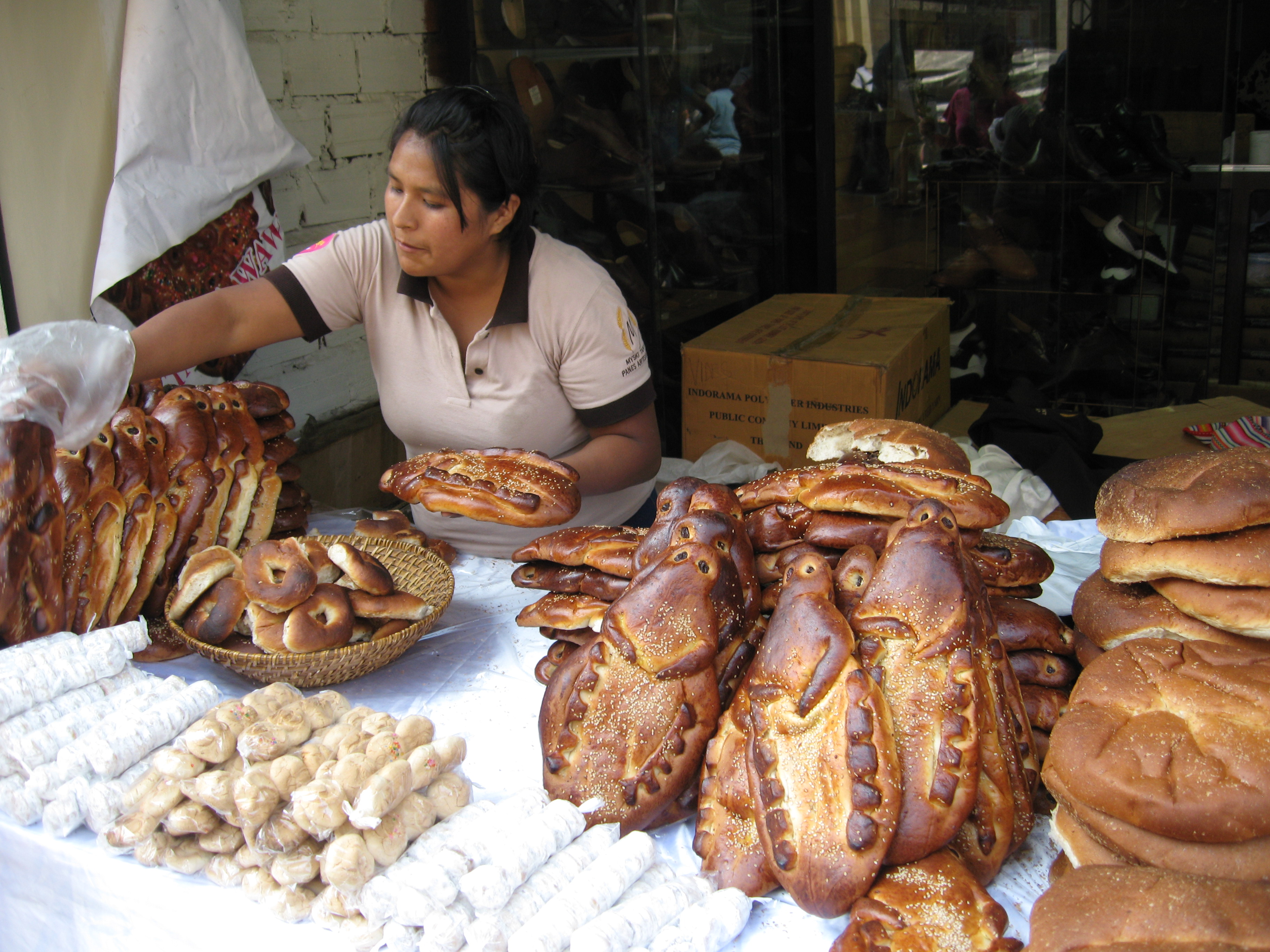
Breakfast in the garden and then Brenda picked us up for a City tour. There isn’t much to Lima, it seems to be the place you go to, to get out of. It was Good Friday so a lot of stuff was on the quiet side but, the main town square was heaving. The Cathedral was giving it big licks, speakers pointing out into the square and an endless supply of Padres screaming about the sacrifices made by HeyZeus, making my head feel like I was the one wearing the crown of thorns. Crowds of people crowding into any building vaguely religious. Vendors selling Jesus, crucified, wrapped in a corn husk. Snack or Icon? Difficult to tell.
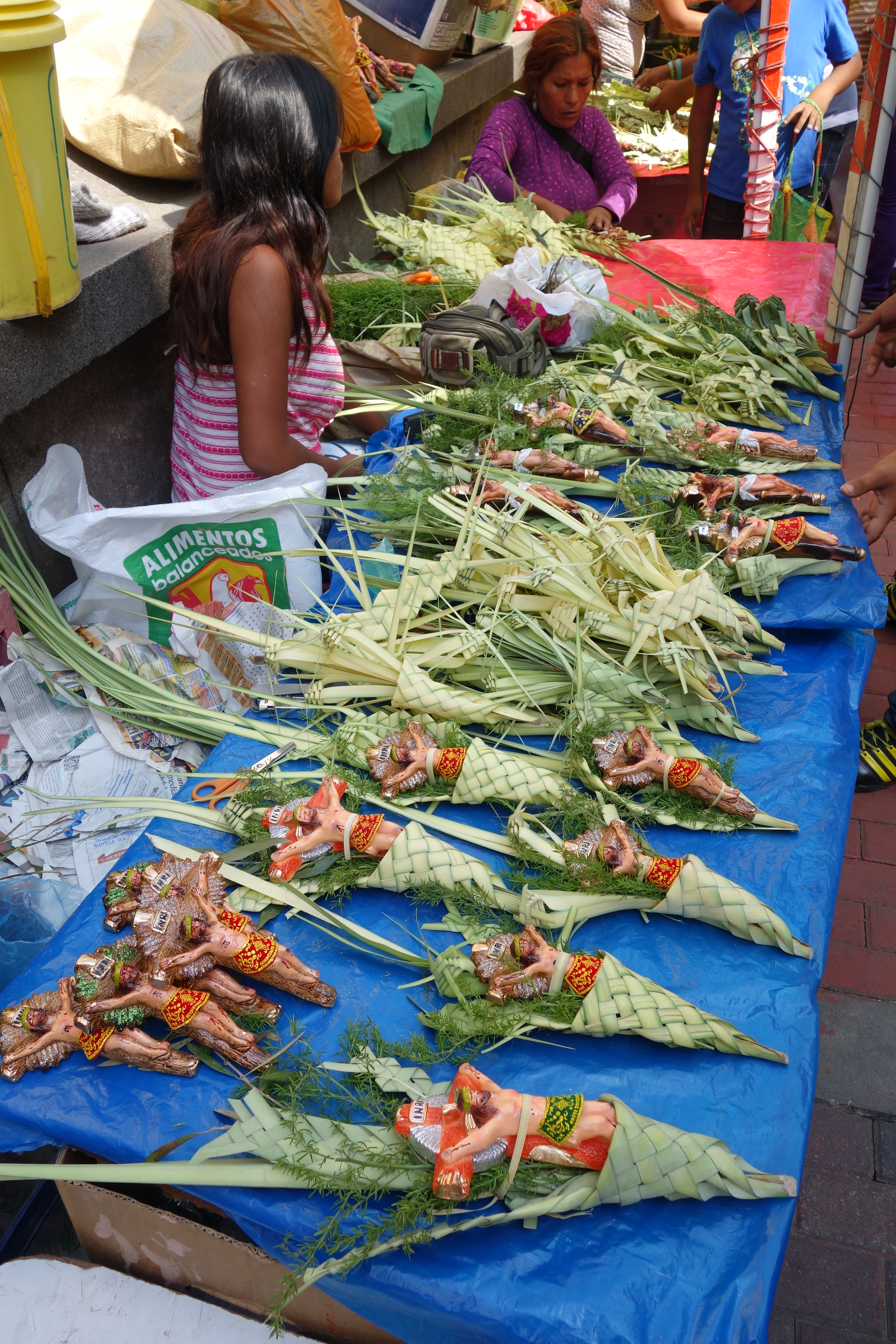
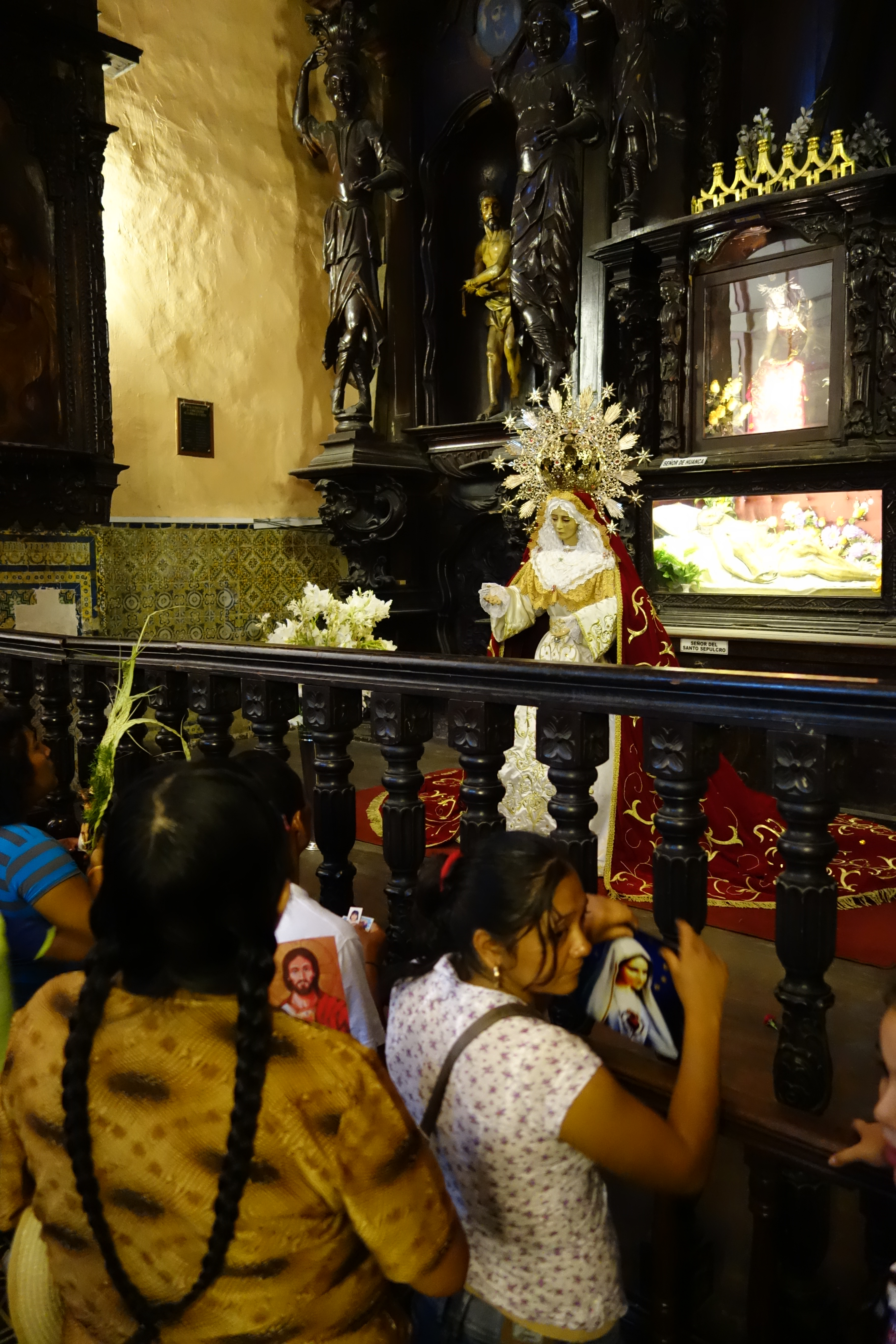
Churches packed with people getting their Snackicons blessed. Catholic Voodooism at its very best. Outside the Presidential Palace they are changing the guard. White tunics, red pants, gold helmets, black pony tails and shiny knee high boots. You’ve seen the Nazi strut. These boys take it a stage further whereby the toe comes up to shoulder height. Sort of Fascism meets the Tiller Girls. Very weird, especially when they do it to Paul Simons El Condor Pasa.
By this stage, Jon and I had registered that Brenda was a rare beauty in Lima, where it seems that almost every woman has an arse almost as big as the rest of her. Dori and Liz were beginning to look quite smug. After a beer, Brenda went on her way and we went to find some lunch. Having determined to go local, we found a great little cafe and ordered the set lunch which consisted of 8 different varieties of Rice, Potato, Noodles, Beans, Mashed Corn and Horse accompanied by a corn drink with extra sugar. Okay, it didn’t taste great but at least we were beginning to understand the arse situation.

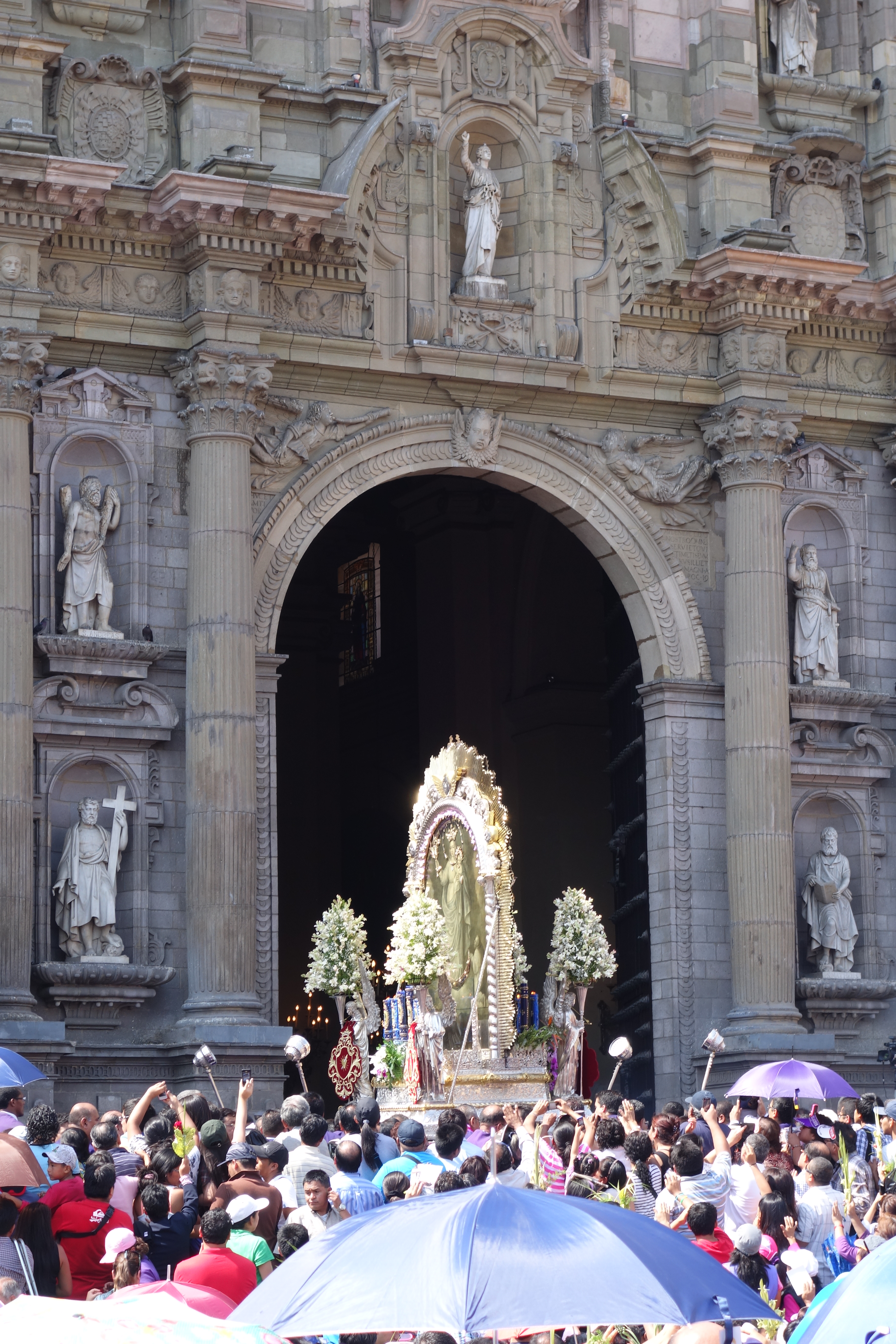

After lunch, we wandered around a bit more and drifted back to the Hotel for a wash with running water and then down to Barranco where, as luck would have it, we discovered a small restaurant with the most amazing tapas, good wine and atmosphere. Suddenly it seemed as if Peru might have some pretty decent grub to accompany the Cusquena. We emptied out of the bar into a night filled with incense. The local chapter of the Brotherhood were hulking a 3 tonne statue of HeyZeus and the Virgin of the Potato on their shoulders down the street. Big heavy set dudes in purple gowns, Ladies in Mantillas walking backwards, an oompah band giving it max and swirling clouds of incense. Fabulous.
3
Breakfast and checkout. We meet our driver Rudi and our new guide Derly. Rudi is Mister Polite, his vehicle is immaculate, his manners impeccable, his English non-existent and his sense of direction seriously compromised. Derly directs him out of town as far as the great Pan American Highway and then jumps ship. We are on our own. We are on ‘The Gringo Trail’.
This is the first of several big drives which are destined to exemplify Rudi’s cautious approach to overtaking and which have me screaming in the back. However, having said that, Rudi always got us there, eventually, and in one piece.
The endless miles of the Pan American roll by beneath us. Leaving Lima is a good thing, the Burbs are pretty rough, but seemingly so are the burbs of the Burbs. A very large portion of Peru is desert, here it just rolls into the ocean. Occasionally a river will make it down to the sea and there is a flash of green, but for many of them it is just too much and they disappear into the parched earth. The sea is cool and land hot, a sea fret washes everything in grey. Houses are poor. Development taxes ensure that nothing is ever finished, it’s cheaper to leave walls unplastered, top storeys started, never finished. Rebar sticking out of everything like rusting bones.
Huge dunes and stony desert, but all along the highway a scattering of building rubble. Desert is held in common ownership, squatters rights. Dump some waste concrete and stick up a fractured mat-shed and in 15 years it could be yours. But it’s ugly now. This is not pristine, grandiose desert, this has been serially abused. Tatty billboards tell of dream homes and luxury resorts to come, but today’s reality is gritty. Occasional ranks of little white boxes seem like desperate attempts at colonising Mars, for fun. But it’s not funny.
Finally we pull into Paracas. There is a big enough concentration of people here to make it workable. A crappy old village/town but several spanky new hotels. We dump our bags and meet our next guide Roxanne. Her English is almost as good as Rudi’s, but Paracas doesn’t give her much to work with. She takes us out into the desert. It’s a National Park so better protected, no builders’ rubble but the Park Guards have a tendency to go dirt biking when they get bored, so the clean lines of the desert are often disturbed. But it’s still beautiful, we see some lovely coastline, striking red sand beaches and watch Gannets dive bomb shoals of Anchovy. There is a cute little museum explaining the local ecology.

After dinner at the hotel, we stroll into town. This is not exactly heaving. 2 very pretty barmaids with terrific legs are posed outside the happening bar. These are the best legs in Peru. These are intimidating legs. The bar is empty. We stumble upon a small shop, like a fixed gypsy encampment. A certain aromatic smoke drifts through the door and inside an oldish dude is quickly stubbing out something exotic. He has some very neat stuff. Dori falls in love with a big silver Inca medallion (New), but doesn’t buy it. Jon spies his first pot (Old) and does. I find a cabinet of exotic wares including some beautiful old pots, fighting tools, copper death masks and a couple of skulls, one of which looks like The Alien. It seems that the pre-Inca high borns took to binding the skulls of their babies with rope and wooden slats so that the skull grew upwards. This is seriously bizarre and, unbeknownst to me, would be the only one like this we would see on the whole trip. So I am now kicking myself that I didn’t take a photo. Naturally all the really good stuff is for bragging rights only, there is no way he will sell and, in all probability, you would be arrested at the airport anyway.
4
We head to the town pier and meet Roxanne who hands us over to another guide who loads us on a boat. Where did all these people come from? There are about 20 of us on our boat and so many boats that it seems like the D-Day landings. An effect that is reinforced when a cloud of birds commence to stuka-bomb the sardine shoals. But we zoom off and there are no crowds except around the pier.
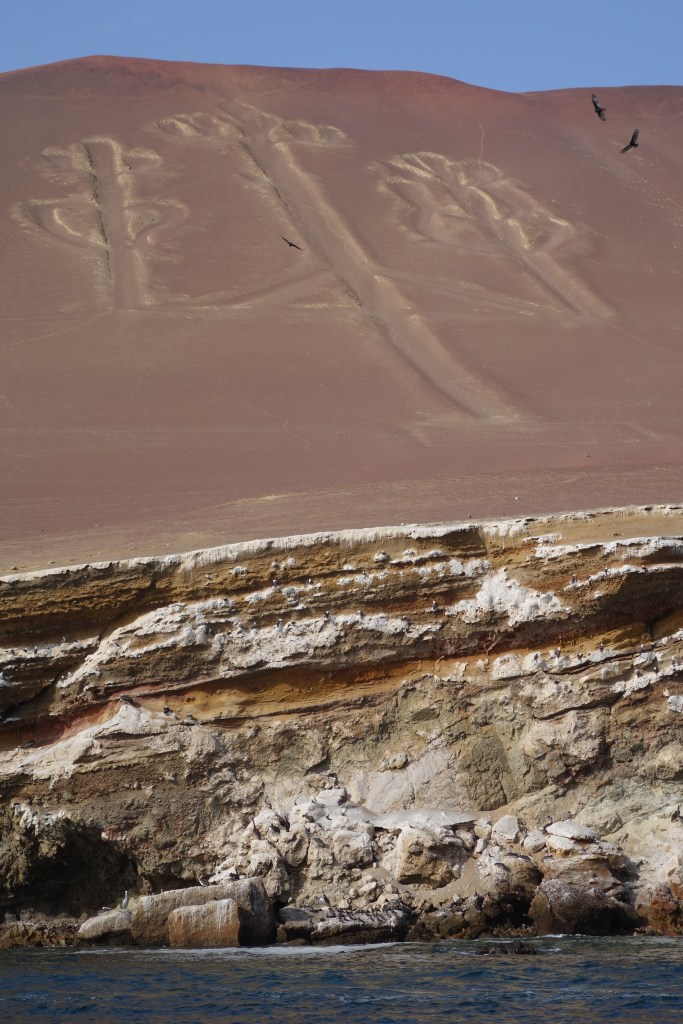
We stop at the Candelabra. A huge red dune towers over a cliff rising 20 metres out of the sea, Gannets and Pelicans line the crags, but on the face of the dune, somebody has carved an enormous symbol. It looks like a candelabra. It might be a star map meant to represent the Southern Cross. It might be a navigation beacon. It might be some stone age geezer taking the piss. Nobody knows when or why, but it is very cool. The girl in front of us is too busy talking to her boyfriend about last nights’ party to take much notice and, when she takes a selfie, it’s very much her, with the Candelabra obscured by her hair, which is looking ravishingly windswept.
Then we speed off to the Islas Ballestas and she continues to rabbit on for about 50 minutes before falling asleep, just as we arrive.
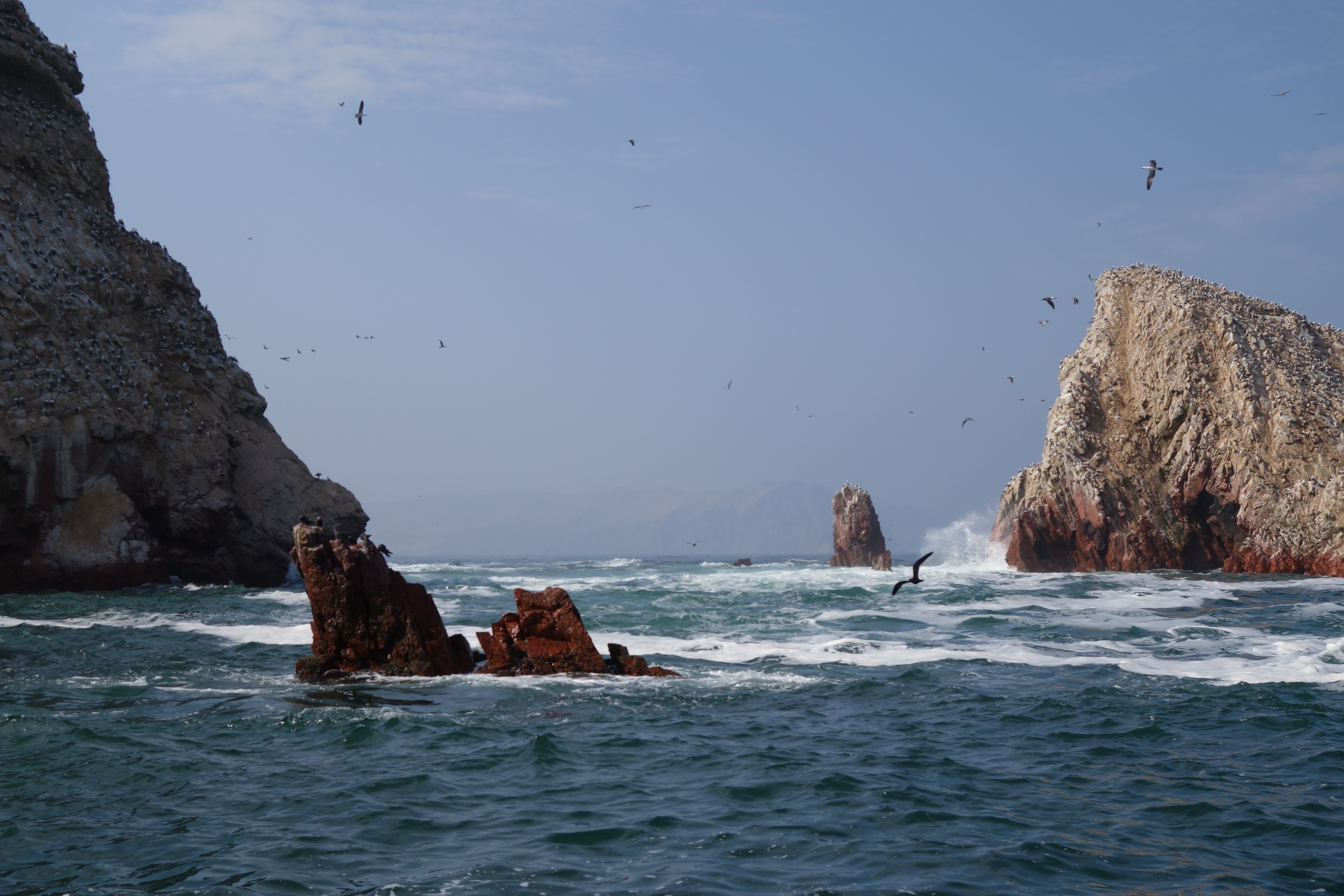
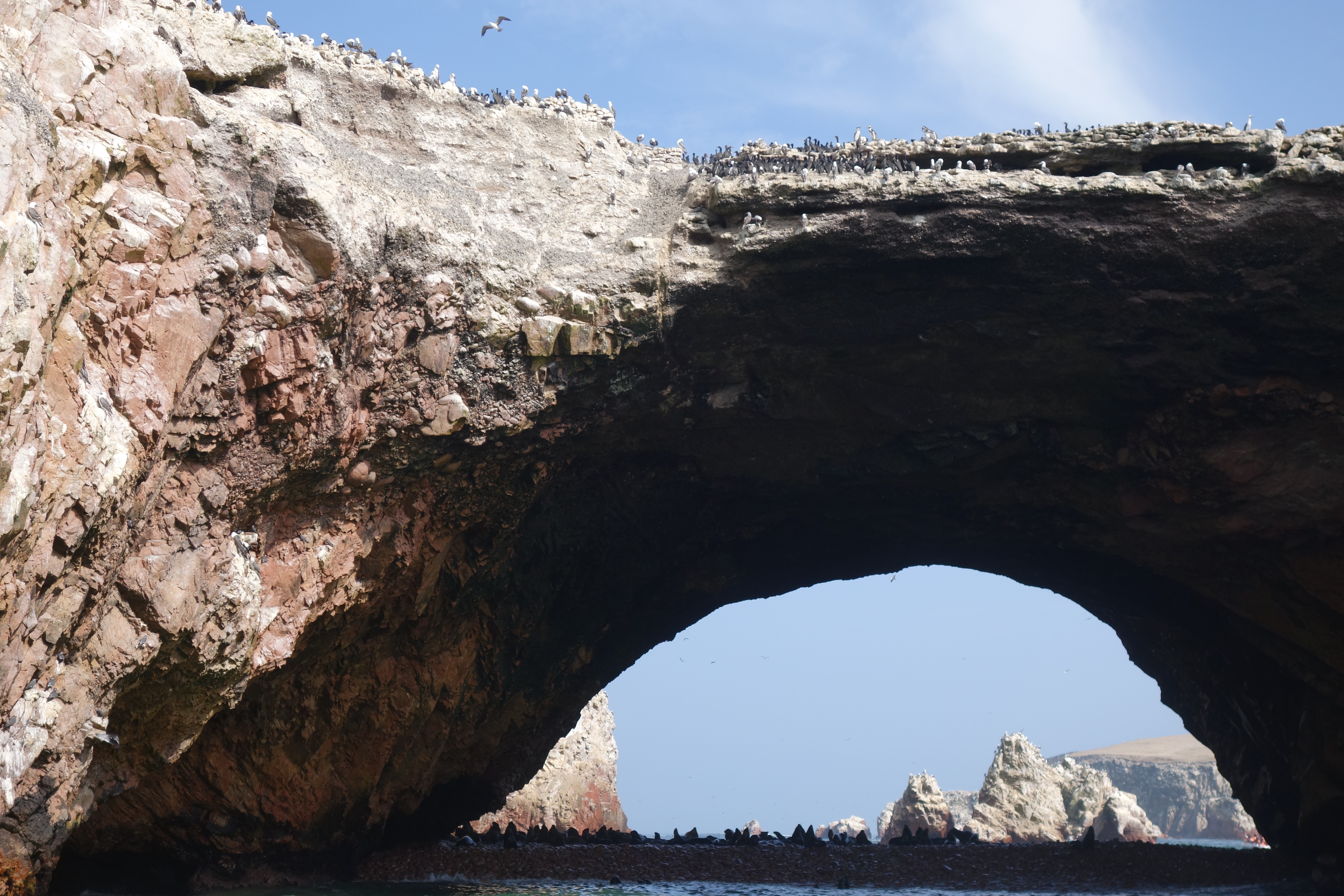
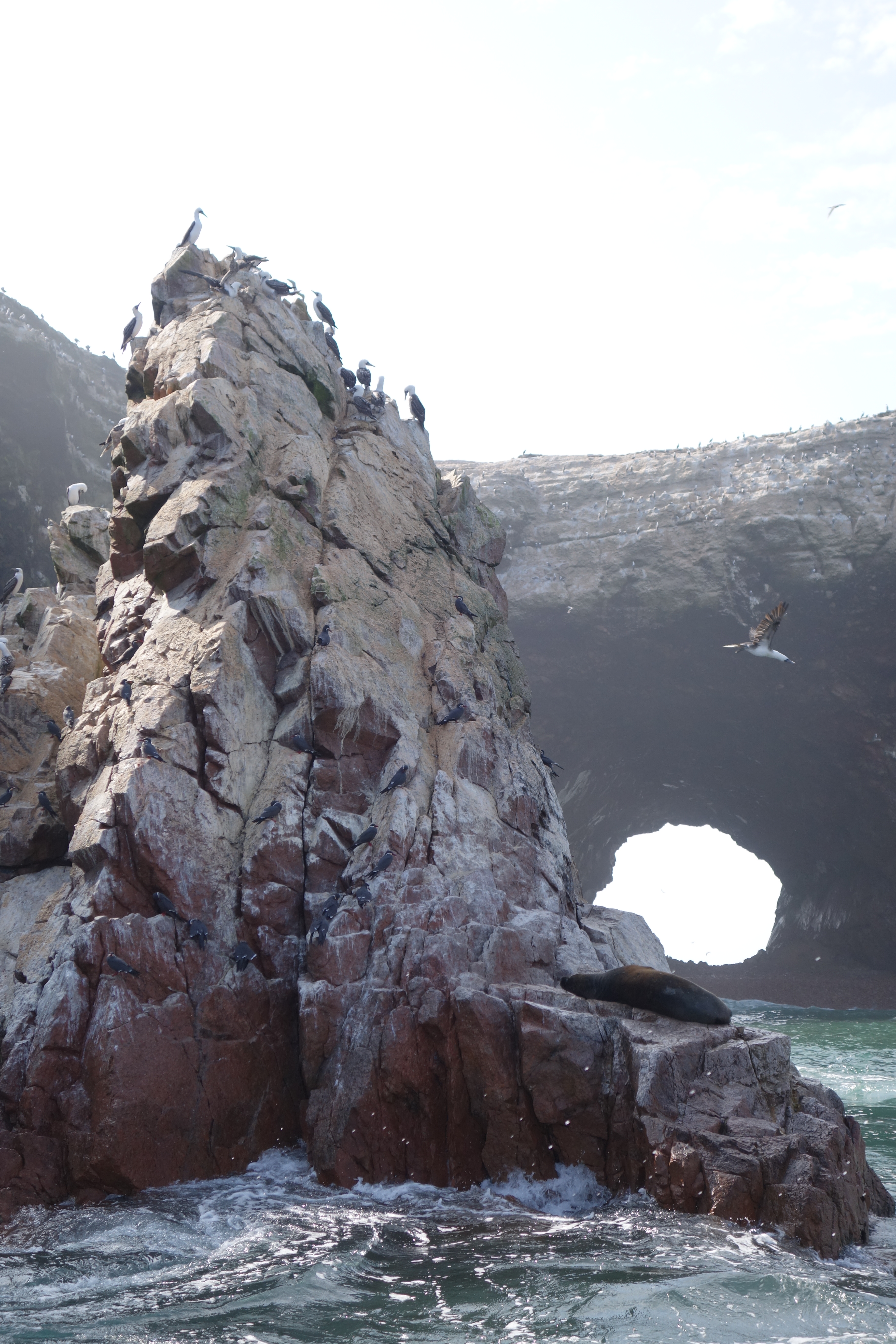
The Islas Ballestas are a bunch of islands several miles off the coast that made Peru the bird poop capital of the World, for a while. Guano. White gold. The Worlds’ first fertiliser boom. Exported to Europe for use in industrialised farming. They are a group of very pretty islands rising up out of the Humboldt Current and surrounded by Anchovies, between which, drops of salt water can be found. Boobies, Pelicans and Penguins swarm over them. Black snowdrifts of Boobies. Thousands and thousands of Boobies. I like saying “Boobies”. Herds of seals cover the shingle beaches, drifts of them roll in and out on the surf, others sun themselves on the rocks. Mothers are in deeper waters teaching pups to swim and hunt. Surf crashes. The noise is incredible. The great mountains of guano have gone, but the birds are doing their best to replace it and the mining stuff is still all there. They now harvest every 3 years.
Our boat rocks in and out of various coves, looks into caves, circles great pyramidal crags, bobbing and rolling on the surf. But nobody feels sick. No Chinese tour groups yet. The sky is blue, the sea crystal and the World is full of Boobies. Fabulous.
Eventually we head back and, as we pull into the harbour filled with dinky little Anchovy boats, the girl in front of us wakes up. Tick. Been there, done that. What a waste.
Heading to the car, we have to pass the interesting shop. This is more than Dori can take. Her willpower dissipates and she heads back in to buy the medallion and Jon buys another pot while he’s at it.
We say goodbye to Roxanne and Rudi drives us off, further down the coast, which is much more pristine now. Miles and miles down the Pan American. We turn inland, towards Ica and stop for a break at a winery where they make Pisco. This is the national drink made from brandy grapes, which make a sweet wine and a heavy duty, burn from your boots upwards, liquor. They soften it down with lemon, syrup and egg-white with ice, shaken to a froth to make a Pisco Sour. You cannot escape it. They show us the fermentation and distillation process and we learn not to drink the first 15% of production, because it is ethanol, capable of putting a rocket into orbit around Saturn and making you blind.
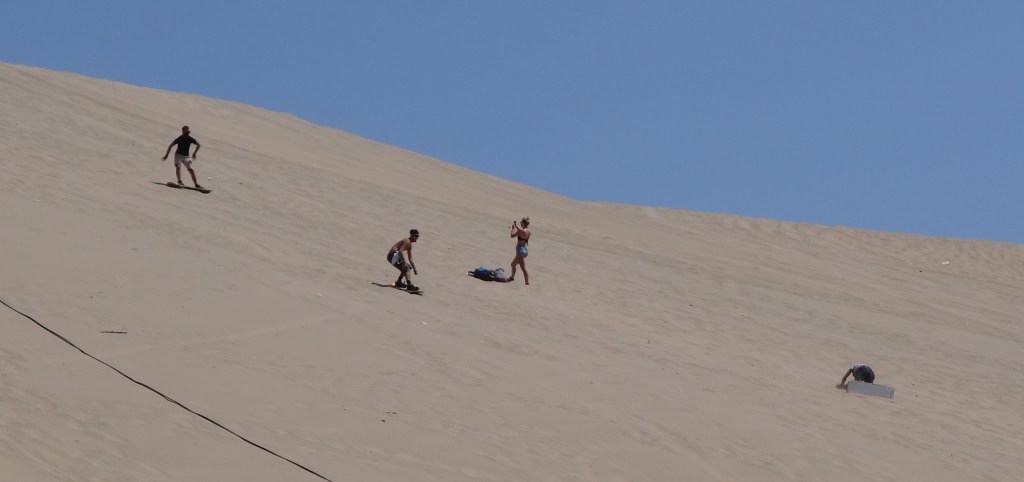
Just outside of Ica, the roads climbs over a ridge and there, sunk down in the middle of enormous dunes, is the oasis of Huacachina. Completely hemmed in by mountains of sand is a small lake fringed with palms. It could be something from Arabian Nights, except there’s no camels. Actually there are not even Lamas which, after all, are Peruvian camels. People are swimming in the lake, but we decide to skip this dubious pleasure. People are attempting to board ride down the dunes, but we skip this too, some sort of rash looks to be the inevitable outcome of either pastime.
After Lunch, we drive on towards Nazca through black stony desert, stopping to look at the Museo Maria Reiche, where lived the Lady who first mapped the Nazca Lines. There is also a metal tower by the road, which you can climb to look down on a couple of the smaller glyphs. Our hotel looks deserted and fairly basic, but the family who run it are nice, they have cold Cusquenia and it’s early to bed anyway.
5
We wake around dawn, have breakfast, pick up packed lunches and check out. Rudi drives us to the airport, but loses it. So we find it for him and are greeted by a young man with the shiniest shoes ever in the history of the World. I suspect he uses them for looking up ladies’ skirts. He is our pilot and ushers us through various formalities including a passport check, should we decide to hijack the plane and fly to Bolivia. Actually, it turns out there are 2 pilots and I am suspicious that one of them has a gun, so no hijacks today Signor. We are loaded into a tiny little plane for 4 passengers and given a quick run through of the itinerary. There will be no in-flight snacks or drinks, they will direct us to look at a point directly below the wing tip at various stages of the flight and the only entertainment will be the occasional muffled scream from Liz.
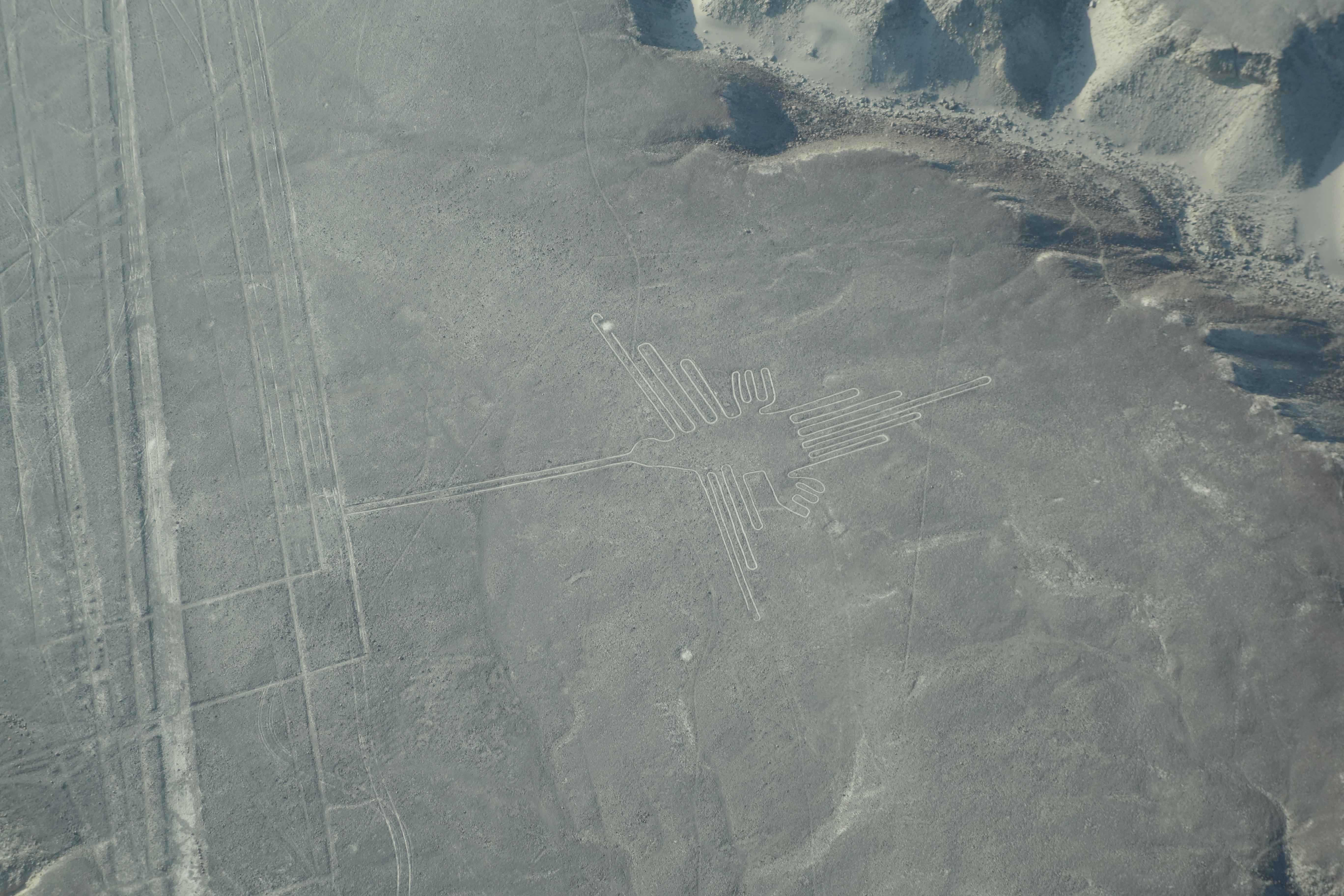
We rumble out and take off. Soon over the desert the Pilot asks us to look right and then banks the plane to almost 90degrees and describes a clockwise circle around a point just below the wing as we all try not to fall out the window. It takes a little while to figure out what you are looking at but, sure enough, there is a Whale marked out on the desert floor. We level off and then the other Pilot takes over and we bank around to describe an anti-clockwise circle before moving on to the Dog, Spaceman, Monkey, Humming bird, Condor, Flamingo, Tree, Hands, Dodo…… Dodo? Seriously? And enough lines, Morse-code messages, flying saucer runways and the like to make your brain spin, if the plane wasn’t already doing that for you. It’s fantastic, in the true sense of the word. Why would they do this.? Theories abound, with the current in favour being that the lines had a religious significance, something to do with ensuring rainfall. Well that’s a pretty broad theory for a civilisation living in a desert.
My own is that around 300 Before HeyZeus the Nazca Town Council were plagued by the local tourist industry honchos to do something about the lack of a tourist industry. The Mayor, Huactacamacamaya, looked at what they had to work with — A lot of desert, rocks, peyote and his son who doodled. “So we build the biggest doodles in the World and get them into the Guinness Book of World Records. Then, until such time as we can breed a flamingo big enough to fly people overhead, we will sell peyote and doodle maps. The punters will be flocking in and we will shift baseball caps by the thousand”. Sure enough, it worked and the descendants of Huactacamacamaya are ever grateful. They might even have got away with it, if they hadn’t got cocky and included the Dodo.
Whatever. I’m glad they did it. It’s brilliant and one of the highlights of the trip. No sooner highlighted than we meet Orlando, a local guide who takes us to Chauchilla Cemetery. This is a burial ground for one of the early civilisations. Situated in the desert fringing the cultivated land, it has been extensively robbed and despoiled, but it is still an incredible sight. Bone fragments and cotton wadding from burial shrouds litter the ground around a series of pits, in which are arranged various mummies that they have managed to save. All sat in a foetal position, facing east.
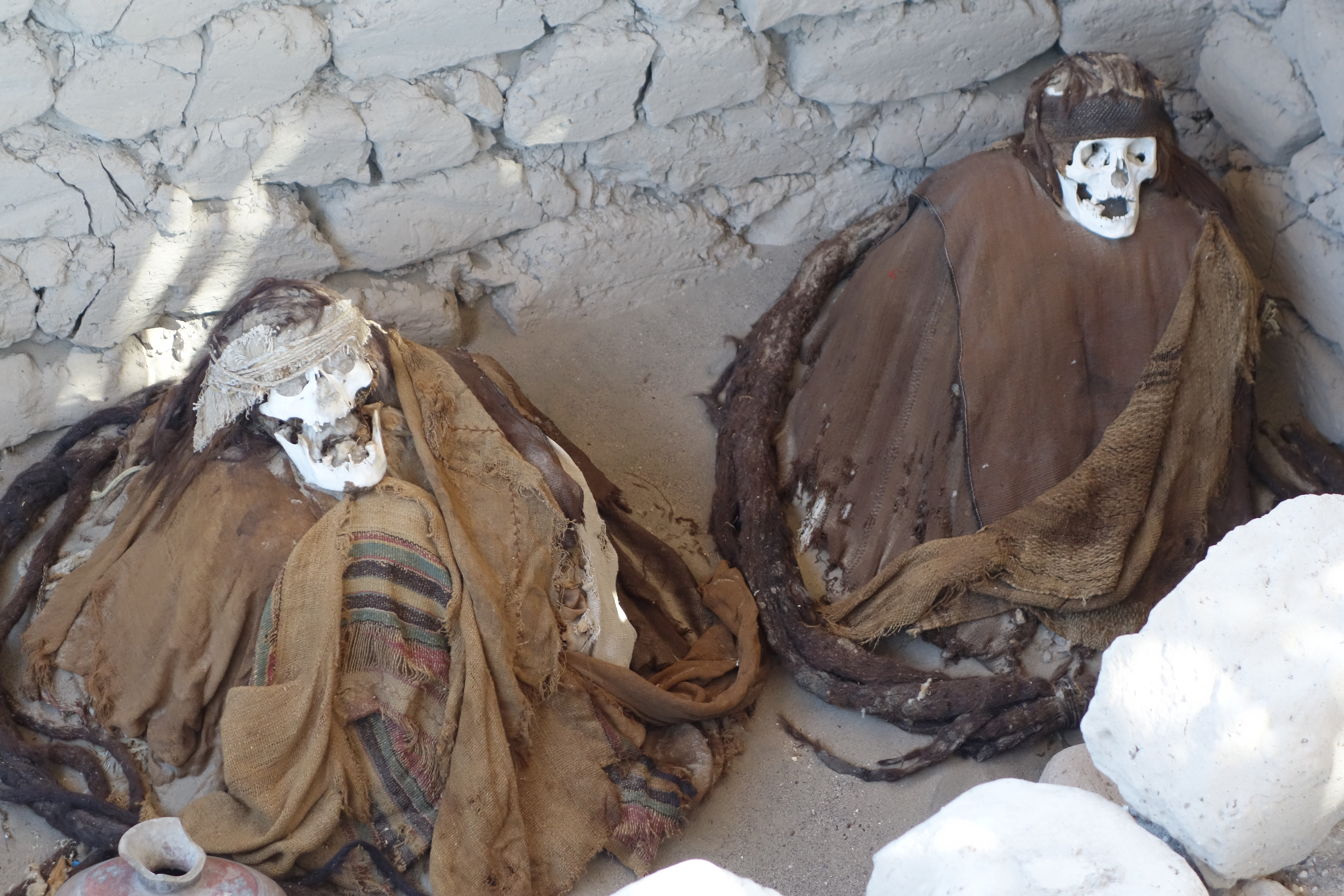

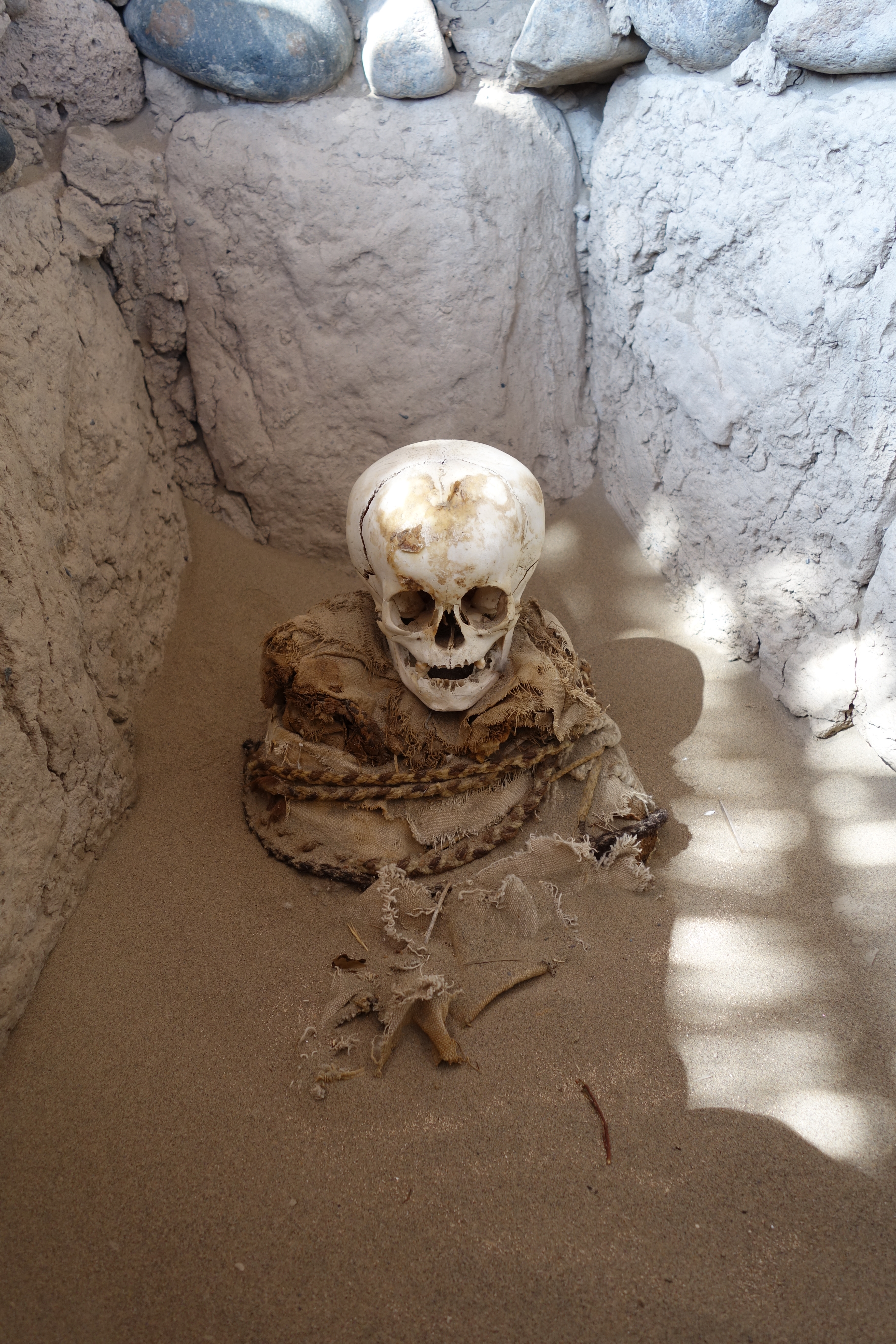
Orlando is one of those guides who, however many times he tells the stories, will always make it fresh and interesting. Skeglingtons with grinning skulls and long, long Rastafarian dreadlocks, crouch down, wrapped in woven shawls, surrounded by pots. A single baby in its own little crypt. It is seriously spooky. The desert has preserved them, but you have to worry that their current exposure to the sun and the occasional dog makes them vulnerable.
We leave Orlando and his Mummy and start the long, hard drive to Arequipa.
Back on the Pan American. The desert is desolate and daunting, but magnificent as it collapses into the ocean. There are miles of pristine beach. Isolated valleys are irrigated by frigid streams and crowded with olive trees and corn. On rocky headlands kelp forests are being harvested and once we see a pod of Dolphins rolling in the surf rubbing up against the road. There are miles and miles of nothing, with the occasional village. “What do want to be when you grow up son?” “A kelp collector like you Dad”. “Just as well son. Just as well”.
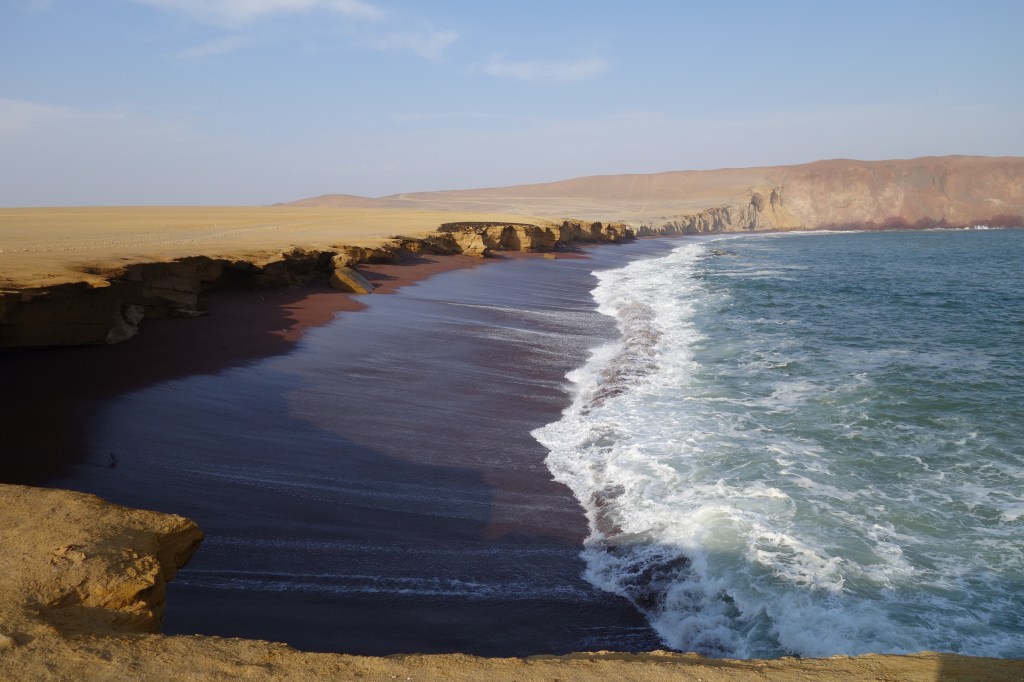
Suddenly the road turns East and we climb inland, up the first ridge of the Cordillera and onto the Altiplano. The high desert plains. It’s turning cooler now. Snow capped volcanoes peak over the distant desert horizon. Dusk and then dark. The Southern stars challenged only by our headlights. After 9 hours non-stop driving we drop into Arequipa. The burbs are hideous and, in the darkness look like something from Mad Max. I am seriously concerned, given Rudi’s sense of direction, but we turn a corner and are in the nice part of town, parked outside our hotel.
It’s late but we have to eat and stumble into a restaurant over the road. Aaaah Cusquena. Jon and I have Vicuna steaks. This is the wild version of the Lama and its meat is like venison, delicious. Our waiter can hardly see over the edge of the table. He must be the smallest in Arequipa. We go to bed. I think it must belong to the waiter because my feet are hanging over the end, but maybe I’m just delirious from the drive.
6
Breakfast. We are now in Coca country. So Coca tea for brecky. Dori and Liz hate it, Jon and I love it. We meet our new guide Jayme. Very Peruvian and very cute. Dori and Liz hate her, Jon and I love her.
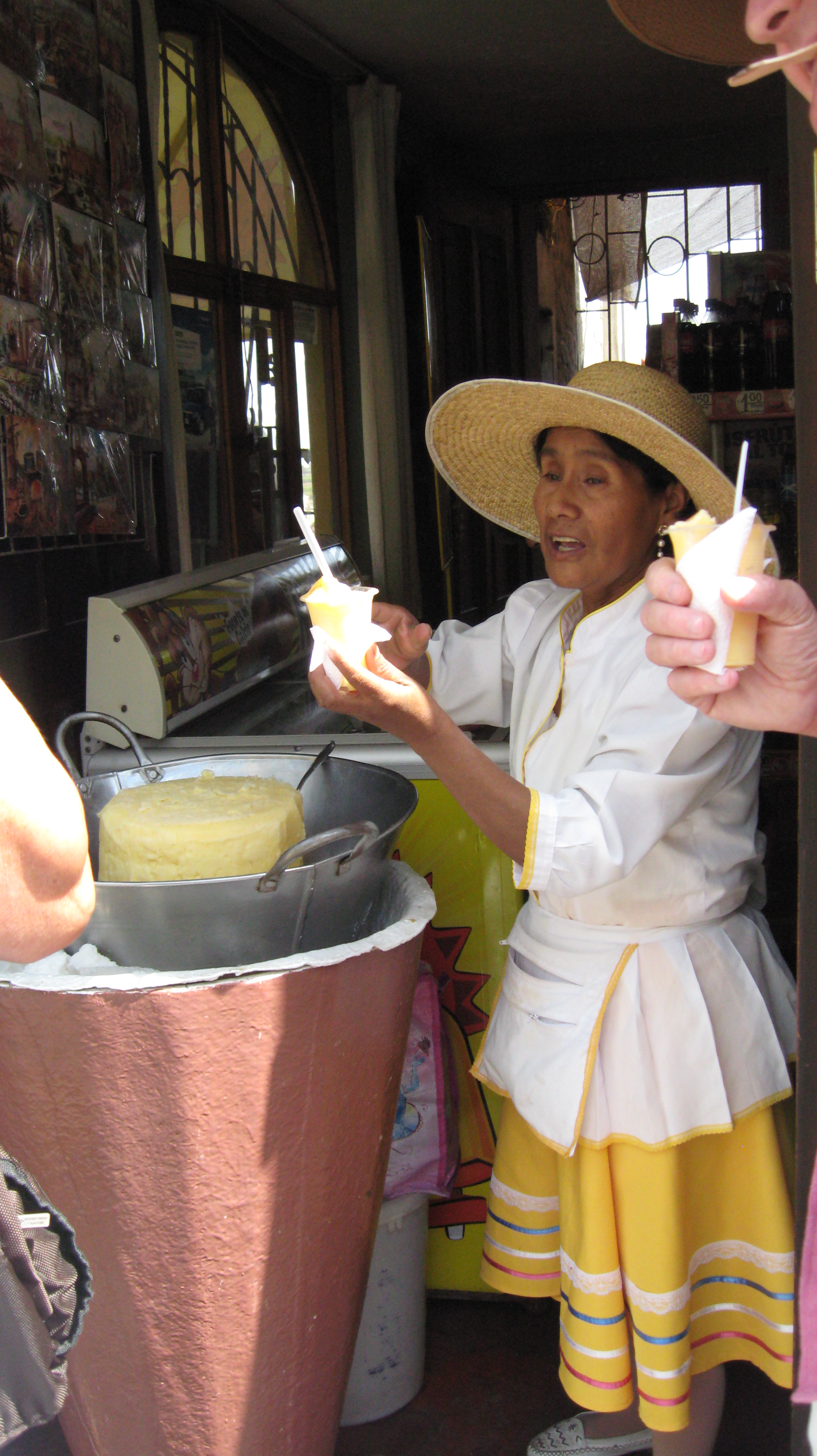
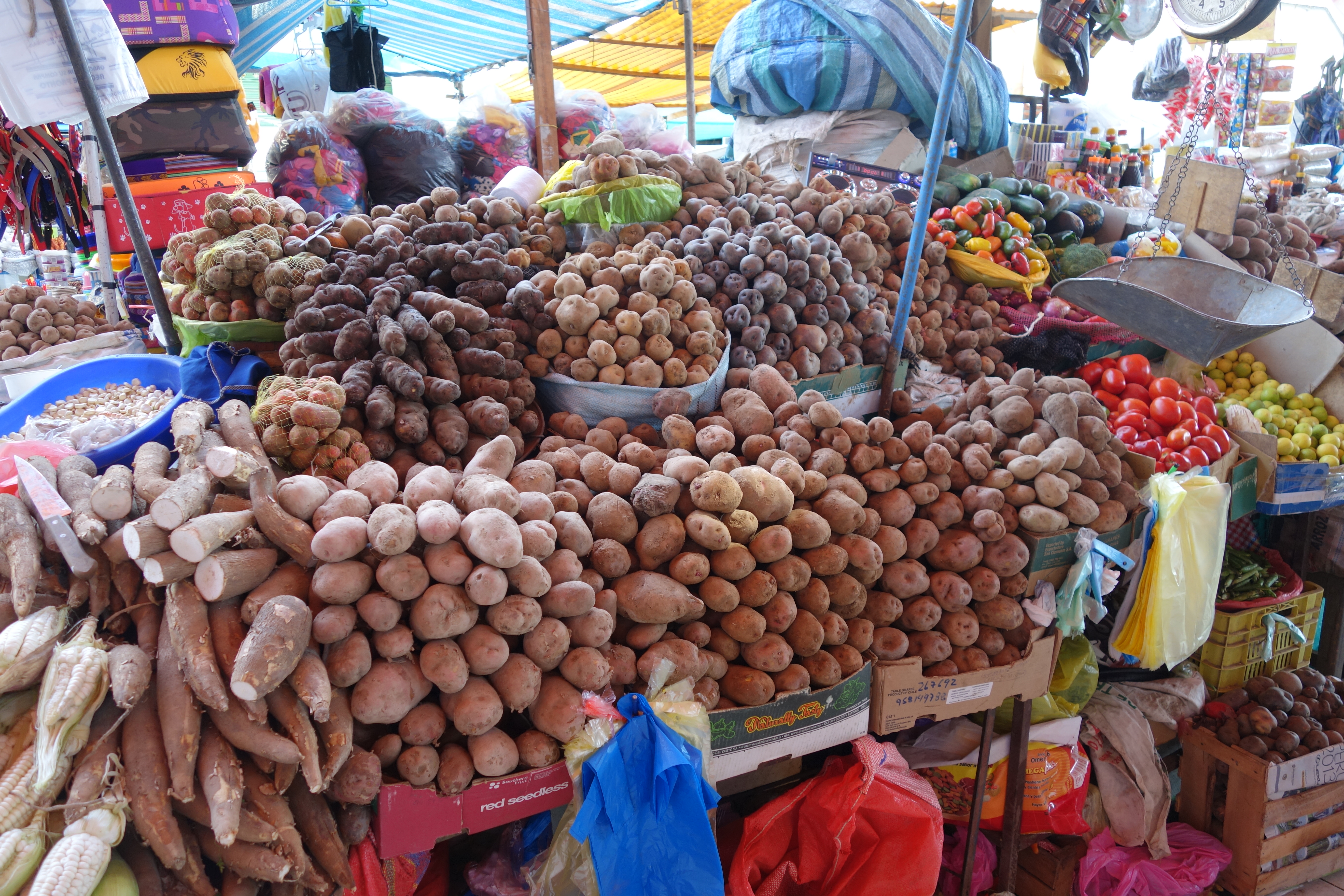
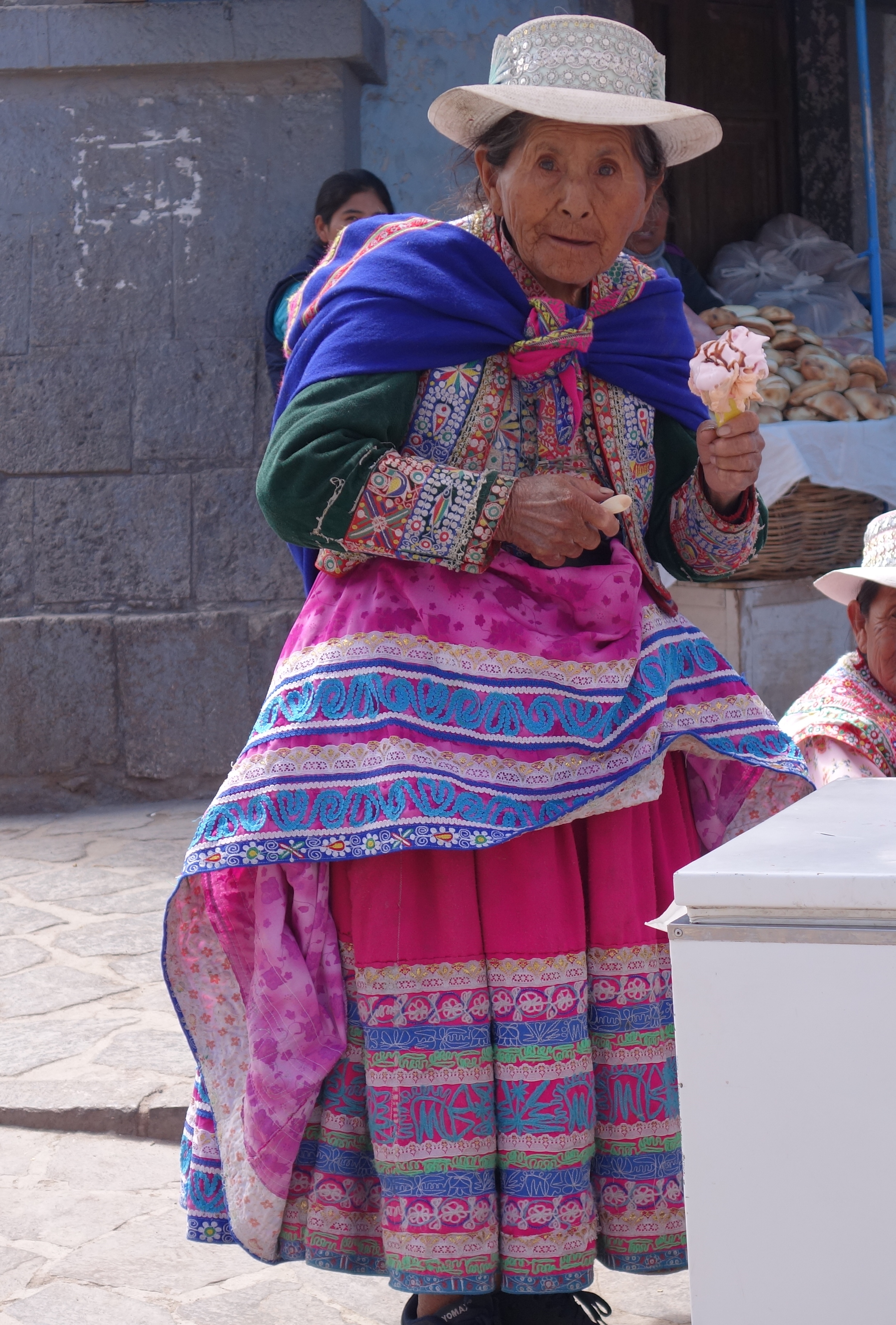
We drive around town and visit various lookouts. El Misti is a huge Volcano cone that backdrops Arequipa, but he is looking a little misty today. We buy cheese ice cream from a sweet little old lady. It’s delicious but a killer for brain freeze. Beautiful old Casa del Fundador, built by the Spanish founding father of Arequipa to house his mistress and his mad son. A Vicuna shop with animal pens out the back has Alpacas and a Lama with attitude who spits a gluey straight at Liz. I walk past and look him in the eye as I hoik up a green one, you gotta let ‘em know who’s boss, and he backs off. A charming water mill where the wheel is configured in a horizontal plane, not seen that before. Stroll through the local market, we start to see some of the local Indian Ladies with natty hats and ponchos as well as about 600 varieties of the almost 800 types of Peruvian potato. Lunch in an old courtyard with a fountain. I have Ceviche, a national dish made of raw fish marinated in lemon, chilli, onion and salt. It’s like eating sushi with flavour. Excellent.
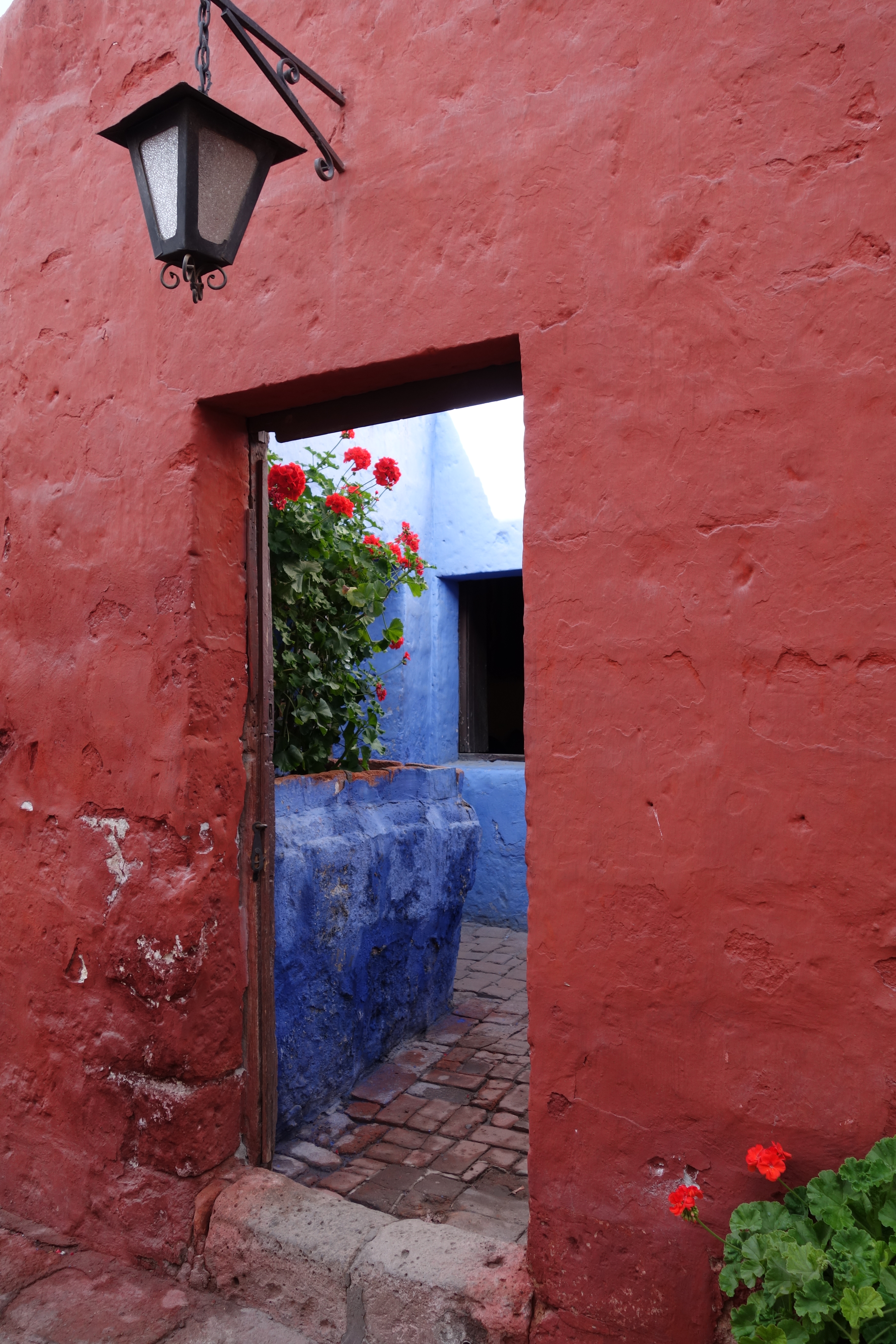
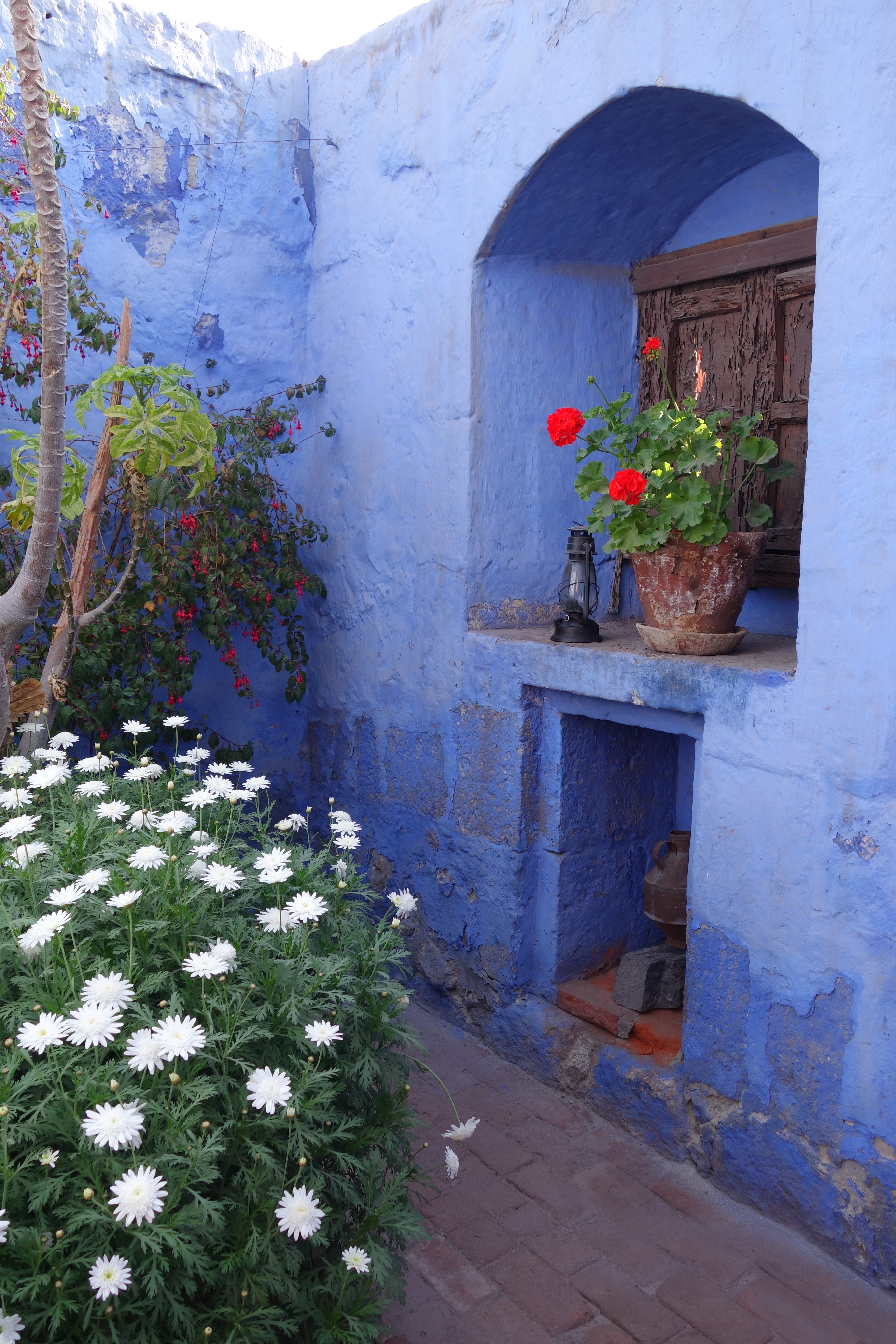
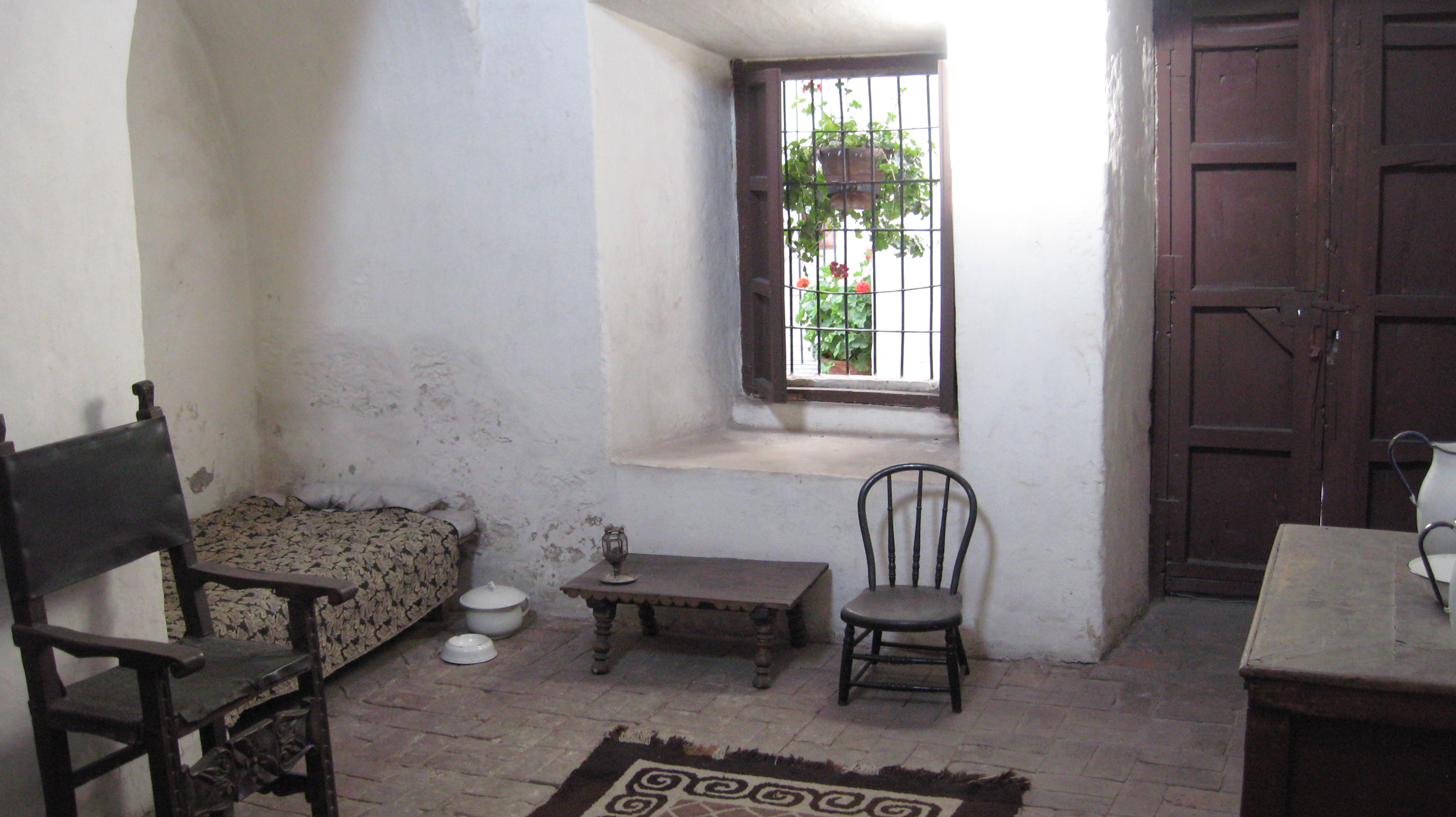
After lunch we visit the Santa Catalina Monastery, which is actually a Nunnery. It is a huge complex of houses, streets and cloisters painted in ochre reds and blues. Flowers everywhere, gorgeous. The Nuns who used to live here came from very rich families. They had their own kitchens and slaves and it seems that, at one point in their history, Life here got so good that the Pope shut them down. One Nun however, is considered a Saint. She entered of her own volition at age 3, was considered to have worked miracles of healing and from age 16 to her death slept on a carpet of metal nails in order to atone for Mankinds’ sins. I guess if you didn’t have Men or TV to cause you pain, you might come up with some weird ways to get your kicks. Bless her.
On to the Juanita Museum. This is the big deal in Arequipa. Juanita is the Ice Maiden Mummy, a perfect 13 year old babe who was born to be sacrificed. When the old El Nino acted up for a couple of years, rains fell off, Gods unhappy, and Juanita gets to take a 5 month hike with a bunch of Shamans. Most of the time she’s out of her box on Coca and Chicha beer. With a cast of thousands, she manages to climb a snow capped mountain, that won’t be conquered again for another 500 years by guys in down jackets and crampons. She’s wearing a long dress, a blanket and rope flip-flops. Take a bow Coca/Chicha. When she gets to the top, they dig a hole, sit her in it, give her an almighty whack round the head and hope the rain comes. Bless her.
The Museum and the story it tells about Juanita, what happened to her and how they found her, is pretty amazing. Some of the artifacts are beautiful. Unfortunately the Museum guides are a bit needy and that starts to take the edge off it. Plus, when we were there, Juanita was off having her hair done and we got another young sacrificed babe called Serita. Not that it mattered too much. In the darkness that is El Museo Culturaleo and encased in her ice preserver, she could have been that leg of lamb I put in the freezer and forgot about.
7.
The dawn rose bright and clear, El Misti looking pretty imposing. Rudi loads up and we set off for Colca Canyon. First stop en route is to buy water and Coca. Seems that Jayme is a bit of a Cocalliero and was more than happy to use us as an excuse to get loaded. Dori lasted about 5 minutes before spitting out. Liz managed a couple of wads before giving up. But Me and Jon were into it large. Take 10 leaves and lay them up with the biggest at the back, stems pointing down. Nip off the stems with your thumbnail and use it to grate some lime powder onto the stack. Roll from the bottom into a wad and stick between gum and lip. Let your saliva damp it down and give it the occasional squeeze. Gum and tongue go a bit numb, heart rate steps up a notch and a mild feeling of well being ensues. It’s actually very mild, not half as potent as Taiwanese betel. You don’t get high and you don’t get speedy. You know what else? You don’t get addicted, you don’t get lung cancer, you don’t get a thrombosis that can cause gangrene and you don’t contaminate everybody around you. Nobody in Peru, except stupid tourists, smokes vile, addictive, cancer causing tobacco. Coca is actually pretty healthy but, BAT and Philip Morris can’t make a buck out of it so the Yanks, petty puritan minded pillocks that they are, will tell you that it is the Devils plant. Wankers.
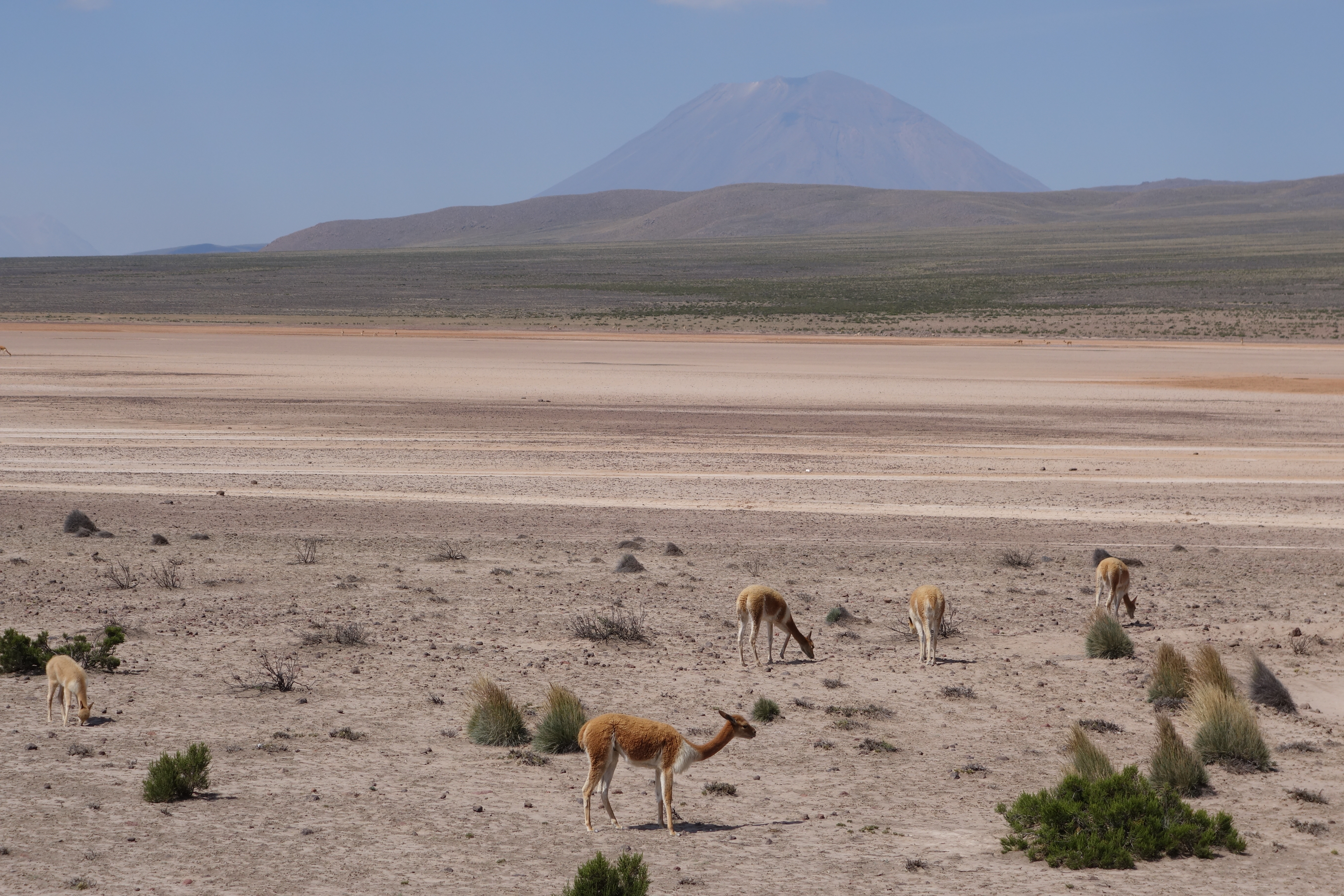
Arequipa is only green because of the Inca irrigation, take one step past the canals and you are back into the desert, but as the road climbs, wild grasses and sedges appear and then huge banks of spring fed moss carpets dotted with snow white eider ducks. We are now entering serious Lama land. Vicunas appear in small groups scattered across the enormous plains, with distant snow capped peaks and a huge sky. There are solitary small farmsteads ringed with flags to keep the Pumas away. Eventually we hit the high pass at 4,800 metres and take a photo stop. At this altitude it is advisable not to run. We have passed the permafrost line and seen icicles dripping from frozen waterfalls, so if you need a wee, do it quick. Now we are back in cold stony desert where Lama Farmers pile stones as they pass, to wish for a good day at market. Top stone is Condor representing the Heavens, middle is Puma for the Earth and bottom is Snake for the Underworld.
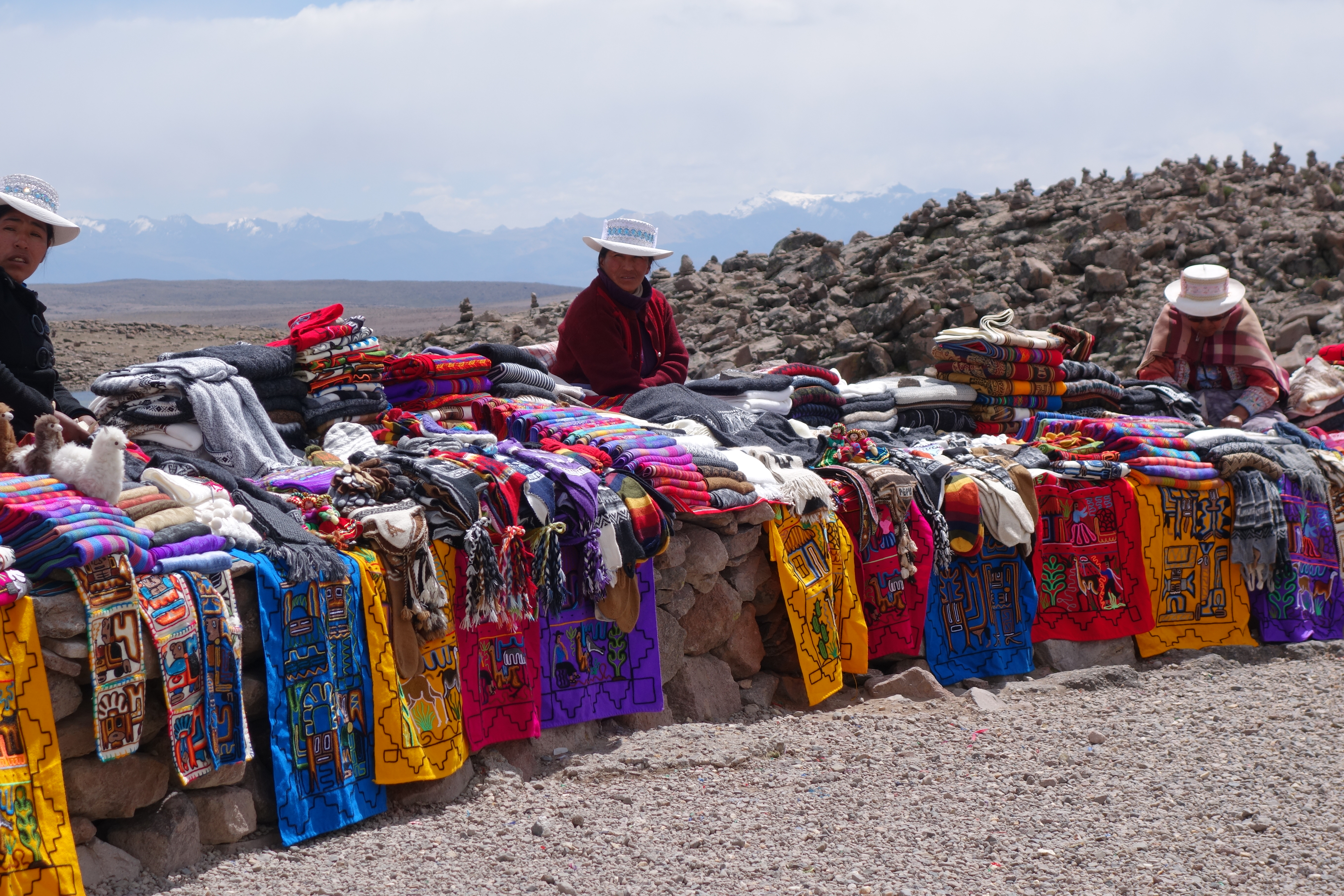

Of course, despite the fact that it’s below zero and there is a wind to cut you in half, you have stopped, so by the time you turn around, there are 15 women in bowler hats trying to sell you a jumper. Or, as we say in Peruvian, “Uno Chompa”. Yes I bought one. Yes with Lamas on it. And I love it.
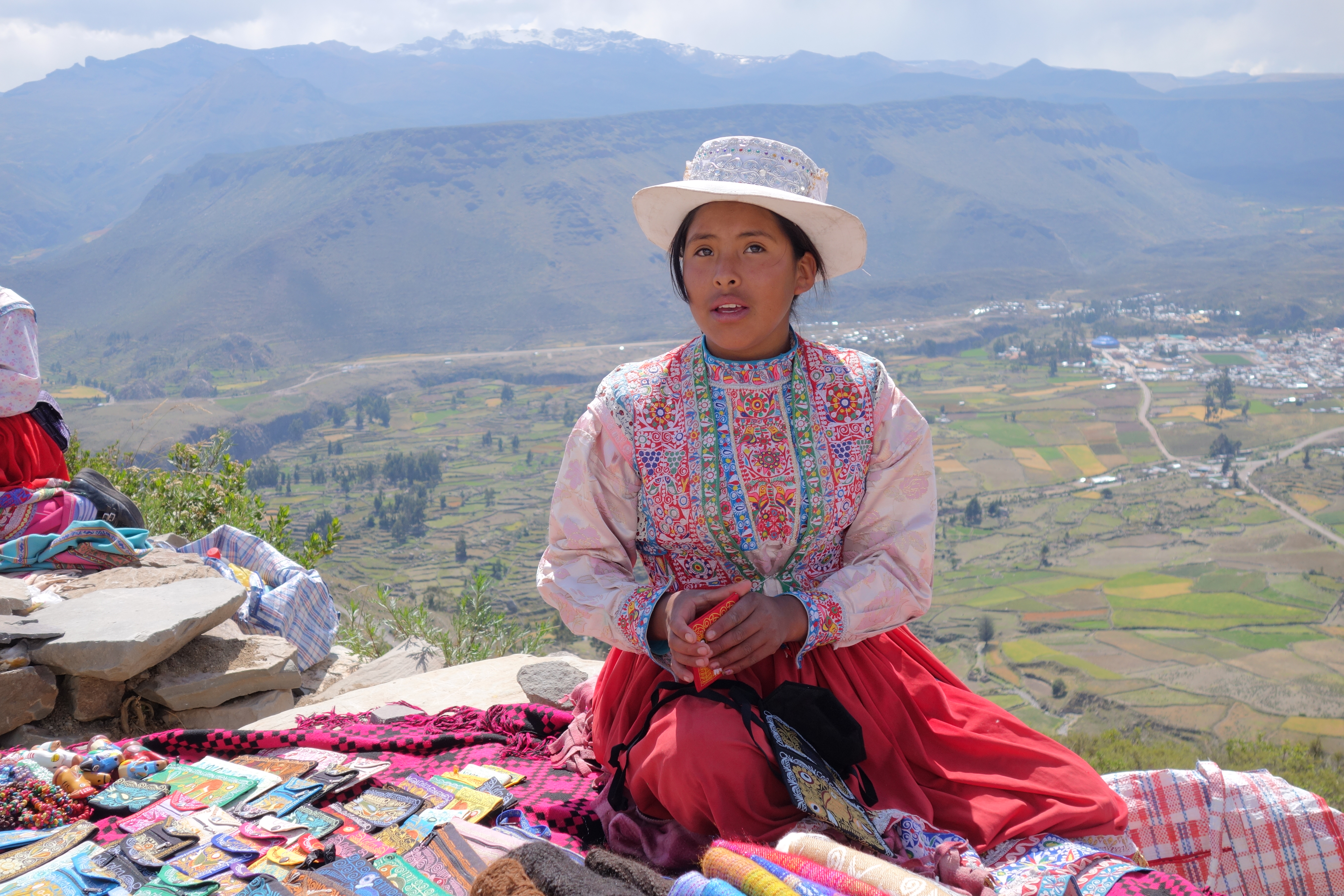
We start to drop down into Colca Canyon and, on this side, things are much greener, so the sky is much bluer and the snow covered Andean Volcanoes even whiter. This is Jayme’s home village, Chivay, where she is evidently something of a local heroine. We have lunch, check out the market and then go to our hotel. If we had known what the Colca lodge was like, we would have been knocking on the doors half a day earlier. Nestled in the valley bottom by the riverside, with its own hot springs and surrounded by ancient settlements and terraces. It’s idyllic. Huge rooms, huger beds (Definitely a Tardis moment here) and very elegant. We slip off to the hot pools for a soak, then it’s sitting round a log fire listening to cool jazz, drinking a cooler Cusquena and strolling back to our room gazing in awe at the Milky Way. Bliss.
8.
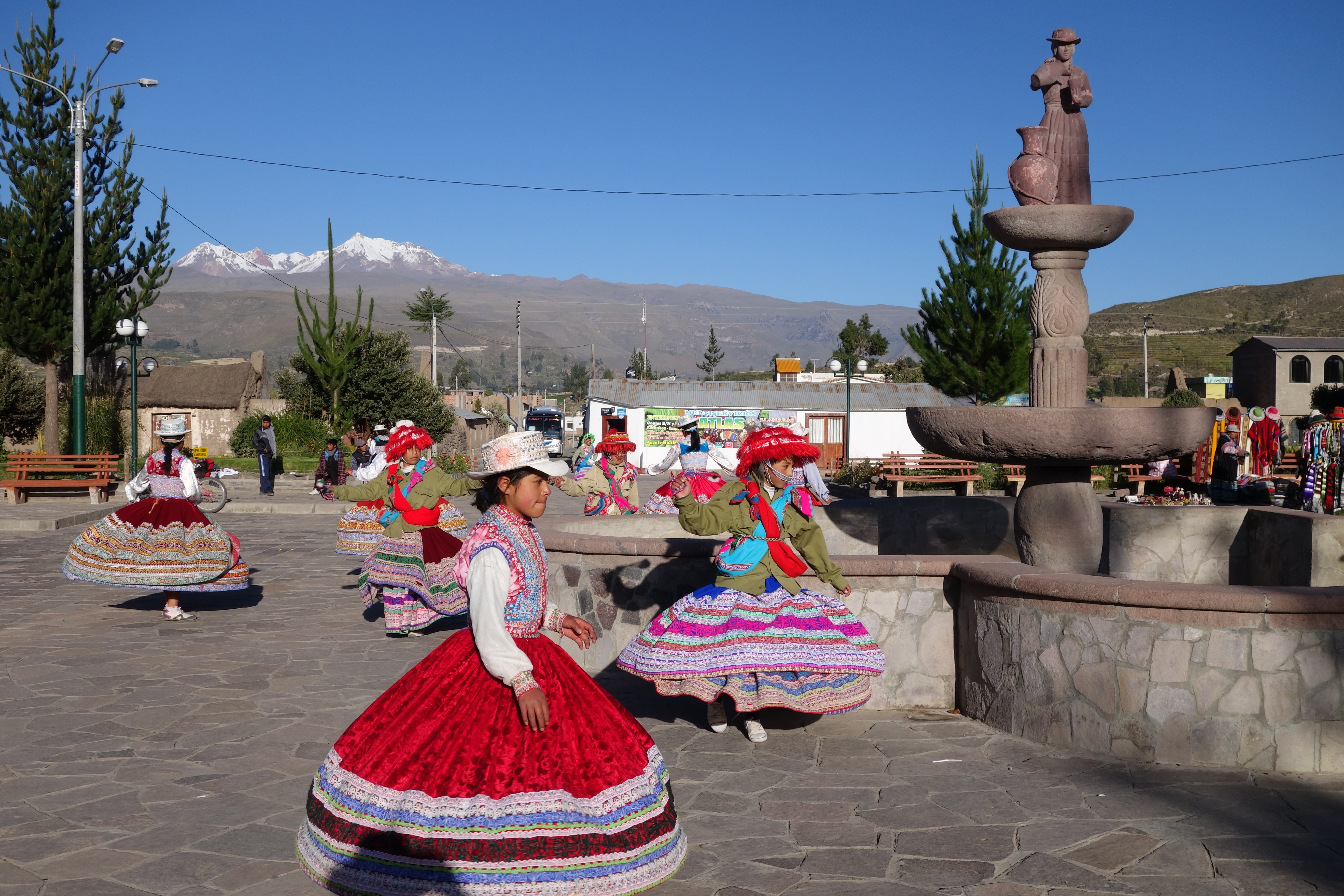
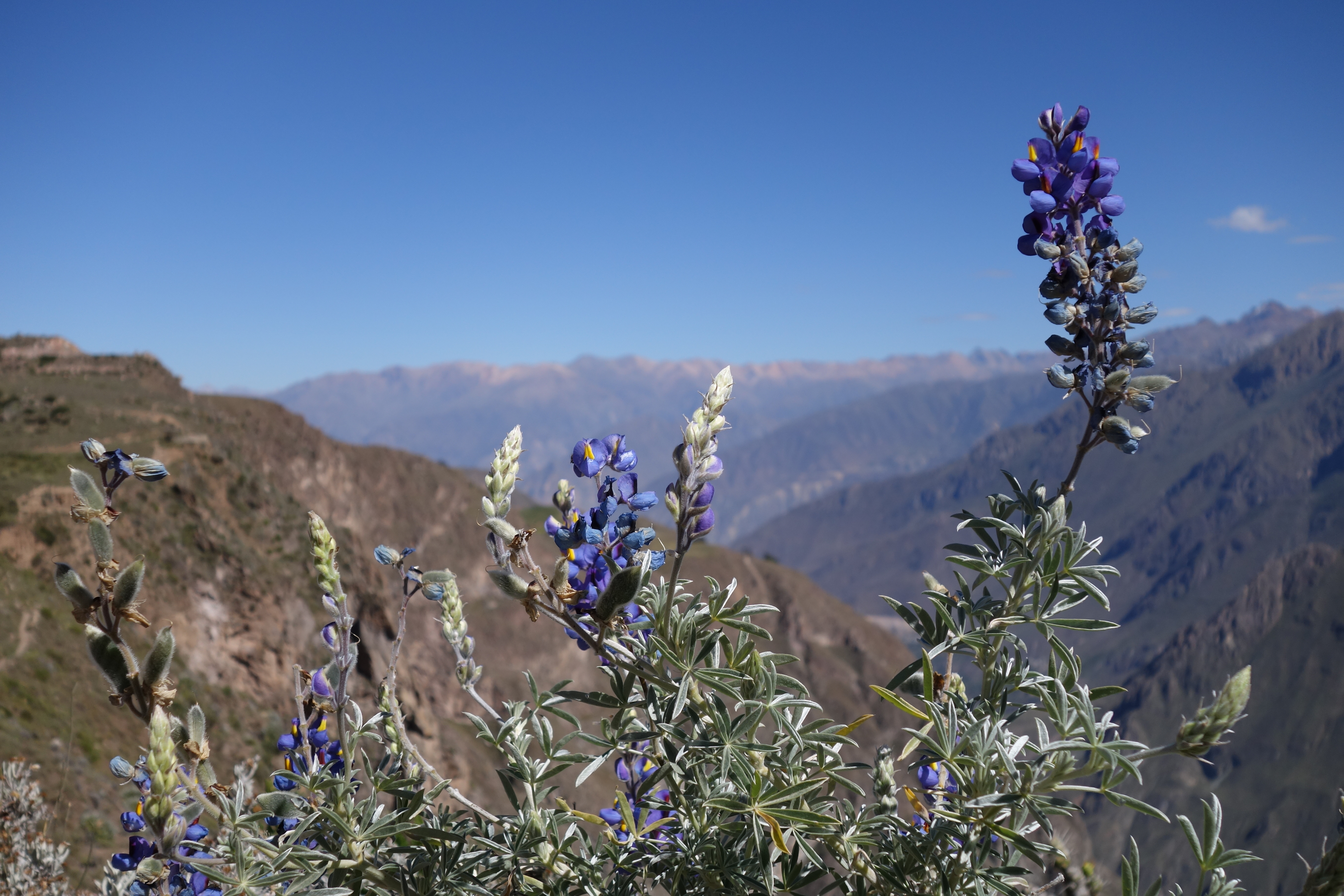
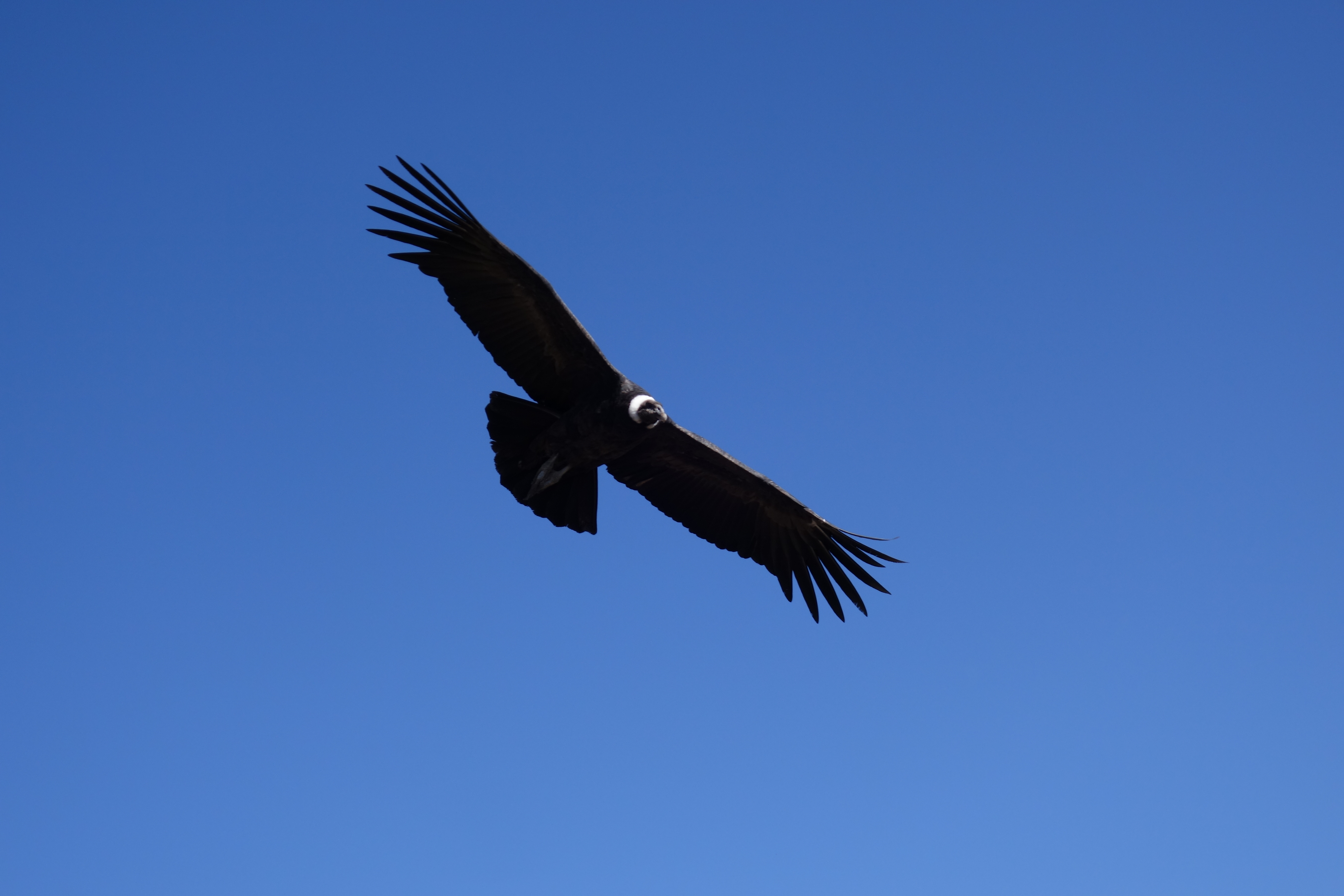
However, this holiday was not about relaxing and we were up at 5.00am, breakfasting and watching the dawn break with still a sliver of moon and a lone star. Rudi runs us into Yanque where the local kids perform a weird dance in which the boys dress as girls in order to confuse her parents. Seems that the Yanque parents are not the brightest stars in the firmament. Then off down the Canyon, one of the deepest in the World, to a point where the Condors hang out. Every day they wake up and do an hours aerial calisthenics as the thermals build. Then, when they are really ripping, they ride them up and over the altiplano, looking for something dead to eat. They are incredible to watch close up as they swoop and dive just metres away from us. Balletic, if the World’s biggest vulture can be described as such. We take a short walk along the canyon side and see eagles, huge humming birds, a flock of divebombing green parakeets and lots of wildflowers.
We drop Jayme back in her village, pick up enormous chicken avocado and everything sandwiches and then Rudi hunkers down for the 6 hour drive to Puno. It’s hard. Endless plains of sparse grass, some interesting bits, especially when Rudi manages to lose the way, twice. We aren’t exactly inundated with alternatives here, but he seems capable of some truly bizarre navigational decisions. Finally we crest a ridge and there is Puno, with Titicaca beyond. Let’s be honest, it doesn’t enthrall. Puno is a dump made of half built brick and concrete mini-dumps and the lake looks like a stagnant cesspool. We are welcomed to our hotel by Puno’s most unwelcoming receptionist. Things don’t look good, but it’s better for us than Rudi, he leaves us to drive back to Arequipa by night. Bless him. At least we get a hot meal and a big bed.
9
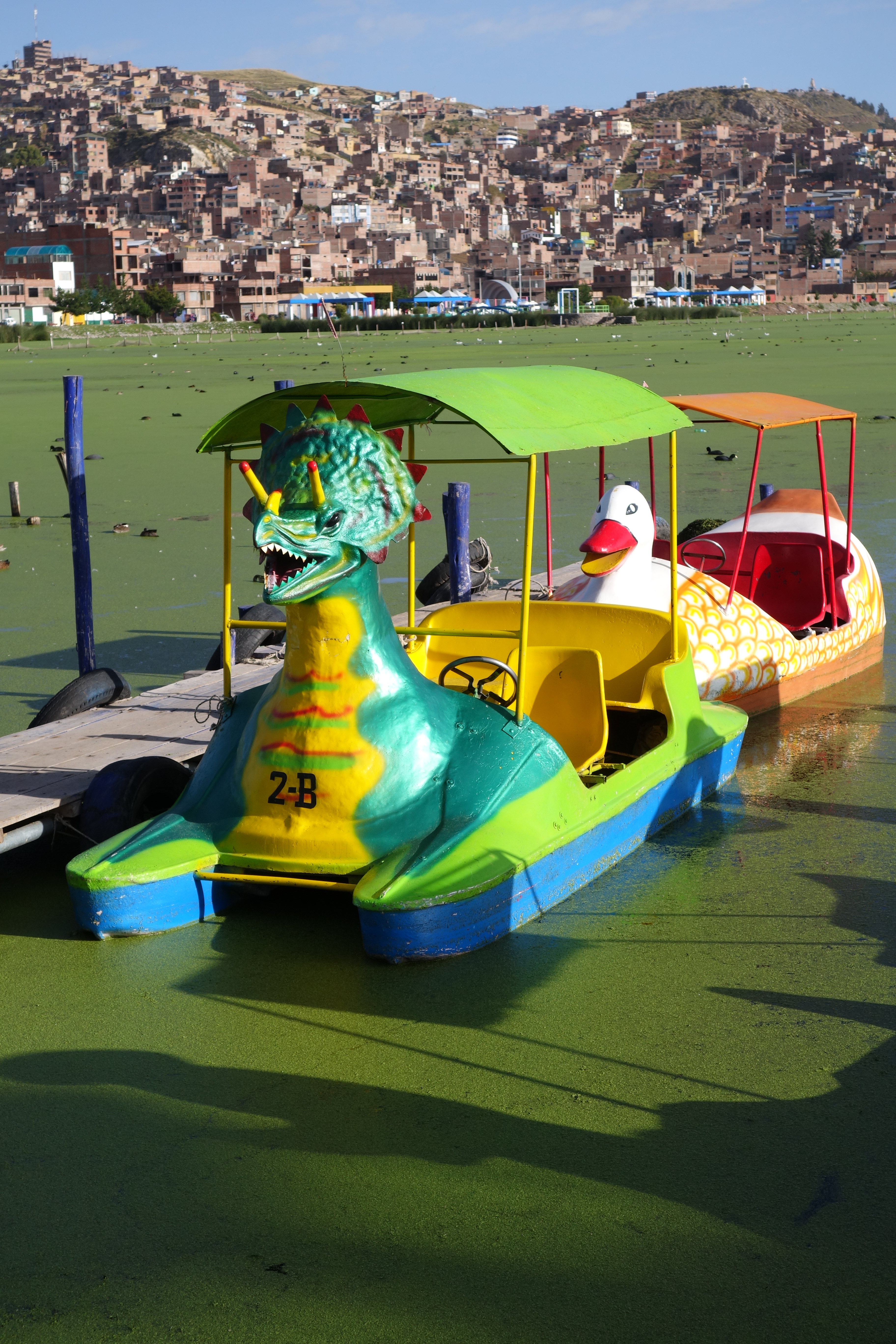
The sun is shining and Titicaca looks a bit more inviting. We head through derelict streets to the port. Abandoned pedalos decorated as Peruvian Mickey and Donald bump into Peruvian Godzilla on a puddle of stagnant milkweed. It’s not glamorous. We find our boat and sail away. Within minutes we have left the cabin and stretched out up on the roof as we sail through a sea of reeds that perform a hula dance in our wake. Soon the water is cleaner, reeds greener, sky bluer, this is more like it.
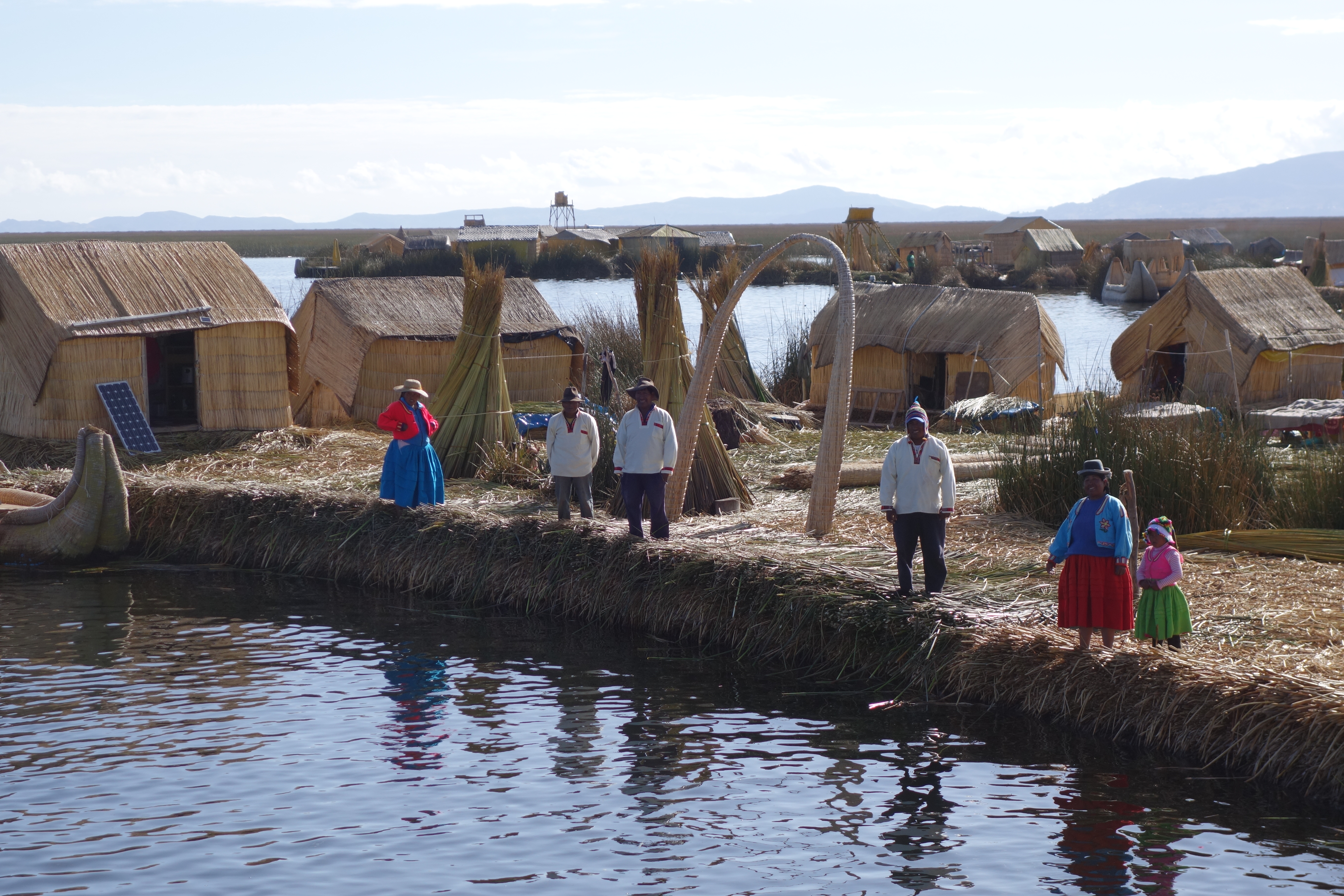
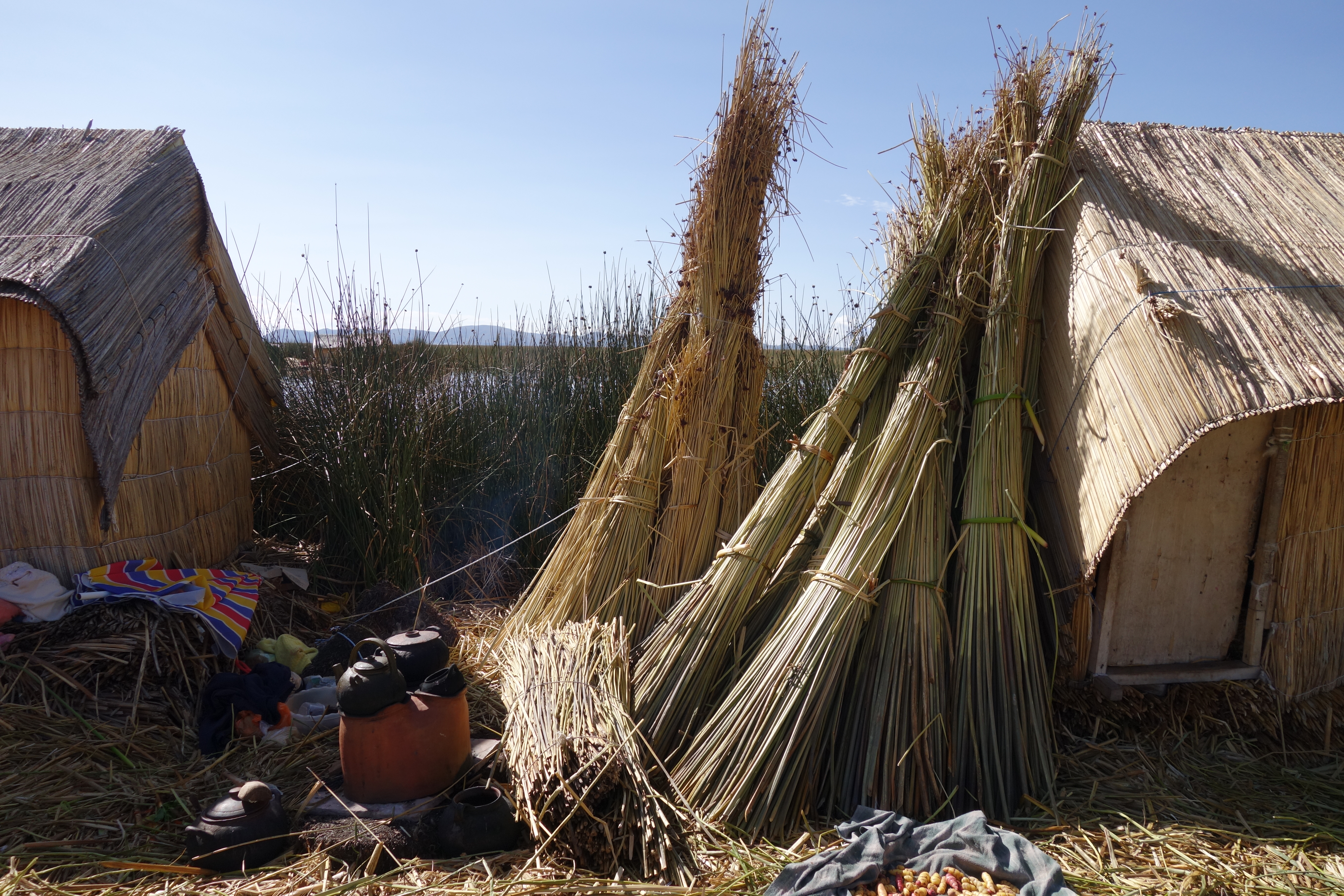
We enter a huge lagoon surrounded by rafts of reeds. Each one has half a dozen small reed huts and a boat made of reeds and a family or three beckoning you onto their raft/island. The families line the edge and sing a song of welcome. We step off the boat and onto the island and immediately get the wobblies. The rafts are huge, very thick and stable but you sink into the surface as you try to waddle across. There is a small garden of flowers, about 6 reed sheds and a big flat stone with a fire on it and breakfast bubbling away. We get a short lecture about life on board, complete with sections through the raft and a reed eating demonstration for anybody wanting to contract bilharzia. Evidently, they have to put down new reeds every 2 weeks, because just below the surface is a manky fermenting mess, but the water surrounding is crystal clear. They chuck nothing in and the toilet is a 5 minute boat paddle through the reeds which are a very efficient filter. Whenever they put down new reeds, they just lift up their houses onto the new layer. A boat takes about a month to build and 3 months to rot away. It’s a busy Life and honestly, if it weren’t for tourists they probably wouldn’t live here any longer. We buy some obligatory stuff that they make, then we have another singsong and then they row us down to the central island where we have an IncaCola. Do you remember American Cream Soda? Only sweeter.
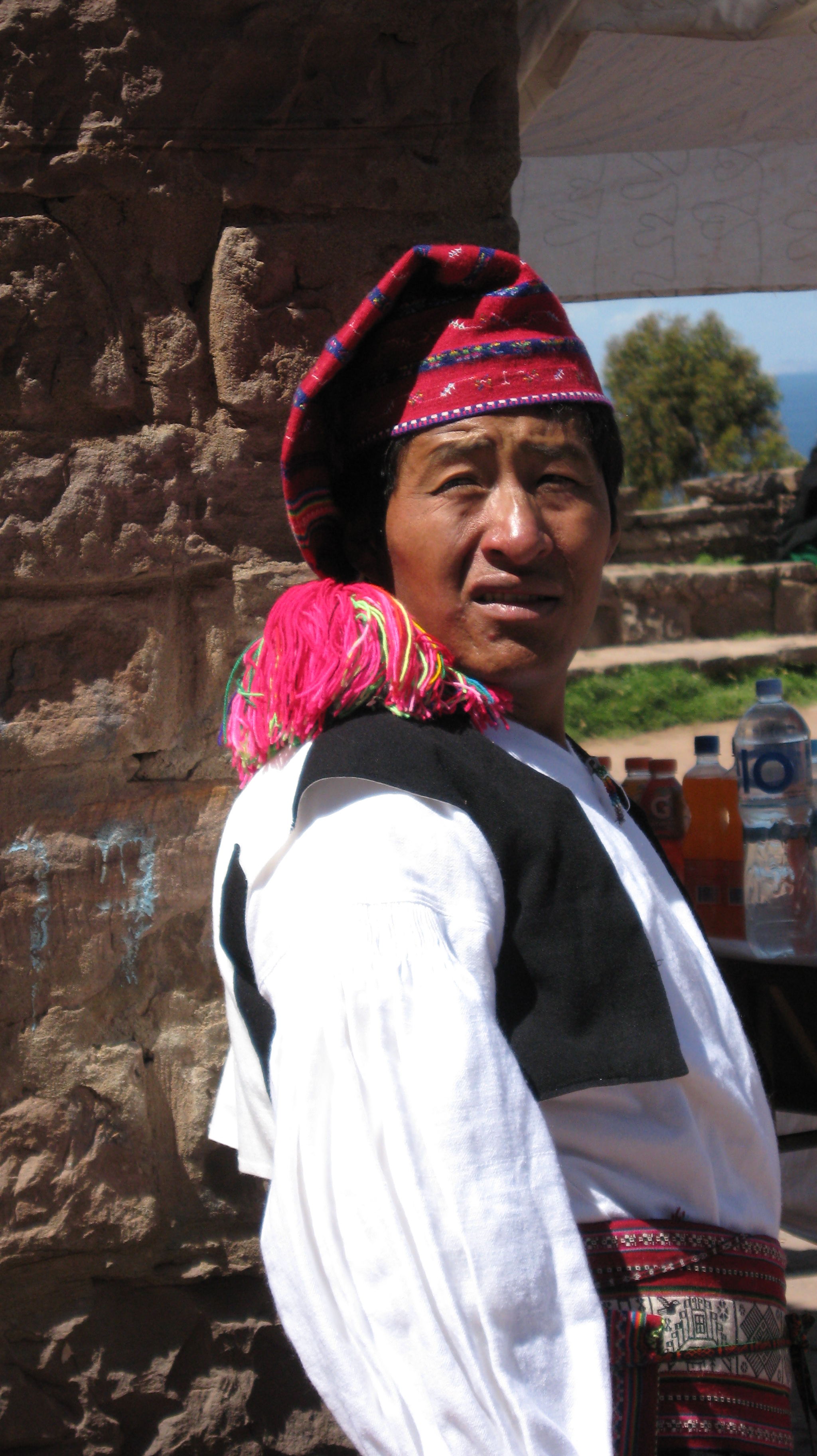
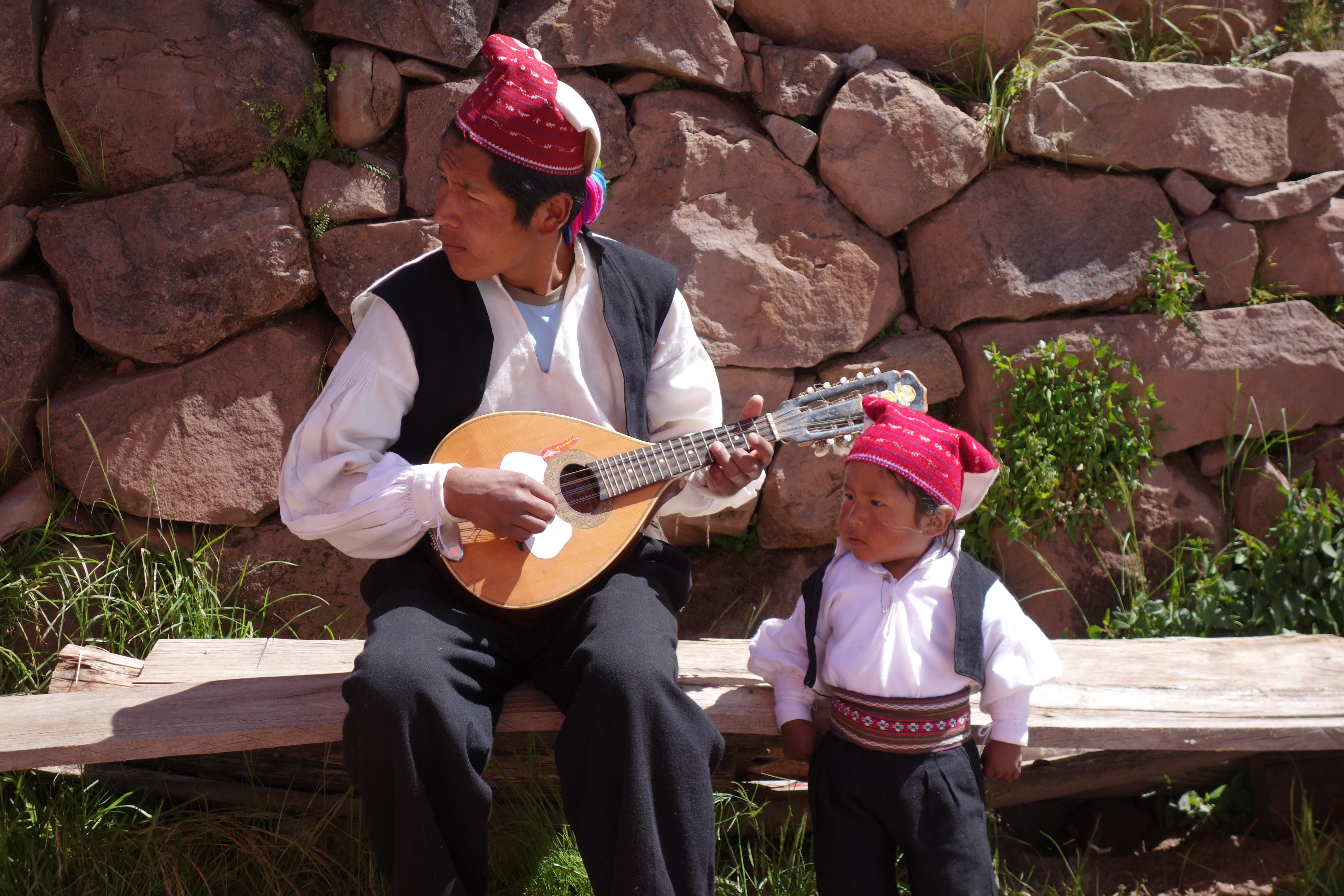
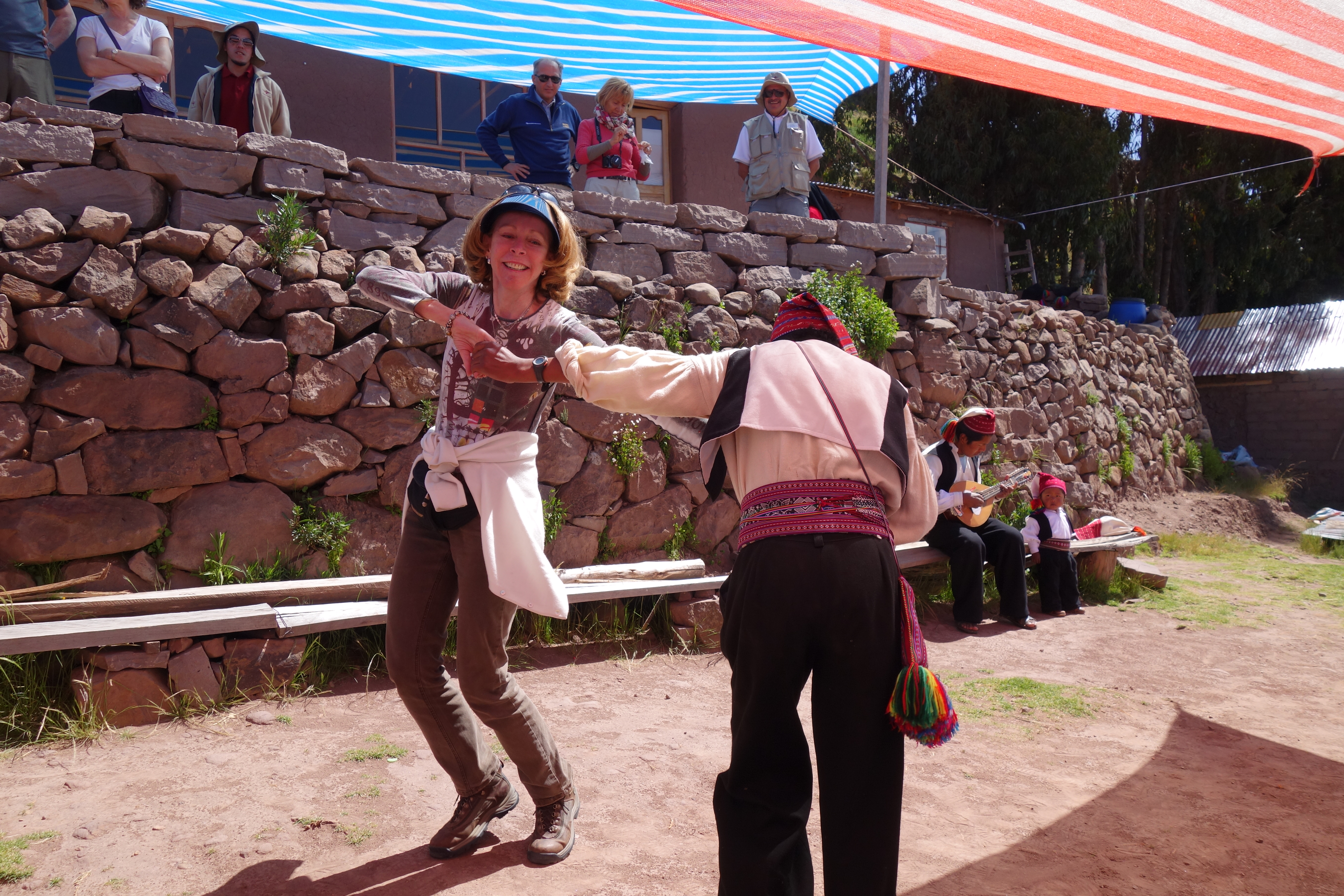
We board our boat again and head off across Titicaca to Isla Taquile where we hike up to the top of the island and into the town square. All the guys here wear black trousers and waistcoats, white shirts and funky knitted caps and belts. They knit their own hats. Evidently top stud on the island is the best knitter. Mmmmm. Kinda backwards to our way of thinking and possibly the cause of a declining population. Lunch is served in some knitters garden, where we sit looking out over the blueness of the lake, cotton wool clouds rolling by, wild flowers everywhere and birds singing in the trees. The family turn out and we have singing and dancing, the music is great. Fortunately, they pick Dori for the dancing, at this altitude she is the only one with enough puff. With the music, costumes and scenery you could easily be in the Mediterranean, except for the fact that the coastline on the horizon is Bolivia. Lunch follows dancing with a wonderful vegetable soup followed by Titicaca trout. One of the best fish I have ever eaten, fabulous. Afterwards we stroll across the island listening to the birds and photographing the flowers, it’s pretty idyllic. Then the boat takes us back to Puno.
10
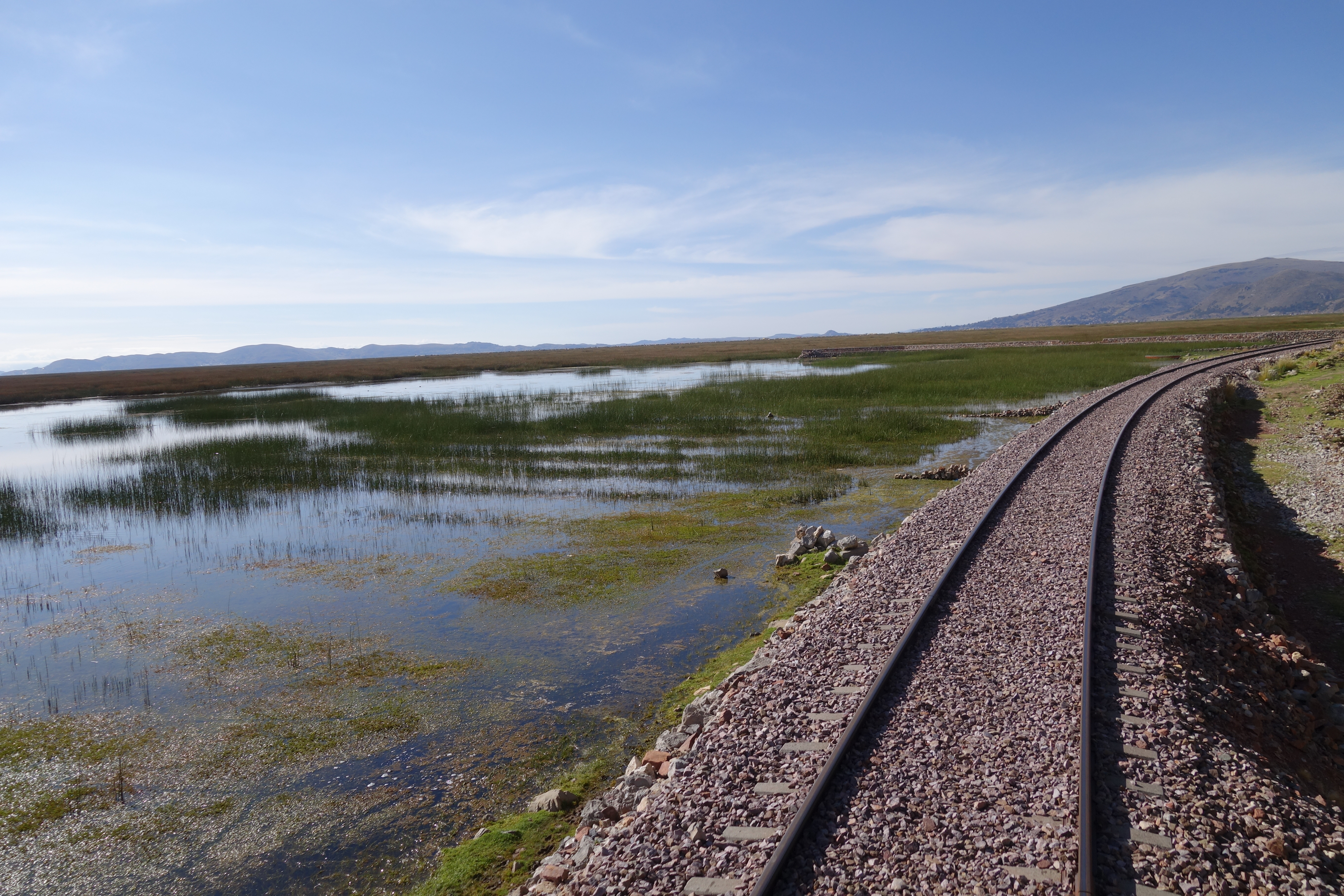
We rise at dawn and head to the train station. PeruRail has had some pretty bad press in the past, but now it seems very efficient. We board the Andean Explorer, which is locally referred to as the Gringo Express. The only thing Express is the nickname. We are welcomed by our waitress, Elisabet, and guided to our big armchairs surrounding the linen covered table and she immediately takes our order for Lunch. At the back of the train is a bar and observation carriage with an open balcony hanging over the rails and as the train pulls out, I head back there. At first it’s just the scummy outskirts of Puno, but then we pull alongside the lake and into green country, it’s fabulous. The early morning sun over the lake and reeds and distant mountains as the track spools out behind us.
Pretty soon other people catch on and I am not alone but, as the train eventually leaves the waterside and pulls off into the altiplano, we are ushered back to our seats for our mid-morning feed. Then it’s into the bar for complimentary Pisco Sours (At 10 am.) with a live band and dancing, on a train ambling through the desert. Maybe it’s the Pisco, but these guys seem very good, we have the best seats by the bar and this train is rocking and, of course, the Signorina danceriner hauls me up for a quick jive.
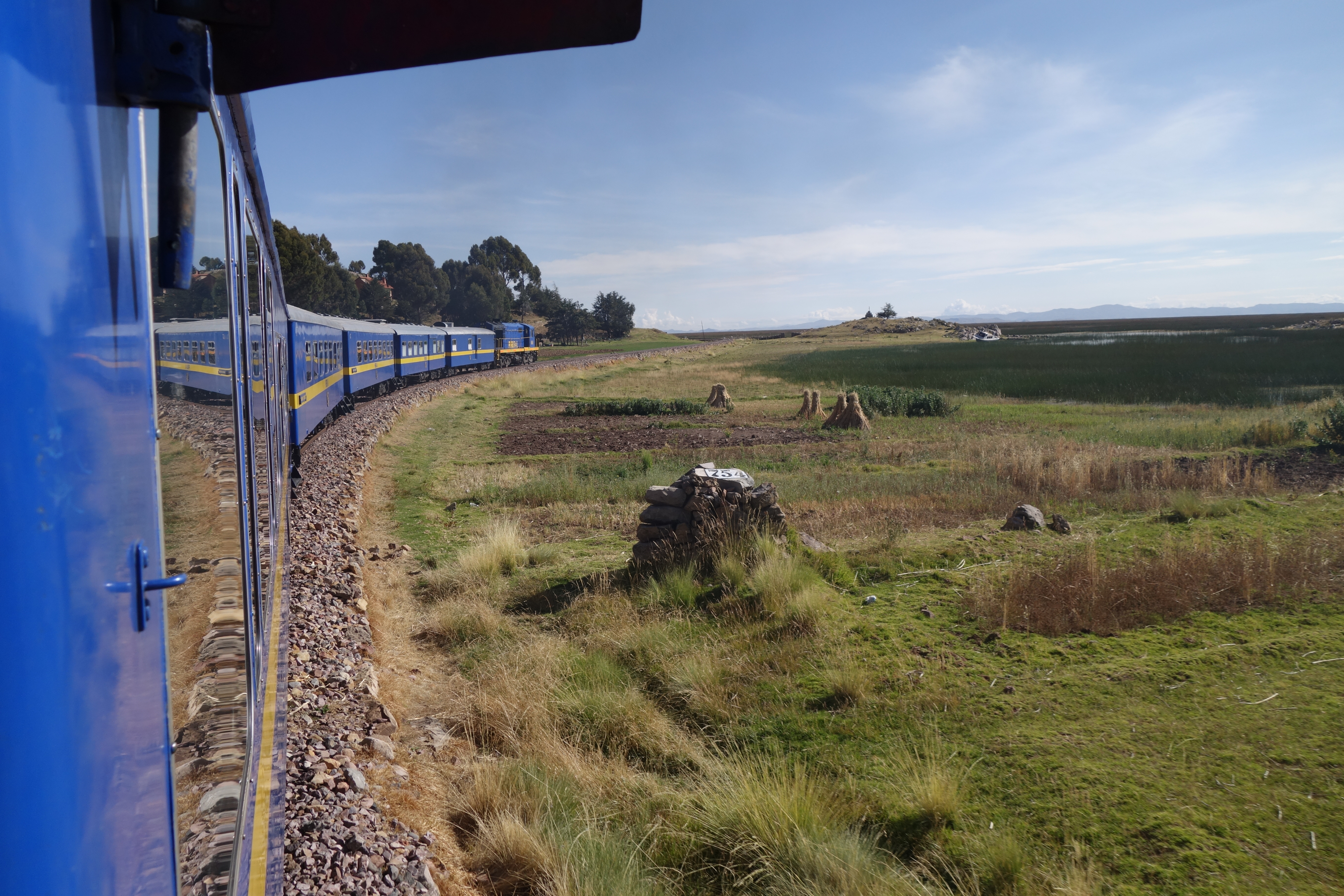

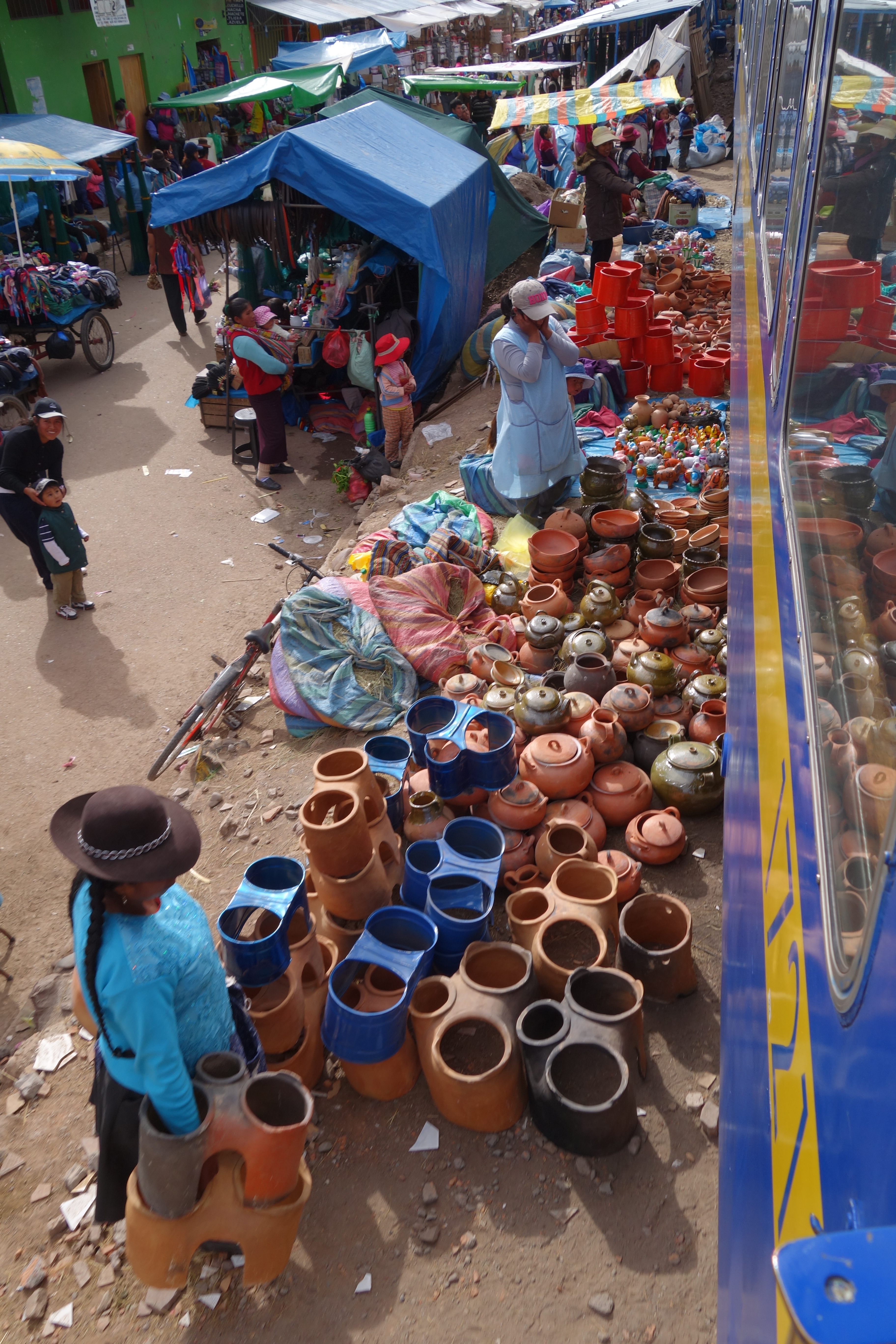
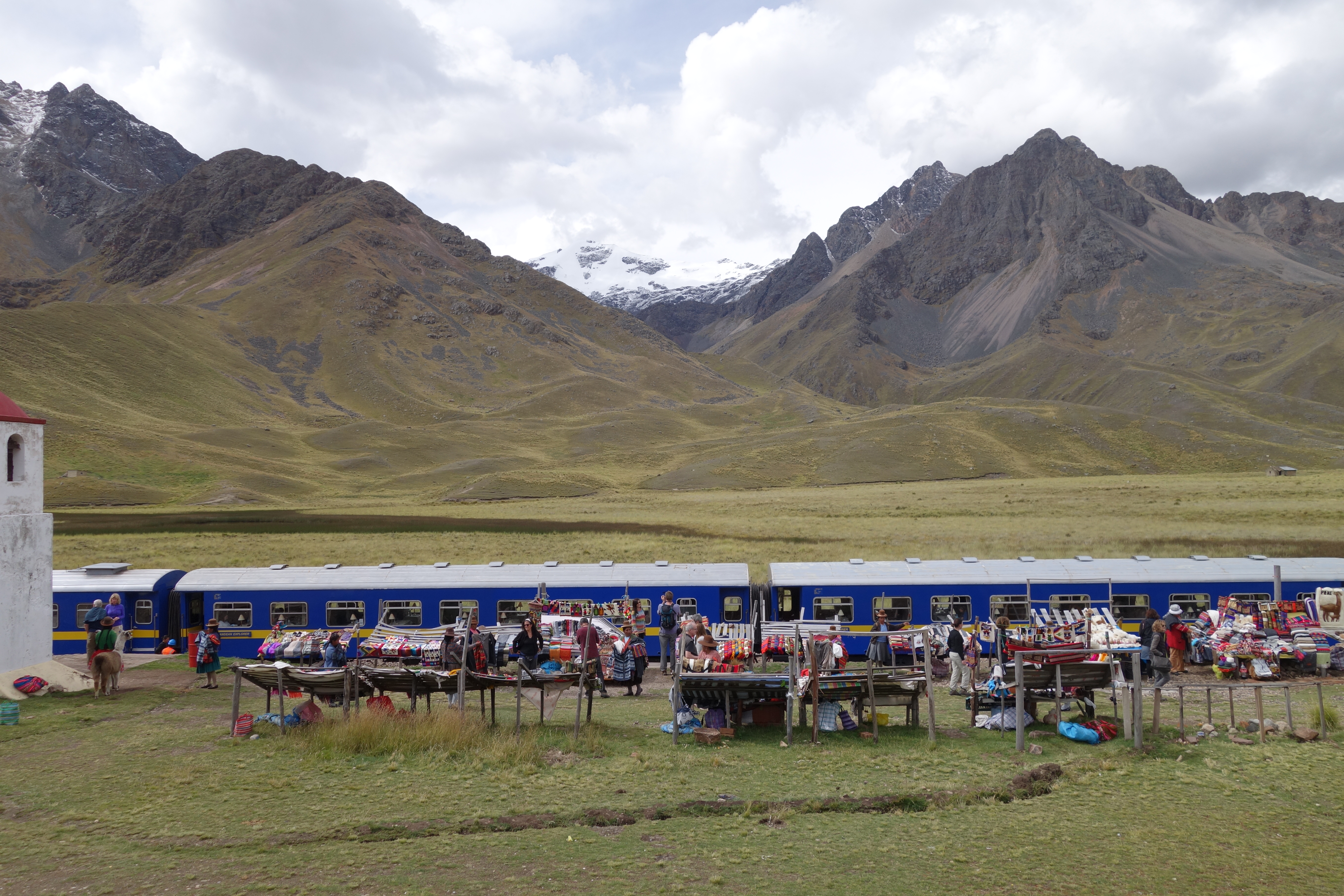
Back to our table for a cold beer, excellent lunch, delightful wine, followed by siesta. We stop to let the uphill train go past and then pull up at the highest point of the trip. There is a small church and a market, naturally. Surrounded only by mountains and sky and the odd lonely lama off in the distance, our little train is hemmed in with chompas, ponchos and ear-flappy hats. Our band has switched places with the guys on the uphill train and so, as we commence our descent to Cusco, we are invited back into the bar for more festivities and a fashion show, but a man can only roll with the ponchos for so long and we skip it. The downhill valley is more crowded and we pass through several small towns where the rail tracks are considered to be the market place. Buildings and lean-to’s brush the carriages, the horn blasts continually as stallholders clear their stuff out of our way and then immediately flow back in behind us. After 20 metres you can’t see the tracks and wouldn’t know a train had just passed through. Some resent the Gringo Express, it doesn’t stop, so they can’t sell us anything. We are just a camera clicking annoyance. Most people smile tolerantly but one sweet little old lady makes an obscene, throat slitting gesture at the gawking tourists drinking their wine.
We rattle further down the mountains over afternoon tea, through red and yellow fields of Quinoa, past chasing dogs and by 6.30 the sun is setting and in blackness we roll into Cusco. It’s been 10 hours. Knackering but beautiful, entertaining and you can at least walk around and stretch your legs. We are met by Yuri, our Tour Operator, and he drives us to our hotel, an old Spanish Colonial building built around 2 courtyards and just uphill from the main town square. Nice rooms, huge bed, hot showers which, after 10 hours basking in the mountain air and train fumes, are much required. Refreshed, we step out into the evening. Cusco is by far the coldest we have been and within 30 metres we dive into a restaurant called Mr. Soup where Mrs. Soup serves up huge bowls of piping hot fresh vegetable and meat pottage. Bed is calling. Cusco will have to wait.
11
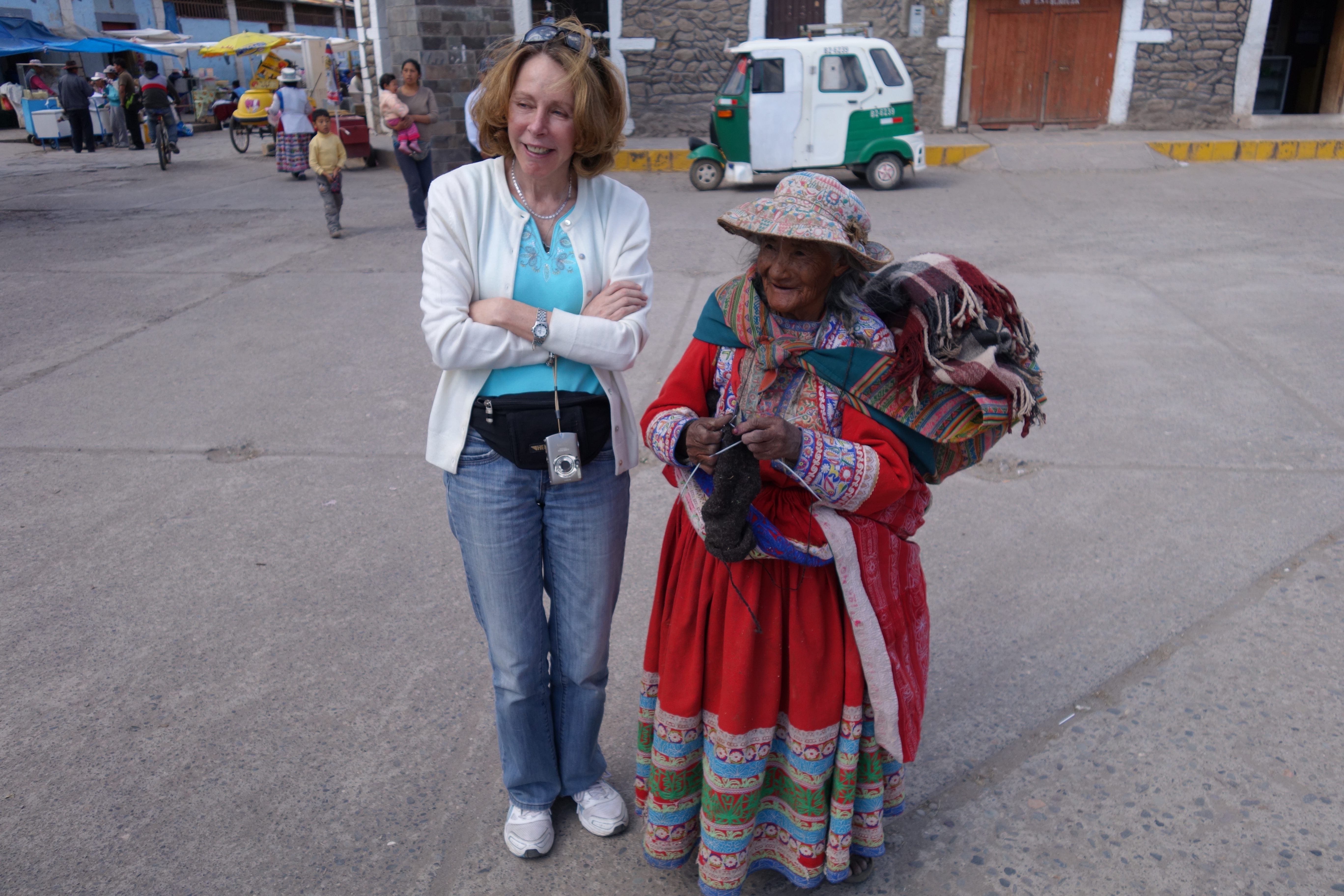
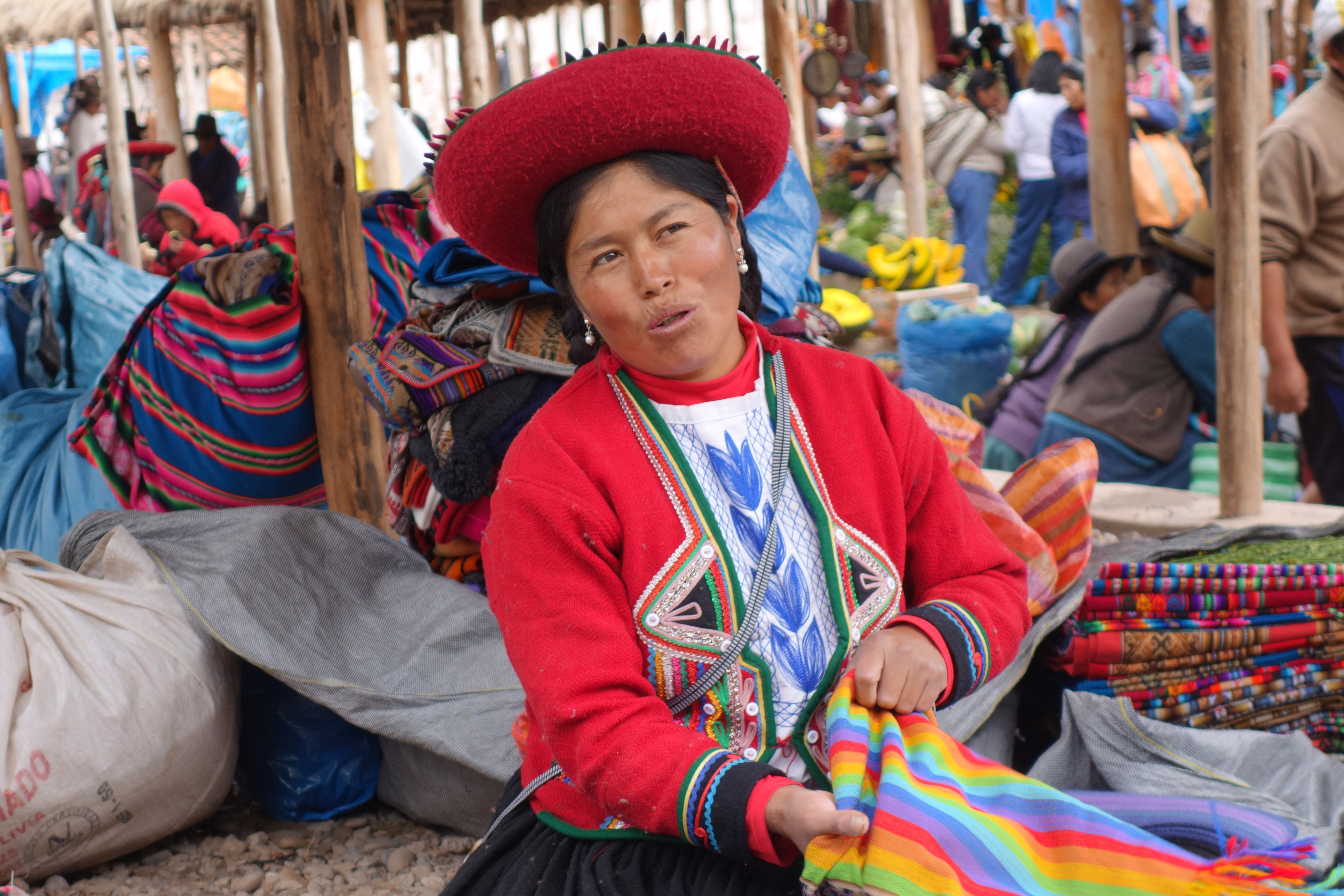
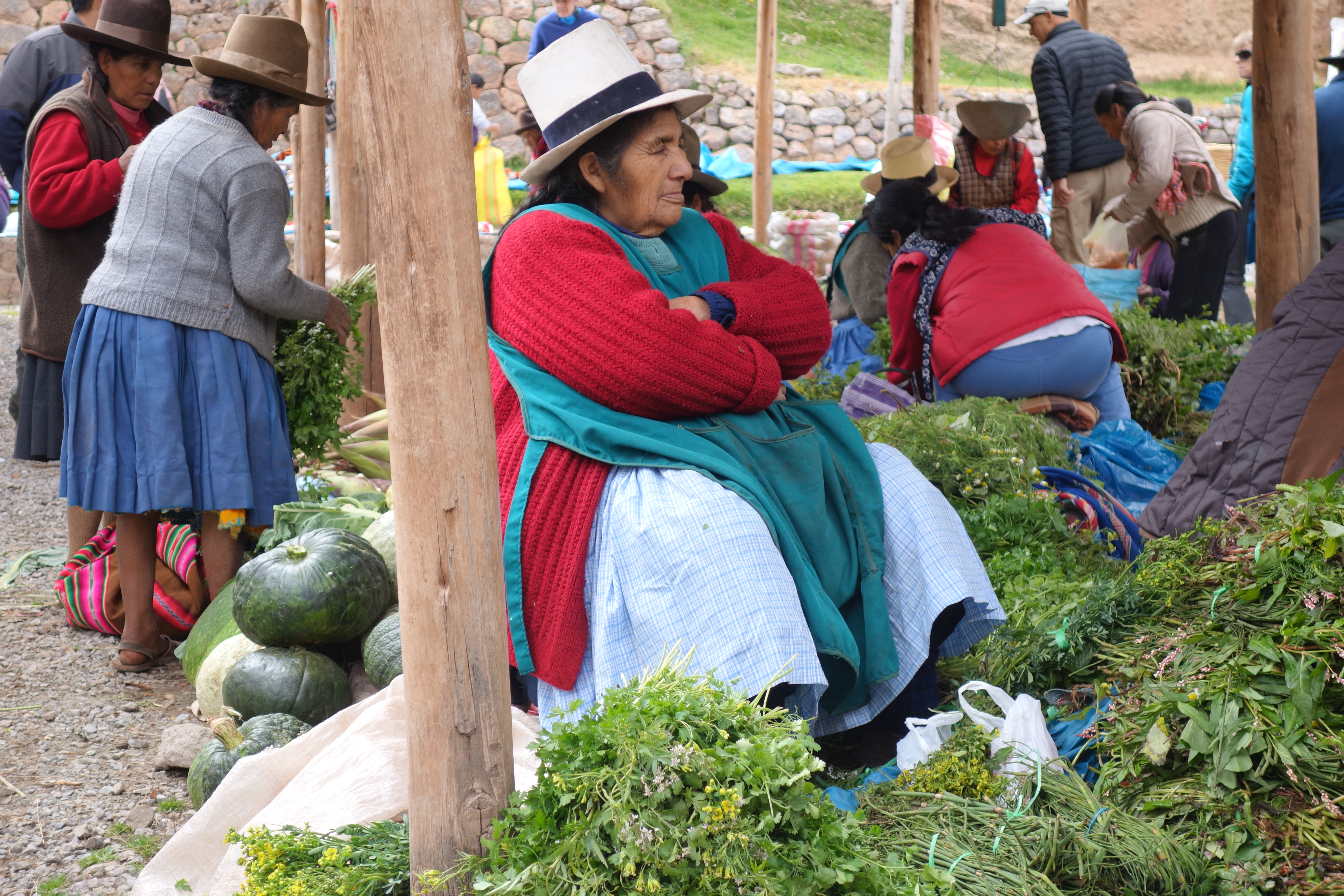
It doesn’t wait long, despite the fact that something brewing from Puno is now causing my insides to jellify and I am somewhat delicate. Our new Guide, Daniel, and our new Driver, William, pick us up early doors and we head off to Chinchero Village. Here there is a fantastic Market with a touristic fringe but a local core, where people from the surrounding highlands come to buy produce brought up from the Sacred Valley. The costumes are varied and fabulous. The smells of herbs, flowers, fruit and vegetables are incredible. There are very few men, maybe they are all down the Taverna, so the ladies do all the buying and selling and we do all the photographing.
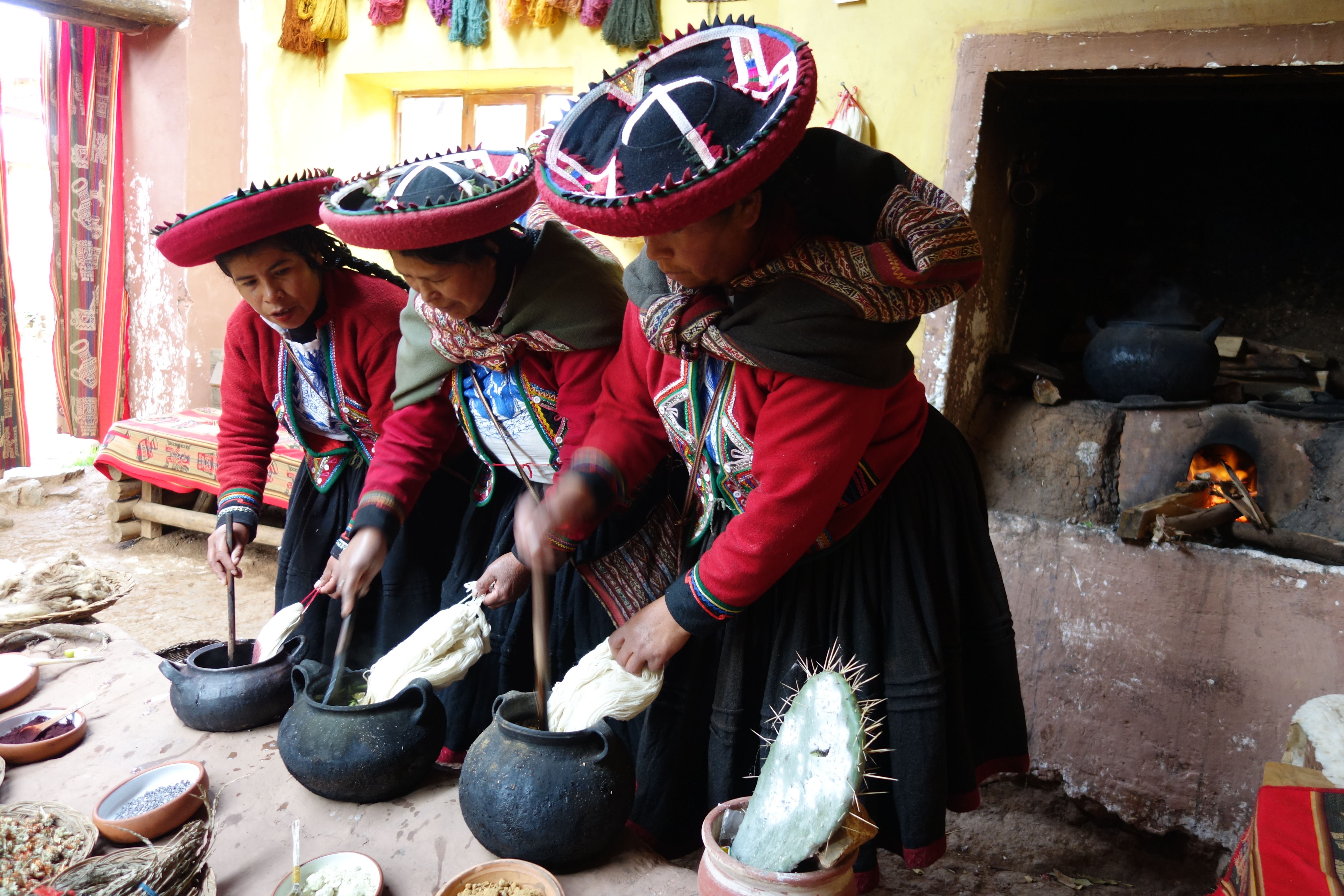
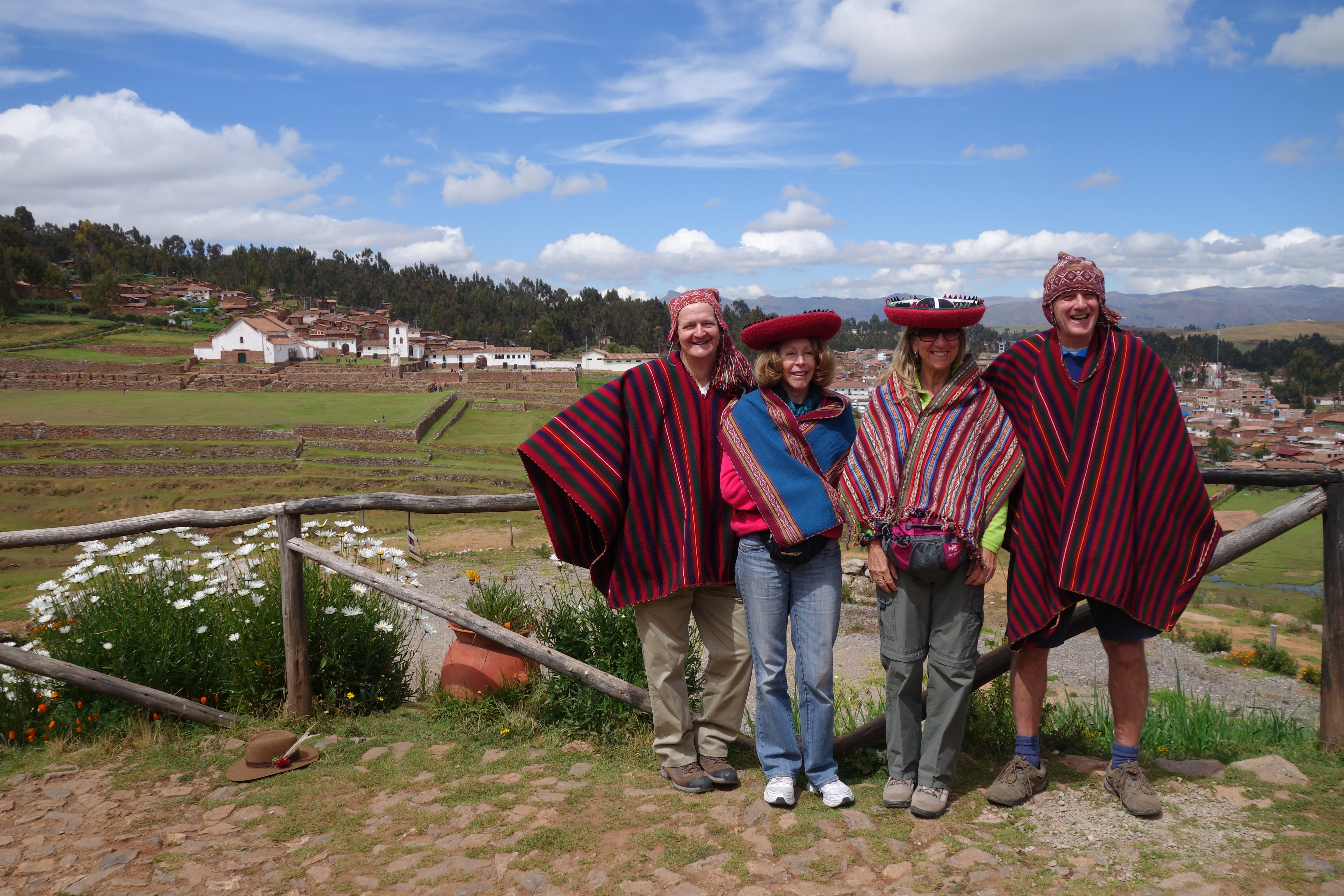
We move on, to the outside of the village where there are huge Inca terraces and a Spanish church built over them. Chinchero is famous for weaving, so we stop at a small hacienda surrounded by flowers, where local ladies give a fascinating lecture on the washing, dying, spinning and weaving using all natural ingredients, including a mountain root that is grated to provide soap. Sort of a ‘Soap-on-a-Root’. No bull though, it really was fascinating and when our Instructress pulled 2 Cochineal parasite mites out of an infected cactus and smeared the red over her lips, you had to be impressed. Revlon Red No. Bug. She also had a pretty good line of banter. “What’s this?” She asked, holding up a bone they use for a shuttle. “Human thigh bone!” Says I. “Yes! She replies “And if you don’t buy anything after this, then it will be Tourist sacrifice day!” Ha.ha. But she said it with a glint in her eye, so we bought and then posed for stupid gringo photos in ponchos and ear-flappy hats.
Drive on to Moray where the Inca had built an experimental agricultural/biological research station. This, before We even knew about potatoes and maize, let alone chips and cornflakes.
Absolutely stunning. I really had not expected this. I had seen some photos but never really appreciated the scale and the beauty. It’s a massive sink hole in a mountainside, that the Inca developed into a series of circular terraces to monitor subtle changes in micro-climate and soil conditions and their effect on different crops and strains. It is just so geometrically beautiful that it puts most modern attempts at ‘Land Art’ to shame. We hiked around it in awe. These guys were cool before we even knew what cool was.

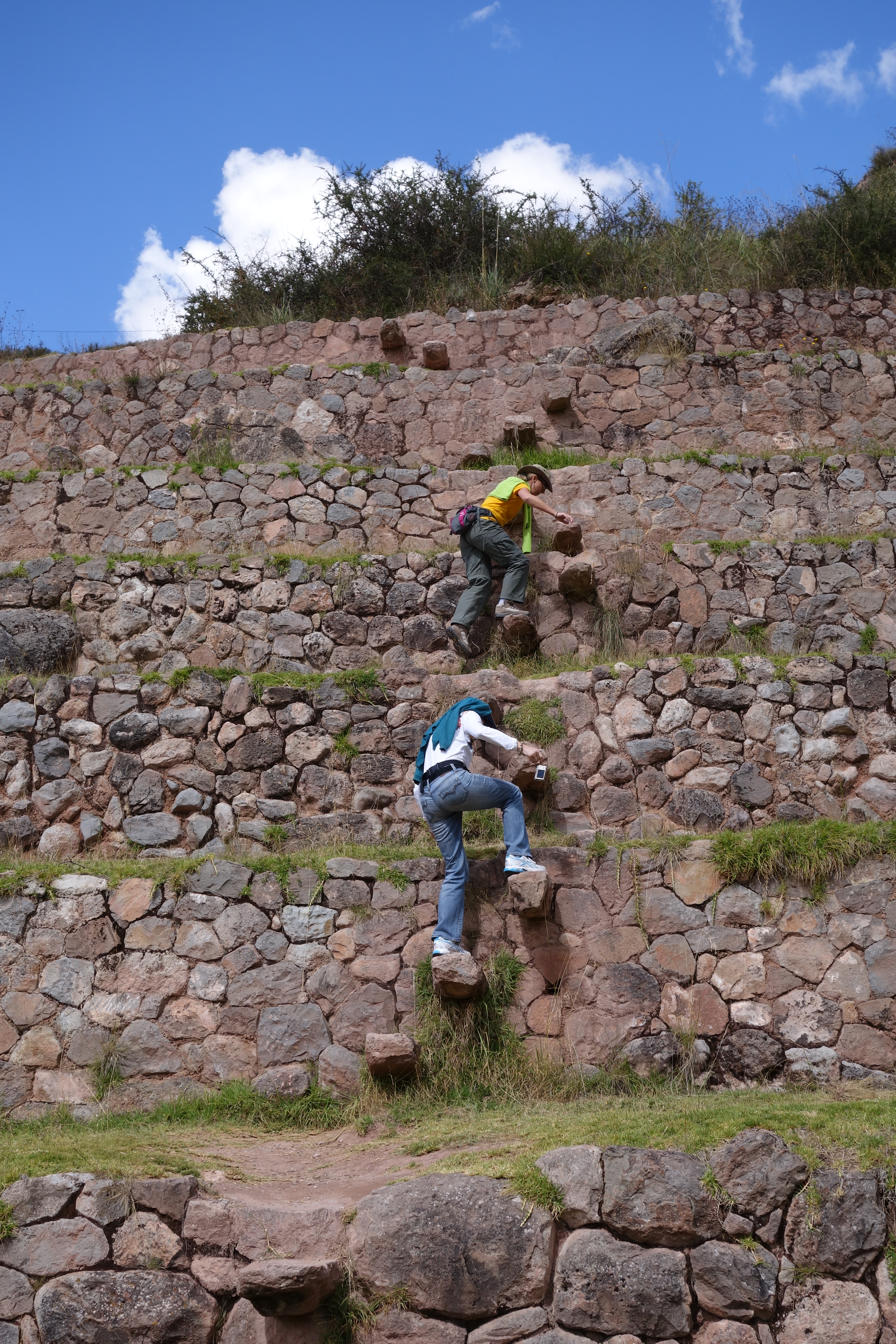
Then to the nearby salt fields where the Inca built a mountainside of terraces to collect and dry the mineral salts coming from a volcanic thermal spring. Still in use today. We were supposed to be back in Cusco by 1p.m. Fat chance, we were having far too good a time and got back around 3.30 for a very late lunch. Puno problems will really sap your strength though, so Cusco was still very much on hold and my dinner consisted of Munyia tea.
12
Breakfast on boiled eggs and we drive just above the city to Sacsayhuaman. At this point I decide that, even if I don’t make it to Machu Pichu, I will not be disappointed. I want to be an Inca when I grow up. Failing that, in my next Life. Sacsayhuaman was a temple dedicated to the Sun and Moon but laid out to please the God of Thunder. The base plan is a series of stacked lightning bolts zapping across the ground, they are built from enormous stones, each tailored to fit perfectly on to the ones below.
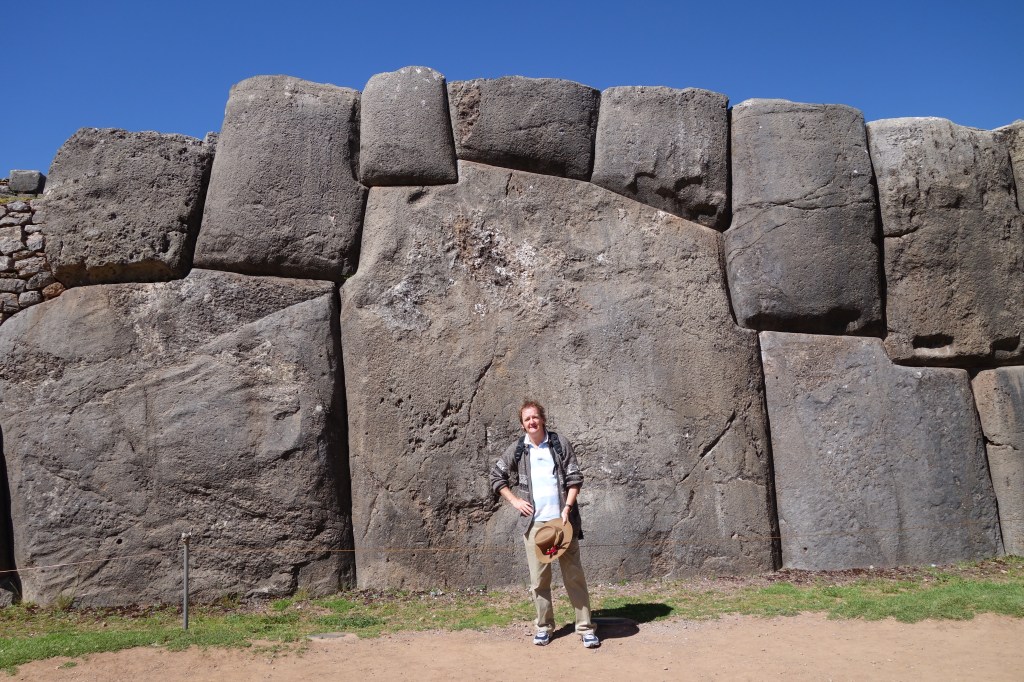
The scale of everything is massive and the precision is unbelievable, even though El Conquistadores did their best to wipe it out. Bless them. No, actually, I’m getting fed up with being nice. Curse them to the Hell that they invented. That they should be threatened by something of such beauty and magnificence shows their church to be the feeble and corrupt Taliban of yesteryear. I know we Brits did our share of looting. We stripped the Forbidden City, the Taj Mahal and the Coliseum. But we didn’t pull them down. I calm down enough to buy a beautiful greenstone carving of a Puma who is snarling at me as I write this.
On to Kenko, a big rock with a cave underneath that the Inca modified and then used to create a mummification room. Then to Tambomachay, a sacred spring cum spa where the Inca came for a purification shower that, for some reason, must have included hypothermia. And lastly Puca-Pucara, part of a series of lookout towers, travellers hostels, immigration towers that make ‘Homeland Security’ look like the YMCA.
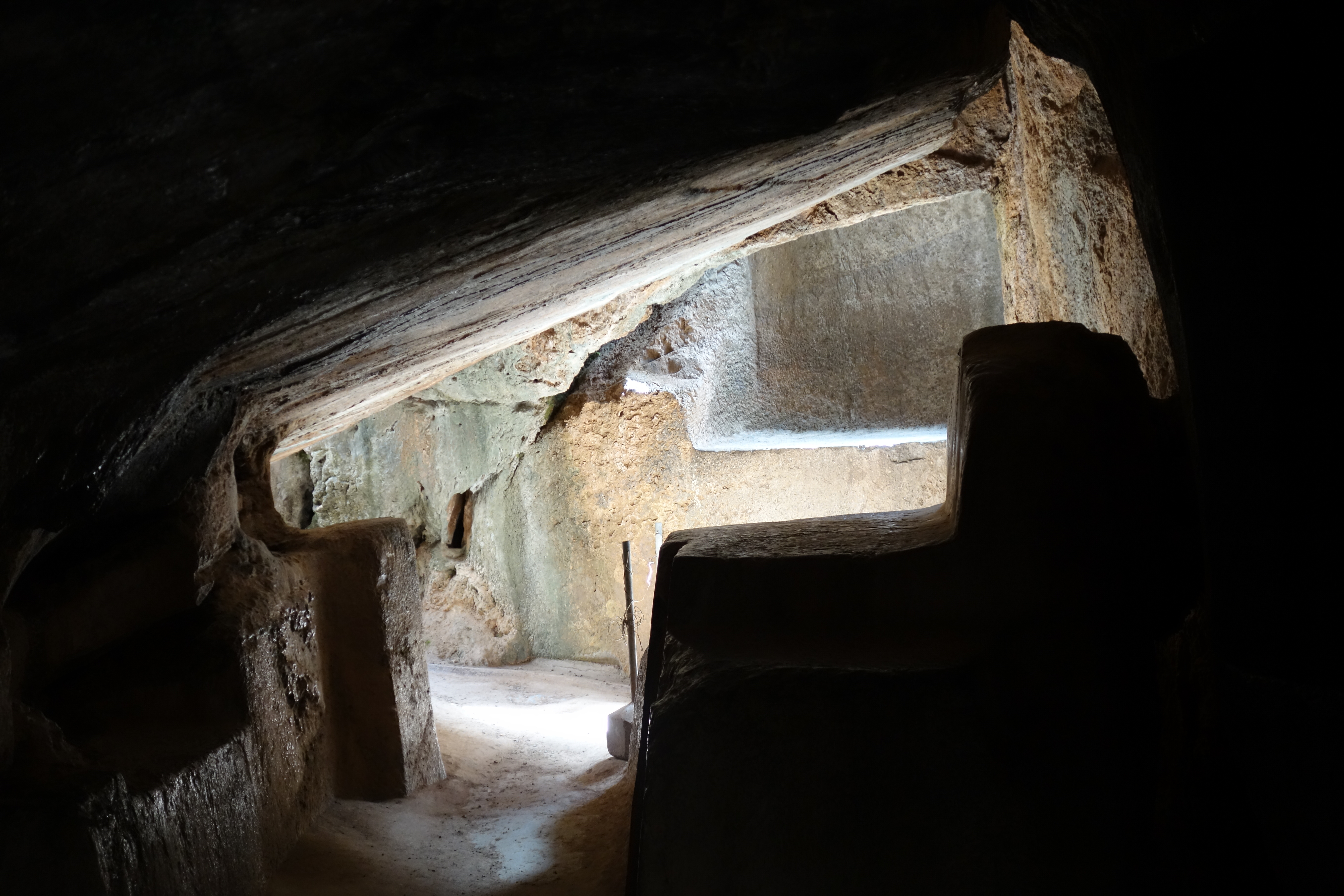
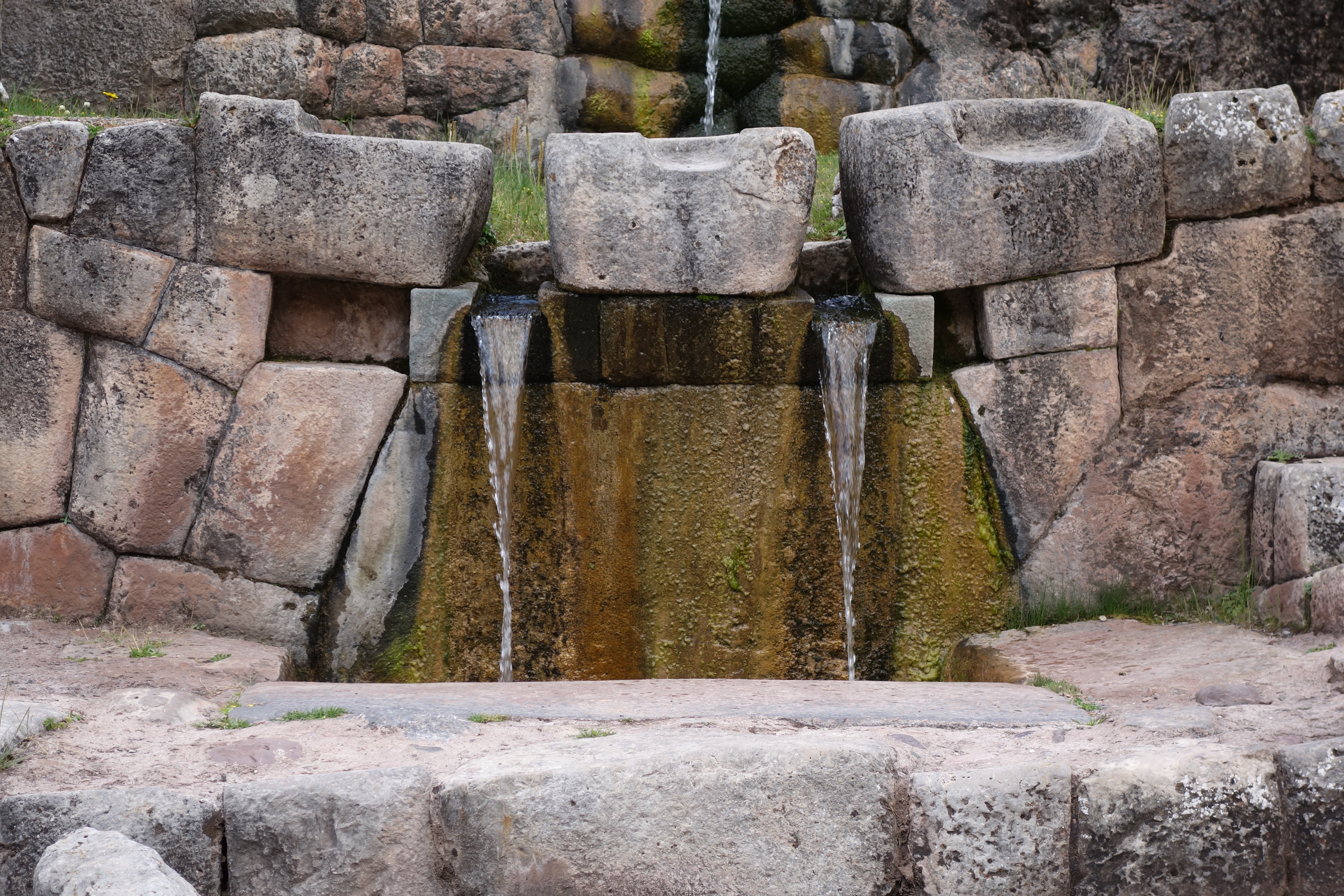
By contrast, we drop back down into town and visit Cusco Cathedral. You’ve seen one, you’ve seen ’em all. No you haven’t. This one is incredible. If you are going to try and showdown the Inca, you’d better come up with something special and, Cusco Cathedral is pretty special. It seems that not all the gold went back to Spain. Nice touches were some of the paintings by local mestizos who were specifically bred and then trained by the Spanish. These include a Last Supper with HeyZeus sitting down to a plate of Guinea Pig, wrong for so many reasons. After all Guinea Pig hadn’t been invented in Judea at that time and there is some arguement as to whether Christ and his Jewish brothers would have sat down to a supper including any form of Pig, even though it’s a rat, it’s still not kosher. Another favourite depicts a crucified HeZeus in a Peruvian frock flanked by Mary and St. Peter chewing on big wads of Coca. Now that would take the edge off it. Whatever gets you through the day.
Finally, we stroll down to see the Inca Sun Temple, upon which the Spanish built a very pretty Convent. Pooped again, but I’m feeling a little more stable, so we go out that night and order Guinea Pig. If it’s good enough for the Lord, we better give it a try. What a huge disappointment. Visually, it is stunning. A big, deep fried, carbuncled rat. It comes to the table with its head still on and its sharp little incisors bared in a less than happy rictus. The skin is left on and seemingly so is the hair, which mostly dissolves in the cooking. Taste? It doesn’t really taste of anything other than deep fried fat. Not something that I would choose for my last meal on Earth.
14
We drive over to the Sacred Valley of the Urubamba river, heartland of the Inca. It is much warmer than in Cusco. Visit the Inti Watana ruins above Pisac, a huge fortress, temple complex guarding the entrance to the valley and the route from the highlands to the jungle. It rains as Viracocha, the Father God of the Inca, is crying. The girls scurry for cover but Jon and I are clambering about like schoolboys. Down into Pisac town to visit the market. This is strictly for tourists, but definitely has the best stuff we have seen. There is a huge and I mean huge, brick bakers oven making delicious empanadas. We scurry round the market as the girls scream, not enough time, not enough time!
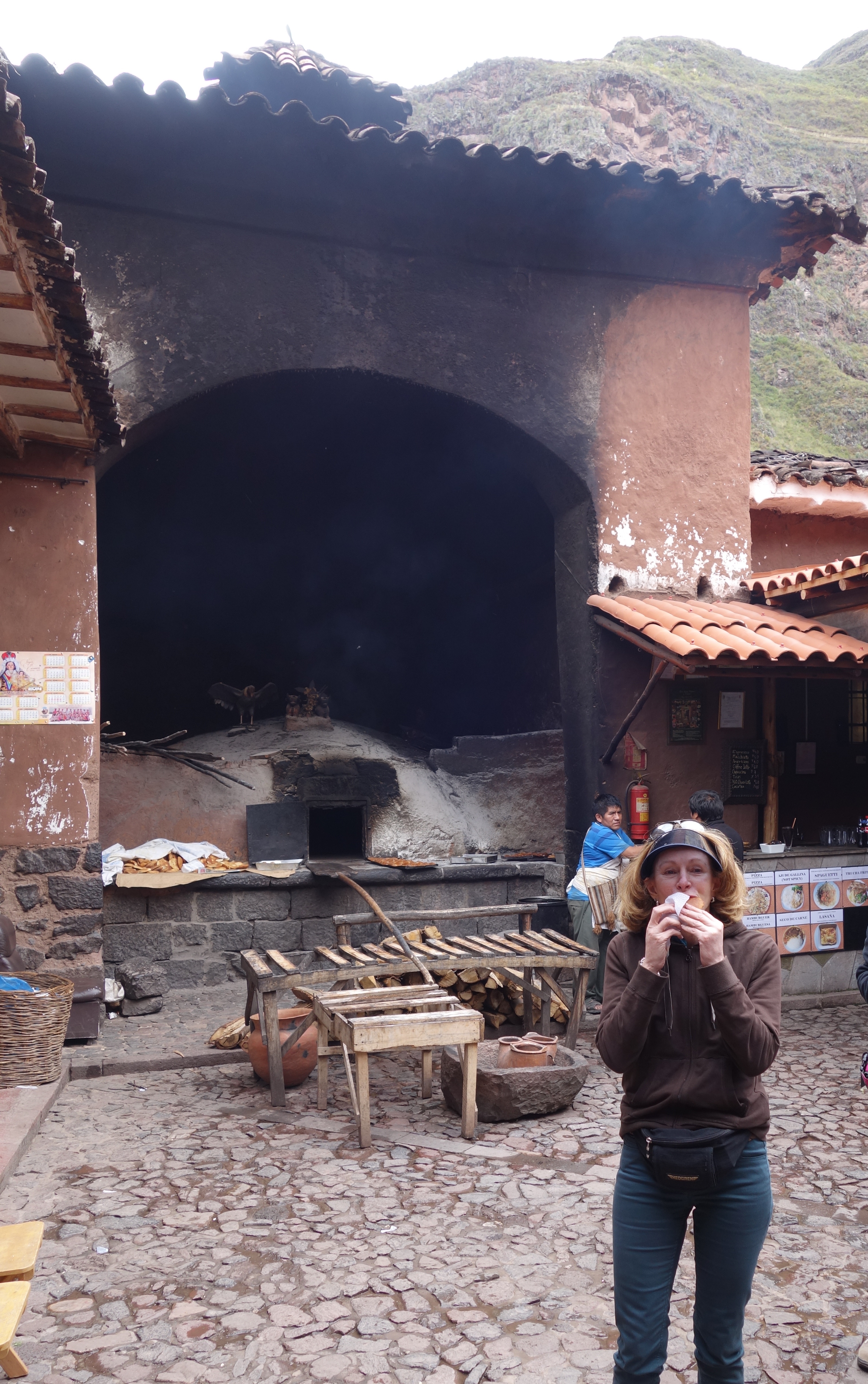
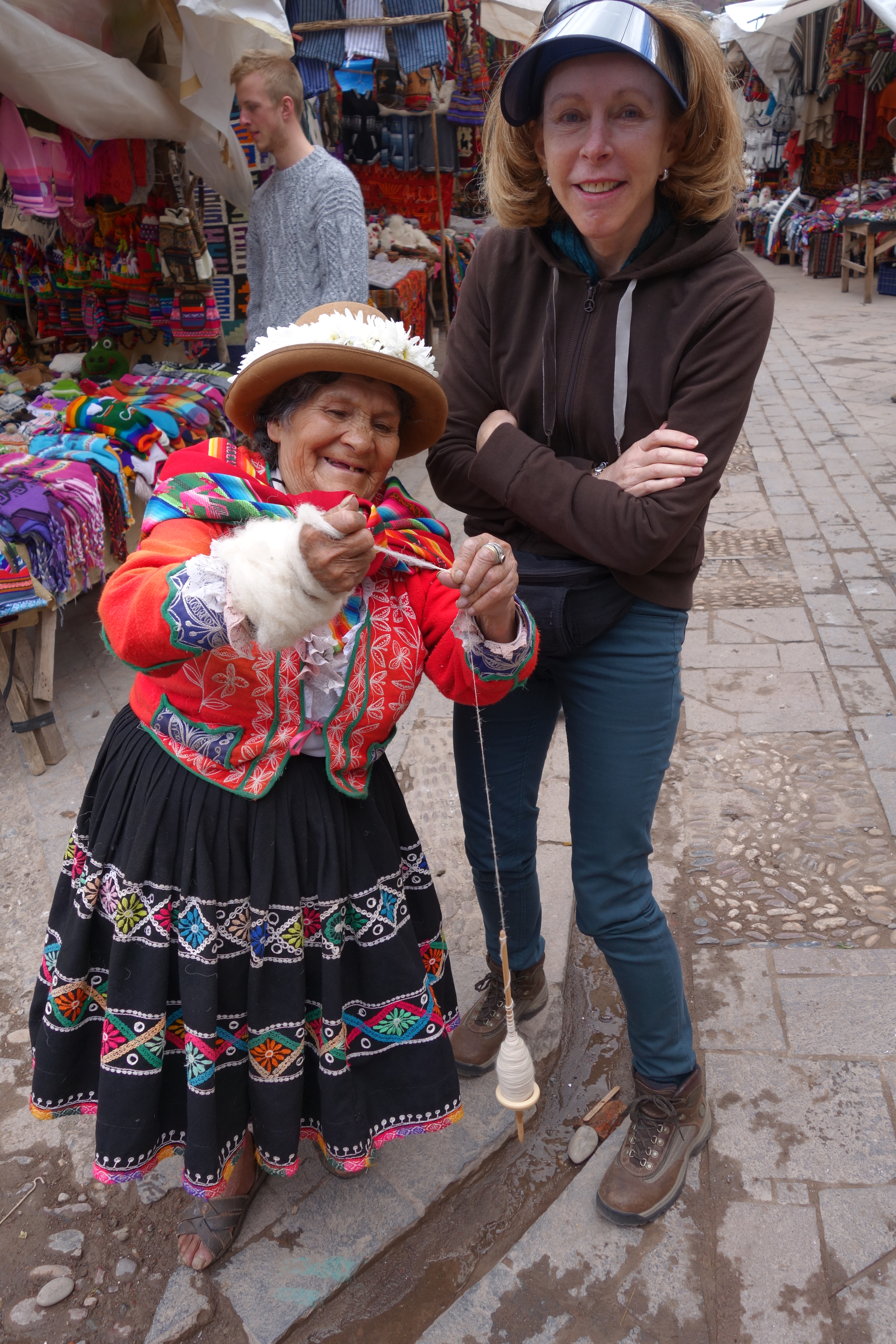
Lunch is a fabulous buffet in a garden somewhere surrounded by Lamas. Daniel lets us stop at a ceramic artisan where we buy a beautiful flan plate painted with the God of Chillies. Chillie flan! My tummy must finally be settling down. And then on to Ollantaytambo. It seems that after lunch is not the best time to visit here. Everybody and his Grandma has arrived at roughly the same time, all groggy and sated from epic lunches, we queue, barge and push our way up the hillside ruins and back down again. But they are lovely, despite the hoardes, and the view across the valley to the Inca granaries and the hillside carving of Viracochas’ head is wonderful. Up at the top, the obligatory Sun Temple ruins are subtle and monumental. The precision of construction yet again breathtaking.

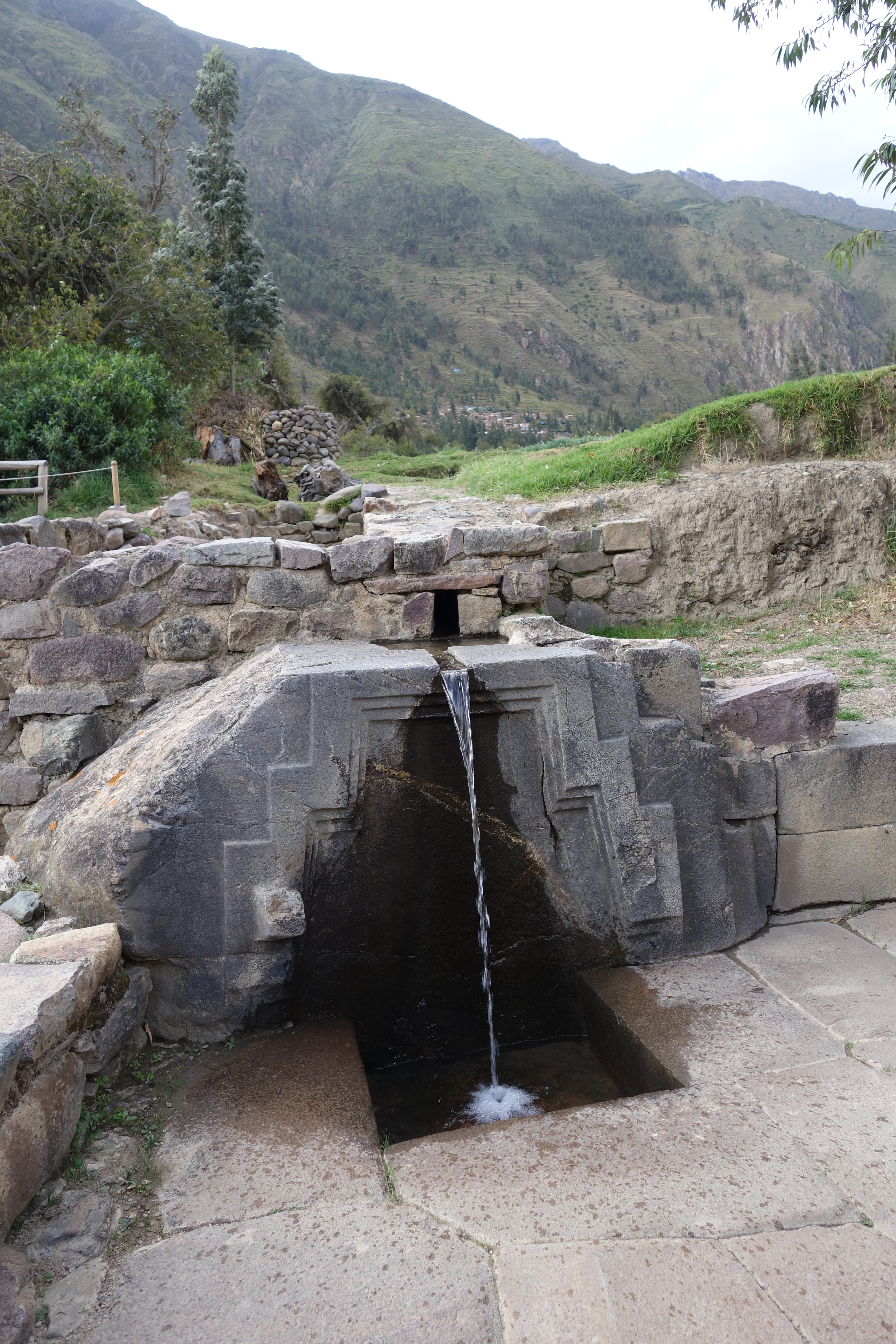
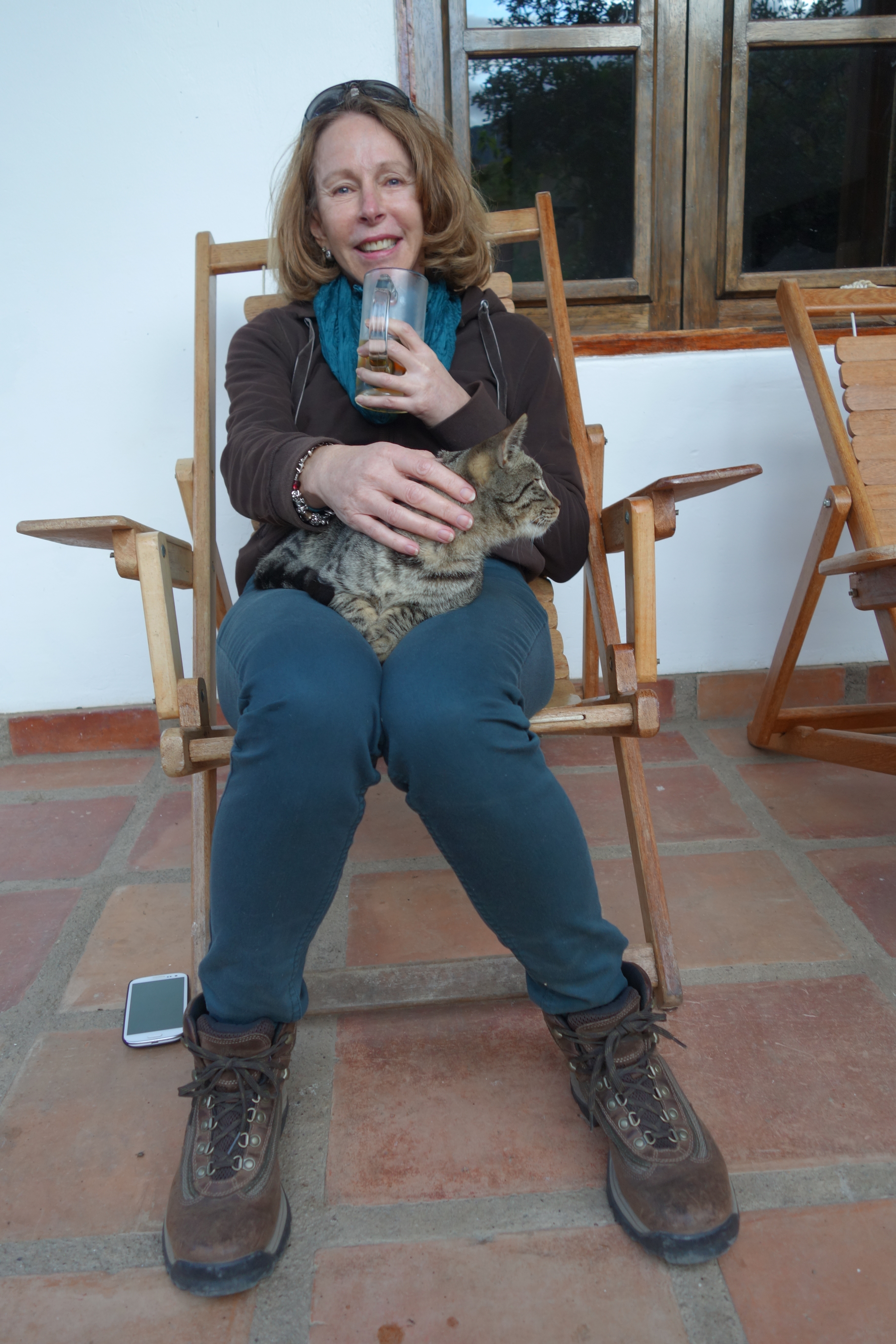
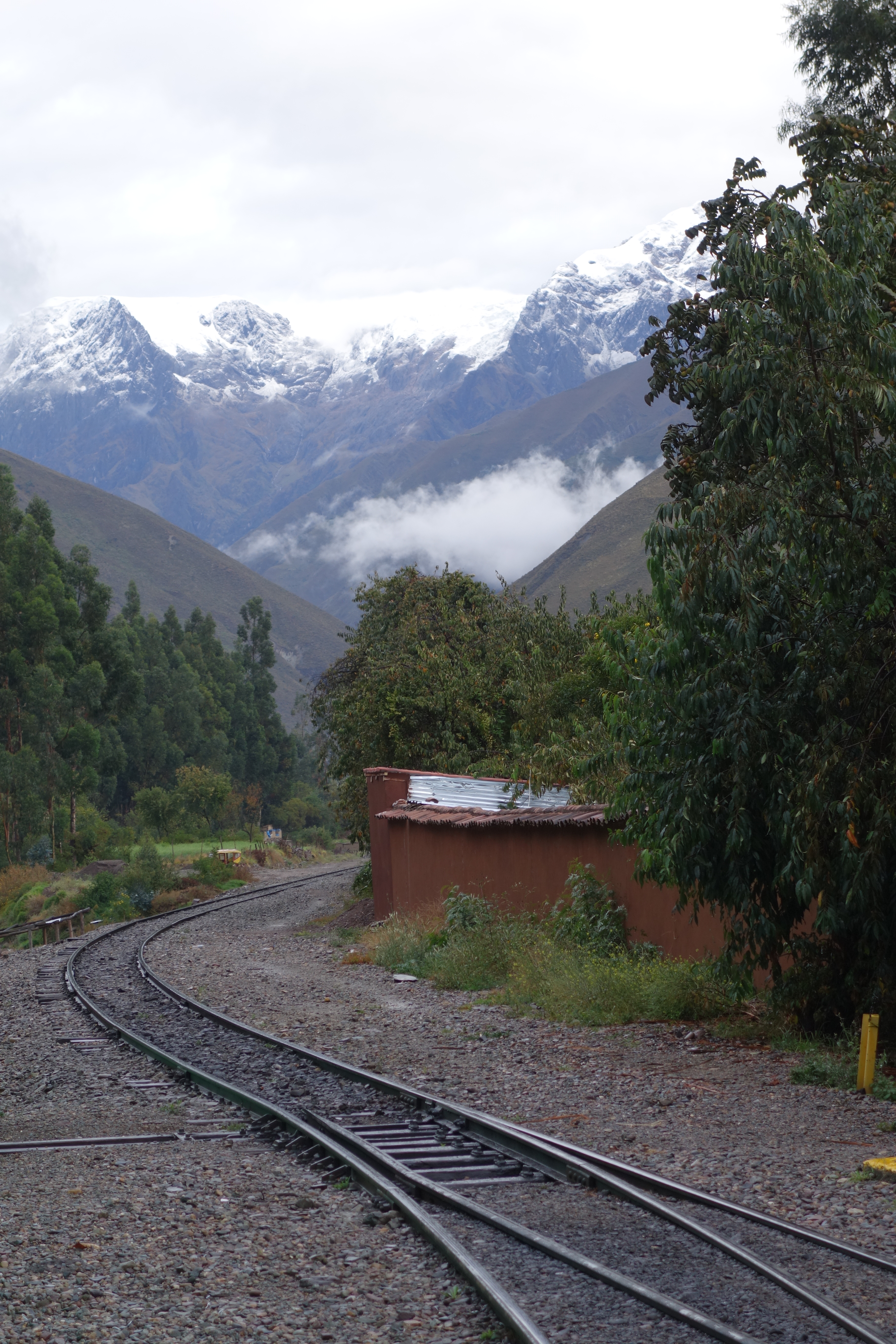
We arrive in Ollantaytambo town and wonder where all the crowds went. Actually, they were the only crowds we encountered on the whole trip, apart from Good Friday in Lima. Our Hotel is right by the Train Station to Aguas Calientes. Actually our hotel is the Train Station, it’s called the El Albergue and the front door is directly off the platform. Our rooms are set back from the tracks in a walled garden full of tropical flowers and scents, snow capped peaks peek through the clouds. A cold Cusquena is called for and quaffed on our verandah while the station pussy cat adopts Dori.
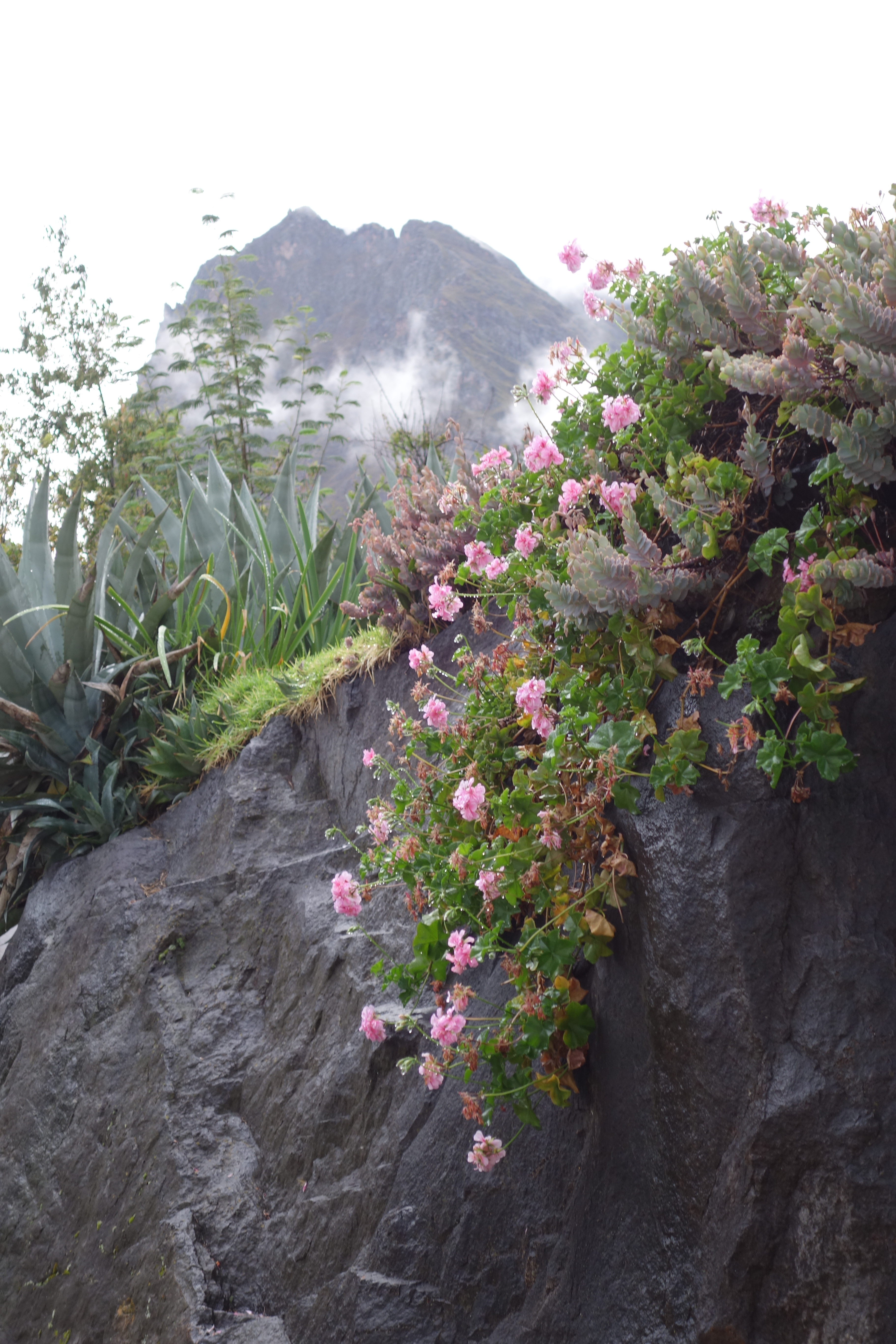
The rooms are very simple and beautiful, with the luxury of an under-heated bathroom floor but, nonetheless, the Peruvian Plug Thief has been. After a foray into the town for a stomach settling Peru Libre and back, we find that the hotel restaurant is probably the best around.
14
Another day, another dawn, but at least we don’t have far to stumble onto the train. Machu Pichu! The excitement is palpable. The train pulls down the valley that soon becomes a gorge and then the train stops, in the middle of nowhere. Kilometre 104 is all it says. There is no station, just a patch of dirt and a rope bridge over a raging river. “Okay”, says Daniel. “This is us” and we climb down onto the patch of dirt and watch as our train rounds a bend and disappears. Passengers waving from air-conditioned comfort. “Byeee! Good luck!” Gone….
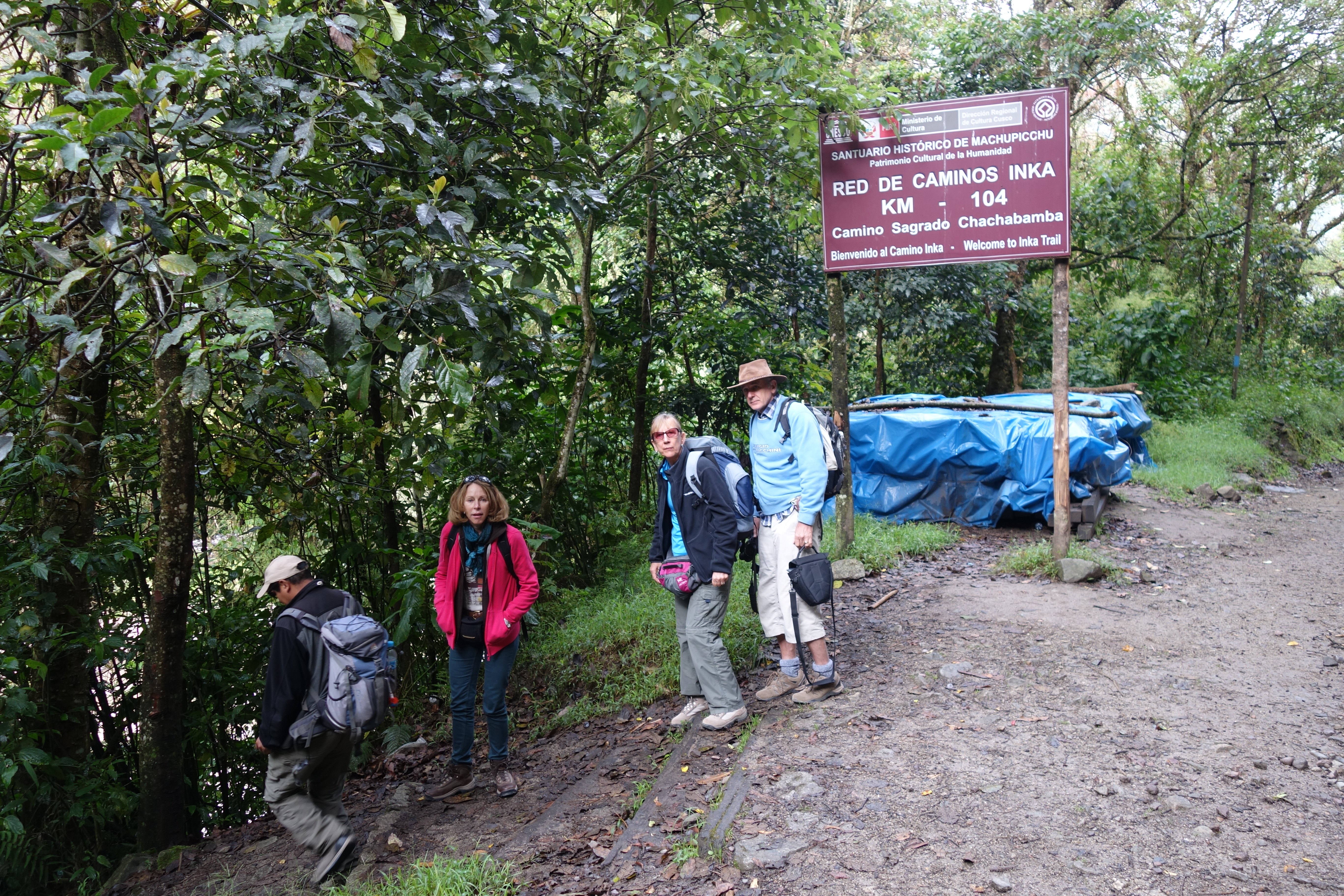
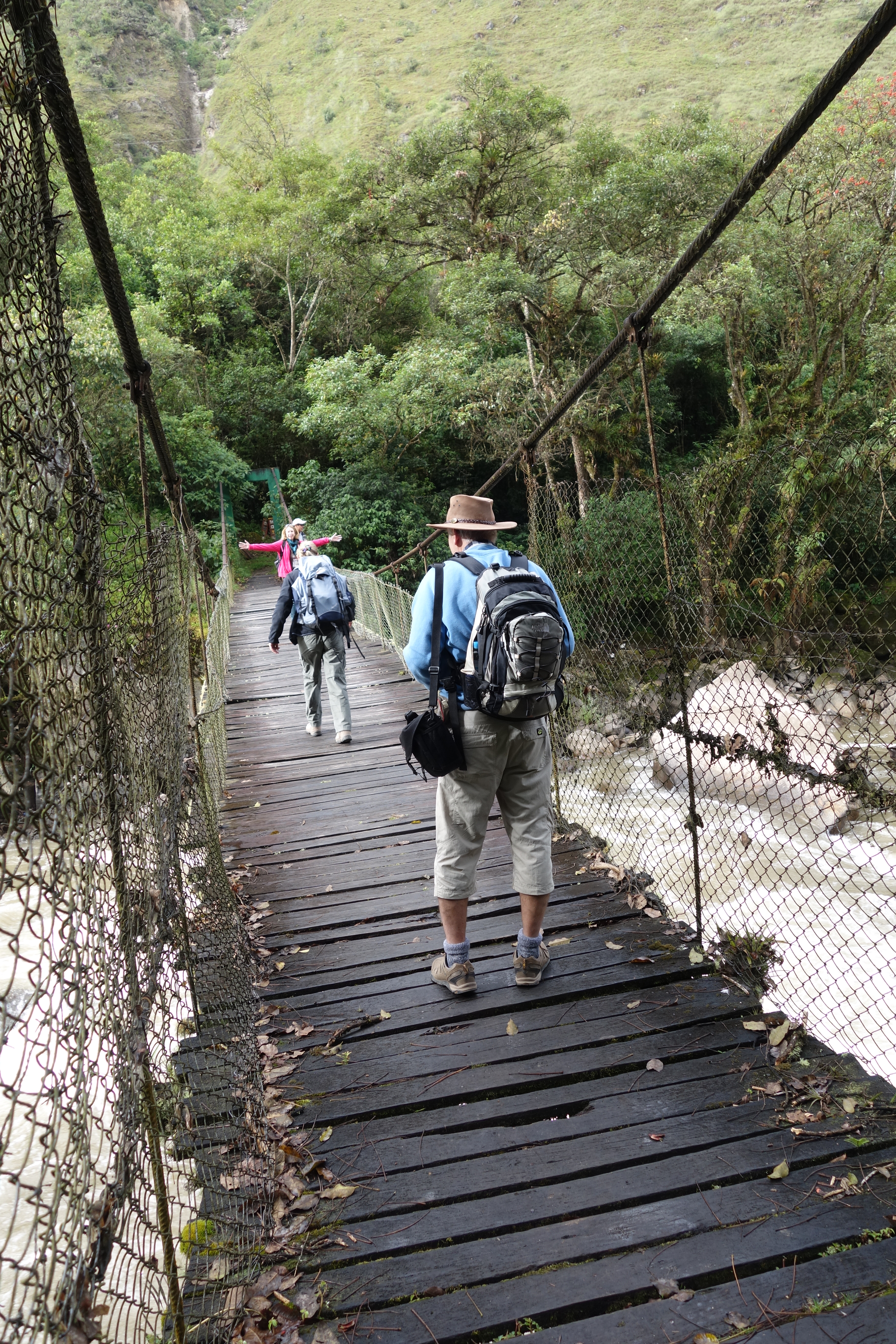
Technically, we were at a place called Chachabamba. But to get there, we had to cross the swaying bridge and so we Samba’d across the Urabamba to Chachabamba although, in Liz’s case it was more of a hysterical dash. We were on the last stage of the Inca Trail and, at a small government lodge, we had to sign in with passports. A couple of groups from earlier trains had already registered but during the days hike we only saw them to overtake. A little old Lady was there to sell us long walking poles with cloth willy-warmers over the end, these hook over your wrist and were the best HK$8 I spent the whole holiday. The trail climbs from 2,100m to 2,700m (8,860ft.) at Winayhuayna, passing through cloud forest, scrub and more forest. The sun came out, but we were pleasantly cool in the shade. Wildflowers were everywhere. Orchids of every colour.
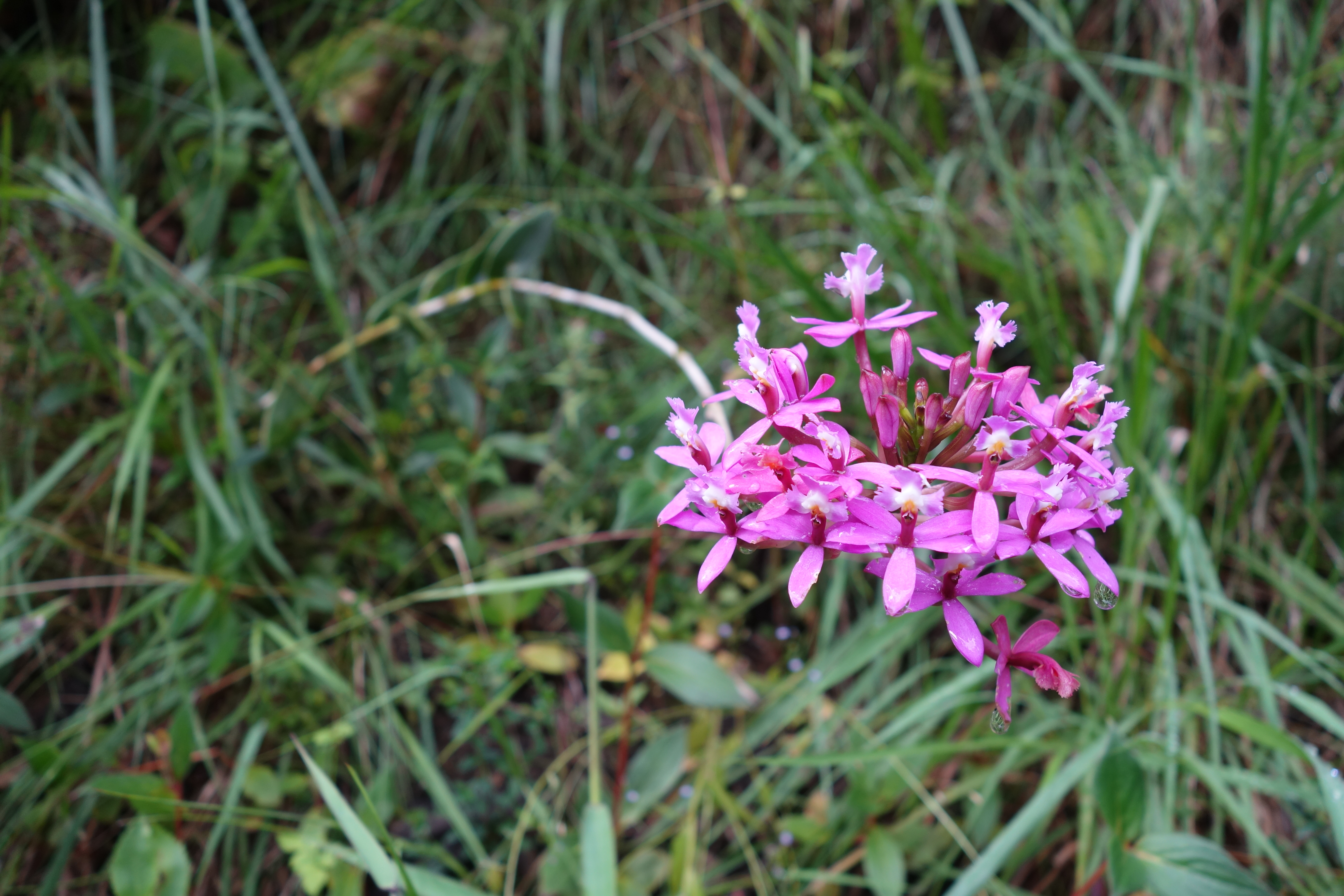

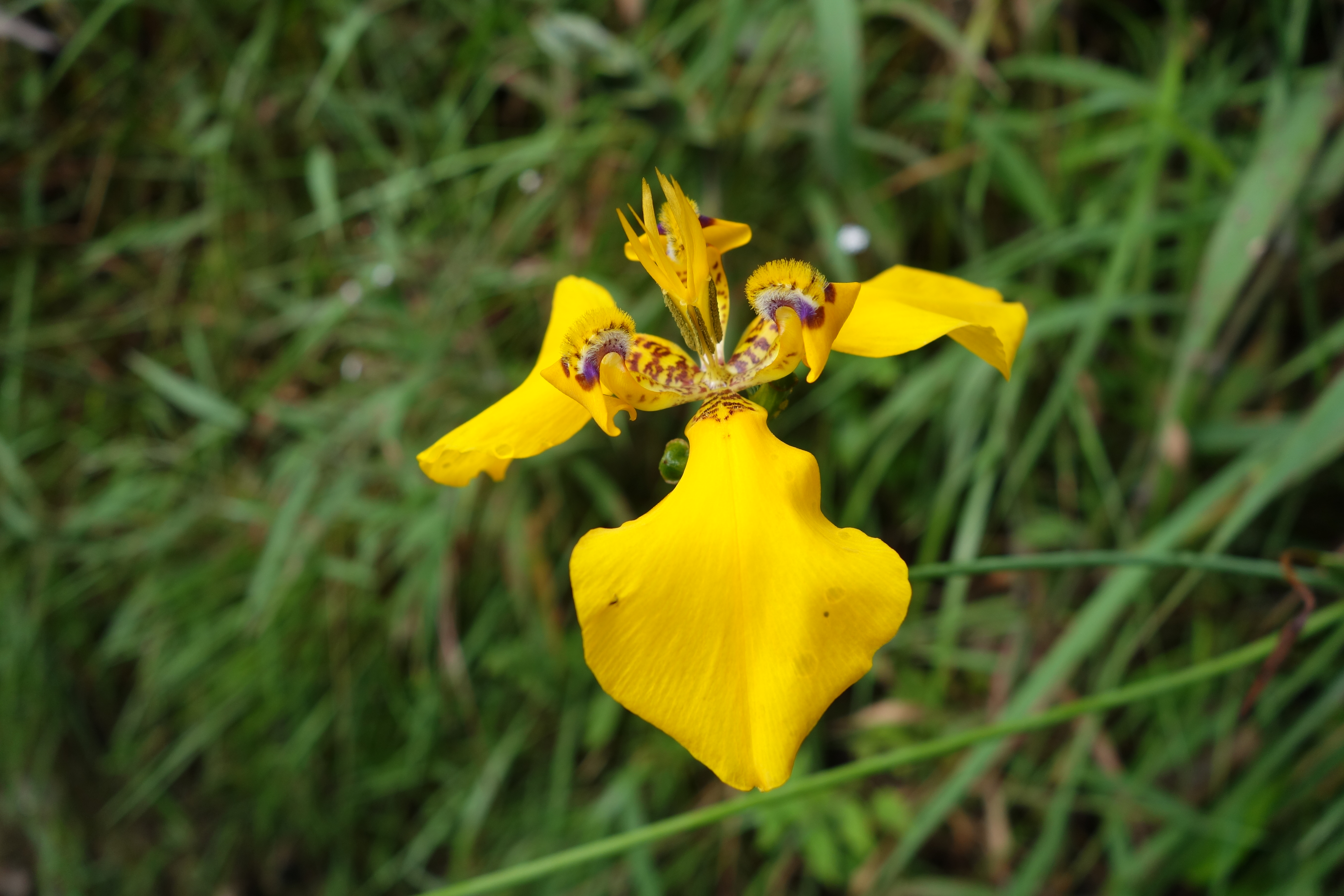
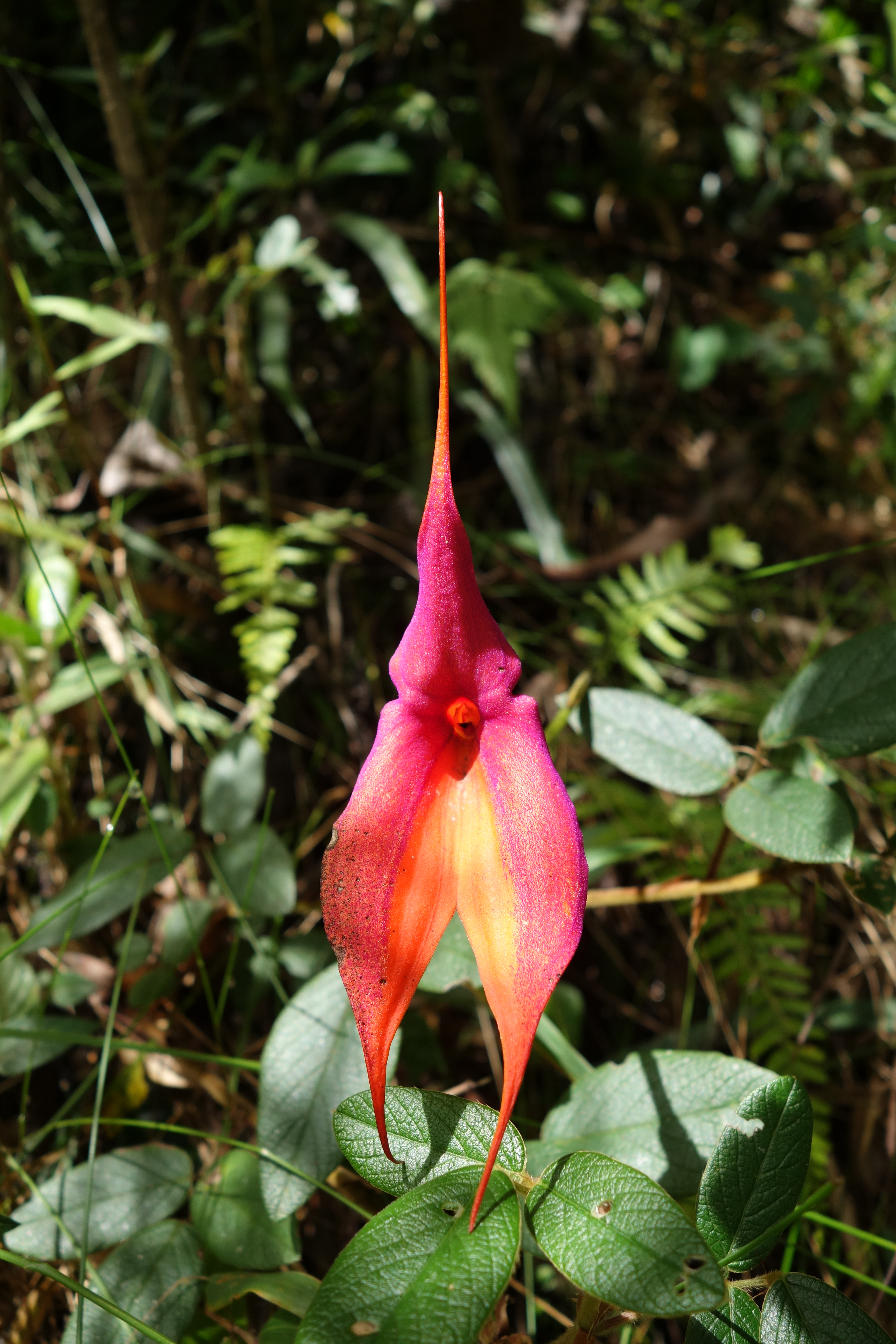
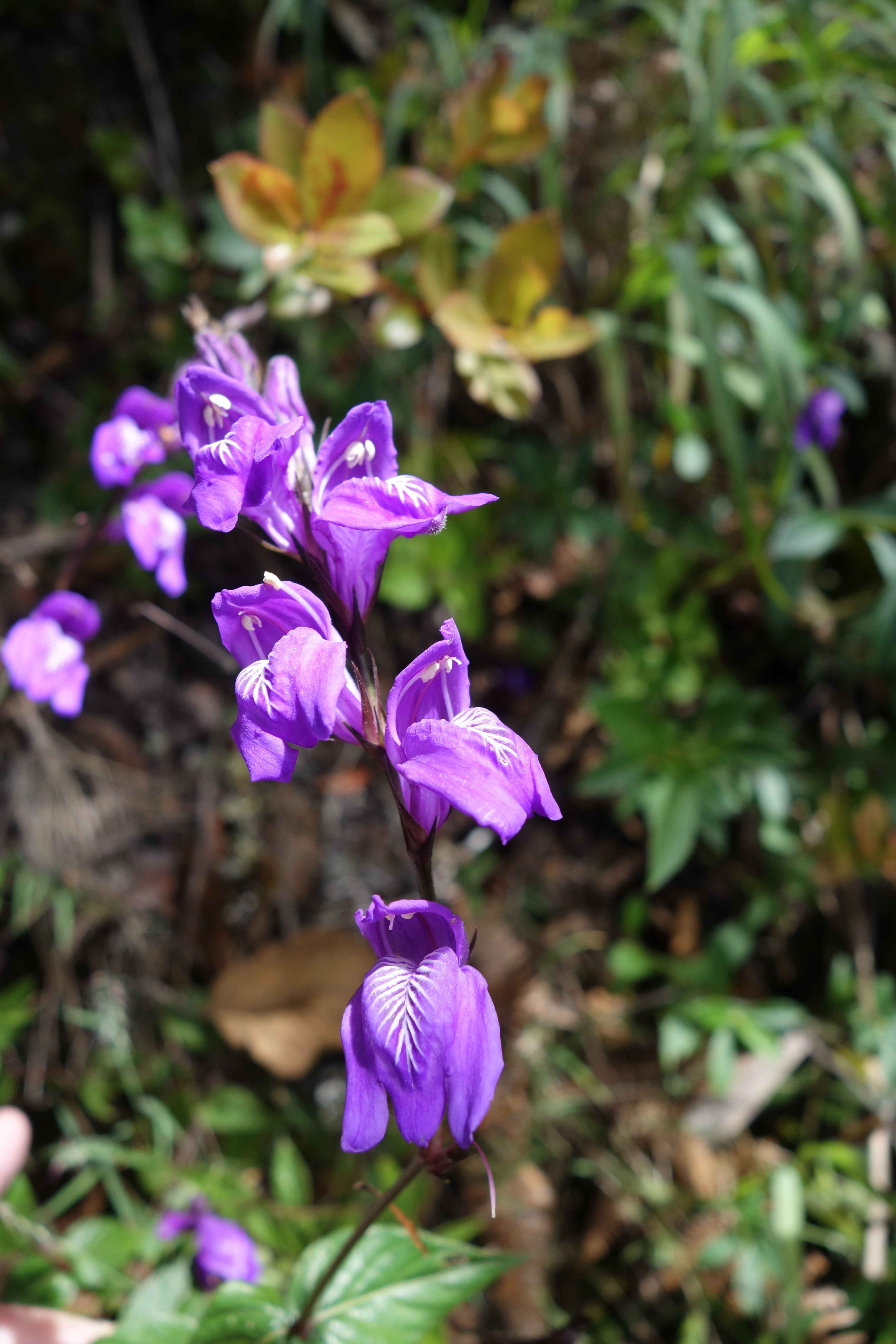
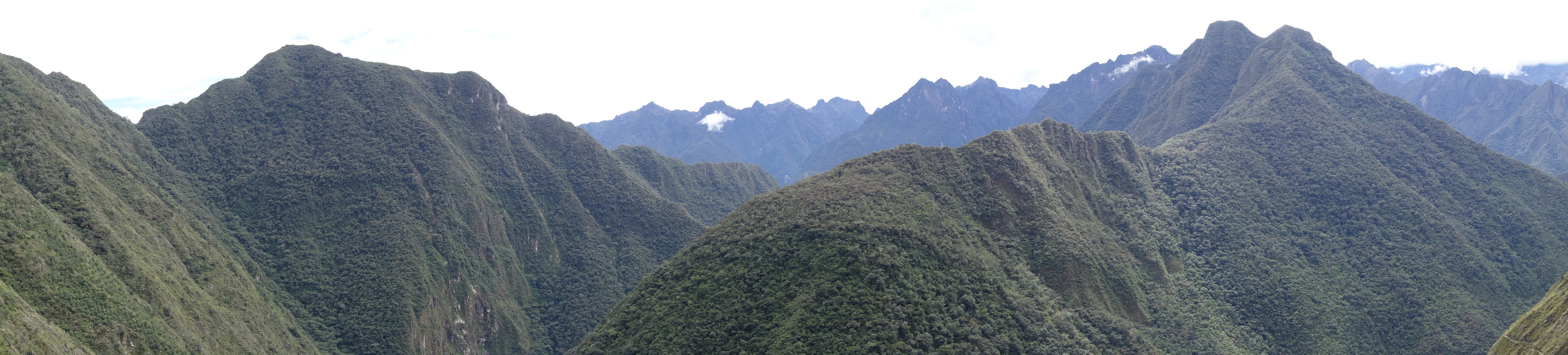
Views across the valley to the snow capped mountain ridge beyond.
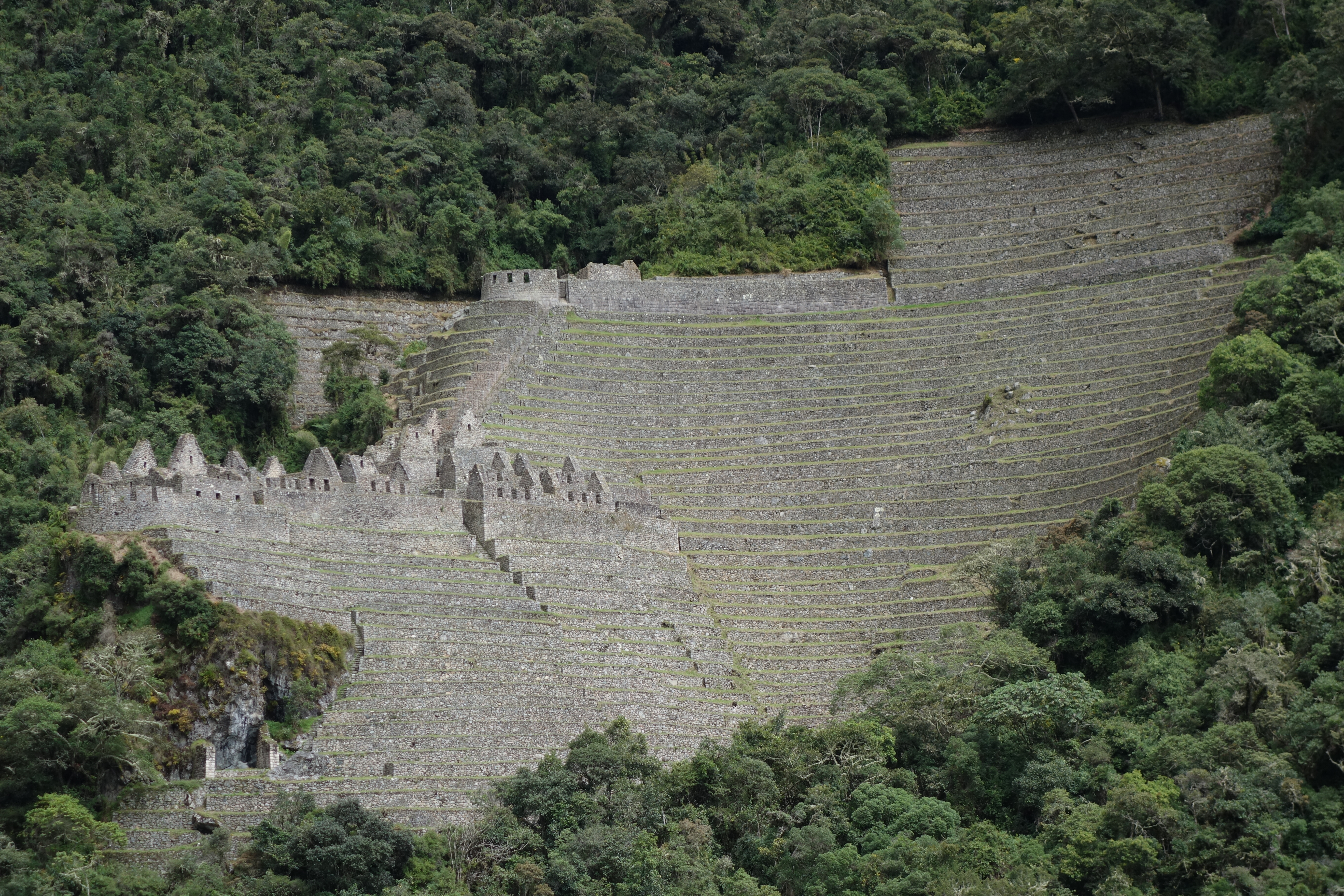
Fabulous. Just past a huge waterfall, Winayhuayna is a terraced Inca ruin climbing up its own peak, beautiful, mysterious and quiet.
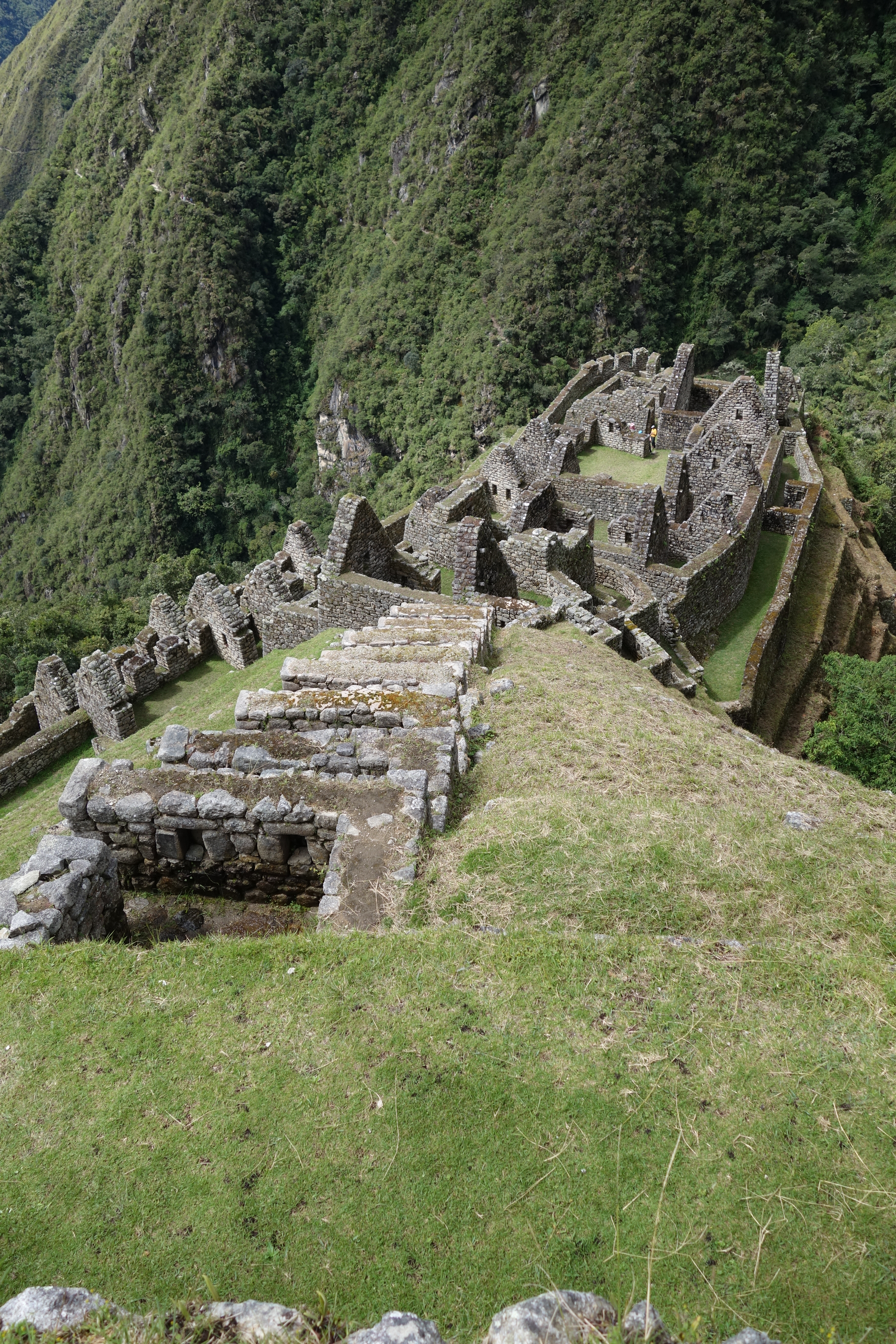
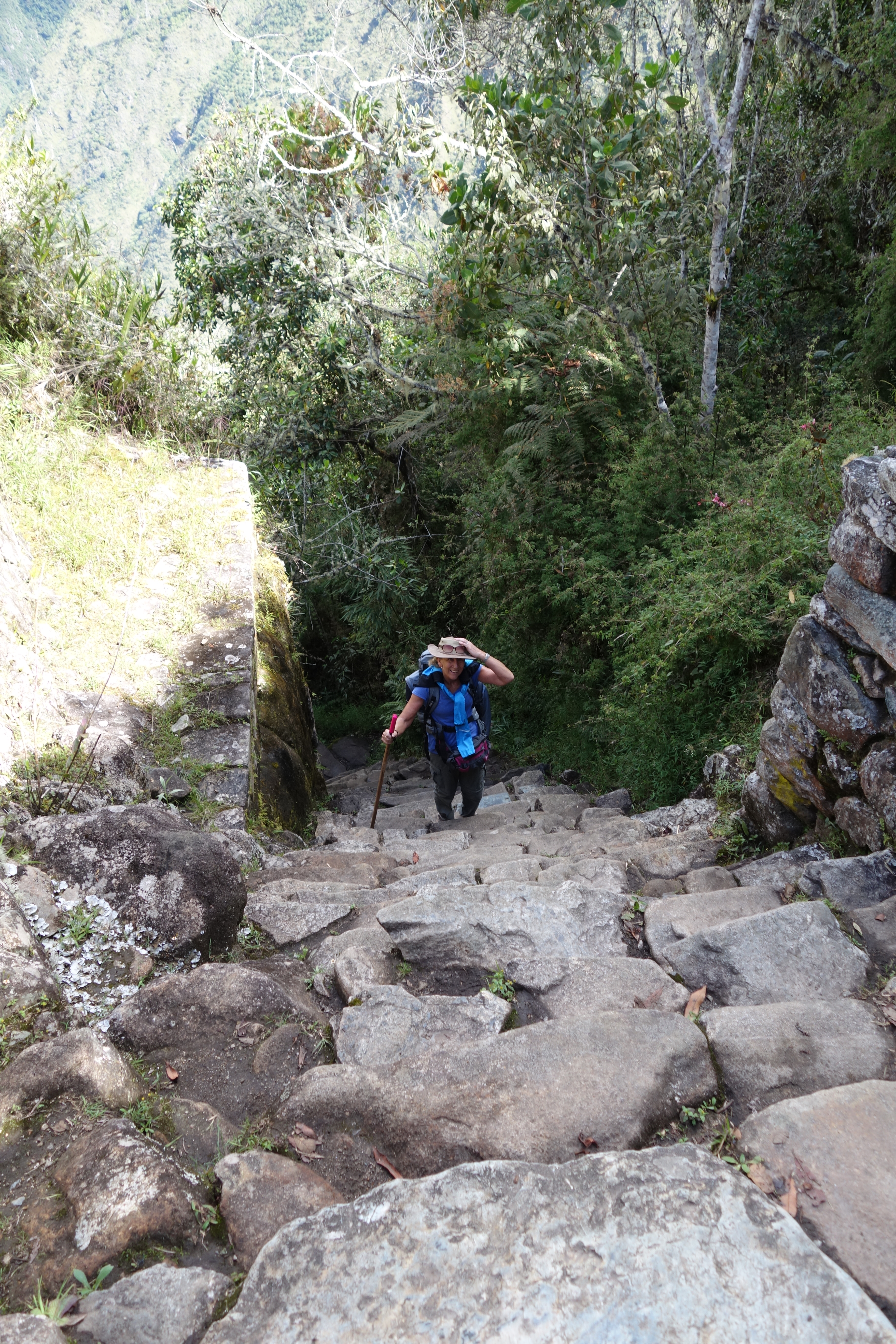
The trail carries on until you hit the ‘Gringo Killer’ a vertiginous staircase that gets the heart rate even higher, but then allows you to calm down before you round the ridge and pass through Inti Punku, the Sun Gate.
There in the distance and down below is Machu Pichu. The late afternoon sun shines down on it, circled by the river valley flanked on all sides by the majestic mountain ridges. It really is spectacular and well worth the anticipation.
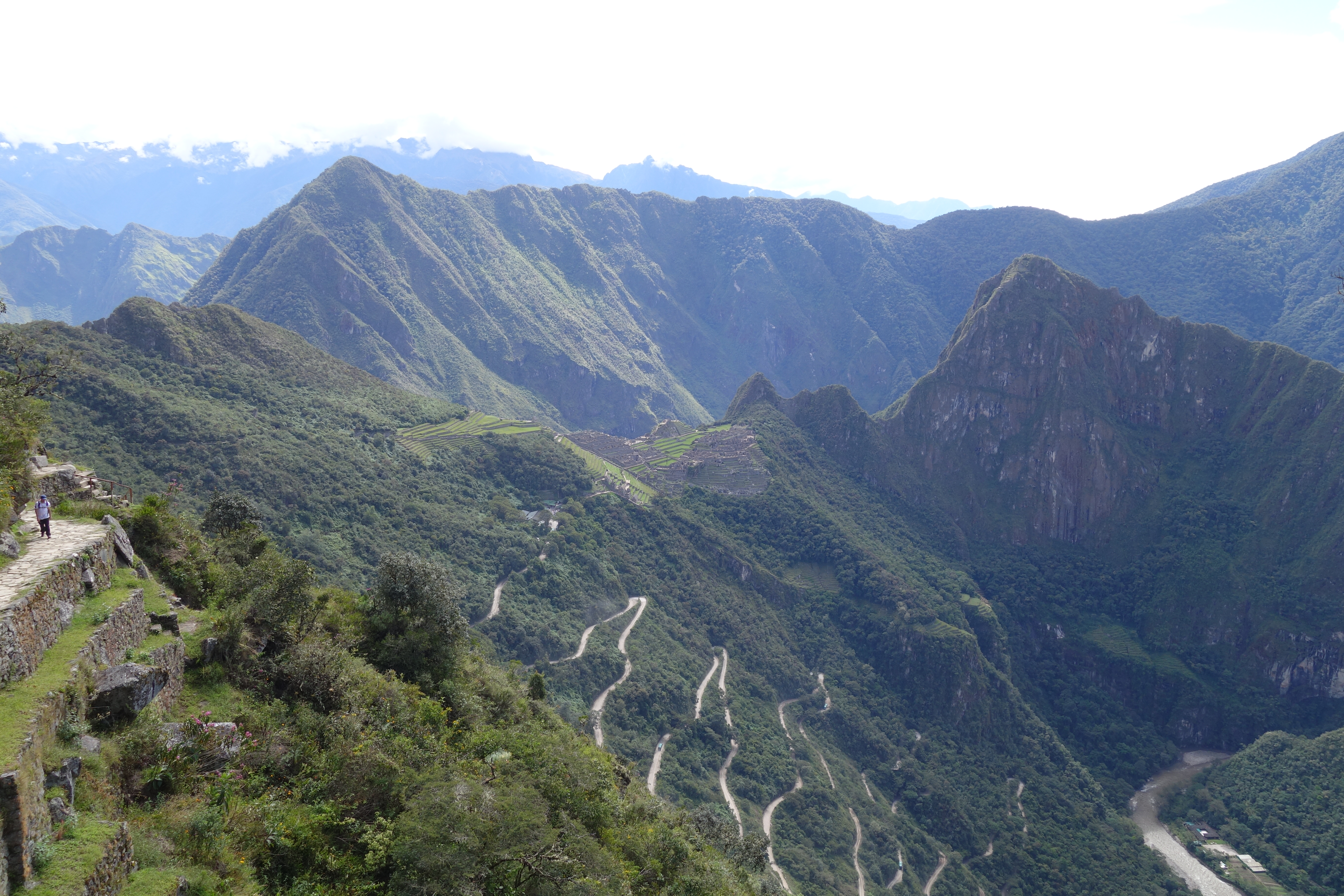
We sat and took it all in. Ate an entire cooked chicken each and took it all in. Then ambled down the mountainside, stopping every 5 yards or so, to take it all in.

We stopped on the terraces immediately above the main body of the town/temple/palace? My camera was overheating. Daniel gave us the spiel and I laughed to finally be there. Then we took the bus down the mountain zig-zag to Aguas Calientes and a hot shower.
15
Up at 4am, we are standing outside the hotel at 5.00 waiting for the bus. We can hear the Urabamba roaring past in the pitch black. 3 buses pass before one flashes his lights and stops. Daniel was in the queue at 4.00 and managed to save us seats and we zag-zig back up the mountain. It’s light by the time we arrive but, such is the height of the Andes, the sun won’t crest for ages yet. Sleepily we queue to get in, while youngsters in various stages of undress, trot sweating up the path from the valley floor, high fiving and calling out to other vagrants. I don’t want to know what time they got up. The doors open and we flood in but are soon dispersed. Numbers are strictly controlled so it seldom gets crowded.
We position ourselves back on our terrace and watch as the sun stumbles up and over the ridge and floods Machu Pichu with warm light. Inspirational.
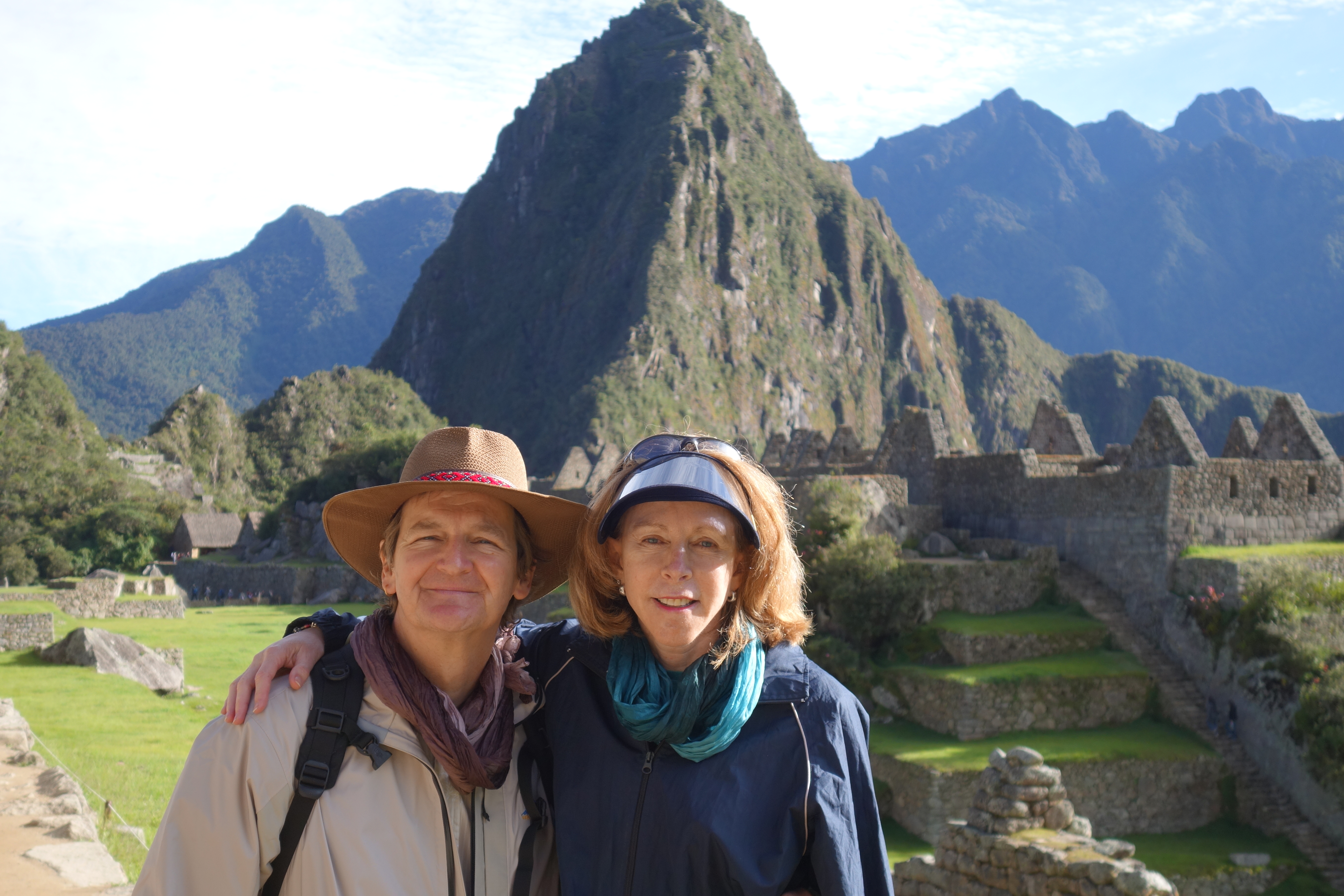
Then we go in and explore with Daniel leading the way.
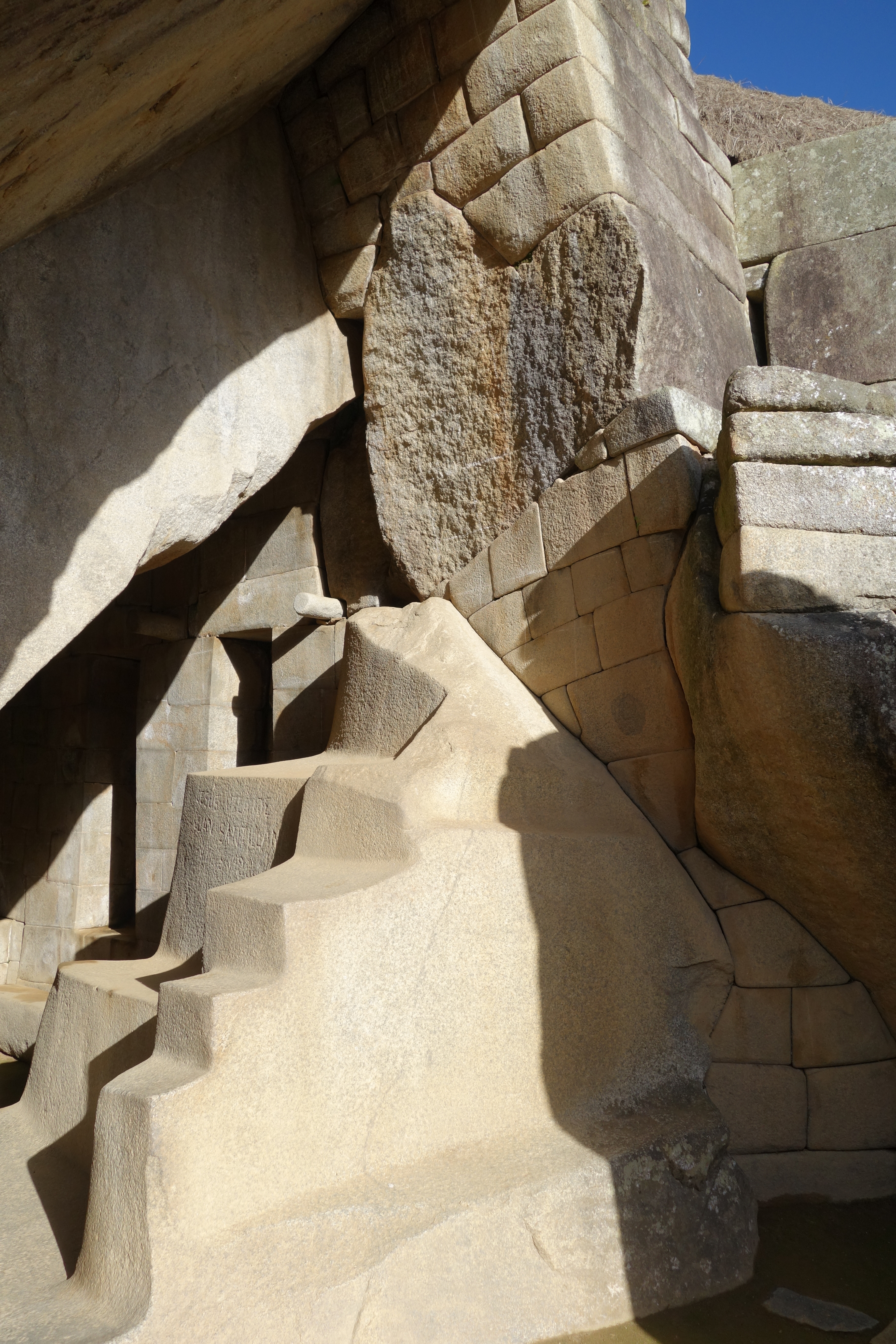
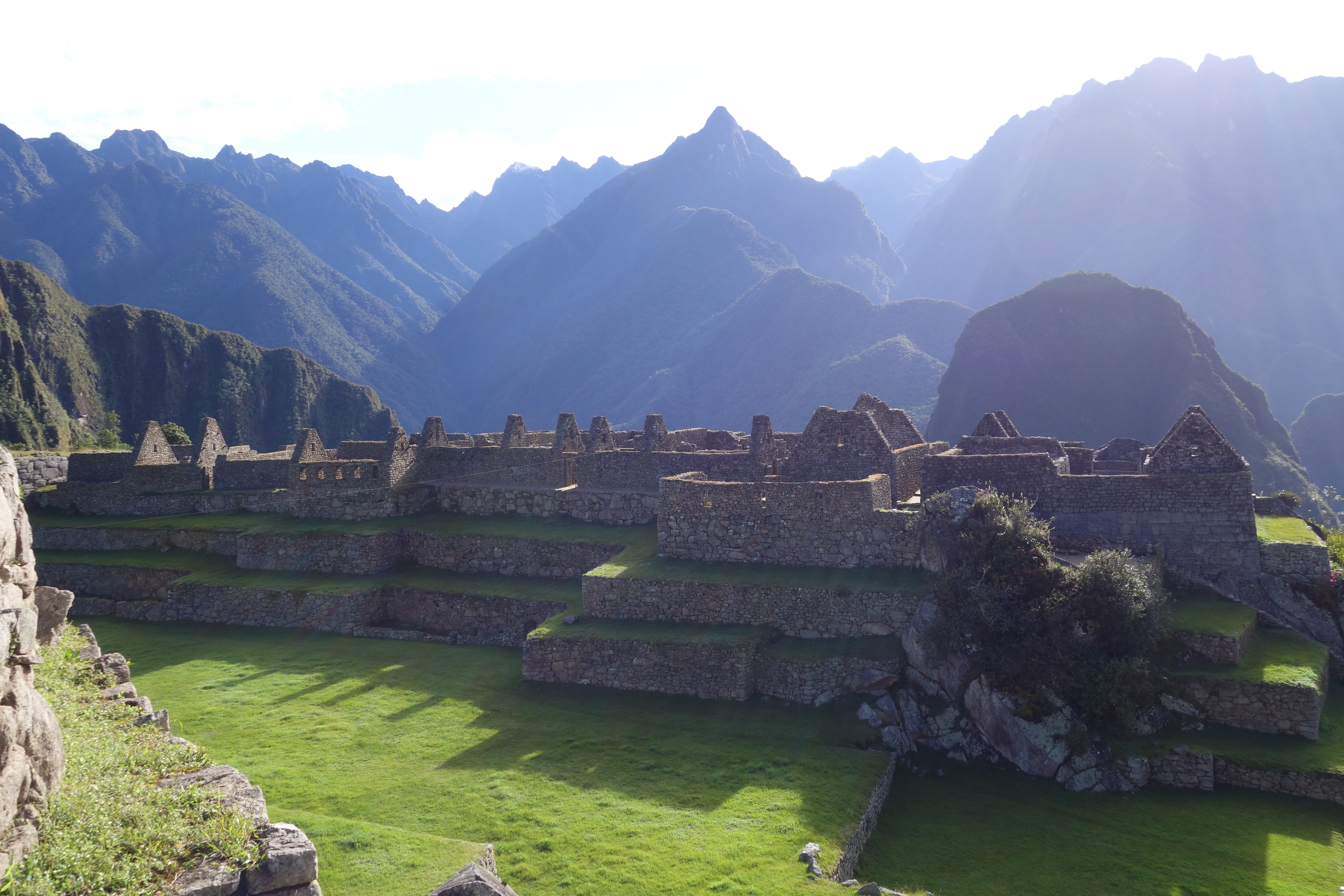
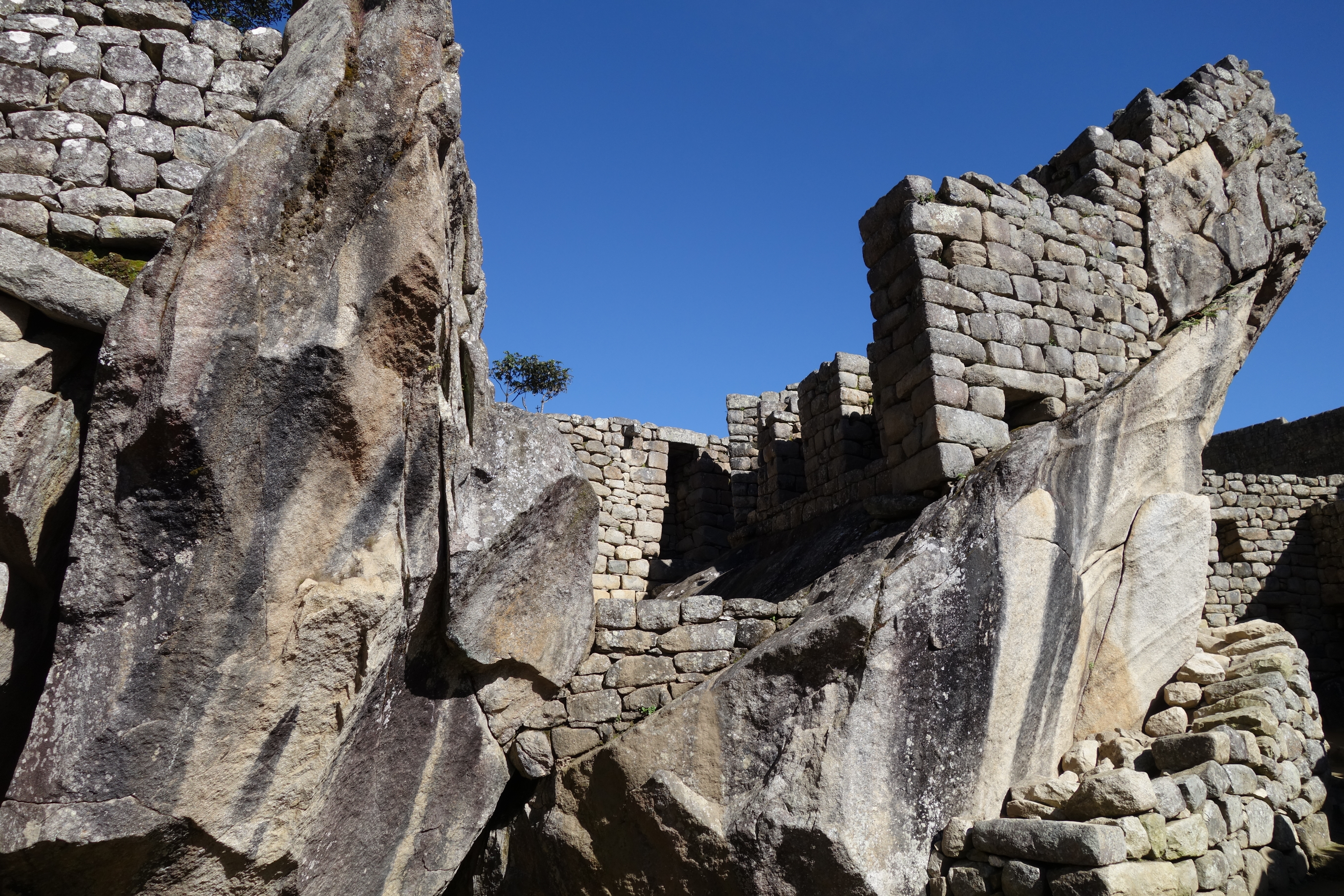
Eventually, Daniel takes his leave, he will take an early train back to Cusco, but he leaves us with fond memories and our train tickets. We are booked in to climb Huayna Picchu. This is the mountain directly behind the town/temple/palace? and access is limited because the footpath would test a mountain goat, let alone a Lama, not even a camera toting tourist.
It’s a bright sunny day and hot. Fortunately the path is in the shade. Unfortunately it is very damp and everything is slippy. The last downhill stragglers from the early ascent pass us. They looked dazed and spent, there are few words of encouragement. We set off and pretty soon the track becomes very narrow. Steel cables are bolted into the rockface to help you pull yourself up. Despite admonishments from the Rangers, there are many groups still on the descent, looking very nervous as they pick their way down near-vertical crags. We pile it on and are at the front of the pack for most of the way, it’s not a race or anything, it’s just that I prefer not to have my nose up some strangers’ bum. Mind you, I am definitely at the rear of our group, with Dori forging ahead. It’s not a huge climb by any means, but it is a strong 40 minute challenge and, just before we hit the first platform, we are overhauled by a thirty-something couple. Pushy bastardos.
The first platform gives you a fabulous view directly over Machu Pichu, you are almost looking directly down on it, it’s just so vertiginous and difficult to get Liz to pose. Stunning views, including a house perched right on the edge, just beneath our feet. It beggars the question, “Why?” Then the last bit is a real scramble including crawling through a tiny cave, heads, shins and cameras bashing into everything. Up a ladder and voila, or as we say in Peru, “Aqui! Cojones! Estoy hecho polvo!” You balance on a big rock, nervously absorb the 360degree panorama, have your photo taken in Macho Mountaineer pose and then get the f*&#! down as fast as your shaky little legs will let you.
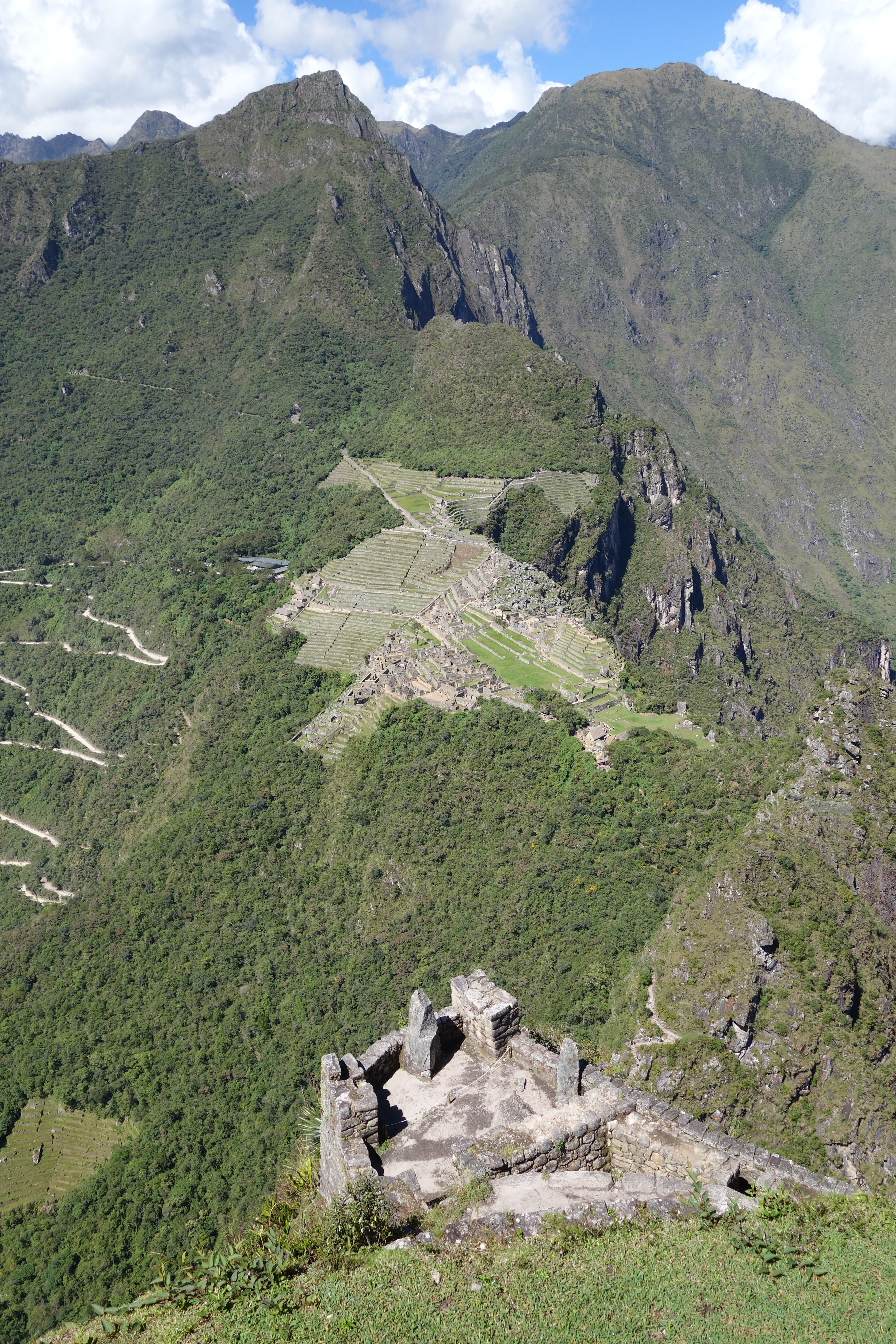
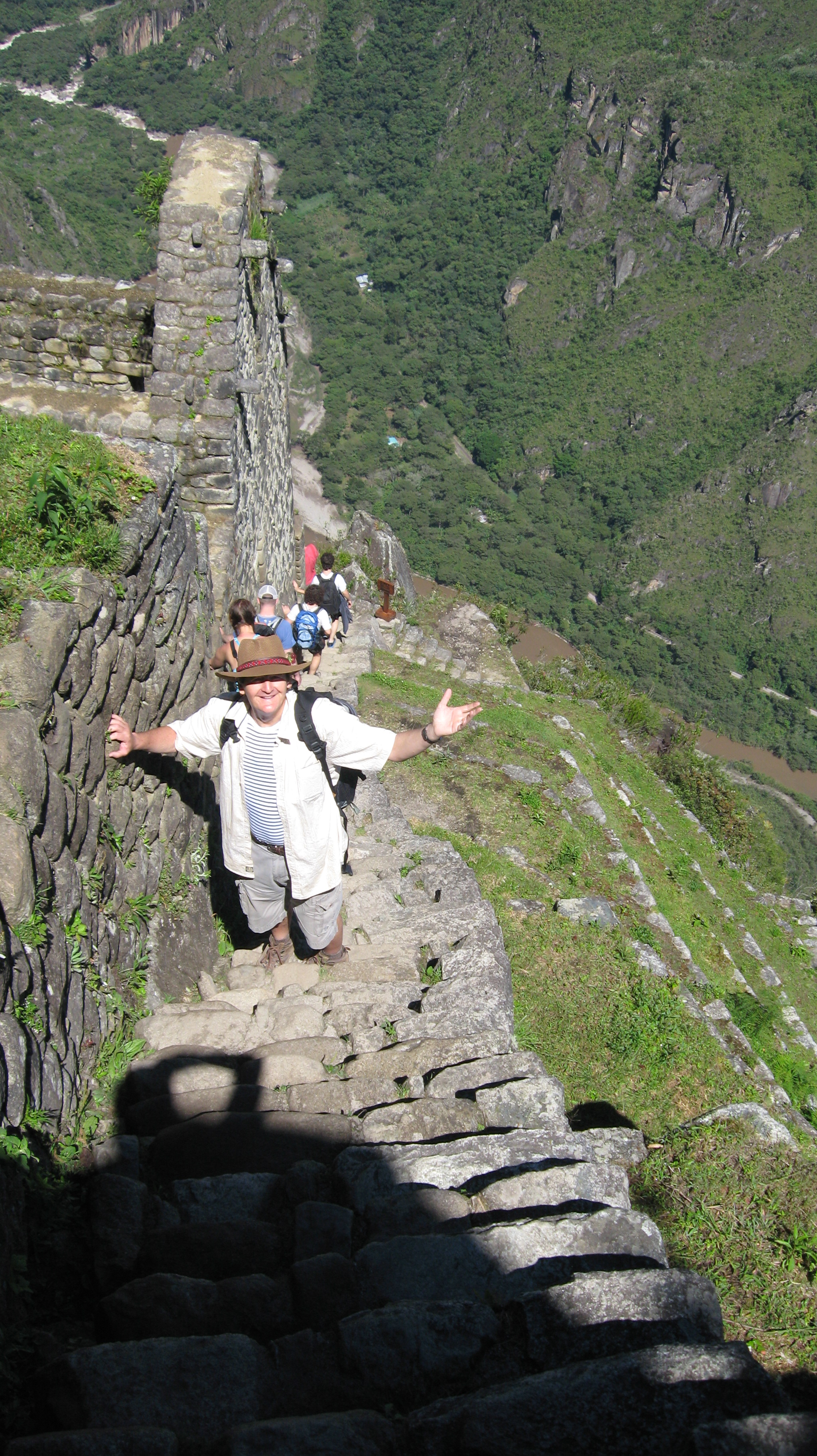

But the views are certainly panoramic, it’s just that I don’t think I saw them until looking at my camera several days later. We rested at another platform, just off the top and then began the descent. The first part of this is a cave bypass that the Incas thoughtfully built on an almost shear face of the mountain, about 30 metres down and a foot wide. That is, assuming you are placing your foot sideways ’cause these babies are only 4 inches deep. At the bottom of this stairway to hell, the mountainside just disappears into oblivion and, for some reason, possibly thinning the herd, this is the point where nobody bothered to put a cable handrail. Still after several minutes, grazed hands and multiple bum stains, we clear this challenge and tumble back down the mountainside. By now, we are Machu Pichooped and grab the first bus down.
The train to Cusco is full of the usual PeruRail delights including a folk dance featuring a really scary clown and a fashion show showcasing a range orrrrrf…. ponchos! Yay! And me, tired and bedraggled dressed in an alpaca cardie and scarf doing a very wobbly catwalk striptease. It broke the ice. Cusco was dark and cold, but the bed was warm and inviting.
16
Last full day in Peru and we have no Guide, but Cusco is relatively familiar to us now and anyway, it’s all about shopping. We stroll down to the Artisans’ market. Outside, an old geezer tries to sell me an ammonite, it’s beautiful, jet black, too jet black. With my coca-leaf honed pruning thumbnail, I whittle off the coating to reveal plaster and with an innocent smile he says, “Bueno, voy a ser tío de un mono”, which translates as, “Well, I’ll be a monkeys’ uncle”. But I’m not. So no sale. Inside the market are row after endless row of ear-flappy hats, Lama chompas and stuff. Undaunted, we cruise and still manage to find some unusual and beautiful items. Crossing town again, we find wonderful hand-made and glazed dishes that exhaust our supply of Soles (Peru money), requiring a panicked foray to the nearest cash-point. We find an alley walled with old Inca stones, beautifully placed, including the famous 12 sided stone of Cusco. Lunch, Cusquena, a festival that starts outside the Cathedral with babes in spangly outfits sashaying to an oompah band followed by a troop of guys who are giving it big licks. Imagine Bruce Lee does Hip-hop. Wild. Cusco is great place for ambience and just soaking it all up.
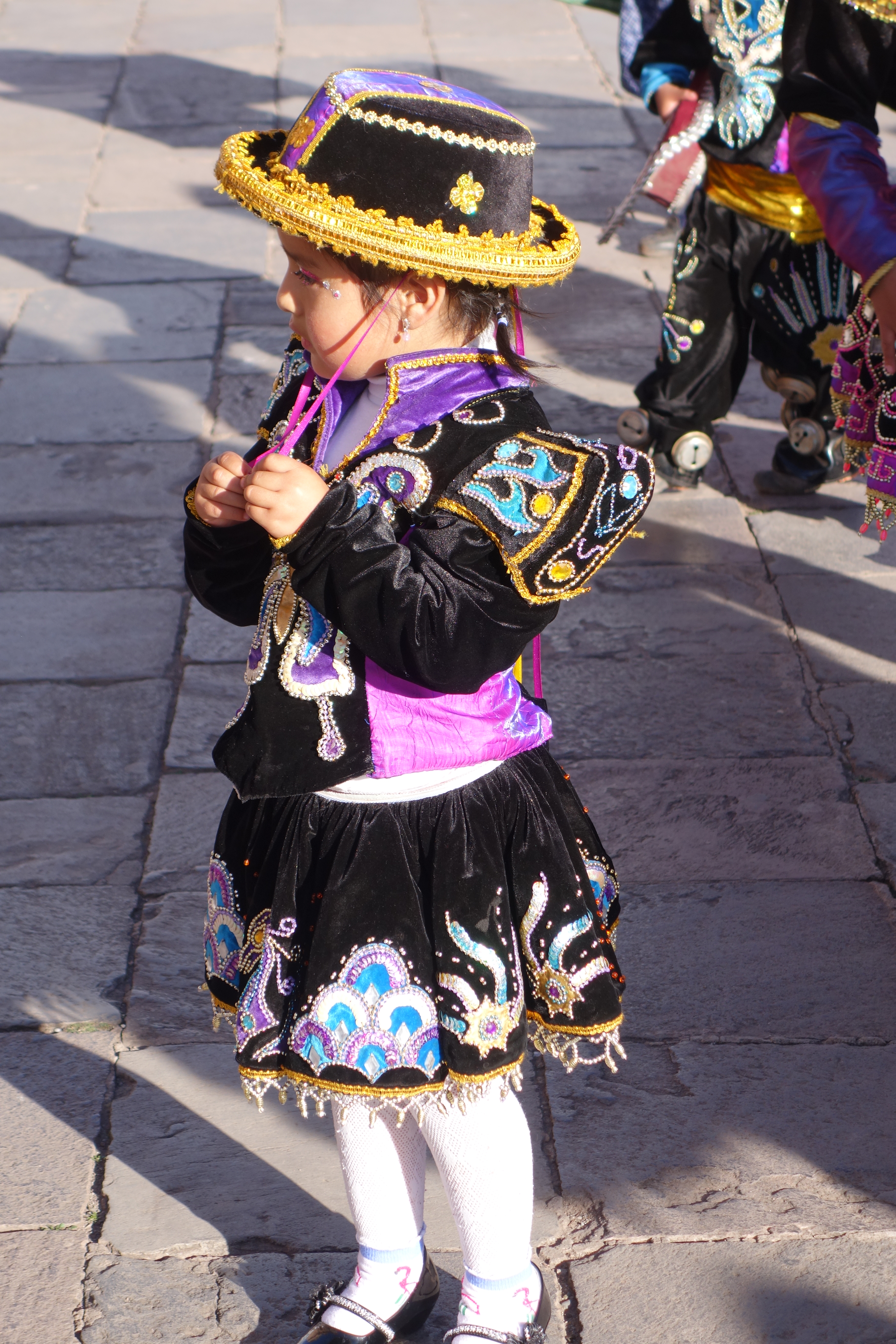
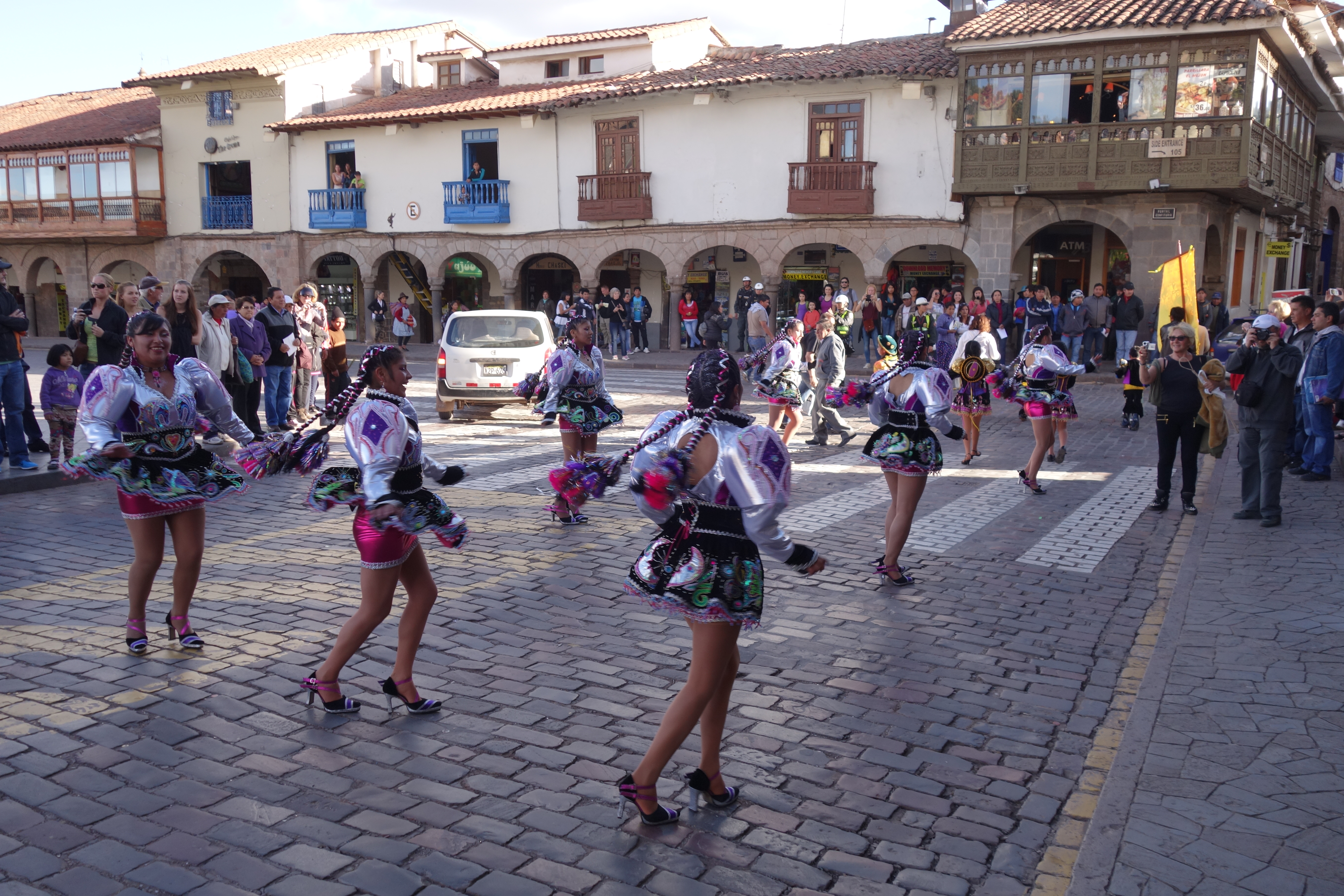
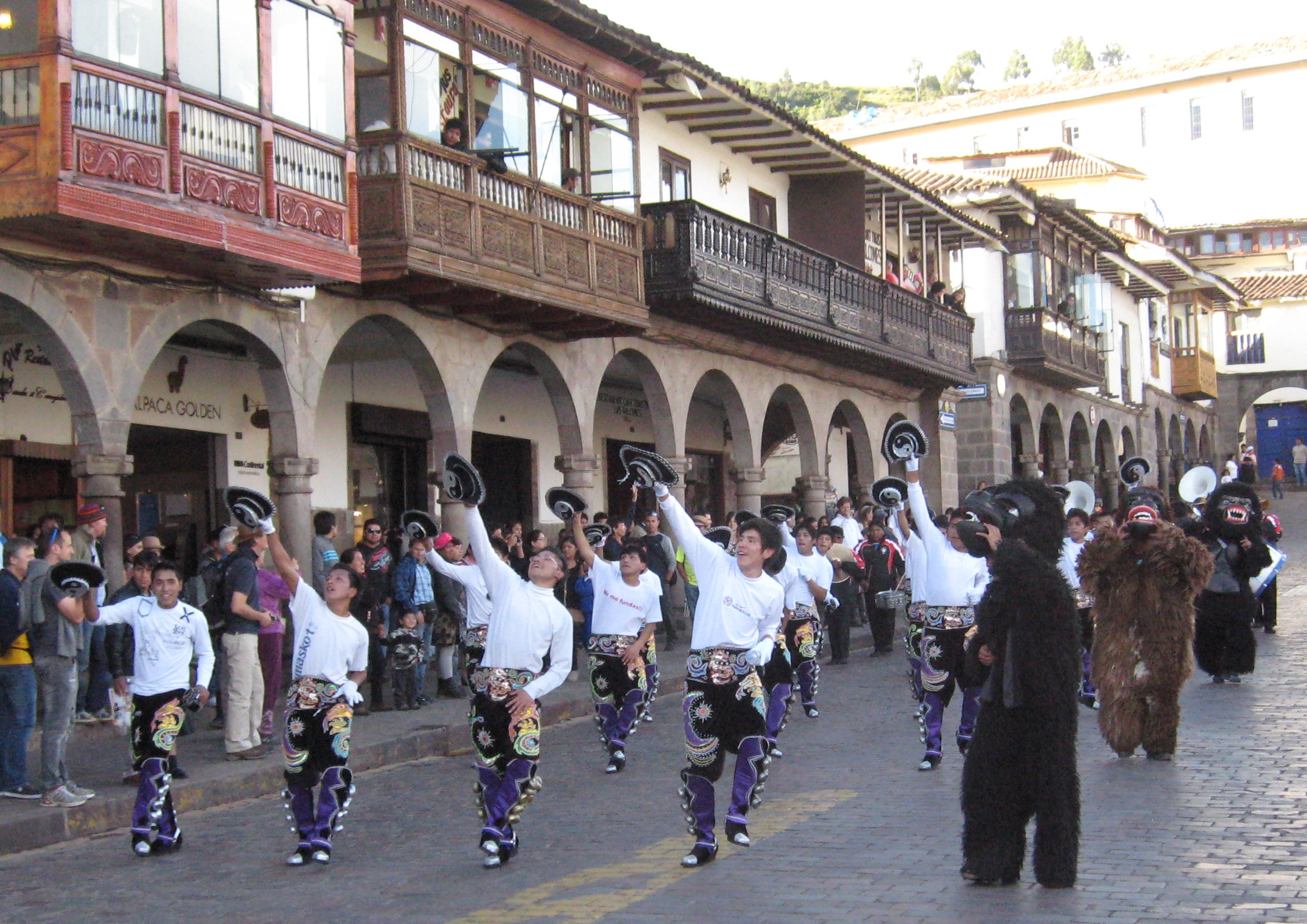
By now I am carrying half of Peru’s national output of “Stuff” and Jon has the other half, so it’s back to the Hotel and 3 hours of packing before we head out for one last Peruvian dinner. I go for the trout again and am not disappointed. I sleep and try not to think of the upcoming 36 hours in-transit between the hotel and our house. The interminable zombie queues and checks at Los Angeles that are able to eviscerate a four and a half hour layover to permit only a frantic 10 minute beer gargle. The slop that Cathay Pacific serves with a menu, but no salt and pepper. And, after days of pristine clarity and oxygen, the toxic stew that the Hong Kong Government laughingly calls ‘air’.
It was good one. One of the best. Hard, without a doubt, but joyous and very, very memorable.
Thank you Peru.
 Travels, Opinions, Stories and Stuff
Test comment
LikeLike