Chengdu to Lhasa to Katmandu. April 2010
Having not been allowed into Tibet last year, those intrepid duo, John and Liz Foxall, decided to have another crack at it and dragged the Dynamites, kicking and screaming, in their wake, half way across the Asiatic continent.(Or incontinent if you allow Dori to choose the restaurant).
We flew to Chengdu, which is half way up China over on the left…ish. It’s only real claim to fame is the Panda Research and Breeding Station located in the suburbs of this fairly large and nondescript industrial town. There are more Pandas here than anywhere else in the World and they have got jolly good at getting the furry little blighters to make babies. Keeping them from rolling over and squishing their tiny, pink, wormlike offspring would appear to be the major challenge. Panda females do not go in for delivering huge headed, kicking and screaming babies whose entry to the World can rip the undercarriage away. I regularly poop things bigger than the average Panda cub and a lot more attractive they are too.
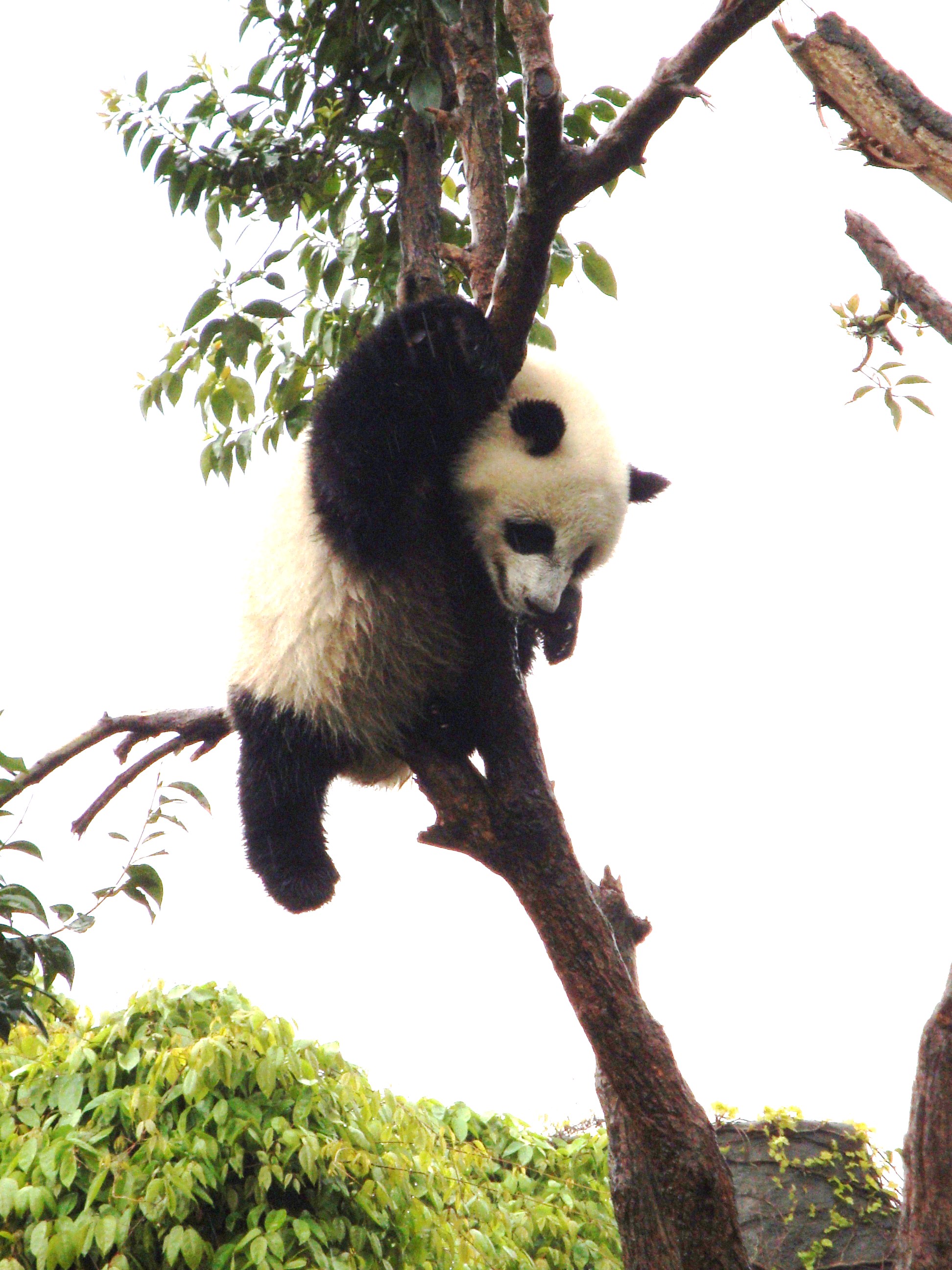
Anyway, once they start to grow a bit of fur, they are unbearably cute and spend the rest of their days playing, sleeping, eating bamboo and being encouraged to have sex. Nice work if you can get it. It rained all the time we were there, but little did we know that this was the closest thing to a bath we were going to experience for the foreseeable future.
As evening came around, we headed off to the Train Station to catch the 44 hour sleeper to Lhasa. Chengdu has a massive station with a grand square in front. The square is generally full with thousands of migratory workers waiting for trains to take them to the factories in the South and East. 4 wet white devils dragging suitcases makes for some welcome diversion. We had time to spare and, not knowing what the food would be like on the train, we decided to try a local café. Dori was particularly insistent on a greasy spoon which she claimed had lots of “Character”. It also had lots of bacteria and the grease wasn’t confined to the spoons as we skated our way to the back and fell into some seats, only to watch as our table slid off to other parts. We managed to anchor it and, despite our best efforts at avoidance, were served some graying vegetables and rice, all served a la grease. It was unlikely that constipation might give us cause for concern.
The waiting hall at the station was dark, cavernous and cold, but eventually there was a surge, which we figured to be boarding time, and we elbowed our way on with the best of them. It was at this point that the Travel Agent whose job it was to get us on the train, told us that we had 3 tickets for one cabin and a fourth ticket for somewhere further down the carriage. This, because the Government has a quaint ruling that you can only buy 3 tickets at a time in order to prevent ticket speculation. The prospect of sharing a compartment for 44 hours with some of these guys was less than appealing. We barged into our compartment, threw the cases on the beds, took our boots off, farted, stripped down to our vests and generally tried to look and smell as undesirable as possible in the hope that we could convince the fourth occupier to swap seats. Of course, in my case this is an almost impossible task, but fortunately Jon was up to it and when the person in question arrived, he had no problem convincing her to swap. Her? Yes, the 20 year old lingerie model sharing with the All-Tibet Ladies Volleyball Team. Damn!!!
Having established that we were all in the same compartment, the next task was to actually get us into it. 4 bunks with a gap of 18” down the middle, we would have to take it in turns to roll-over. 3 had to stand in the corridor, while one arranged themselves and squeezed their case under the bottom bunk. Then when everybody had taken their turn and their case was in, the first person decided to get their Jammies and toothbrush out so that the process had to be repeated in reverse order. It was all quite good fun until the first person decided to use the loo.
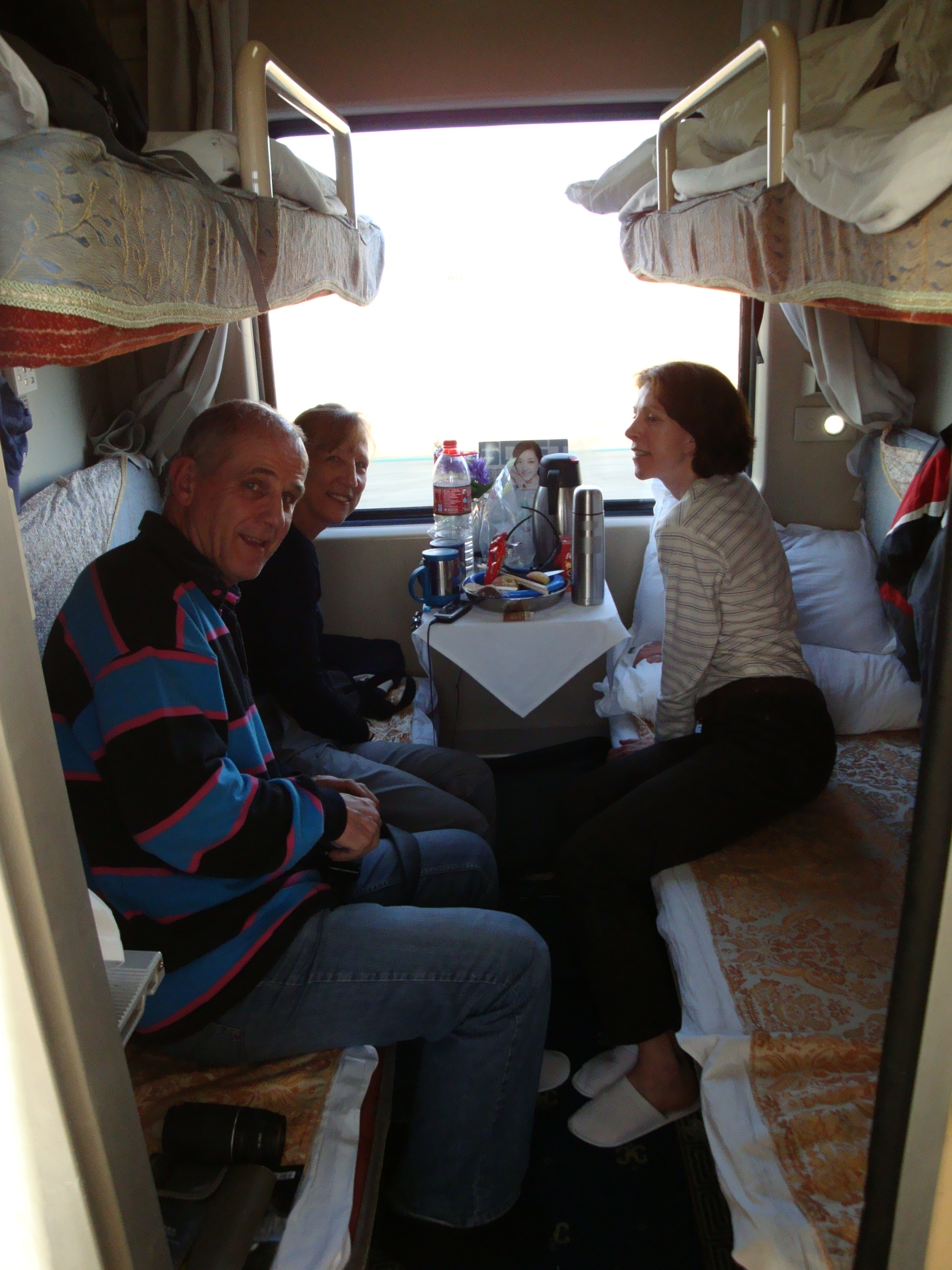
We had been issued with these thin disposable slippers like in hotels, but wellies and a lifebelt would have been better. One hour out of the station and the Yellow River was encroaching down the corridor, which was remarkable, if only because these lavvies had a suction on them that would rip your trousers off if you got too close.
But we were in the posh ‘Soft Sleeper’ carriage. In theory there was no smoking, but the Chinese have a very liberal interpretation of such strictures. Behind us was the ‘Hard Sleeper’, 6 bunks in the same amount of space and, up the front, beyond the dining car, were the seats. 44 hours in a seat with everybody hoiking and smoking continually.
Still, we are all seasoned and hardened travelers and our little enclave only got unpleasant once, when I accused Jon of wearing my slippers to visit the squatter. He thought he could get away with it under cover of darkness. And dark it was, that first night. Western China is reasonably quiet, but we had only just begun as we rode North East. Sleeping on trains is brilliant and we all woke refreshed and started on our first of several picnics, involving croissants that had been fresh in Hong Kong and which Liz had protected clenched tight to her bosom. They were warm anyway.
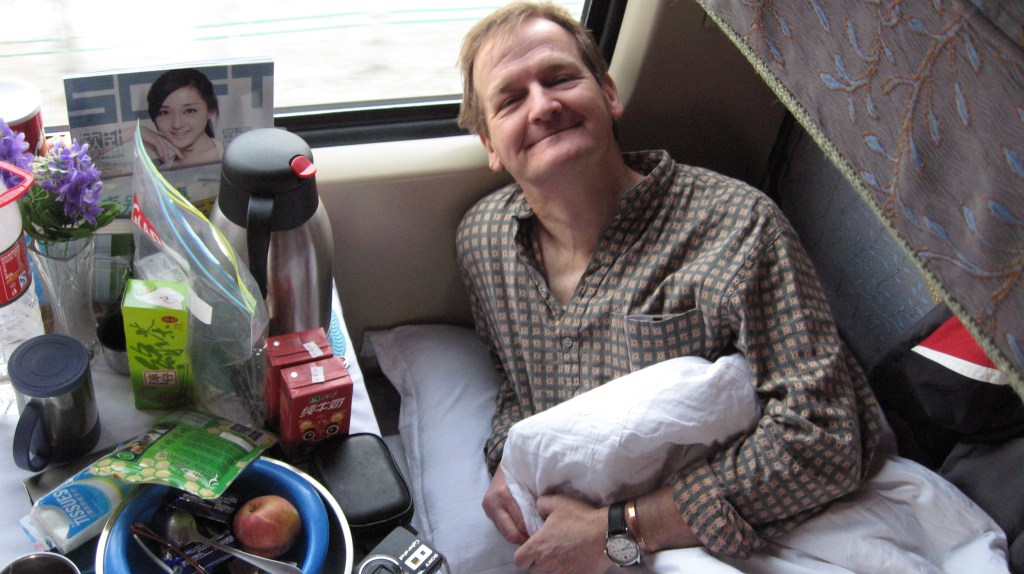
We had all brought biscuits, cheese, sliced meat, tea, coffee, sweets and enough instant noodles to support a famine relief drive, but on every occasion Liz always seemed to be able to trump the rest of us. When did you last eat potted fish paste? I can honestly say that I last ate it at around 11.00am on 2nd April 2010 as we passed through Tianshui. Mark that date. It will never be repeated. Fortunately, the train provided a thermos and loads of boiling water and people pushed carts round every so often, selling fruit, toilet rolls and lunchboxes. Most of the food was sprinkled liberally along the corridor carpet which seemed to instantly suck all the moisture out of it and then lie there, quietly burping.
The Landscape was hard, Western China has been suffering its worst droughts in a hundred years. Dun was the general colour travelling through Loess country. Lots of troglodytes. (Look it up). Playing Scrabble took up most of the day, but only because playing with Liz is like knocking out the Bayeux Tapestry with a barge pole. Having eaten more pot noodles than is safe, we braved the dining car in the evening and after completing my Chicken impersonation, we were given a very nice plate of tofu. How do you mime tofu? Evidently in China you mime it just like chicken.
During the night we had joined up with the Beijing line and now we were heading West. The elevation was creeping up and before bed time we passed the Qinghai lake, almost a sea. Another night passed travelling across high mountain desert and by morning we were up on the Tibetan Plateau, heading South West, having crossed the first pass through the Kunlun Mountains at 4,700metres. The Sun came up on frozen wastes, dun landscapes and Yaks.

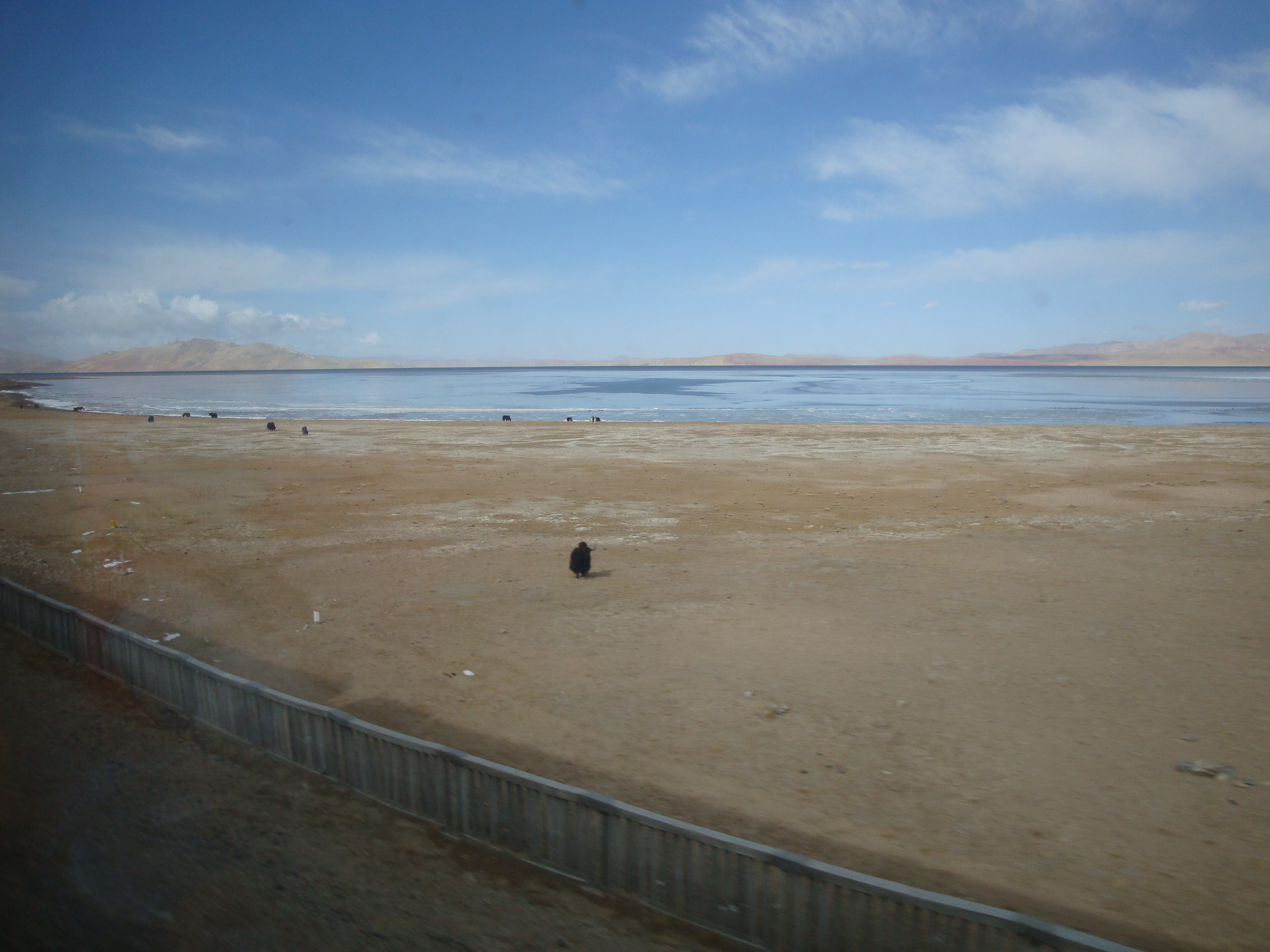
Houses that barely stuck up out of the ground, prayer flags cracking away in the incessant wind. Antelope, wild Asses, Eagles and Vultures and an amazing turquoise lake with frozen edges. The train was still climbing and mid-morning we reached the Tanggula Pass at 5,041metres. This is why they have oxygen on the train. For’ard in the Hard Seating Class, they had their own atmosphere, it was called ‘smoke’.
We all felt pretty good, at first. Then Jon started to get a migraine and feel a bit sick. Soon he had gone a grey-green colour and his head was pounding. The girls were fine, but we had pulled into a siding to wait for an upcoming train and, as I looked out the window my vision started to go all psychedelic and I felt really queasy. Fortunately we pulled into a Station. All the train Guards were decked out in fur hats and big coats, but the sun was shining and I had a little caper on the platform, soaking it up and baring my belly for the general amusement of the locals.
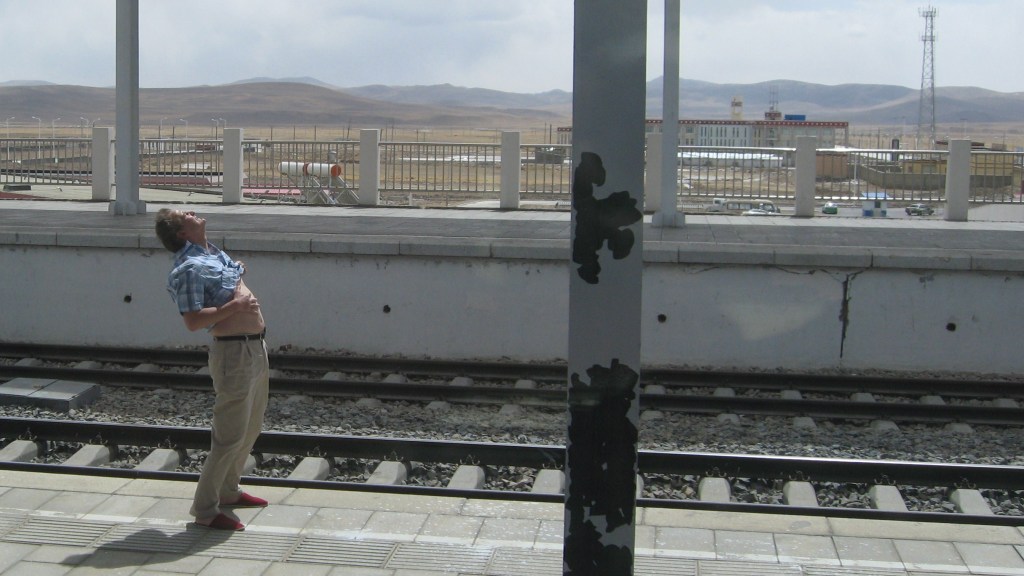
It seemed to set me right and soon we were heading down into Lhasa which, at 4,400 metres, is easy-peasy and Jon was right as rain after that.
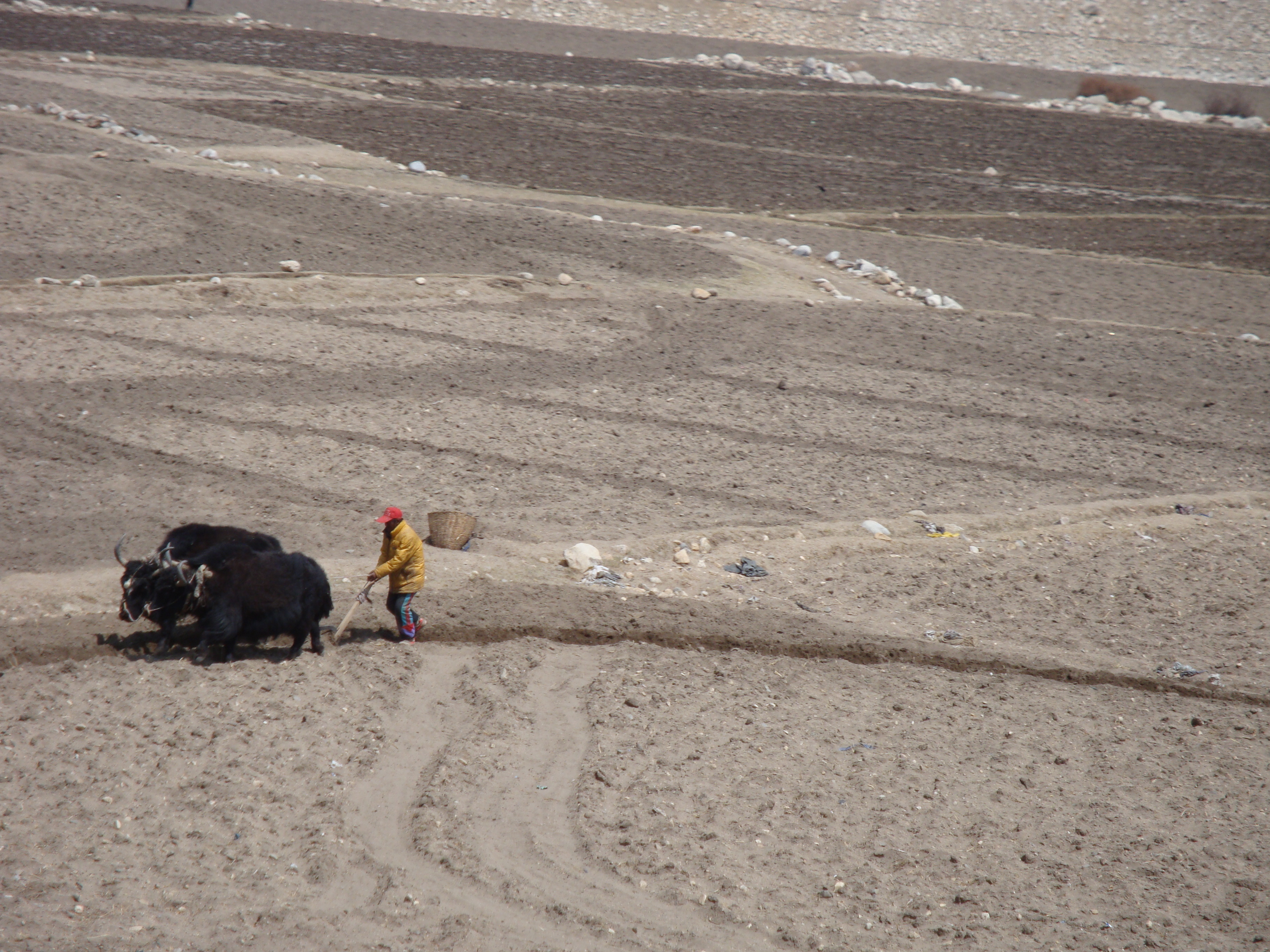
The train passed through a few gorges, houses stood a little taller, people were ploughing dirt with Yaks. Technically, I don’t know if you can refer to this stuff as ‘soil’. It’s just dirt. Sort of a cross between crushed rock and cement.
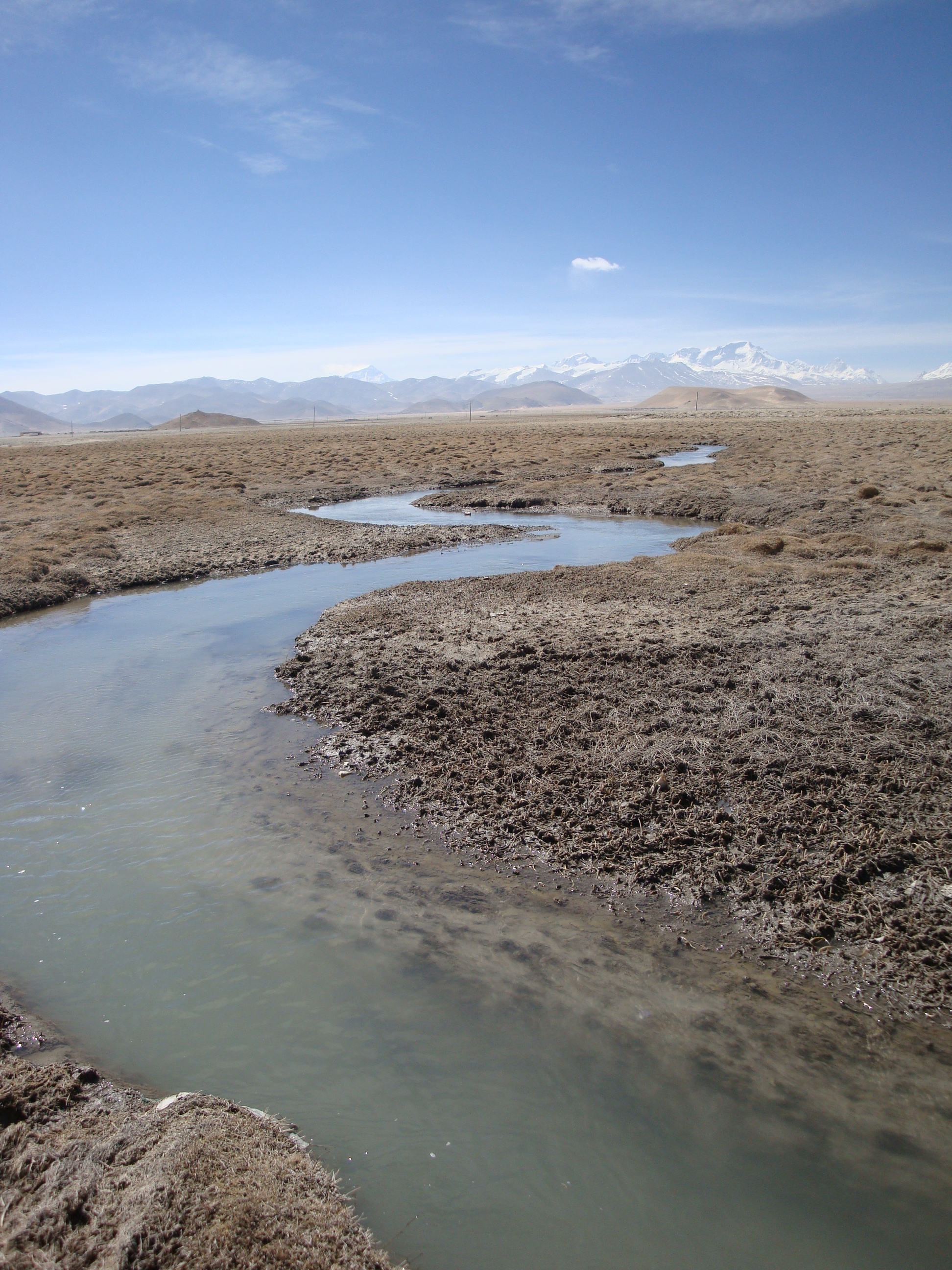
We pulled into Lhasa Station, which is this massive modern Stalinist edifice and everybody fell off. We were still trying to prise our cases out from under the bunk, when the cleaners came round and ripped out all the carpeting. Our slippers were taken away and incinerated. We ambled off the train, 4 of only 8 foreign tourists. Either that, or the others had succumbed to the down-draft of the squatter and were sprinkled, across the frozen wastes of the Tibetan Plateau, looking bewildered with their shredded trousers round their ankles.
After much processing, inscrutable stares and chopping of chops, we met our new guide Kel Sang. He was a big beefy lad, brought up on ample supplies of Yak meat and barley, with skin the colour and texture of an old leather belt, but why some Tibetan nomad would name his boy after Superman’s dad, I have no idea. We were his sheep and his job was to herd us for the next 7 days.
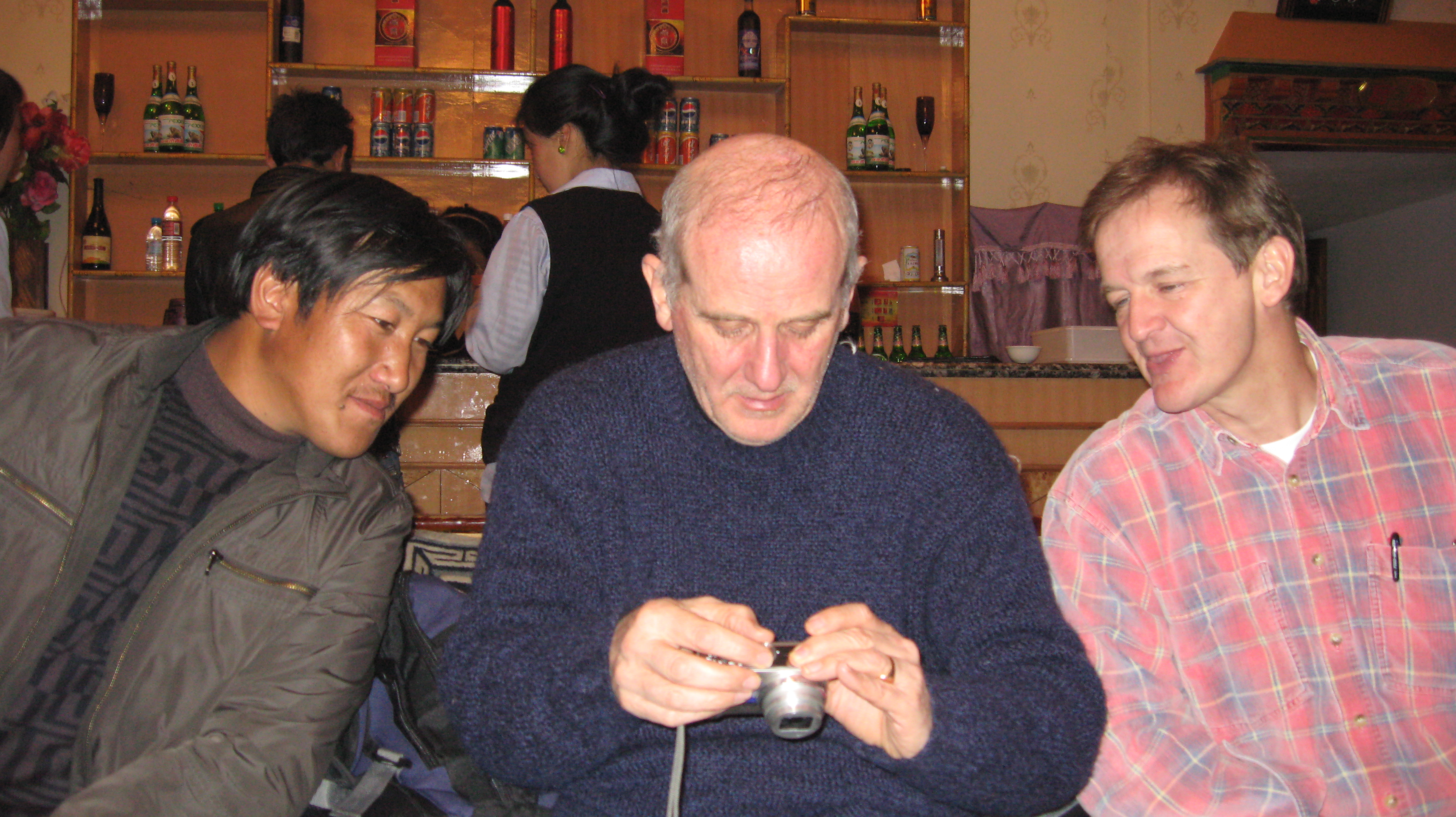
His English was “adequate” when talking about anything to do with Buddhism (But no mention of the 14th Dalai Llama please, except to say that he abandoned ship and is considered a ‘Splittist’). (We met lots of ‘Spittists’ in the following days, but that’s a different thing entirely). However, his conversational English left a lot to be desired and questions about anything other than Buddhism were usually answered with “Yeshyeshyesh” which, although very positive, does not necessarily lead to an exact understanding.
Q – Do you like living under Chinese rule or would you prefer to be independent and free to worship this really tall dude the colour of dayglo bananas.
A – Yeshyeshyesh.
I dunno, perhaps he wanted both.
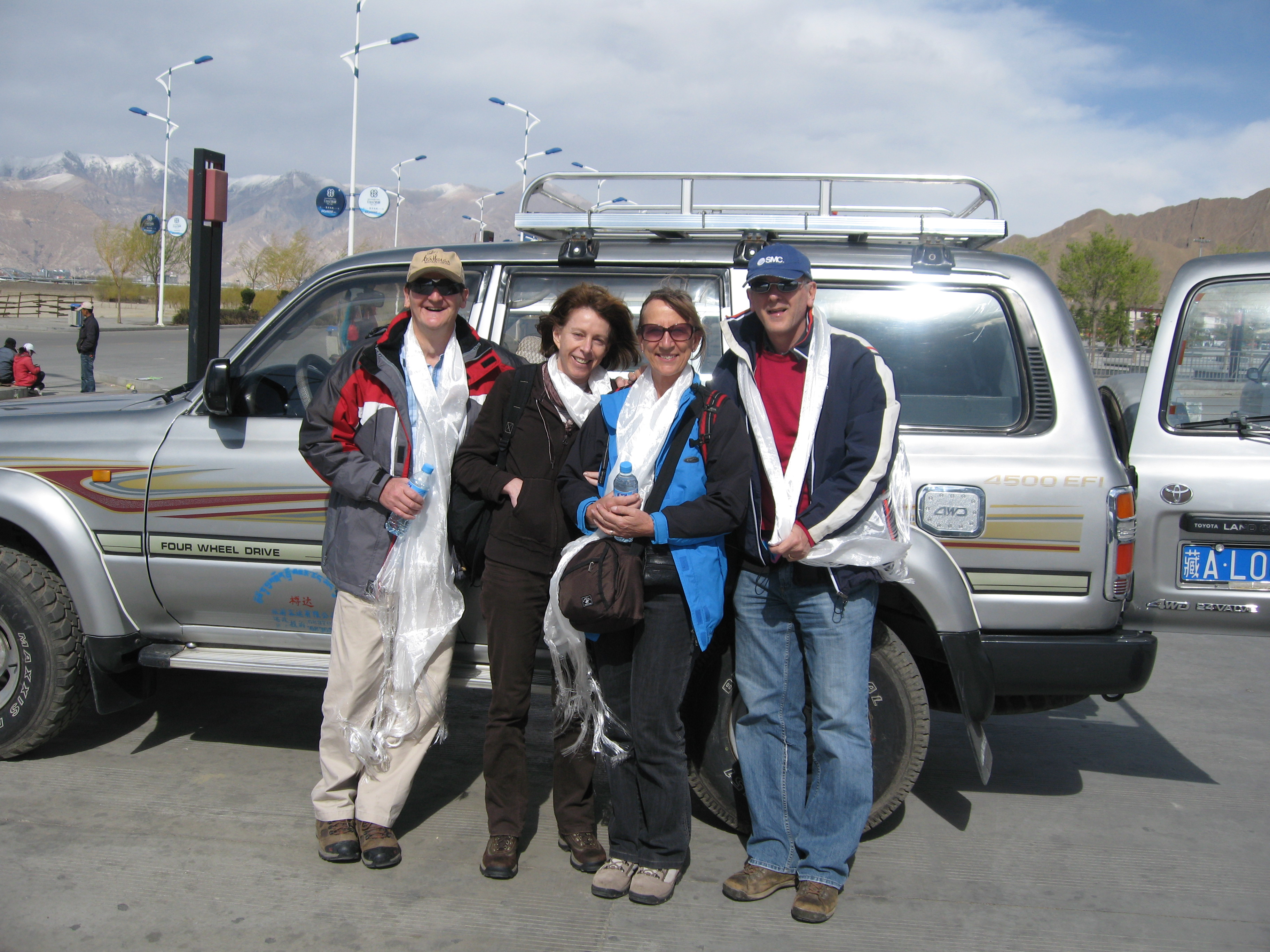
Anyway, he introduced us to Padro, who drove the Landcruiser. Padro, we discovered quite quickly, was apt to pull out in any traffic in any direction, without bothering to look. A result, I was convinced, of a fatalistic Buddhist belief in Karma. Okay for him, but is reincarnation an option for visitors? We made it to our first Hotel. Strictly 3 star Chinese standard, but the sheets were clean and, occasionally, there was hot water. After 3 days on a train, we needed to shower.
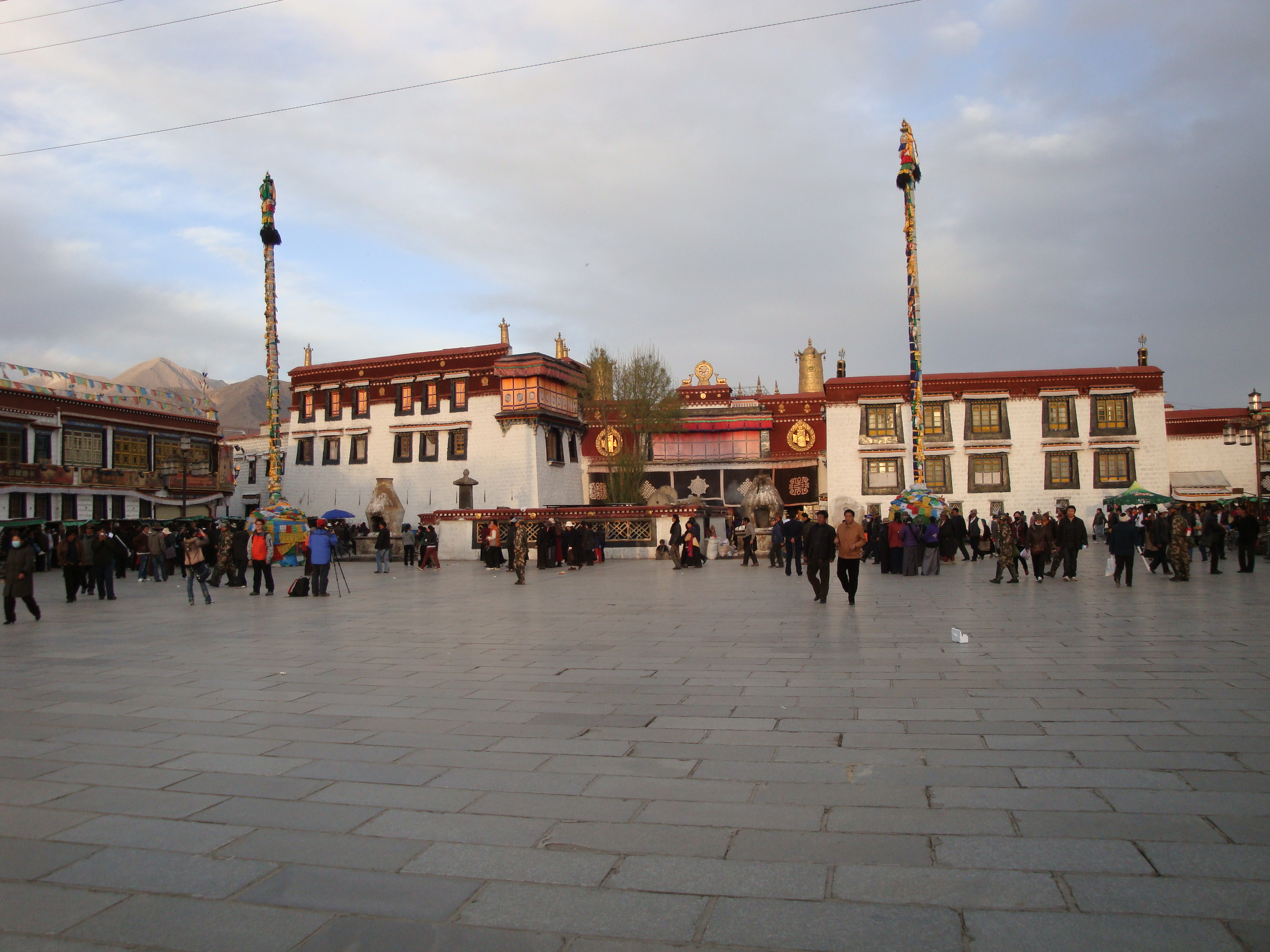
That evening we took a walk into the Old Town and saw the Jokhang Temple. Outside the front Gates, devotees were prostrating themselves on the floor, which was cold and hard. People with little or no money, dressed in rags, dirty from days of doing this :-
Step 1 – stand upright with arms raised and hands clenched above the head.
Step 2 – drop hands and in one flowing movement slide yourself headlong along the floor with arms outsretched in front, touch forehead to floor.
Step 3 – slide back to knees push body upright and raise arms.
Step 4 to 10,000 Repeat.
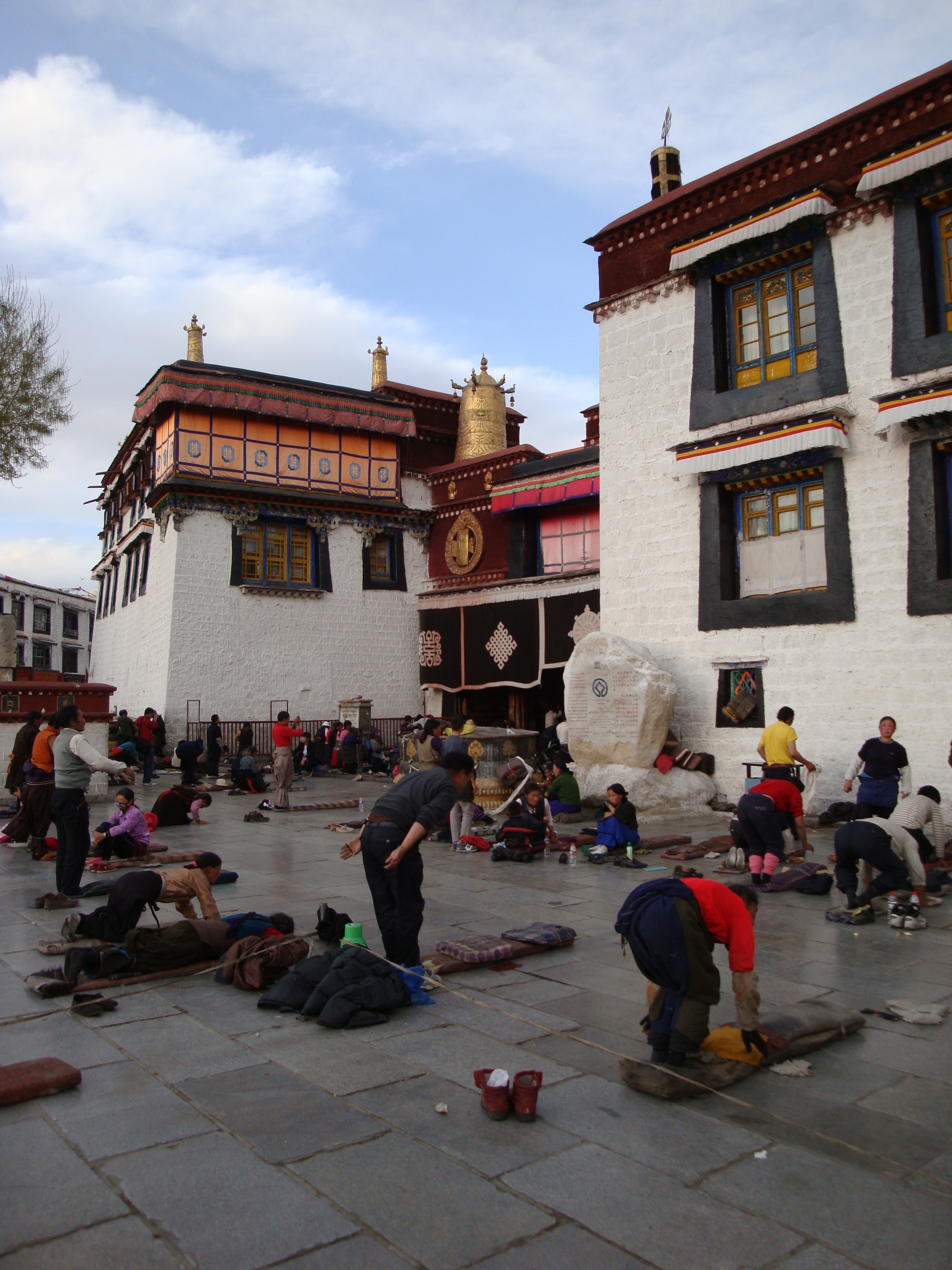
For variation, you can start at your front door and repeat daily inserting 3 actual steps between Steps 1 & 2, until you get to Lhasa. We saw one guy who had done this from his home 450 miles in the West, other Pilgrims gave him money, probably enough to get his hips replaced, although I doubt they can do that sort of thing in Tibet.
At this juncture it would be fair to state my position on Religion in general and Buddhism in this particular instance. Religion is fine. Buddhism, in particular, is a beautiful philosophy. Churches, Temples, Monasteries, Priests and Monks tend to be parasites. Okay there are many good ones, but I am convinced that in history there have been more bad than good, or that at the very least, they have caused more evil than good. The people of Tibet, seem to me (With all my 10 days of experience) to be a spiritually beautiful race of people, with enormous dignity and pride. They are a very warm and compassionate people.
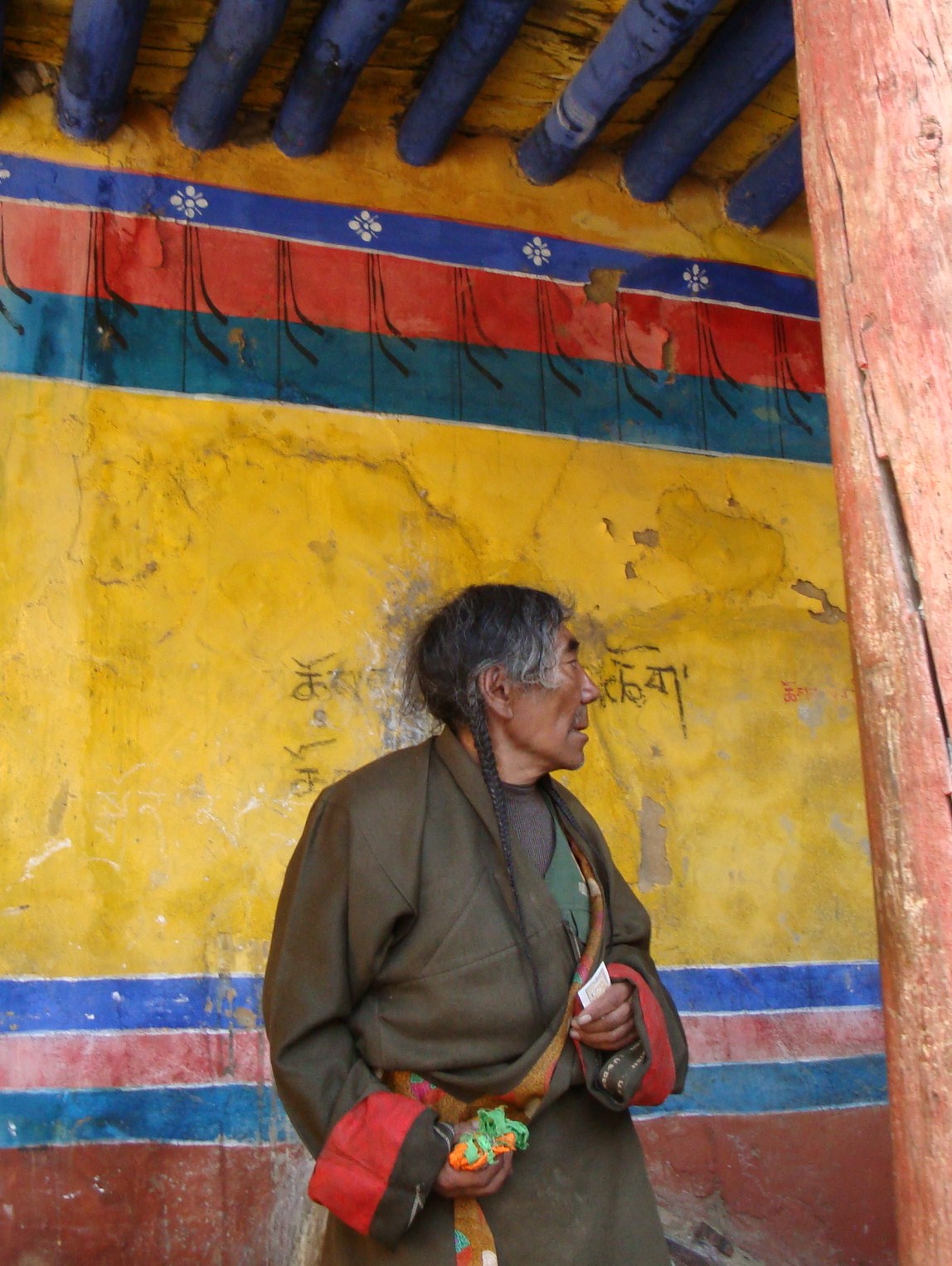
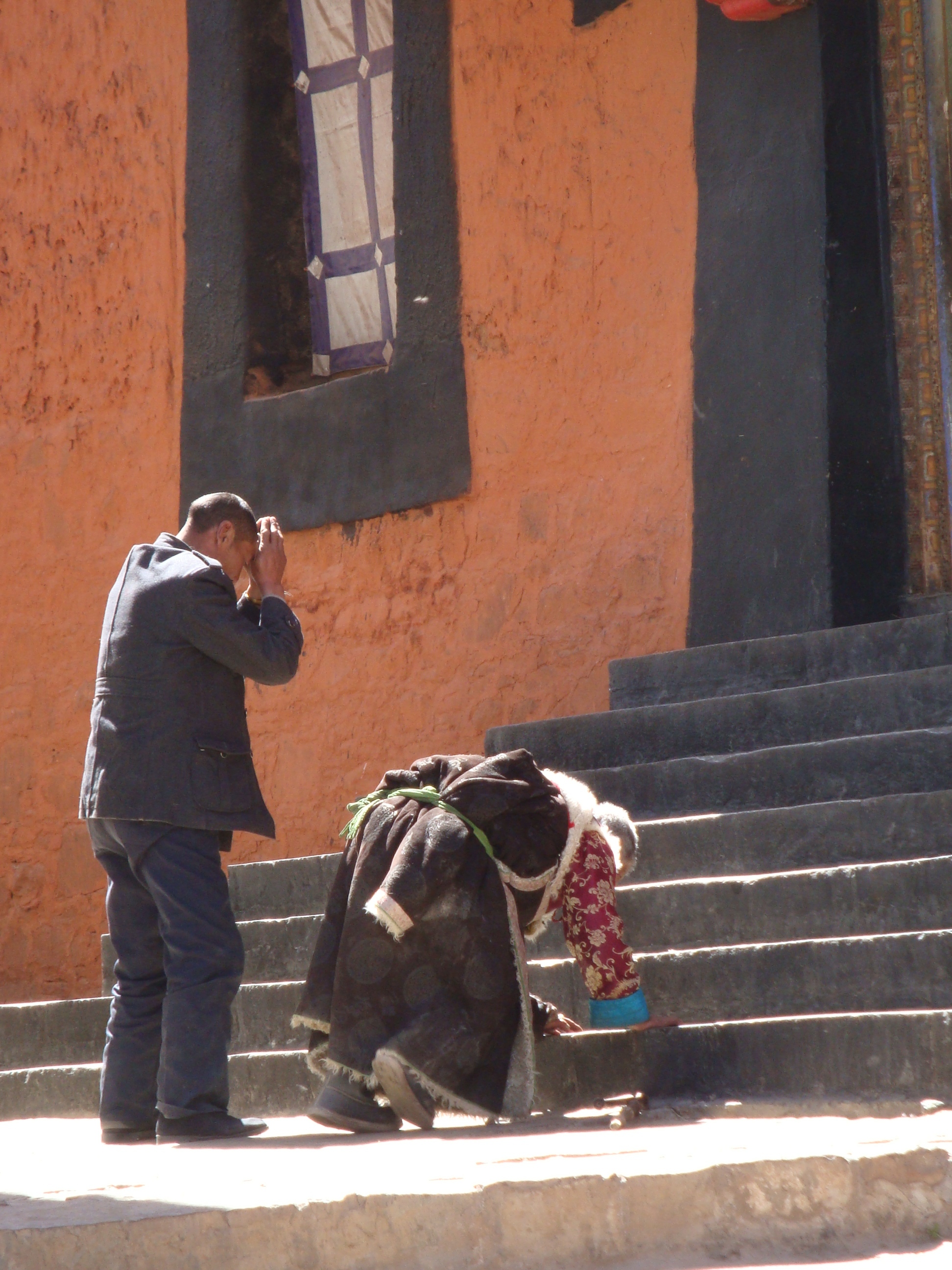
Their Church tells them that this is a hard life, but that if they prostrate themselves beneath the feet of the Church and hand over what little money they have and carry out all manner of ritual abasements from dawn until dusk every day of their brutal lives, then they might get a better go next time round, maybe, no guarantees. The monks sit there in the golden glow of the Yak butter lamps and rake in the cash.
The Christians do it, the Muslims do it, the Hindus do it and the Buddhists do it. Show me the Church that says, “Keep your money, make yourself a good life, look after your family, friends and neighbours, create beauty when you can and look after the Environment for your inheritors, because frankly we have no idea what happens next, although we would like to think that it’s something nice” and I will join that one.
So some of my rantings may seem a little cynical, nay offensive, sorry it’s not my intention to offend, but I do feel offended by much of what Churches have to offer.
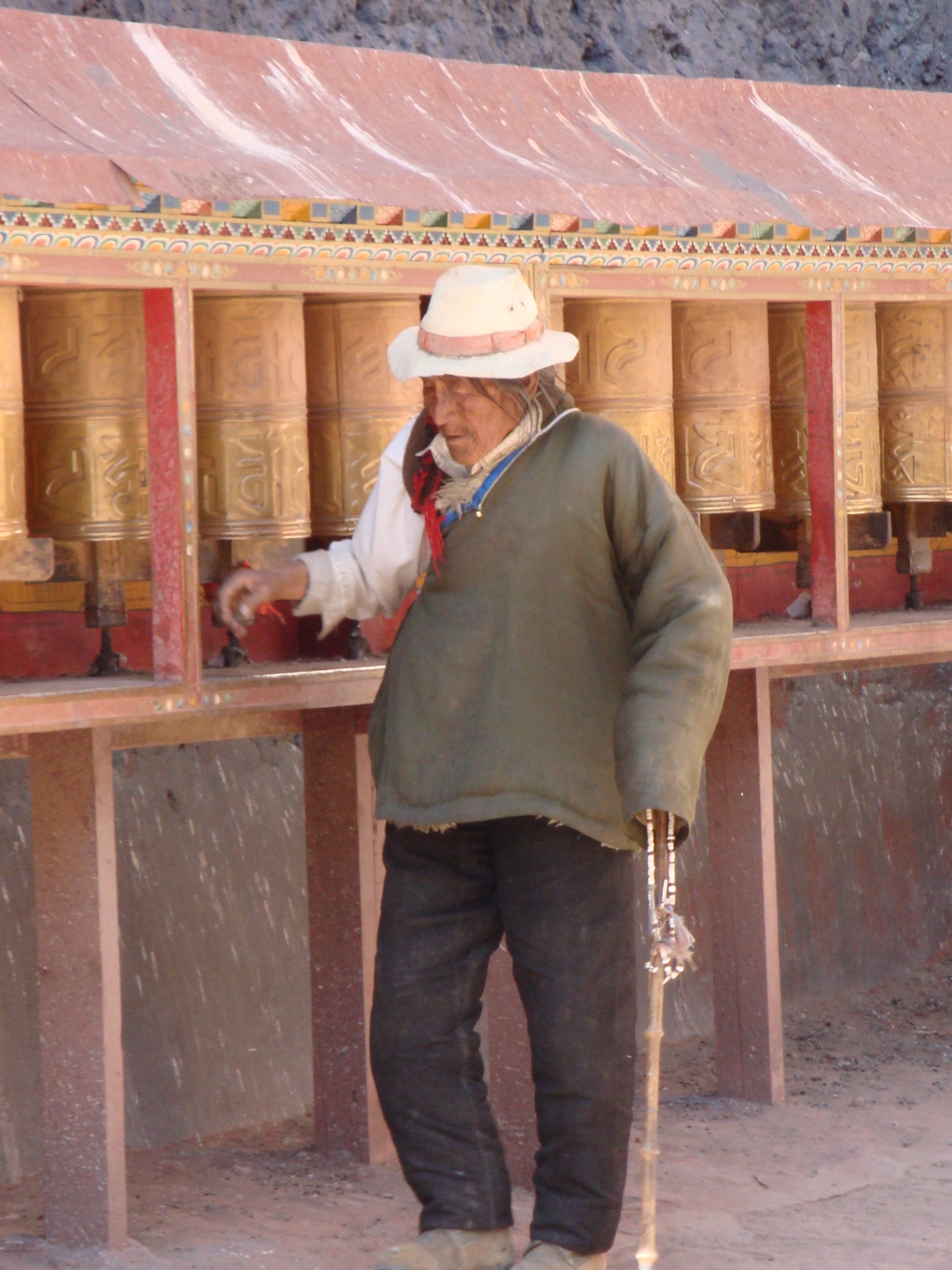
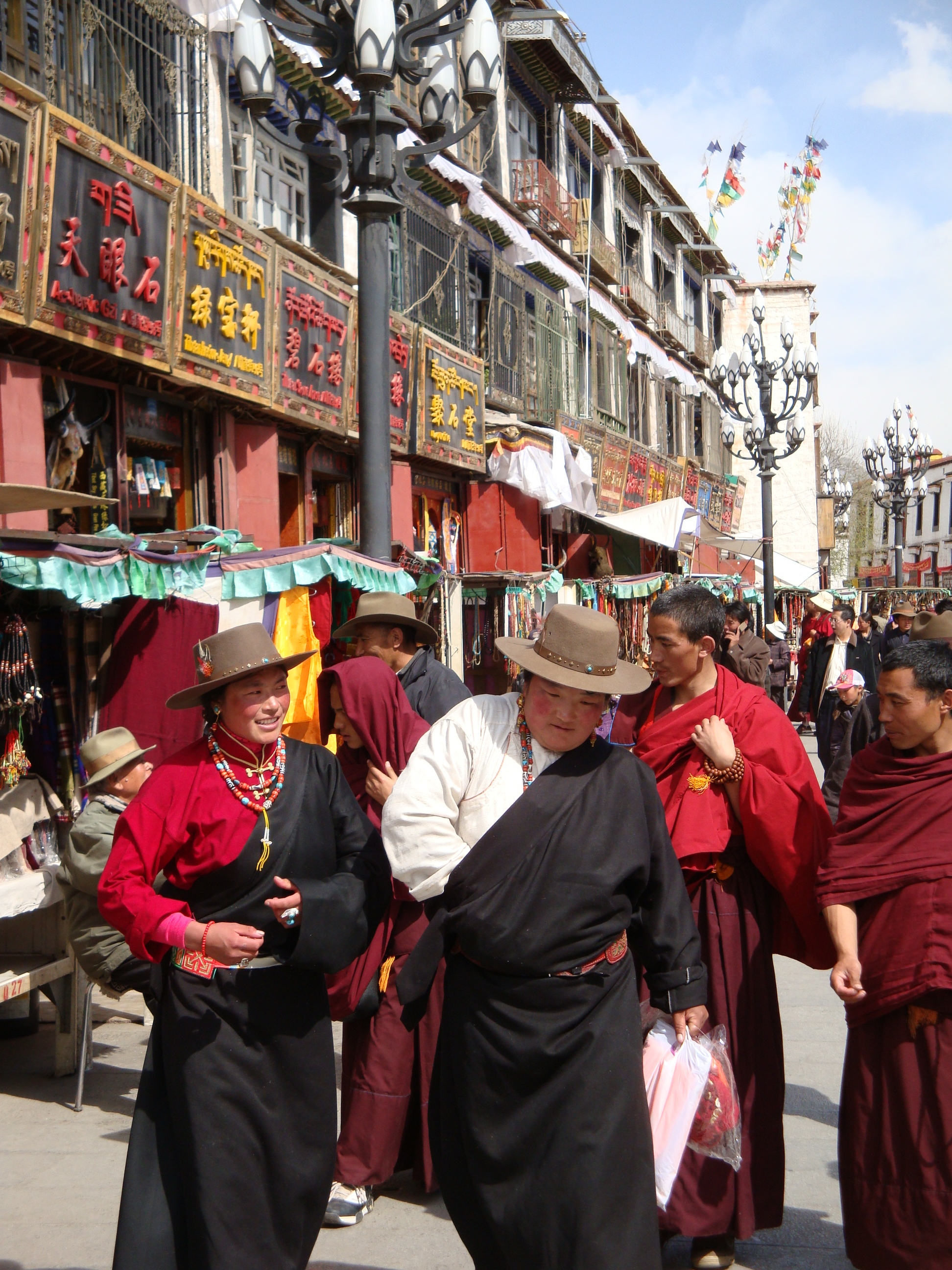
Anyway the Jokhang is surrounded by a street called the Par Kor. At the four corners there are huge poles covered in prayer flags and the devout gather every morning and evening to walk around this circuit, rolling their prayer wheels and having a good chant. I guess it’s about a kilometer in circumference and the street is lined with shops and market stalls. Everybody and his brother is out for a walk and it’s brilliant. A riot of colours and smiley faces from all walks of life. Lots of traditional costumes, but also plenty of nylon baseball hats and sneakers, a real mix of ages. You have to do this circuit at least 3 times, although lots of people seem to go on for hours, but you don’t bump into anybody because they all walk clockwise. How did they know to do that? In a country where they had no clocks? Spooky.
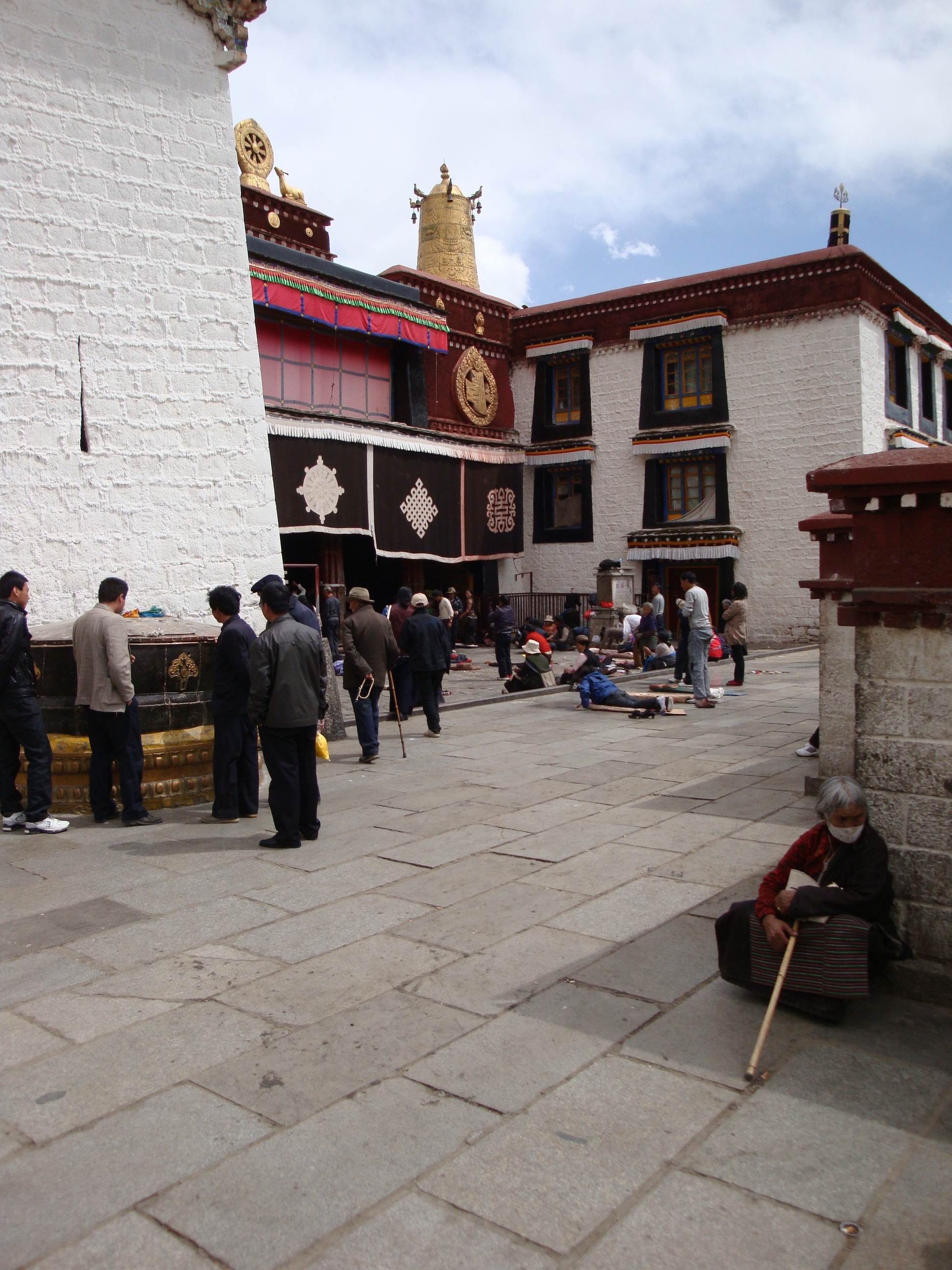
Half way round the square, we came upon a small temple, the outer walls of which were surrounded with prayer wheels and the inside of which was filled with one enormous prayer wheel. Just in case you get bored walking round the Par Kor, someone has thoughtfully provided this alternative entertainment, that you can walk round all day.
In the evening, we had our first Tibetan meal. Tibetan restaurants are really cool, actually damn near freezing. The tables are about 2 foot off the floor and the benches about 1 foot. The tables have sides that come down to the floor. Evidently, nobody in Tibet has knees. There is nowhere to put your legs. You end up sitting side-saddle, with your Western namby-pamby knees under your chin and your guts twisted and constricted. Voila! You already feel full before you have even eaten anything. Then the food comes. This is Carbo Central. Potatoes, noodles, rice and bread. For vegetables, we have rice and potatoes. For meat, we have Yak and for dessert, you can have the choice of rice pudding or bread and yak butter pudding.
But hey, we had hot showers and beds you could roll-over in.
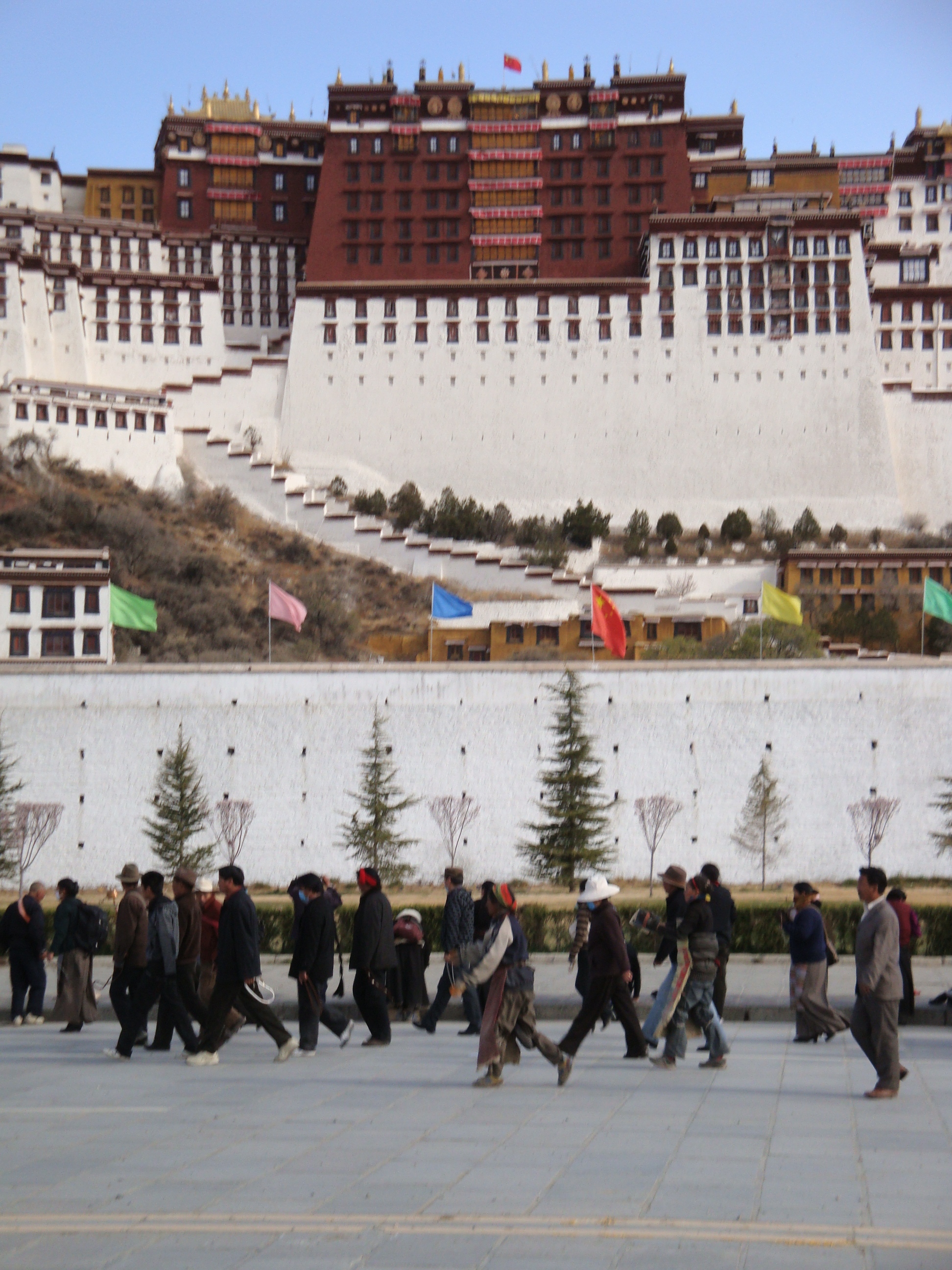
The next day, we went to see the Potala. This is a truly superb building. The Chinese have done their best to spoil it, surrounding it with radio masts, military observation points and a huge Tiananmen Square complete with obscene memorial to the Liberation of the Serfs. Okay guys, we get the point. The Serfs needed to be liberated. Kudos. But nobody needs this kind of Fascist memorabilia. Nobody photographs this wasteland, not with the Potala next to it.
The Potala takes no notice. It sits serenely on its hill giving off a gentle “Ohhhhmmmmmm”. The white, ochre and maroon walls. The gold ornamentation. The flags. The huge blue sky. The air so thin and clear and the colours so vibrant. Thousands of people walking around the outside, clockwise, prayer wheels spinning, prayer beads rattling, several pilgrims doing the prostration shuffle.
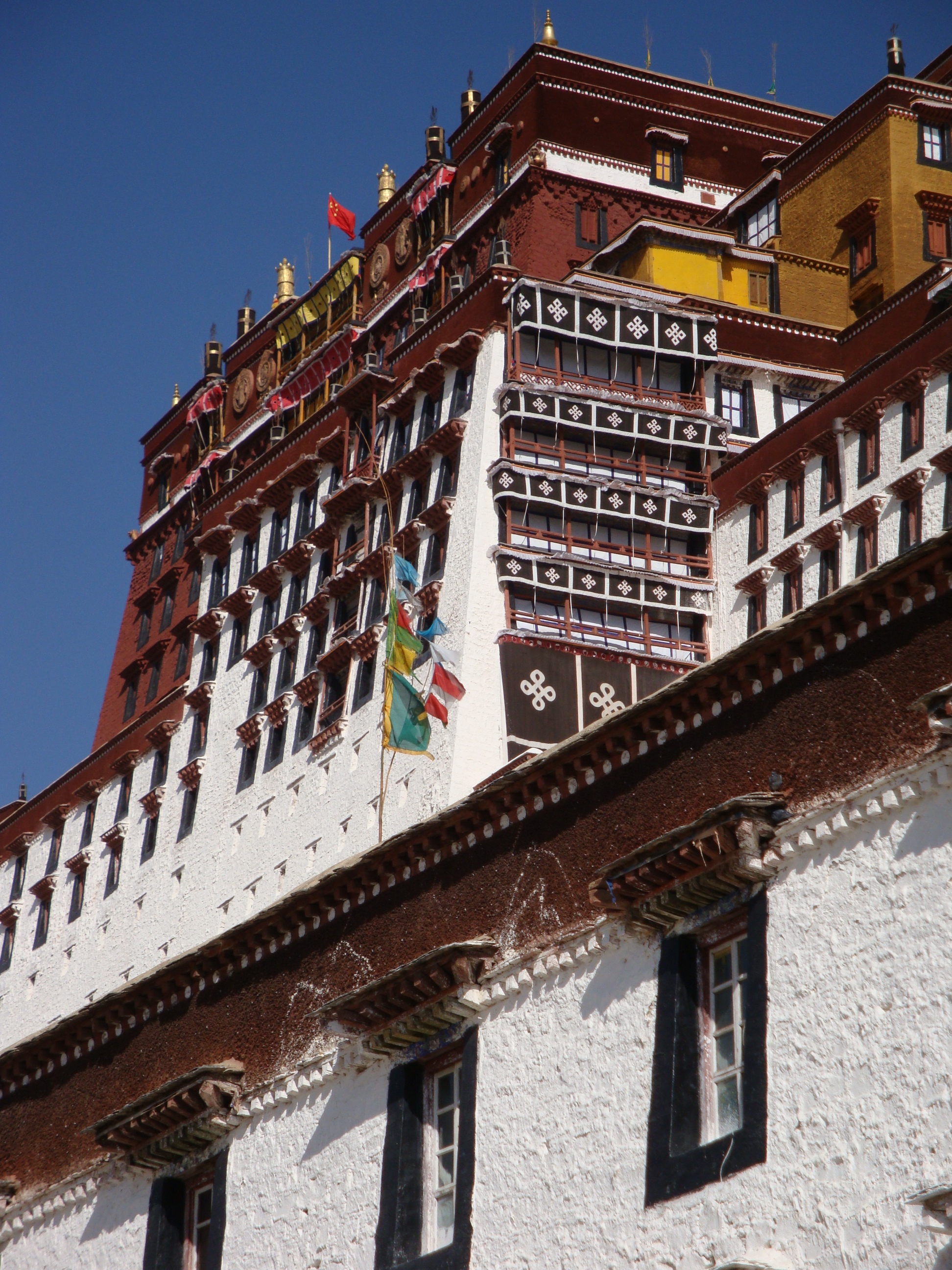
We jostled our way in and started to climb, slowly. It was here that Kel Sang got into his stride. The 14 Dalai Llamas, the 10 Panchen Llamas (Nobody counts the 11th, he’s a stooge), the 53 kings, the 4 Kings of kings, King Strontsam Gampo, Sakyamuni, the 4 Protectors, Past Buddha, Present Buddha, Future Buddha, Compassionate Buddha, Medicinal Buddha, Naughty Buddha, Lady Buddhas, MacBuddha with fries and the Yak Butter Super Slurpee. Okay, got that? Because next door there is another Chapel with all the same stuff in it, but in a different order and there will be a test.
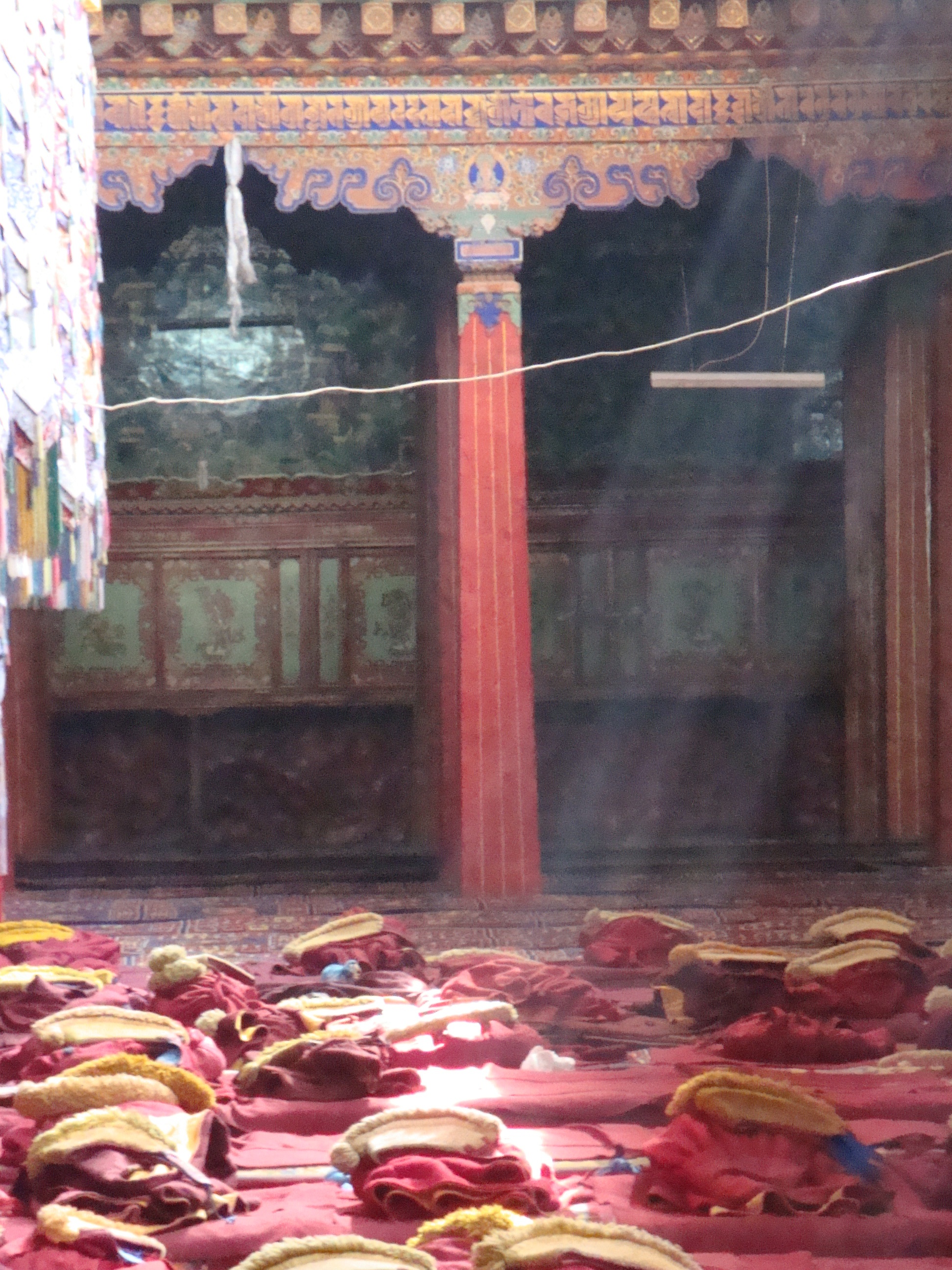
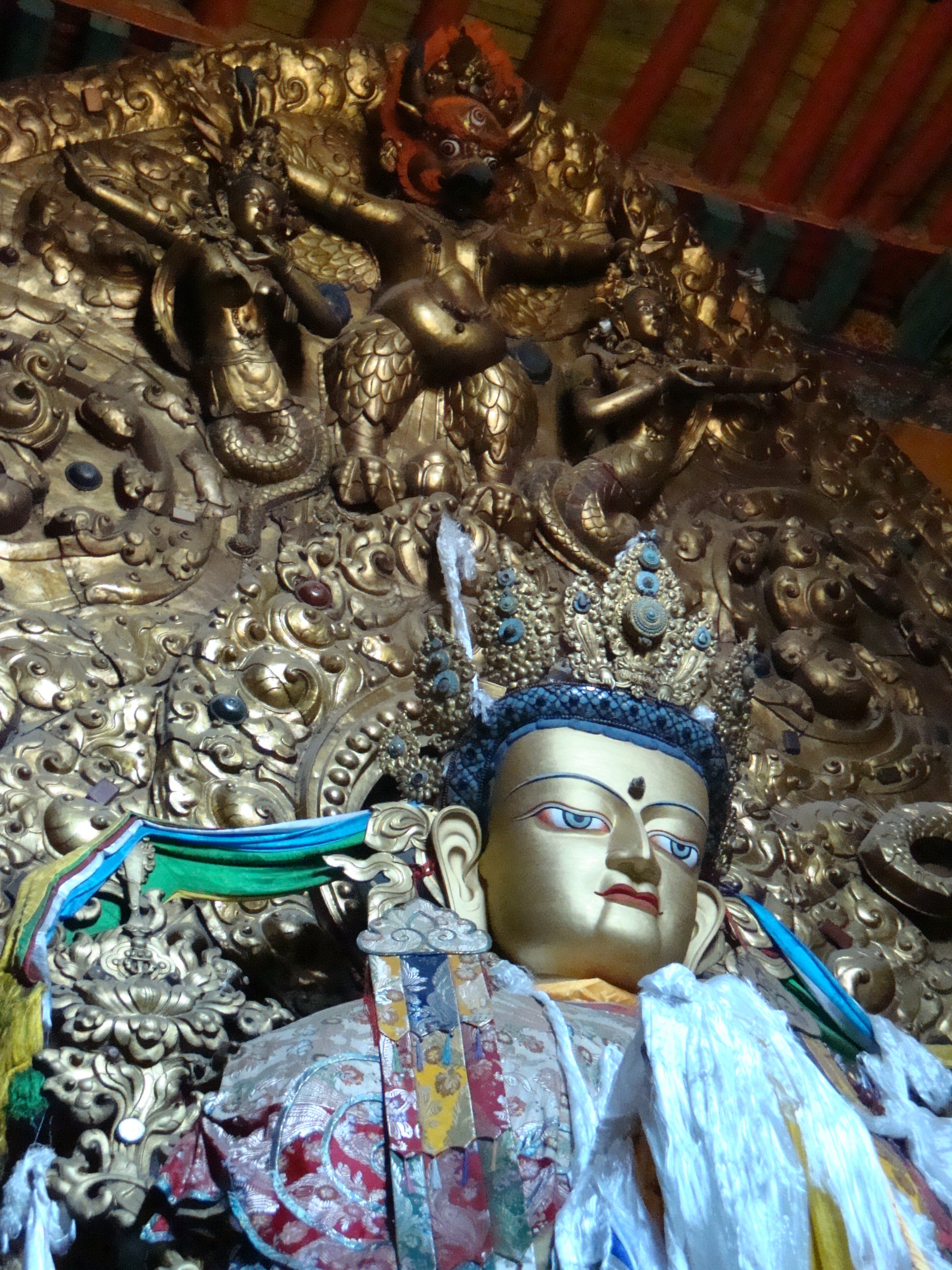
Multiply this by about 50 and you have the average Tibetan Temple or Monastery. Each Chapel has urns full of yak butter with several wicks on the go. Pilgrims race around with thermos flasks of liquid butter to top them up and stuff money into every available nook and cranny. Monks sit in the corner straightening out and stacking the loot. Your eyes are strained from the bright light outdoors and the smoky light inside. Your clothes and hair begin to smell of burnt yak butter. You begin to understand why all the monks have such dark skins. It’s not sunlight, it’s Yak smoke. It’s a never ending procession of people. Touch all the bases, load each one with a little butter and cash, move on to the next, hurry, hurry, you might die soon and you don’t want to come back as a Chinese.
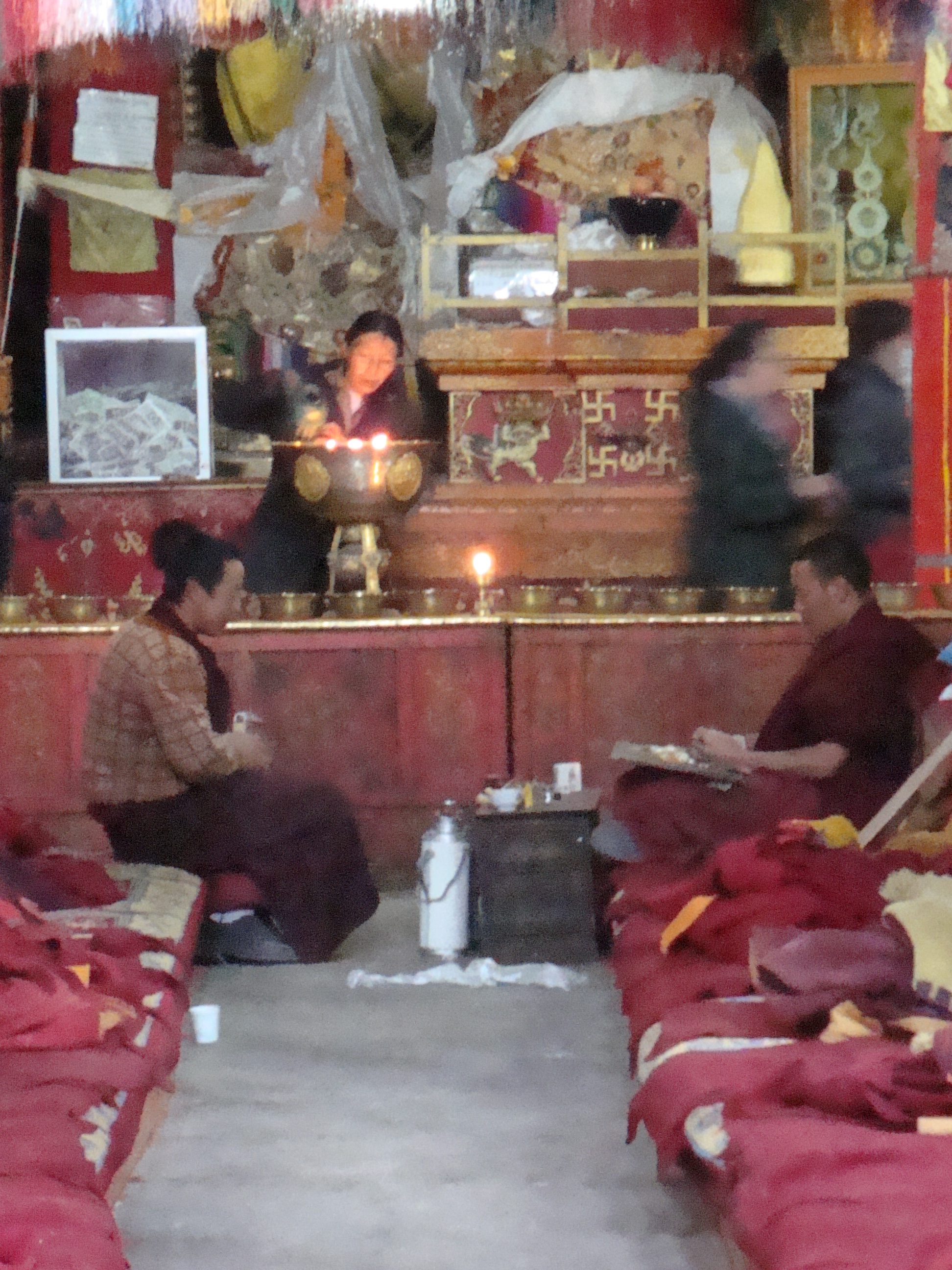
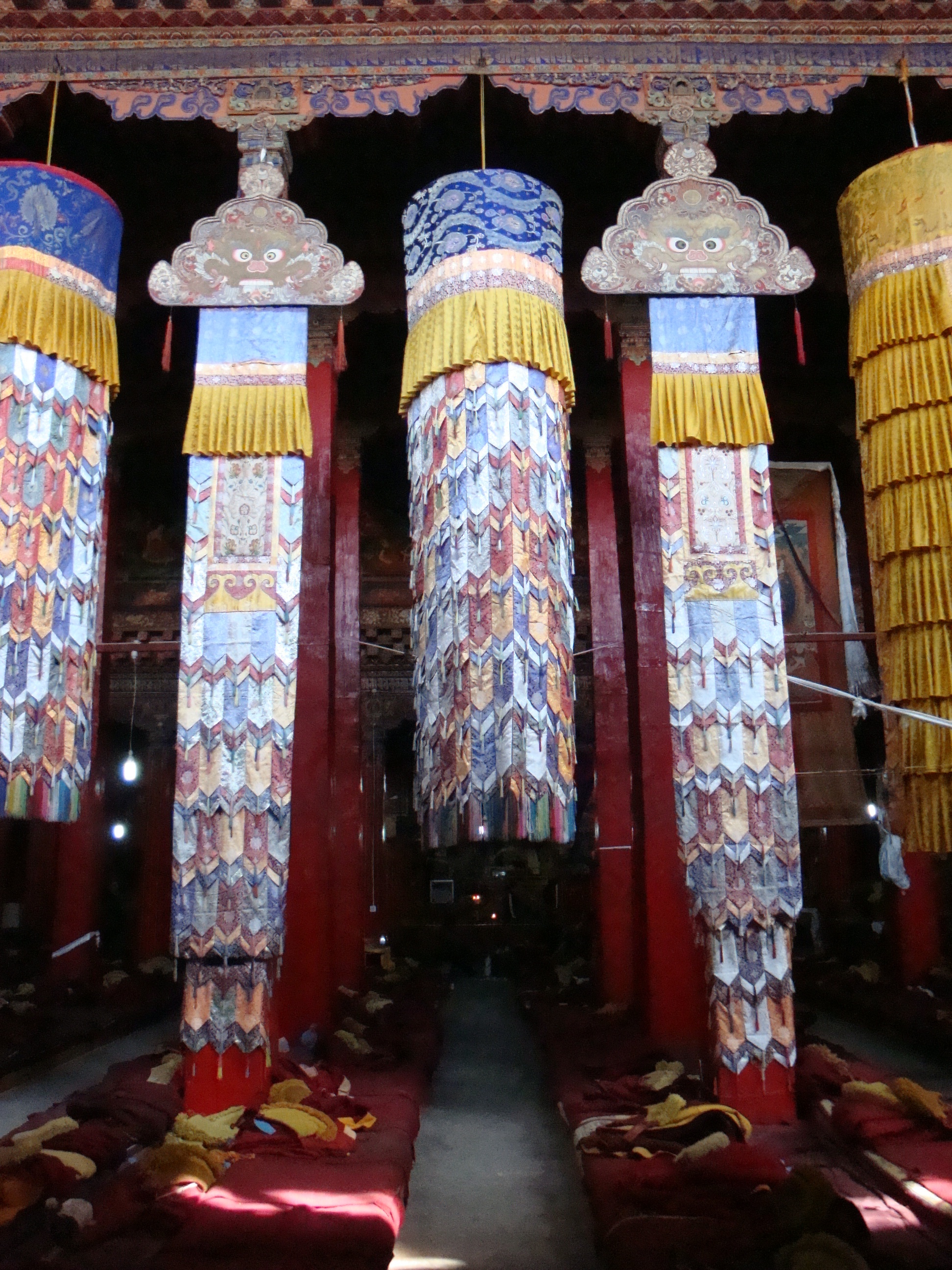
It’s beautiful and sad. It’s extremely serene and incredibly annoying.
All the Temples and Monasteries are the same. Beautiful, repetitive and repetitive within themselves. I guess Churches and Mosques are pretty much the same.
At lunch, we discovered a real coffee shop and Liz was able to get that monkey off her back. After that, we managed to find a market stall with hats big enough for my fat head and I ended up with a dapper little Indiana Jones number. With a nice wide brim and my wrap around shades, I was protected from the worst of the glare, all except for my nose and chin which, despite copious applications of factor 3,000 soon developed a Tibetan Tan.
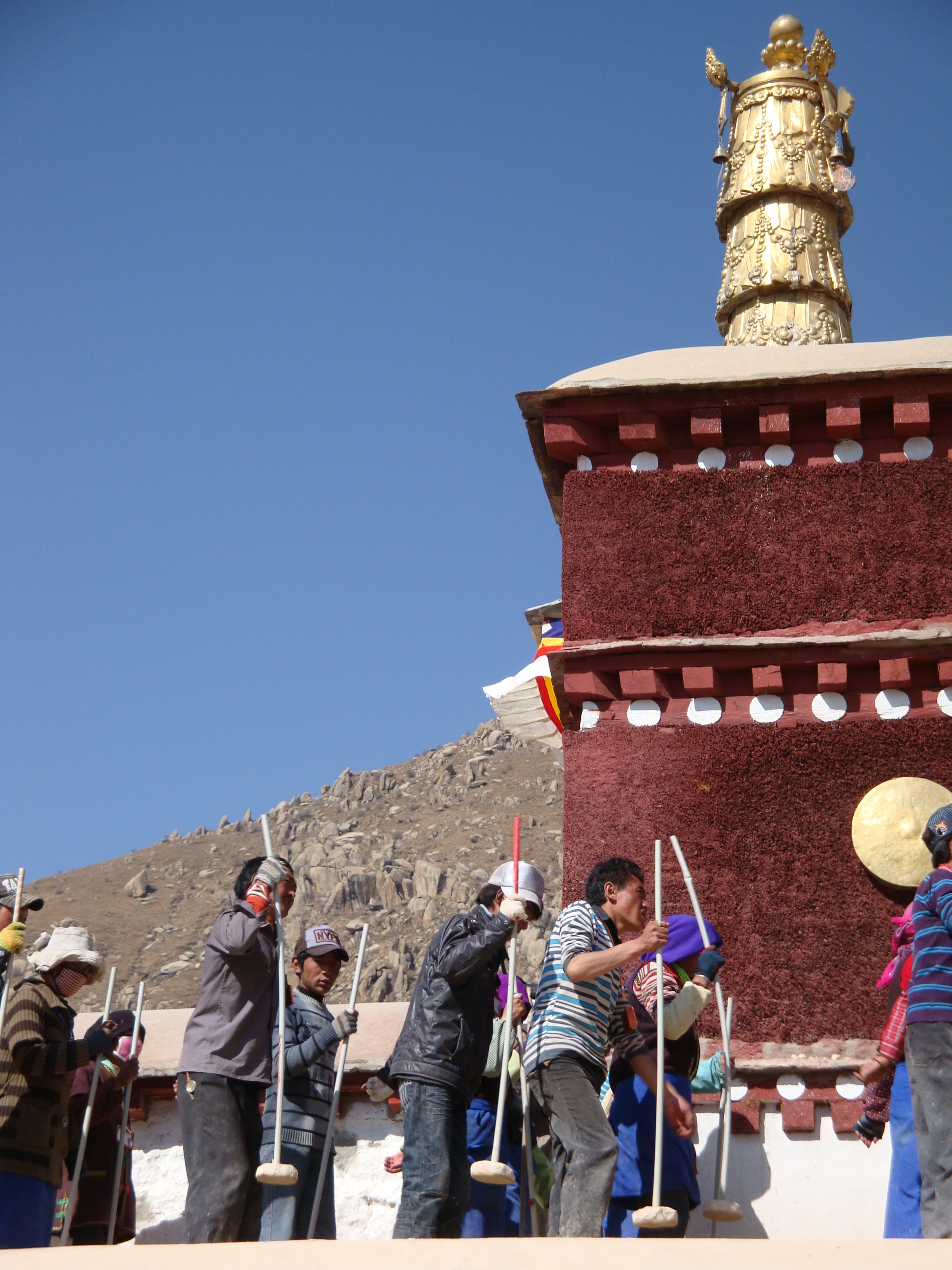
In the afternoon, we went inside the Jokhang. Even this early into the trip, we could see that we were going to get Buddha’d out. But each place had something unique and this one was under repair. The workers were compacting a new terrace floor. About 50 of them, men and women stood on the crushed stones, a long pole held in one hand with a stone weight on the end. Half the group started up a song, rhythmic wailing like a Red Indian wardance, feet stamping and the pole weight cracking down. As their line finished, the other group picked it up, back and forth, back and forth. It was brilliant.
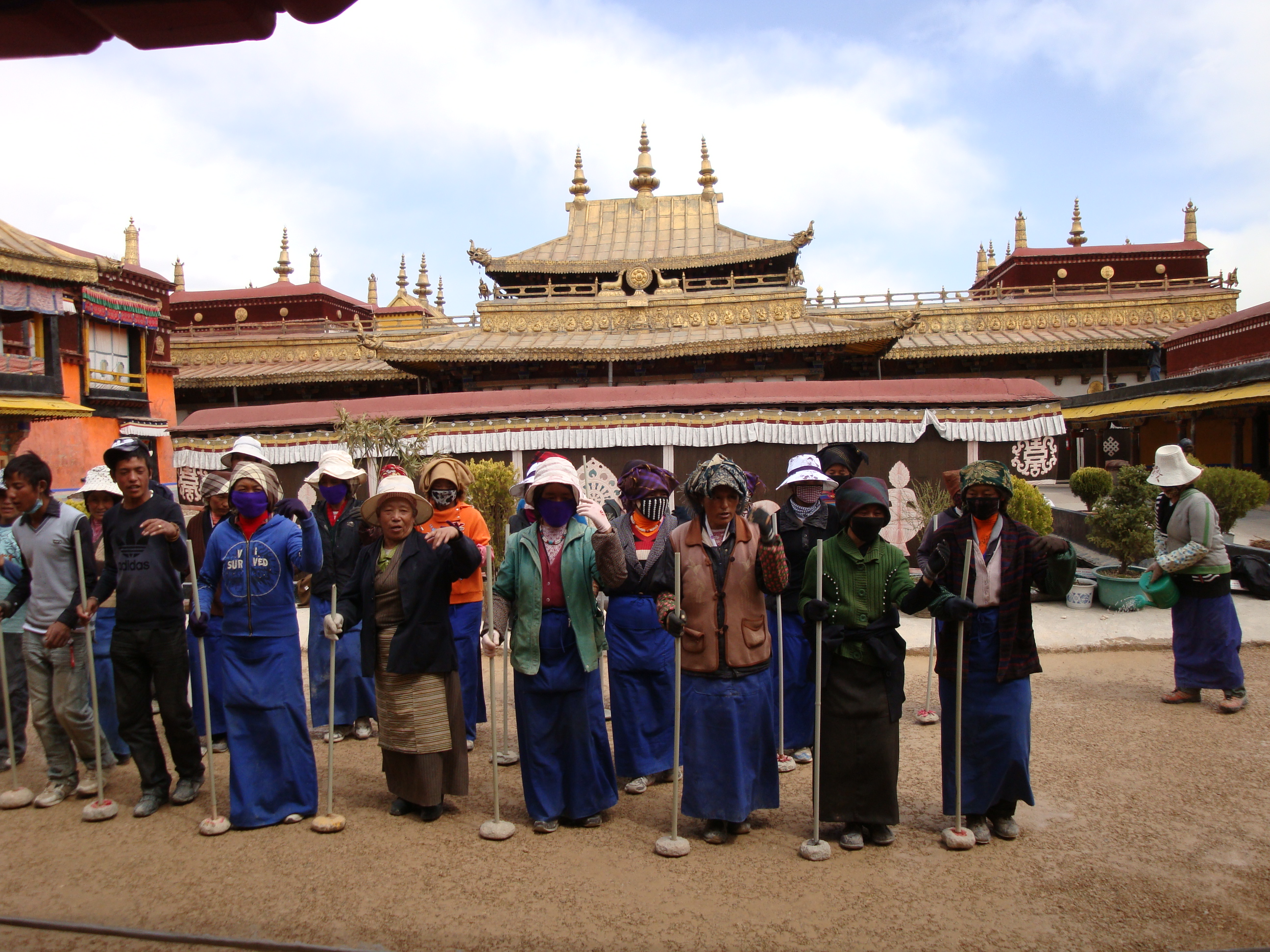
They were a group of villagers in from the countryside, travelling from temple to temple doing repairs. We said to Kel Sang that the temple should always be undertaking repairs as it was by far the most interesting thing there. We took loads of photos, but in one corner a guy, trying desperately not to look like a plainclothes Chinese cop kept waving us away. Just in case we inadvertently got a photo of the military outpost in the distance.
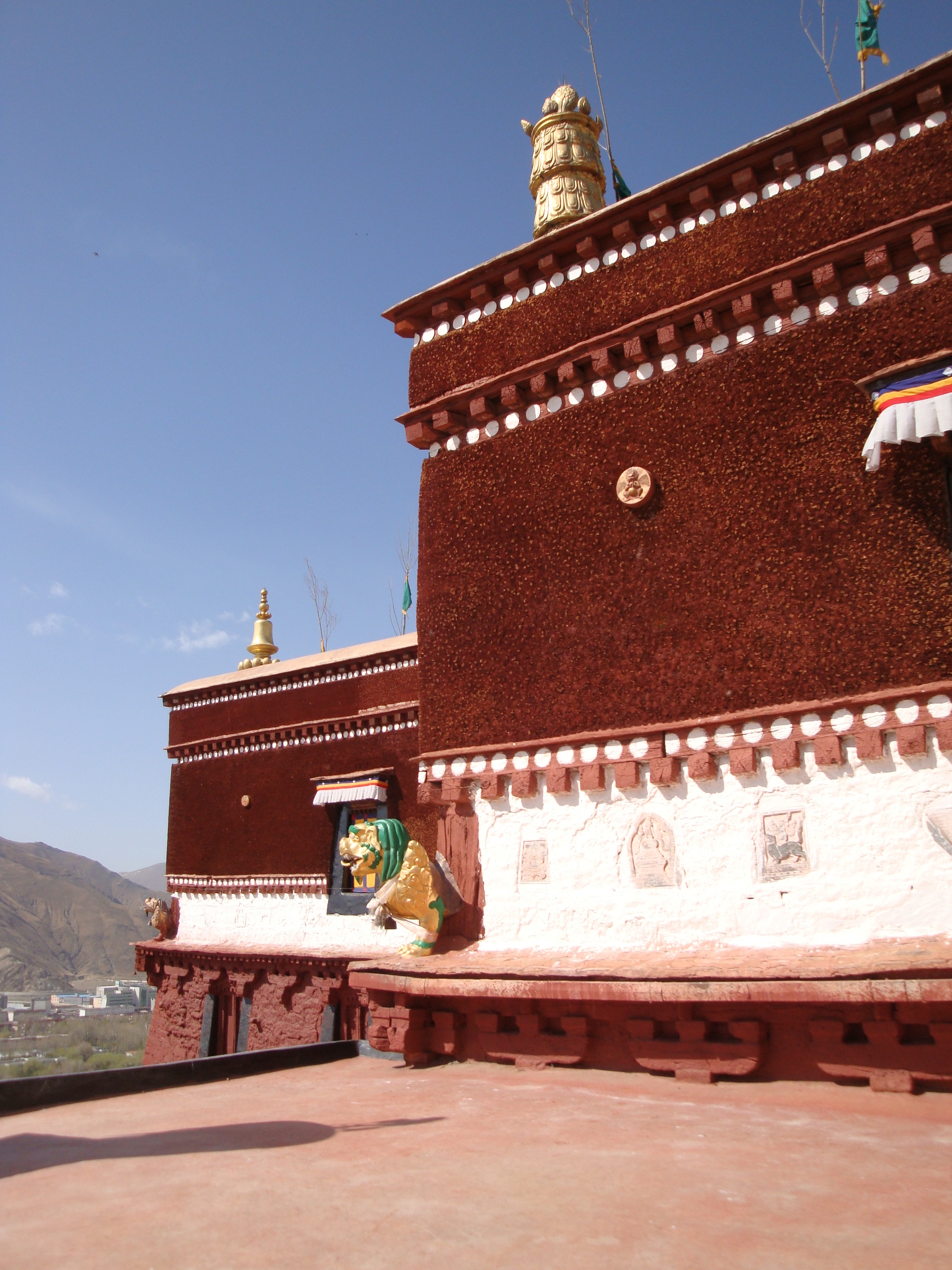
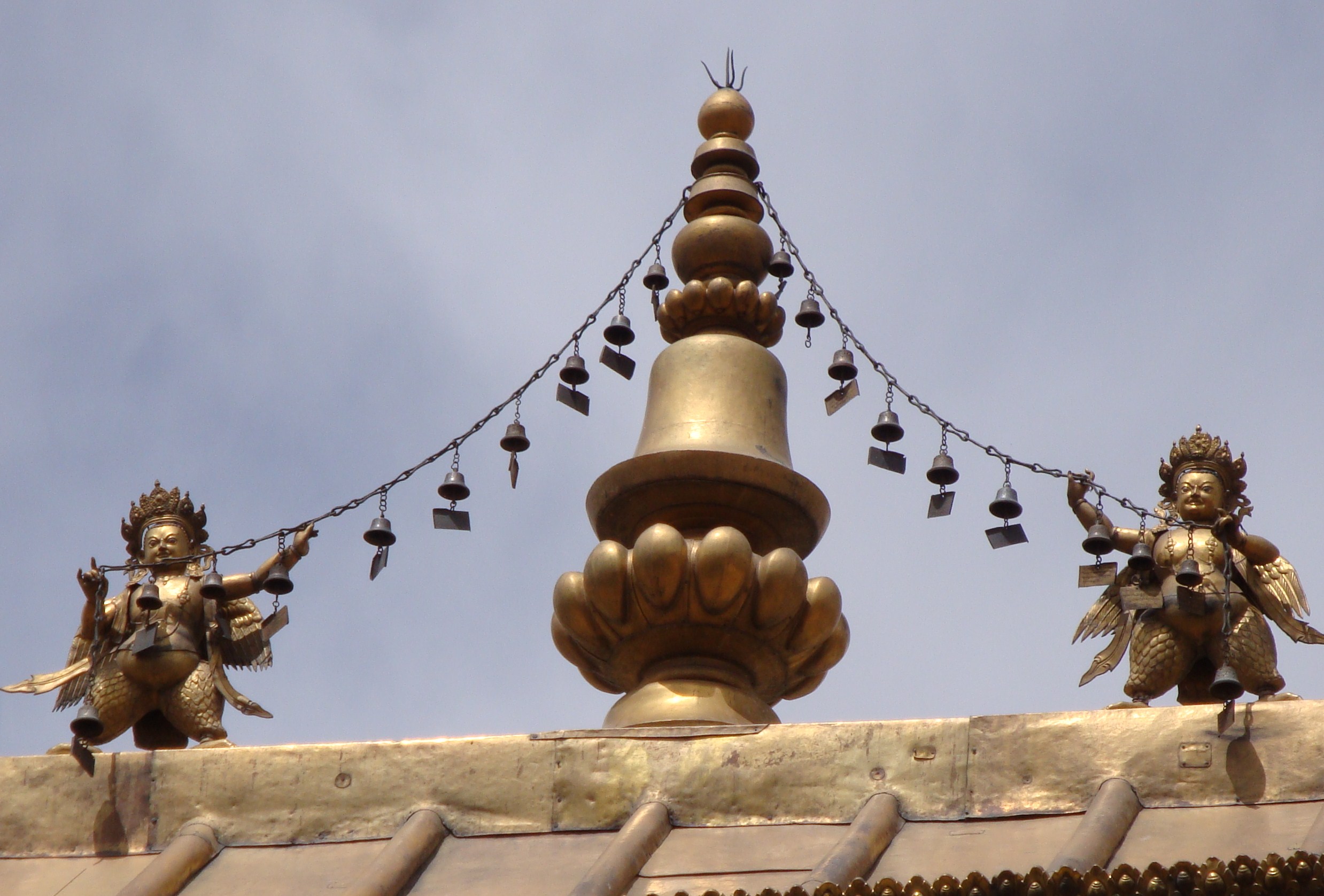
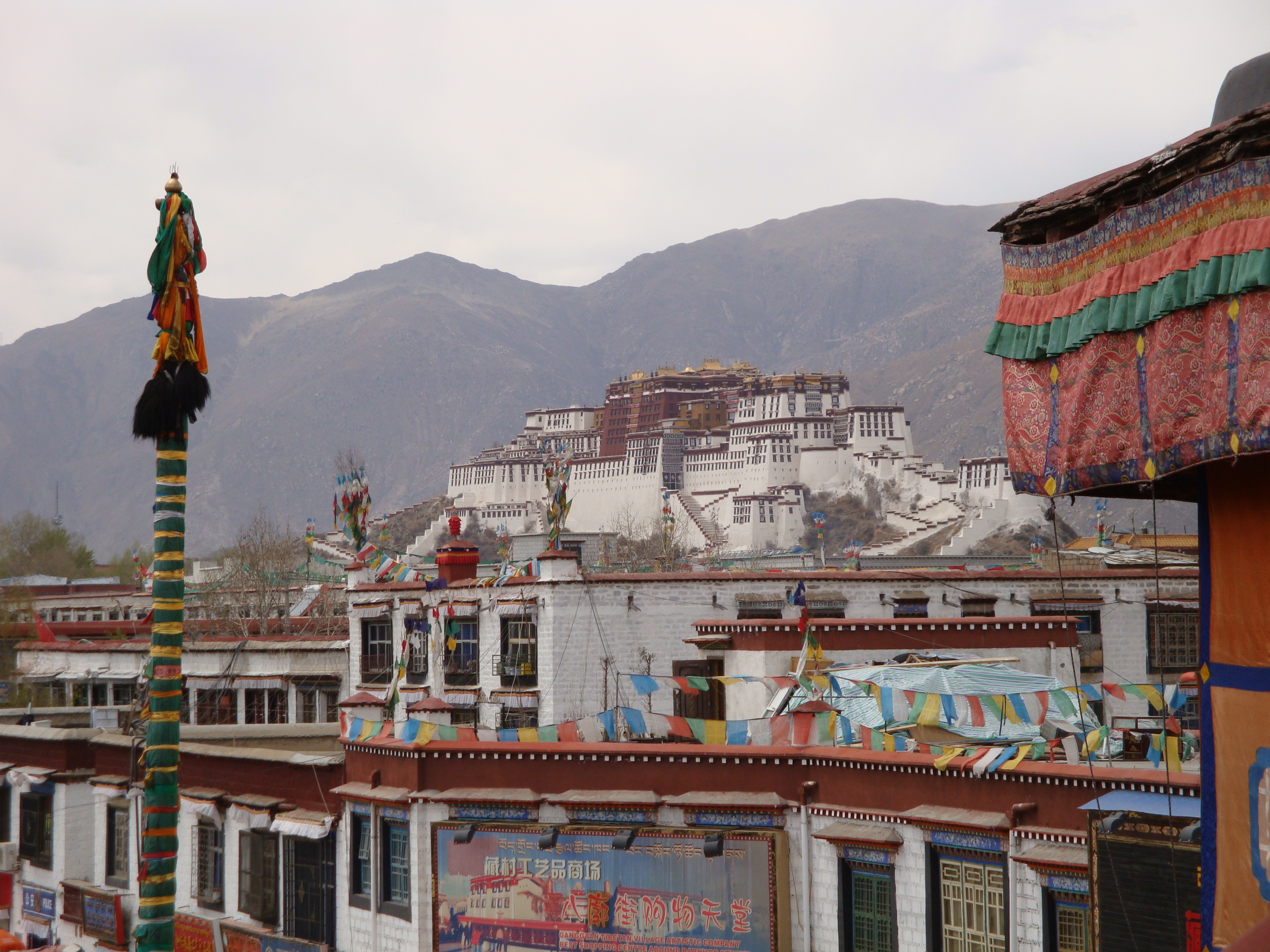
After that, we hit the market, because Jon and Liz have another house to furnish somewhere, and in the evening we discovered that most people don’t actually eat Tibetan food, because the Nepalis have introduced a thing called ‘Curry’. God bless ‘em.
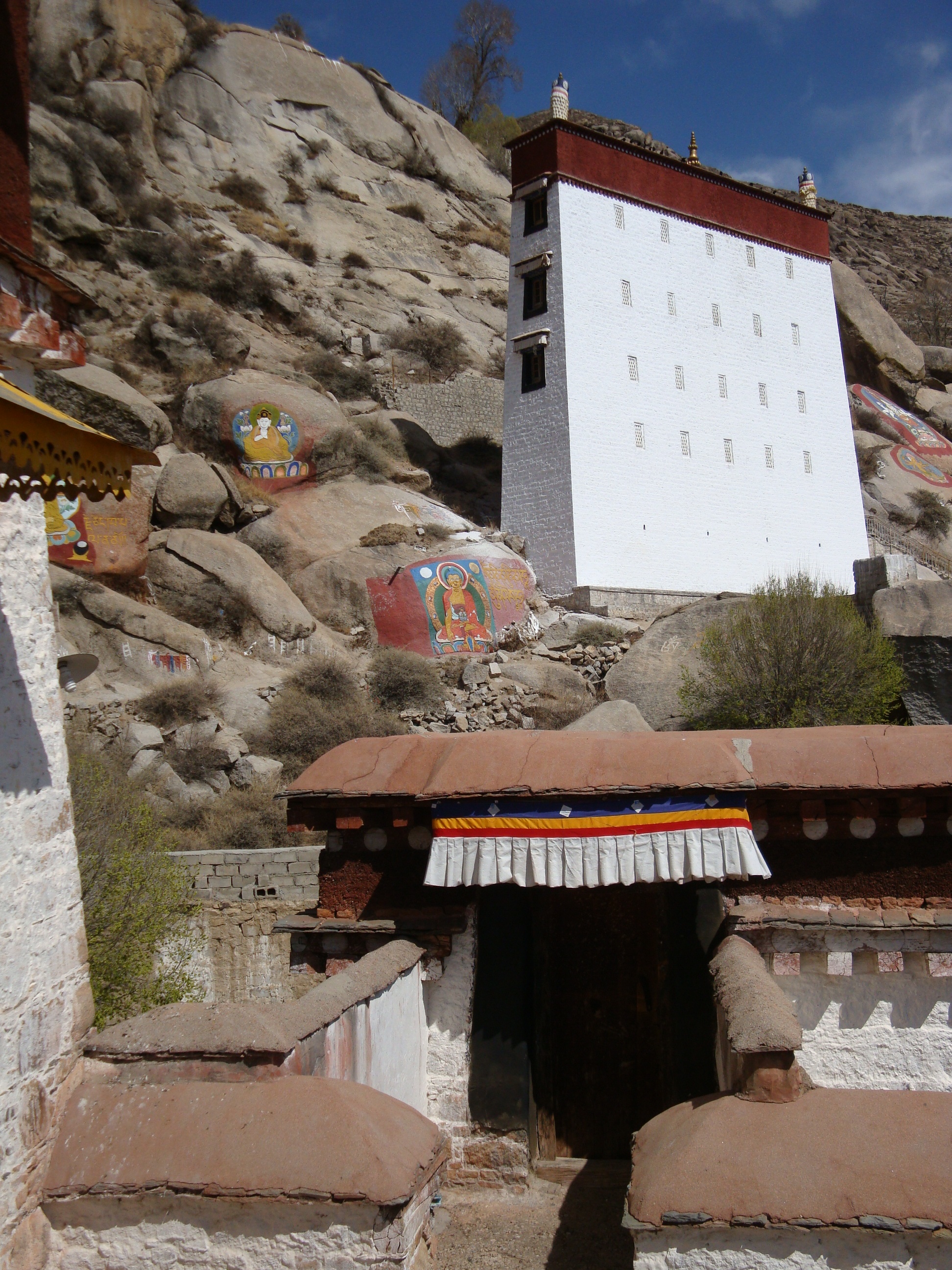
Bright and early the next day, we went off to see the Sera Monastery, the second biggest in Tibet (Lots of Buddha’s).

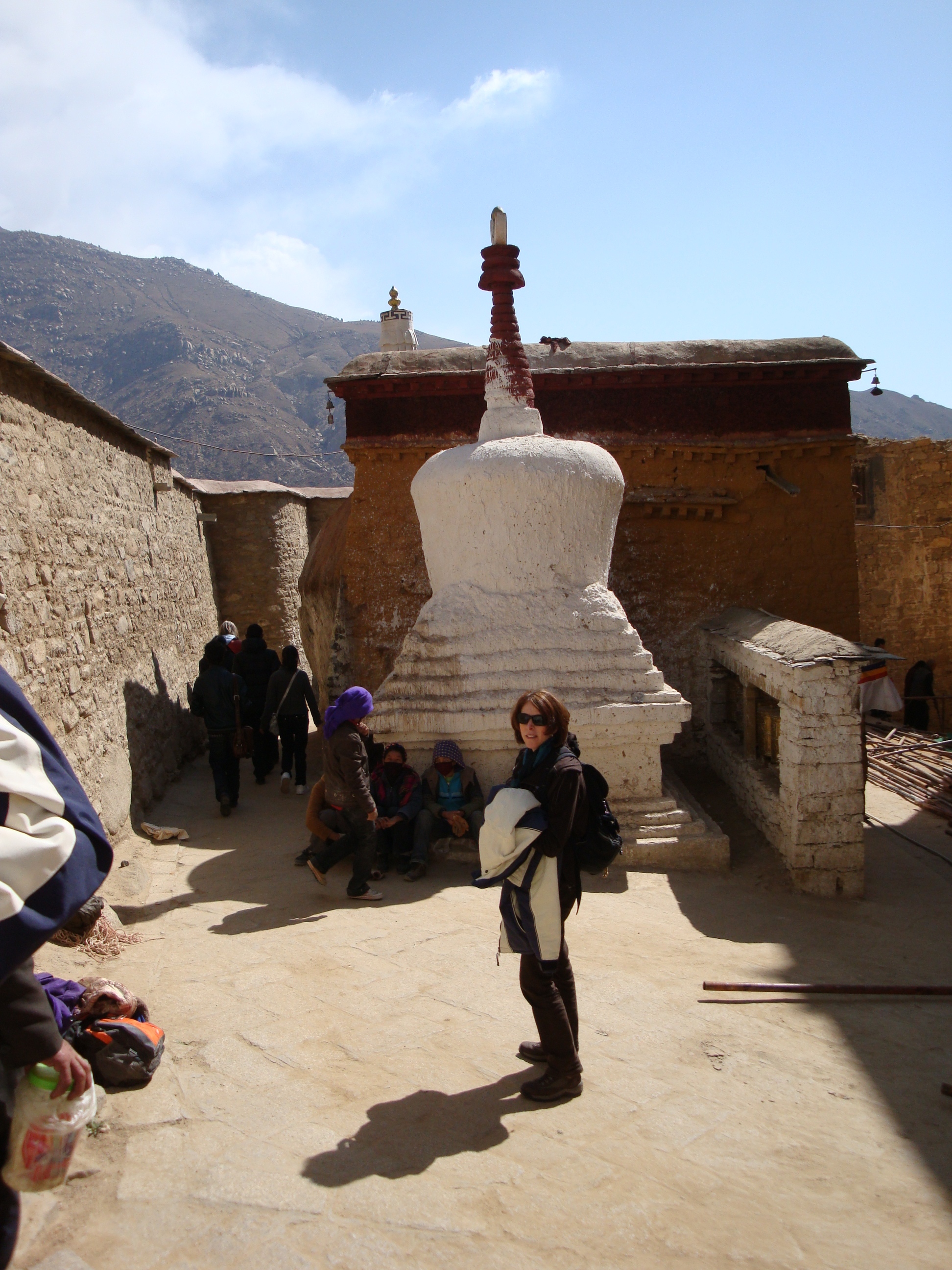
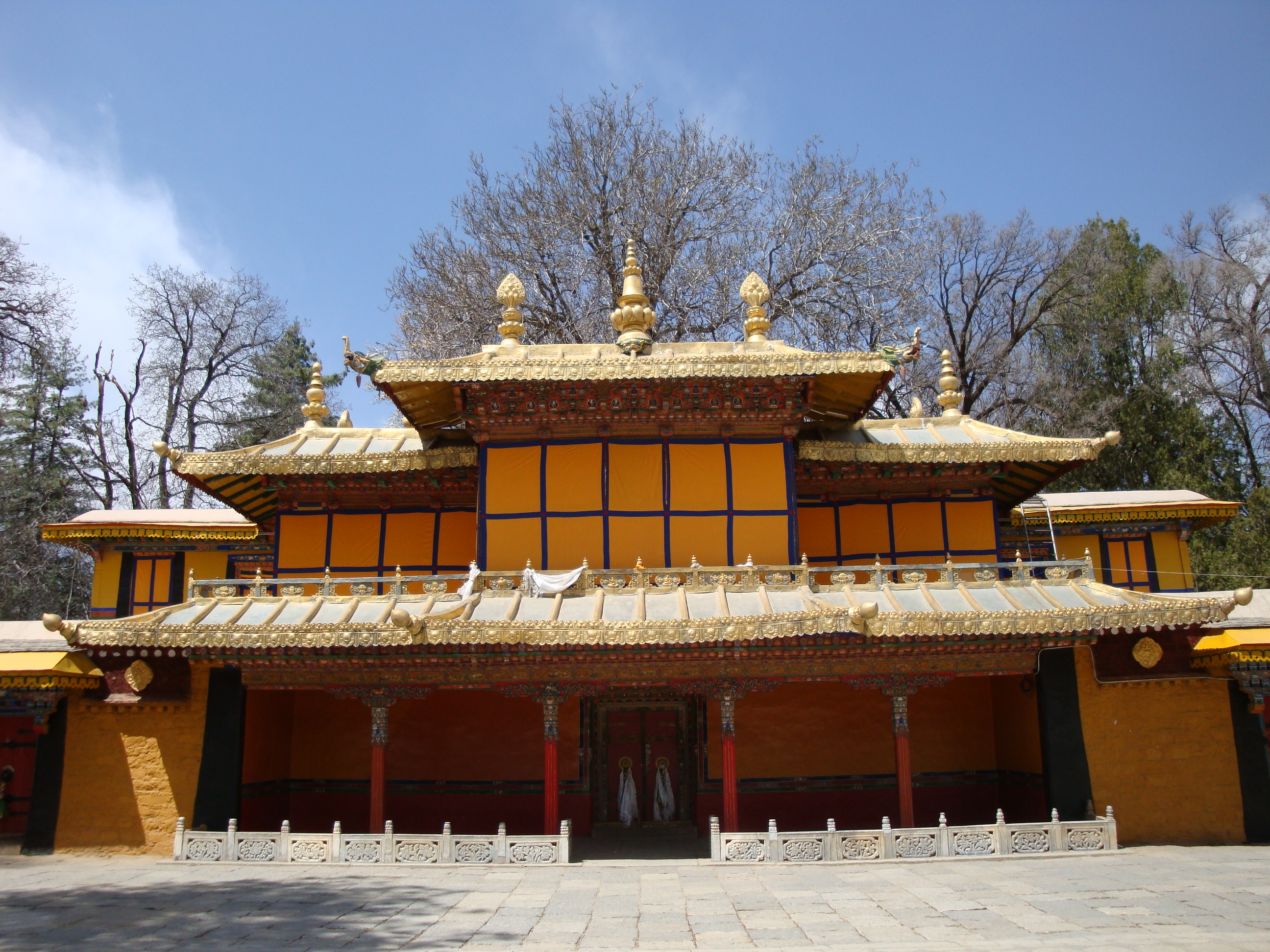
Then on to the Norbuling Ka, which is an area of parkland with trees and water where the Dalai Llamas built there Summer Palaces. 14 Llamas and 4 palaces. Most Llamas seemed happy to use somebody else’s, but there was one, much bigger than the rest. Yes old Mr. Humble Smiley Guy, the 14th Dalai built himself the biggest and best, before he ran away and left them to it. Oh yes and while we are on that subject, he also left behind his teacher, the 10th Panchen Llama, who did such a good job of standing up to the Chinese that they threw him in jail and tortured him until he died.
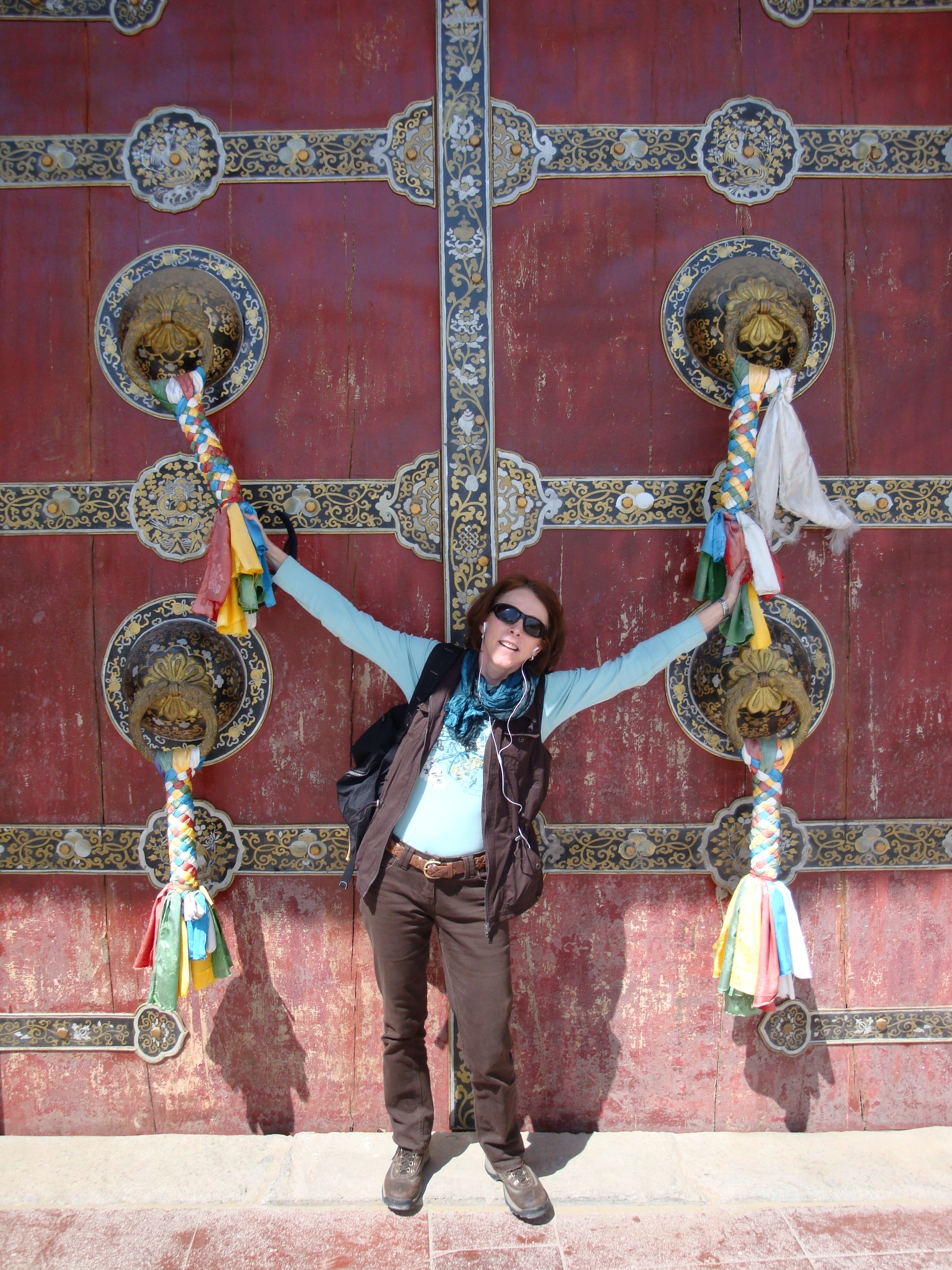
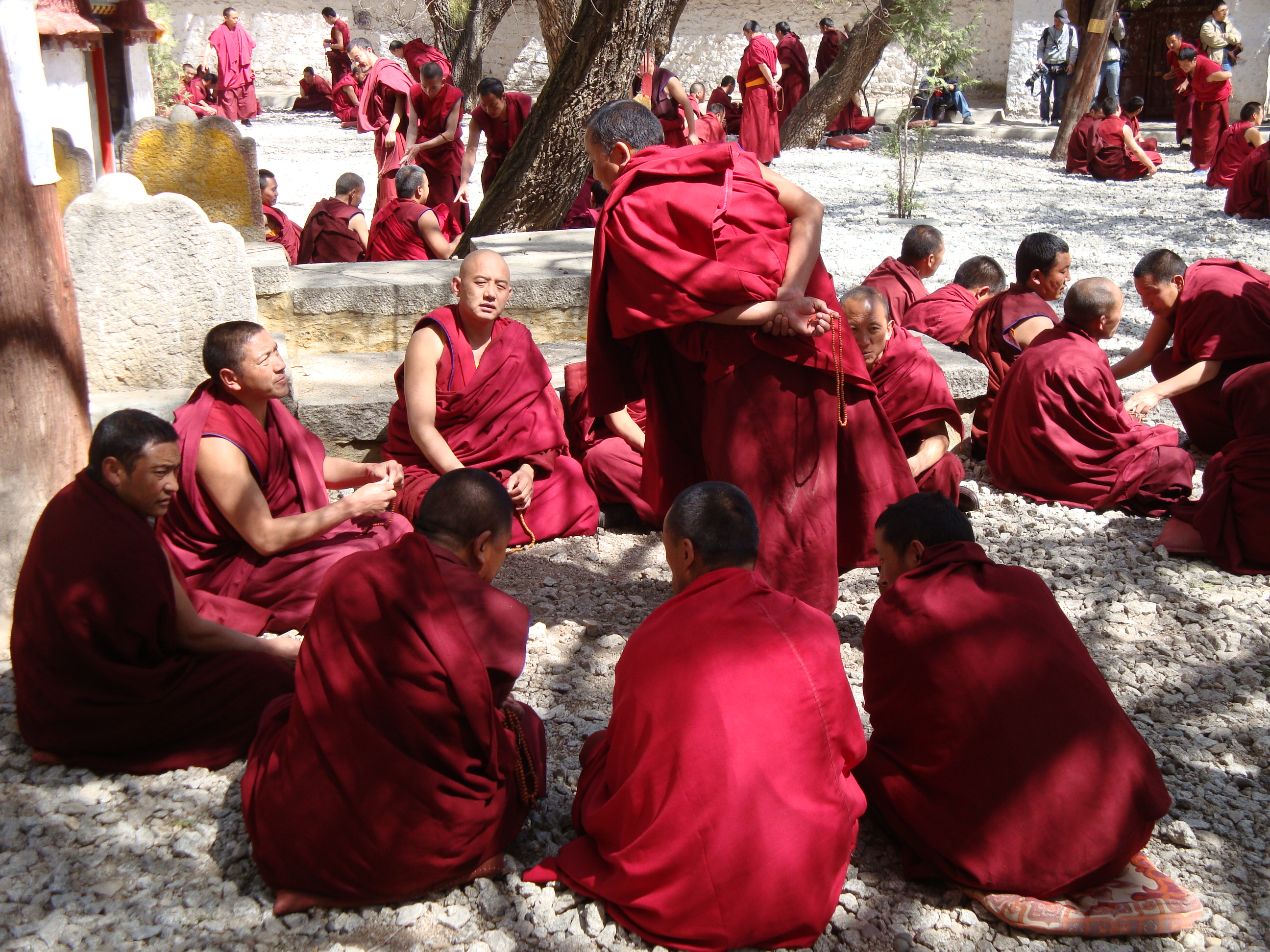
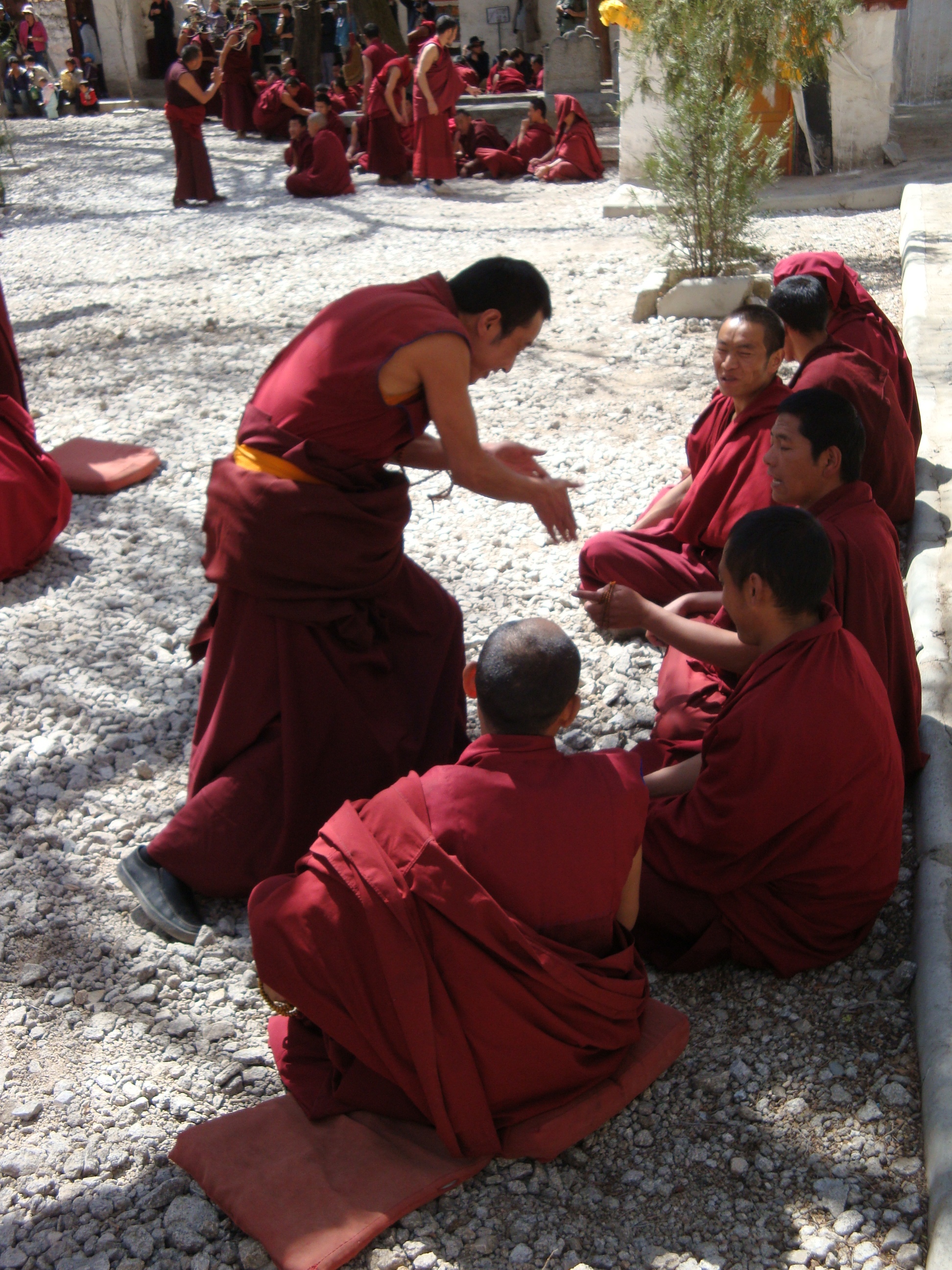
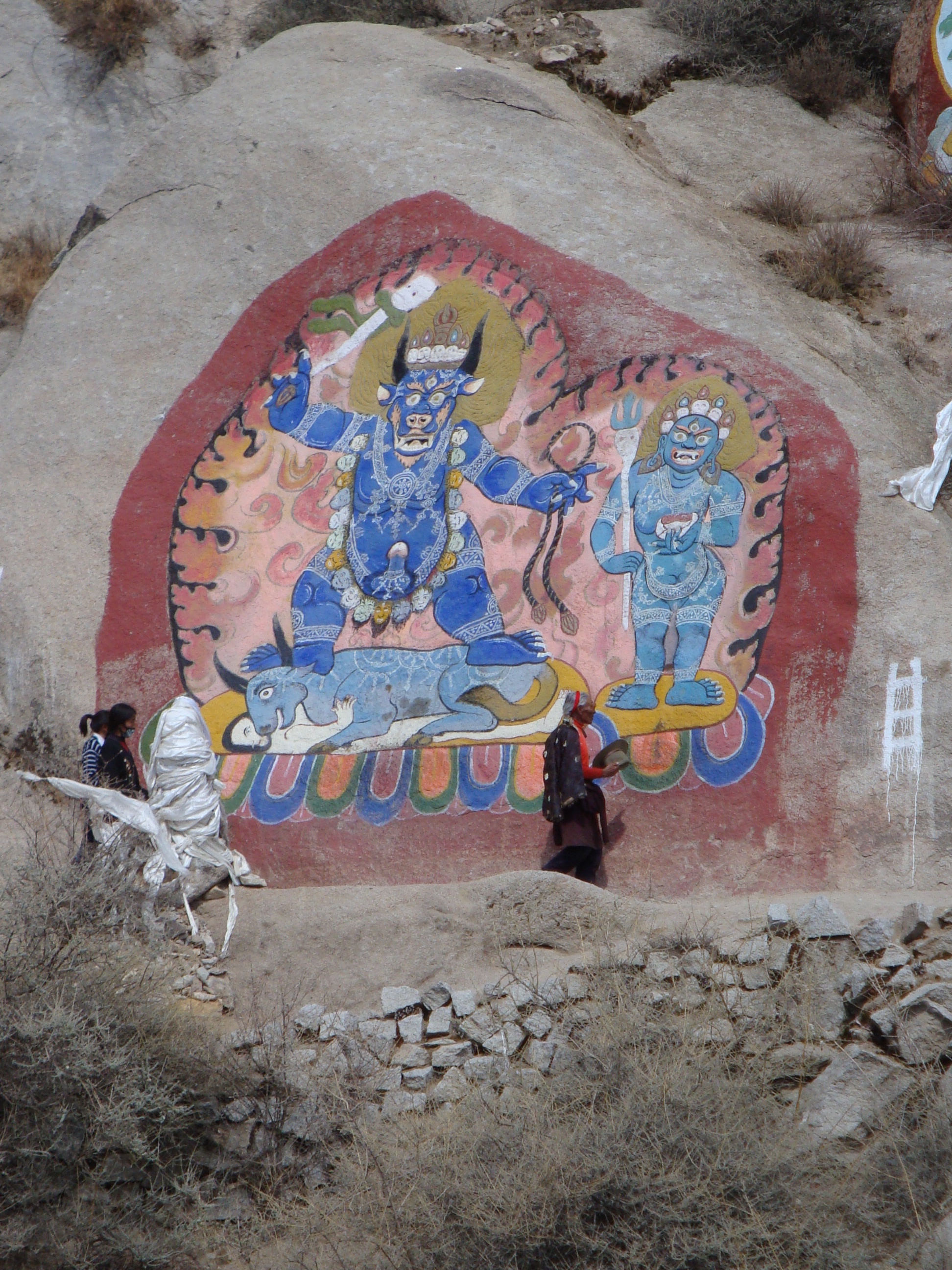
After Lunch we went to the Drepang Monastery (Lots of Buddha’s) but in the afternoon it gets really hoppin’. The monks all study theology and Buddha’s teachings in the morning and then after lunch and a period of contemplation (Meditazionzzzzzz..zz..zz) they gather together in this courtyard to debate. It’s really wild. They sit around in groups. One guy within each group will stand up and posit a question based on today’s teachings and the others have to answer back. If the answer is good, then Karma to you. If the answer is not right, then the standee has to yelp, clap his hands, stamp and push that devilishly wrong answer back into Hell where it came from. Either there were a lot of wrong answers or these guys just enjoy letting off steam. It was a lot of fun in there.
Back to the Par Kor for a last promenade and shop (Liz just needed one more Buddha), a curry and then early night because tomorrow we are on the road.
In the morning, Padro loaded the bags up onto the roofrack and covered them with a tarp that was made of biodegradable plastic. A noble and eco-friendly act that, given the UV levels in Tibet, meant that within 15K our cases were ruined. Jon in the wing mans’ seat. Me, Dori and Liz in the back and Kel Sang hunched over in the boot with jackets and hand baggage. Cosy.
“You okay back there Kel Sang?”
“Yesh,yesh,yesh”
“How far is it to Yam Drok Lake?”
“Yesh,yesh,yesh”.
It wasn’t very far, but it was predominantly uphill. The Landcruiser battled on, ever upwards and soon, the few trees on the river plain were a distant memory. The Hills were mountainous and the road wound round them until suddenly, with the crack of prayer flags, we rounded the crest. Before us, the dun covered hills rolled off into the distance. In the foreground a huge turquoise Lake, luminous under a crystal sky and on the far horizon, a jagged line of white capped Himalayas with Everest at its’ centre. Its’ signature little white cloud trailing from the peak. Magical.
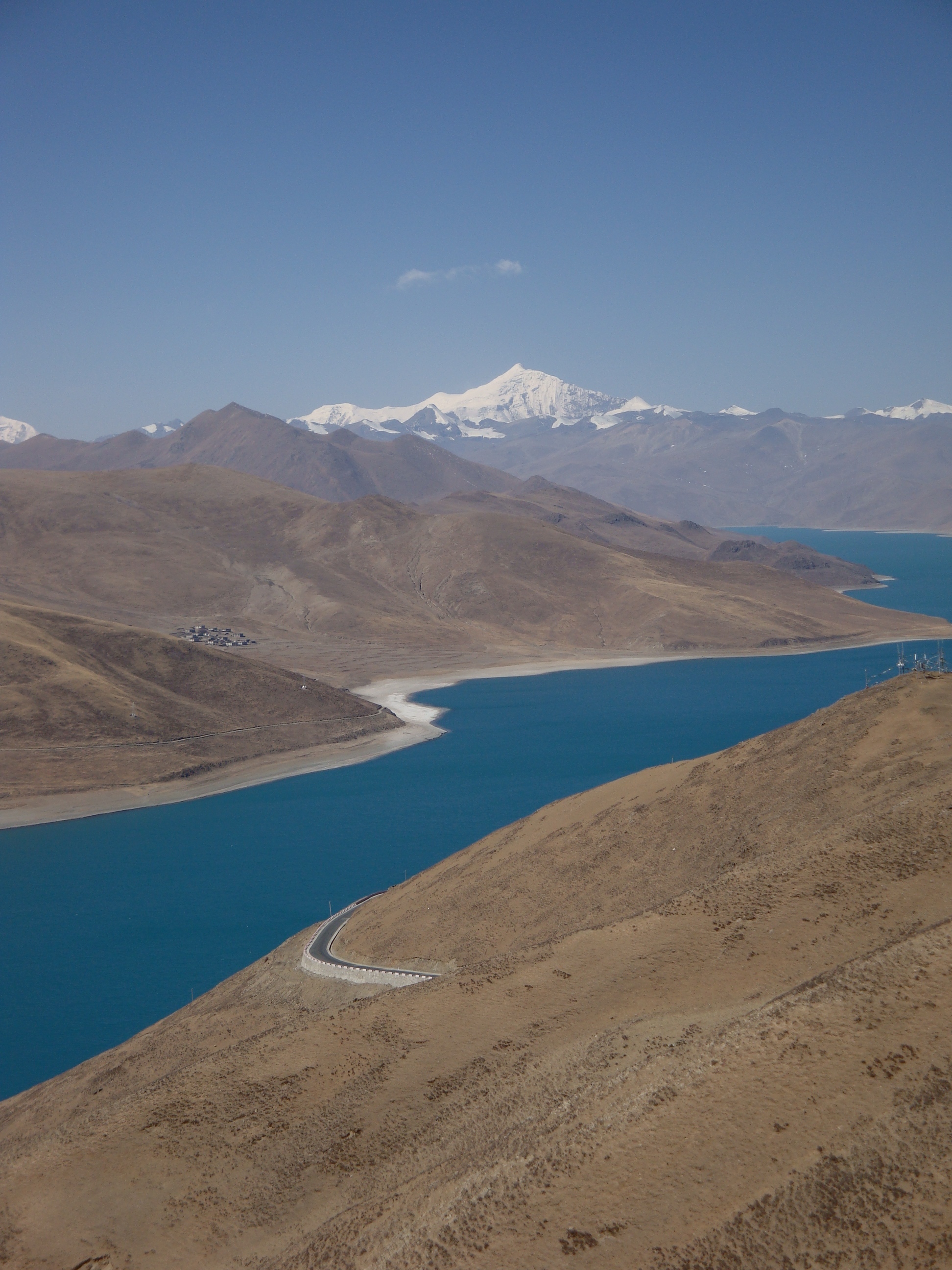

We drove down to and along the lakeshore. Kel Sang told us how it was a spring and glacier fed lake with no natural outlet, just evaporation. That is until the Chinese decided it was a shame to waste all that water, so they drilled in a pipeline through the mountains to the valley below and put in a Hydro station. They understood that it was sacred lake, so they promised to only take a little bit, but each year it’s a little bit more. They claimed that the power generated was for the good of the people, but it goes straight to the Army base and the Chinese factories. The lakeshore is receding.
The Tibetans have 2 kinds of burial. Sky and Water. Either your body is chopped up and left out for the vultures or put in the lake for the fish. Nobody eats vultures, but the Tibetans don’t eat fish either. The Lake and the Fish are sacred. But now the Lake is being drained, the fish are getting cramped. So the Chinese build a big fish restaurant right on the lakeside for all the passing Chinese tourist buses. P.R. is not a strong suit in the Chinese deck. How can you win the Hearts and Minds of the People, when you think only of your own belly, you don’t have a heart and your mind is owned by the Party.
We stopped to take photos and I battled along the shore, leaning into the incessant wind. How can there be such strong winds when there is so little air? I turned my back to the wind and immediately my hat went flying. Instinctively, I charged after it, arms pumping, knees kicking, as it careened along the ground. I had managed about 30 metres when my lungs said to my brain, “What on Earth do you think you are playing at?!!!!!!!!!” and my legs turned to jelly. It really doesn’t take much to hit ‘The Wall’ at this altitude. Fortunately the hat fell flat and came to rest. I staggered up to it and was pleased that I had managed not to vomit and then wobbled back to the car with my heart pounding and my chest heaving and everybody laughing.
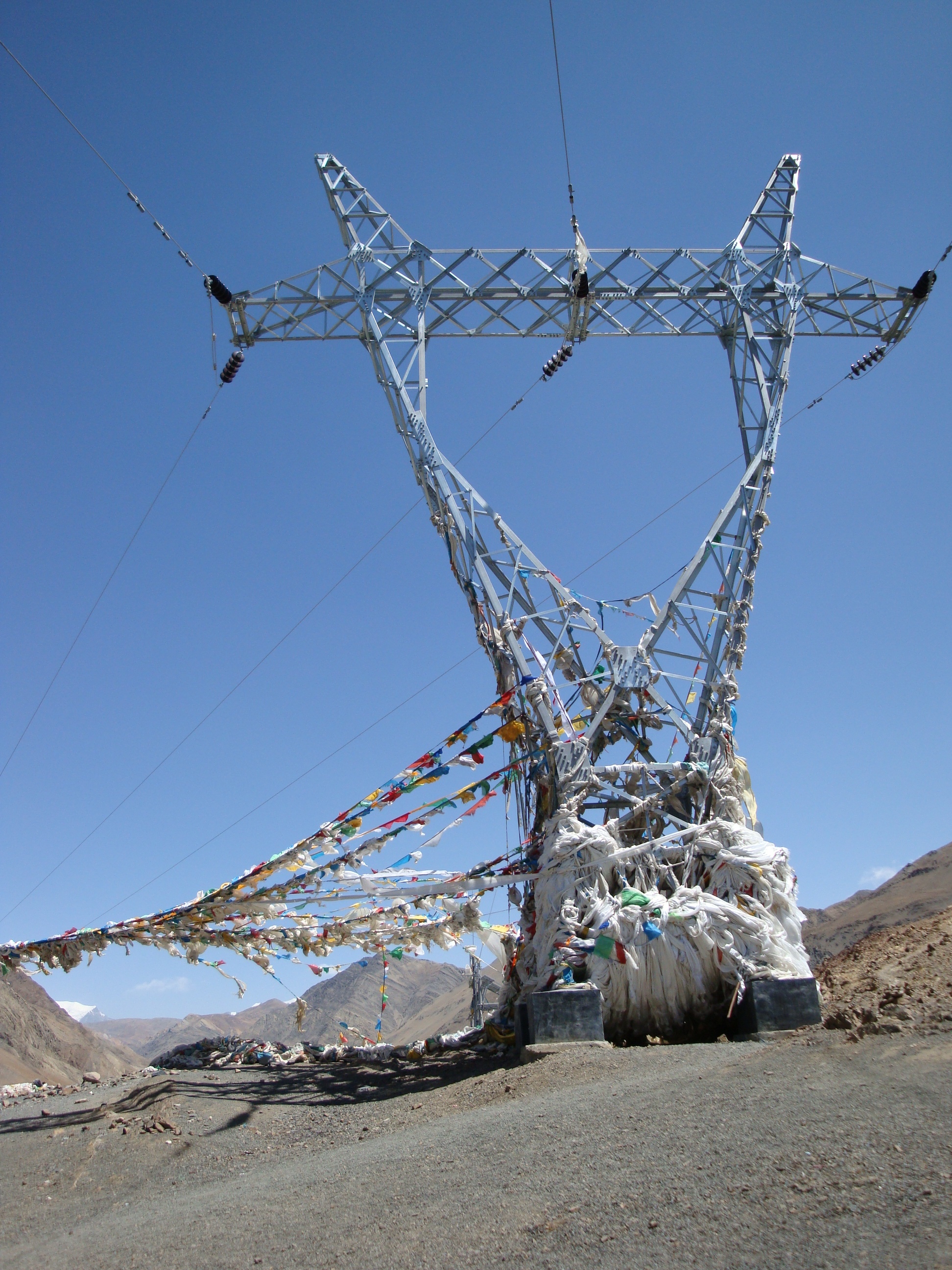
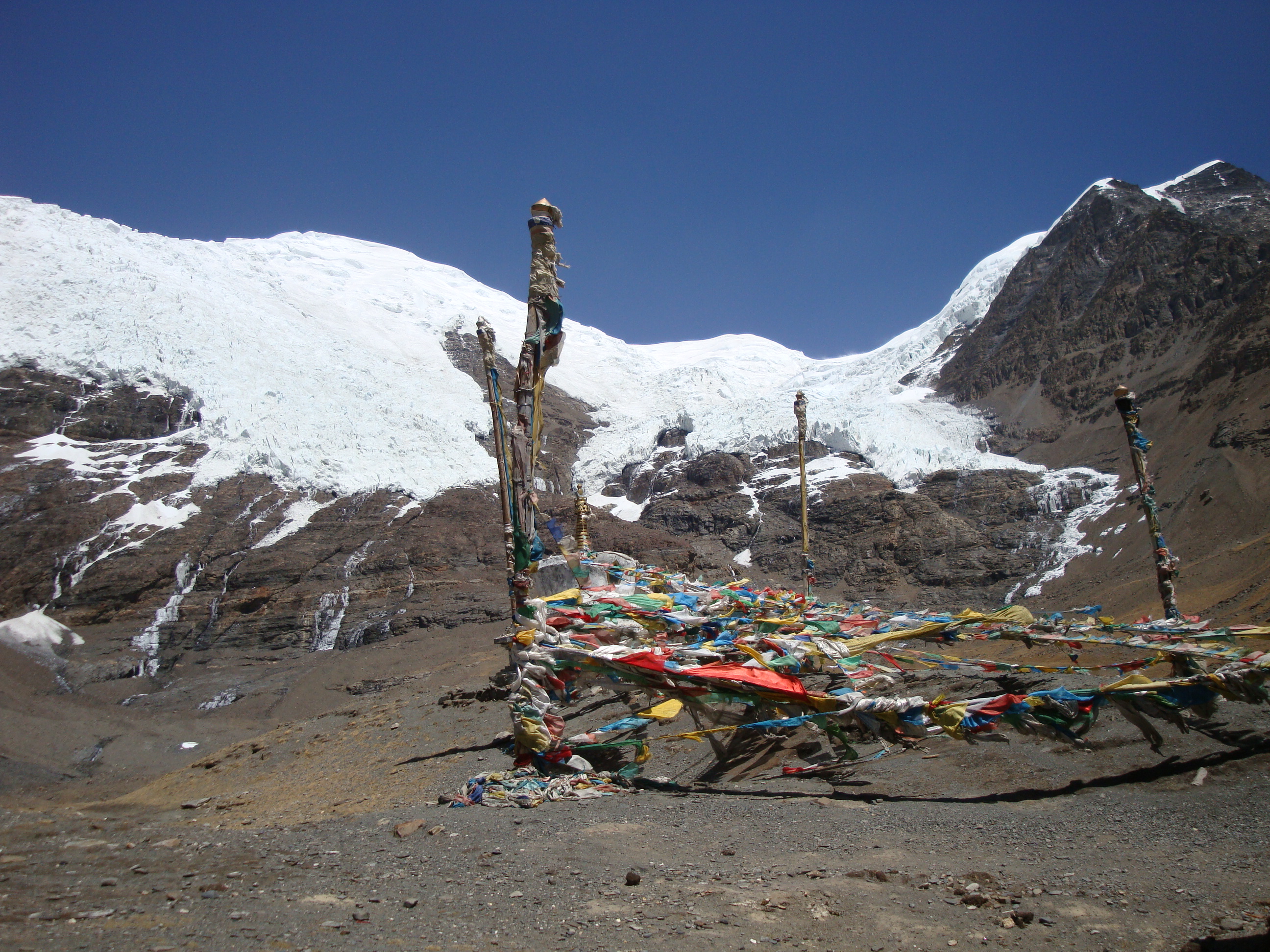
After lunch (No Fish) we drove on to Gyantse and booked in for the night and then went to see the BaiJu Temple and Monastery. (Lots of Buddhas).


Gyantse has a really cool Fort up on a hill, but it was abandoned centuries ago and when the British came during the Victorian Great Game, they ignored it and fortified the Temple instead. It seems that the Brits came to declare war on the Tibetans in order to save them from the Russians, but nobody showed up on the Tibetan side so, ipso facto, they lost, but the Brits couldn’t find anybody to ratify the result, so after a few years waiting in vain for the Ref to show, they took their ball home.

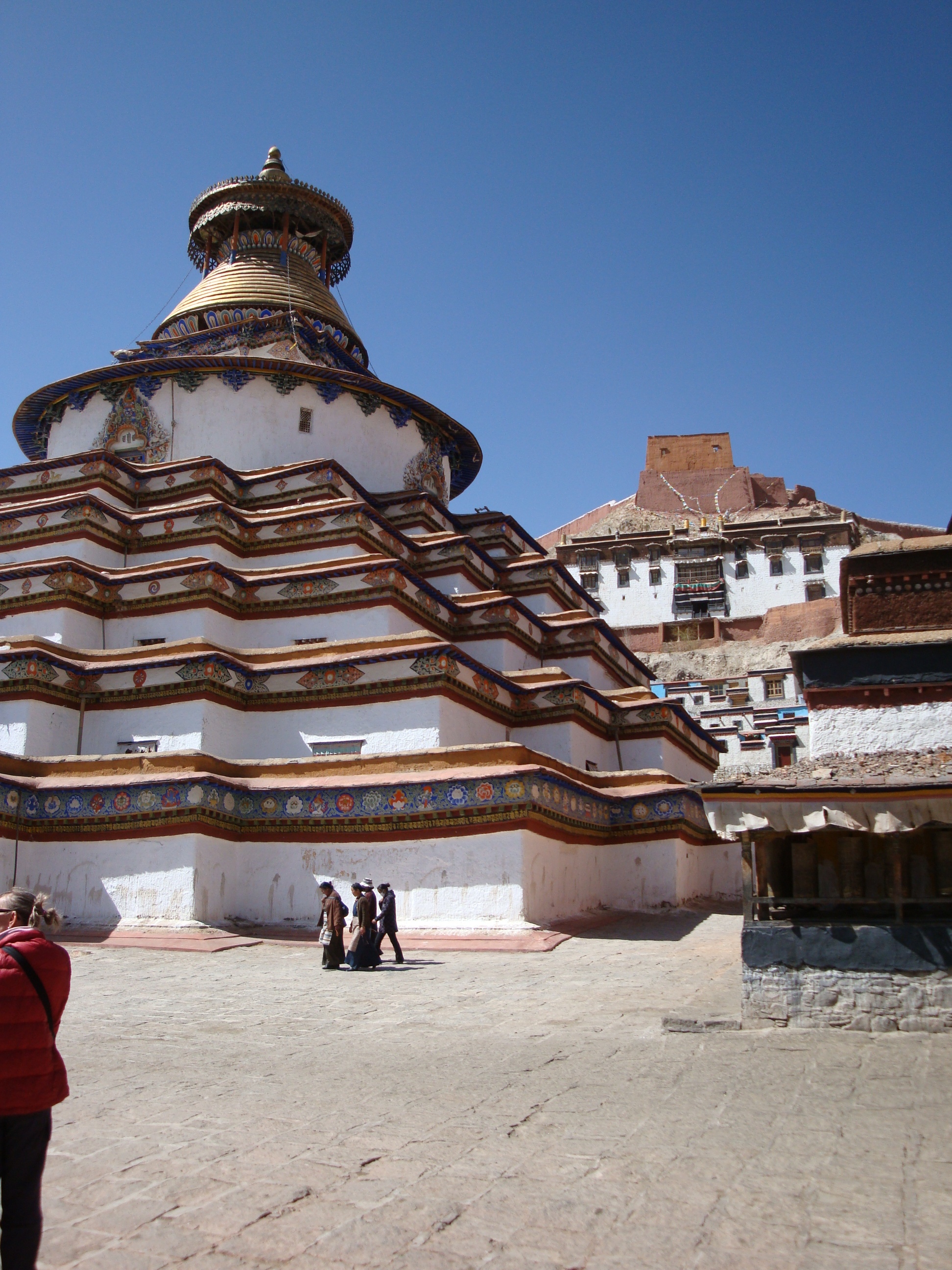
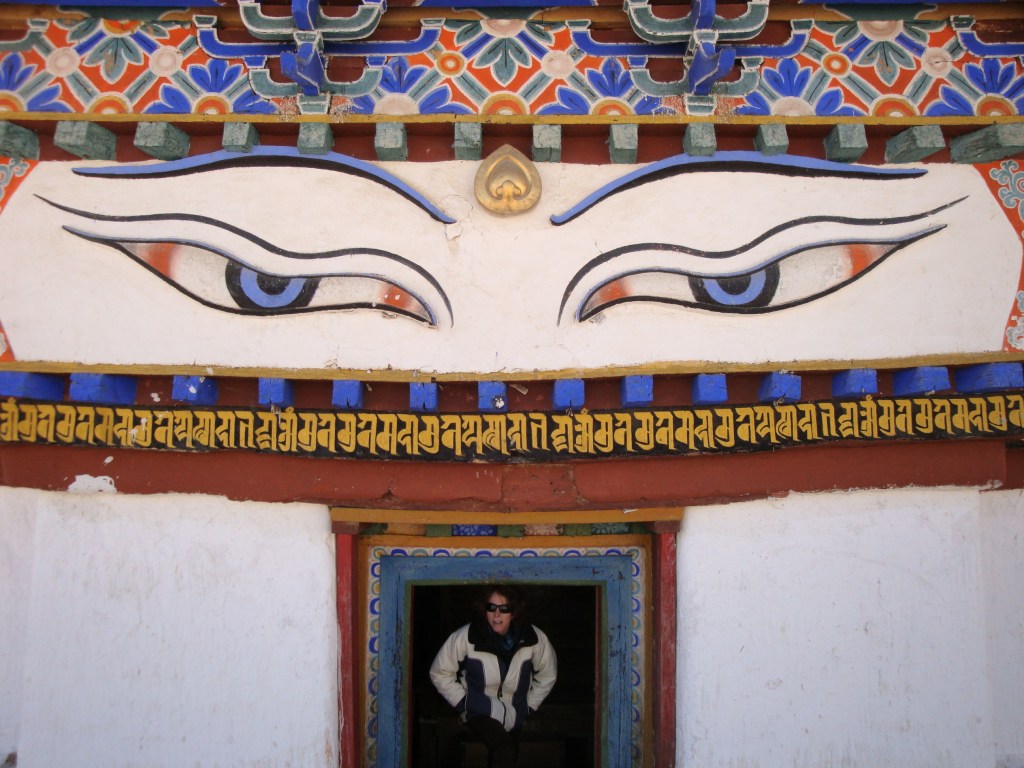
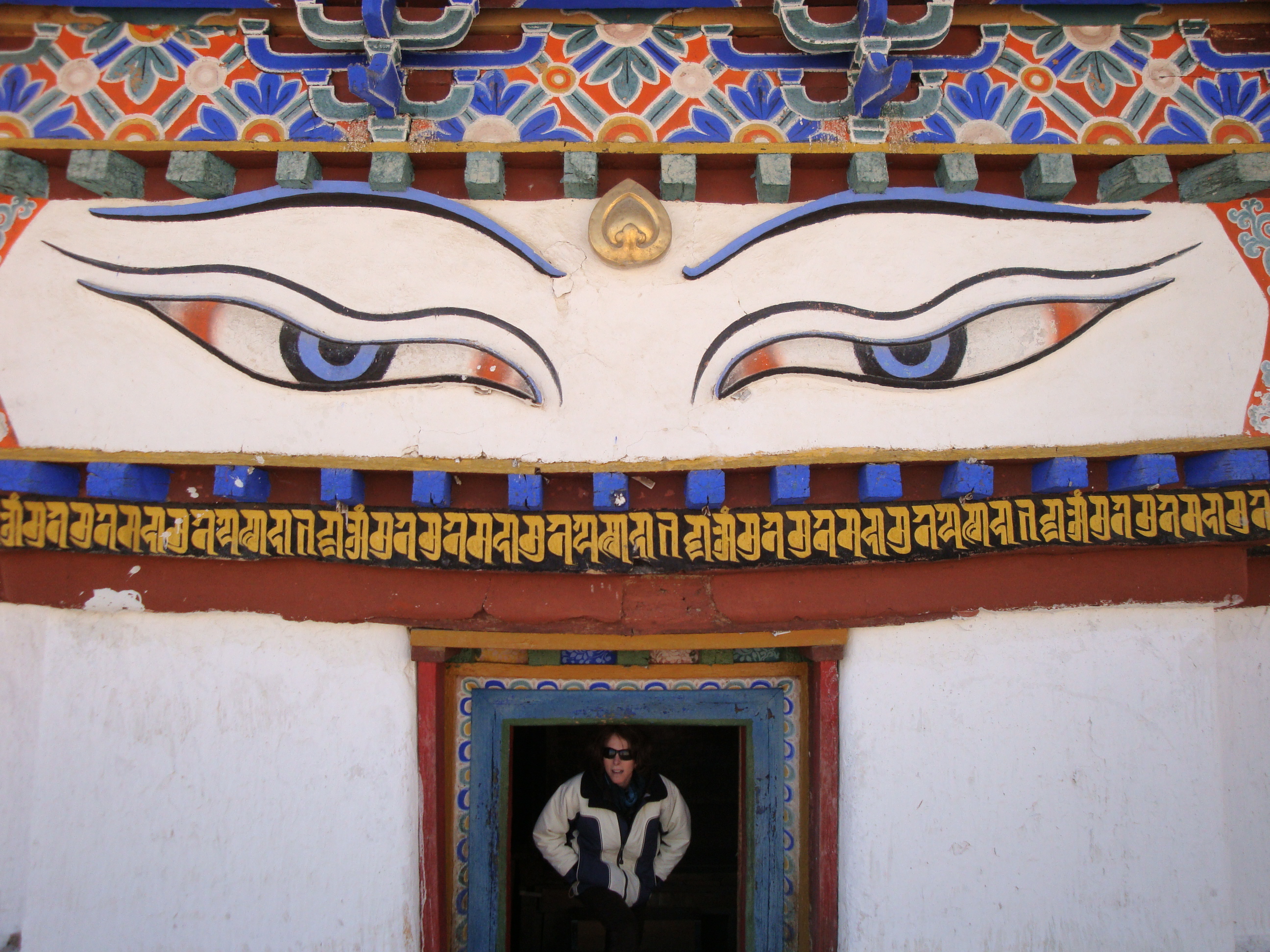
The Baiju has this really cool Stupa, white with a gold hat and Buddha’s eyes looking deep into your soul.
Next day it was off to Shigatse and (By Tibetan standards) quite a nice hotel although the lift was broke and breakfast was a joke. Kel Sang had to go into the Government Offices to get our permits for Everest and we went into the town market which was huge and full of stuff you had absolutely no use for. Chinese Capitalism at its finest. But just off the market we bought a Tibetan sheepskin for Nicole and the smell followed us all the way back to HK. Fortunately it was not the smell of the market wall.
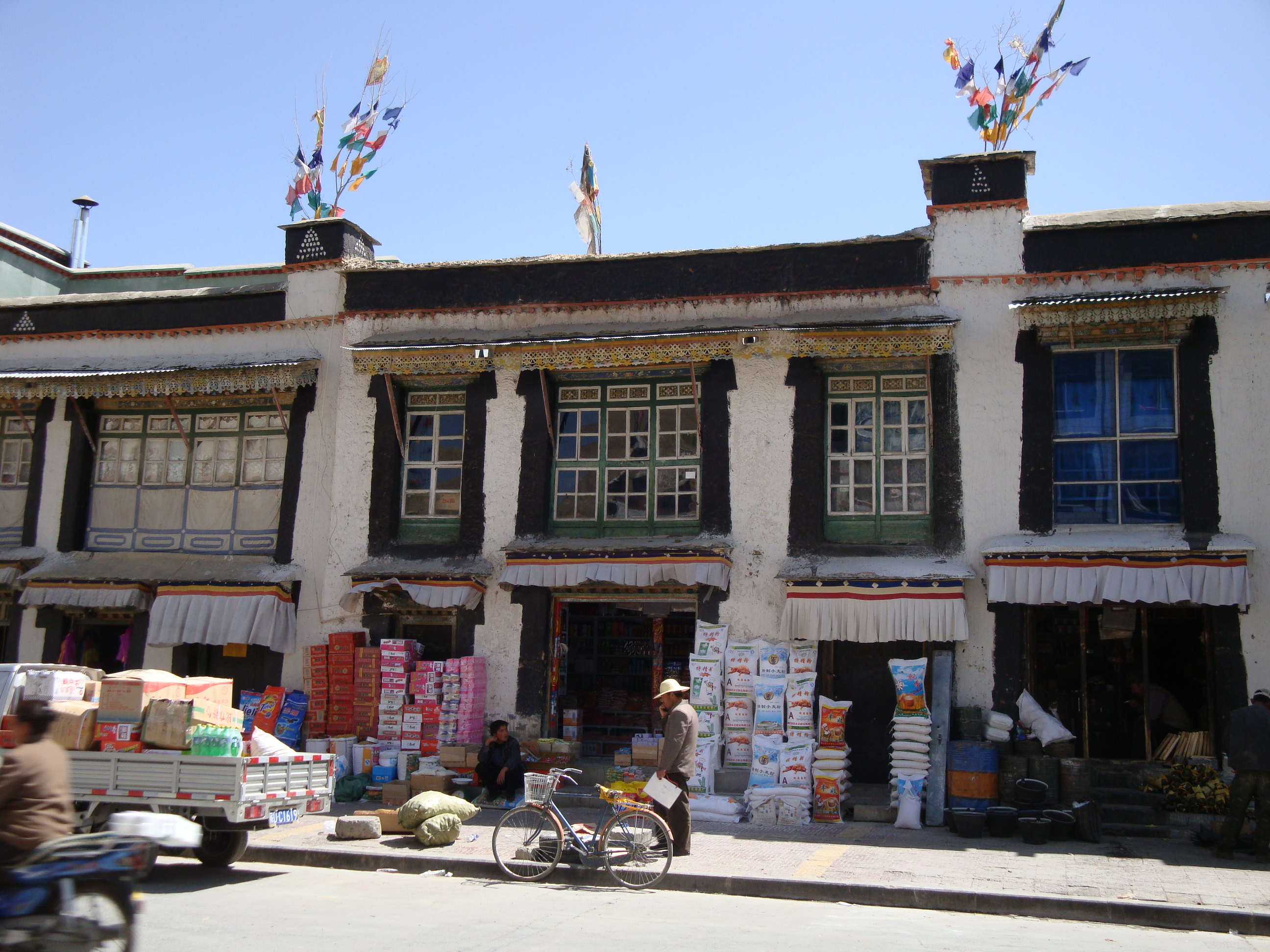
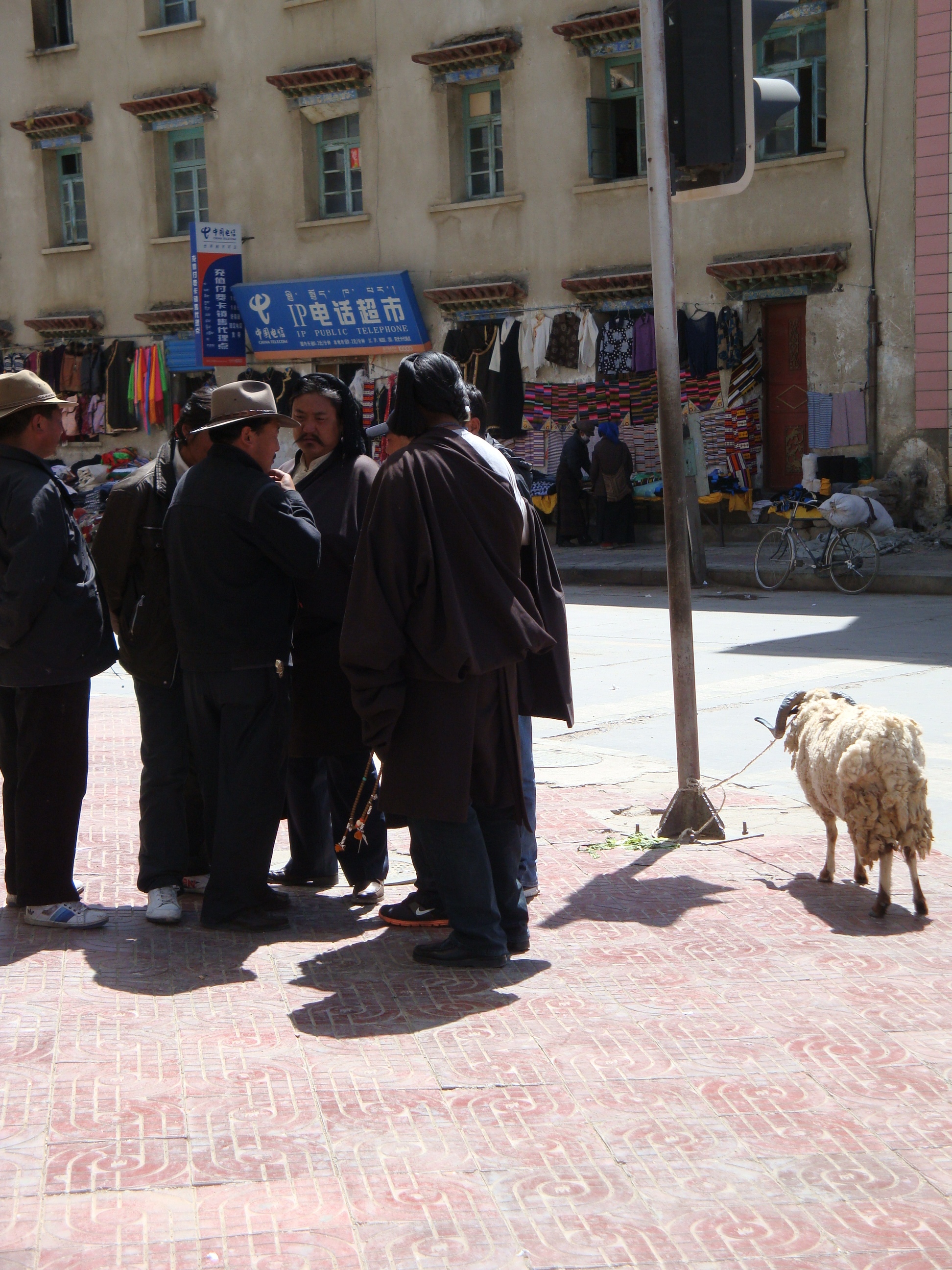
Tibetans have only a rudimentary understanding of Public Hygene and almost everywhere you go, People just pee up against the wall. Of course, the physical evidence evaporates in seconds, but the olfactory presence lingers everywhere.
In the afternoon we went to the Ta Shi Lun Po Monastery (Lots of Buddhas), spiritual home of the Panchen Llama. Pictures of the 10th Panchen (The Dude who resisted the Chinese and got topped for his troubles) are everywhere. The 11th reincarnation was selected by the Dalai and his pals but at age 6 was spirited away by the Chinese never to be seen or heard of again, (Poor little Buddha) and, in his place, the Chinese appointed their own candidate who, by the sheerest coincidence, was the son of a Chinese Civil Servant. Public Relations Balls Up No. 6,032. There are no pictures of the 11th Stooge to be found anywhere except within his own temple and even there, his pictures are smaller than the 10th’s. It is an accepted fact that 40% of the monks in this place are Government spies and the Guides all talk in hushed voices so as not to be overheard, ratted out and hauled off in the middle of the night for some re-education.
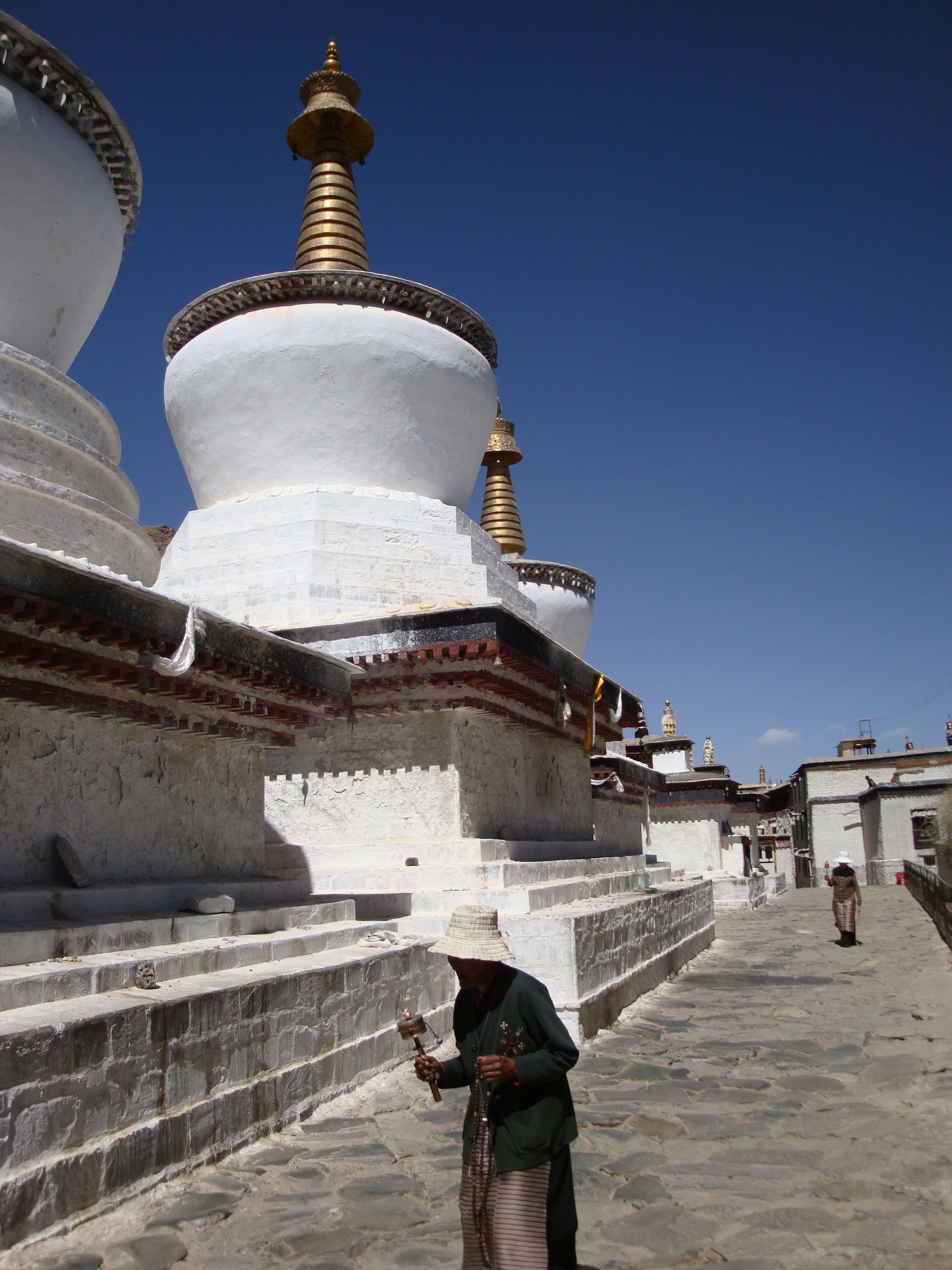
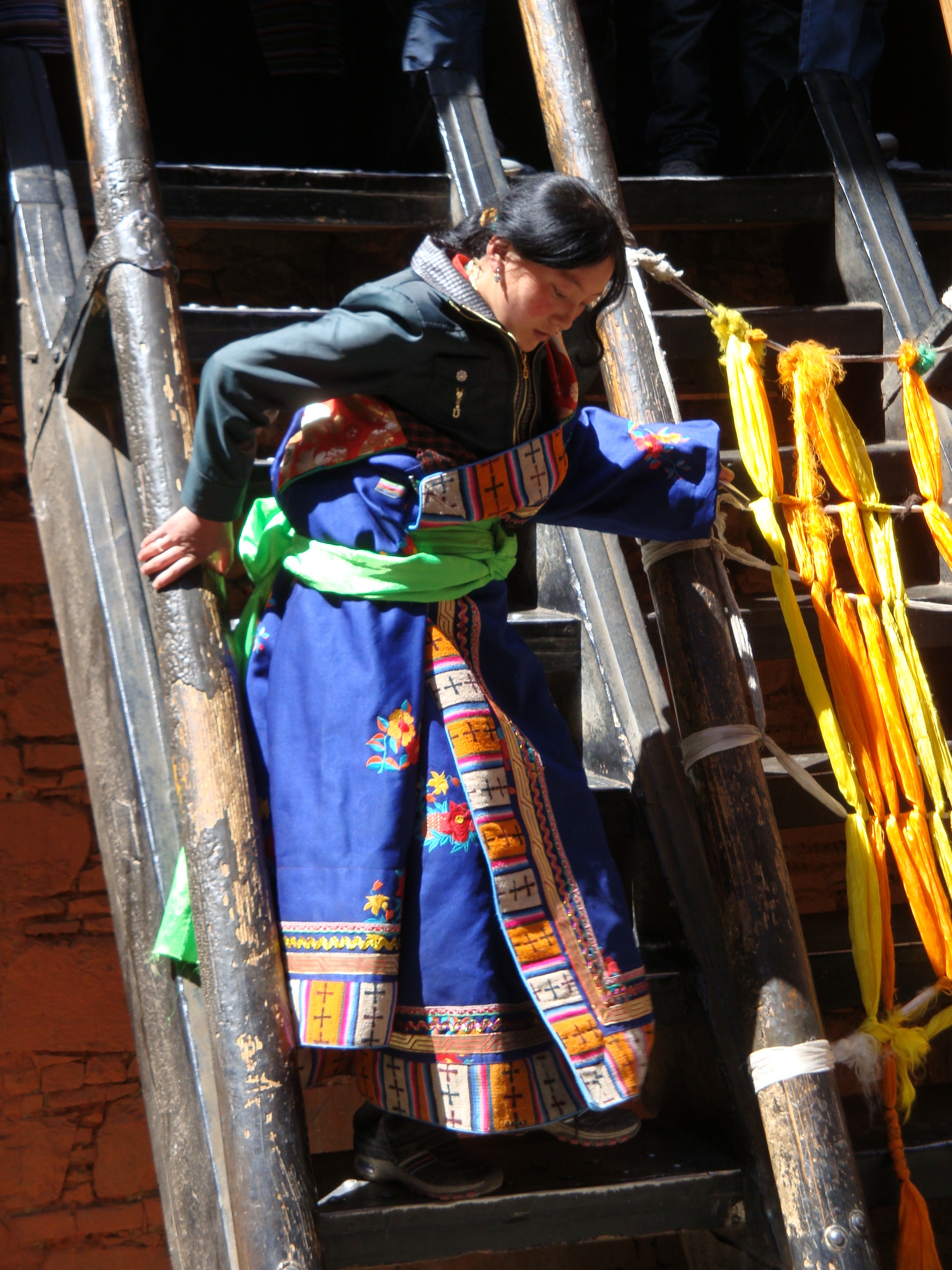
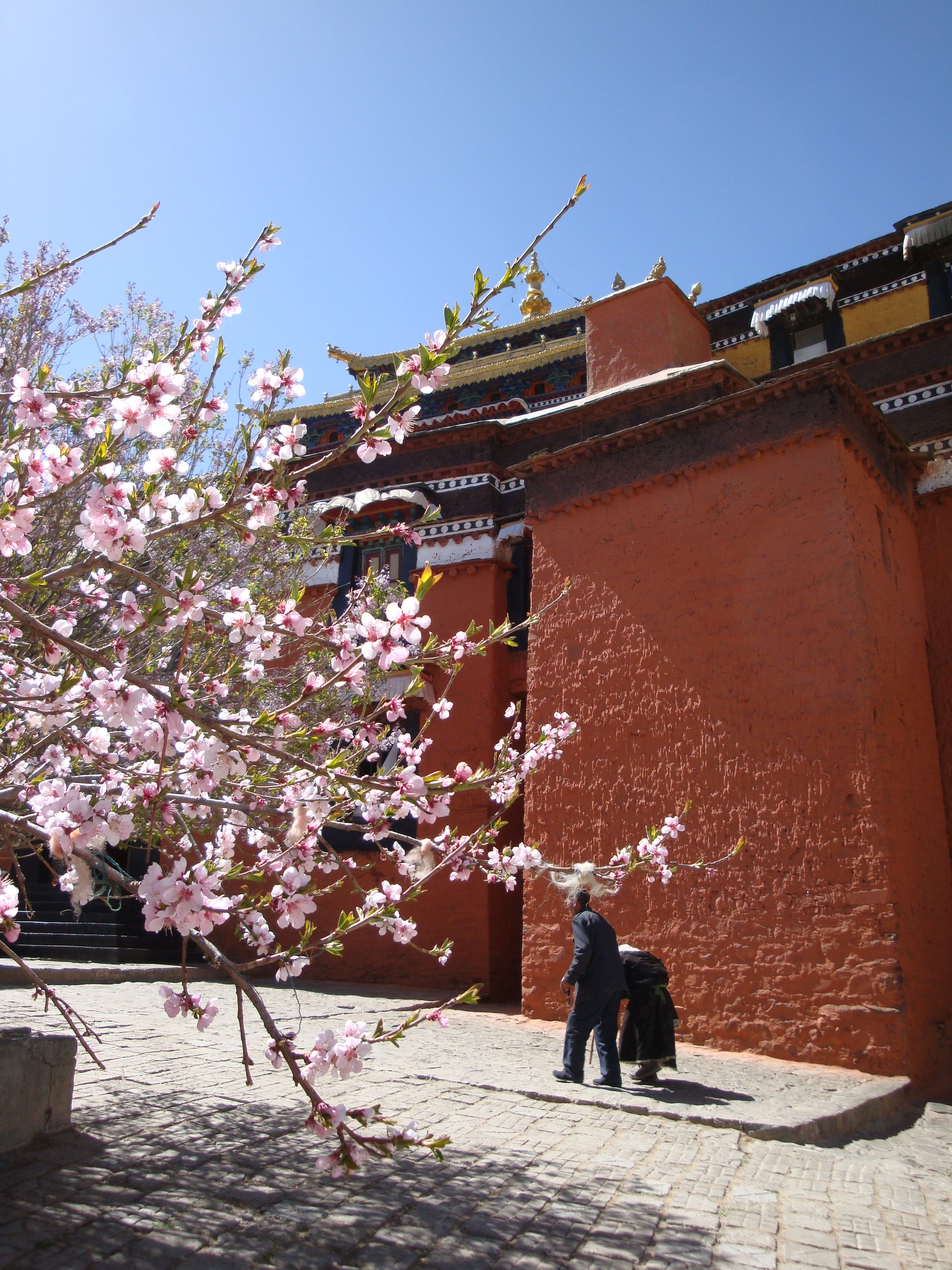
The next day on, on we travelled. Sakya Monastery (Lots of Buddhas). Even here, in the navel, of the middle, of the middle of nowhere, the Cultural Revolutionaries had come in and trashed the place and the Tibetans, with their infinite patience, have rebuilt it. The Singing Labourers have jobs for life. Before the Cultural Revolution, some of these places had over 8,000 monks, nowadays 2-300 seems to be about the going rate, which is fine by me. Just enough to keep the place tidy and look after the relics.
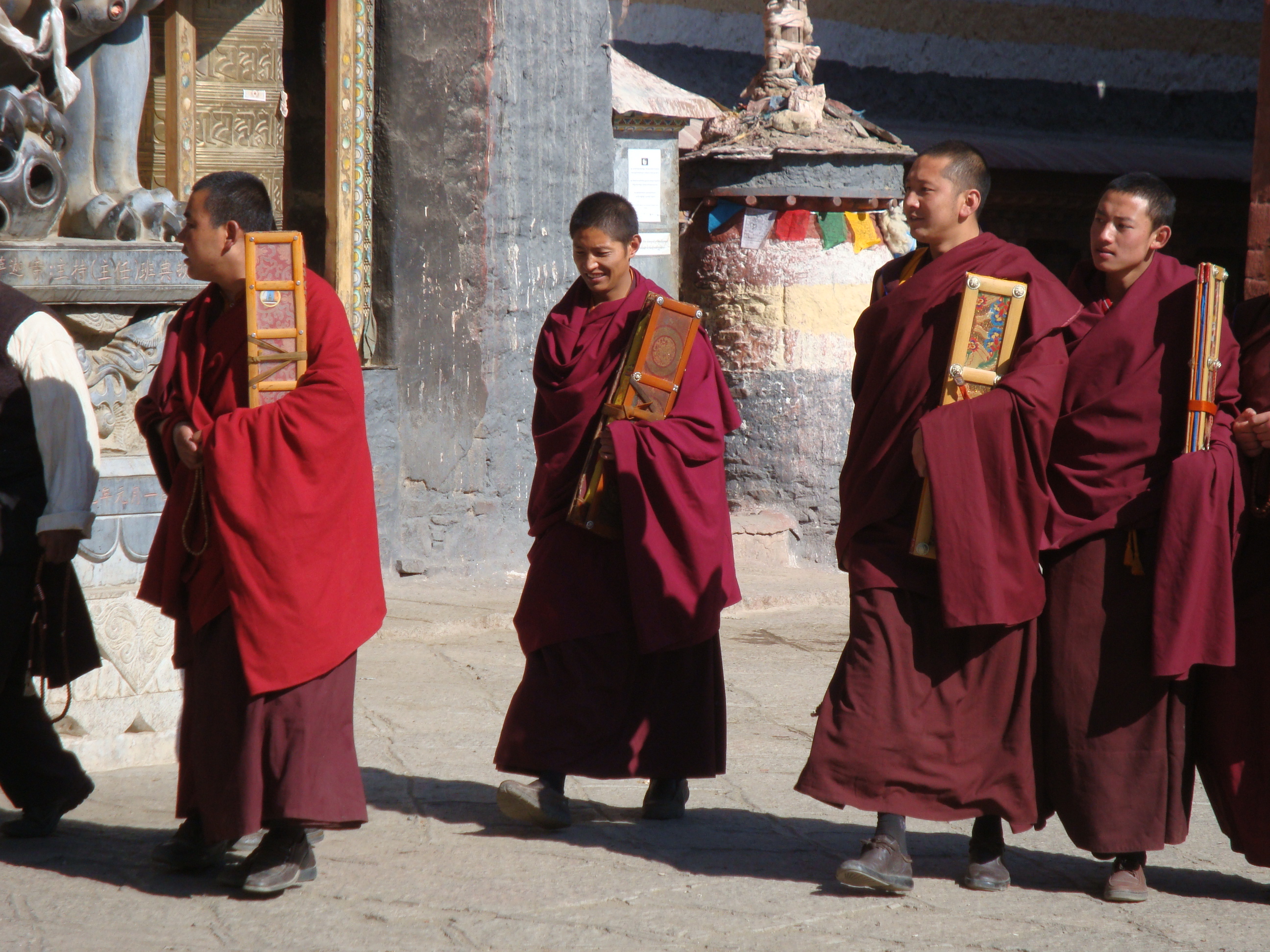
Then it was on to some flea-bitten town along the Great Friendship Highway, where we had to stop, show passports and the permits Kel Sang got in Shigatse to get in. This opportunity was not lost upon the local lads who showed up with pockets full of Ammonites. Long, long ago, this was all sea and the sea was full of big swimming snails, which died, settled in the mud and became fossils. The tectonic plates shifted and the Himalayas grew out of that sea and now these young Yak Herders find fossilised sea snails in one of the highest places on Earth and sell them for pennies. I got 3 and they are way cool. I also got a big plate of amber with 2 scorpions inside it which is so cool, that it has just got to be fake. But who on earth would go to all the trouble of making such a convincing fake and then shipping it to the roof of the World for some Yak Herder to sell for less than it would cost me to buy the resin in HK? Whatever it is, I had to have it at that price.
Having got into this town, we then had to go to the Permit Office which issues the Permit which supersedes the Permit we got in Chengdu that got us onto the Train which got us the Permit to get into Tibet, that got us the Permit we got in Shigatse, that got us into the Permit office here which gives us the Permit that gets us into Everest Base Camp (Subject to Review by any passing PLA Officer and/or Cleaning Lady). Dori and I waited outside and fed Digestive biscuits to a Wild Ass.
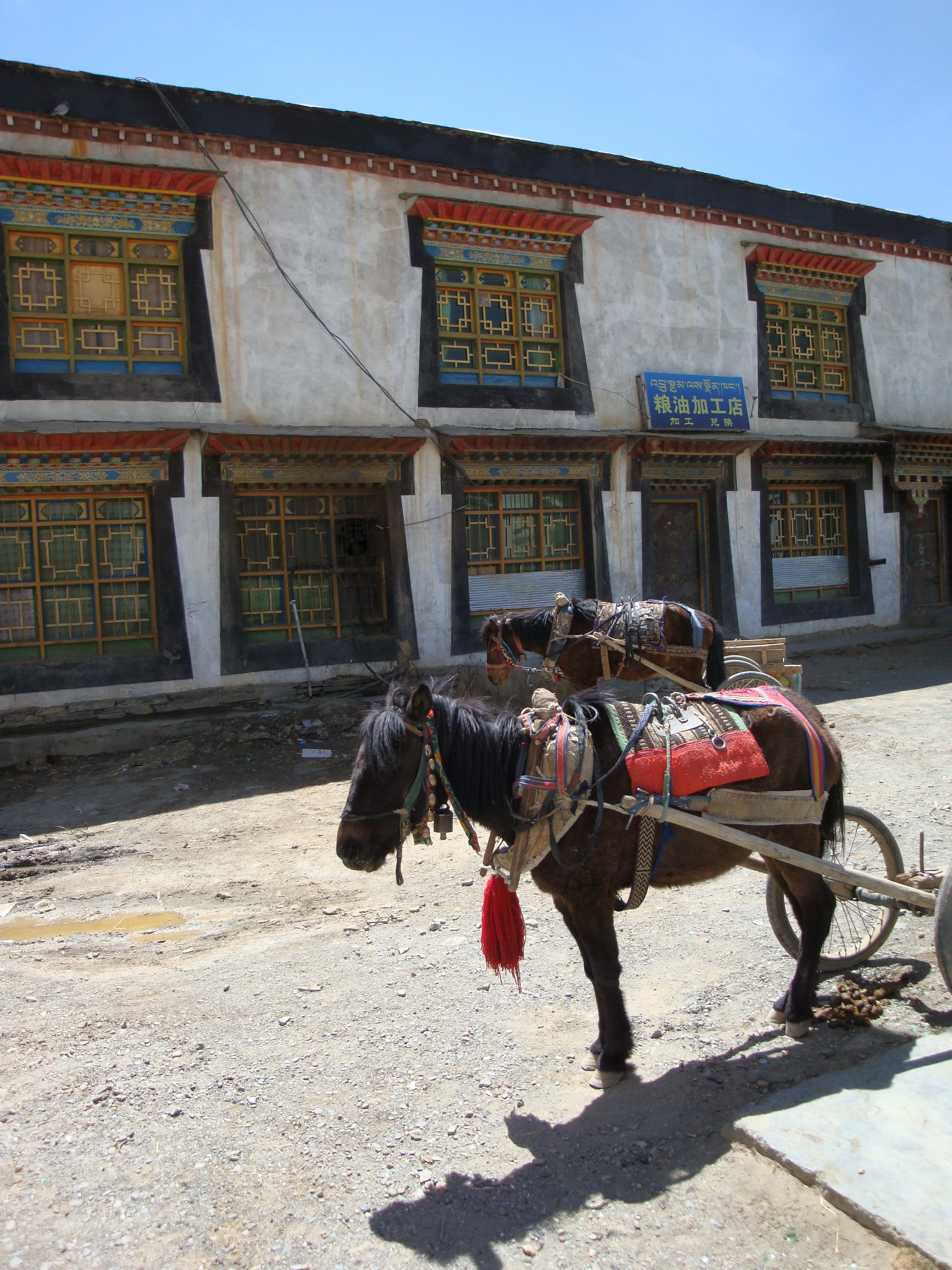

Then, having had our permits checked on the outside of town, we went off-road. At first this was quite exciting and the use of a Land cruiser finally seemed appropriate. After 5K it seemed essential. Thereafter, a moon buggy would have been a blessing. I guess it keeps the riff-raff out, but this is 108 kilometers of extreme driving and it took 6 hours. It was brutal. Where there was a road, of sorts, it was ribbed like a washboard and it vibrated the fillings out of your teeth. Elsewhere it was just rocks. Boulder strewn glacial moraine. All my geology started coming back to me, by way of my spinal column. Community singing was suspended. It was just 6 hours of “OOfs!! & Grunts!!”, which sounds like our community singing anyway, with occasional stops to look at Everest getting closer.
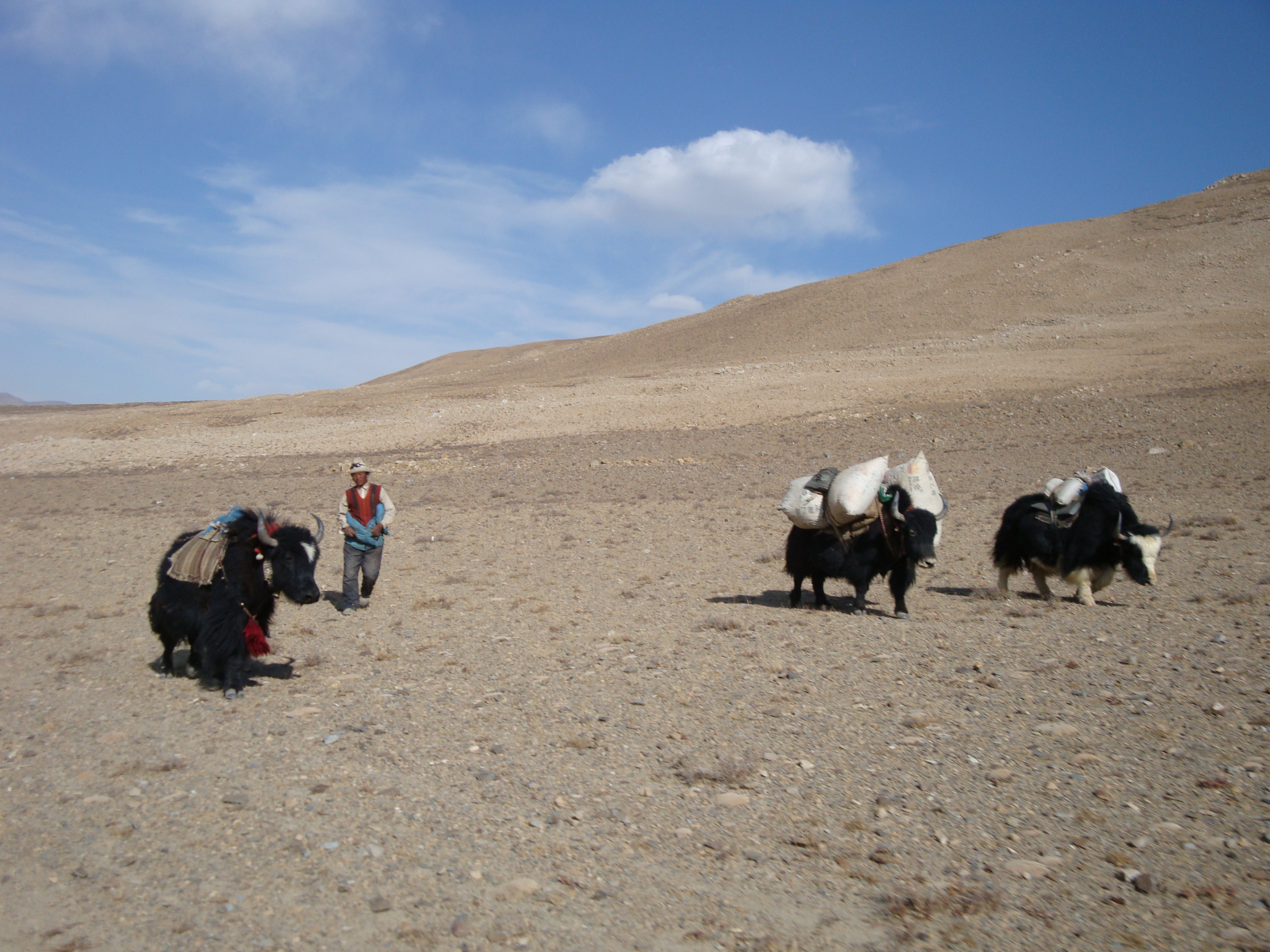
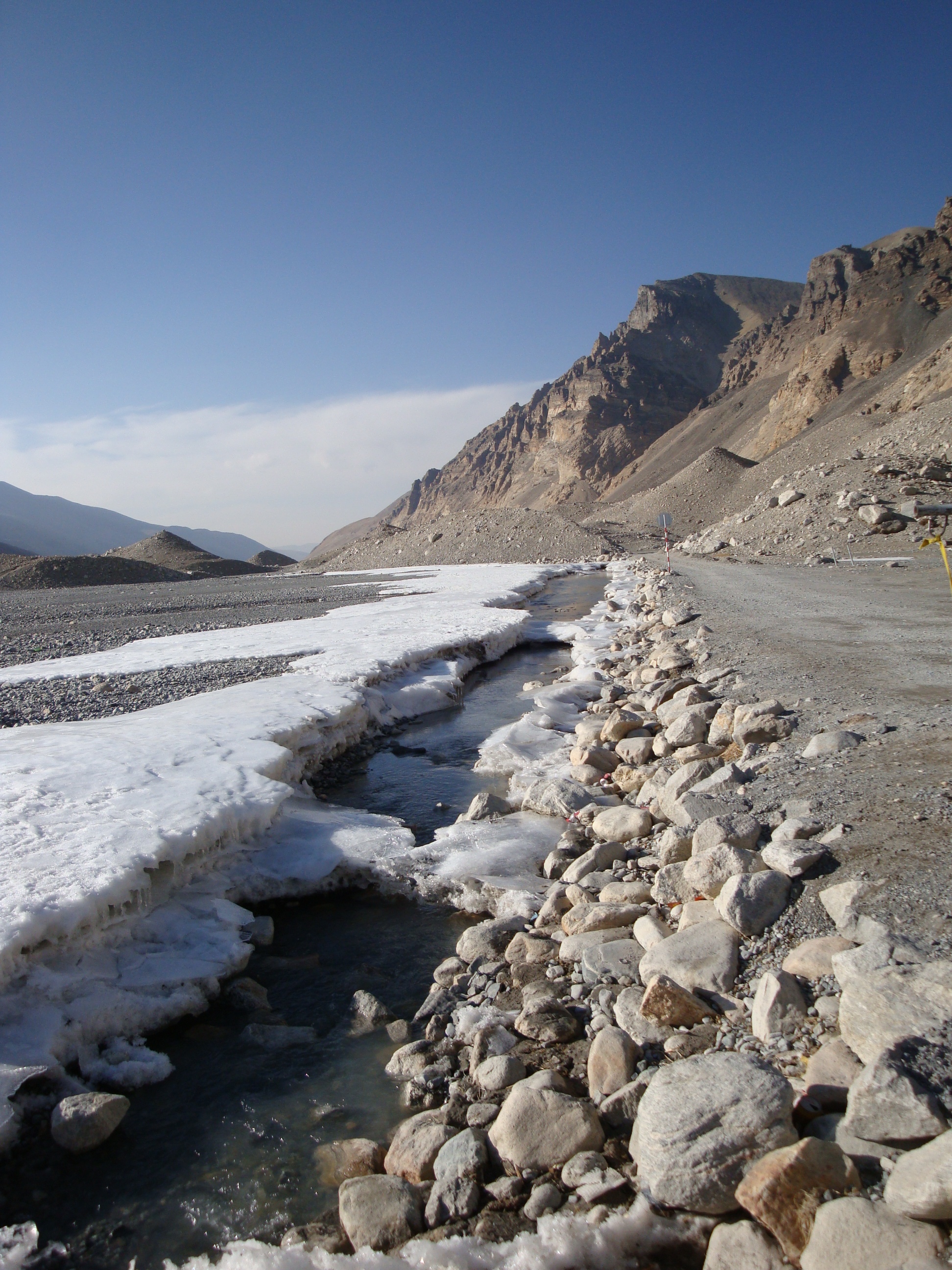
Finally, and greatly anticipated, we approached Base Camp as evening approached. We stopped at another Military barrier for final permit check and were told, “No, we are not going to let you in”. No reason given, the Lieutenant was just feeling antsy and exercising his Chinese right to be a complete pillock. Kel Sang played the humble Tibetan guide and they all had a smoke. Then this youth with a gun acknowledged our presence and despite the fact we had every permit under the Sun asked to see my Passport. Fortunately it is full of China Immigration stamps and you could see his face change as he realized we were Gweilos, but also, Chinese Residents. Then he looked at Jon’s and we could see him trying to work his way out of this without losing face. He managed it and muttered something about him doing us a huge favour and we were in. Only it wasn’t Everest. It’s actual name in Tibetan is Qomolangma and Everest was just some Brit Cartographer who took the liberty of immortalizing himself.
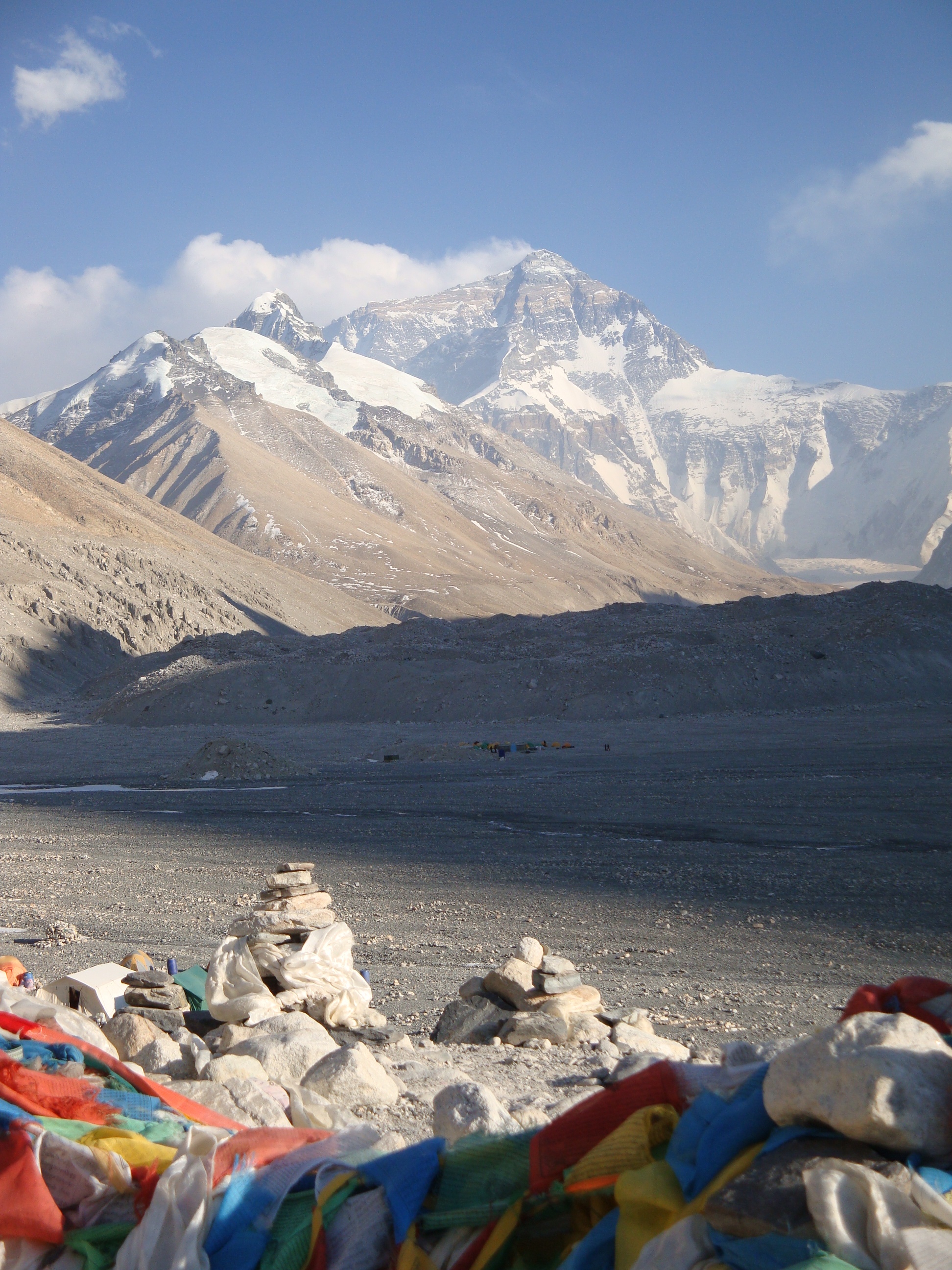
We walked past the barrier a couple of hundred metres and then climbed a small hill about 30 metres high. Every step is an effort at 5040 metres, but when you get to the top, there she is. A steep shadowed valley lies in front, various expedition camps set up along the valley bottom and Qomolangma framed at the end. The sun shining on black granite, white snow and the flag of cloud fluttering from the summit. It is really quite beautiful. It doesn’t look that difficult, especially on a sunny evening. I might be tempted to give it a shot one day. I just hung about and gawped and took a gazillion photographs, but eventually they dragged me away. It was only at the foot of the hill that I realized we hadn’t taken a team photo, but at that point I couldn’t convince anybody to go back up.

We made our way back down the valley to the Everest View “Hotel”. In this particular case though, “Hotel” is a bit of a misnomer. “Gulag”, is probably closer to the truth. The rooms were Spartan, one bed, one cupboard, one light, no toilet. I don’t think there was a bath or a shower in the building. The communal lavvy on our floor was at the end of the corridor and fitted out like an Icelandic Bank. No light, a concrete floor with a hole in it and, below that, 3 years of frozen deposits. There was no tap of course, just a fifty gallon drum of water. Frozen solid. If you had your own icepick, you could chop off a chunk to wipe your bum with.
Down in the “Restaurant”, the middle of the room was taken up by a big cast iron stove fired by Yak dung. The fragrant fumes creating a blue fug of carbon monoxide. The staff and local punters hunkered around this, smoking, so that us foreigners had to huddle in the nether regions, in sub-arctic conditions, where there still remained a semblance of oxygen. However, there is only one place that I know of in the World, where you can look out of the windows at the North face of Everest.
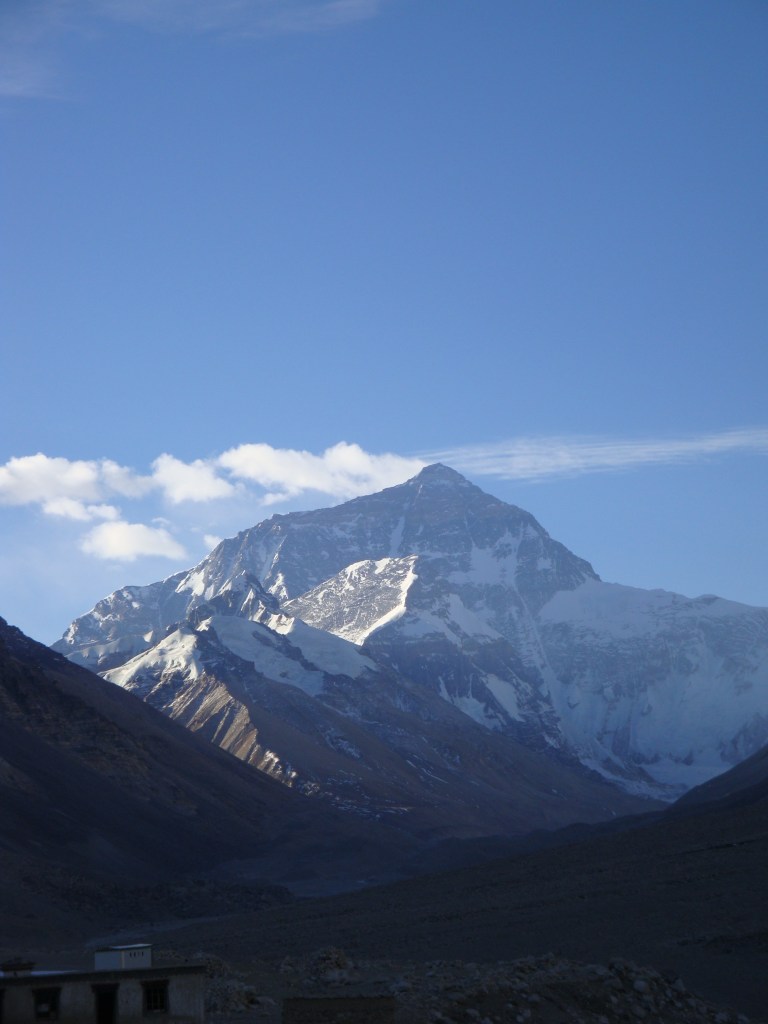
We survived the food. If I ever see another bowl of vegetable soup noodles it will remind me of moments such as these. Beer was definitely off, at this altitude it would be suicidal. We went to bed early, not even enough energy to play cards.
By this time, the temperature in our bedroom was -11C. That’s ‘Minus 11 degrees below freezing’. Dori was wearing almost every item of clothing she possessed, including scarf, wooly hat, gloves and hoody pulled up. She kicked off her boots, put on another pair of socks, got into bed, pulled the covers over and disappeared. 5 minutes later, she got up, put her boots back on and got back into bed. I did my best with Jammies over my thermals but sleep was elusive.
Firstly, the results of drinking gallons of tea to try and get warm, kick in rather quickly. I made several trips to hole in the floor and I swear that on the last trip I had to snap the frozen drops off the end of my poor shrunken little friend. I may have only been away for a minute or two, but each time I returned to frozen sheets.
Secondly, with so little oxygen around and absolutely no humidity, us chaps used to the sweltering, soggy coastlines, tend to get a little parched. This involves yet more drinking, with the inevitable consequences, and when one does get off to sleep, your nasal passages atrophy, your mouth opens to facilitate continued breathing (aka ‘Life’) and the moisture hungry night demons of Qomolangma suck every last drop out of your throat. You suddenly wake up in paroxysms of gasping, vainly trying to recover lost moisture, grabbing the water bottle and then almost retching because your throat is so parched it cracks when you try to swallow. All this and trying to breath too. The old heart rate must have been off the scale.
At one point I really had the need to hoik up a gluey of epic proportions. It’s one of Life’s great inconsistencies that, at a time of massive dehydration, your body produces mucus by the bucketful. I tried for several minutes to get this prairie oyster out of my throat, to no avail. It wouldn’t budge and it was getting increasingly uncomfortable. I pulled out my torch and had a look in the mirror. I had spent the last 5 minutes trying to cough up my esophagus. It hung there, huge, swollen and distended and trying its’ damndest to strangle me. In an effort to combat all this I tried to sleep sitting up, but ended up merely praying for the dawn. Boy we were really having fun.
Dawn arrived after an eternity and we stumbled down for a cold fried egg, cold fried pancake and some form of luminous toxic substance masquerading as jam. I bravely did my morning business, very quickly and, unless this global warming thing really kicks in, I think it will probably stay there for eternity, slowly evolving into a diamond in about a trillion years. Think about that the next time you put on your De Beers.
We needed no shepherding to the car that morning and submitted ourselves to the bone-jarring ride back down the foothills with equanimity. A short way down the ‘off-road’ Padro turned ‘off-off-road’ and Kel Sang said the magic words, “Short cut”. He may also have said “And I hope you are all covered by Life Insurance”, but I may have missed that bit.


We tore off across boulder strewn wasteland, forded streams and careened along dirt tracks no wider than the axles, staring down into bottomless chasms. But it was stunningly beautiful, in a very harsh way. Every so often, we would meet a caravan of trucks plying the expeditionary forces up to Base Camp for the start of the Summer season. The 108 kilometres was reduced to at least 104, but hey, that saved about an hour. We pulled up to the Park barrier, where we were checked to make sure we weren’t illegal aliens or escaping Yetis and we fed our surviving rations to a flock of snotty nosed kids, who probably grow to adulthood on a diet of Mars Bars, Yoghurt raisins and Digestive biscuits.
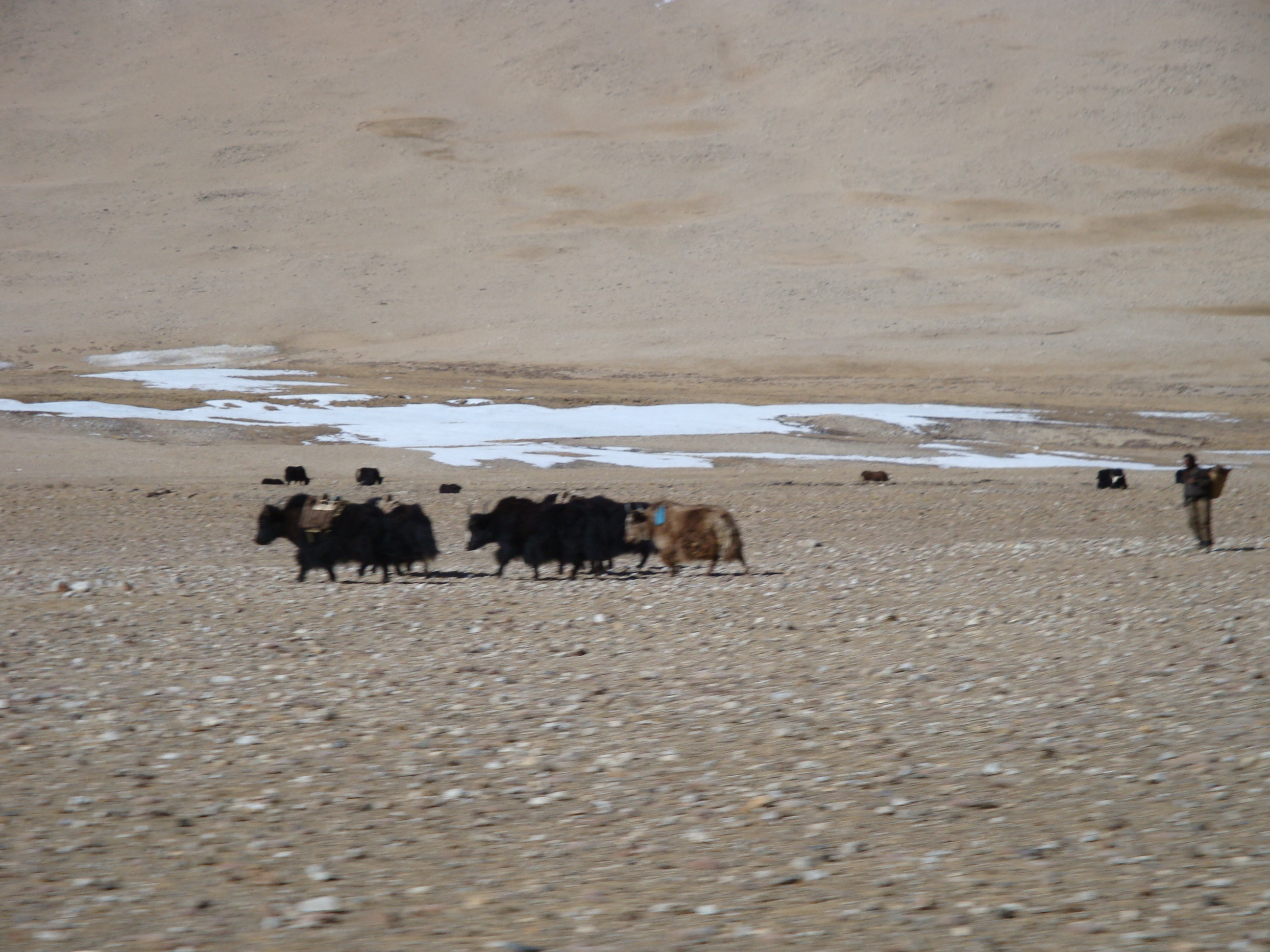
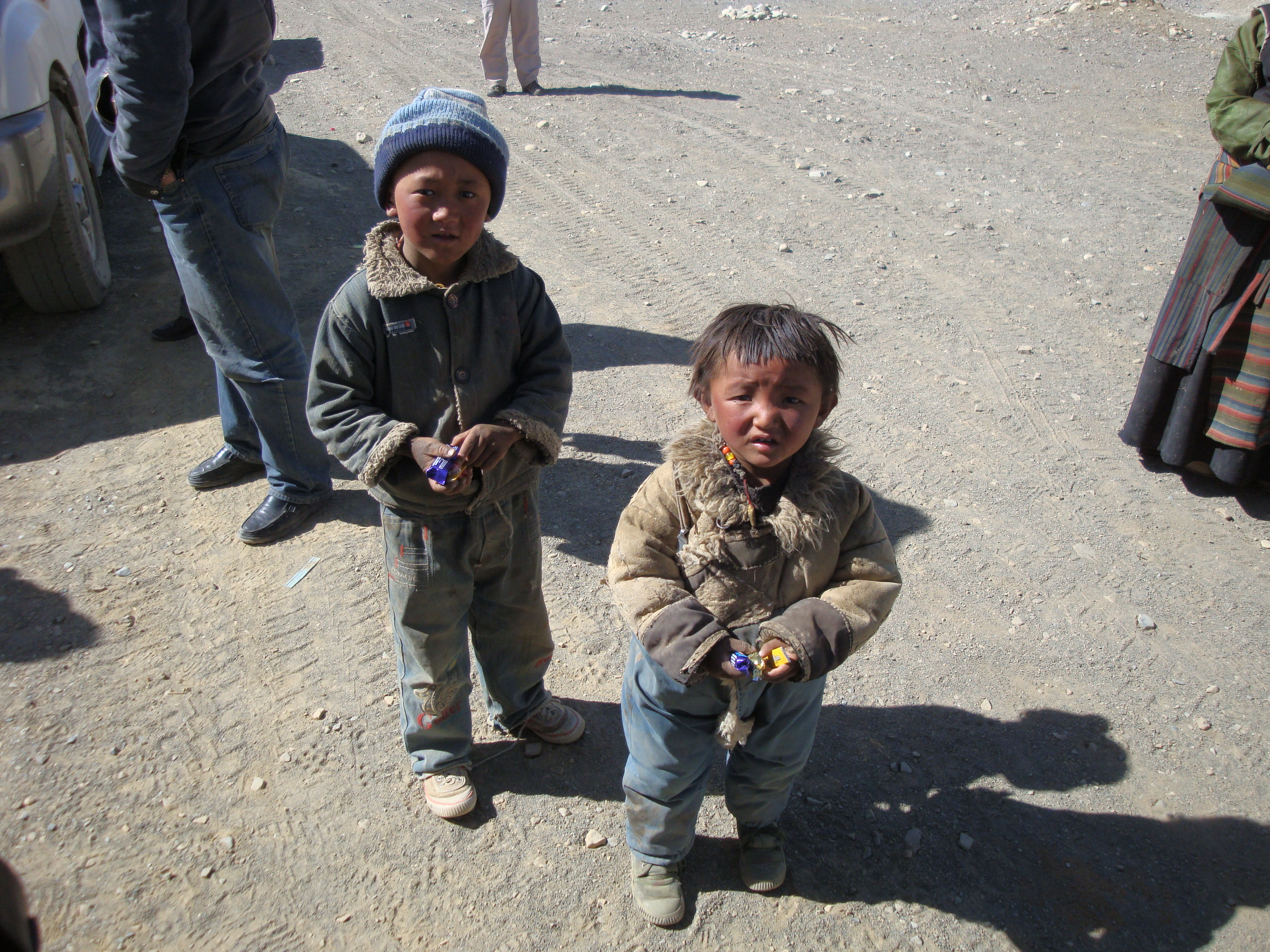
After a stop for Veggie soup noodles, we were off to the border. Along the ‘Friendship Highway’, built, so the Nepalis will tell you as a route for Tanks, should the Chinese ever decide to invade Nepal. In centuries past, this valley route into and through the Himalayas was the road for invading armies of Nepalis coming raiding into Tibet. The hills are sentried with crumbling mud forts at regular intervals. The road engineering and passing through the snow capped monoliths is all pretty impressive.

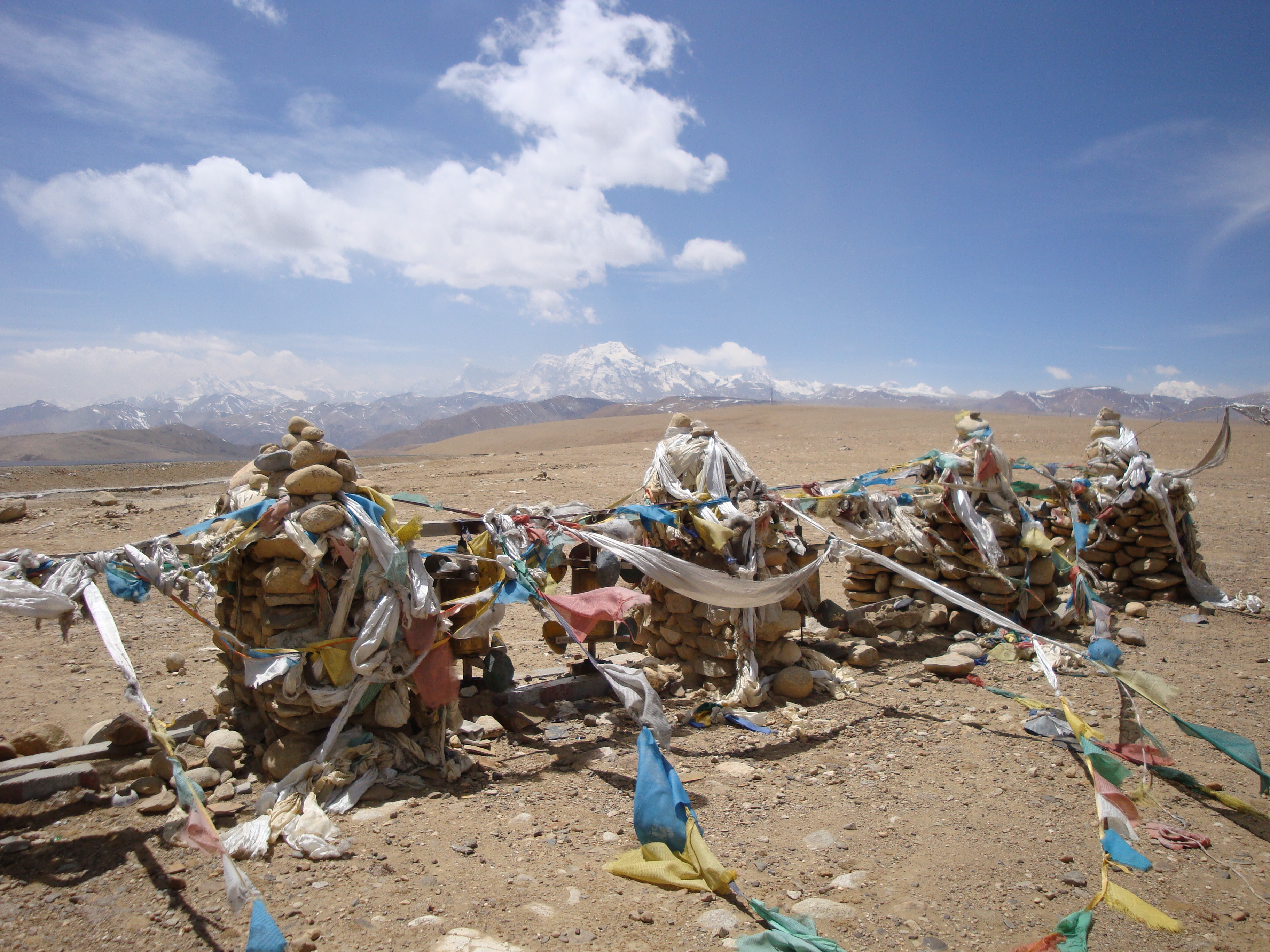
Finally the road starts to plummet into a narrow gorge and at this point it just disappears. The last 10K into Zhangmu you are suddenly aware of trees, low cloud, waterfalls and the fact that there are overloaded trucks grinding up the donkey track that you are trying to descend. You come into Zhangmu which is just one street about 2K long, zig-zagging down the side of the gorge. Blocks of ugly flats have been superglued onto the hillside. Trucks and cars have been parked everywhere, so that passage depends on being able to batter your way through.
We check into our Hotel. It has hot water and a shower in every room. We dissemble, de-coke and deliver ourselves of layers of clothing and several layers of skin. We can breath. We eat curry, drink beer, sleep deeply and have some of the sexiest dreams I can remember since being a teenager. I have no idea what that is all about, but maybe that’s why the Dalai Llama came down from Tibet and never went back.
The following morning we set off for the border, it’s only about 6K further down the donkey track, but there’s a one hour delay because part of it has slid away. Closer to the border, the traffic is jammed to a complete standstill. We get out and say goodbye to Padro and carry our bags the last kilometer. He is probably still there, waiting for a space to turn round.

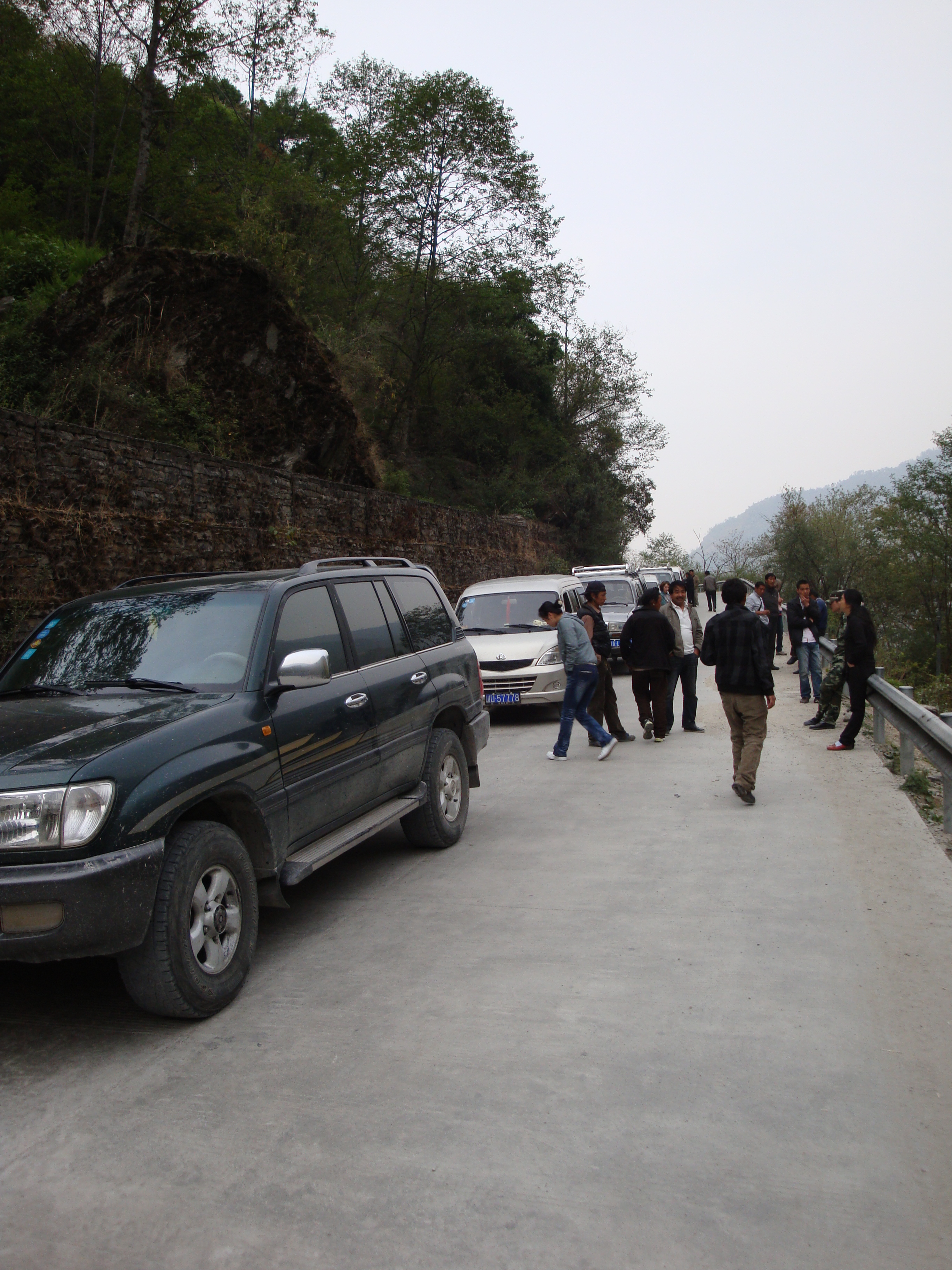
Emigration from China is, as usual, problematic. Visas are thoroughly checked luggage scanned and then we are subjected to a complete luggage inspection. Everything out on the table top. Try explaining what an Ammonite is to a Chinese Border guard and why it is wrapped up in 3 pairs of socks. “I’m not trying to hide it. I’m trying to protect it”. “In those?!!! You’ve got to be kidding me! Look they’ve already stripped the Jurassic Period clean away!” Saved by Liz who had a Buddha Statue. “Has this got anything to do with the Dalai Llama?” “Why would I try to smuggle Dalai Llama images out of Tibet?” And all this time, both Chinese and Nepalis are sauntering past us carrying bales of opium and bundles of AK47’s.
Eventually we are allowed out of China and into No Man’s Land, where troops of Nepali Scavengers descend upon our luggage. We form a fortified ring around it and kick a few people just to get the message across. Several people claim to be old friends of ours, lost relatives and representatives of the Nepali travel service. Finally some shifty looking adolescent shows up, claiming to be our guide and we tell him to bugger off. Then it occurs to us to try ringing our guide and sure enough this guy’s phone goes off. So we say goodbye to Kel Sang and make our way, clutching our bags, across the Friendship Bridge, mined, it is said with almost 200 tonnes of TNT, should the Chinese ever decide to make an uninvited visit.
On the Nepal side, we walk past Immigration without noticing, until somebody calls us back and we go into a shed, where we fill in Departure forms, because they have run out of Arrival forms in 1983 and have since employed one guy to cross out ‘Departure’ write ‘Arrival’ and the next guy to check his spelling. We meet another couple who are trying to get into Nepal. “But you just left!” Says the Immigration Officer. “Yes but they won’t let us into China. They say we have the wrong Visa and there is no Guide to meet us. We must go back to Kathmandu find the Travel Agent and disembowel the son of a lady dog! Where can we get a bus?” We felt really sorry for them, but there wasn’t an inch of space in our Landcruiser and had to leave them to it. We also felt pretty sorry for the Hippie couple pushing their bikes up the road. Bikes?! They had to be mental. It’s another 2000 metre vertical climb from Zhangmu to the Tibetan Plateau and I don’t remember passing any B&B’s.
We felt even sorrier for both couples by the time we reached Kathmandu. The road down made the Chinese side look like the M1, plus it had the M1’s traffic levels and all belching heavy black smoke. We got into town 8 hours later and, much to our relief, were taken to the very nice Kantipur Temple Hotel. Jon and Liz had fought hard for this and it was really worth the effort. A beautiful piece of modern Raj, with a small garden, down a back alley, off the main shopping and nightlife area. We had to be given a 15 minute lecture on being “Green” but this was just an excuse to save on laundry and to cover the fact that Kathmandu has a massive electricity shortage, so the power comes and goes on a rota system, but basically you get some if they’ve remembered to pay the coal bill and Fred’s come in to work.
The girls couldn’t wait to get out and shop and boy did we make up for lost time.
The next day we met our new guide who was a small very dapper older gentleman (68 ish?) by the name of Sahindra. He was an absolute star. A retired tea trader and very well educated with superb Victorian English, I loved him to bits. He could talk about anything and give you the complete History with Political, Religious and Socio-economic perspectives. If we had had a guide like him in Tibet, my cup would have runneth over.
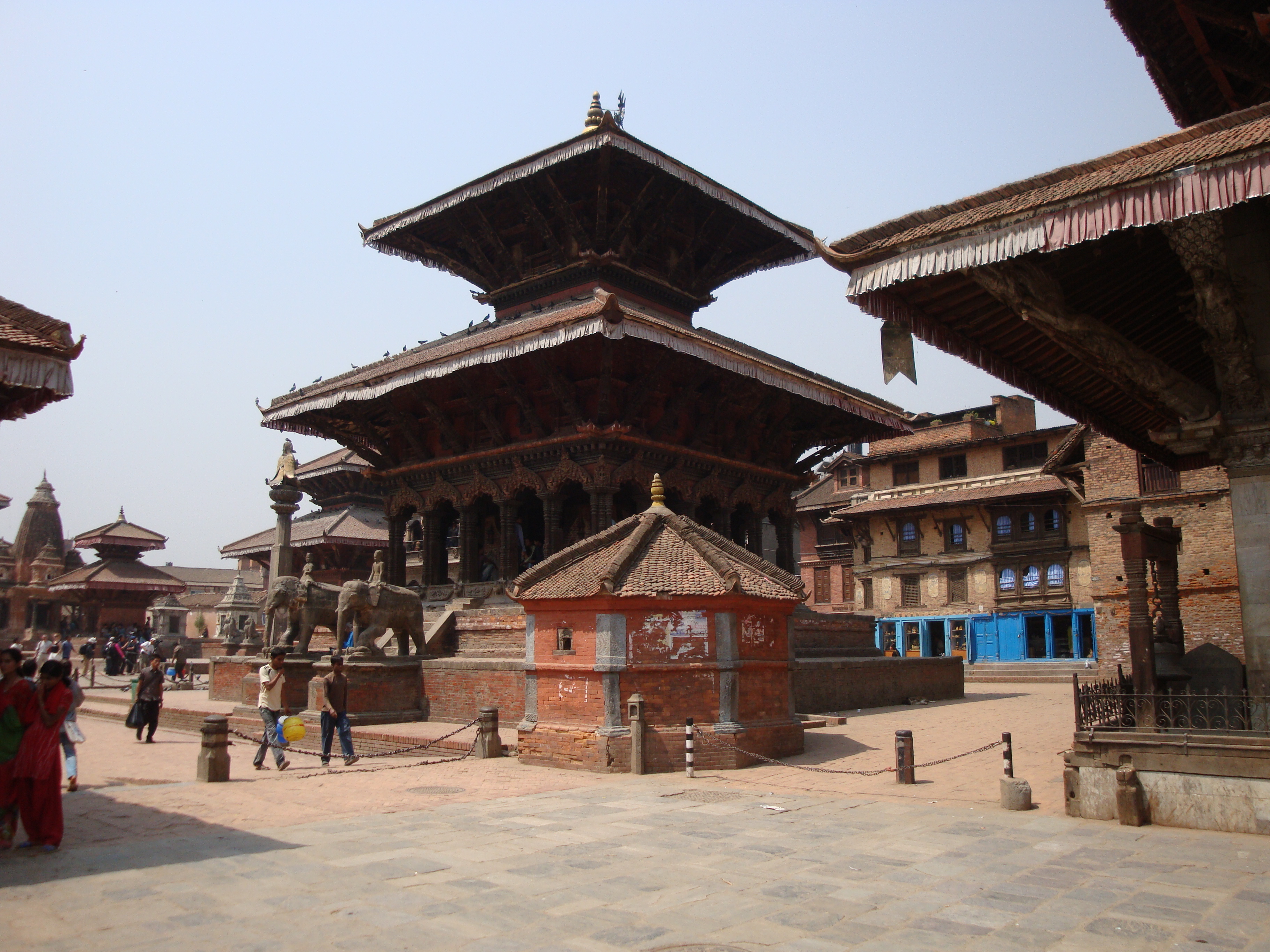
What followed was a very intense immersion in Kathmandu from Siddartha to the Crown Prince who murdered the Royal Family and let the Maoists into power. In two days, we saw Hindu Temples, Buddhist Temples, Royal Palaces, Cremations, a 7 year old living Goddess, Tanka studios, Carpet weavers, Tea shops, Terracotta makers and the Singing Bowl man.


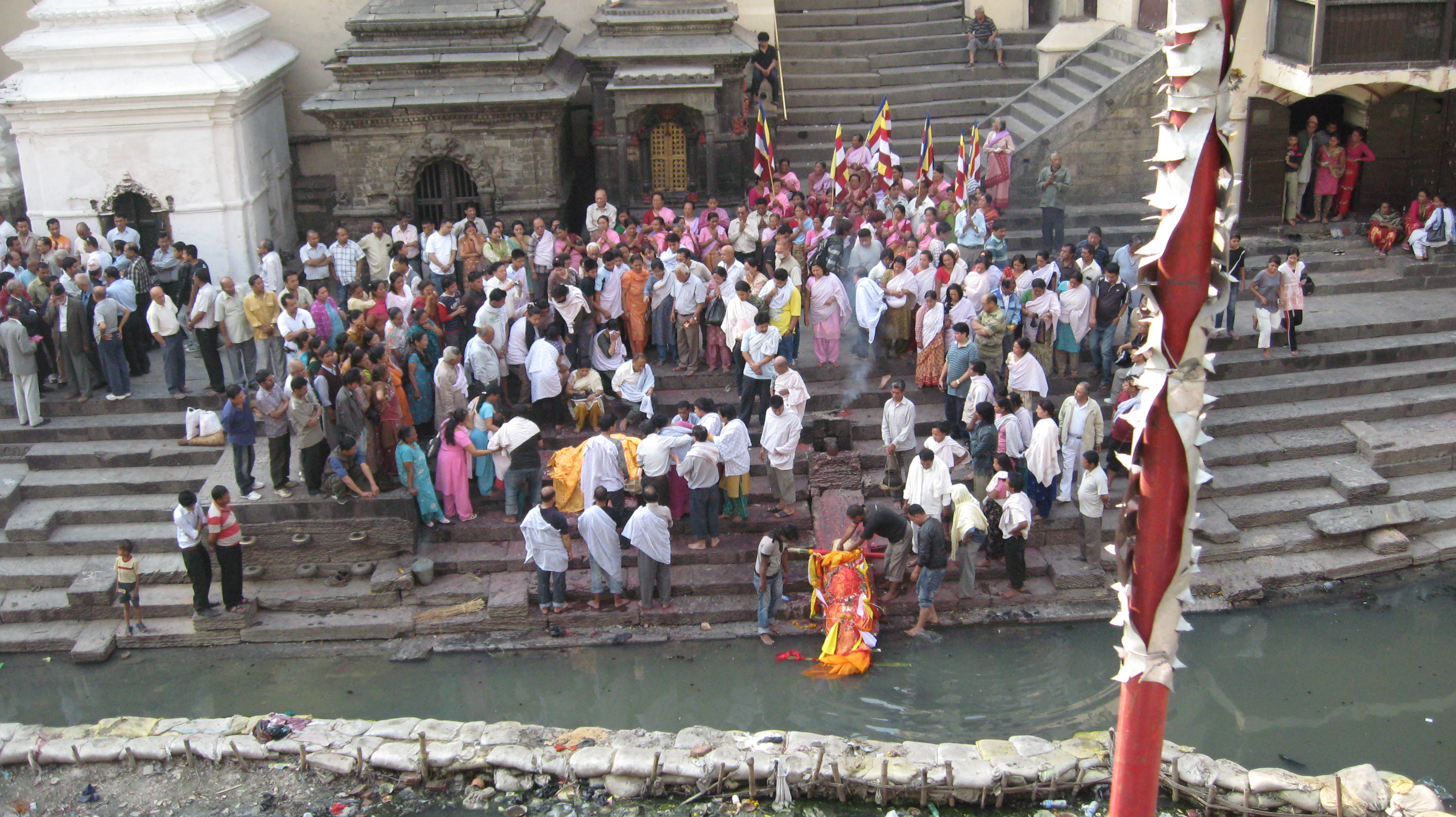
The last was a cute little guy who handmade bowls from a composite of 7 different metals which vibrate when struck or rubbed and give off the sweetest sound. He put them over our heads and gonged them so that you felt the vibrations run up and down your Kundalini, getting your Chakras in order. He also took Visa. I had to have one and now I give Dori a good gonging whenever she will let me.
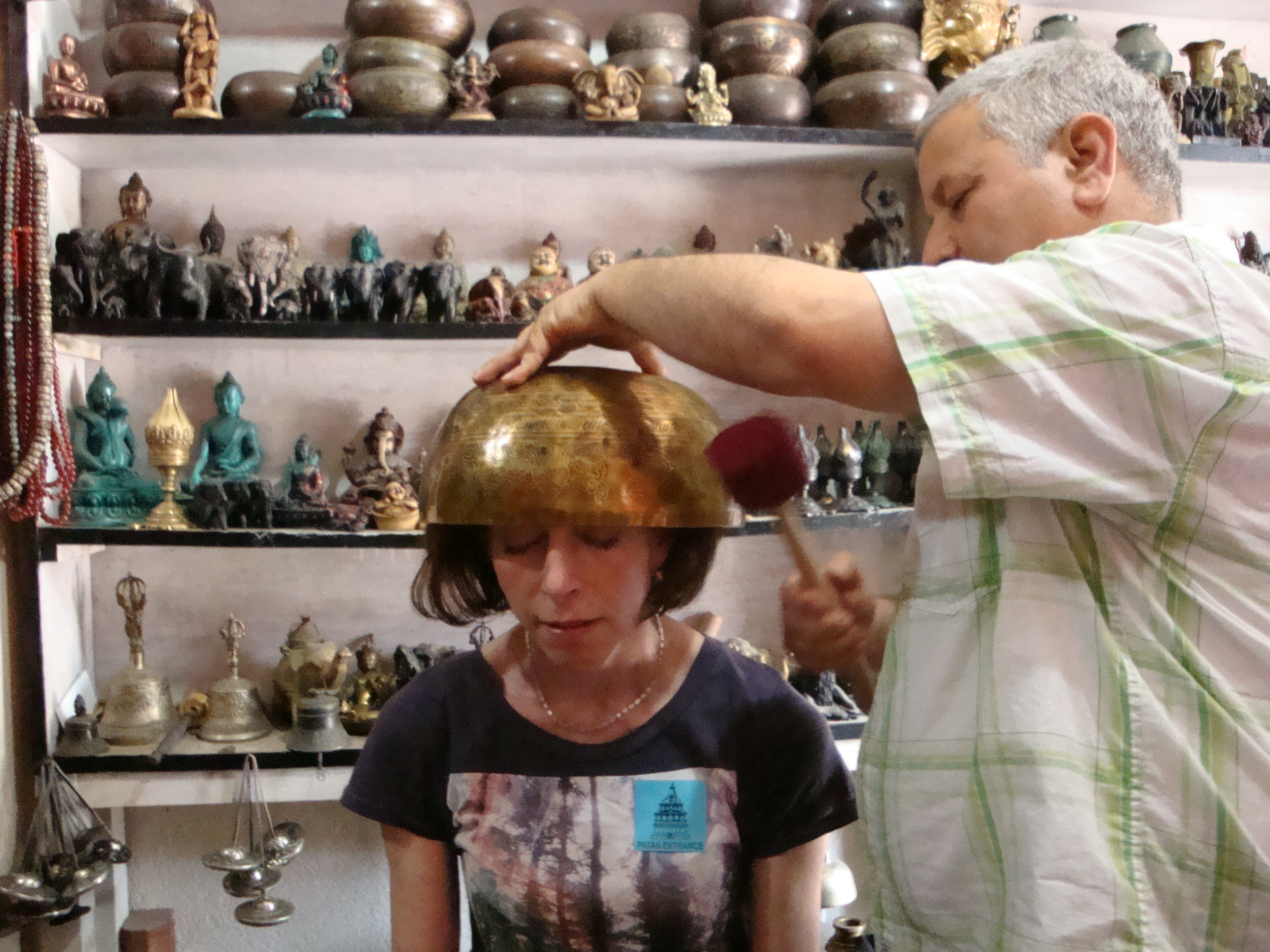
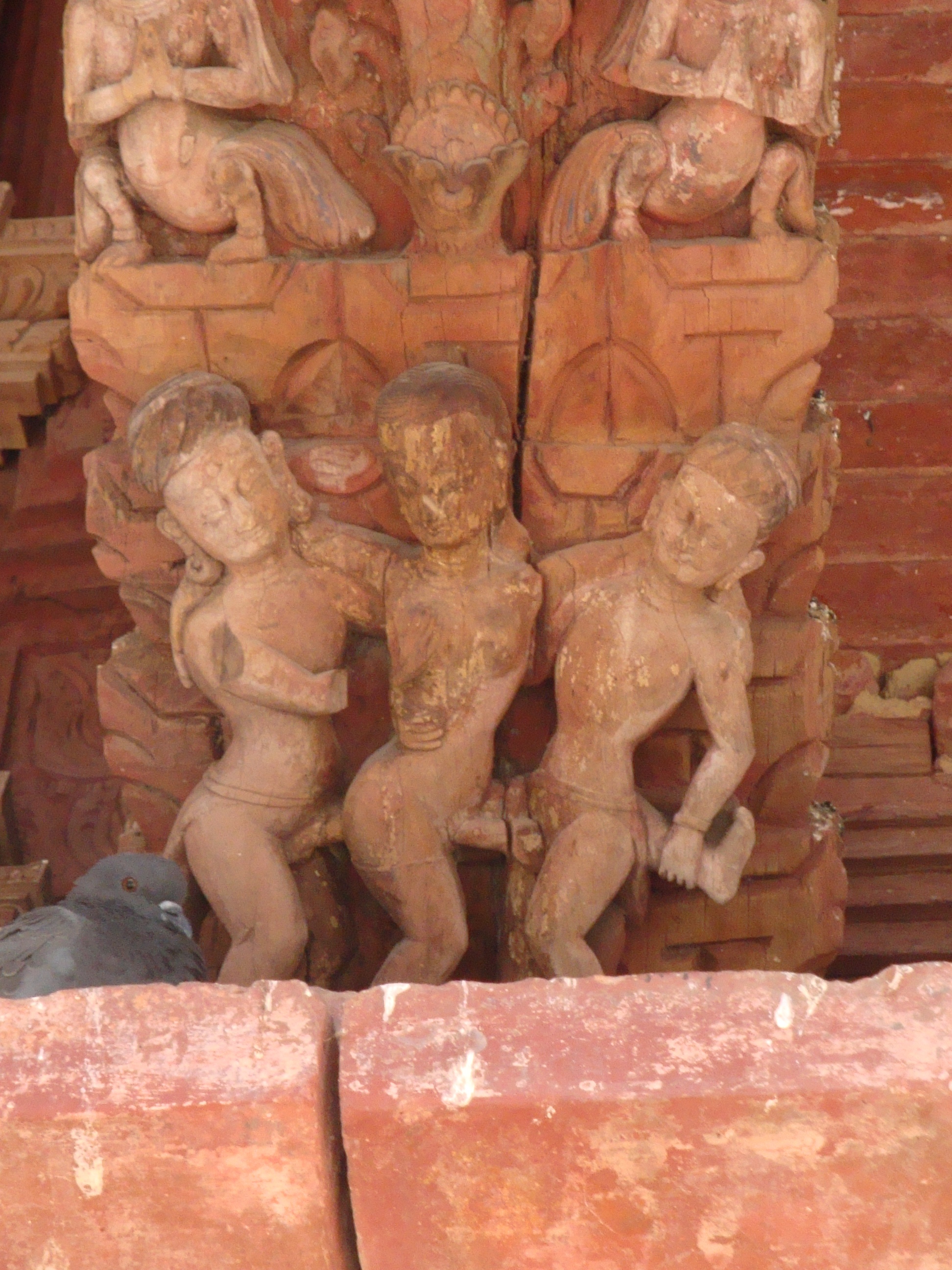
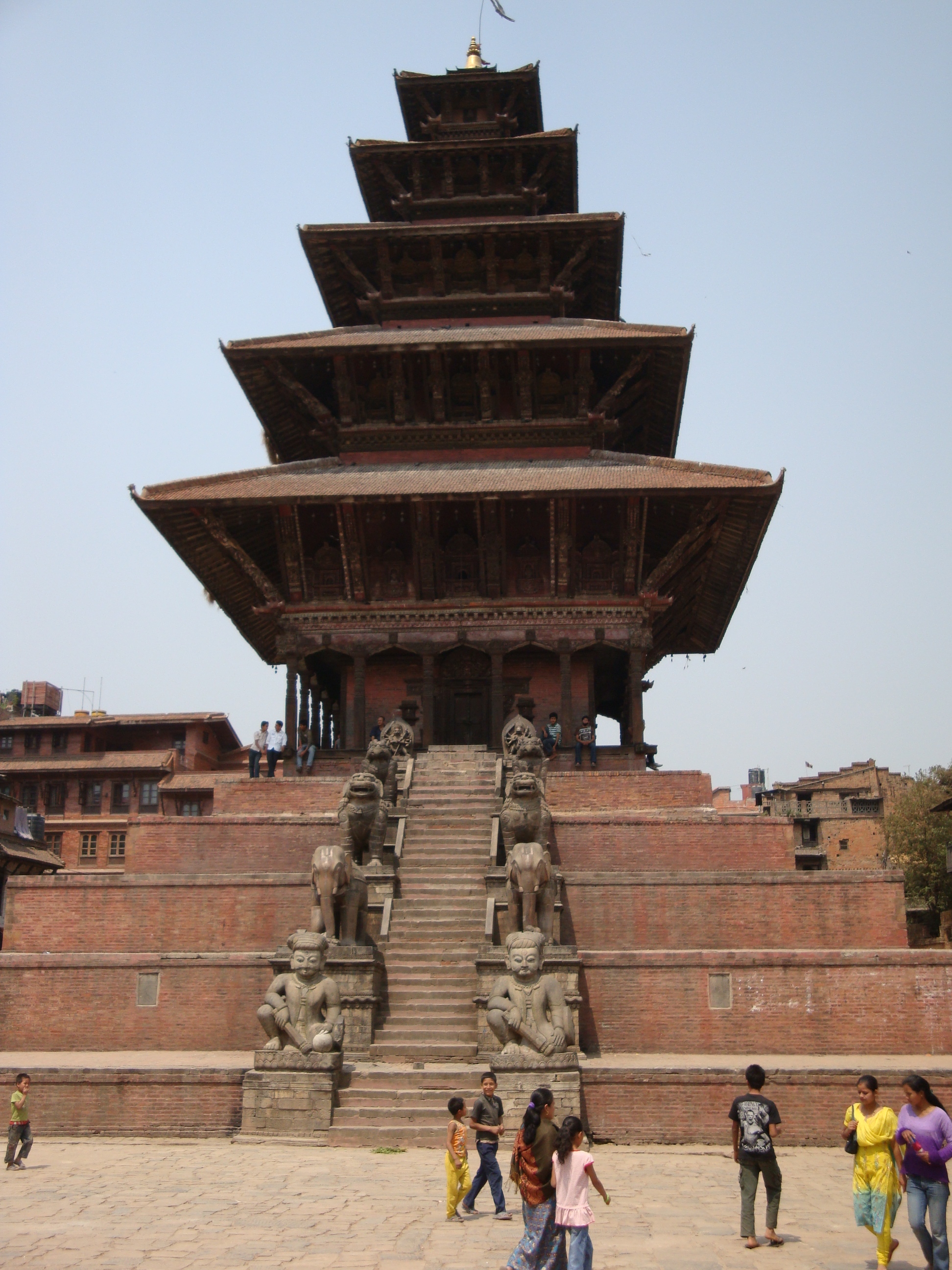
The Dhurbar Square in Kathmandu is good, but the ones in Bhaktapur and Patan are superb. I love brick architecture and these guys invented the brick, and the Pagoda, which they later sold to the Chinese before they even knew what architecture was.
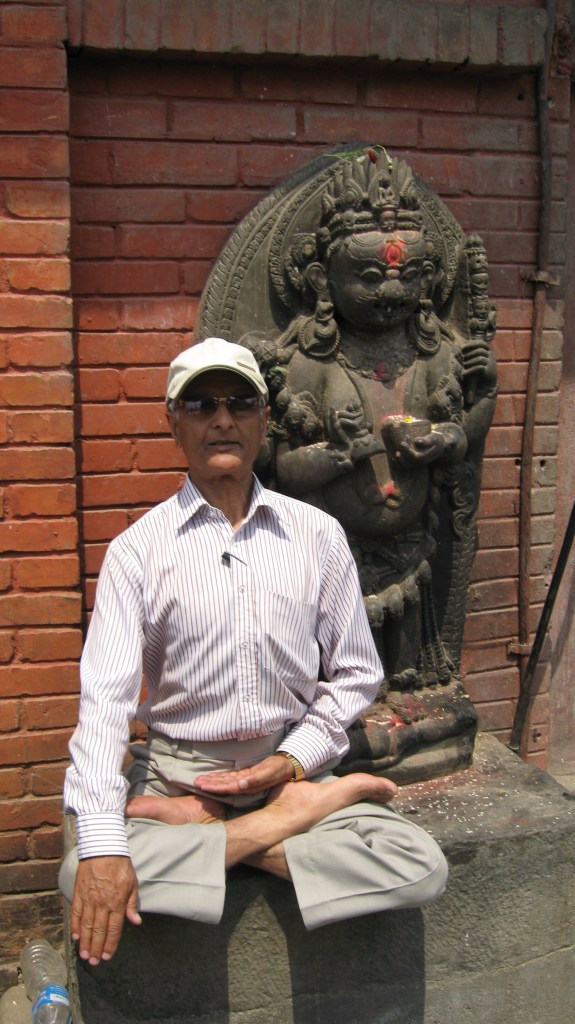
But one of the highlights for me was at the Hindu Monkey Temple, when we got into a discussion about Buddhism growing out of Hinduism and then itself branching into the several forms that exist today. Sahindra sat on a plinth and described how Buddha reached enlightenment and how the Devil tried to tempt him away with groupies. Sahindra kicked off his sandals, sat down, pulled his legs up into a full lotus position and did the accompanying hand movements, waggling his head while explaining their significance. By the time he had finished, every other tour group in the vicinity was spellbound. I wanted him to be my Grandad. I would have put him in my suitcase if I could.
The food in Kathmandu is great, the shopping is great, the streets are packed and you take your life in your hands every time you step out the front door. The pollution is horrific, the squalor is enormous, the political situation is a very bad joke and the economy is trashed, but the people seemed okay in the main. It’s difficult to see how the Maoists have such a stranglehold except I guess for the fact that anybody with real energy is going to bulldoze most average Nepalis aside.
The last hurdle was getting out of the Country. Kathmandu International Airport has all the subtlety of a KFC slaughterhouse, without any of the technology. Departure depends upon you being able to beat your way to the front of a massive Rugby Scrum to get some guy to chop your ticket confirming that you don’t have any contraband in a bag he hasn’t even looked in. It also depends upon them having a plane available. We got the chops, they got the plane and we got home.
Definitely one of the hardest trips we have done in a long time and certainly one of the most physically demanding and uncomfortable ever, even including some of our pre-children escapades. But what a fabulous adventure. Glad that we did it, but glad in equal measure that we don’t have to do it again. Would I recommend it? Indubitably!
Johny D
 Travels, Opinions, Stories and Stuff