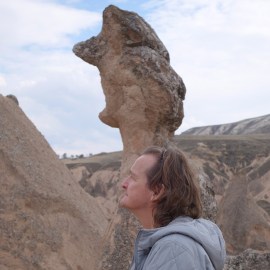
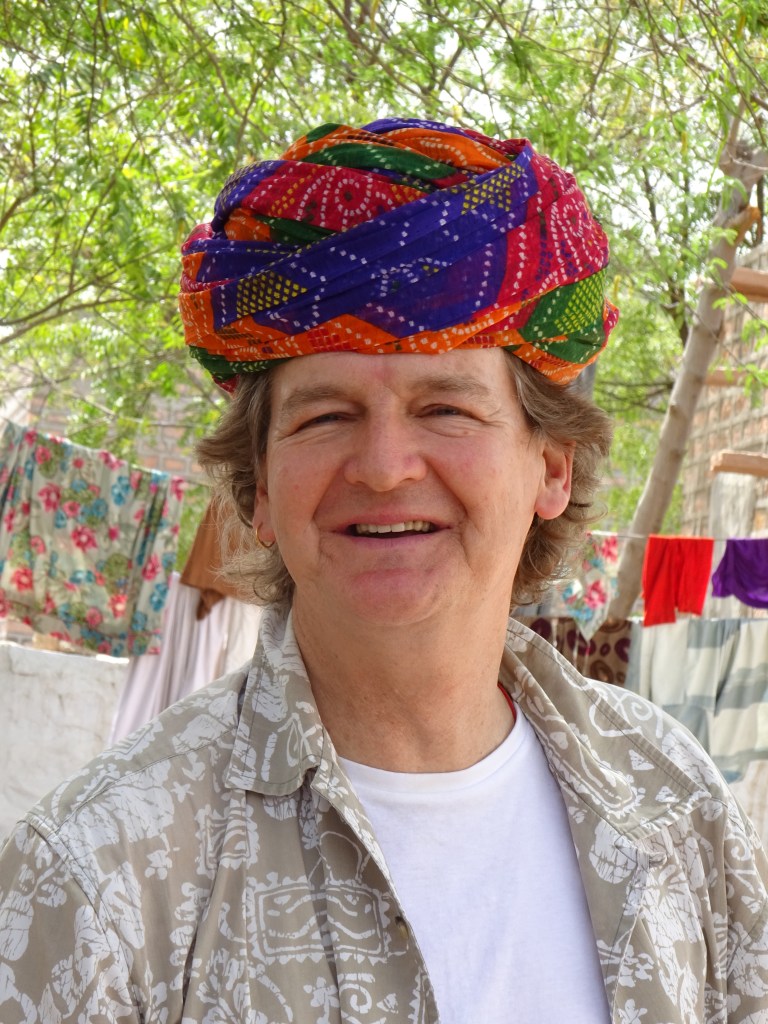
We last went to Rajasthan in 1985. Then, we was Hippies, with flowers in our hair. Now, the hips ache and we wear sensible hats and Factor 50.
Jon Foxall had made contact with TGS Travels out of Jaipur and between him and their boss Nikhil and a gazillion e-mails, we had an Itinerary for courageous hearts and brazen bums. As has become usual on the Easter Adventures of the Fabulous Four, the glutes were in for a serious bashing over miles of rough terrain and Cathay Pacific cattle class seats.
We flew into Delhi arriving around midnight and were pleasantly surprised by the Airport. Good start. TGS met us and we went to one of those horrible Airport Budget Hotels, The Red Fox and had a startling introduction to the new security requirements, three checks including a full-body frisk, just to get into a box with a bed in it. I’m pretty sure my sheets had been slept in, possibly by someone on day-shift, but we were too knackered to care. Dori passed out, but I just lay there worrying about being able to wake up in 3 hours time. So, no problem with that.
Back to the Airport for the 5.30 flight to Udaipur and checked in our bags which, of course, were overweight. 15kg? My underpants weigh more than that and Liz, as usual, had an average of 3 outfits /day including matching shoes. Meanwhile Dori had a case of Frexinet, so nothing unusual there either. Anyway, we antied up and got on with it, arriving in Udaipur to meet our Driver, Ramdev. A broad shoulder, a big belly and a twinkle in his eye. Our kind of guy.
We left Udaipur and headed off to Bundi on roads made almost entirely of potholes. One has to wonder if, in a country as bureaucratically bedridden as India, there is in fact a Ministry of Potholes, whose role in life is to ensure an even distribution of same. If this is the case, then the road to Bundi was benefitting from more than its fair share. Mile after mile we bounced through a landscape of stone quarries separated by walls of trash. Bizarre Dr. Seuss trees stick up in weird shapes, just 3 branches and a clump of red flowers on each, the leaves having been cut off to feed the goats. After hours of rocky scrubland a shallow valley opens up, with a lake, grassy banks and herds of cows and buffaloes. But it’s only a passing fancy and we are back in the searing scrublands, only to turn a corner and be met head on by a surge of spangled trucks. Our first riot of tassels and chrome, horns and Bollywood anthems, shacks, tyre piles, pigs, dogs, cows and dust, that form the hinterland of every Indian town. A small ornamental lake appears and on the far bank the Taragarh Fort rears up the side of the hill. The town proper is tucked into the narrow valley below the dam that keeps the lake in place. We stand on the lakeside wall to photograph it and almost fall in, the smell being somewhat full-bodied. If the dam ever leaks, the town will dissolve in a hissing pile.

Ramdev manoeuvres through the old town gates, past cows and hairy pigs that dam the evil smelling drains. Somehow, in the chaos that is a single lane, multi-directional, high street, Ramdev pulls off a 3 point turn and blocks an alley from which a bunch of guys appear and grab our bags. Fortunately they work for the Dev Niwas hotel and we are ushered into a beautiful, peaceful courtyard. Fountains tinkle; plants scent the air and colourful mosaics adorn the white walls. It’s beautifully restored with splendid rooms and a rooftop view of the Fort.
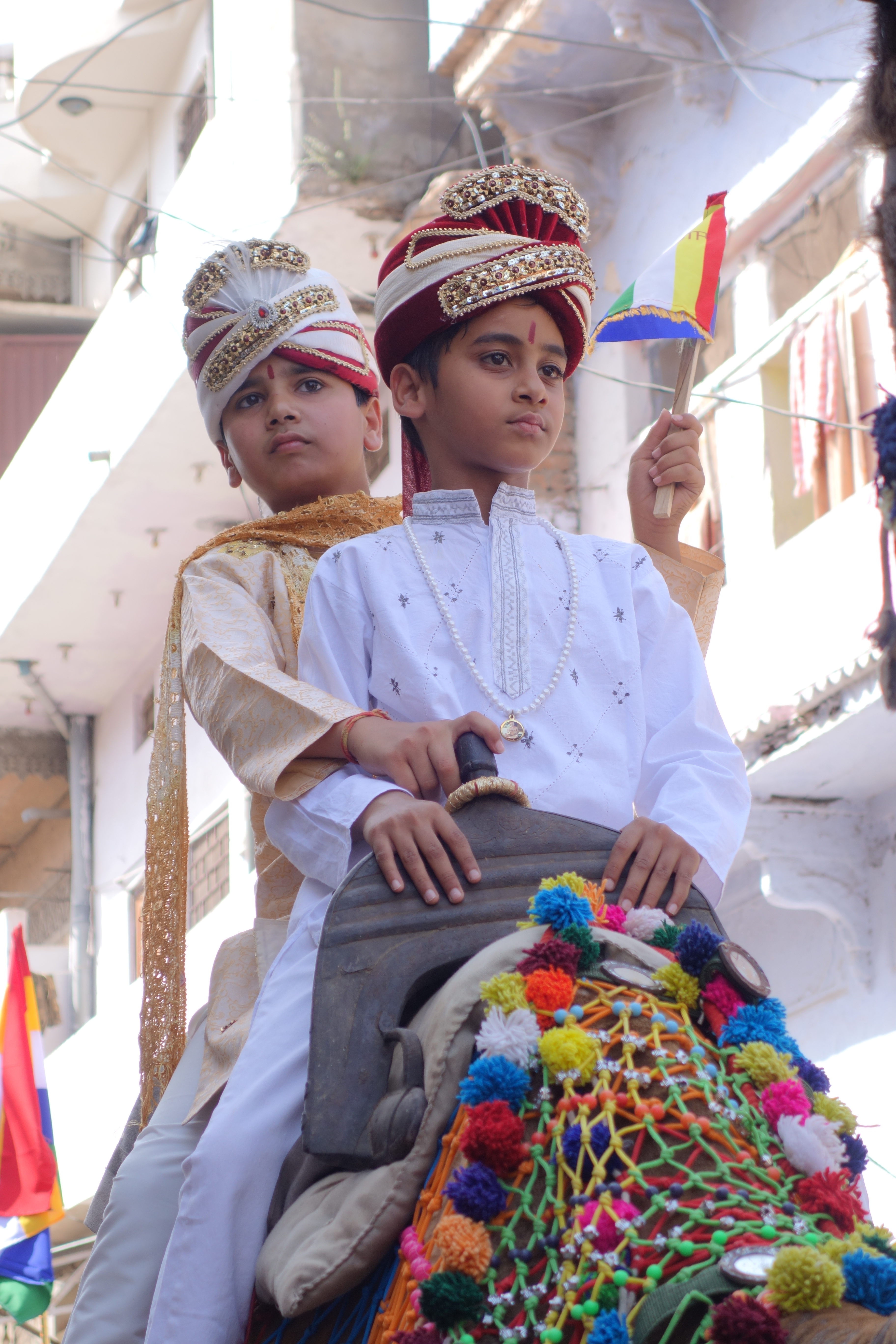
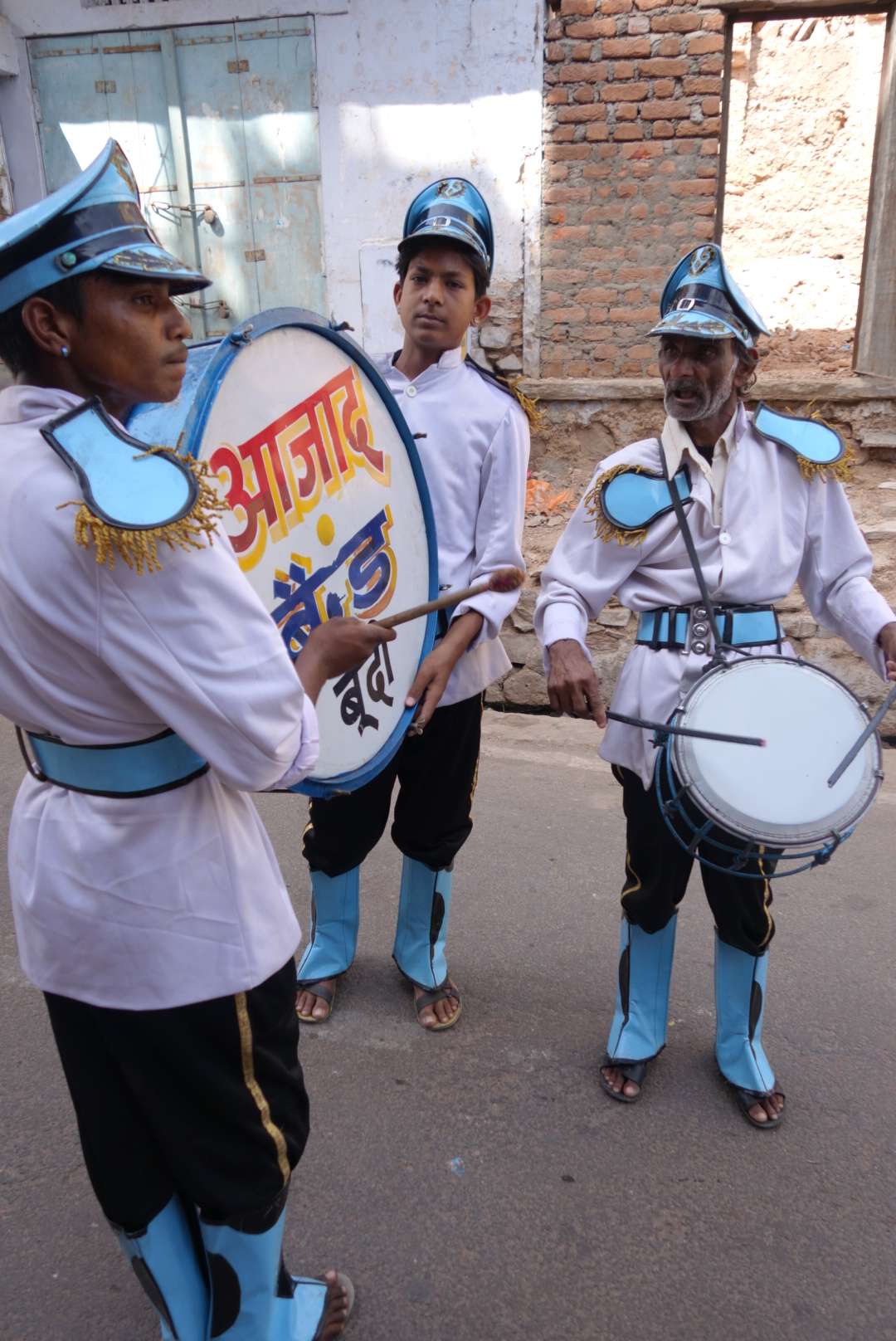
No time to relax, our guide, Navendra, was there and we were off. Somehow, Ramdev had managed to squeeze the car back out of the town and now the street was jammed with a religious procession. I always thought Jains were very esoteric, all about giving up earthly trivia and connecting with the big Ohmmm in the sky. Not these guys. They were all about spangley floats, careening down the street, each accompanied by a group of bizarrely clad and wild eyed, grizzled old geezers and boys, banging drums and blowing trumpets while a singer belted out the latest top-ten holy tunes from chromed speaker horns mounted atop the float. Each competing with the next, while motorbikes and tuk-tuks buzzed between not even trying to match the rhythm with their never ending horns. And everywhere, the great stoic cows.
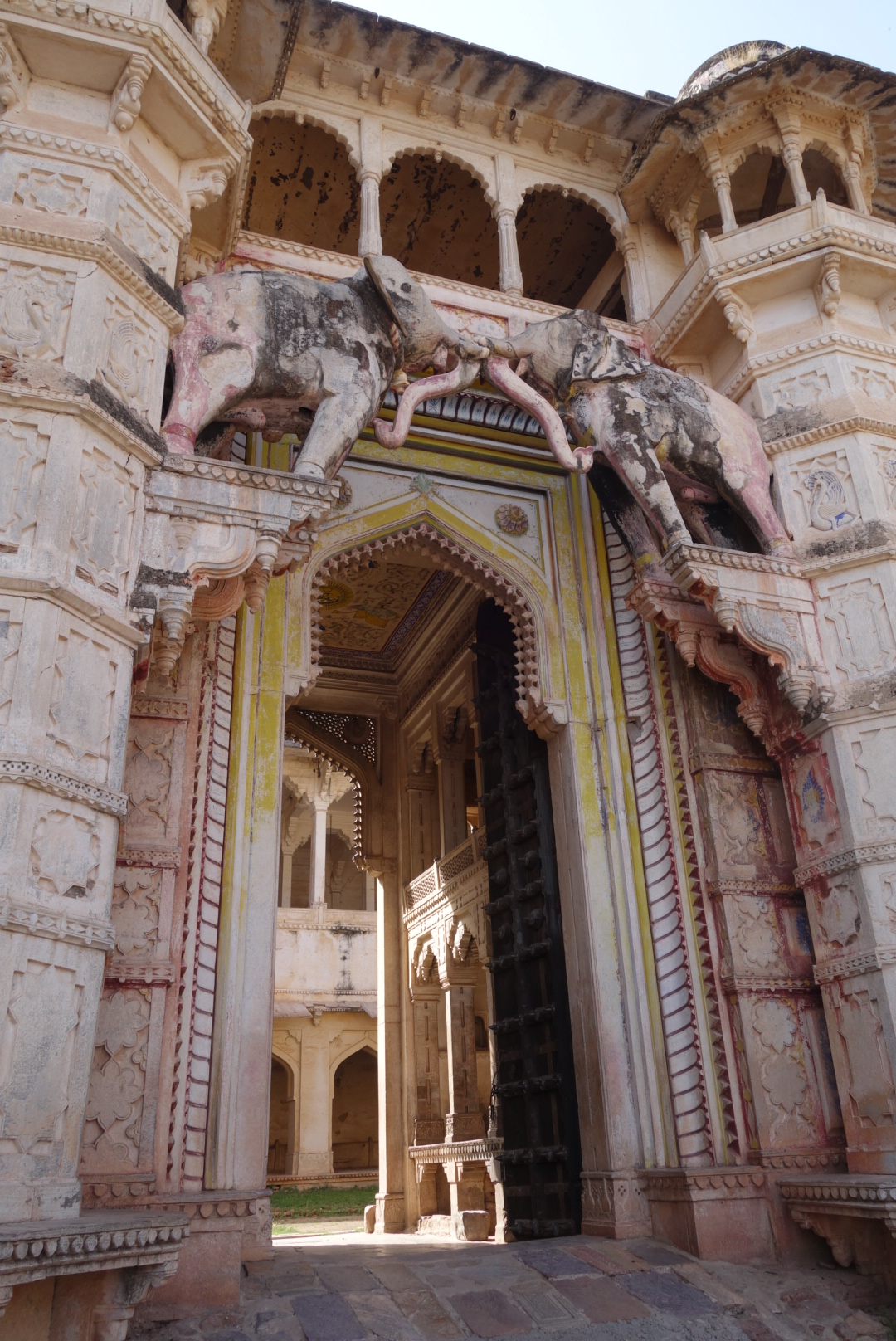
The Fort is privately owned by some ex-Maharaja’s grandson, who is now a politician. If he were the Minister of Tourism, he should be subjected to a historical Thugee garrotting and then suspended by his testicles from the Fort gates. Bats and Pigeons rule the place and it is rapidly falling apart. It is beautiful now, but it won’t be for long. It stinks of decay but is sorely in need of love and respect.
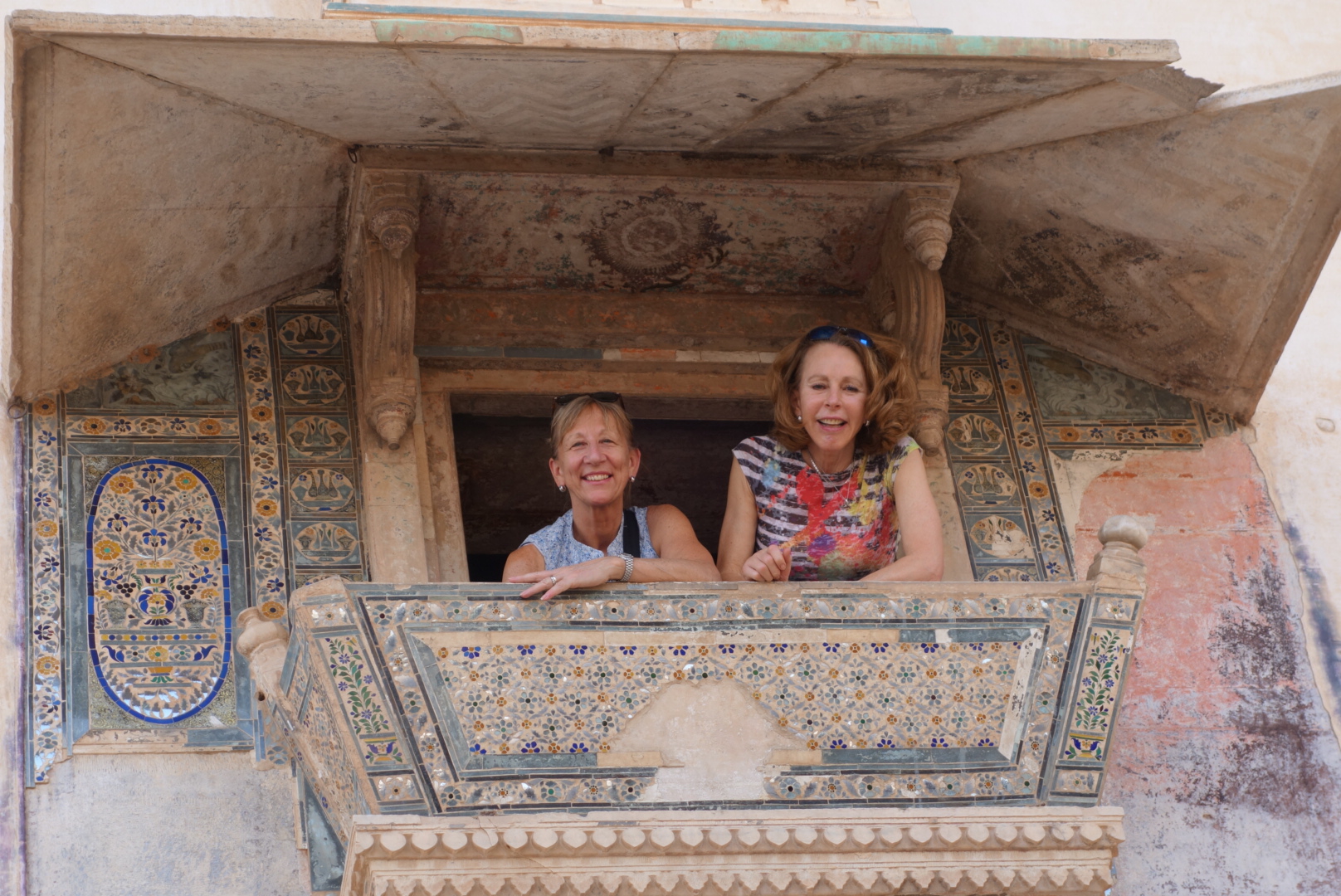
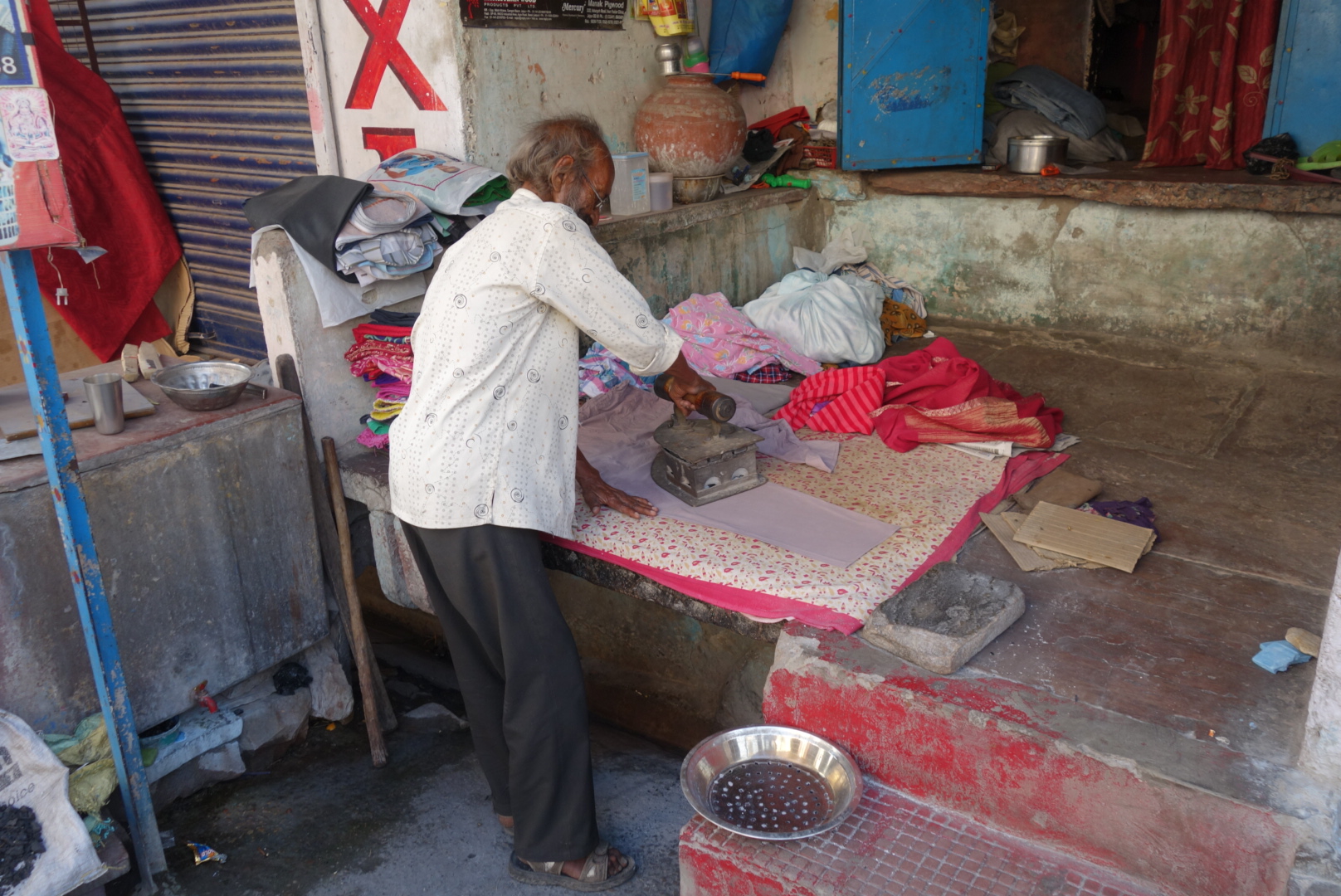
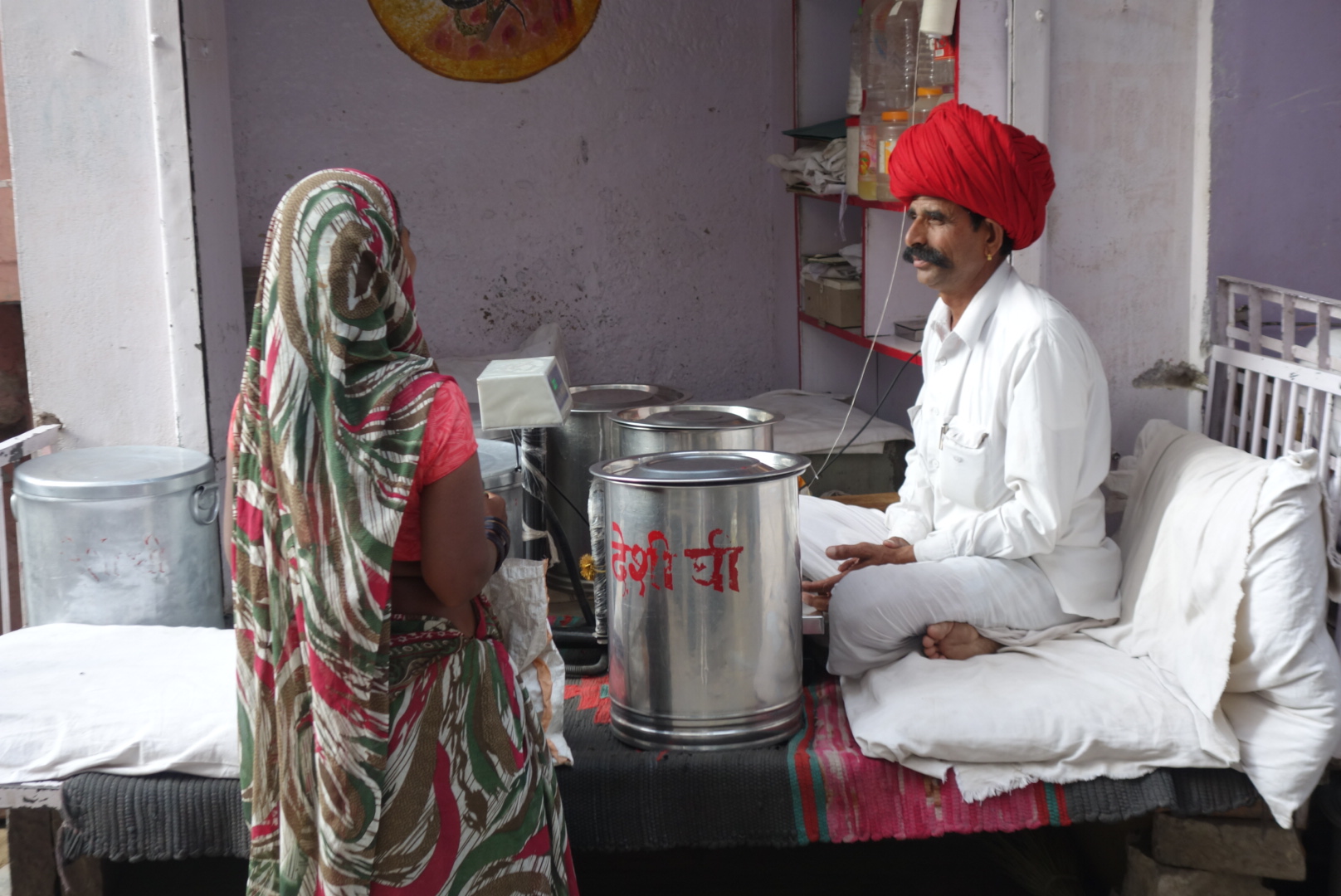
Back down through the town, we visited the Raniji ki Baori, a massive engineering structure built down into the ground. It’s a 46 metre deep step well that ensures that even in the driest of years, the town had a water supply. Although, drinking from it now might not be life enriching experience. We ambled back through the Bazaar. An old guy is ironing his pants on the floor, using an enormous cast-iron iron full of glowing charcoal. He must have a right arm that can lift trucks. Goats pirouetted on shop roofs, red turbaned black moustachioed dudes sold lassi and Jon made his first of many purchases, a huge brass milk churn which was not a welcome addition to the crowded back of the car, until I designated it the in-flight emergency commode and spittoon. While Jon bartered, a holy cow snuffled up behind Navendra and then used him as a snot rag. Bless you my son.
We retired to the hotel for showers, sunset on the roof, the first of many curries and a re-introduction to my old friend, Kingfisher beer, before falling comatosely asleep.
2
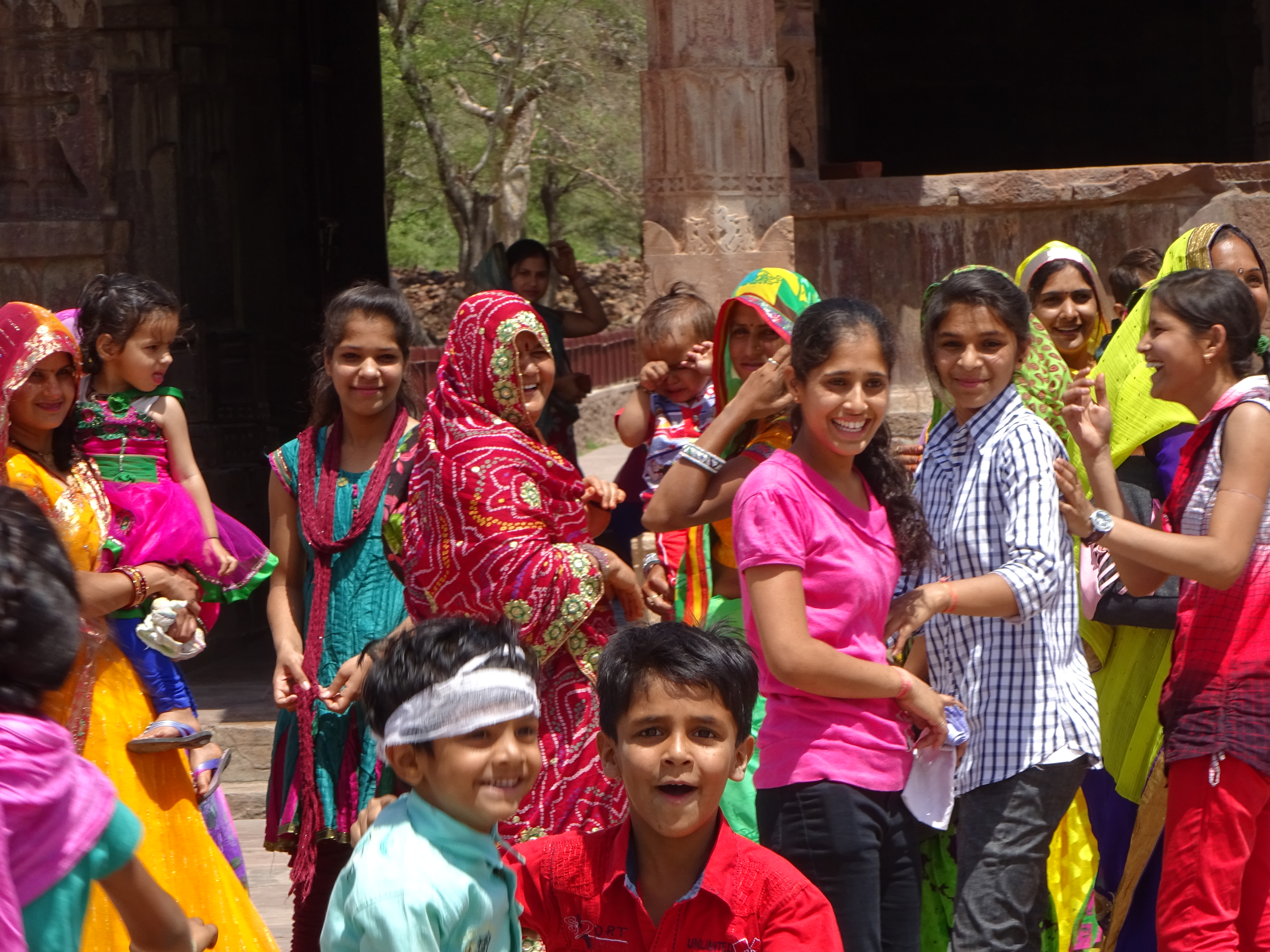
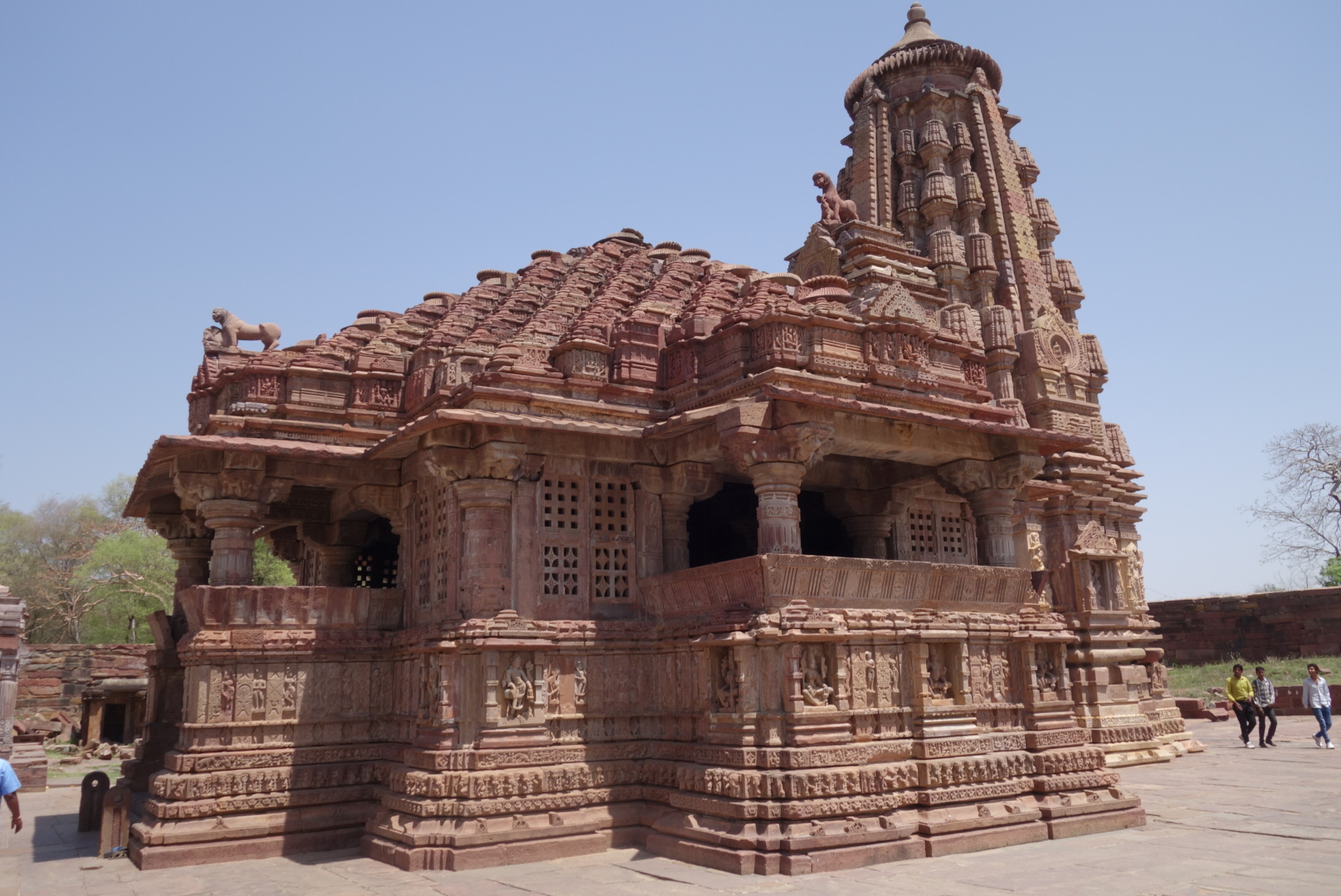
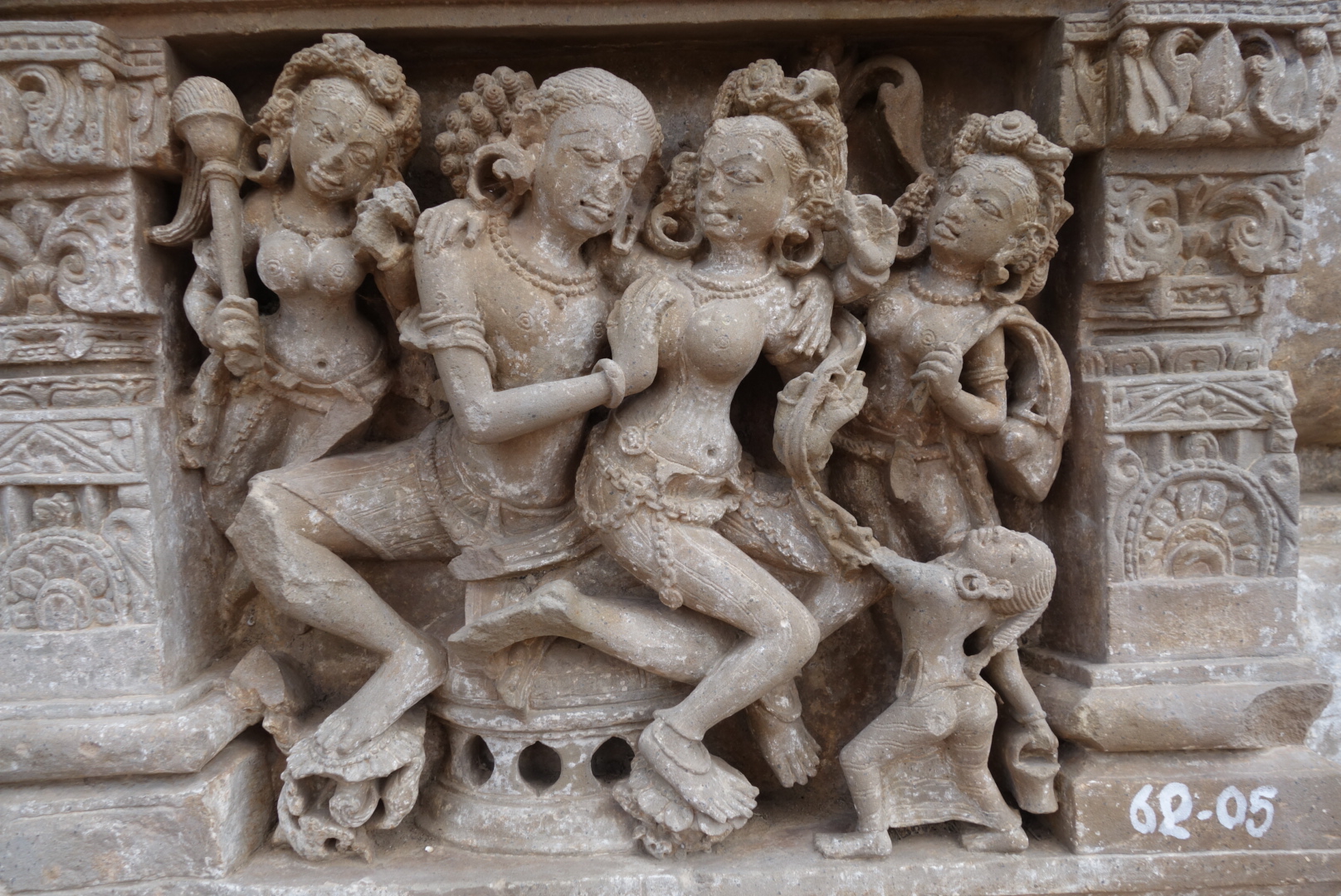
Breakfast on board, Ramdev loaded up the motor and we manoeuvred back out of the town and along the road of holes towards Bassi. Seemingly it was a Festival day, but when is it ever not in India? He pulled up at some Temple or other that wasn’t on our itinerary but which turned out to be quite pretty. Obviously not on the main tourist route because the locals treated us like Bollywood Stars. Selfies all over the shop. There was also the obligatory loiterer. “Look sahb, very disgusting carvings of Rajah and Dancing Girl.” They say that it’s to do with cleansing your mind before you enter. Dump all the dirty thoughts on the way in, but have you ever noticed how many of these guys limp? eh? eh?

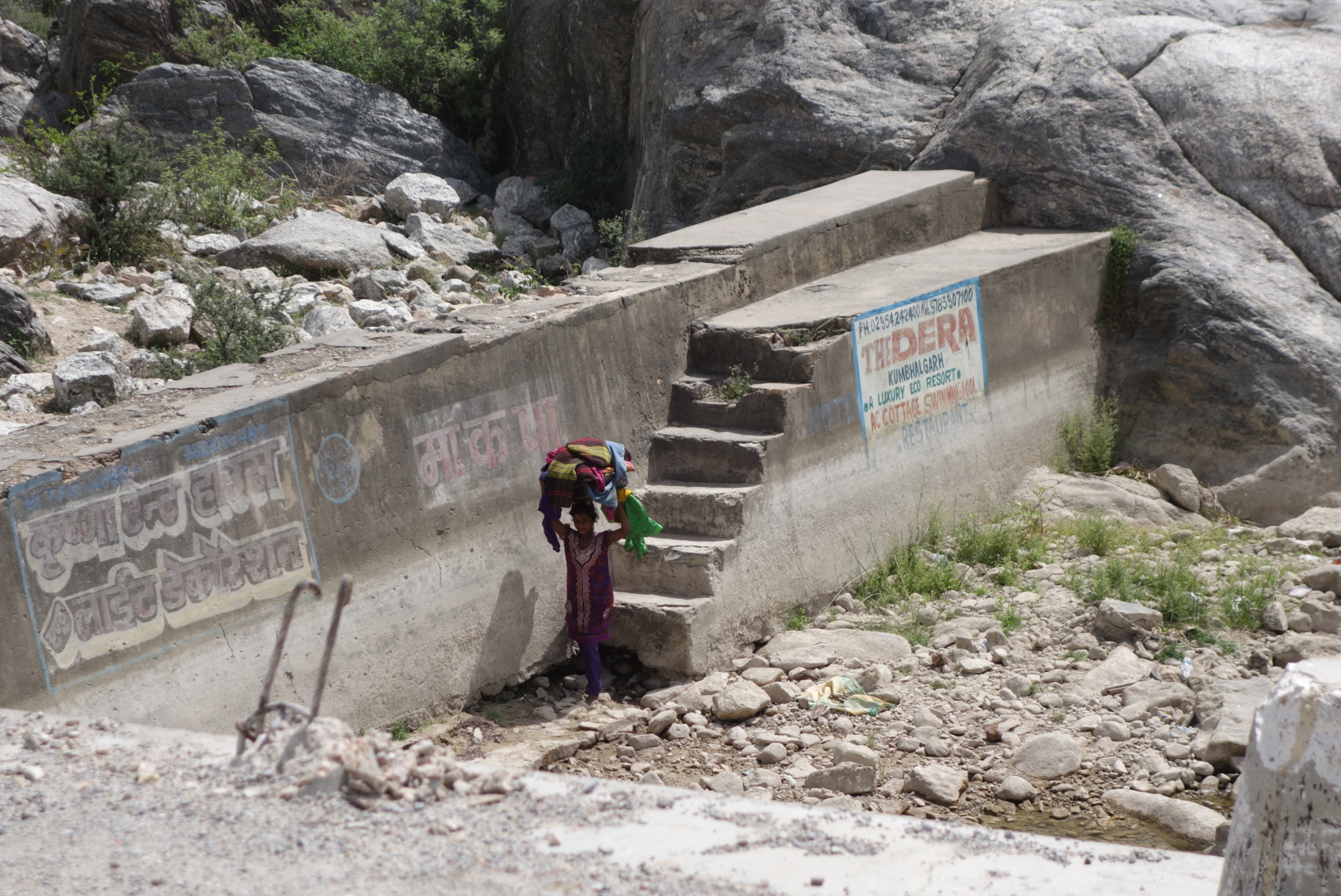
Next to the Temple was a waterfall that has carved an enormous bowl out of the landscape. it must look very impressive every 5 years or so, on the day it rains.
To Bassi, to Bassi. We had booked the Bassi Fort Palace Hotel months before, but just before we left Hong Kong I noticed on TripAdvisor that the place was getting some really bad reviews. Dirty rooms, surly Manageress and poor service. We contacted Nikhil and asked him if he could look into it as there were not really any options at this late stage and he promised he would have a word. I don’t know what the word was, but it worked. As we drove into the compound, the gate boys sprang to their feet and straightened their turbans. Raj, the super-keen junior manager made it known that he would clean the soles of my shoes with his tongue if I so desired and we were garlanded and bindied and carried in on a wave of indulgences to be greeted by the Owner, The Colonel. It seems the surly Manageress was, in fact, his wife and she had been bundled out of town for a ‘rest’ during our stay. Our rooms were palatial in scale and, once upon a time, must have been palatial in their opulence. However, the fairy tale is a little rusty now and faded elegance meets Fawlty Towers. I checked the bed sheets and they were freshly laundered, fresh in the circumstances being used in the sense of ‘recently’. They appeared to have been beaten full of holes on some rock in some stream where the Buffalo sport and then dried upon a thorn bush, but they were a clean sort of grey.
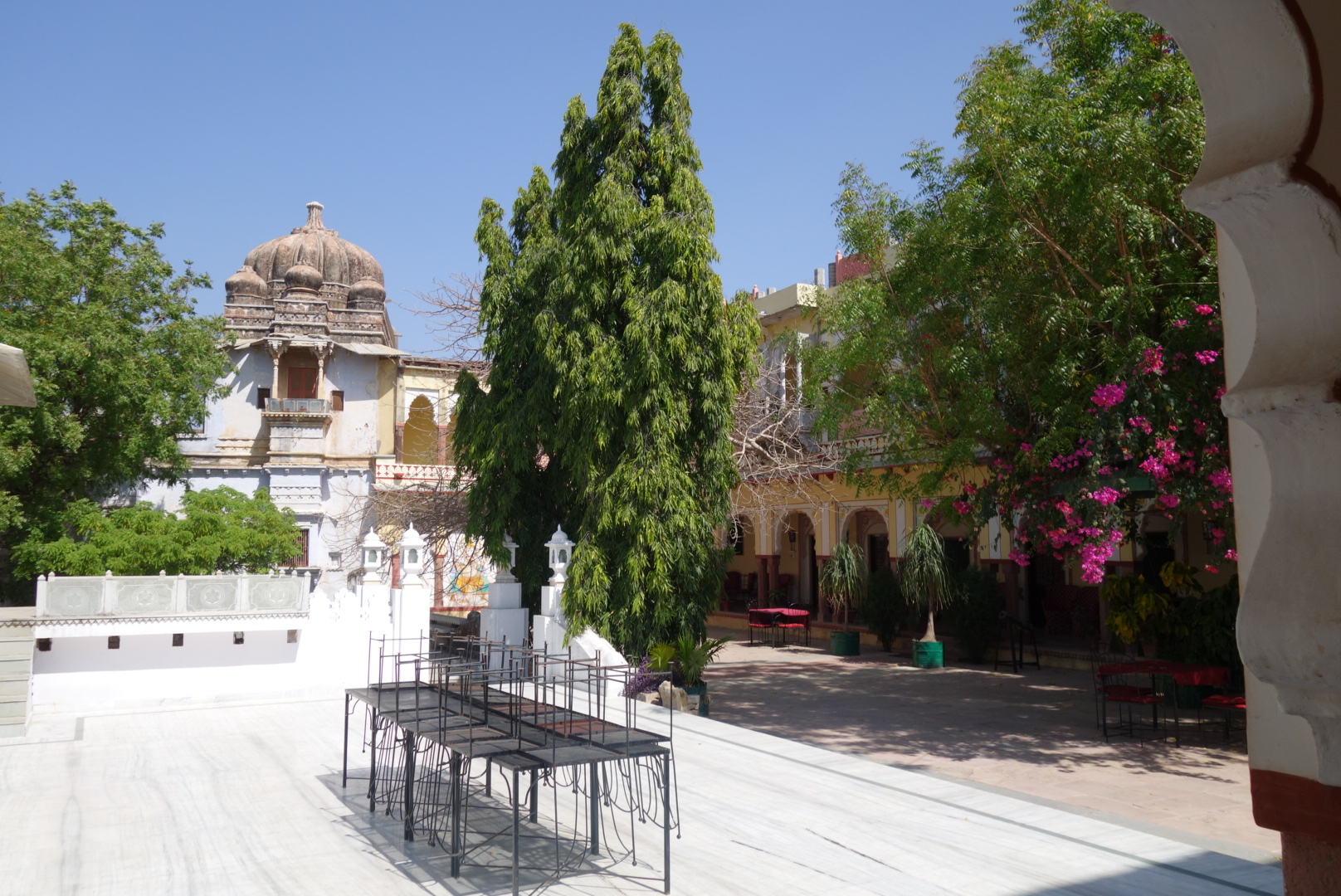
Hey, we are in a tiny Village in India, the power cuts out when you plug in a phone and all the sink taps fall off when you turn them on. We liked it.
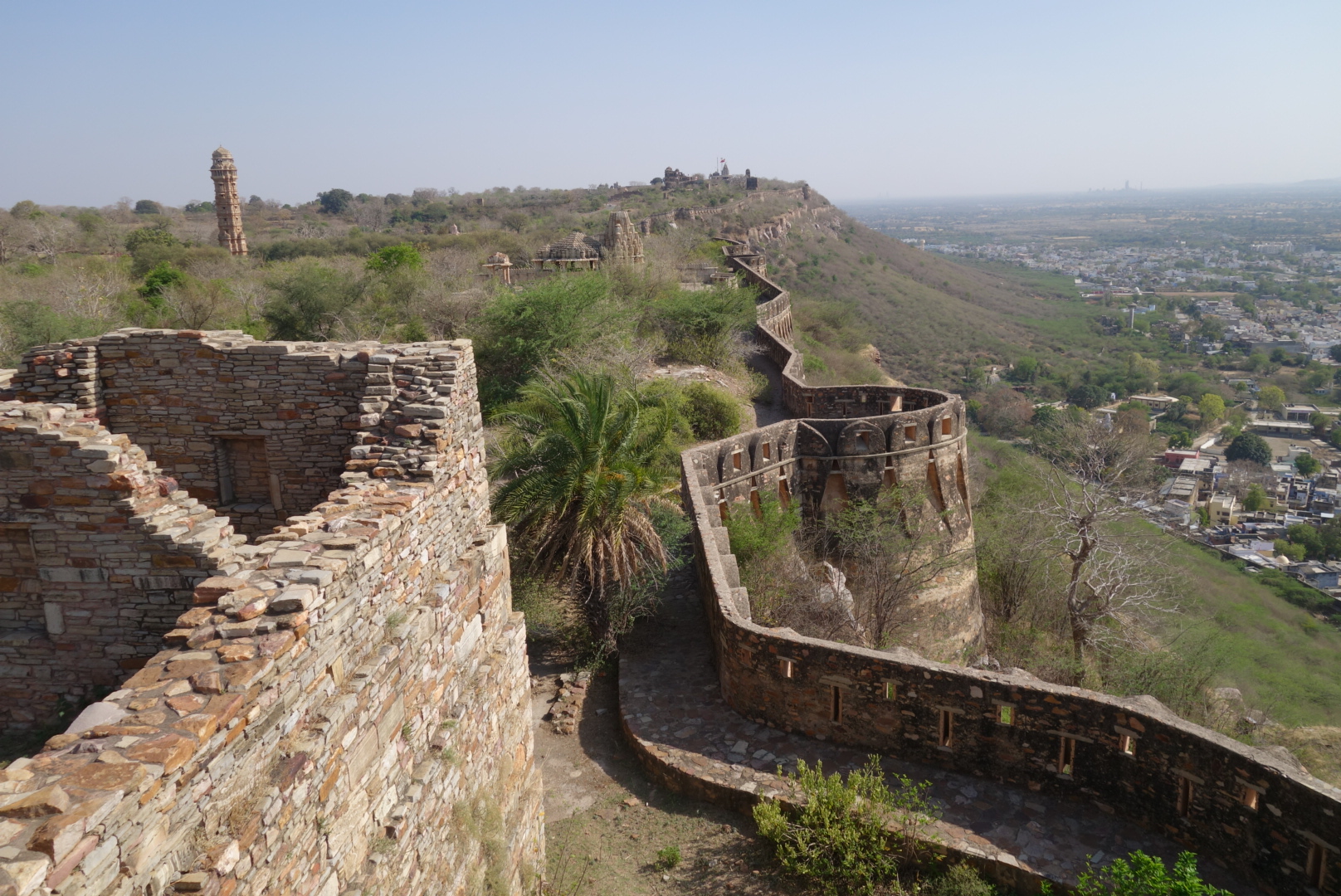
Bassi Fort is just a pile of stones and Bassi Fort Palace is just a pile, so we set off to explore the Fort at Chittogarh. Most Forts in Rajasthan are huge and Chittogarh is the hugerist. Why they built them so big is anyone’s guess. Most of the stuff inside is scrubland and temples. They must have felt the need to protect their thorn bushes and do a lot of praying while under siege. The story tellers tell of the polite Maharajah and his beautiful wife and how a visiting Maharajah was allowed to view her through a series of mirrors in order to protect her modesty, yet honouring the guest. Alas, he was a baddie Maharajah and this only served to inflame his passion and he declared war upon his polite host and carried him off to be ransomed for the missus. She agreed to the ransom, but only if she could come to him in secrecy. She hid a small force of soldiers in her baggage train and they surprised the baddie and freed her husband, but the jealous baddie re-grouped and chased them back to the Fort where the polite Maharajah was killed in battle. Instead of giving herself up to the blackguard baddie, the Maharani threw herself into a funeral pyre and, being somewhat miffed at the outcome, the baddie slaughtered 30,000 Hindus. All for the sake of a shag.
The story line has more pot-holes than the road to Bundi, but the locals dig it and it is soon to be a Bollywood Musical, except that they are trying to recruit 30,000 Pakis for the end bit.
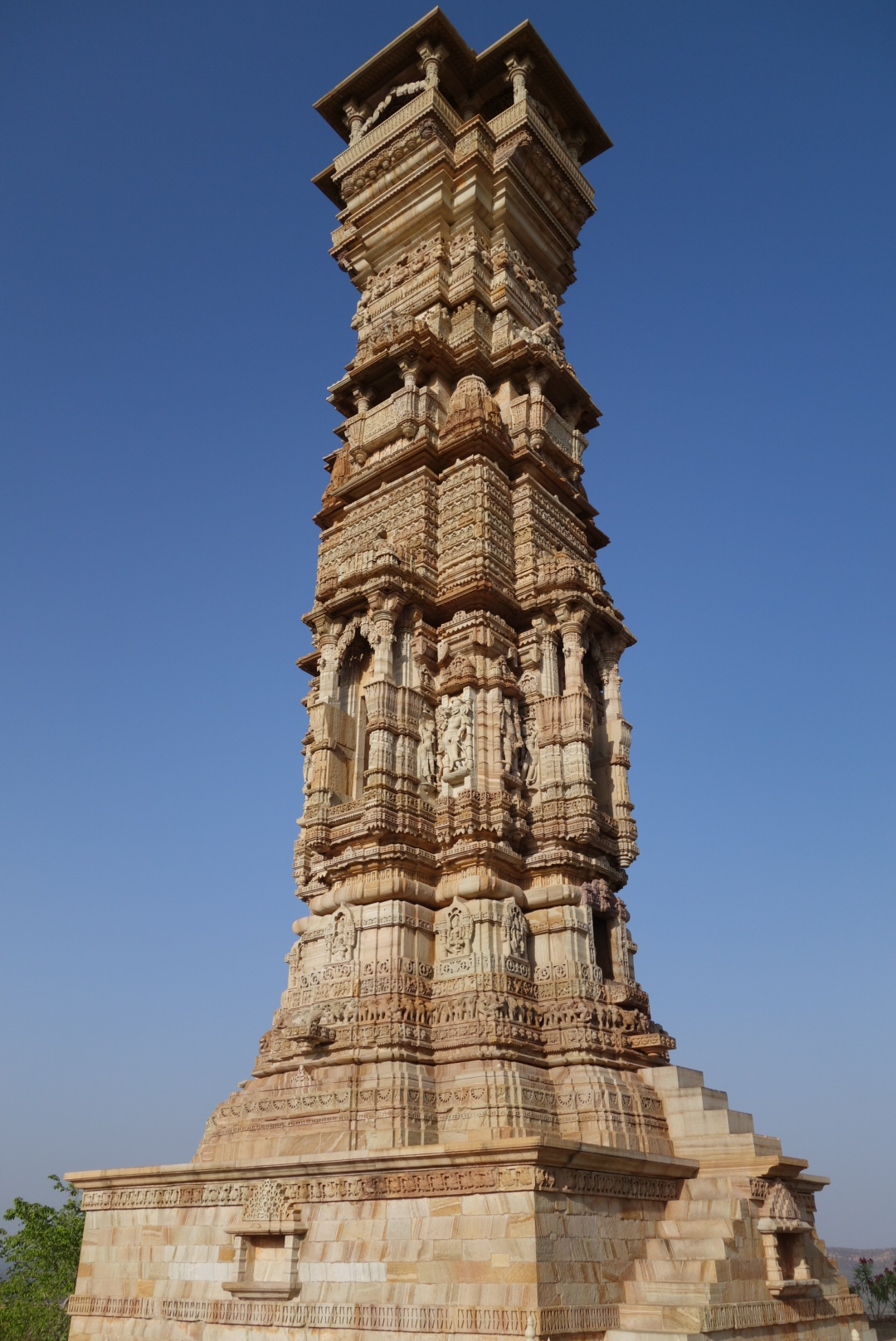
Apart from the thorn bushes, an empty lake, a multitude of temples and a dead cow, there is a Jain Tower. Built at a time when we Brits were running around in woad, it is an incredible example of beautiful architecture and amazing engineering and is in almost perfect condition. Jain the Builder, Can he fix it?! Jain the Builder, oh by golly gosh it is almost certainly he can be doing so!
Back to our pile where we had fun with electricity and water in the shower, although at times it was fun with water and electricity in the shower. Please be being very careful. Earlier, we had asked Raj if there was a bar. “Yes! Yes! Of course!” And so, while were out, he and a cast of thousands, had built one on the terrace. Peacocks and Monkeys vied for position on the ramparts, outlined against the softening sky. “May I have a Gin and Tonic?” “Certainly Sir, excepting we are having no Tonic. Gin and Coke Sir?” “Erhm perhaps not. Rum and Coke?” “Coming right up Sir” He proceeded to bark at 3 different minions, none of whom paid him the slightest attention. Eventually we were all sat with our choda-pegs and the Colonel sat down and regaled us with tales of life in the army. Peacocks cried in the settling night. Magical. Dinner followed and was not half-bad and then to bed. The air-con only blew out the fuses 10 times during the night and, after a tepid trickle from the morning shower and a bowl of really corn cornflakes Ramdev loaded us up and we were off to Udaipur.
3
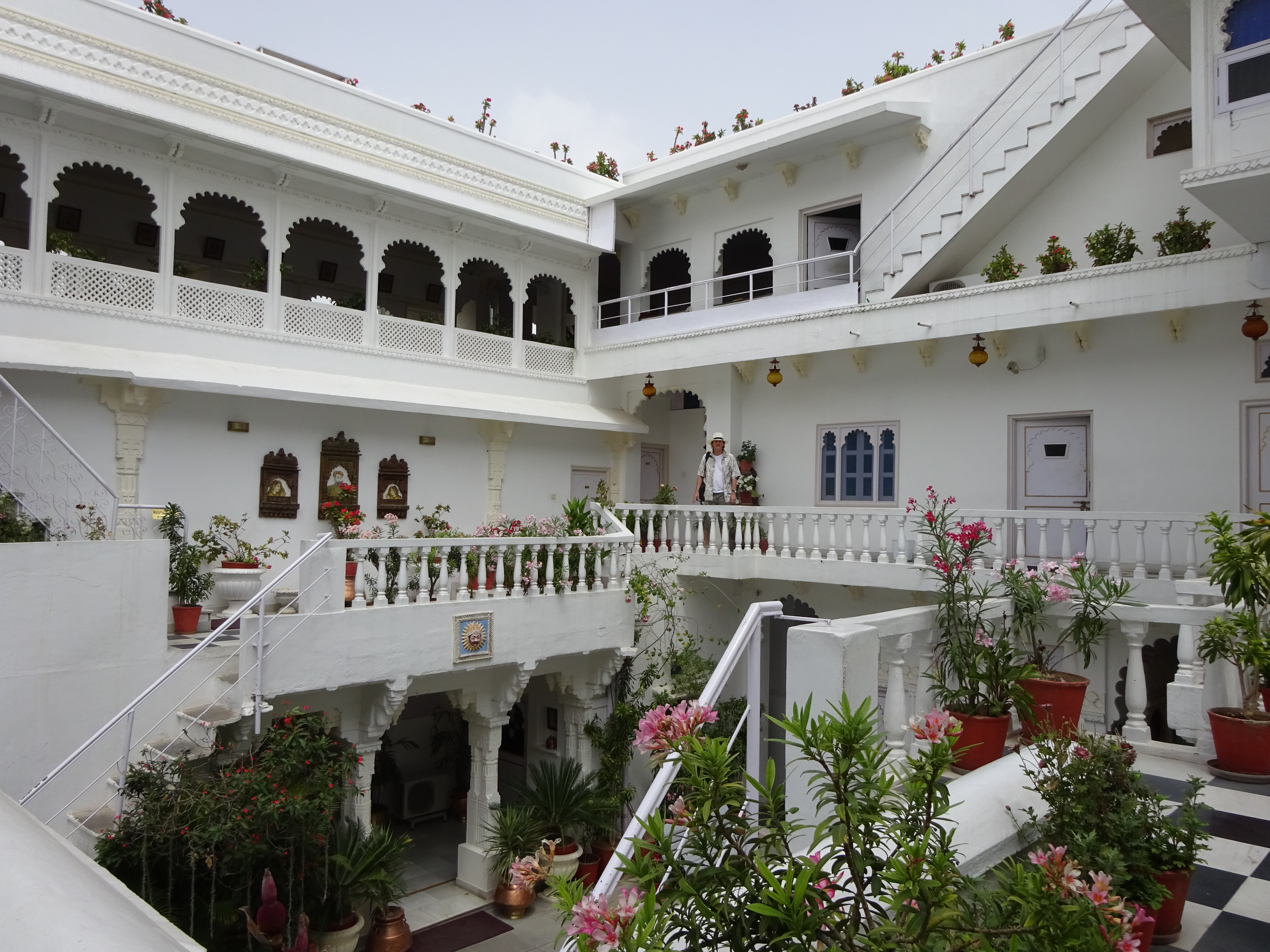
Arriving in Udaipur, Ramdev had arranged for the local black market racketeer to meet us and change USD into a bucketful of Rupees. It’s not quite like the Vietnamese Dong, which comes with its own wheelbarrow, but it’s close. Then we went to our Hotel. The Jagat Niwas is to the Bassi Fort Palace, like Veuve Cliquot is to Babycham. The entrance courtyard is a riot of mosaic and mirror artwork counterpoised with plants, sculptures and tinkling fountains. Our room was bright and airy with coloured lamps and golden ceilings and a window divan looking out over the Pichola lake, past a small minaret towards the Lake Palace. Bollywood music drifted over the water and through our windows. We had to be dragged, kicking and screaming from our room, by our new Guide Umar.
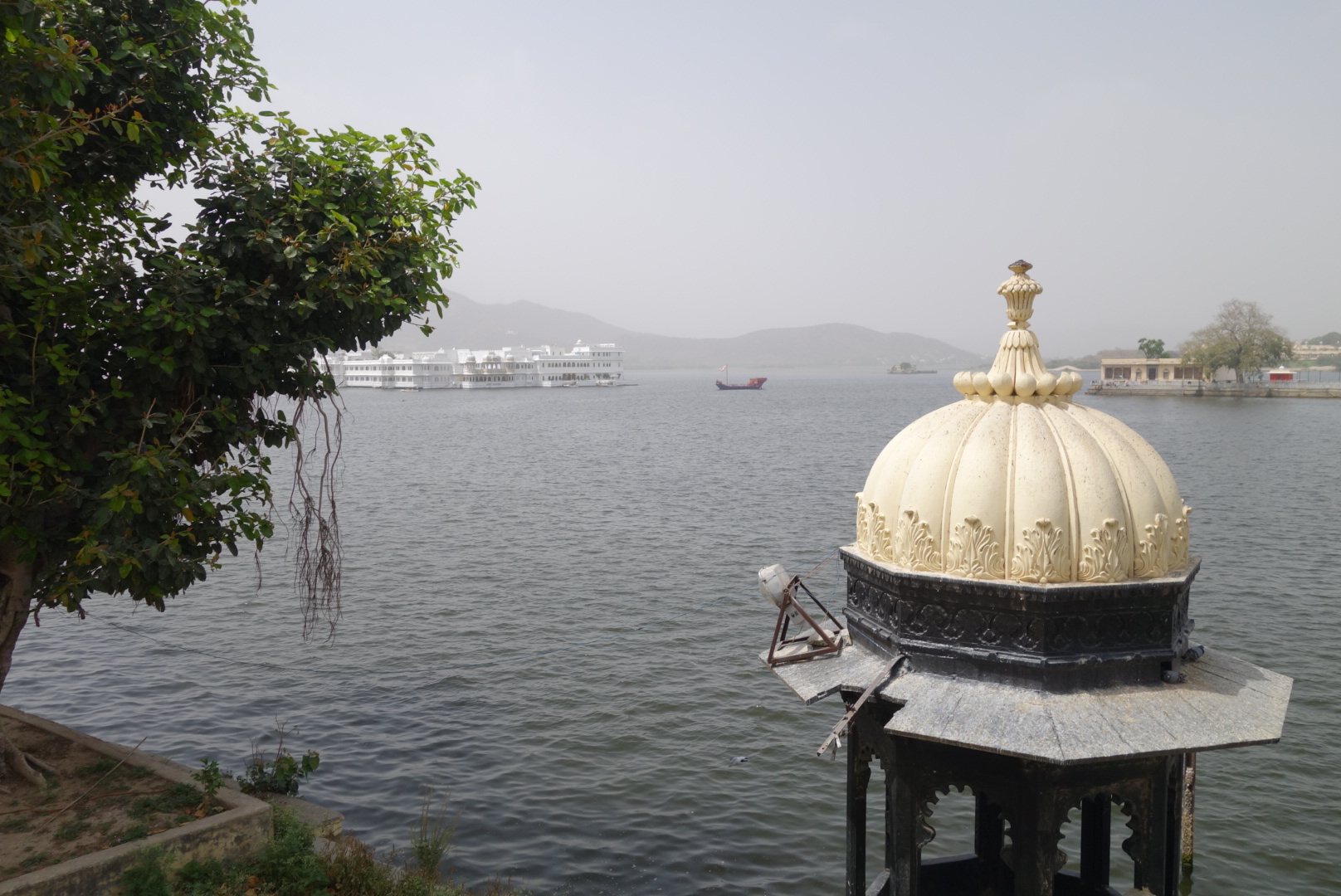
Umar is fit, handsome and supremely cocky and, as we wind through the narrow streets, it takes us less than a heartbeat to hear about his girlfriend from Crawley and his wife and 2 kids in Udaipur. We are booked onto a Lake tour, which consists of a 2Hp outboard motor, pushing a barge full of overstuffed locals, stuffed into manky orange lifejackets. It’s like one of those dishes where they stuff a quail in a duck, in a chicken, in a swan. Only a lot less appetising. Should a goldfish hiccup so much as ripple the surface – expect mass panic. But it sufficed to see the views and they are beautiful.
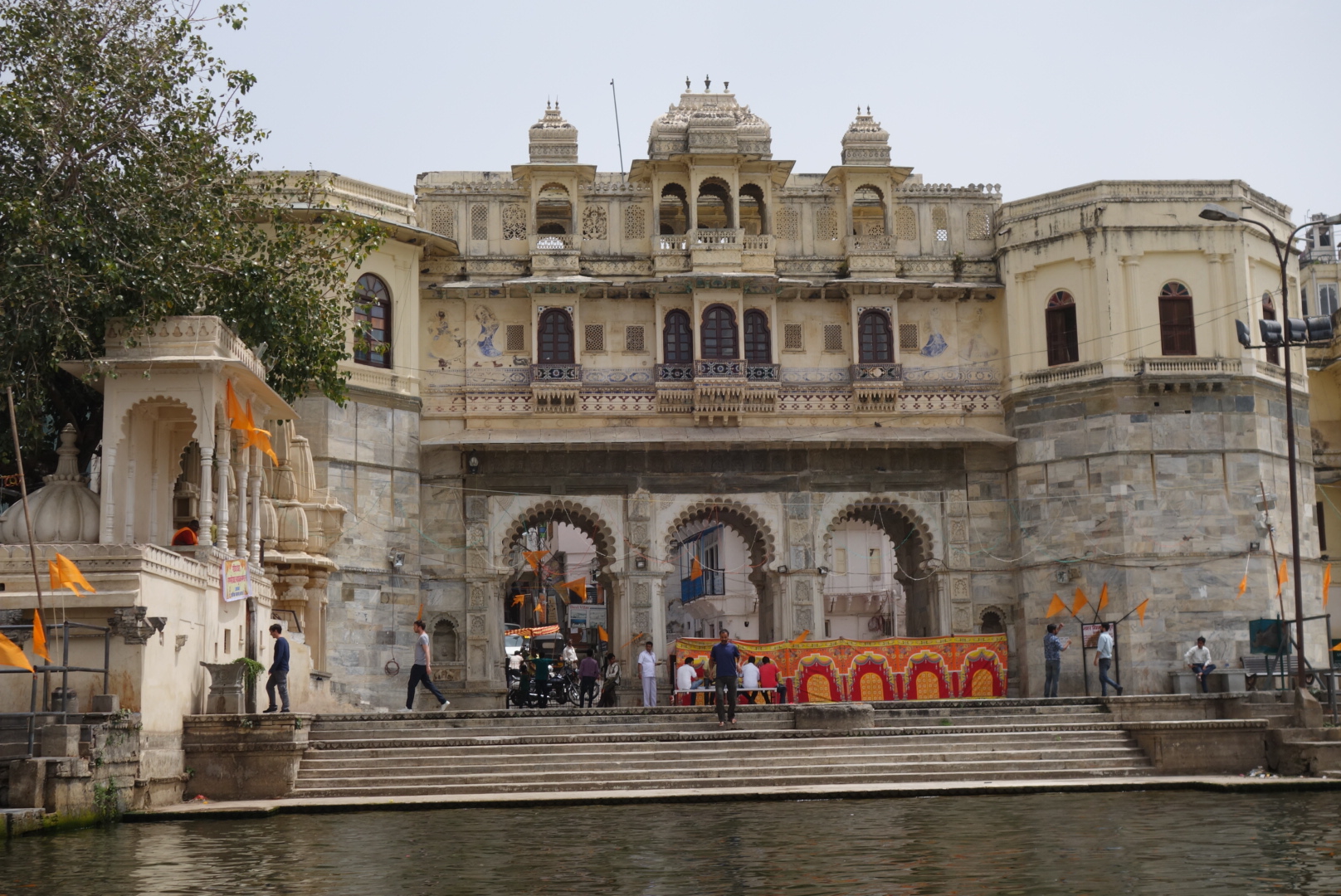

Then into the City Palace, which is owned by the Maharajah of Udaipur, one of the ones who managed to navigate the Independence successfully and is now one of the richest men in the world. He owns about 83 Rolls Royce. Good luck with those through the streets of Udaipur.

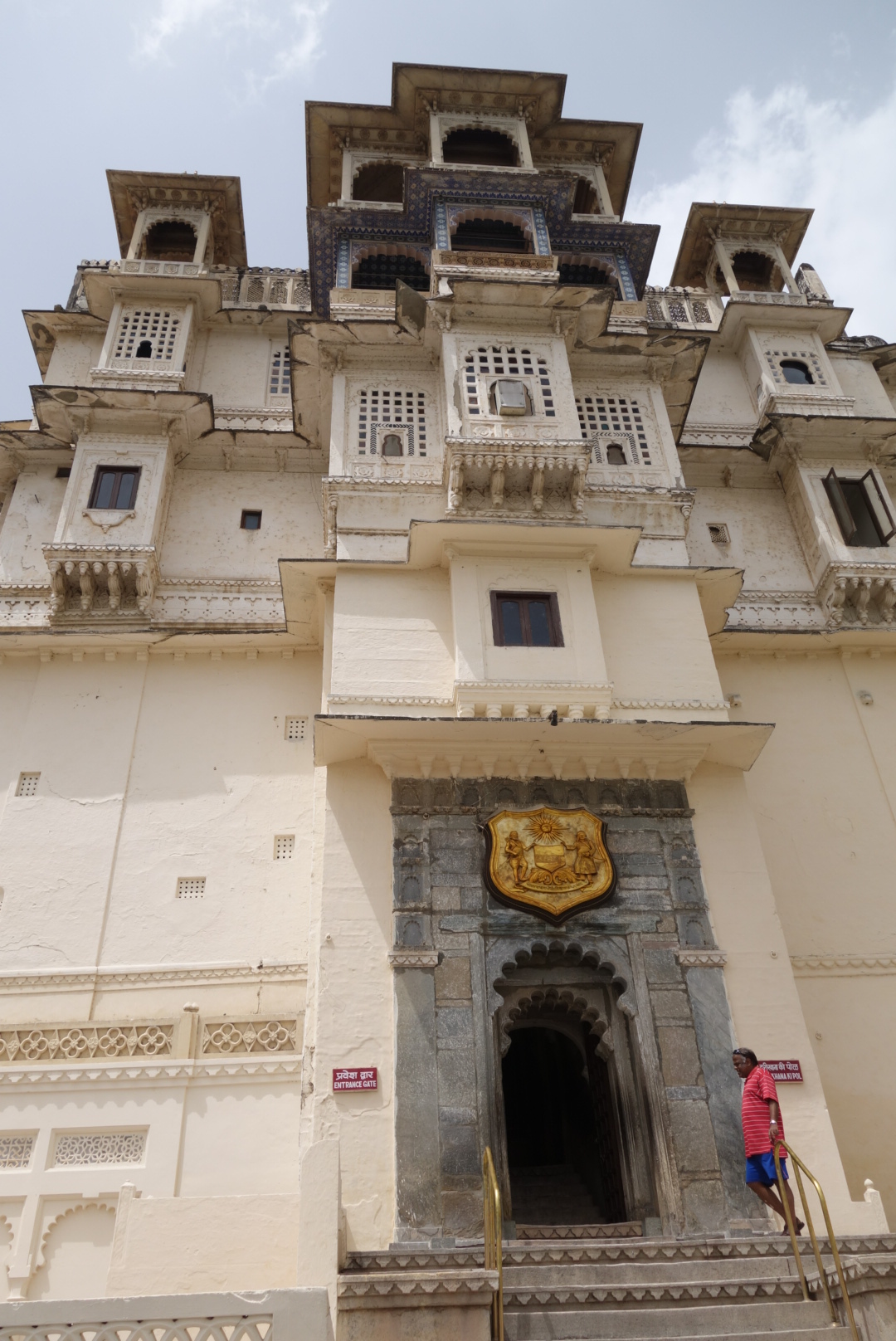
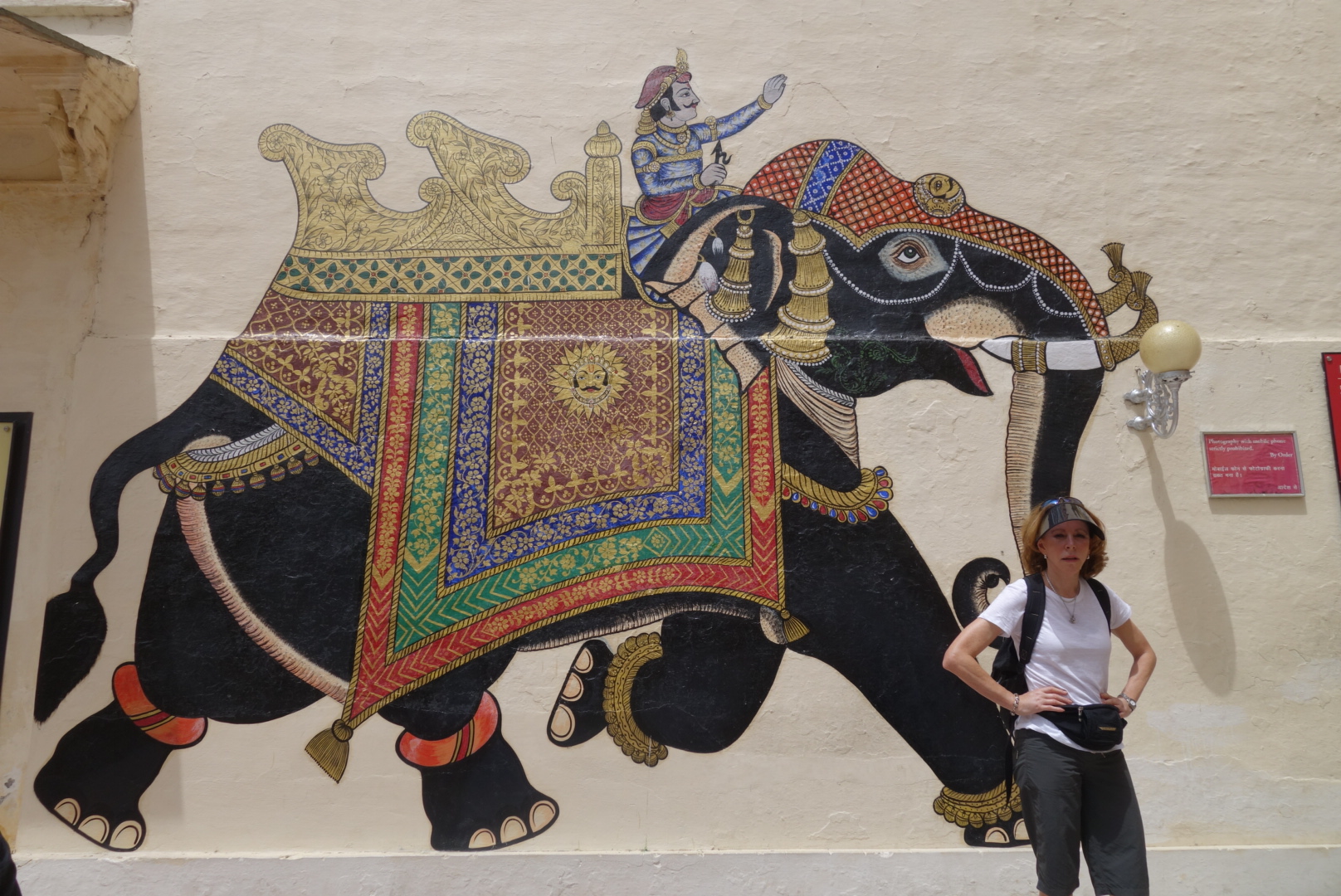
There are beautiful rooms and incredible paintings painted with brushes made from squirrel hair and camels’ eye-lash and guess what? Umar’s Brother just happens to own the best camels’ eye-lash painting studio in town. Which is great, if you happen to be a fan of looking at paintings through a microscope. We weren’t. And, after a noticeable wince, when we declined the invitation, he took it like a man and dropped us in his cousins’ textile shop (Result. 2 bedspreads and a tablecloth), Uncles’ mirror shop (Result. 3 mirror inlays) and best mates’ shawl shop (Result. 1 wool/pashmina). So he wasn’t too upset. Especially after being able to unburden the full life story. As the young man who fell in love with a girl from Crawley (who wouldn’t?) only to be beaten by his Father (good man), who then told the Girl he would commit suicide if she married his Boy (bit excessive old chap). Girl runs back to Crawley (who wouldn’t?). Umar marries a different Girl of his Fathers’ choice (good boy) and has 2 kids (happy Dad). Girl from Crawley and Wife are now best friends (who wouldn’t? happyeverafter. etc. etc.)
Sometime later, Ramdev mentions his mate Umar, “Did he tell you about the Girl from Crawley? — Yeah, he tells everybody that.”
We head back to the hotel for dinner on the roof, lights twinkling over the water and then retire to the most romantic room in Rajasthan. ‘Nuff said.
4
The sun rises to burn off the morning mist from the Lake and after a recuperative breakfast, we rumble along roads made from the left-over potholes from Bundi. The Landscape is more intimate, small hills and valleys with colourful villages dotted around. Oxen plod around the Persian wheels, lifting well water to irrigate the crops. For a country with so much wind and situated along the Great Silk Road, with access to Greece and Turkey, how come they never figured out the windmill? And with wind in mind, we are now into Day 4 of our nothing but curry diet, the endless supply of beans, chickpeas, millet, onions, cauliflower and more beans is having the inevitable consequence on my digestive system. Every time the vehicle stops, I leap out and distance myself from my fellow travellers pointing towards tractors, pigs, cows, ducks that have been stepped upon and aeroplanes breaking the sonic barrier. It’s a rumbling, tumbling, wall of sound which almost lifts me out of my shoes. I have to make sure my laces are tied.
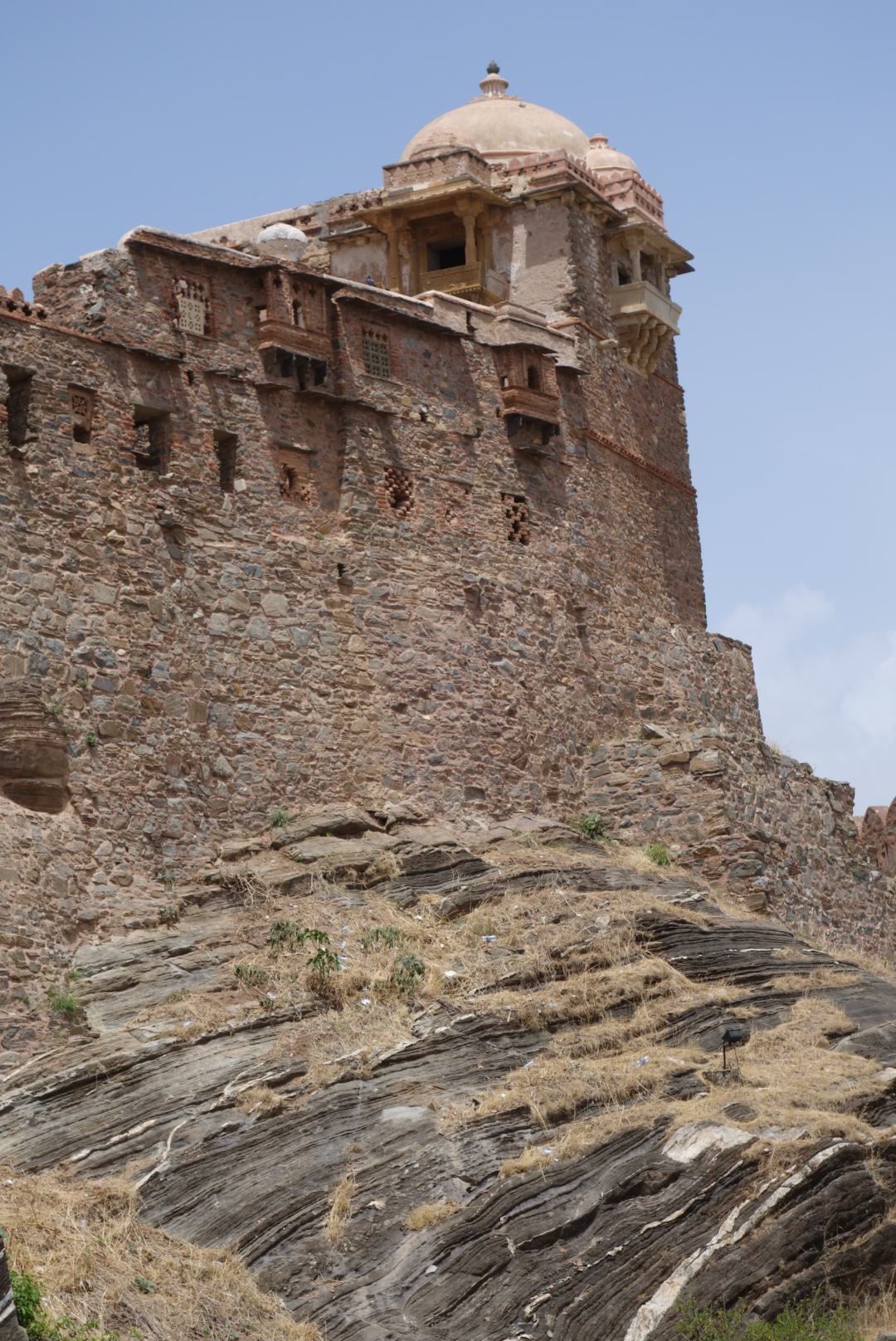
Eventually, we arrive at Kumbhalgarh, which sounds like my tummy feels, but is in fact the biggest Fort in Rajasthan and, at 38 kilometres, the second longest wall in the World, second to the GWoC. There are over 360 temples inside the walls and enough thorn bushes to cover Wales. There is something I am not getting here and, once again, I find myself asking, “Why?” They tell me that it only fell to seige one time and then only to the combined forces of Akbar, Amer, Marwar and Gujarat, but this time it wasn’t even over a shag. They must have really coveted those thorn bushes. Having said that, it is pretty awesome, the scale of the wall and gates and the fort atop the hillside and we clamber all over it.

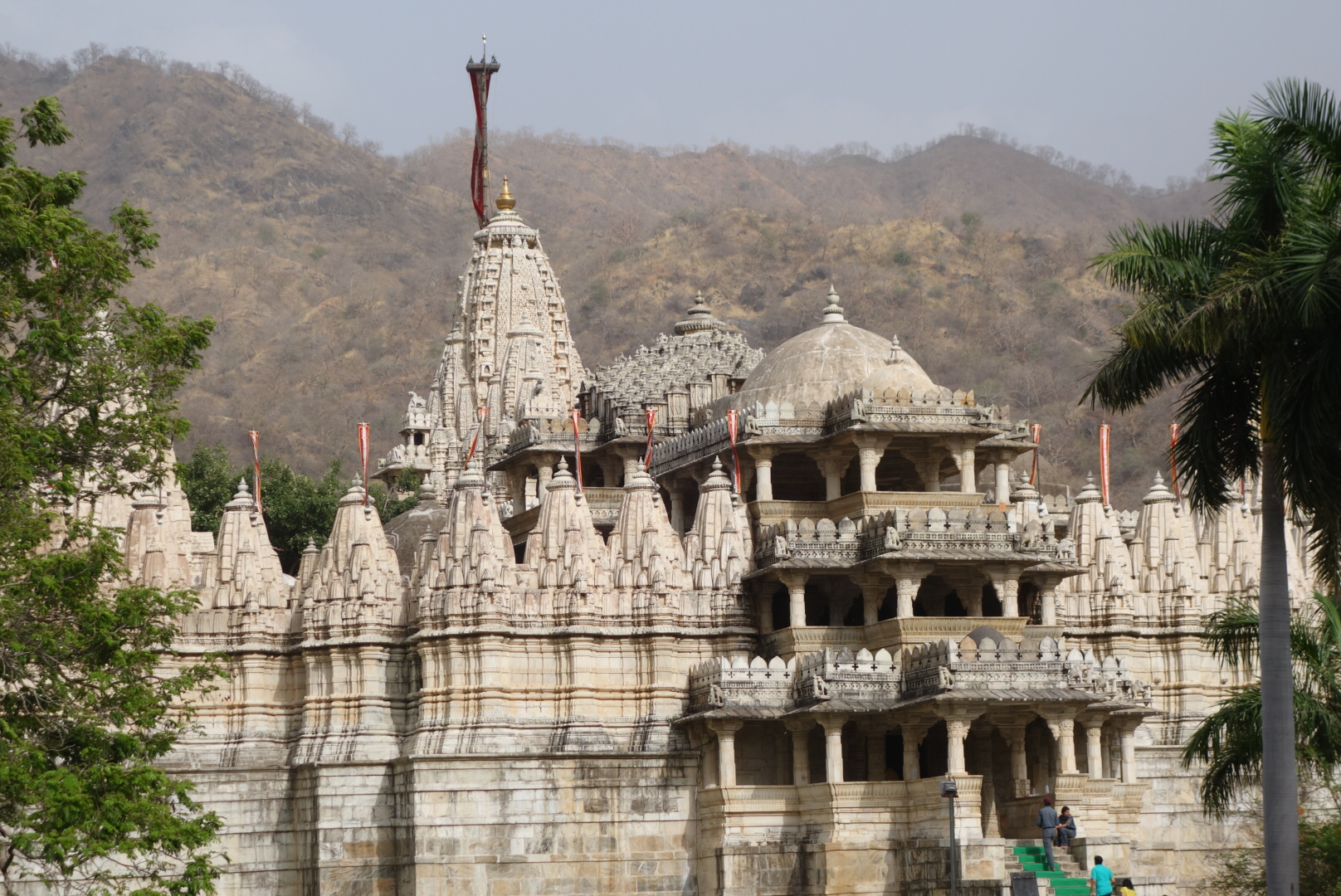
Then on to Ranakpur, the most spectacular of Jain Temples. Only we didn’t think it was, having seen the incredible temple in Mt. Abu, 30 years ago. Maybe it’s a different era for us, but we found Abu to be beautiful and ethereal. This one is big. Maybe it’s the 30 years but we found Abu to be spiritual and calm. This one is commercial and noisy. We couldn’t enter or even photograph the inner sanctum, okay I get that, but the locals were answering their mobiles in there. Maybe it was God calling, telling them that “I just gotta see Jain”. Anyway Dori and Liz got to crawl under the belly of an elephant so we are at least assured of a place in Nirvana. Whoopdedoo.

We drove on to our Hotel. The Kings Abode is sort of a Holiday Inn meets a 1960’s stone fireplace, slap bang in the middle of nowhere. We had a bit of time for a wind down and they had a pool which, as most of the guests are Indian, is a bit of an anachronism. Ever seen India represented in the pool at the Olympics? Me neither. Jon and I had it to ourselves at first but, we were soon invaded by guys who put on their trunks over their underpants, at the poolside and then use a swimming stroke that makes “The Dying Fly” look like ballet. The Ladies were a lot more coy and waited for their Beaus to scare us away before they entered the pool – in full Sari. It looked like a rainbow coloured oil-slick. Still, it’s their country and they can do what they bladdy well like sah!
5
To Jodhpur, where we met our guide Ragghu about 30K outside of town. He took us to several small villages out in the desert, which are known as the Bishnoi. 29 tribes who form a variety of communities, some of which are known for specific crafts. Do you smell a sale here? We started at the Potters and, as Dori and I are suckers for terracotta, we got some really cool stuff. On the way to the next village we spotted 3 separate Black Buck, which are a really beautiful Antelope and which Ramdev had never seen 1, in 17 years of doing this trip. There was also a small lake with Cranes, Spoonbills and 2 of the cutest little Owls sitting just feet away from us. The next village was the Dhurries. The boss here was fabulous. Doris’ mantra this holiday had been, “We will not buy a Dhurrie”. – We bought a Dhurrie. This guy could have sold us used dishcloths. He claimed that his house was made of cow poop, that he learned his English from the BBC World Service and that he couldn’t read or write, but he could make us laugh and use a satellite Visa card reader at the same time. And Jon and Liz bought a Dhurrie. Suckers.
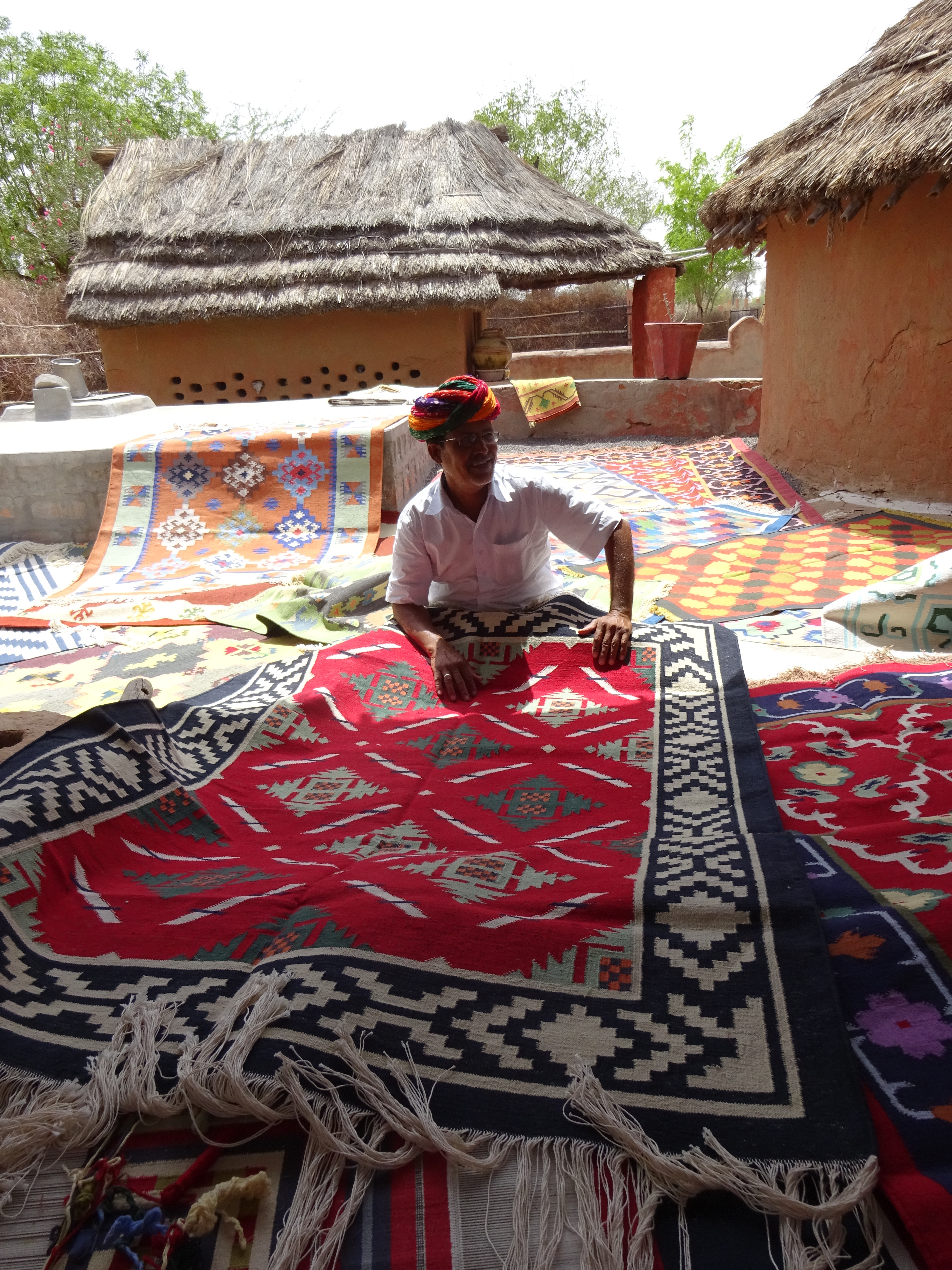
I am pretty sure that Ramdev picked up a little commission at each of these stops and between him and Mr. Dhurrie the phrase “Lubbly Jubbly” entered the lexicon of the trip. To be repeated every time he heard the cash register tching.
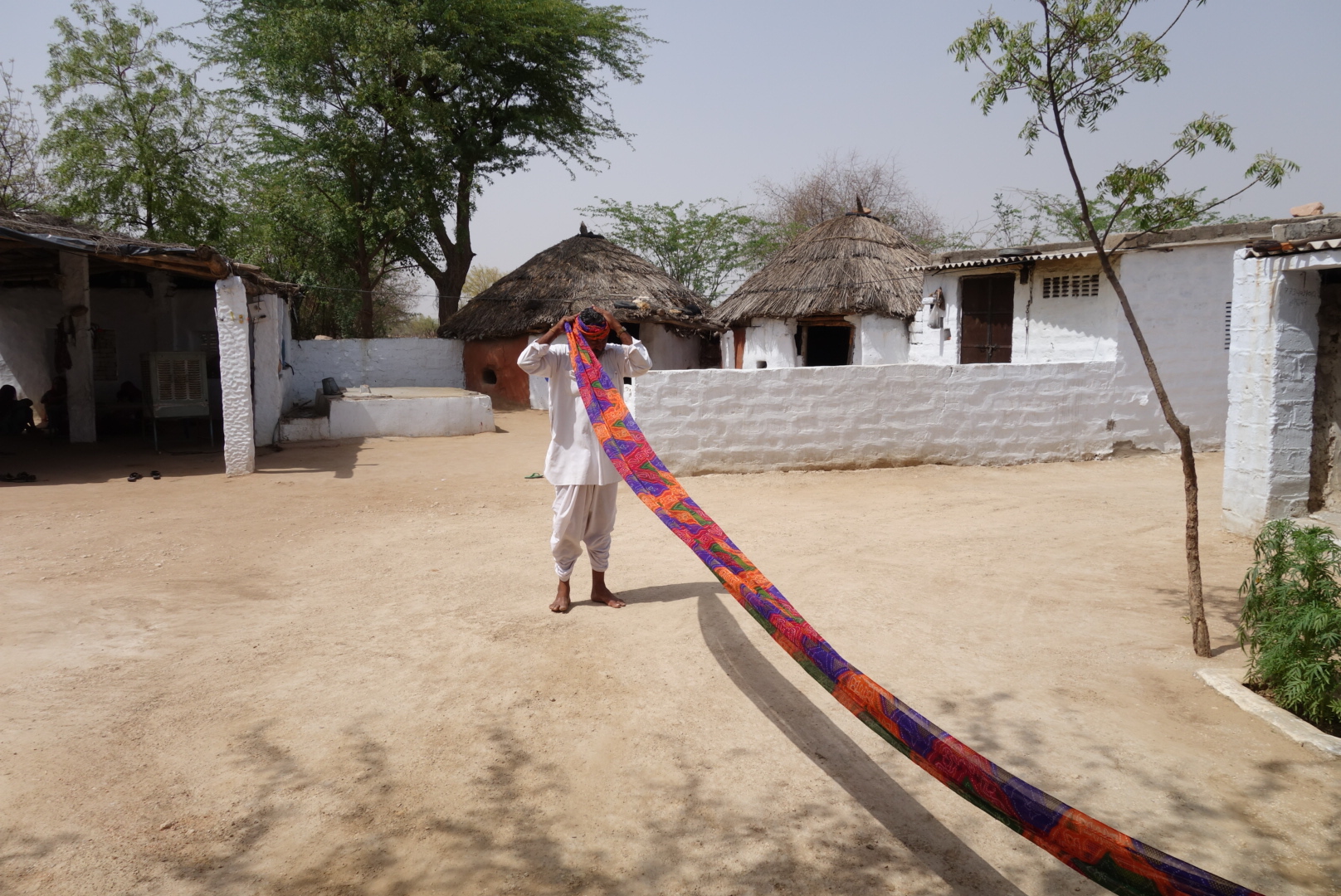
The last Village was the Druggies. They didn’t do much apart from sit around getting stoned, but they did it ethnically. The guy had a beautiful Opium altar and he conducted a little ceremony for us before he whacked down a belt for ethnical purposes, then showed us how to tie a turban before he passed out. I think the Opium must help with the old turban tying routine.
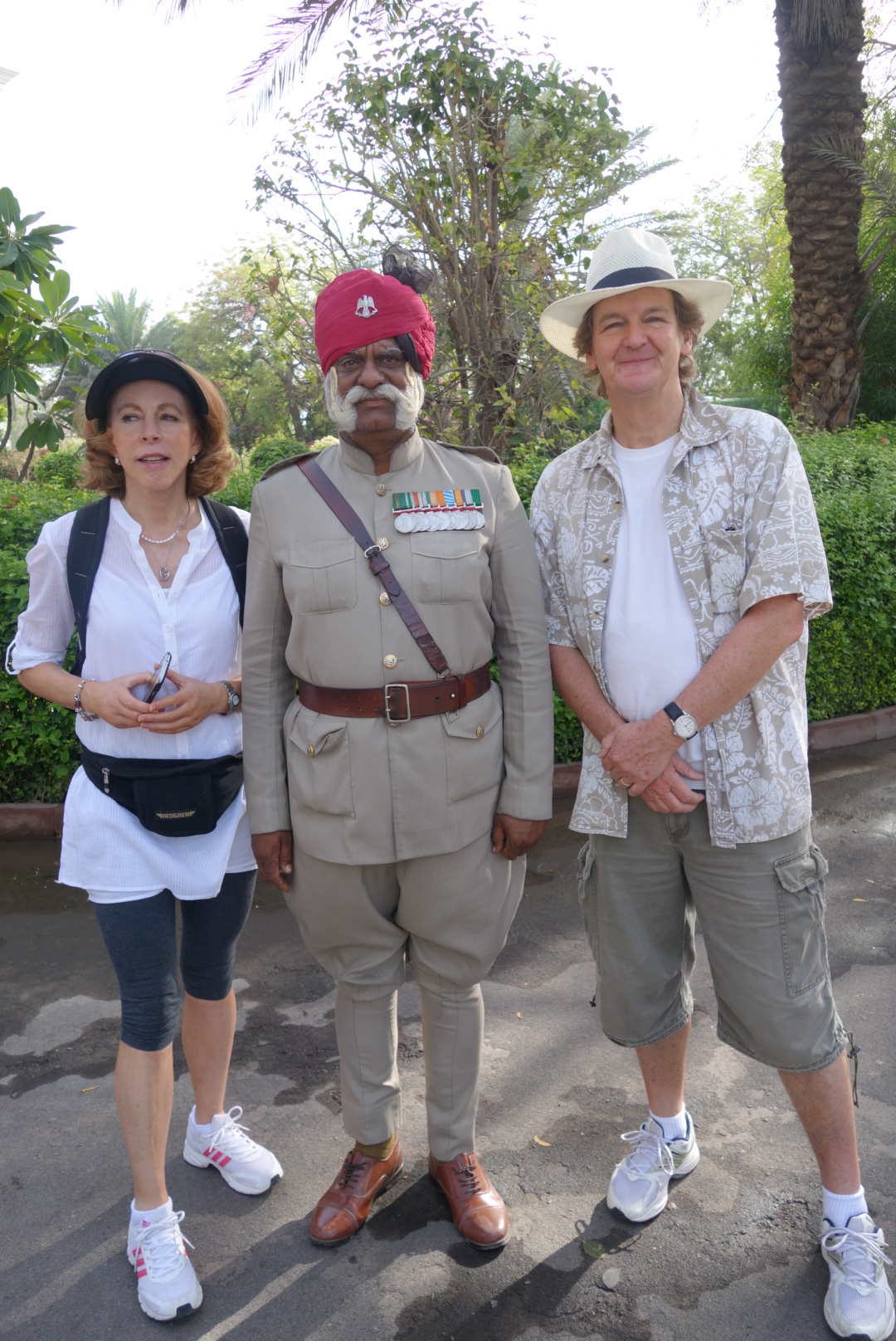
Into town and check into the Ajit Bhawan, a very nice hotel with a Doorman in full regalia, with a moustache that disappeared up its own bum and eyes that looked like he was Mr. Druggies elder brother. We checked into our rooms but headed straight out again to look at the town.
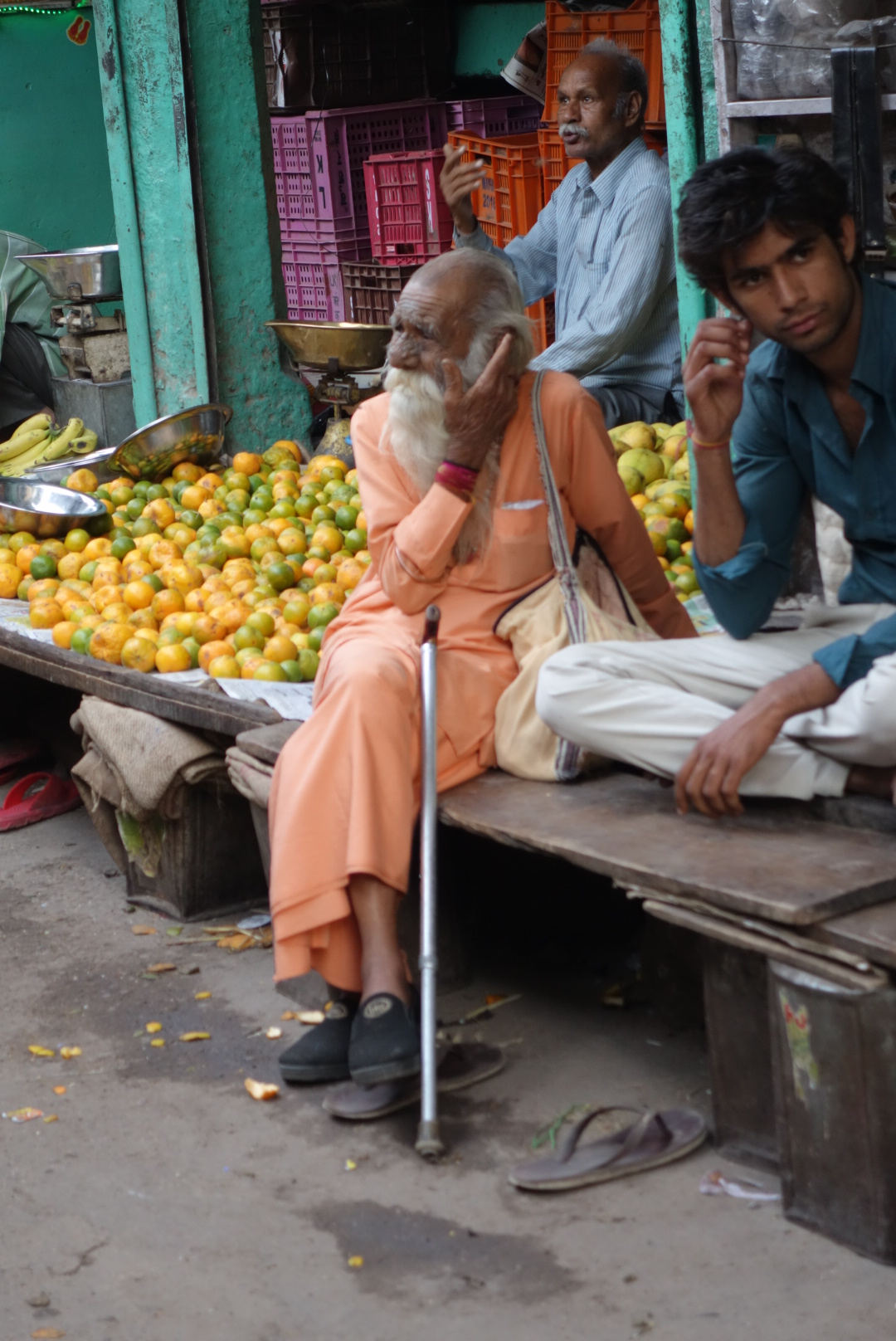
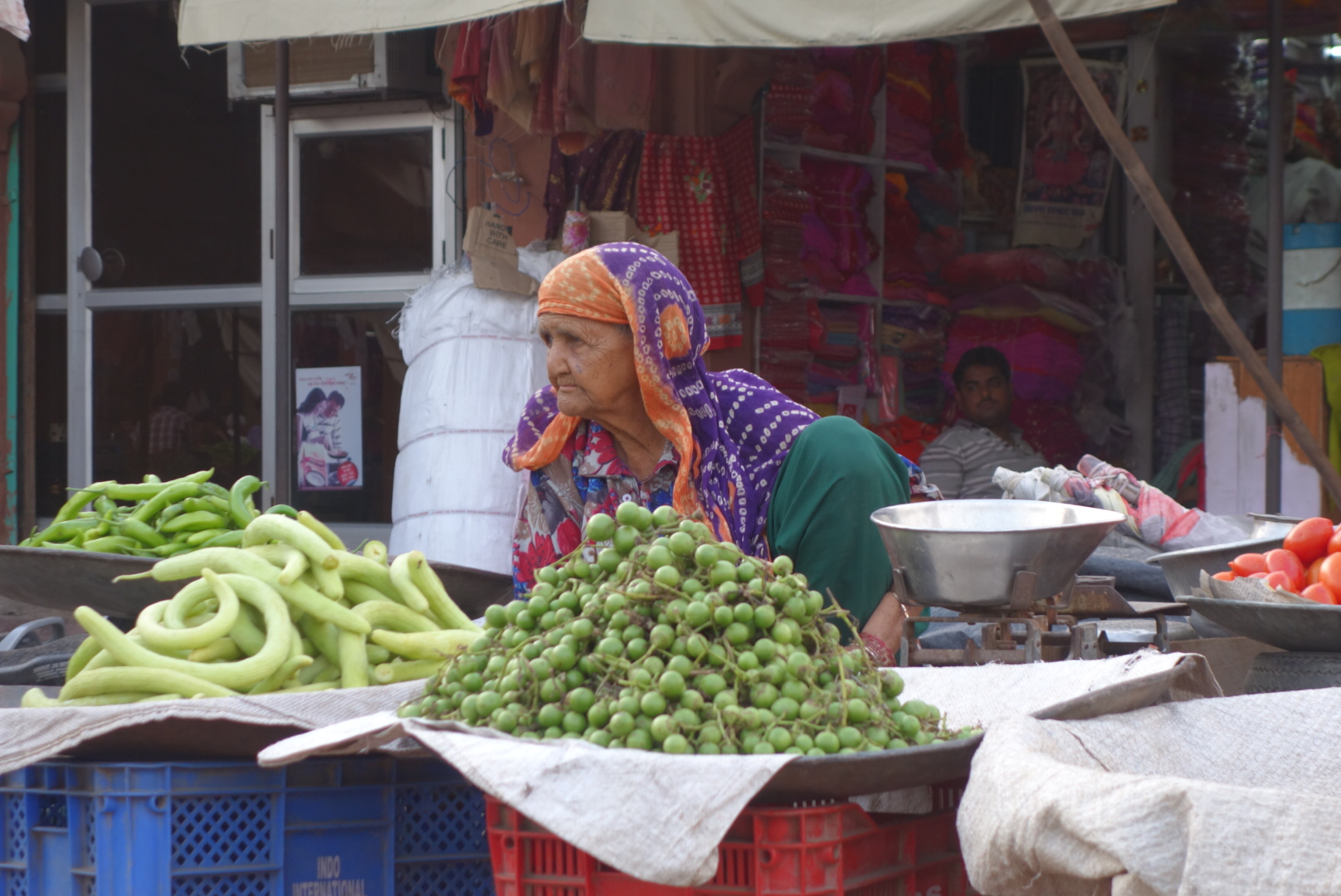
As we drove in, the sky turned yellow, the wind began to buffet and then sand and rain started to hammer the car, fortunately we were inside it. Outside, motorbikes, trees and cows were getting blown over. We thought it had passed, so left the car and went for a walk, only for a second front to howl down. We dived into a Tuk-tuk and went tearing through crowded alleyways; turbans, trash and vegetables flying in every direction, the sound of bikes, horns and wind rattling our senses. We took refuge in Ali-Baba’s house of textiles, where a very nice man tried to sell us everything from Kenzo to Miu Miu via the sweat-shops of Jodhpur. Pretty incredible stuff, but we were only hiding, not buying, and ventured back into the streets as soon as it was safe. But it’s never safe in India. There is cow poop on every corner. We wandered the streets for a while, but the storm had knocked the stuffing out of the Bazaar and the luxury of the rooms at the Ajit Bhawan were a siren call to our raddled bods. We succumbed to the cheap thrill of a hot bath and a cold beer.
6
First morning call was the Jaswant Thada. The royal tombs on the hill with beautiful views of the Fort. Then on to the Mehrangarh Fort itself, a massive edifice towering over the town. Beautiful in its scale from the outside, the inside is nice but not spectacular.


It has a large museum, but how many howdahs can you do, before interest wanes? We were invited into a music recital which was interesting, but the guy seemed chagrined that we didn’t want to buy his CD of cats being skinned and we fled back to Ramdev. Jodhpur made its money as a trading centre and we were headed off to the next stop on the caravanserai. Jaiselmer, the city in the desert.
It was a long hard drive, flat and featureless except for the thorn bushes decorated with 30 years worth of plastic bags. Not the World’s most picturesque drive, made even less so as the skyline became cluttered with wind farms. Windmills… Now you get it! It made me think that the man least likely to get into Nirvana, is the man who brought disposable plastic wrappers into India, second least is the man who sprinkles electricity pylons across every available skyline. But with evening coming we arrived at the edge of the enormous military base for which Jaiselmer gives thanks for the road. Pakistan is just a stone’s throw away and planes circle overhead, just out of reach of the stones.
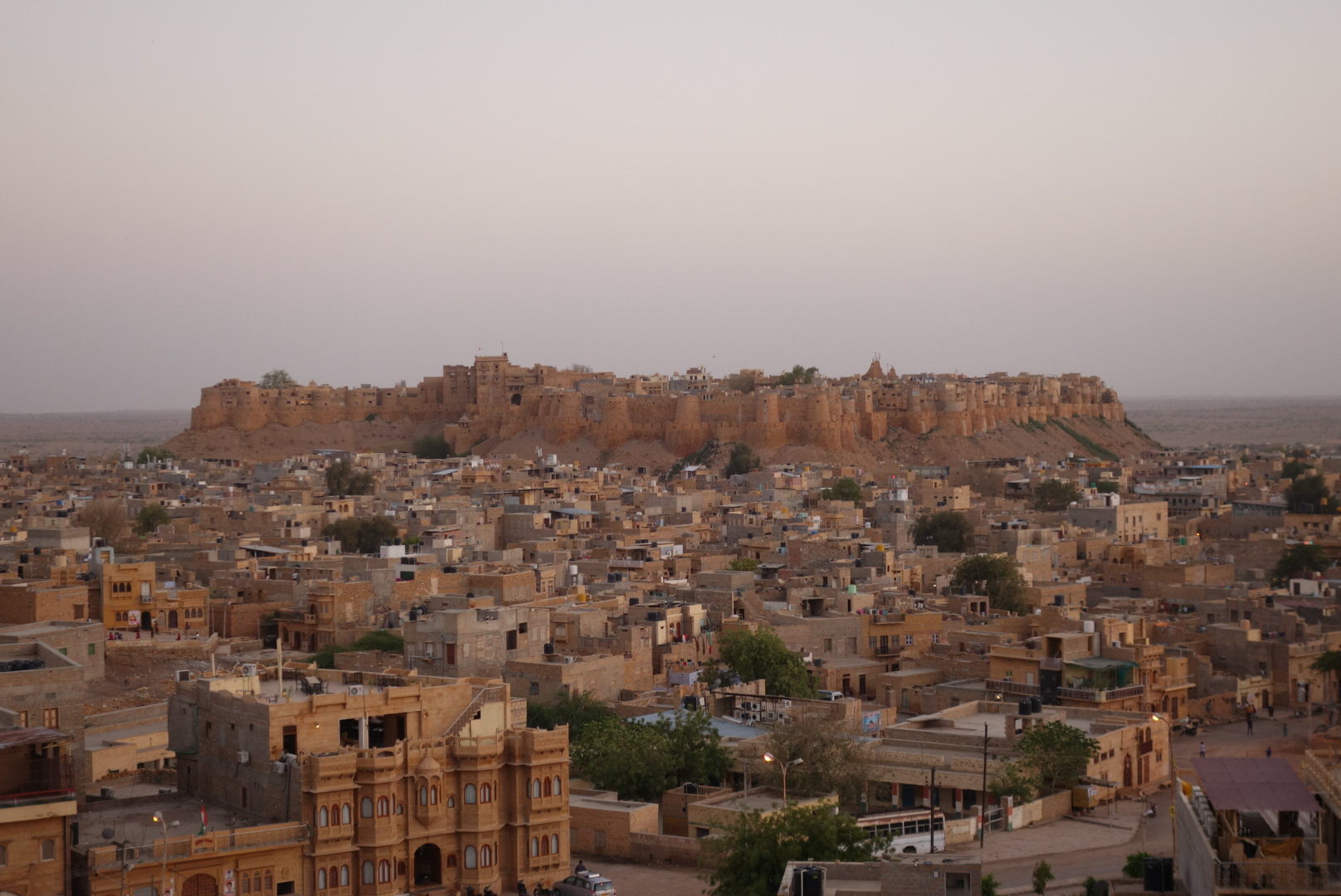
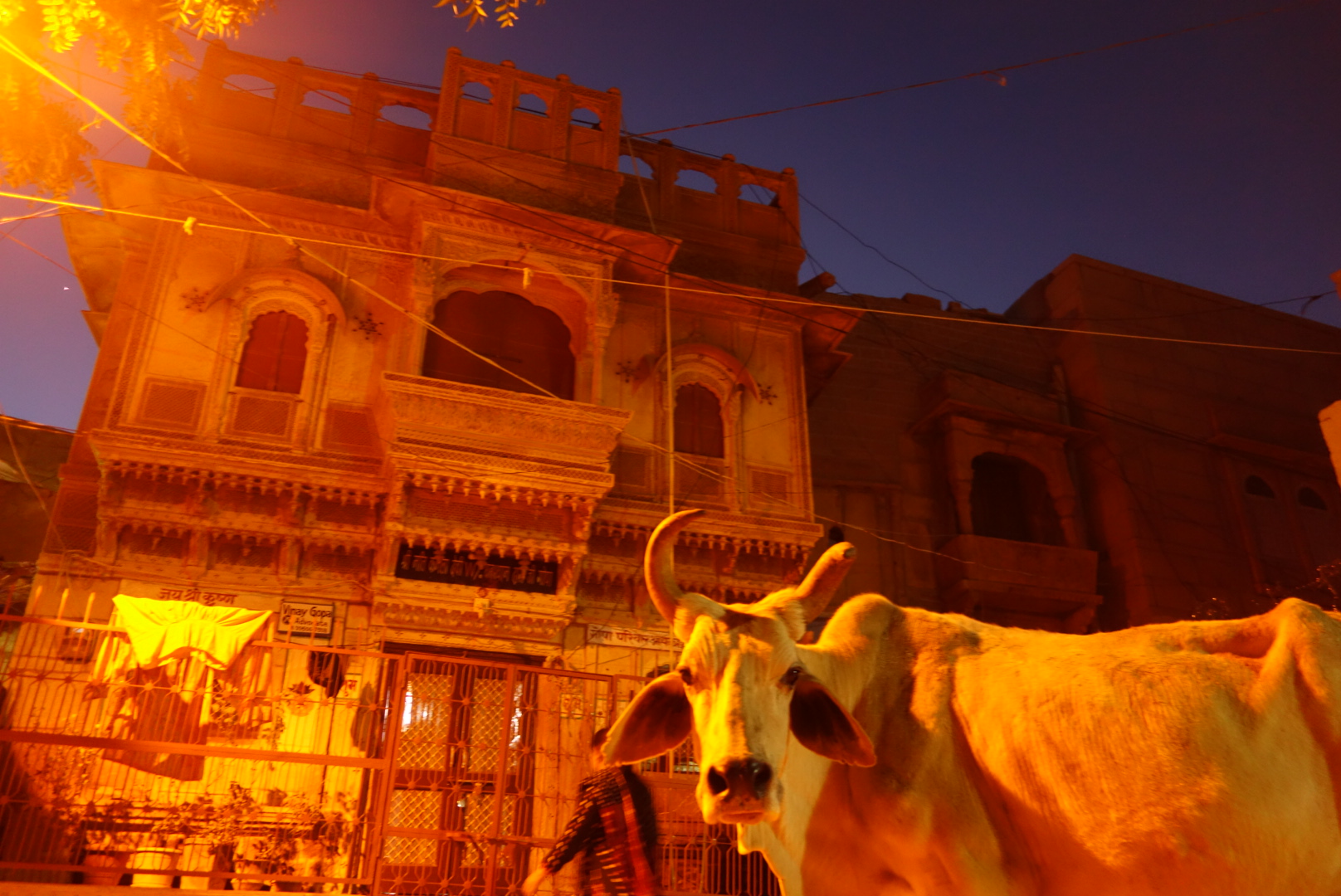
Out of the desert rises a huge rock, houses surround it, washed up around its base like flotsam, but it still looks impressive. A Fort encompasses the entire top. It’s not tall like Mehrangarh, it’s low and contoured to the rock, sort of Star Wars meets Lawrence of Arabia. We park Ramdev at the gates, load up 2 Tuk-tuks with bags and us and helter-skelter upwards through narrow winding alleys. People have to climb into houses to let us pass. Only the inexorable cows can cause us to detour until we arrive, breathless, at the Victoria.
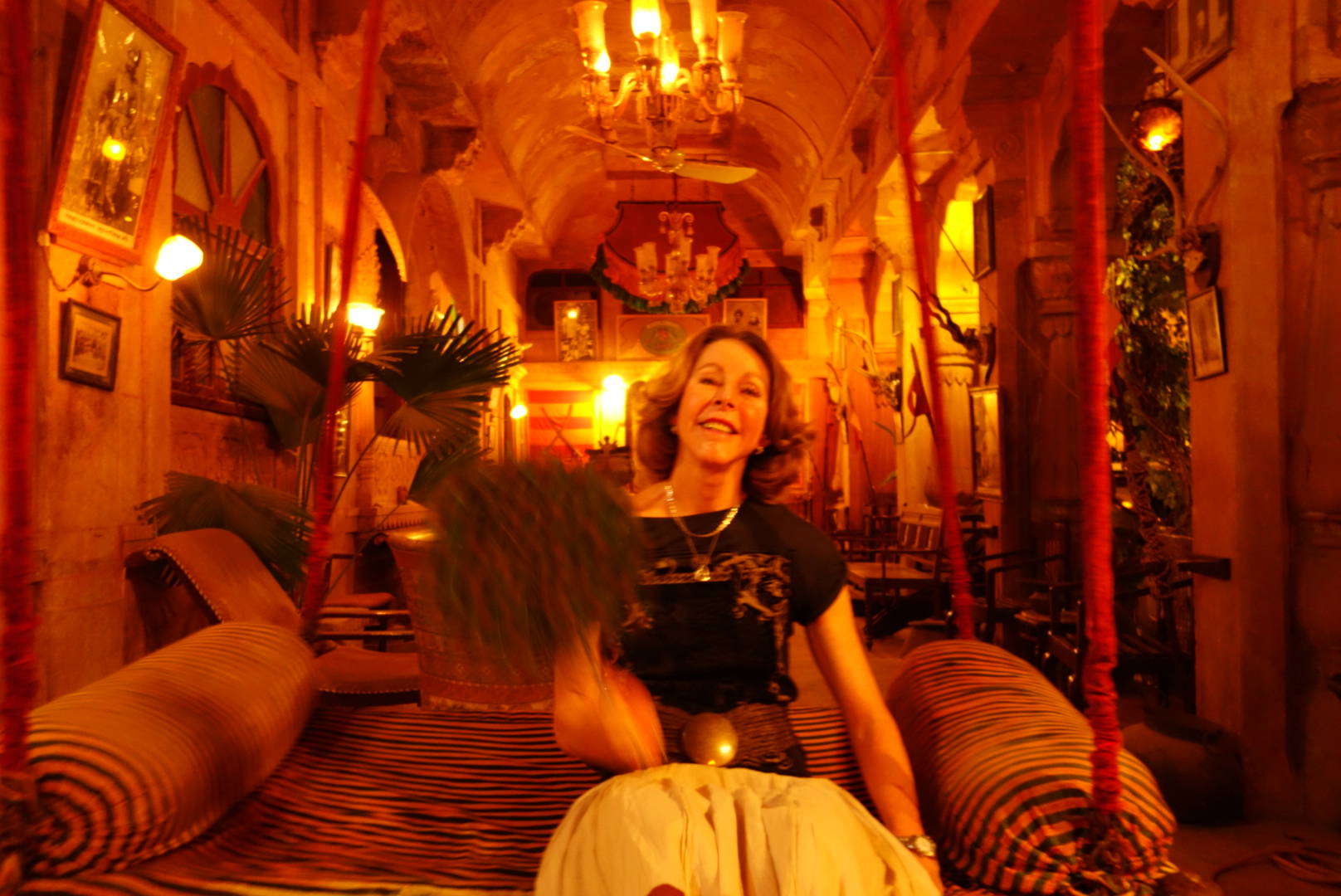
The Victoria is a Havelli and also forms part of the Fort walls. It’s only 3 stories, but the steps are so tall and steep it seems like 8. This is not a hotel for those with bad hips or knees, or any sense of vertigo. The 3 steps from our bedroom into our bathroom rise one metre. It’s okay going up, but coming down with wet feet, it’s safer just to fall onto the bed, but the room is largish and there is a window divan. There is cold beer on the roof and afterwards we walk down through the night bazaar; winding alleys, colourful and cacophonous and we have dinner on the roof at Trios, looking back up at the Fort and our rooms.
7
In Jaiselmer we had 2 rest days! Luxury. We still had a guide, Padman, who was a really nice guy, but it is such a small place he wasn’t really needed. First though, was breakfast on the roof supervised by the Hotel Manager. Punkhar is one of those balls of energy that can hardly sit still for a moment. Conversation consists of questions to which he doesn’t always listen to your answer before expounding his own, or another question, or a treatise on the state of India. Punkhar was one of the first Indians I ever met who would trash talk the Gandhi’s right back to old baggy breeches himself. I thought that was sacrilege but, evidently, not any more. Modi is the new guy in town and is generally venerated, I just hope that for India’s sake he doesn’t let them down. So we loved Punkhar, he’s a smart guy and his Dad told him not to go into the hotel business or he would end up with a pregnant white woman, or on drugs, or both. But the Hotel and the guests it provides are his high, he really gets off on people.
Breakfast became a feast and Punkhar kept sending for more dishes, none of which he ate, but he didn’t put them on the bill either. He also showed us pictures he had taken of the sand storm (ours in Jodhpur) coming in from the desert, which were pretty amazing. Eventually, our guide was downstairs and we staggered off.
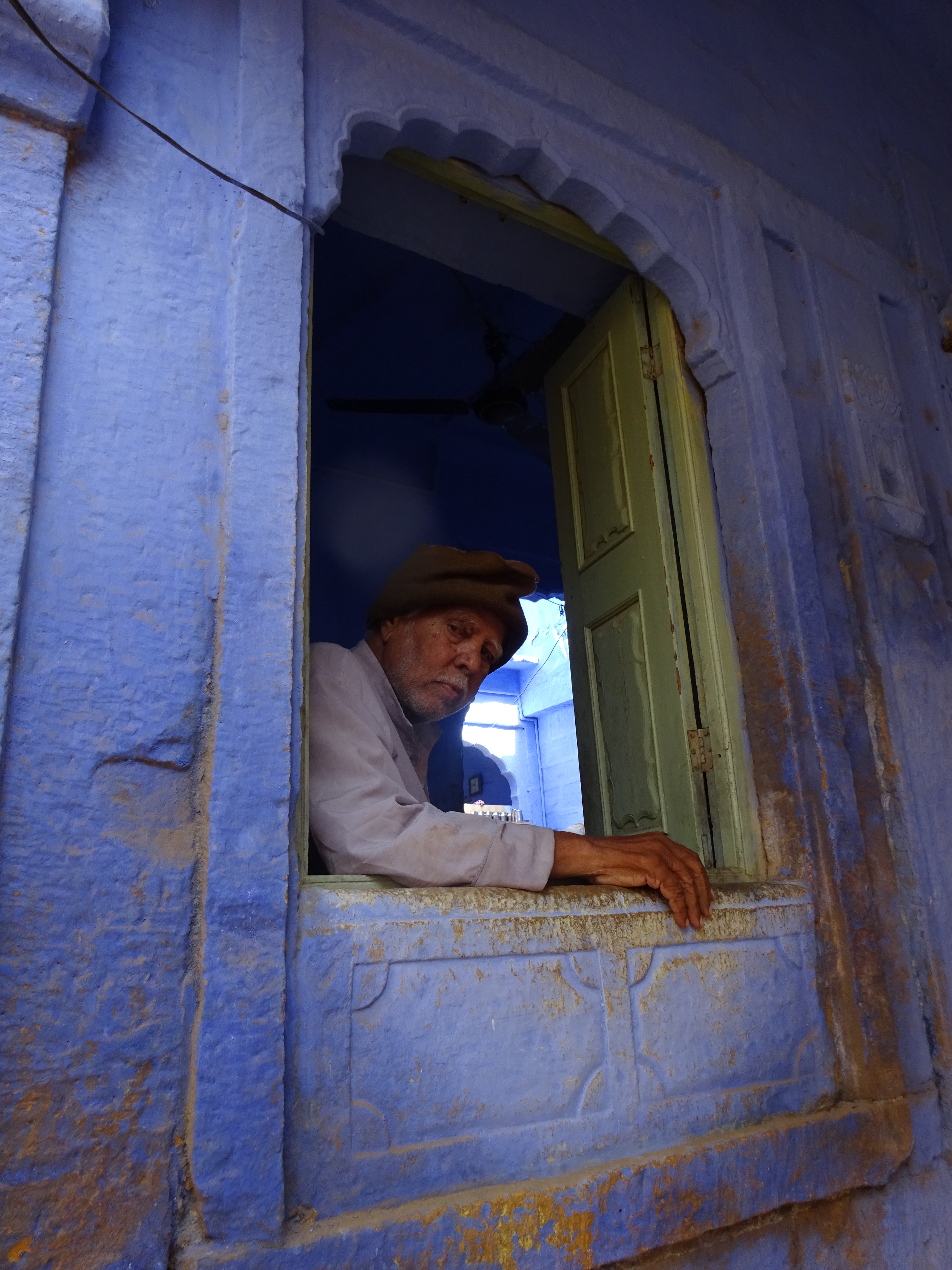

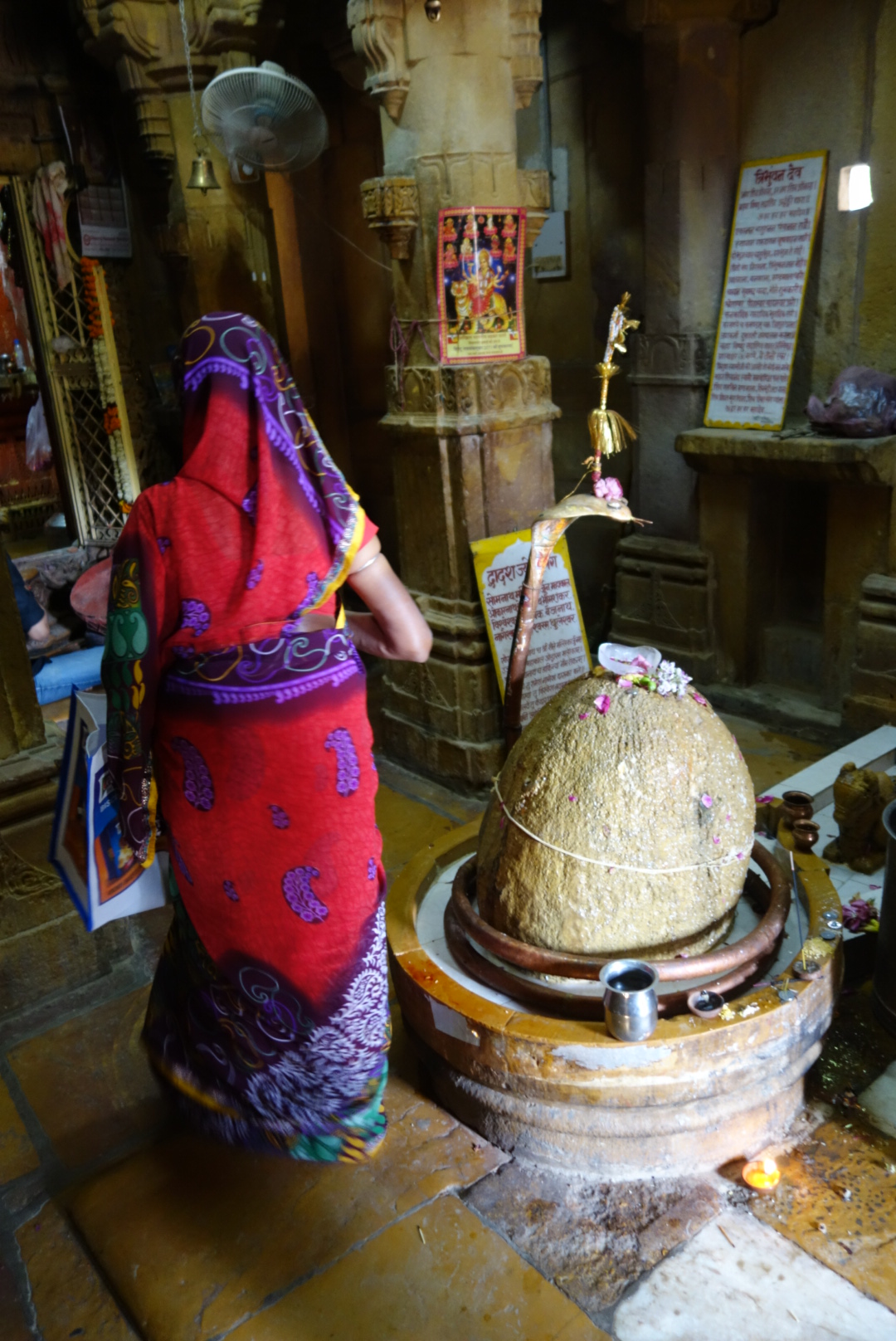
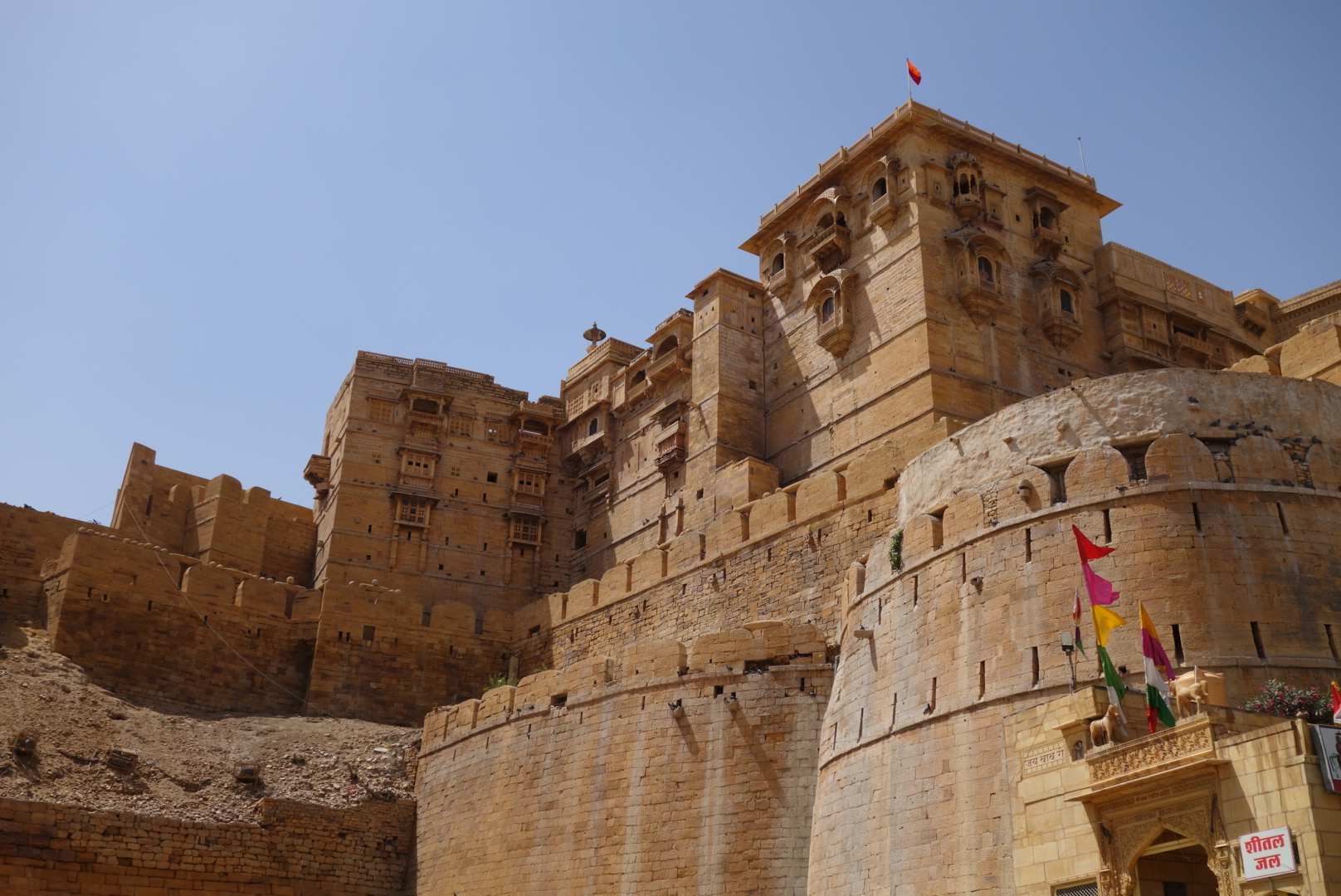
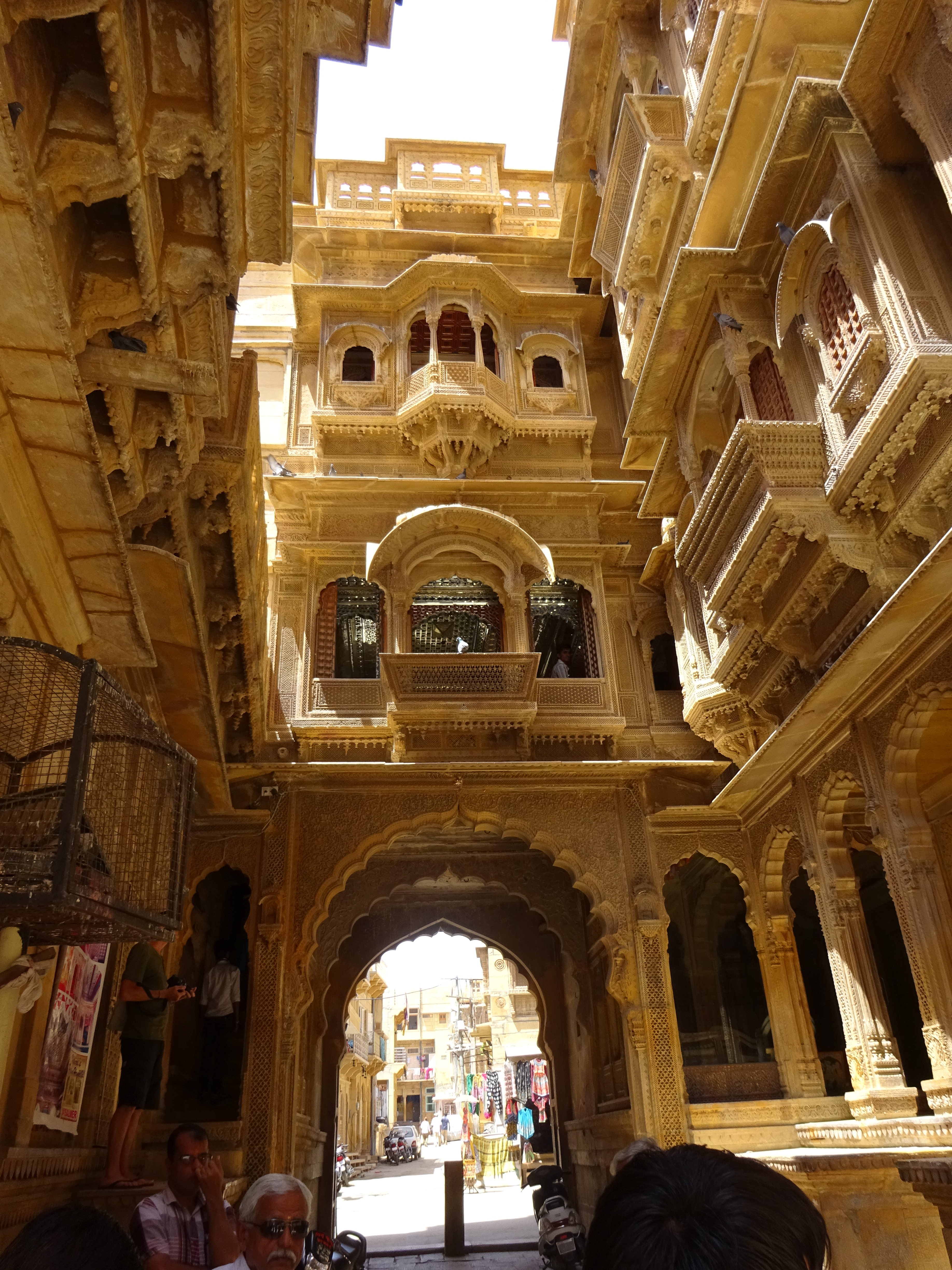
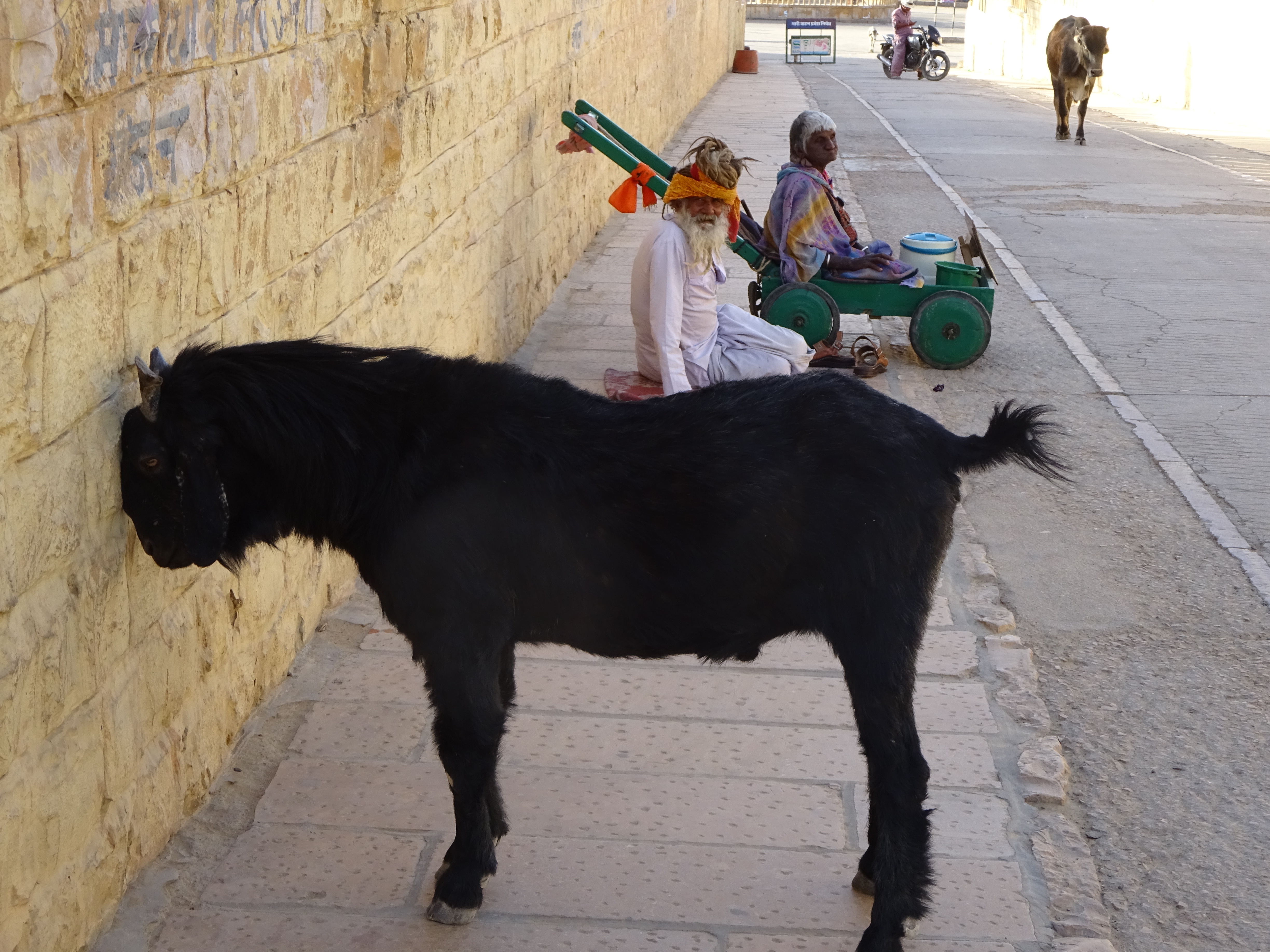
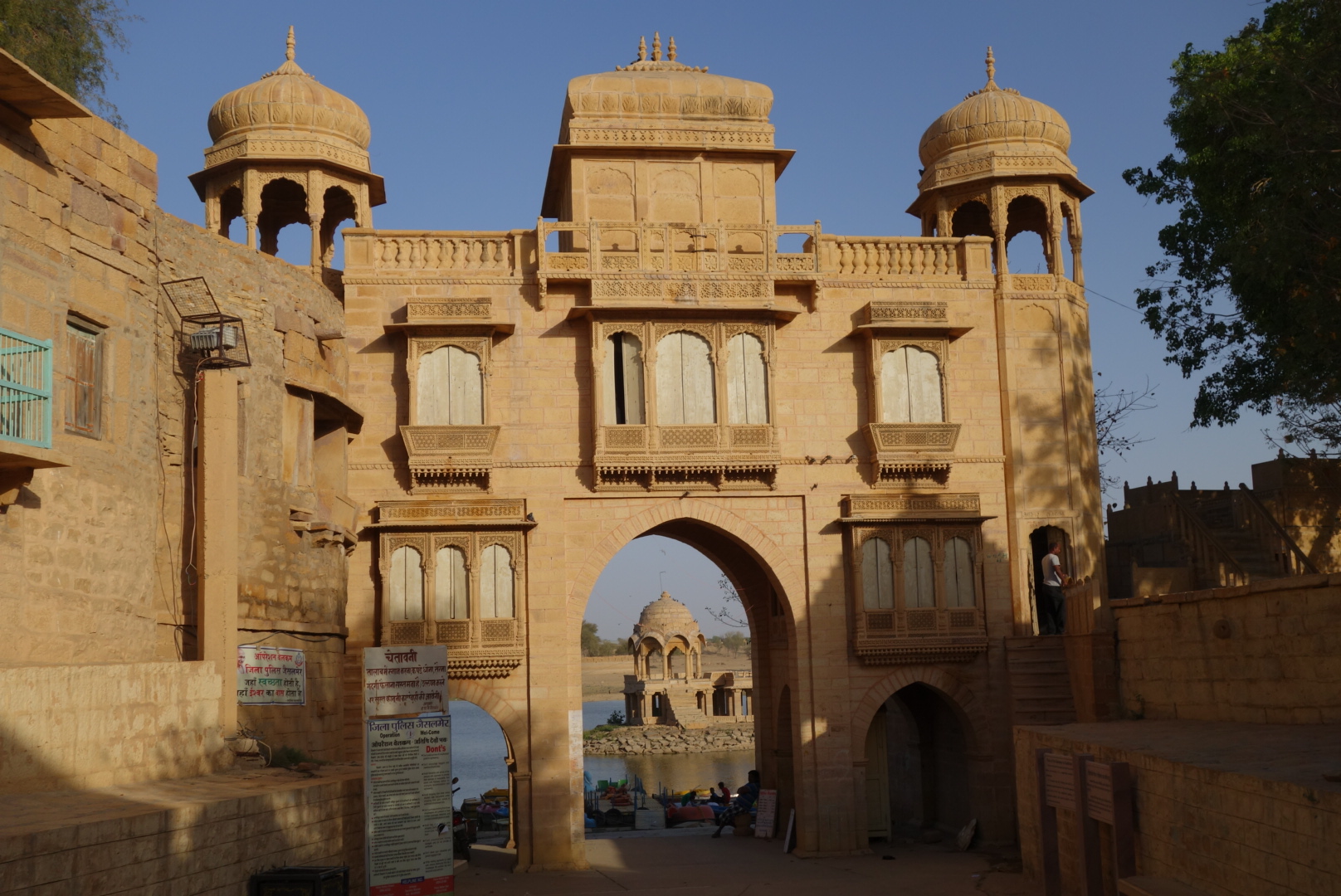
A short walk around the Fort, a tour of the Palace Howdah do’s, and then the Havellis down in town and that was it. Free time to shop and snooze, then in the evening a walk through the Bazaar to the Lake and under the Prostitutes’ gate, before going to Sunset Hill to watch the Fort change colour. Only it didn’t because the dust from the storm still hung on the horizon and, instead of setting, the sun just got eaten up. Shame.

8
Even lazier and no guide. We went to the Temple for morning sing-song which was really nice, then shopped. Dori bought fabric, but then we couldn’t find a tailor willing to take on the commission so, eventually, the shopkeeper called for his pal who assured us that a blouse in 3 hours was no problem. Meanwhile, the old guy on the stairs next door, offered to replace the broken zip in my shorts for 50P.
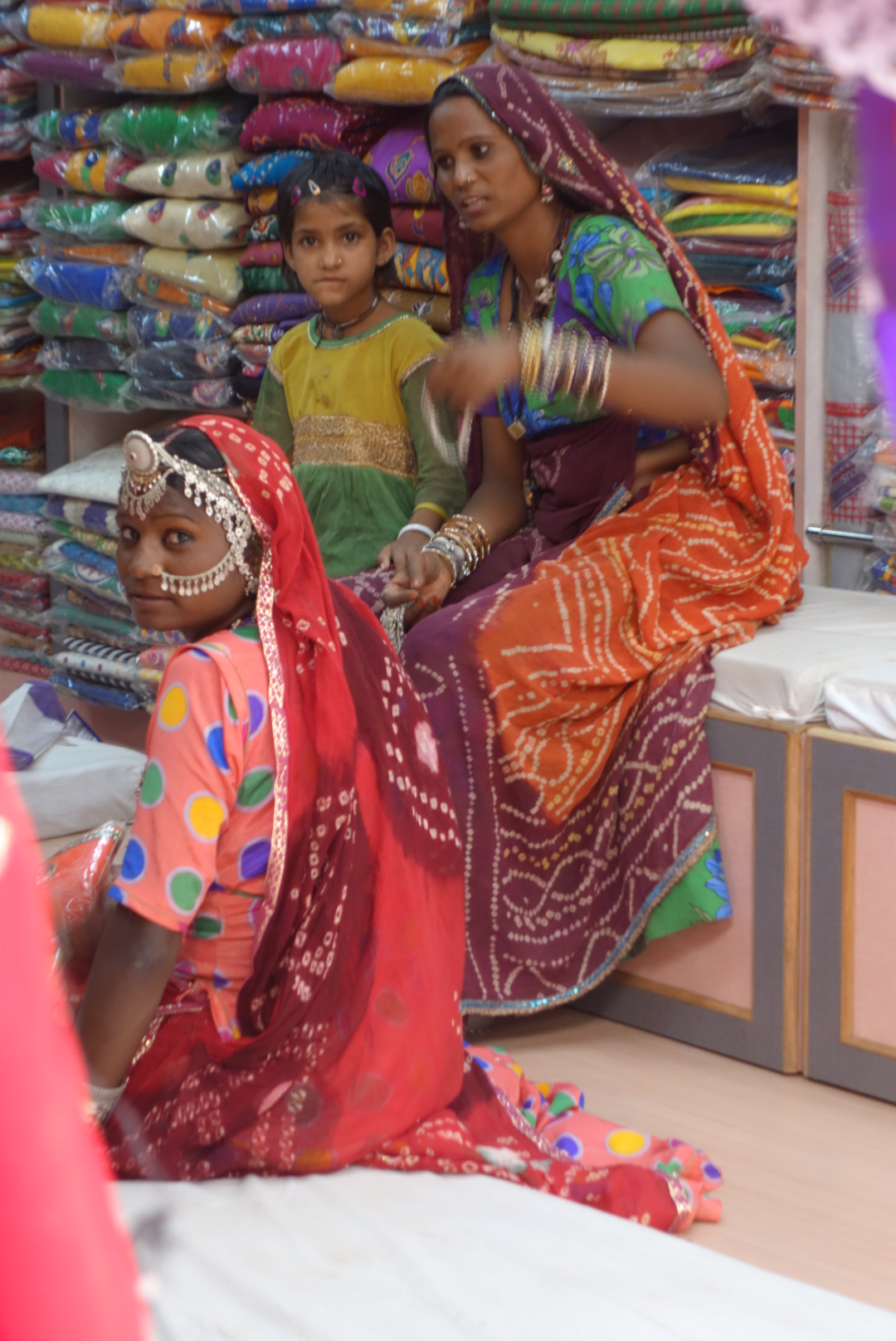
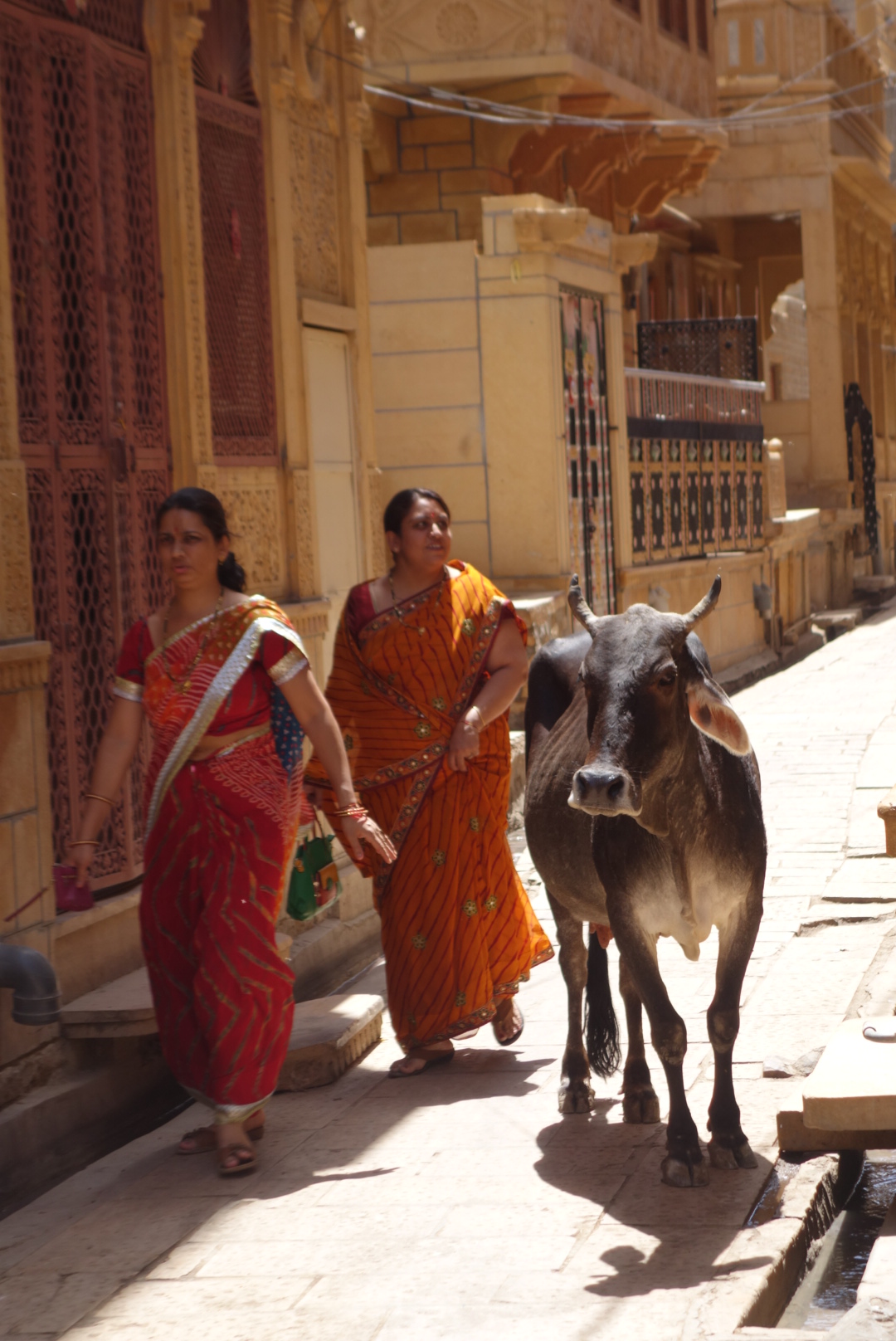
We called back in the evening but there was no tailor. Jon and I played pick-up-sticks with a bunch of kids in the street, who thought it was hilarious to have 2 old Sahib geezers running about like mad ikes. The tailor showed up and yes, it resembled a blouse of sorts, but I doubt it will ever be worn. But my shorts were awesome.
9
Back on the road again. We said goodbye to Punkhar and his crew and had another very long drive, to Bikaner. About 30K before Bikaner, we came to our hotel, The Gajner Palace. A stately Edwardian pile in a huge estate next to an enormous lake, in the desert. Where does the water come from? Magic. As a result, this place is resplendent with enormous shady Ficus trees, Palms and shrubs and everywhere, squawking, acrobatic, dive-bombing, raucous, Parrots by the hundreds. Fabulous. Peacocks too and an iridescent Blue Jay as big as an Eagle. Dori wanted to stop, but we had a guide waiting in Bikaner and headed off. A quick late lunch in town and then I told our guide, Annar, that although we were sure that Bikaner Fort is impressive, could we please just do it super-fast, no disrespect, just that we were getting pretty forted-out. Unfortunately, Annar took great pride in his City and he also started every phrase with Vvveeeeeeeeeeeeeeeeeeeell! I could see Doris’ fingers trying to free a strangulation length piece of fence chain. But there were some beautiful rooms and, in amongst the Howdahs, a Sopwith Camel. Try getting that on the back of your elephant.
Then on to Karni Mata Temple. Best known as the Rat Temple. Suffice it to say that this is a Temple full of Rats. There were almost as many stories about ‘Why?’ as there were rats and, there is a shed-load of rats. As with most temples, you take your shoes off before entering, after which you are walking in rat poop. It’s not of great Architectural significance and its only real claim to fame are the residents. They gambol all over the place, right up to the threshold but never cross it. The Temple keepers feed them and they get into everything including the votive offerings to the Gods. There are huge pans of coconut milk around which they all sit with their bums in the air, lapping contentedly. There are a couple of white rats which it is supposed to be very good fortune to see and we did. It’s bizarre and it says a lot about Hinduism and, based upon the human to rat ratio here, I am guessing that there are a number of Indian restaurants in Hong Kong that would qualify for Temple status.
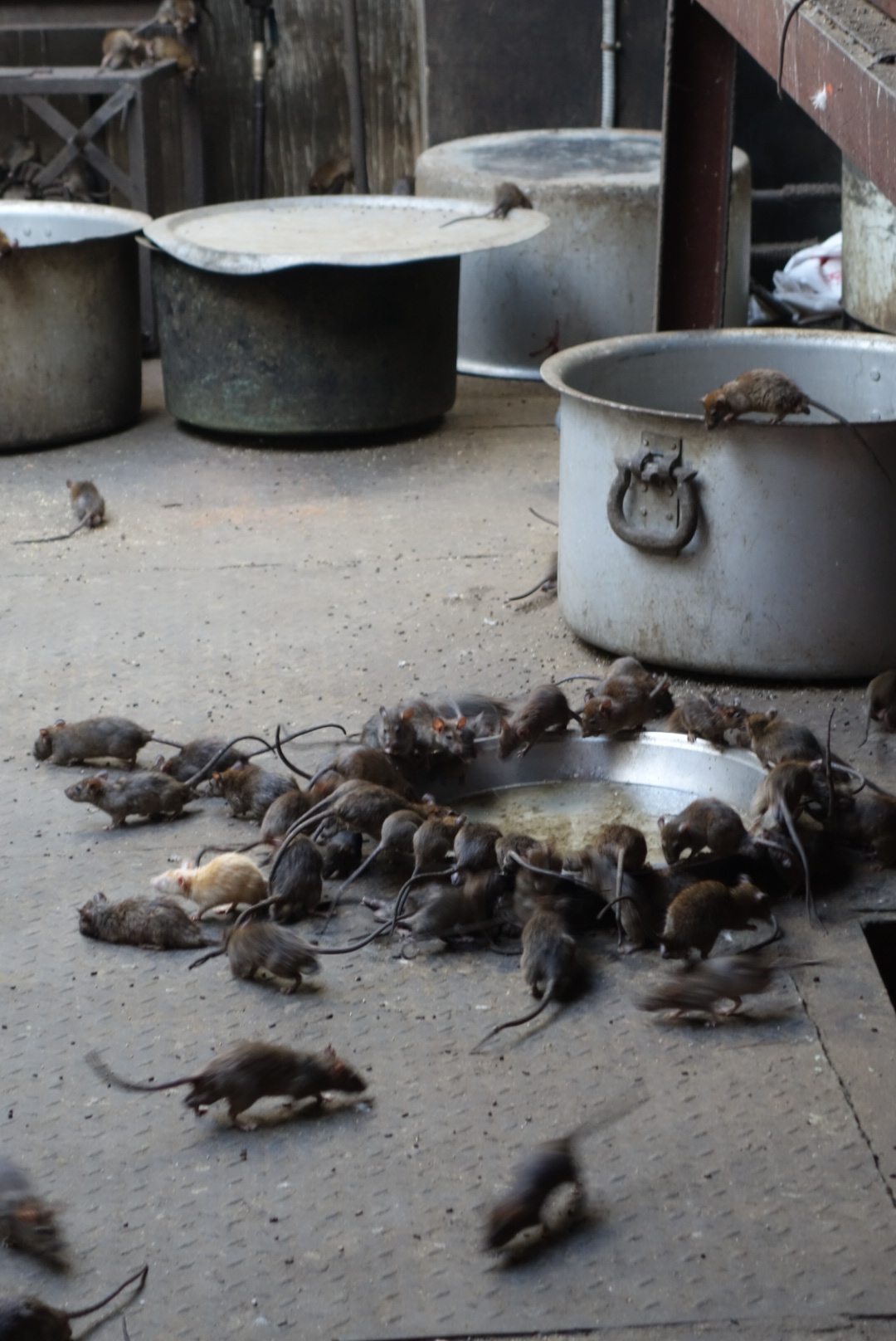
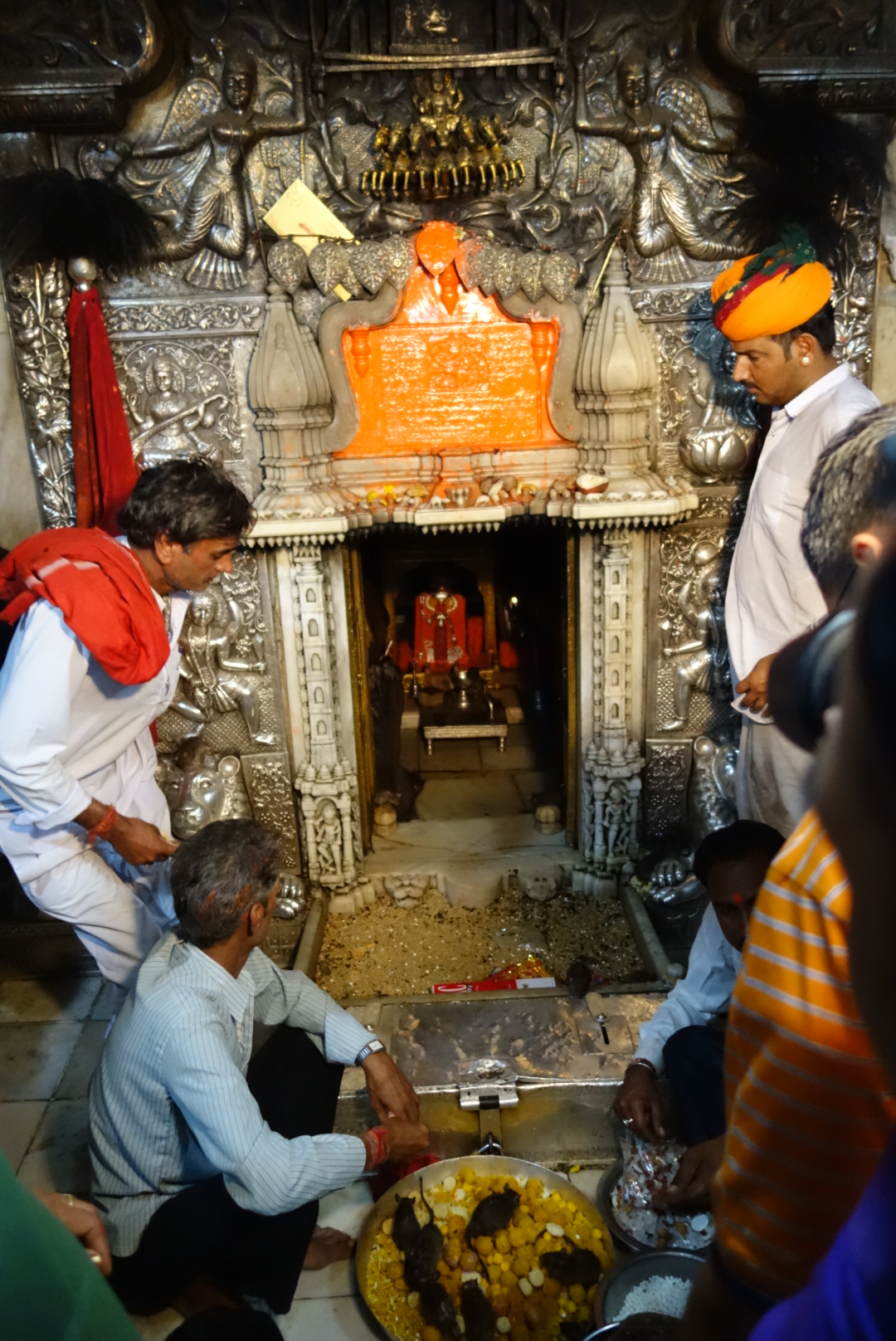
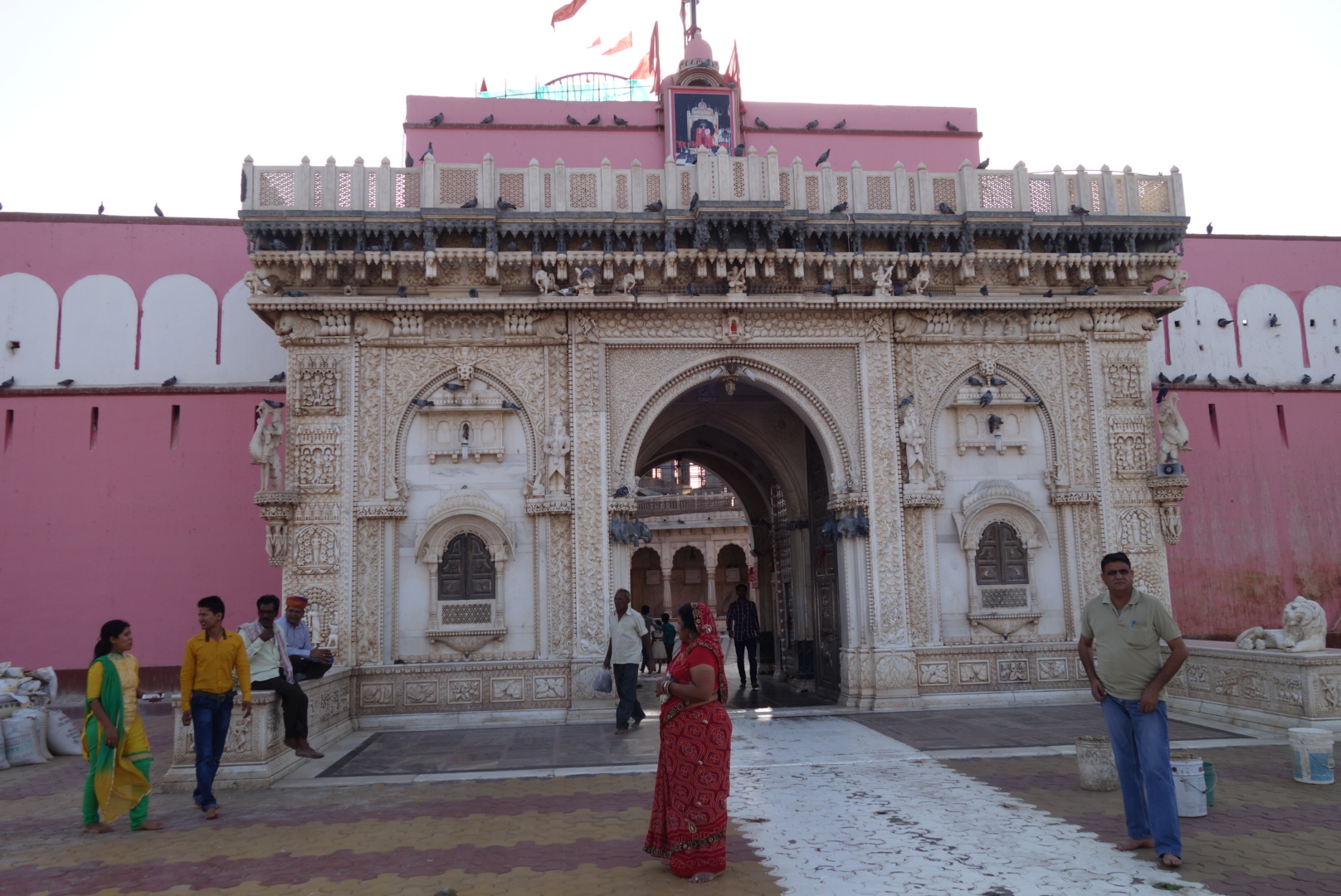
The day was fading fast and the road back to Gajner Palace, hard. We dropped Annar back in town and admired the tonsuring of the local camels whose owners give them buzz-cuts like American basketball players. Once darkness fell, the road was a scary dangerous place to be. Indian truck drivers only use their headlights as they approach you and then flick them on full-beam in an effort to blind you off their road. But Ramdev held firm and got us back in one piece, just in time to listen to the Gypsy musicians and watch the beautiful dancing girls in the courtyard as we sipped our G&T’s. Then a hot shower for rat shit removal and a late dinner. It seems that the joys of travelling are mainly to be found in the bits in-between.

10
Dori was up as dawn broke and I wasn’t really that far behind. The hotel grounds are so huge and shady that they offer one of the few opportunities for aerobic exercise in Rajasthan. The breeze blew off the lake. Dori ran and I walked, sweepers grinned in disbelief, waiters rubbed the sleep from their eyes, Peacocks ran and hid and Parrots did what Parrots do, how we didn’t get lucky I will never know. After breakfast, we set off again, to Shekhawati.
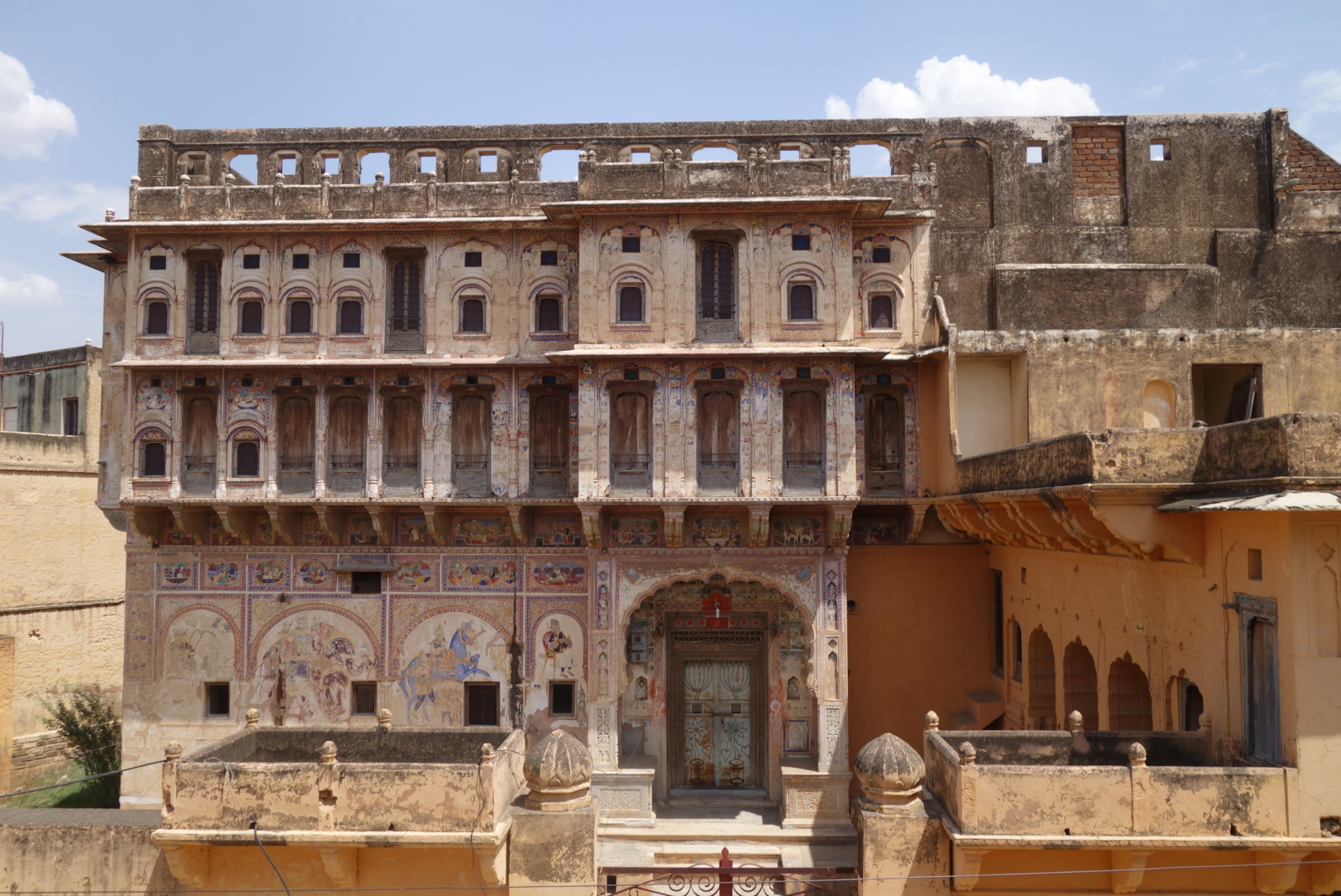
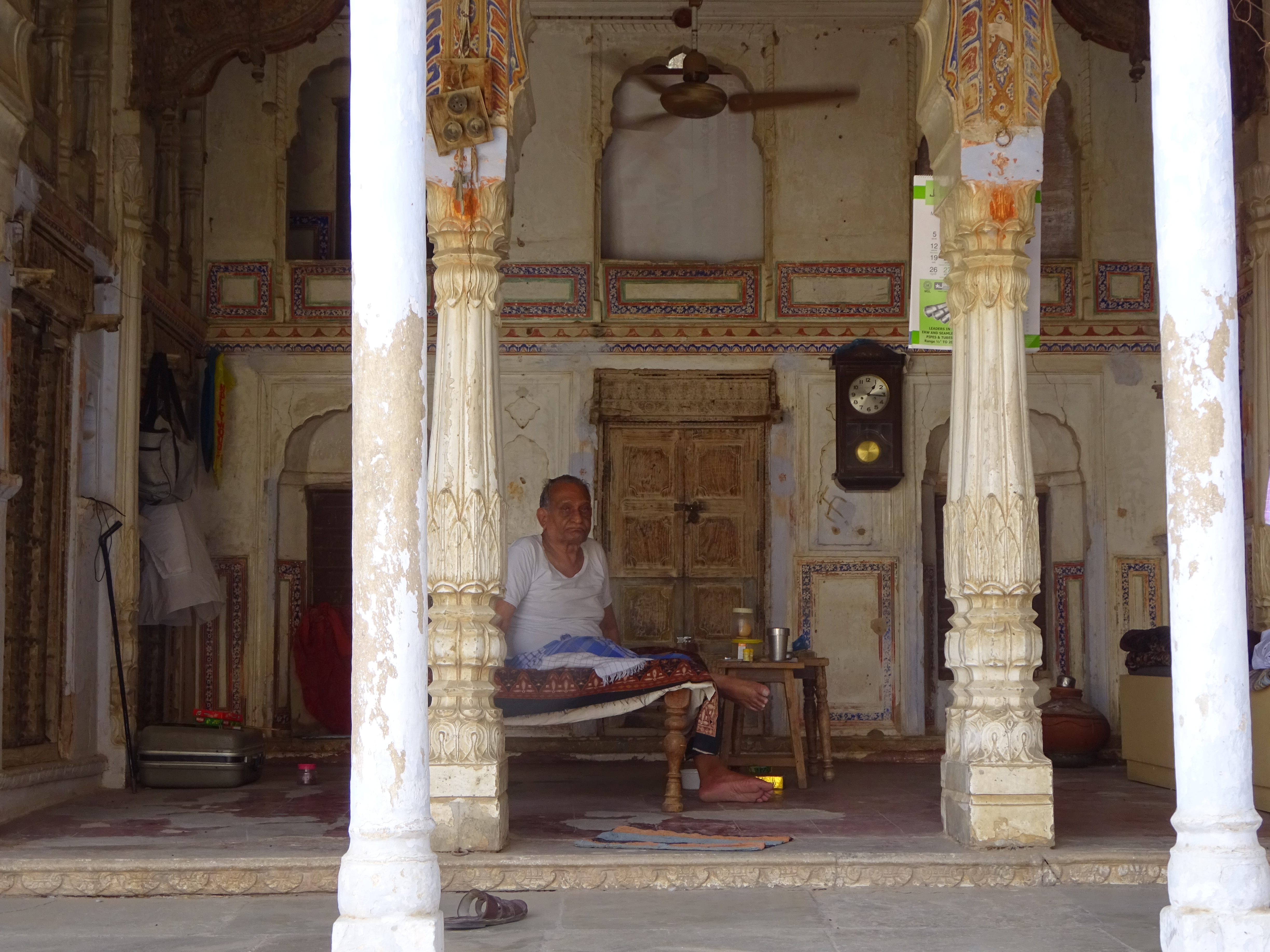
Shekhawati is a series of big villages whose entrepreneurial residents made good money from trading with the caravans on the old Silk Road, however, in time as the caravans reduced, they began to pose a commercial threat to the British East India Company. The BEIC was never a keen proponent of competition, so they pushed them out, but as transport was moving seawards, these guys went to Bombay and Calcutta and made it big time. They then thumbed their noses at the BEIC by sending cash back to the villages and building huge Havellis. Then it got into a competition as to who had the biggest Havelli and whose had the most frescoes. At some stage, the cash dried up or the kids just stopped bothering to come back to the old home village and they were abandoned. Now, these places are not ghost towns, they are very lively, but they are stuffed with ghost Havellis. Great crumbling edifices of past riches, full of cows and pigeons and squatter families who will show you round for a pound.

Then on to Samode, a small village outside Jaipur. It’s a hard drive on a big road towards the district capital. Time to snooze and contemplate. At some point, I was reminded how in China a couple of years ago, there was a huge scandal when it was discovered that the biggest milk processing company in the World was knowingly accepting milk that had been tampered with. In order to meet yield quotas, farmers were adding a liquid plastic, Melamine, (Cheaper than milk and just as white). Not just a pint or two, but on a huge scale. To the extent that kids were being poisoned and even our favourite milk chews were recalled. In India, they don’t have this problem. The cows have decided to cut out the middle man and sit in the ditches, happily chewing their way through all the plastic crap that blows past. If you wonder what that chewy bit is in your breakfast curd, it’s probably last weeks chapatti wrapper.
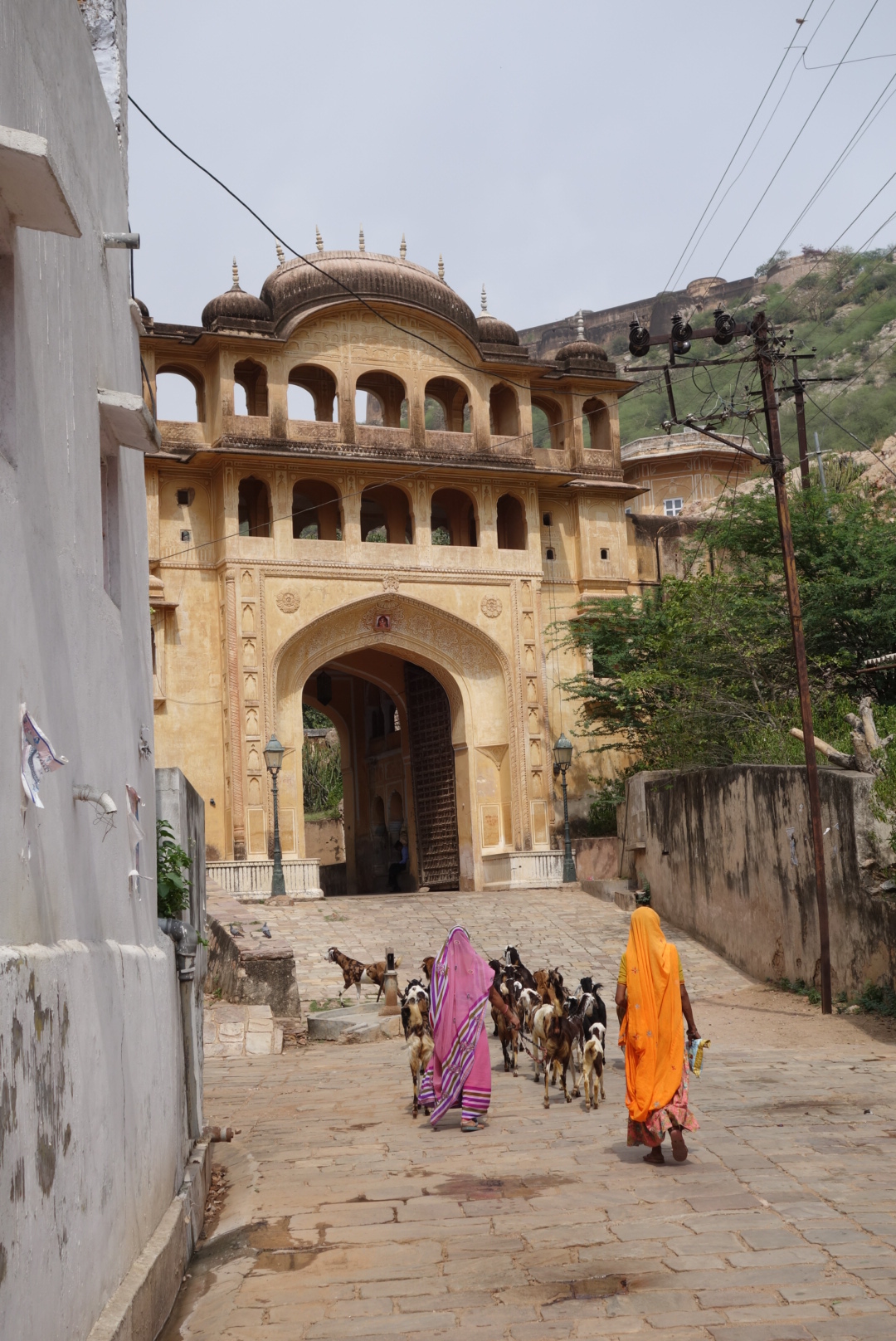
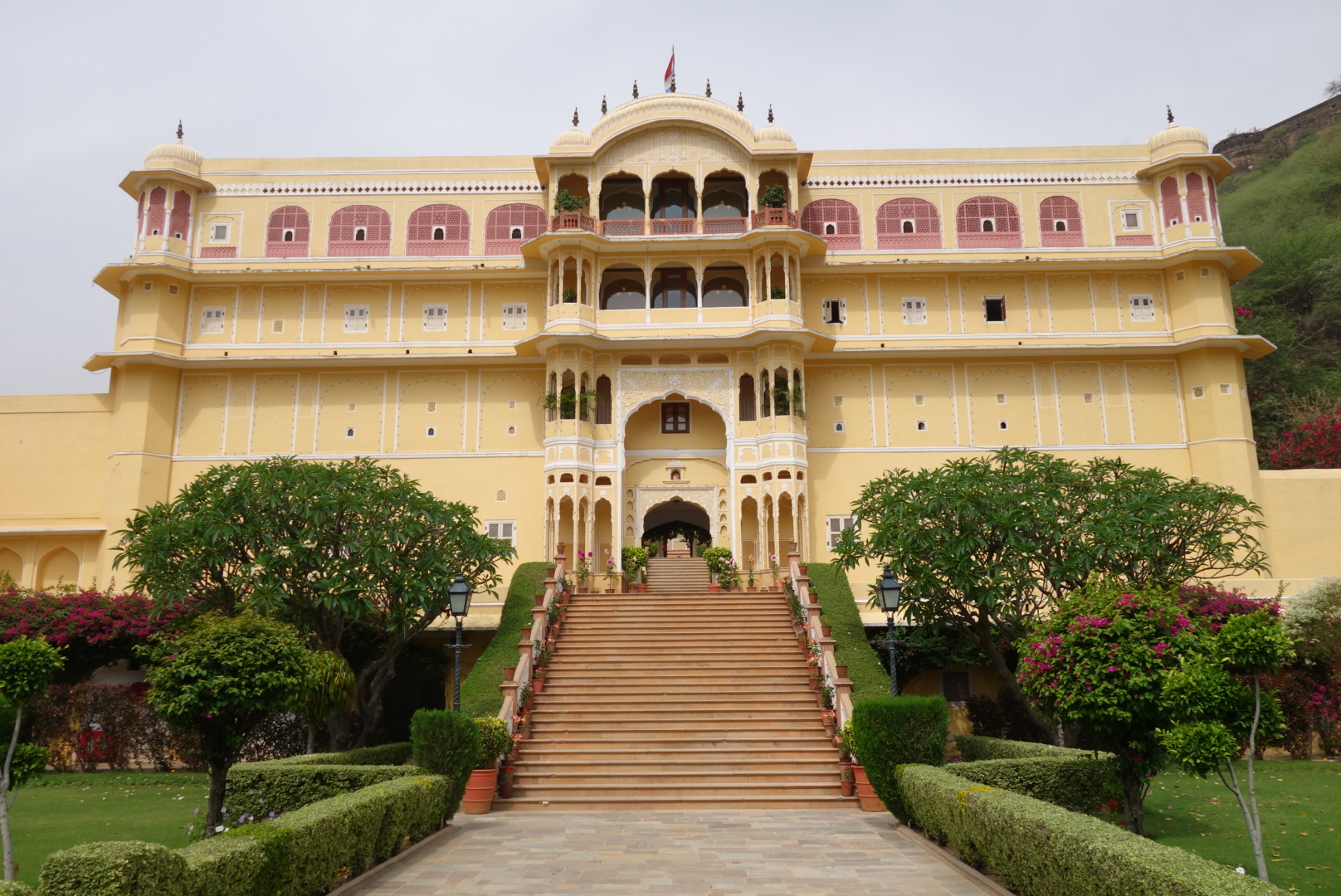
We turned off the main road into Samode. Tucked into a small valley, the village is shady and quiet. A cobbled street winds through it until, at the back of the village, a huge gated wall blocks off the entire valley. We drove in and climbed through a series of even bigger gates until we entered the courtyard of the Samode Palace Hotel. I’m told that they used this for the filming of “The Far Pavilions”, I’ve never seen the film, but I could believe it. Fronted by a large, lush garden, the Palace climbs the valley head in a series of steps, each with the traditional courtyards between becoming increasingly private. The place is meticulously maintained and operated and is totally fabulous.
As is the case in most of these Palace hotels, no two rooms are the same. Ours didn’t qualify as a room, it was more of an estate. 4 poster bed, arches, niches, study, boudoir, dressing room, divan, whatnot and a bathroom big enough for Quiditch, with one of those massive baths on legs. We ordered G&T’s and, after a luxuriate, headed down to dinner. There is a fine dining room, straight out of the Ritz, but we settled for the main room which is just as palatial. This was to the great delight of the waiters, who proceeded to treat us Royally, even to the extent of dressing Jon in a Maharajas Turban and betrothing him to a beautiful Indian Lady on the adjacent table. I don’t know if Jon thought this was a joke, but as far as I could tell, he still owes for 2 elephants.
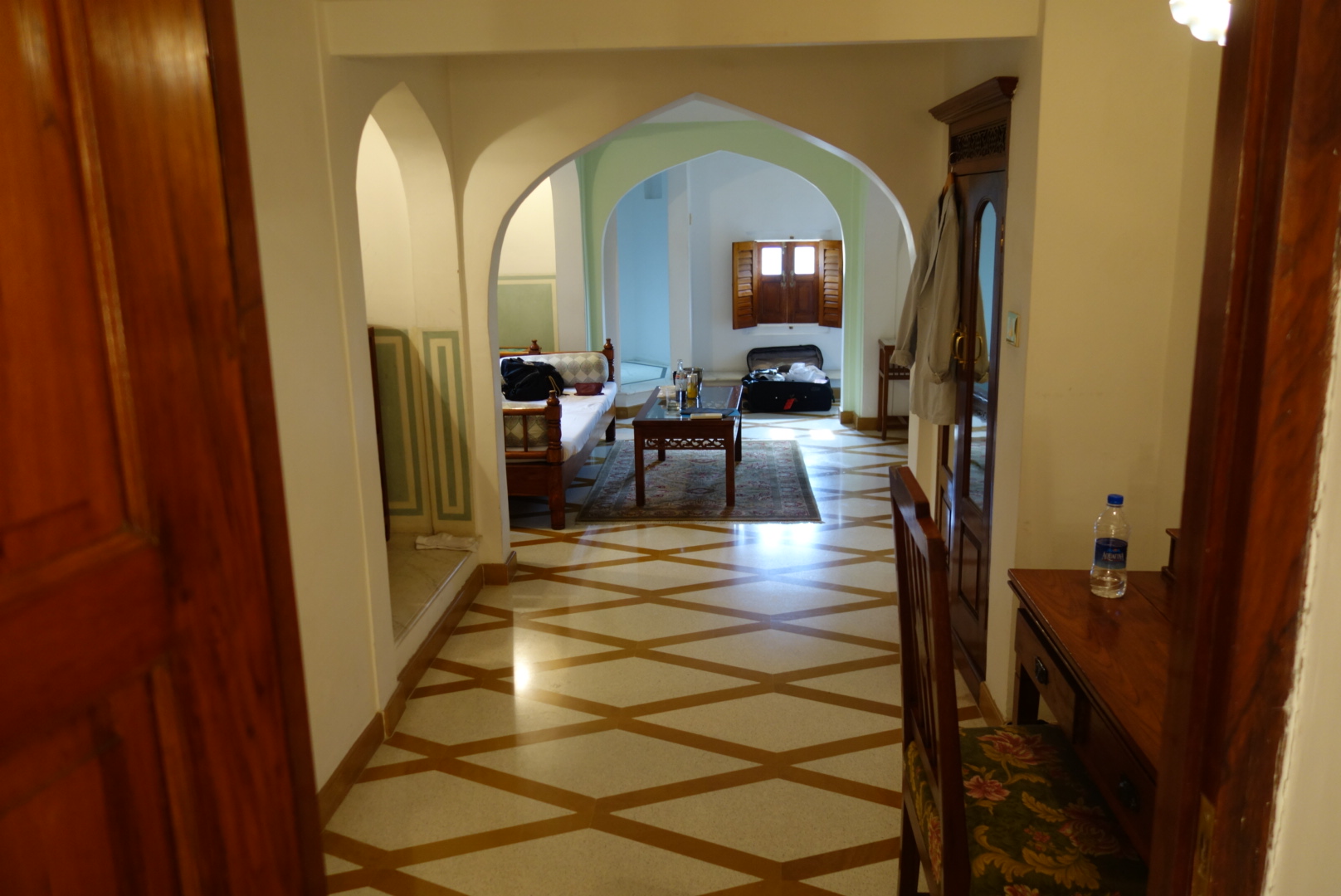

We retired to the bar for nightcaps and a game of cards. How absolutely spiffing.
11
After a glorious nights’ sleep, we partook of breakfast and then a tour of some of the function rooms, which were staggering, much like the breath of our moustachioed guide. We were not in the mood to leave and, as Jaipur was only a spit away, we delayed our departure until the staff came to our rooms and winkled us out.


Into Jaipur and straight to our Hotel, the Jas Vilas. Pleasant enough but, after Gajner and Samode, we were beginning to feel that it was a little beneath us. Still, as a family run place, it was very homely and we were happy. We met up with our last guide, KK, and he whisked us around the City Palace (okay) and the Janter Manter or City Observatory (Wow!). I’ve seen it before, and the one in Delhi, but it is still fascinating. Massive sculptural edifices that are actually machines for telling the time. Weirdly beautiful, but they wouldn’t fit on your wrist. Then, as there were still some gaps in our suitcases, we hit a couple of shops for good measure.

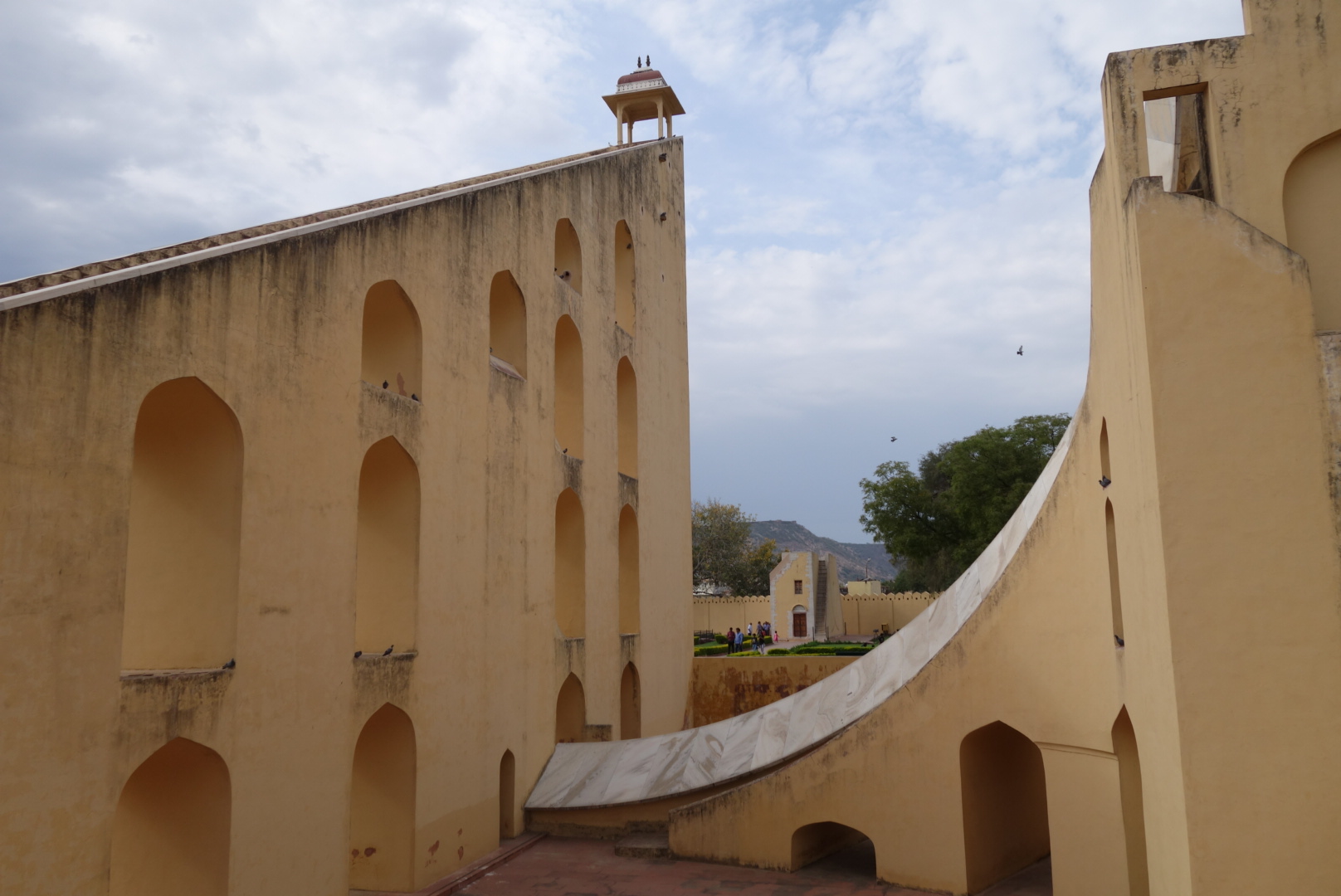
Jaipur is pretty big, very busy and hard, compared to the smaller places we had been, so Ramdev stuck with us, even taking us across town and back for dinner, before going home to see his family.
12
Back into the Pink City. Whereas most places in Rajasthan are the colour of the local stone, which is usually pink sandstone, some Raj or other decided to paint Jaipur pink when some King or other came for a look-see and it has stayed that way ever since. Evidently, nothing to do with Breast Cancer Awareness, especially as most boobies here are brown (I suppose). We checked out the Palace of the Winds, which is beautiful, but on one of the busiest streets in town and, as Jaipur is the one city in Rajasthan that everybody visits, you can’t stand around for too long before being dragged into some shop or other. Beware, Jaipur is the one place in the whole trip where we got ripped off in a shop. Not for much, but it rankled.

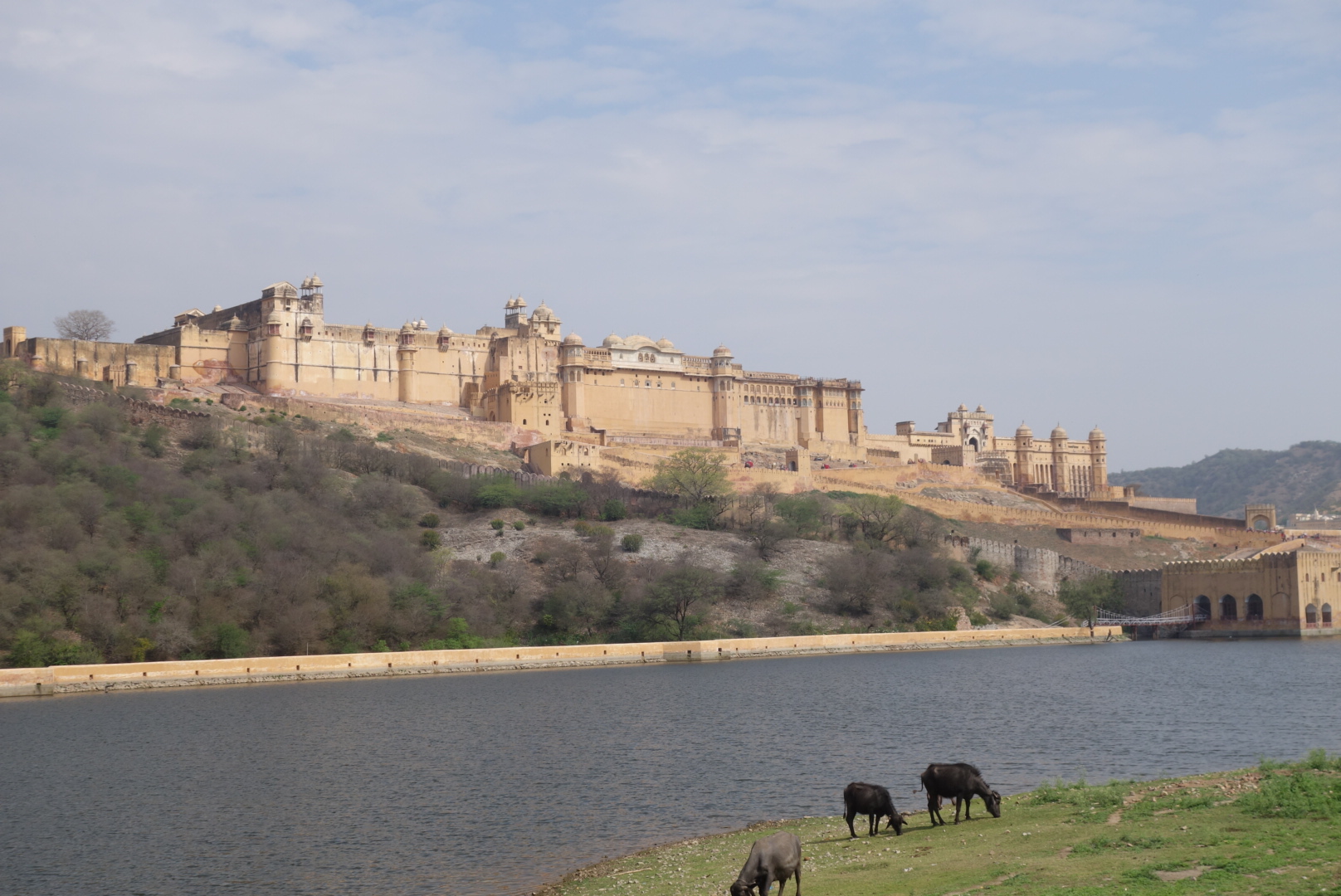
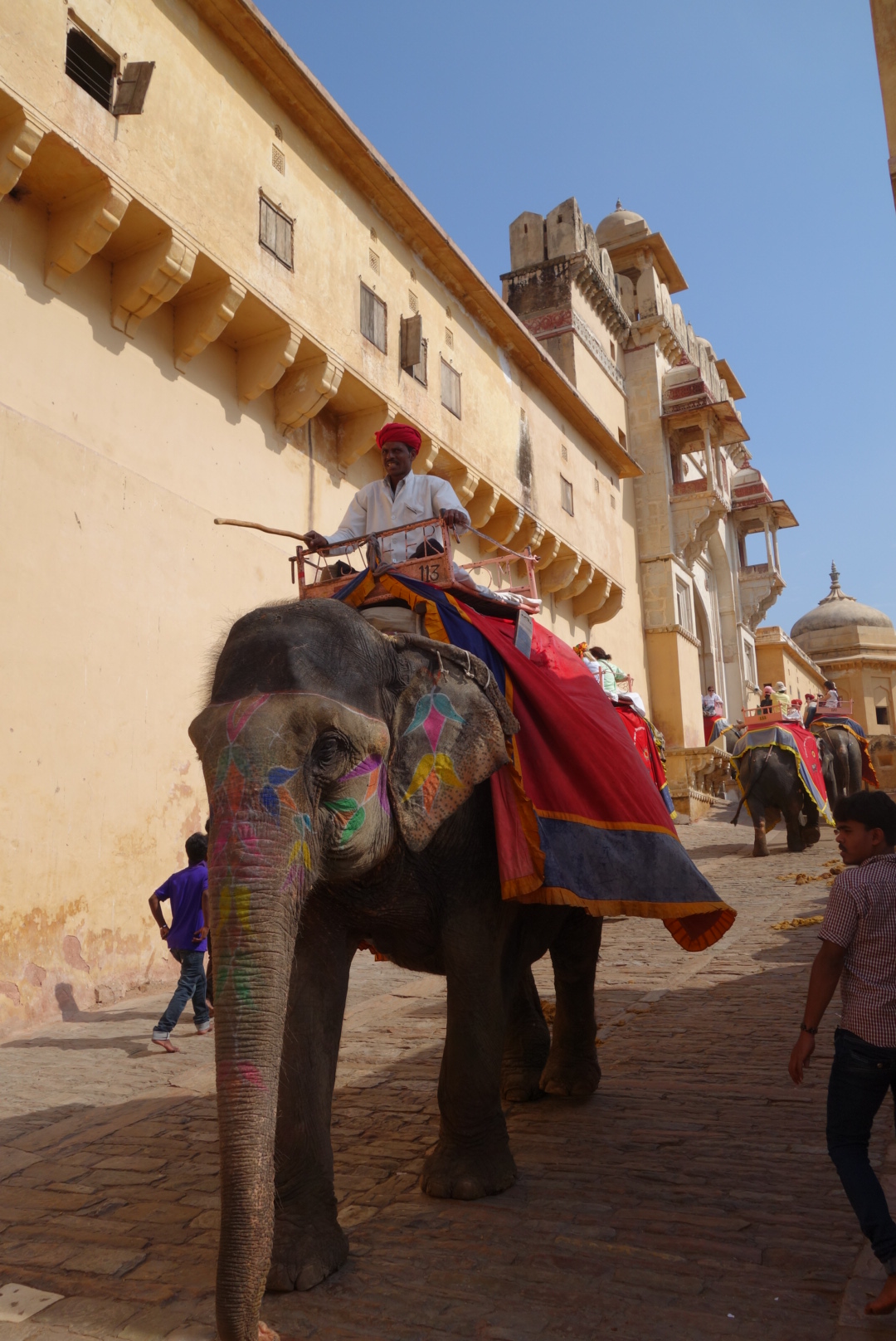
The main reason for Jaipurs’ attraction is the Amer Fort. Situated above a valley lake about 7K outside Jaipur, this is the fairy tale Indian Fort. Bold and impressive, it still manages to be mysterious and elegant. Crowds arrive early morning to take the Elephant ride up the winding road. Even though the Elephants are only allowed to make 3 trips/day in the morning cool, we were still not cool with it and preferred to walk. Instead, taking lots of photos of the magnificent painted beasts (Elephants and Tourists both) and it made a refreshing change to be stepping in Elephant poop as opposed to cow.
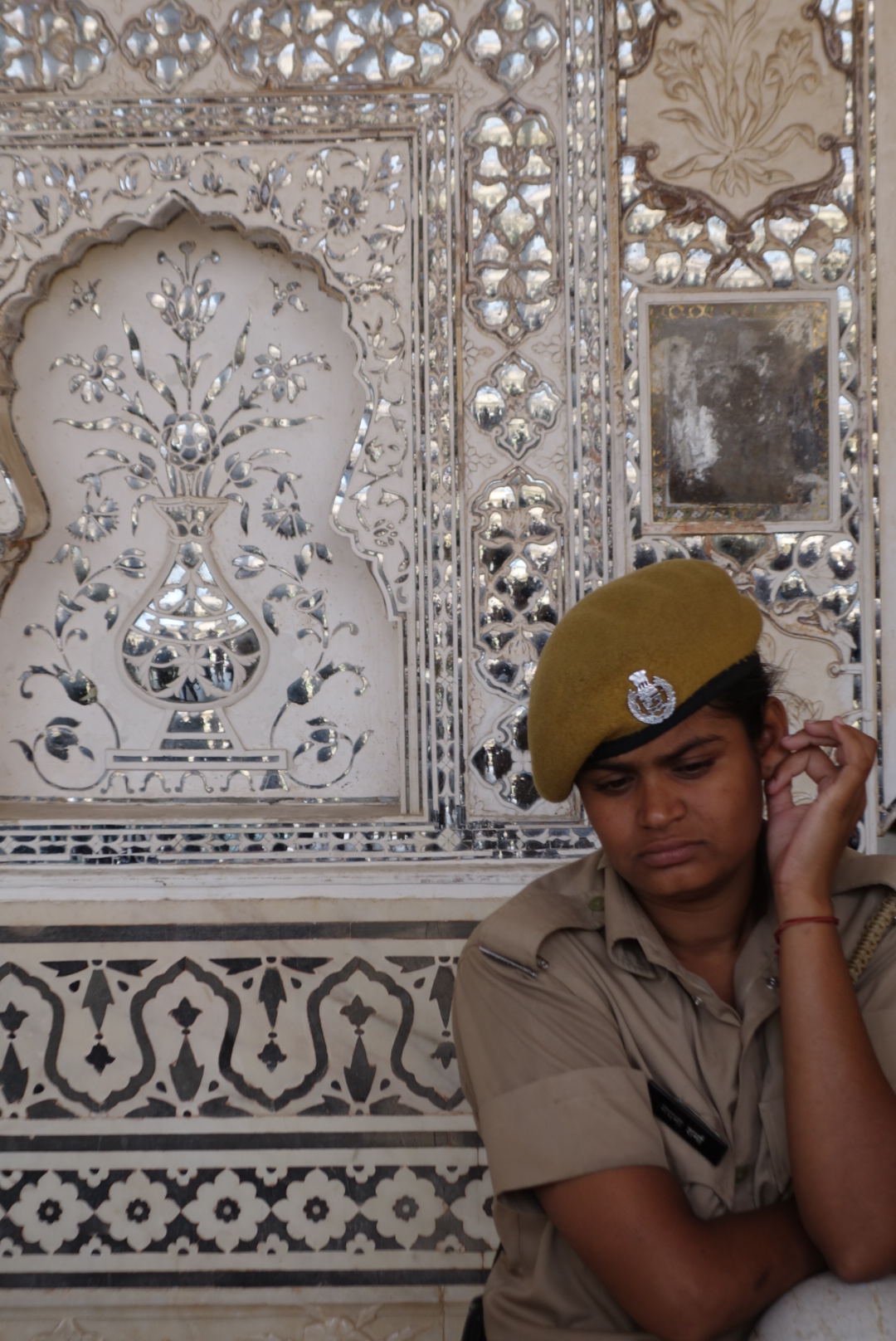
Inside, the Fort is majestic, but the main attraction are the mirrored rooms, where the walls are set with semi-precious stones in beautiful designs. Still gorgeous despite the crowds and the barriers to prevent damage. We saw these 30 years ago, when there was hardly anybody there and you could stroke the walls, but I would rather preserve them than stroke them, so no complaints.


We drove into the TGS head office and settled the last part of the bill, which all-in-all we thought was very good value, then stopped off at the Lassi Wallah just across the road. Best Sweet Lassi in town, served in a clay plant pot, really cheap and then we were shocked when we asked where to put the pot for washing. “In the bin sah”. A mountain of them, all busted up and waiting to fill pot-holes in a road somewhere.
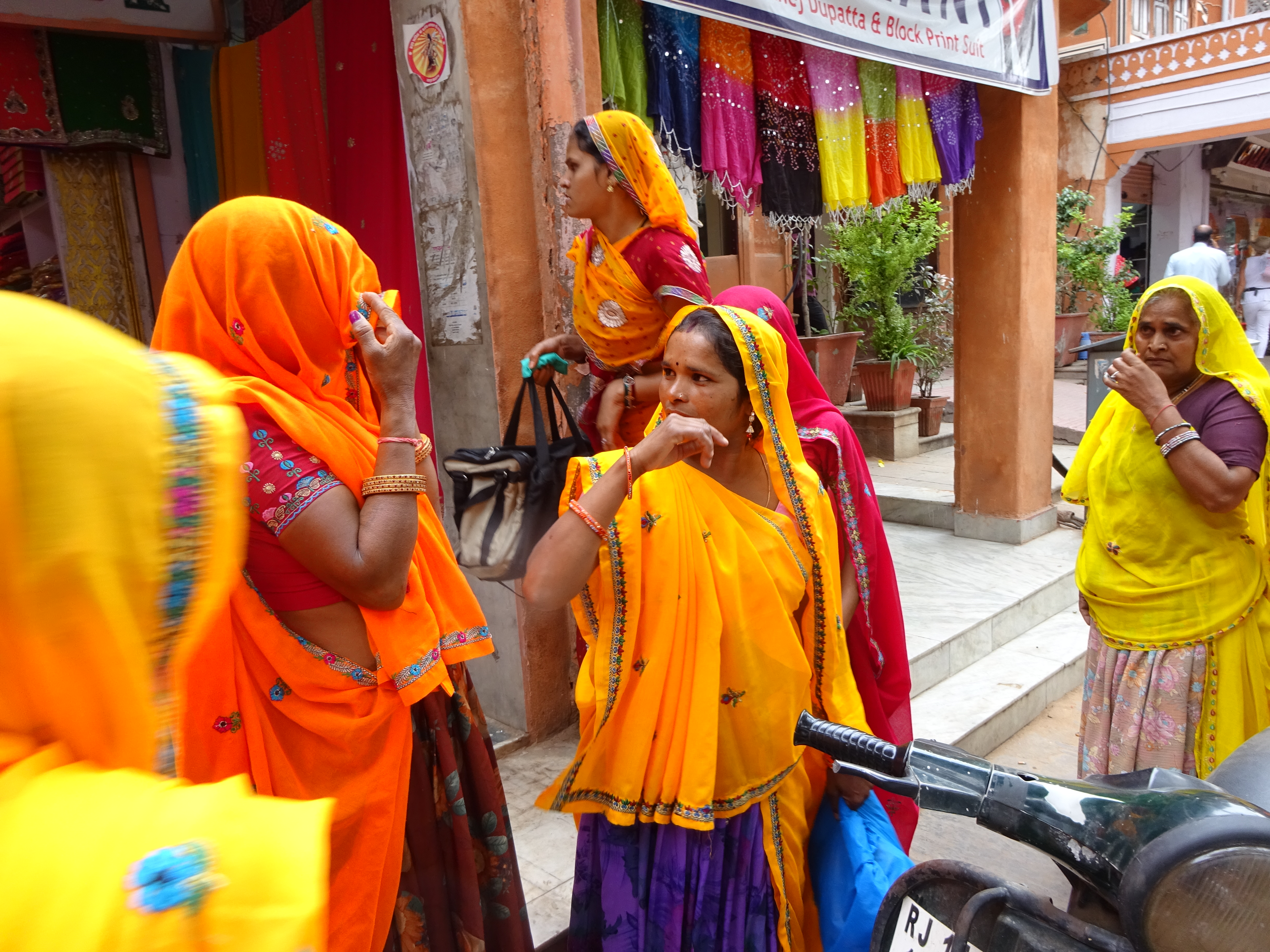
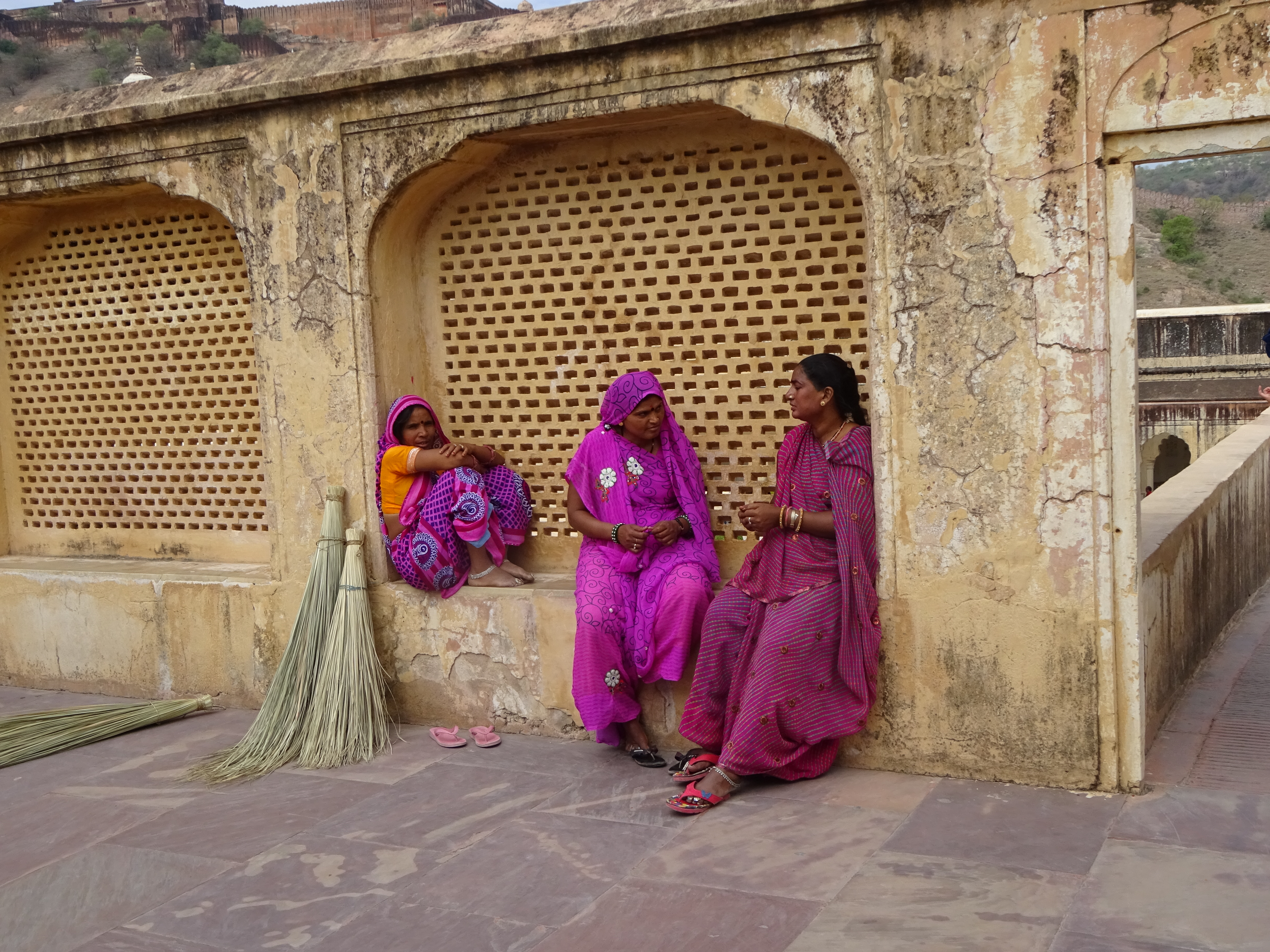
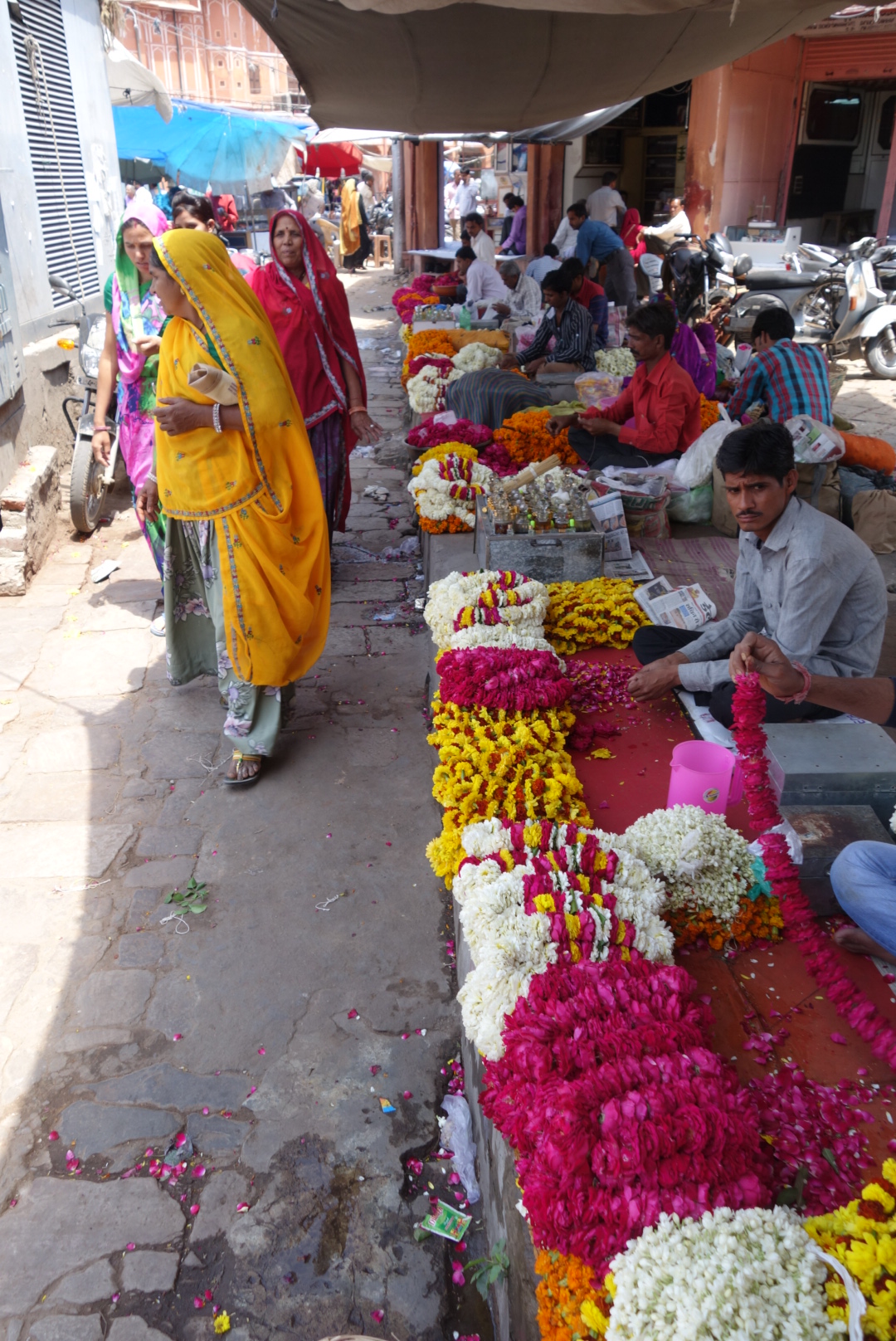
Ramdev dropped us off back in the town centre and we wandered markets full of flowers and garlands, the silver bazaar, where farmers in white turbans, smoked hashish and bought silver bracelets to clamp on the wife’s arm, their form of banking. Groups of women sitting on the floor round guys weaving intricate braids with their toes. Sari shops bursting with colourful saris, and bursting with women bursting out of their colourful saris, so kaleidoscopically bright it hurts your eyes. We settled for beautiful, hand blocked cotton pareos, that were just ridiculously cheap. And every textile shop on every street had just the tablecloth you were looking for, except they didn’t. The pressure to come in and ” look, just looking, looking is costing nothing, look, how beautiful, you want? you not want? what you want? I have. please, just look, so cheap”. It gets really wearing and eventually there is nothing for it but to go back to the hotel and get a beer.

In the evening we were invited for drinks with Nikhil, the boss of TGS, at his Club and we discussed our trip and the state of India and the hopes for Modi. Nikhil is a really nice Gentleman and seemed genuinely pleased that we had had such a good time and that the organisation had been spot on. We expressed our thanks and praised Ramdev, who it would seem, is a bit of a local legend. We grabbed supper and crashed and steeled ourselves for the following day’s drive to Delhi.
13
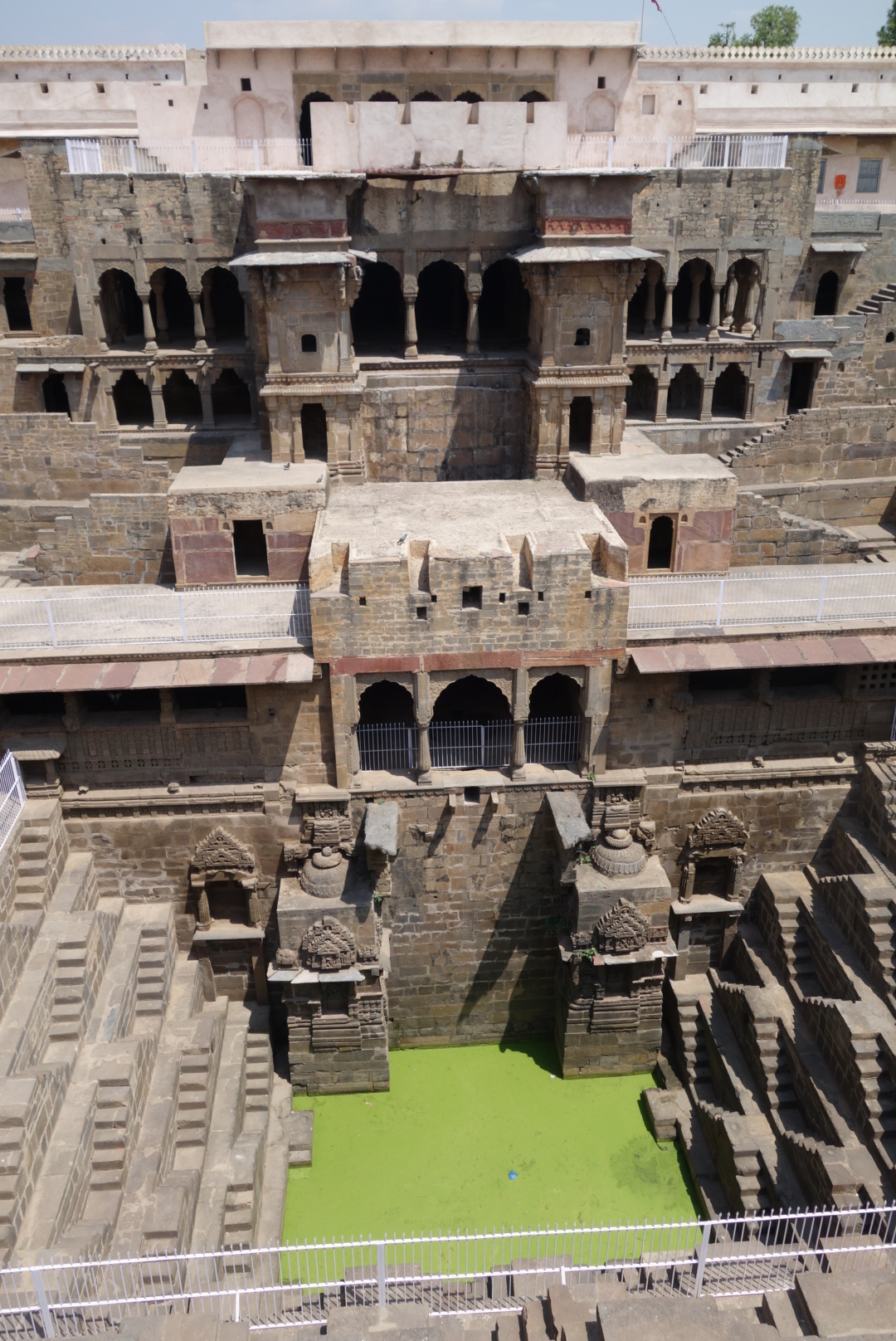
We had one detour on the way, to see the biggest stepped well in the region at Chand Baori. It is huge and it’s in a field, next to a small village in the middle of nowhere. Again you get to ask the question, “Why here?” and again the only answer seems to be, “Because we could”. It’s a pretty amazing Maurice Escher sort of construction and it’s a shame they had to put up protective railings and then paint them bright grey, when a matt black would have disappeared, but I’m not the Minister of Tourism (Still waiting to be historically garrotted).

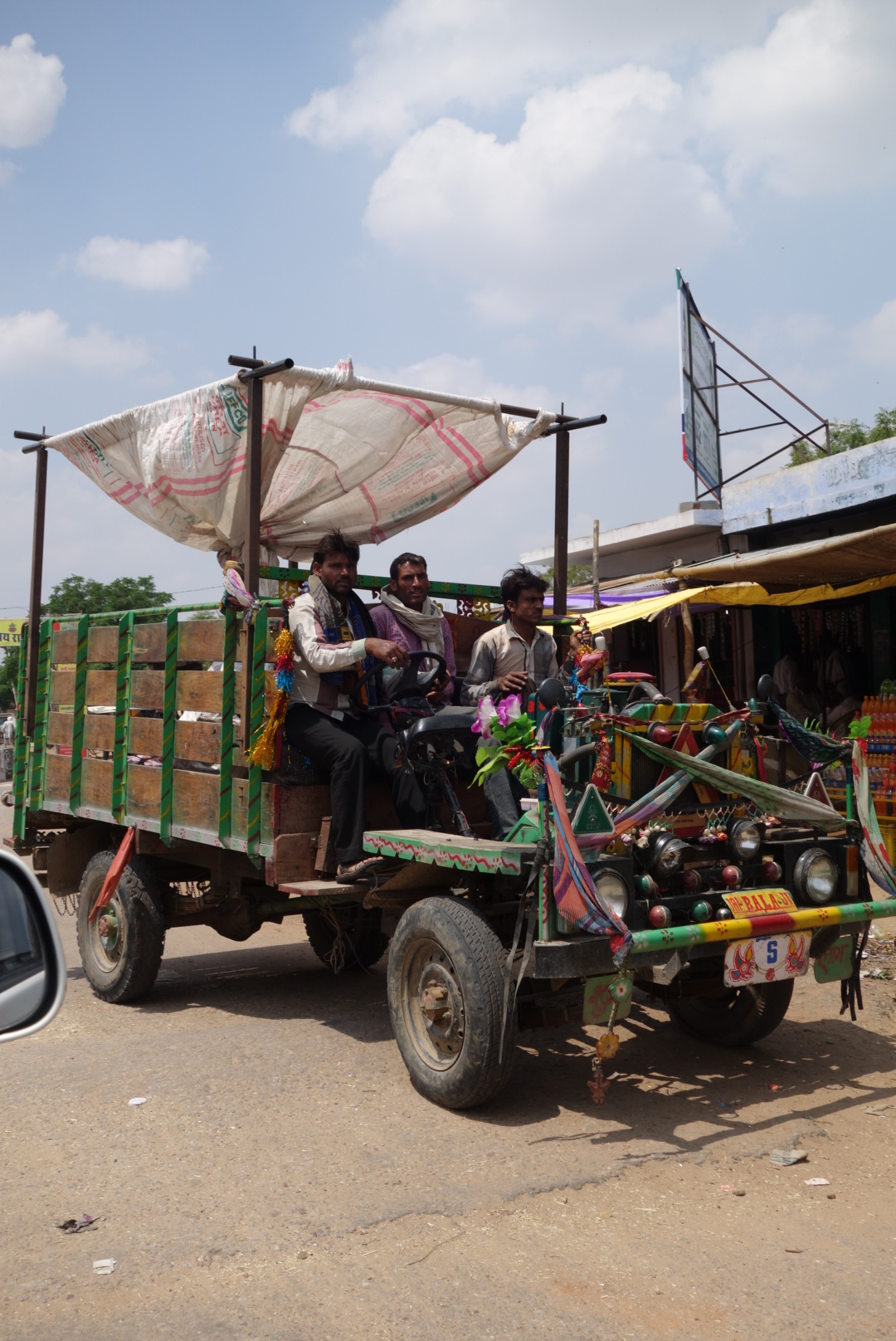
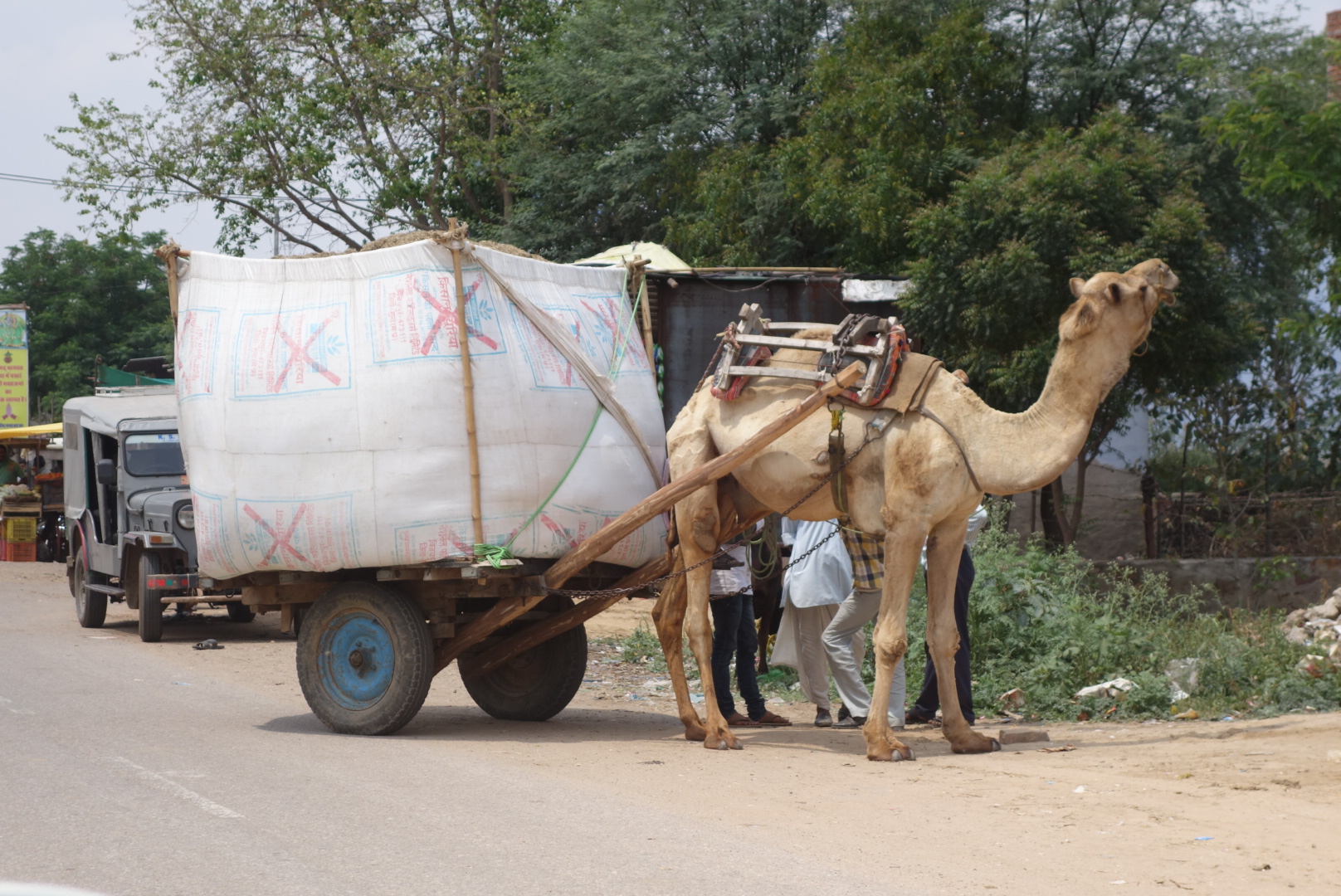
The main road from Jaipur to Delhi is in itself, a treatise on the state of India. A 6 lane highway with no barriers on either side, or down the middle, with no lane markings for very long stretches, it is therefore treated as a 6 lane highway on either side of the median, with traffic heading in whichever direction it so desires. Abruptly, it will cease. As a new crossing ramp/bridge is constructed (A deliberation which seems to take months, if not years) the entire traffic load is pushed up a dirt track jammed in against the comatose construction works and again, opposing traffic is the norm even in this congestion. The traffic speeds up as the road improves through a rural area and a woman with a burden of twigs 3 metres long, resting on her head and sagging, blinker like around eye level, wanders out into the maelstrom, pausing and stooping only to pick up an errant cow-pat and goad her accompanying goats. Perhaps this is why most Indian Saris are patterned as road safety jackets. The traffic slows marginally as it barges through a village or a small town. Schoolchildren on bicycles and foot join the merry throng, as do parents with 7 children and a goat on their scooter. Somebody is sweeping the road with a twig broom and someone else is selling oranges from a barrow he has situated behind an enormous pot-hole which forces you to slow and swerve. Which came first, the barrow or the pot-hole? Liberally sprinkle with cows, standing, sitting, sleeping or eating rubbish and accompany with the sound of a gazillion horns. This is the state of India.

Dazed and bewildered we arrived at the airport and said fond farewells to Ramdev. He done good. Lubbly Jubbly. We enter the sparkling World of modern India, an international hub which marvels at its own sense of self worth. It advertises its vanity on 10 metre high banners, yet fails to comprehend why an International traveller in an International airport would require use of the Internet. This is the state of India.
Be it ever so humble, there is no place like Hong Kong. Although, despite the jibes, we do love India and the Indian people. Thank you for letting us share.
 Travels, Opinions, Stories and Stuff