This years’ trip was Egypt and, when we told anyone where we were going the usual response was, “Are you sure? Is it safe? You’d better be careful!” It used to be that they were referring to the food and the toilets and the probability of a “Gyppy” tummy but, of late, it seems to refer to the possibility of Revolution or piratical Bedouin. It’s all probable, but not to any great degree, apart from the Gyppy tummy, which is an essential part of the experience. Scatology is a primary Science in Egypt and, unfortunately for you, Dear Reader, it forms a large part of this writing because, in ways both good and bad, Egypt is shit.
Day 1
We arrived at Cairo airport to be met by the Rep for Djed Travel who, by means unknown to most International Travellers, appeared to be able to move with ease through High Security Restricted areas on both sides of Immigration and Customs. In fact, it was only remarkable that he didn’t greet us on the plane before the Seat Belts sign went off. Egypt, we quickly learnt, is the home of Baksheesh and who you need to know. We were quickly spirited off to our Hotel, The Mena House, which practically sits in the lap of the Sphinx.

The Pyramids of Giza do, in fact, look over your shoulder. Unfortunately, to get there involves circumnavigating the Cairo ringroad and this gives the arriving visitor the opportunity to formulate a quick impression. It’s a shit-hole and any further refinement of the assessment is completely unnecessary.
The Mena House is an oasis of almost class, a tad faded but very popular with wealthy locals who sit on the terrace and drink juice. We were straight into the local beer, Stella, probably not the best beer in the world, but just as likely to give you a hangover. It took us a while to discover Sakara Gold, which is actually pretty good.
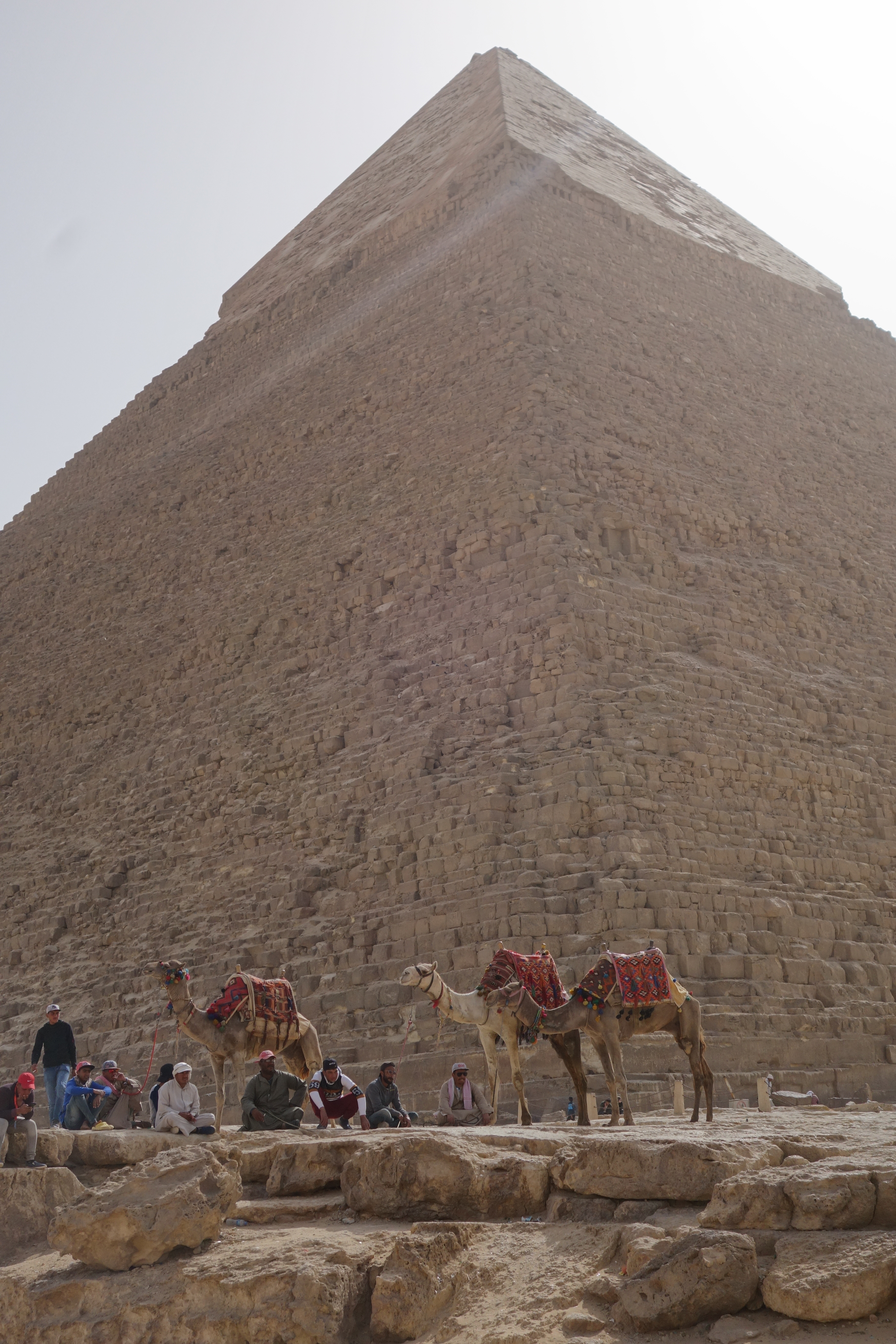
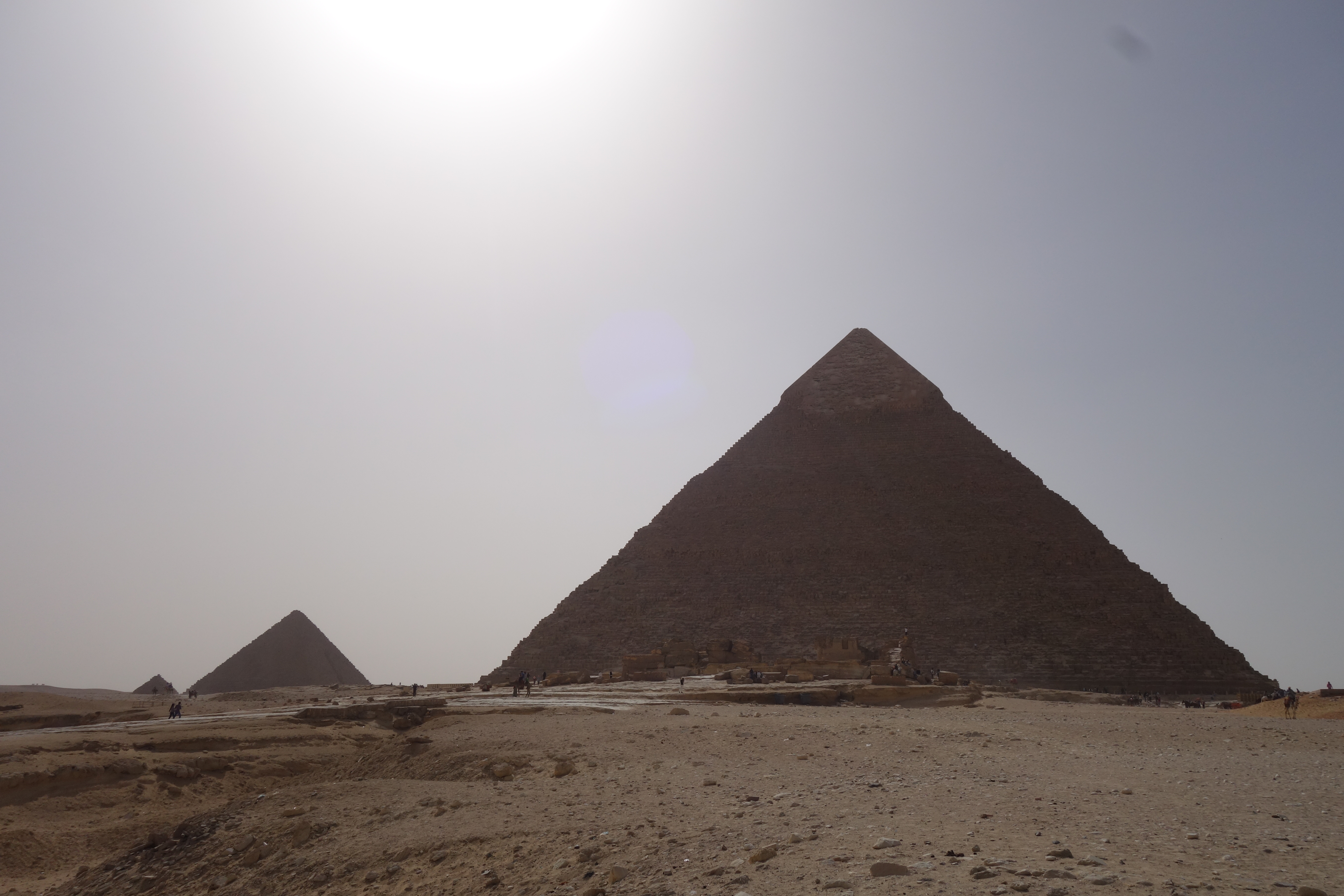
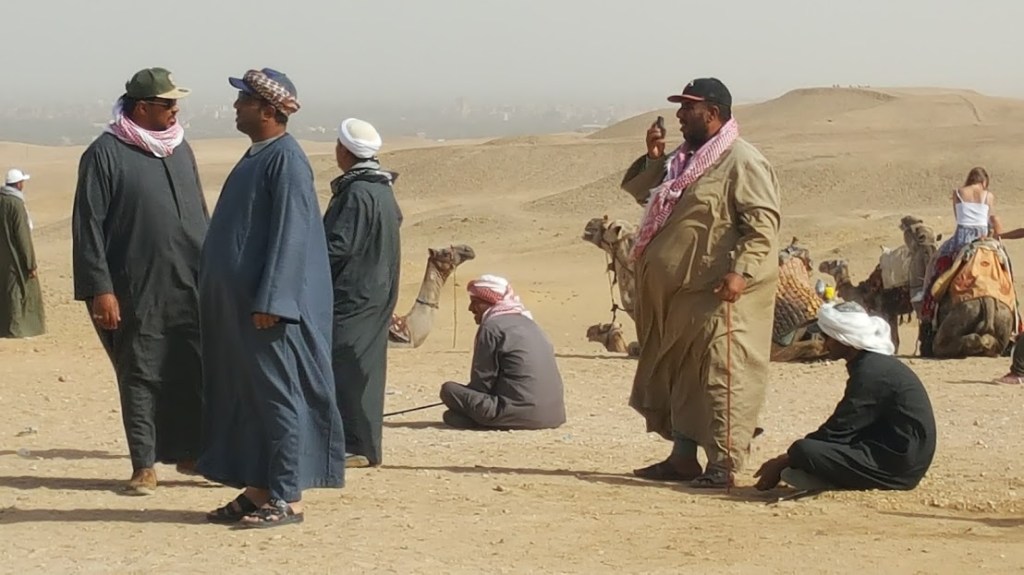
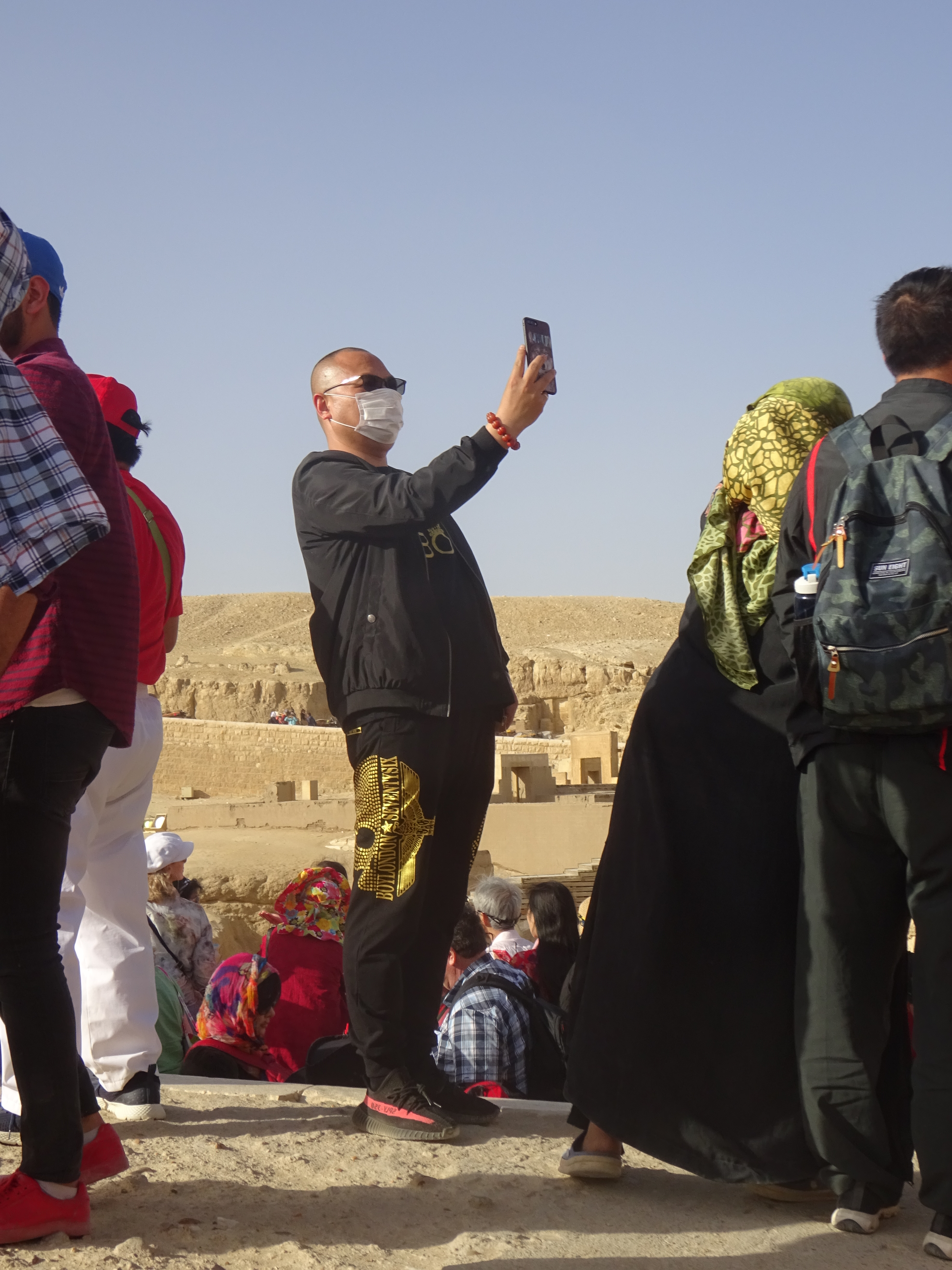
Suitably refreshed our Guide, Imam, had us straight off to the Pyramids to mingle with the Chinese and Koreans wielding selfie-sticks in the cradle of civilization. The Pyramids of Giza are still cool, rising majestically above the chaos of Cairo, but boy are they mucky. Plastic bags soar like vultures in miniature whirlwinds of hot air, the ground is almost concrete; 2 parts broken rock: 3 parts sand: 5 parts camel poop. The inside of the Great Pyramid of Cheops is massively forgetful, the Government limits the number of paid tickets but, thanks to the wonders of baksheesh, this is completely ignored and it’s a bit galling, having paid full whack, to be surrounded by whining four year olds who are convinced that their parents have brought them to hell. Our Guide tells us that the Egyptian People are very proud of their Cultural Heritage, but all I see is people ripping it off.
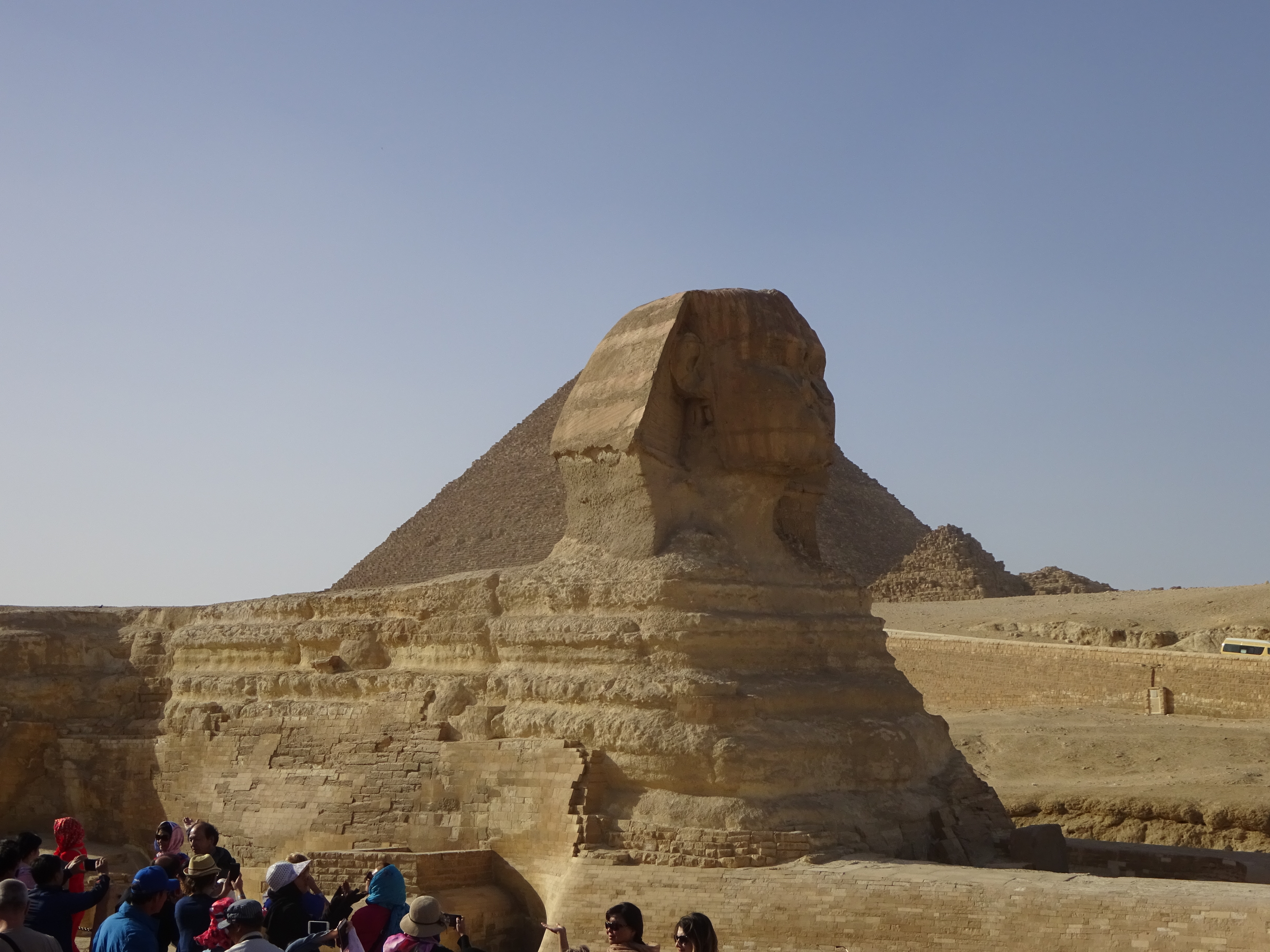
Probably the biggest disappointment is the poor old Sphinx. Badly battered, sitting in a hole in the ground and surrounded by the screaming hordes, it looks like a bewildered wild beast, imprisoned in a Chinese Zoo. We head back to the hotel and a hot shower.
Day 2
We drive out into the country and, immediately, the hordes are left behind. There are Date Palms and fields of wheat. Donkey carts piled high with alfalafa, turbaned drivers cracking whips. Camels plodding by loaded with palm fronds hanging from their backs looking like bizarre four-legged peacocks. The irrigation stops and the desert starts, the division line is brutal and so is the heat, once you leave the shade of the palms. It is stony and ugly, but the ruins of five huge Pyramids rise out of the sand, mostly ruined, but two are pretty impressive. Built by King Snefru, originator of the word “Snafu” (I believe), the first is known as the “Bent” Pyramid, not because of his inclination, evidently many of them were ‘switchers’, but because of the Pyramids’ inclination.
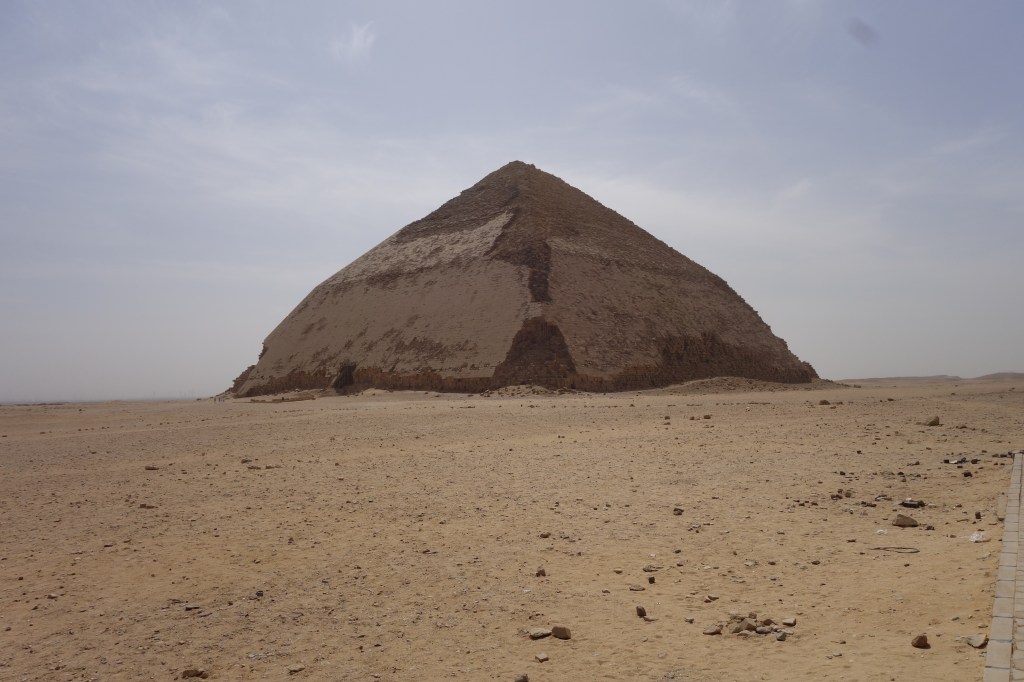
Half way up, the builders discovered that it was already falling down and so they had to change the incline hence, it’s bent, hence the phrase, “Bit of a Snefru”. His second go though, the “Red Pyramid”, was built nearby on a better foundation and was the first classic Pyramid and it’s a cracker. You can go inside and this time, without the hordes, it’s a very impressive experience. You have to descend backwards down a steeply sloping shaft, deep into the heart of the pyramid. The burial chamber is very simple, just plain stones stepped in an ‘A’ and you can feel the massive structure above. In the inner chamber it’s quite difficult to breathe, centuries of wee reacting with limestone leaves a fug of ammonia that never ventilates and before long your eyes are stinging as you lurch towards the entrance shaft and the climb back to the air.
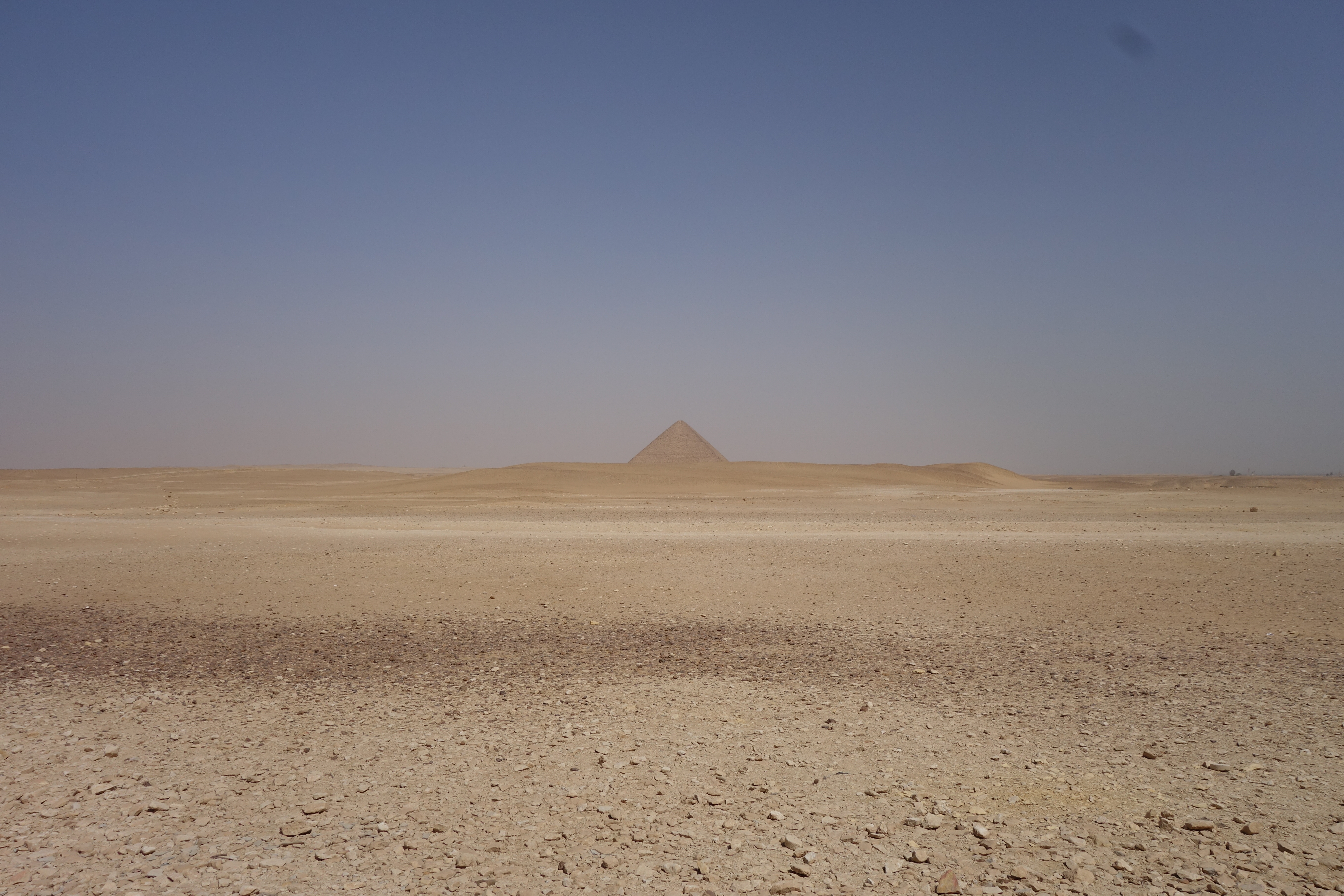

We walk out into the desert to give the structures some scale and, very quickly, you realize how tiny and insignificant you are. This is big stuff. We wander close to a location where a dig is currently underway and are quickly moved on by ‘security’ guards. Nobody wants the general public to witness a discovery that might be crated up and sold to some Russian oligarch next week. Not lost to mankind, just lost to civilization. The Black Market in Egypt is huge.
We drive on to Saqqara and the Stepped Pyramid of Djoser. This is older than the other two and was a step in the development of the classic shape, as such, it is a lot like the stepped pyramids of South America. Spooky eh? Imam shows us some tombs adjacent to the Pyramid and we get our first experience of Heiroglyphics. What immediately impresses is the quality and complexity of the carving and the content and that, now the codes have been cracked, it’s a relatively straightforward read, if you have a Master’s Degree in graffiti. The individual images are very beautiful and combined with the Life scenes depicted in the murals, it gives an incredible insight into Pharoanic living.
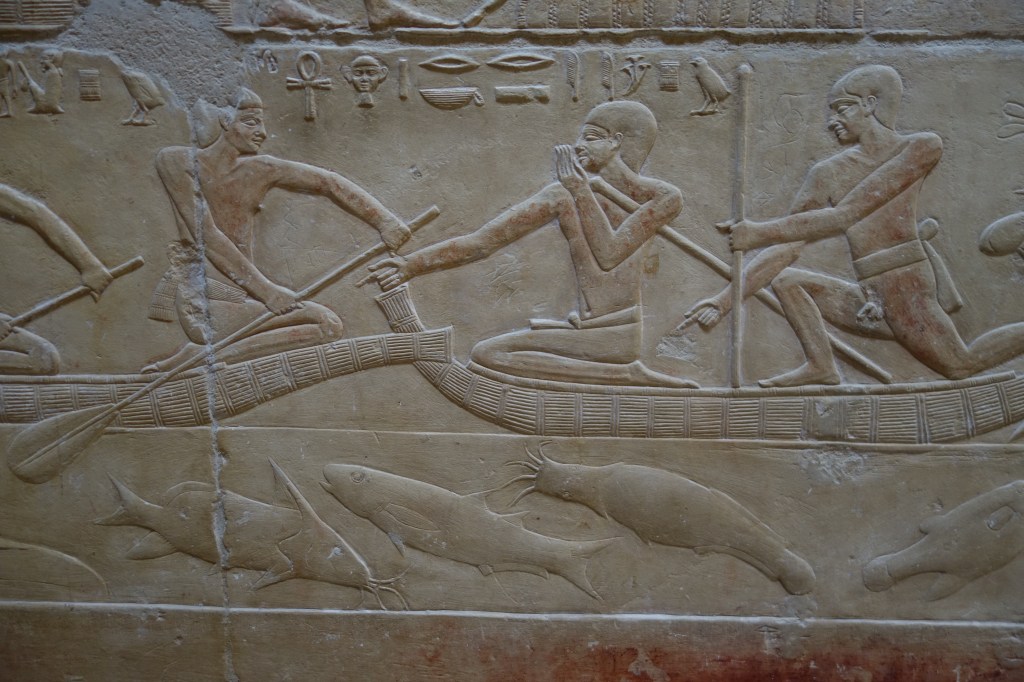
We even saw one carving of some blokes on a fishing trip and one guy is crouched down, pulling in the net and his mate is pointing up his kilt and trying to stifle a laugh. This is the World’s first dick joke! And, unfortunately for the pointing guy, the bloke behind him is pointing at his arse and saying, “He can laugh now, but I’m having some of that tonight, or my name’s not Hatshopshut III !” Honest. It’s worse than a Balham Public Toilet. It takes a while to work out the hieroglyphs but I’m pretty sure I got it right.
Day 3
Into the bus for the long drive to the other side of the Suez Canal and across the Sinai desert. For reasons that I can’t quite understand, the Egyptians are inordinately proud of the Sinai. They invaded Israel and the Yids gave them a good slapping and then occupied Sinai. Some years later the Egyptians had another crack and the Yids gave Sinai back, thus creating much nationalistic rejoicing. My own suspicions are that, having occupied it, the Bin lids had a look around and went, “WTF?!!!” Sinai is a shithole and a very big one at that. Nobody in their right mind would want to occupy it. It ranks up there as one of Mother Nature’s great mistakes. When Moses crossed it with the fleeing Israelites, the whole way he was thinking, “When we get out of this bitch, whatever we find, burning bushes even, these guys will be kissing my feet already.” And, in Biblical times, they didn’t even have plastic, or construction waste, or 50 other kinds of shit. I looked up the etymology of ‘Desert’ and evidently it’s from the Ancient Phoenician word “dee-she-ert”, meaning, ‘Place where shit is dumped’. The Egyptians have mastered the art.
At the entrance to Sinai, in a fly blown transport café that serves a side order of dirt with everything, they are selling ponchos made of knitted nylon and coloured in vibrant shades of Orange and Turquoise and Lemon, decorated with pixilated camels in Black, this is the classiest thing we are going to see in the souvenir line.
Crossing Sinai is still considered a bit of a risk, the border with Palestine is ‘relatively’ close and the Gaza geezers occasionally cause a bit of bovver. Plus the local Bedouin sometimes get a bit iffy about the tourist dollar flowing into the land and straight into Government hands of which they see nothing. They have been known to indulge in the odd bit of kidnapping for ransom so, at the many security checkpoints, we have to wait, sometimes up to an hour or more, for an armed escort to cover us to the next stage. Usually they escort us as far as the first bend out of sight of the checkpoint and wave us on as they hunker down for another kip. Although, a couple of weeks later, we hear about some jolly tourist chaps who, having been left by their escort, decided to do a bit of 4 wheeling in their jeep, off-road and deep into the desert. They were machine gun strafed by a military helicopter and none of them made it out, a case of the wrong place at the wrong time.
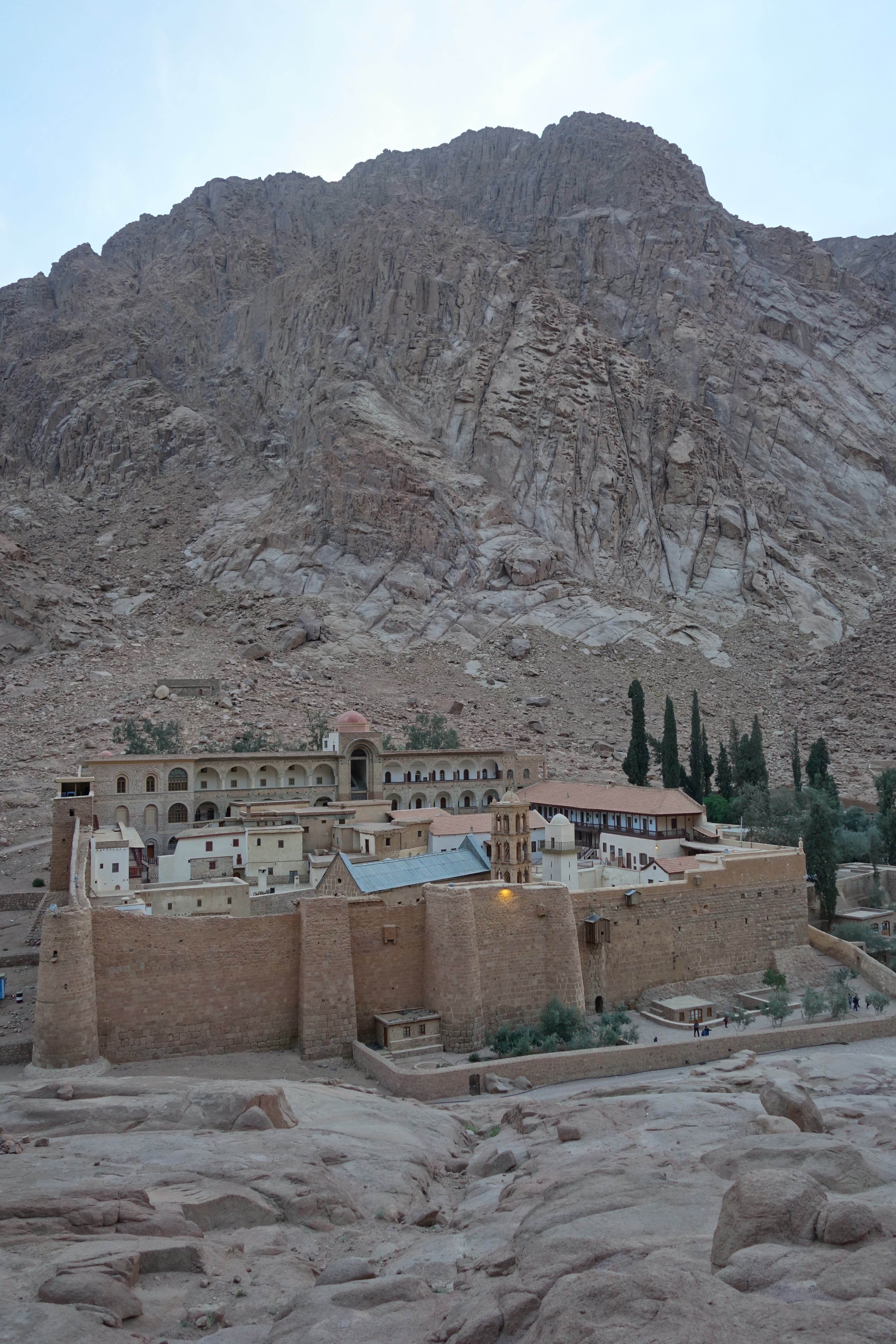
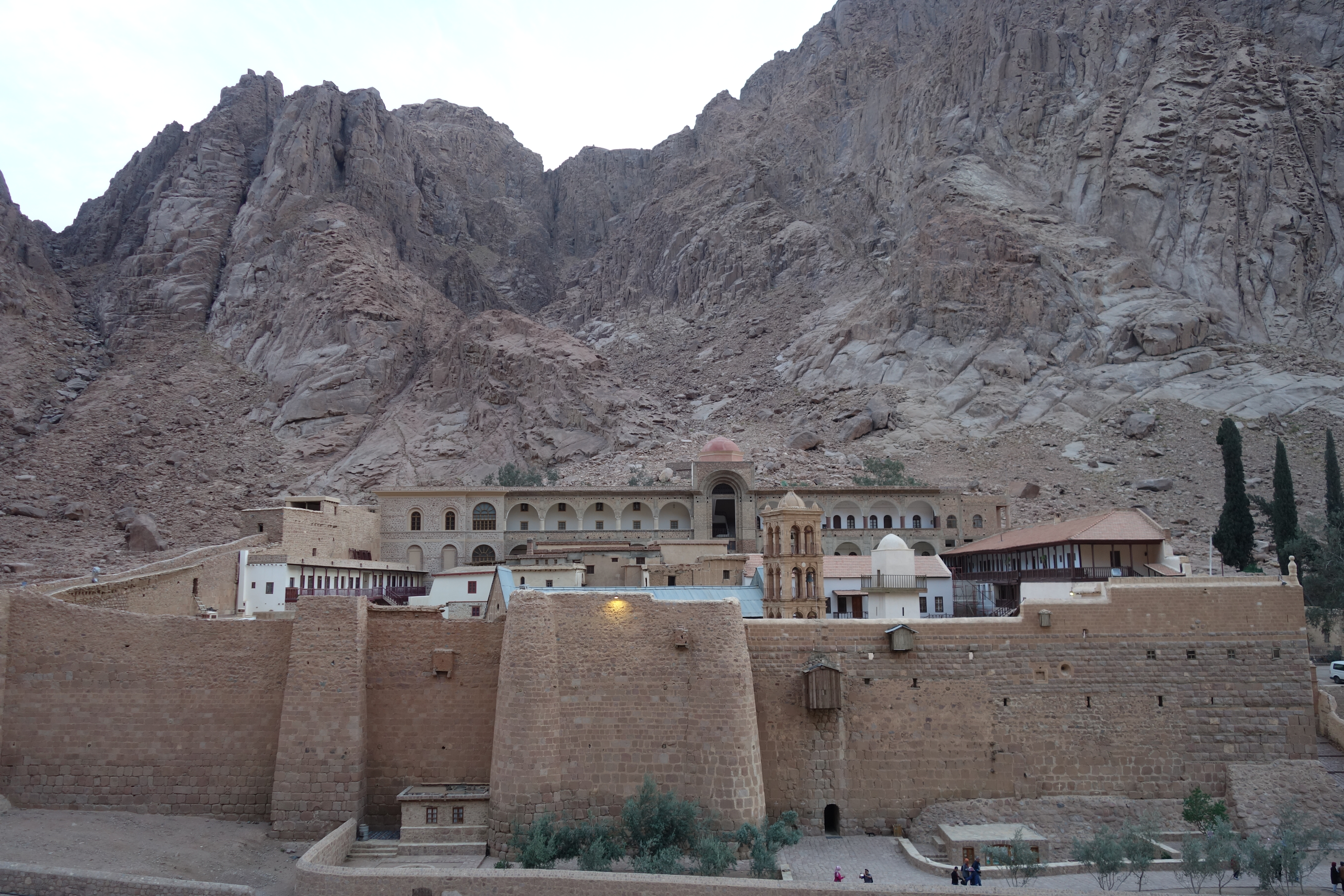
A hard day’s driving brings us to the foot of Mt. Sinai and St. Catherine’s monastery, a Greek orthodox fortress/monastery deep in a chasm of rock. One of the oldest monasteries in the World, it started as a chapel in AD 337 built around the site of the Burning Bush. The BB is still there, (Yeah right) and this is a major pilgrimage site. We are staying in the monastery guest house, which is, ehrmmm, basic? But, after the pleasures of Sinai, it’s an oasis of luxury, hot water and good simple food.

Day 4
Being the Grim Pills that we are, we rise at 2.00a.m. and are introduced to our Bedouin guide, Jamile, who is going to take us to the top of the mountain. We set off on foot while all the real pilgrims are mounting camels for the 3 hour trek to 2,286m. The night is pitch black and cool and the desert stars are breathtaking. Our lights startle a Desert Fox who stands transfixed for a moment before loping away over the rocks. We start to climb and soon encounter the first of many camel trains, some of them carrying hymn singers. The track is narrow and rocky with sheer drops in places, but we have to pass them otherwise it’s going to be a 3 hour climb with your face in a camel’s arse. Camels are not inclined to give way and we have to scramble, duck and weave to avoid getting pushed over the edge or stood upon.
Jamile sets a cracking pace, having gauged what we are capable of and seems quite pleased that we can keep up, but there are plenty of stops as rustic tea shops are scattered along the route, their primus lights hissing in pools of light and warmth, the cold brilliance of the stars above.
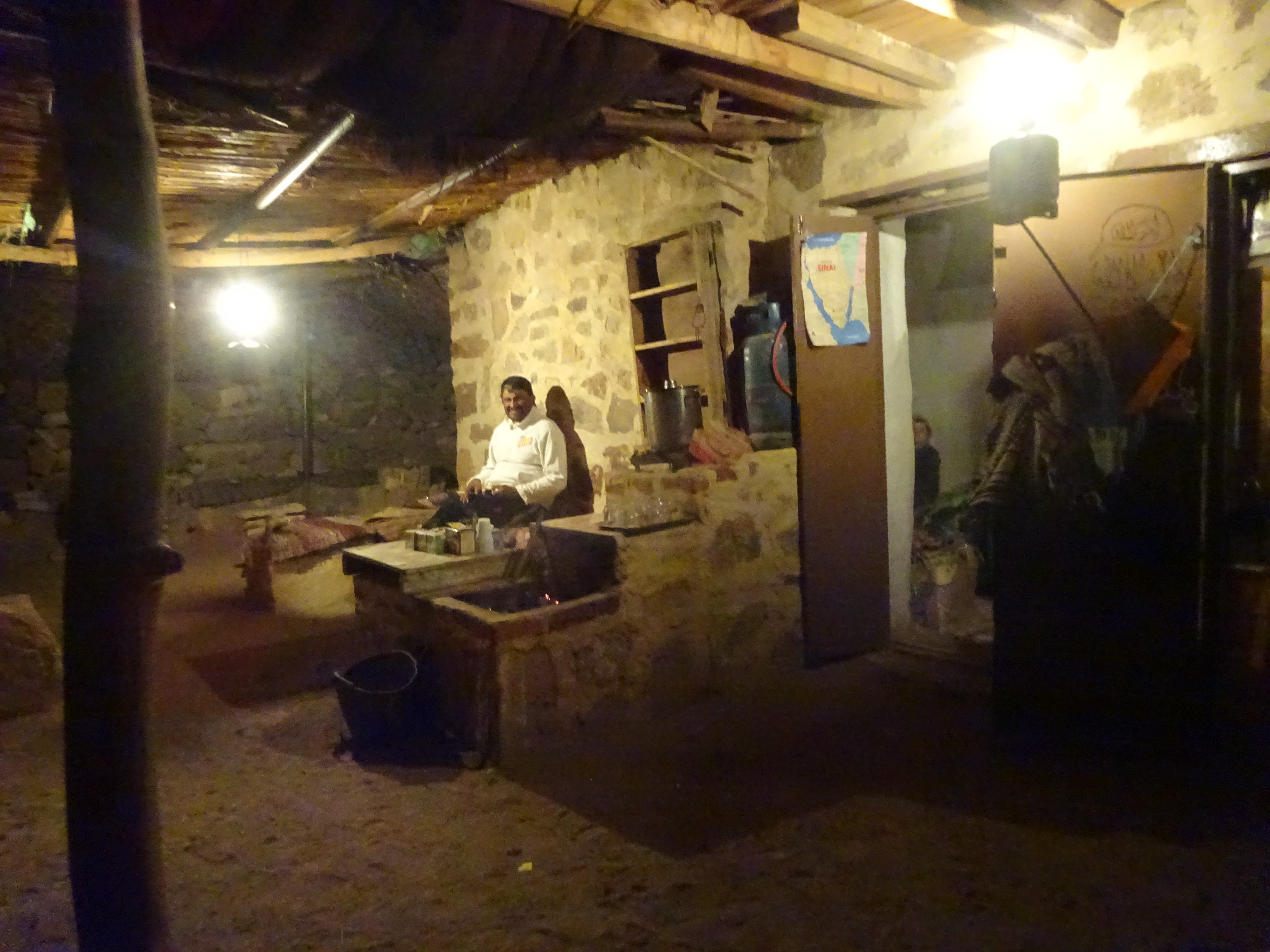
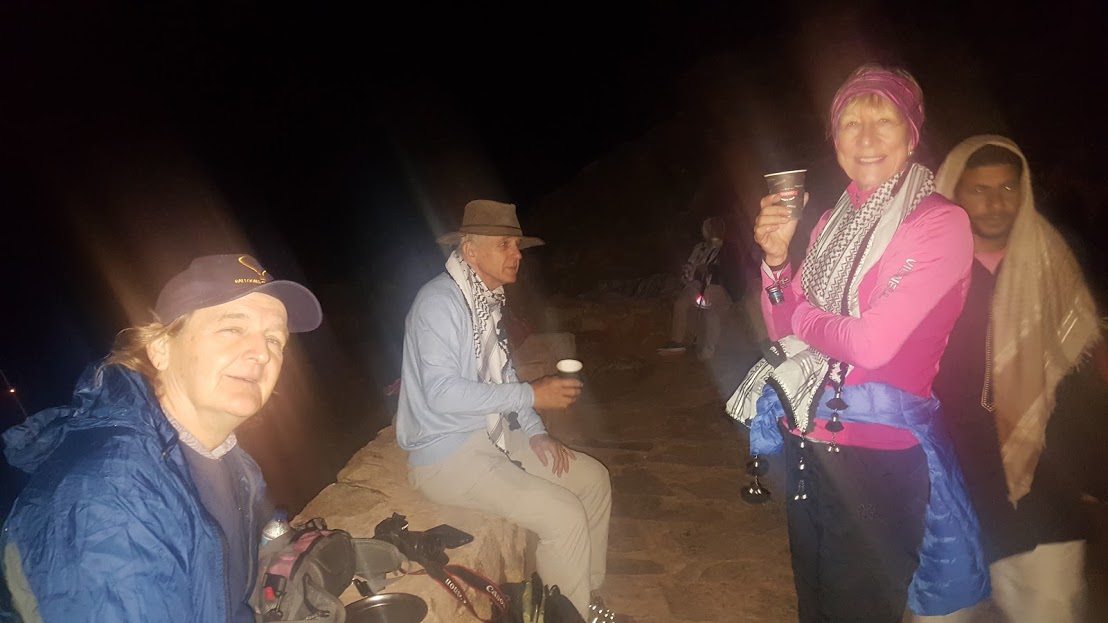
By 4.00 we have reached the camel halt, have a last cup of hot tea and rent blankets to carry on the final, heart thumping ascent up an almost vertical stair. By this time, my legs are all over the place and my balance is shot and I have to use my hands wherever possible. I think it’s just the blackness that is disorientating. At the summit is a tiny Chapel and an even tinier Mosque that sits on top of the cave where Moses fasted for 40 days and nights before God gave him the Commandments. But the punters are arriving, waving cameras and shouting with self-adulation and it doesn’t feel very holy.
We find a quiet spot on top of an abandoned building and wrap the blankets around us as the stars go out and the sun begins to rise. Just in time, a group of younger Egyptians clatter down upon our roof and commence to set up camp right in front of our view, whereon we spaketh to them in tongues of wrath and they did humbly shift out of our way. Sunrise? Okay, but been there, done that and so we set off back down the steep, non-camel route and that was spectacular.
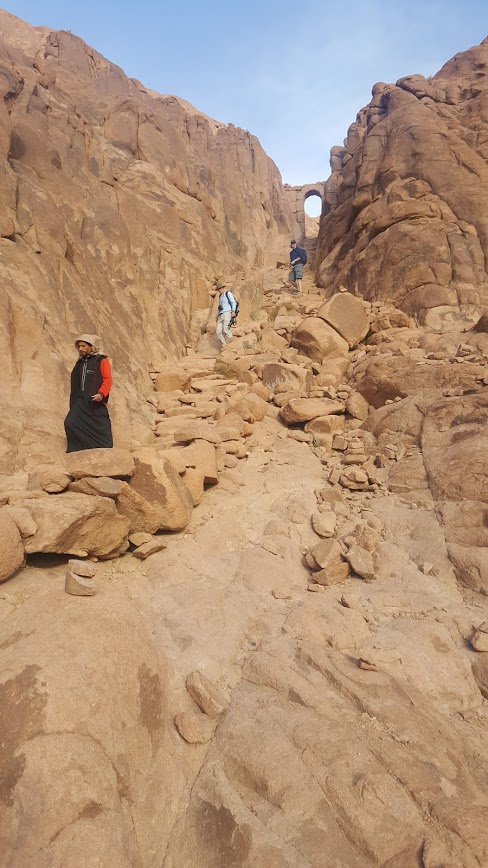

The path itself is a work of art, man-made but carefully crafted into the steep mountainside with tiny shuttered chapels dwarfed by gigantic cliffs and crags, much more impressive than the sunrise. We finally descend to the Monastery, knee and spine jarred, for a shower and a very welcome breakfast.
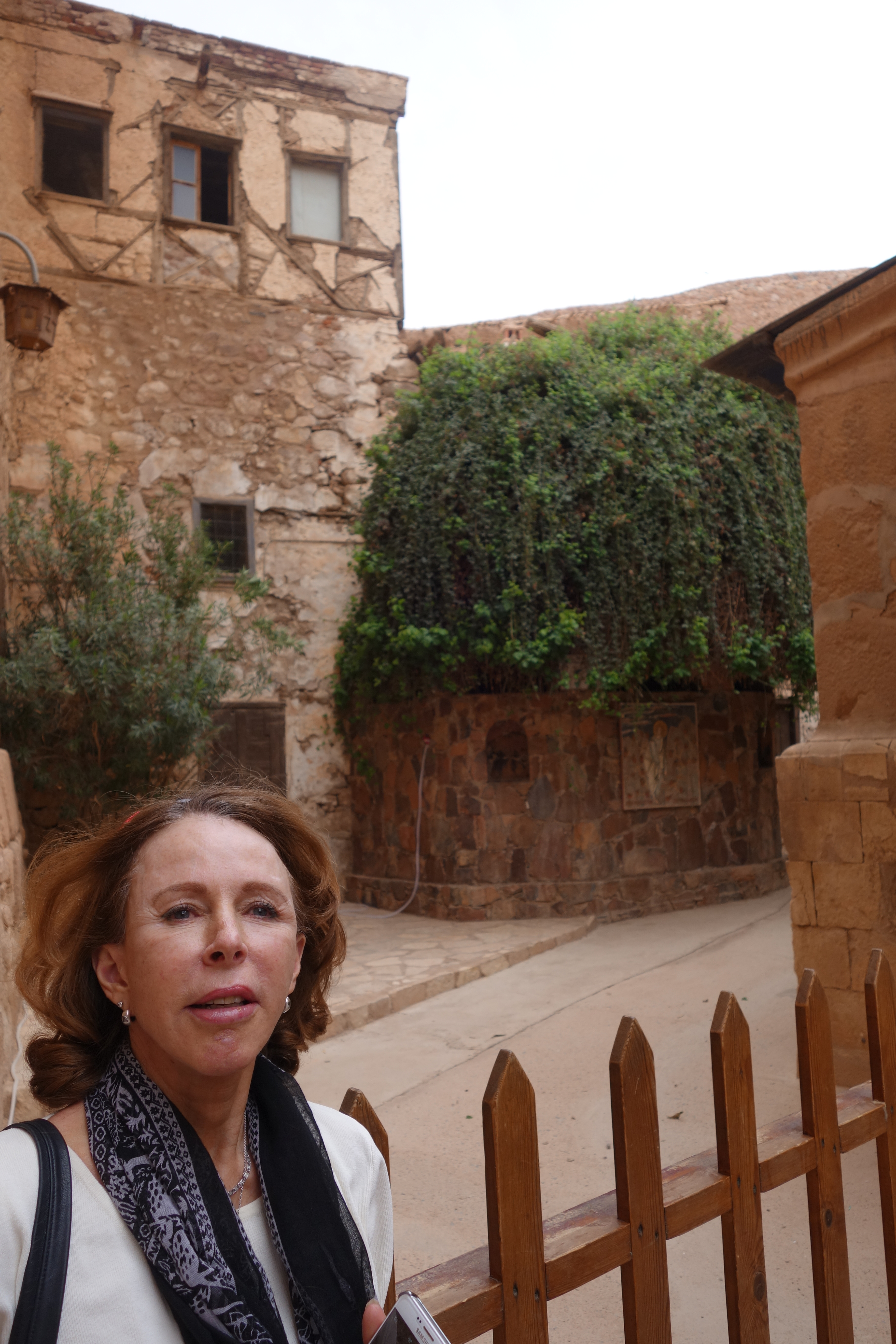
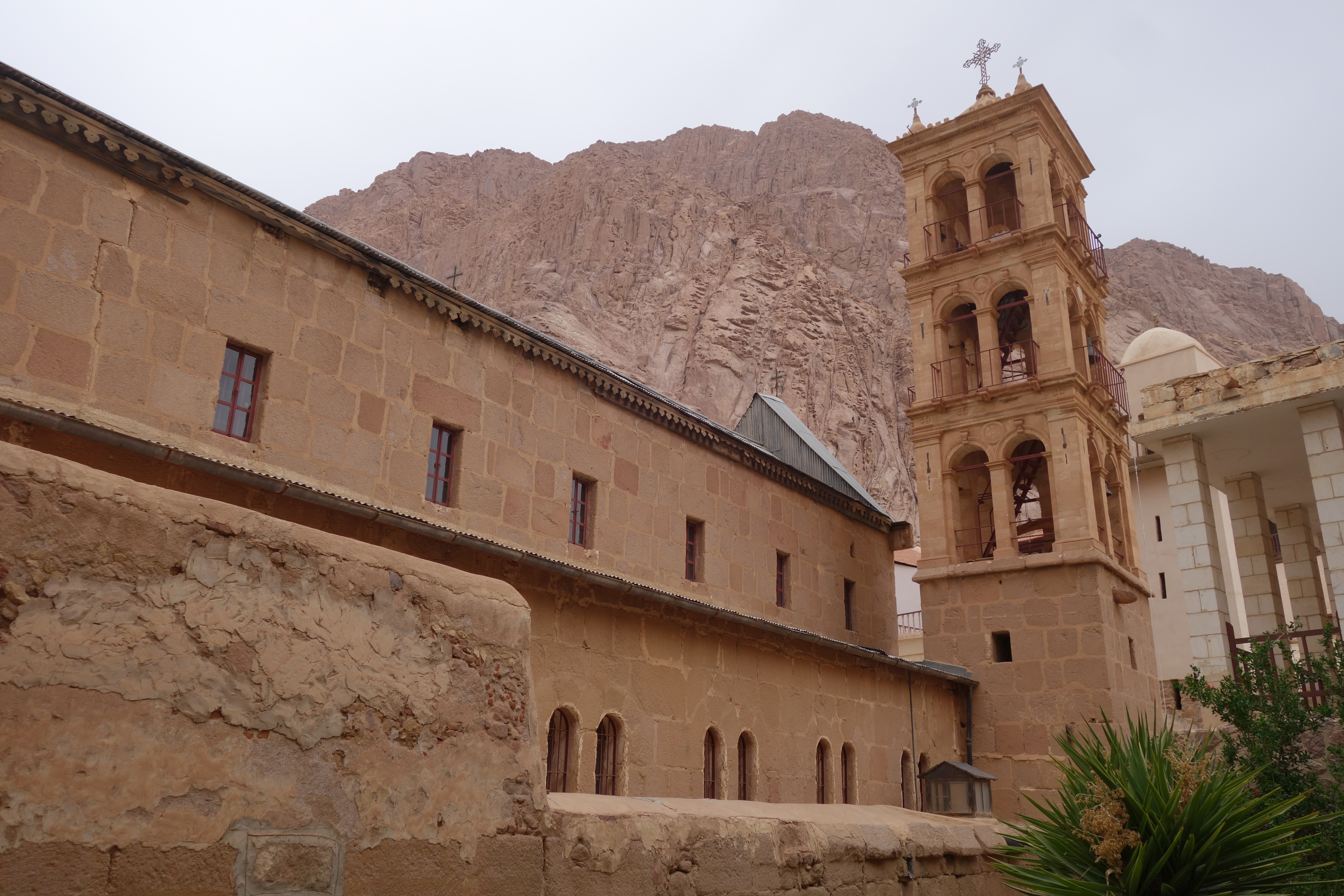
We visit the beautiful church inside the Monastery and the museum, which contains some glorious icons and incredible books and, of course the flame retardant 3,400 year old Burning Bush, honest, before finally climbing back into the bus for the schlep back across the stony/plastic wastes of Sinai with our hit and miss armoured escort.
Eventually, we cross back under the canal and into Suez. It seems that the Suez crisis never really finished, the whole area is in a state of permanent environmental crisis. Suez town is a shit-hole, where the spaces between the slums are filled with shit piled so high that it blocks the light to the ground floor. A huge Coptic Church is decorated with sandbagged gun emplacements. Young Moslem soldiers manning gattling guns, to protect the church from other Muslims. This is not a place I would be tempted to stroll around but, beyond Suez, lies Hell.
Suez is only the gateway. President Abdel Fattah el-Sisi has promised the People an economic miracle and, in order to achieve this, they are required to rape, pillage, plunder and despoil, every aspect of the environment. The Western bank of the Gulf of Suez is the victim. Whether innocent or not remains to be seen but, either way, it is one of the ugliest places on the face of the planet, a riot of destruction and pollution with vast petro-chemical complexes, steel mills, cement works and factories whose sole purpose seems to be the production of dust which they spew into the sky. Where the factories stop, the reckless holiday developments take over, they advertise greenery on rusting billboards behind which lie the decaying ruins of middle class dreams, abandoned and falling apart before they were ever finished. The yellow brown sky of Suez flattens out the sea and swallows the horizon. A lonely pod of Dolphins circle in the copper bronze of a toxic sea.
Night falls and finally we see a vast hotel complex dumped upon the barren coast of Ain Sokra, a temple of tacky neon backed by a humungous quarry. Our hotel sits on top of the quarry. The El Jabor Hotel looks like a Las Vegas mistake, but without the gambling and the alcohol necessary to soften the edges. It is a shit hole and, like many of its kindred shit holes, somewhat different to the brochure. But we are too exhausted to move.
“Can we get Dinner?
Of course effendi, the hotel bus will drive you back down the quarry to where your dinner awaits.
When?
In about 2 hours effendi, God willing.
Can we get a drink?
Certainly effendi, what kind of water would you like?
Beer?
Imsh Allah effendi, there is none of the Devil’s brew in all of Ain Sokra but, we can bring you a young boy for your pleasure. He is only a one-legged orphan so you may do with him as you will.”
I declined the young boy and we negotiated an earlier arrival for the bus, so it wasn’t all bad. The rooms were though, the place is only 3 years old but, the doors don’t fit, the balcony screen won’t open but I would be scared to stand on it anyway as the walls are majestically cracked. The bathroom is dark enough that you cannot see the muck and the paint everywhere is scuffed as if people walk on all surfaces, including the ceilings. The dirt in every corner is deep enough to plant Egyptian potatoes. Welcome to New Egypt.
Day 5
We escape from El Jabar before the guards come to check on us and head back into the desert until we reach the Coptic Monastery of St. Anthony. A rich man who forsook all worldly wealth and found a cave half way up a mountain at the foot of a vertiginous cliff with a spectacular view of nothing.

Just some rocks and a lot of rubble, but at least it was Mother Nature’s rubble, or God’s. Come on guys, whose making all this rubble? At the bottom of the mountain is a spring and some dates, palms not babes, he had forsaken babes. Everyday he would climb down for a drink and a date, then climb back up to talk to God, presumably about the rubble issue. This was AD 361, no facebook. Pretty soon people figured that he must be onto something, maybe they coveted his rubble, and they would turn up to hear him preach and eventually they used some of the rubble to build a monastery, but he was cool with that as he had a lot more rubble saved up. So they figured that a guy, willing to share all his worldly rubble, must be a Saint right? Saint Anthony. Tony to you bub. Howyadoin?
When we arrived at the gates the guards told our Guide that a monk was waiting for us up at the cave. It’s a pretty daunting climb, especially in the heat, but Dori saw an aerobic opportunity and off we went. Imam, our Guide, got as far as the first rest shelter from which you could see the entire climb and announced, “ I’m done! Good luck! I’m a Muslim and I’ll see you back at the bus. We’ll keep the air-con running so that it’s nice if you get back.” We persevered. It wasn’t too bad a climb and the tiny cave at the top contained a small shrine, but no Monk.
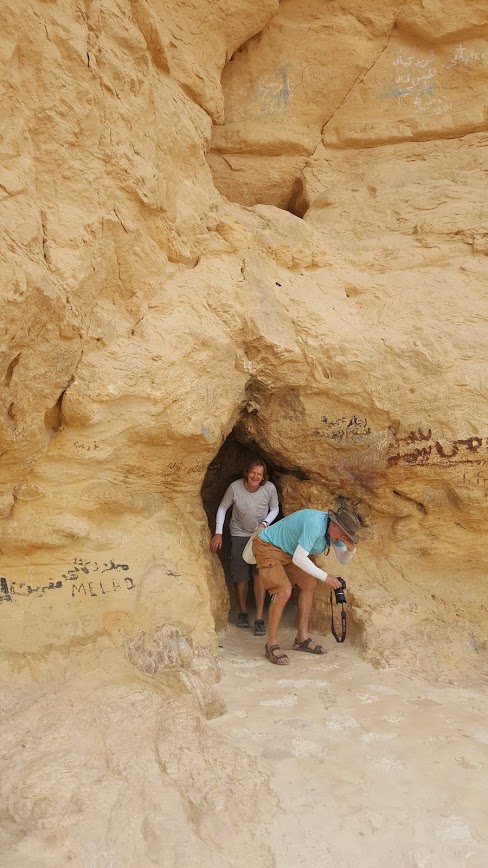

The scent of incense meant that someone had been and gone, it felt womb like and definitely had a holy vibe and you could imagine it being a cool den for 5 days or so, fifty years seemed a bit extreme maybe. But with no Monk, any hope of a quick chant and an esoteric discussion about the meaning of Life was off.
Having climbed back down to the Monastery, we were greeted by Brother Lucas. He looks young enough to be my son, he wobbles a bit because this is one of his 260 fasting days in the Year, he wears a long black robe and a little hooded cap tied under his chin and embroidered with white Coptic crosses on top. He used to be a dentist so, okay, I can understand how this might be a better life. He can only just manage a very scraggly beard and is in no way handsome but, he is one of the most beautiful people that I have ever met, a gentle man.
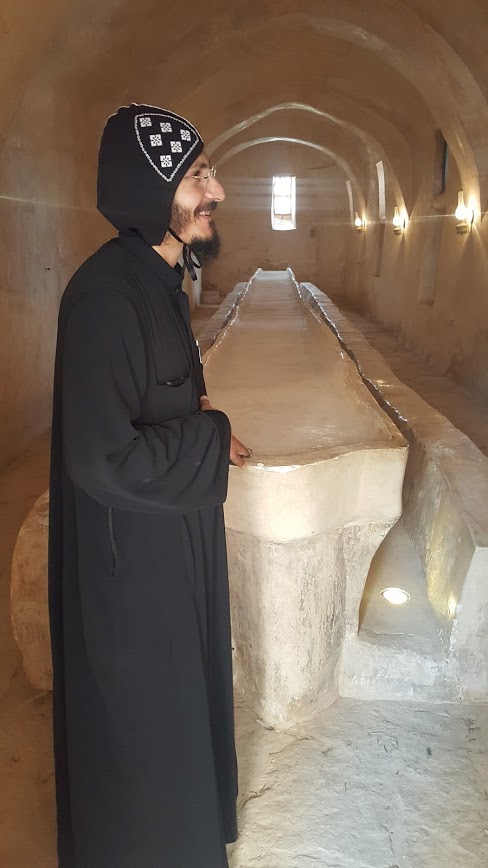
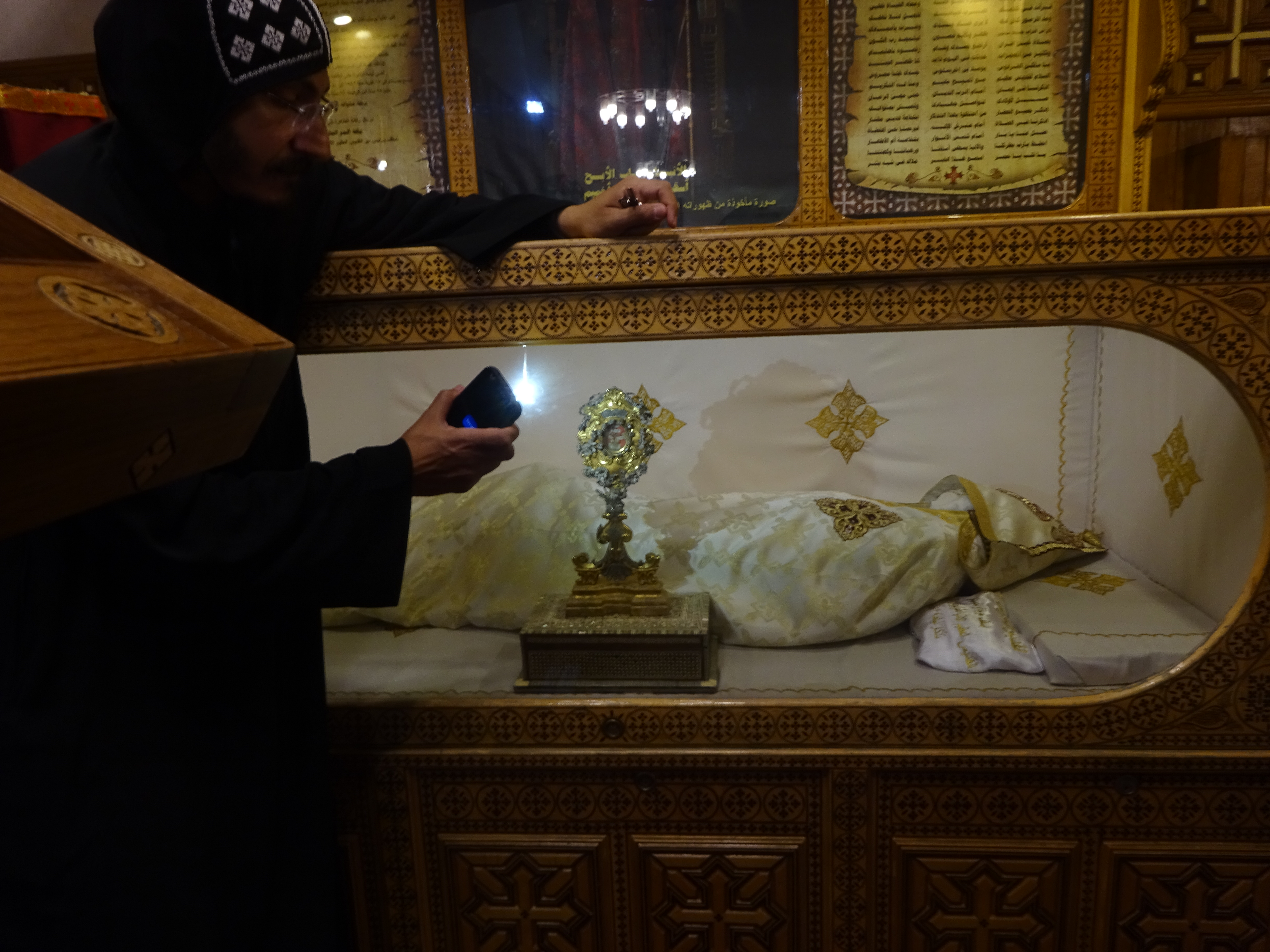
He shows us round most of the older parts of the Monastery, gives us some history, tells us about some miracles, that he really believes to be God’s work, anoints us with holy oil and breaks holy bread with us. Me? I’m very cynical about any form of church but, if they were all like this guy, I would be much less so. Go with God Brother Lucas.
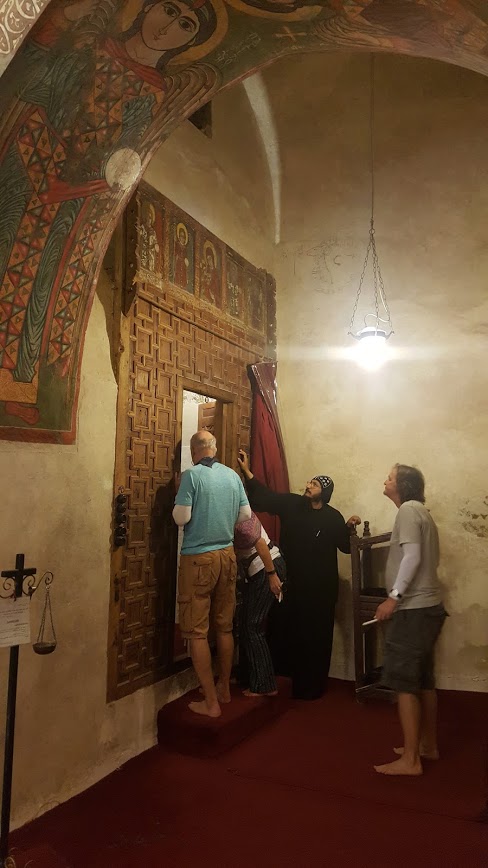
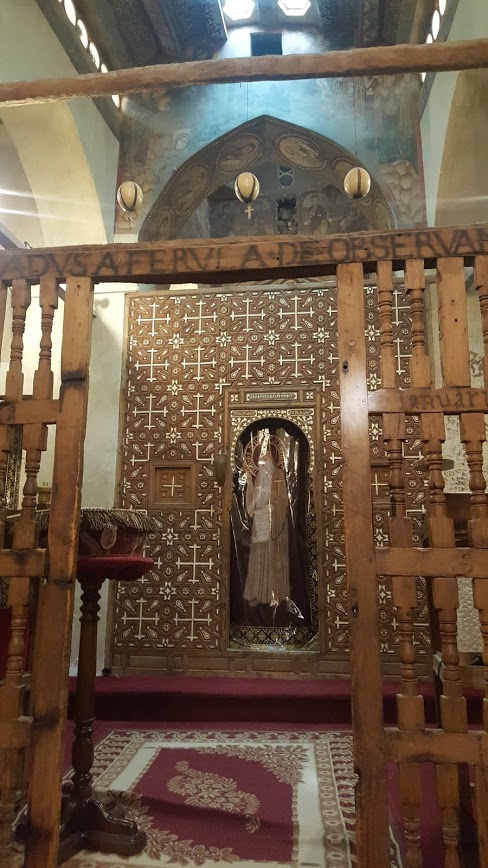
We cross more rubble to St. Paul’s Monastery, but these guys are Orthodox and not very friendly. Their guards get shitty about letting us in because it’s just before Easter and they’re worried about us frightening off the Bunny or eating their chocolate eggs or something, so they won’t let us in, bummer. What about a bit of Christian compassion for the wayfarers who have crossed all this rubble to pay a visit? That just prompts a bus search to make sure we haven’t filled it up with any of their rubble.
We start the long hard drive back to Cairo. The wind picks up and dust starts to fly. It rains! Hallelujah! It seems that our pilgrimage has brought succor to the desert, but the dust turns to mud and we can’t see out of the windscreen. By the time we reach the airport it’s night and blowing like stink. The place is in complete upheaval because flights are getting cancelled. We are allowed to check in for our flight to Luxor at 10.00pm but, one hour before that, Luxor airport shuts down, we are going nowhere.
Day 6
It would be unfair to blame an airline for the weather but, you can blame them for being a bunch of disorganised dicks. There are no announcements, just rumours, and by the time Egypt Air send in a sacrificial lamb, the tourists are ready to riot. It’s getting ugly, there are Krauts involved. You have not seen hissy until you have seen 6’4” of teutonic fairy with a blond perm, losing his/her shit at 2.00 in the morning. What he/she hoped to achieve is beyond comprehension and so we hunkered down for the night, clad in every item of clothing we can put on because the air-con is blasting. It’s also blowing in dust finer than baby talc.
After an eternity, dawn breaks and I manage to crack open the dust caking my eyes, I look and feel like a Mummy. It’s an Egyptian experience. Rigid in my bindings of cloth and totally dehydrated, some devotee has placed an offering of food by my head, but it’s stone cold and looks to be about 4,000 years old, so I pass. Instead we stumble to the coffee shop which is doing a banging trade, best night of the year imsh Allah. There is a gate change shown on the T.V. screens and the groaning zombies lurch across the airport but, it’s just a ruse to corral us somewhere quieter and easier to herd. They needn’t have bothered, the spirit of the mob is broken and we have been cowered into subjugation by dust and air-conditioning and bad sandwiches. The sky looks blue and peaceful, it’s taunting us. Finally, Luxor airport deigns to re-open, we have been stuck in Cairo terminal for 18 hours. The flight takes one hour but, just in case we thought they were shamming, the plane gets kicked all over the sky, big white cumulus are mushrooming all around us and between them is a sea of pale pink dust, the sort of dust that can strip an engine in 30 seconds. We land and applause breaks out.
In the terminal, it takes an age to get our bags and, when they arrive, they look like they have been towed behind the plane, clouds of dust erupt when we pick them up. The local boss of Djed meets us, Osama, 6’2” of Egyptian cool with a mobile phone surgically attached to his ear. He is so cool that it’s difficult to tell if he is awake. Having lost a day we opt to drive straight into Luxor and get on with it, so the bus drops us at Karnak Temple where we meet Summa, our next Guide. She is sweet, very knowledgeable and talks at 78rpm. There is a lot of information, a short time and there will be a test.
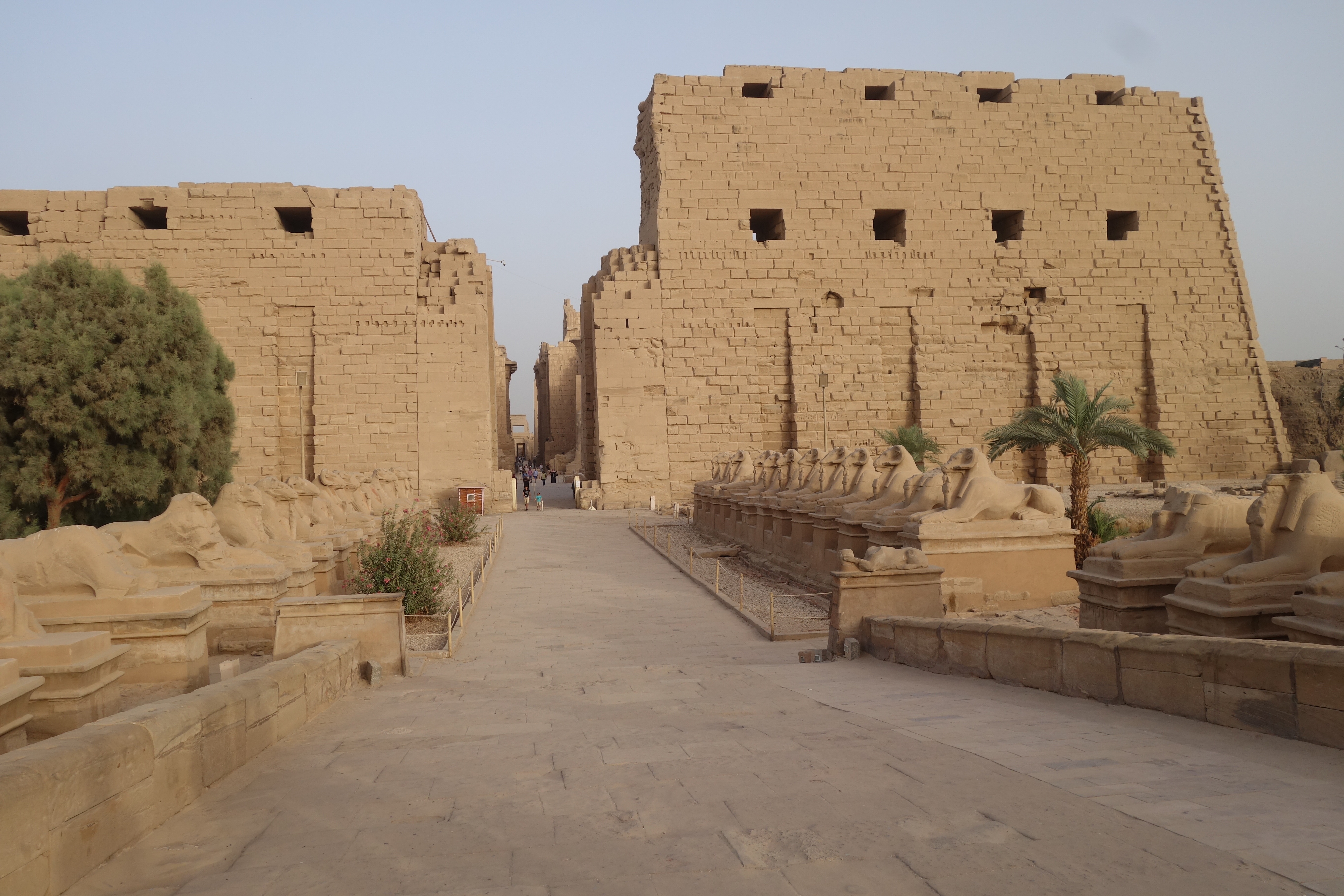
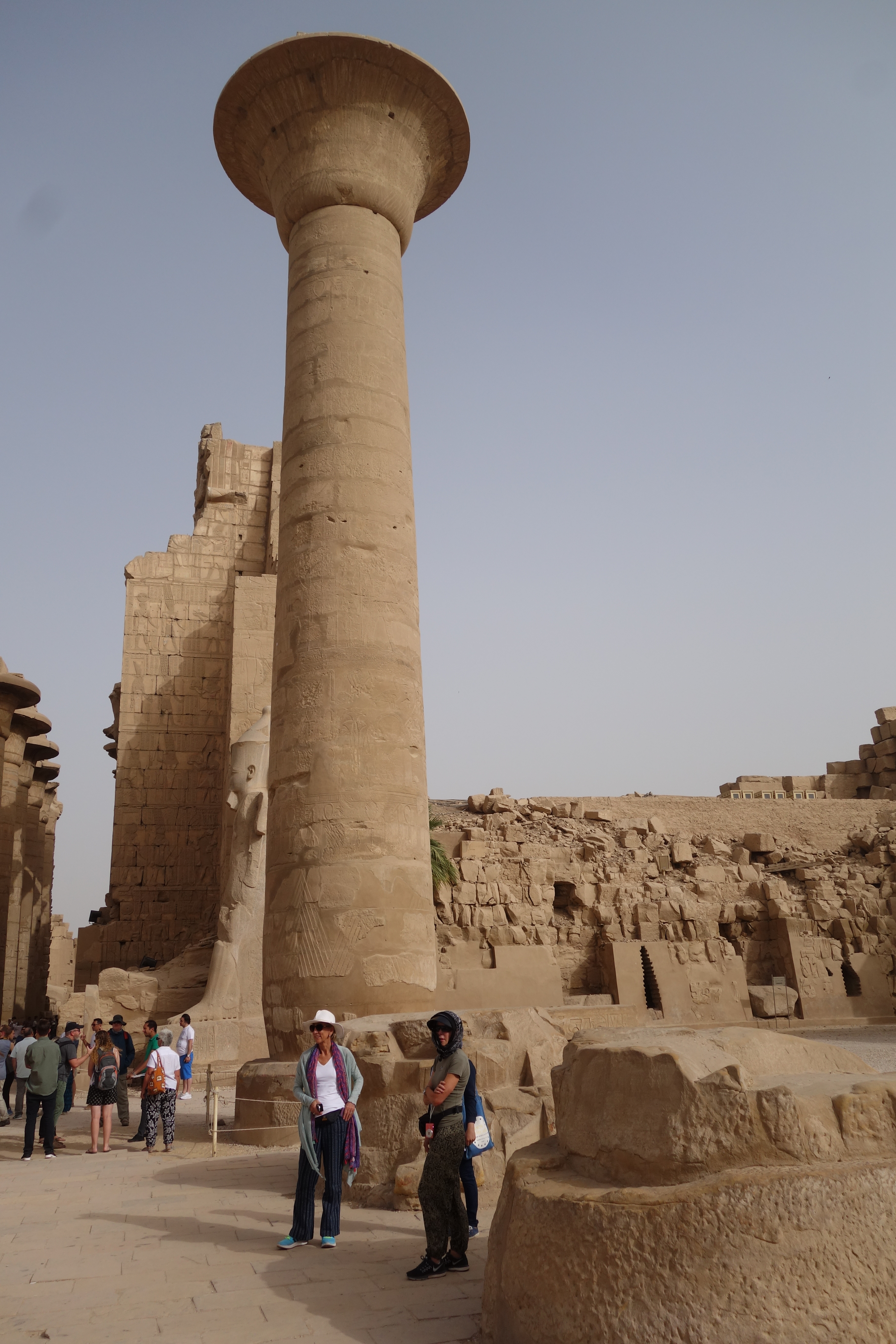
Karnak is hot, very hot, but really cool. A massive stack of sandstone blocks, gigantic columns, carvings on every available square inch and, in some protected places, very richly coloured, even after 4,000 years of equatorial sun. Sadly, it appears that almost every religious site of Pharaonic Egypt was, at a later period, occupied by early Christians. They were zealots and saw it as their religious duty to chisel off the face of every man, woman and god that they could reach, even erecting scaffold to do so. Hence the verb to “deface”. It is heartbreaking, there are thousands upon thousands of these images and what the desert could not do, the Christians did. Everywhere there are deep gouges in the stone where they sharpened their chisels to do God’s work. At least this is what our Muslim guides tell us, a religion that has banned the depiction of representative art since about 650AD and desecrated every Christian church that fell into its hands. Hmmmm. I wonder if we are getting the full story?
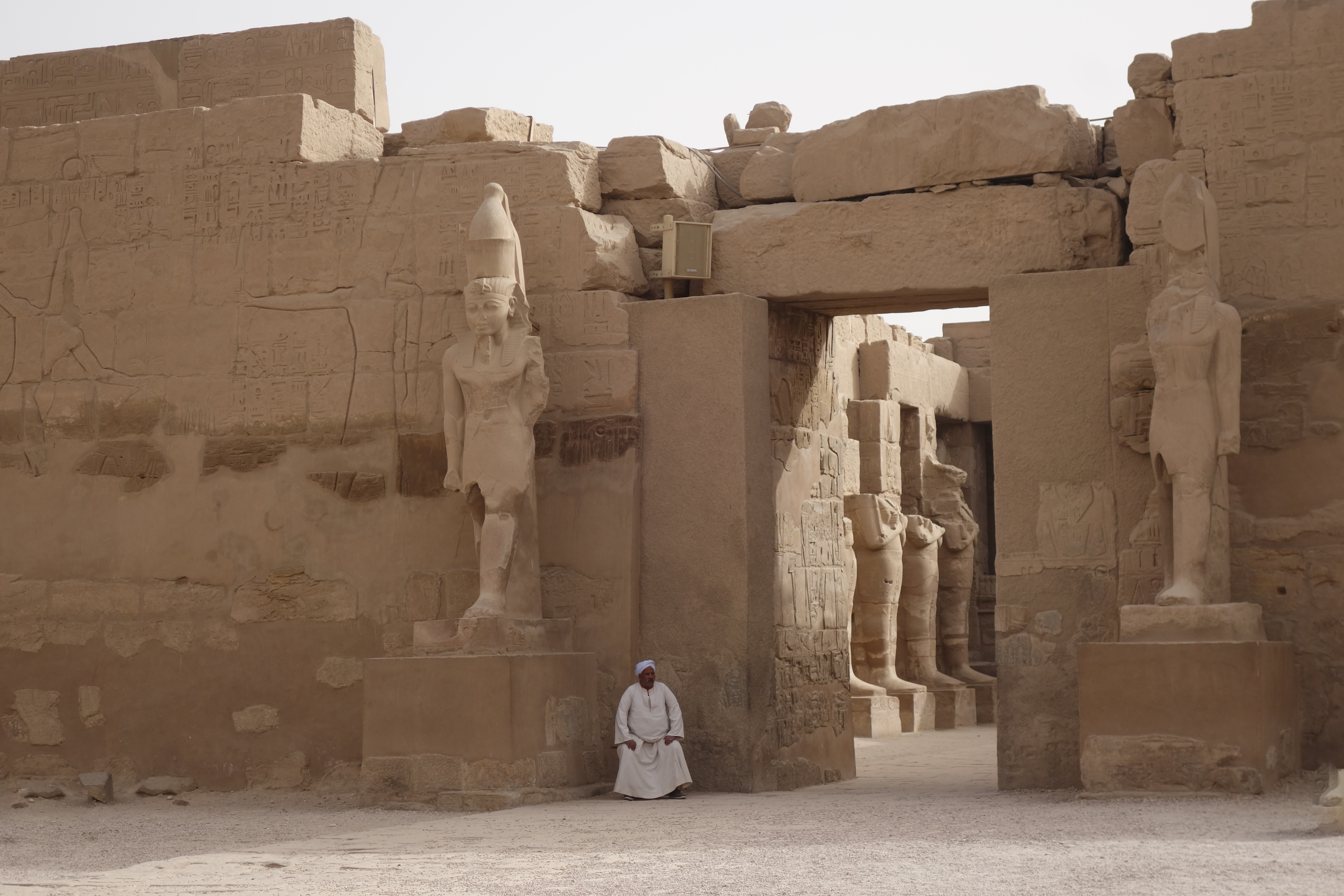
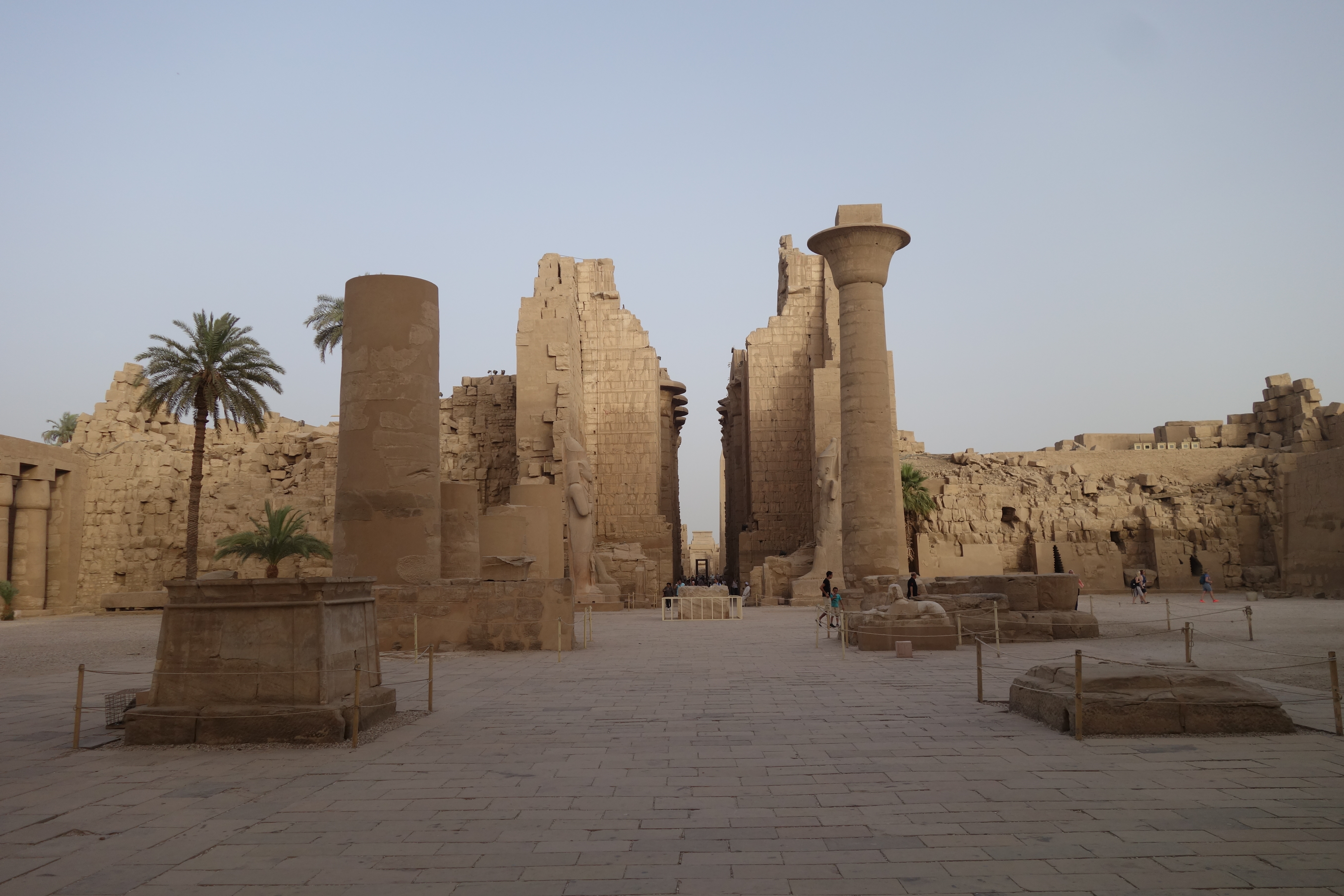
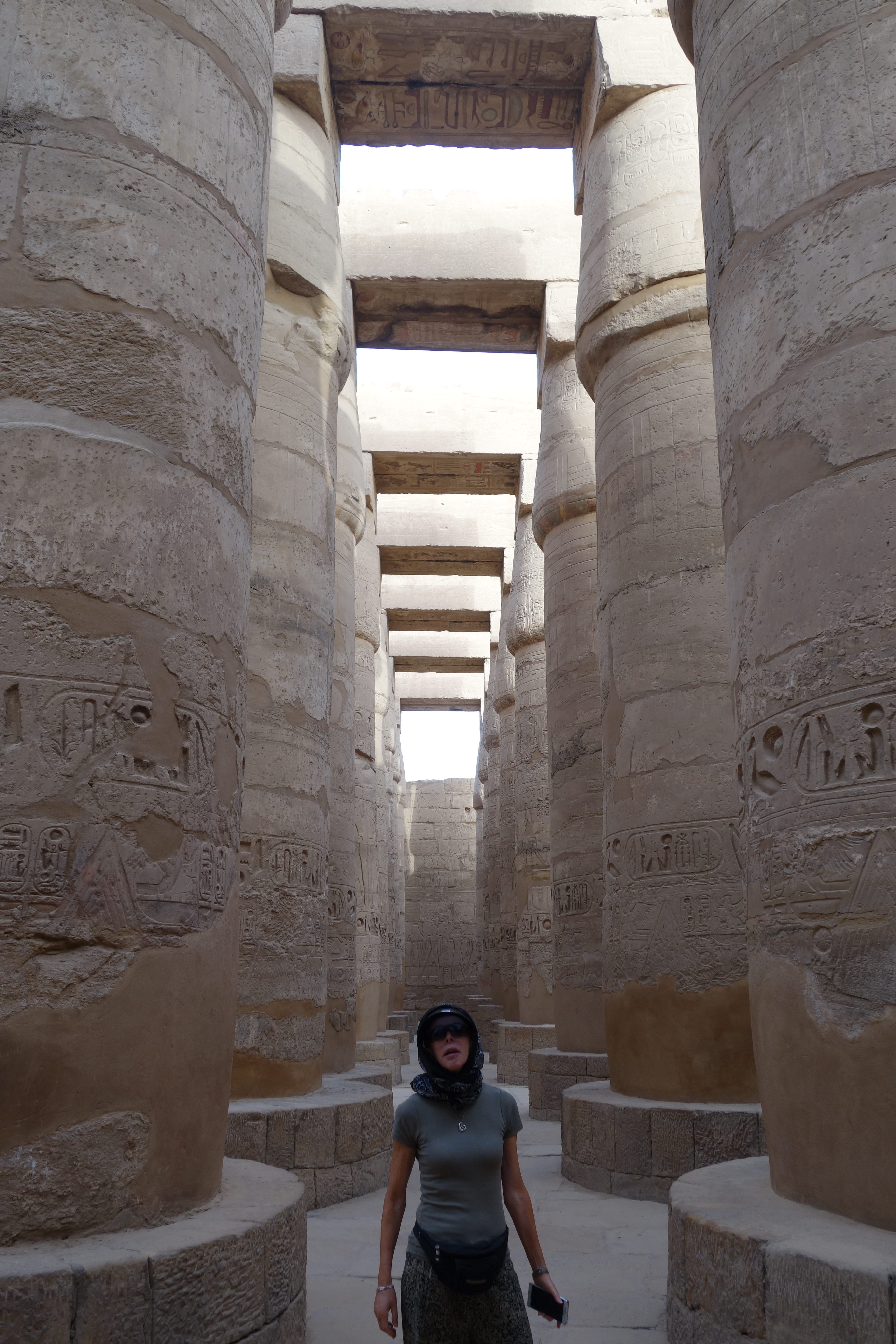
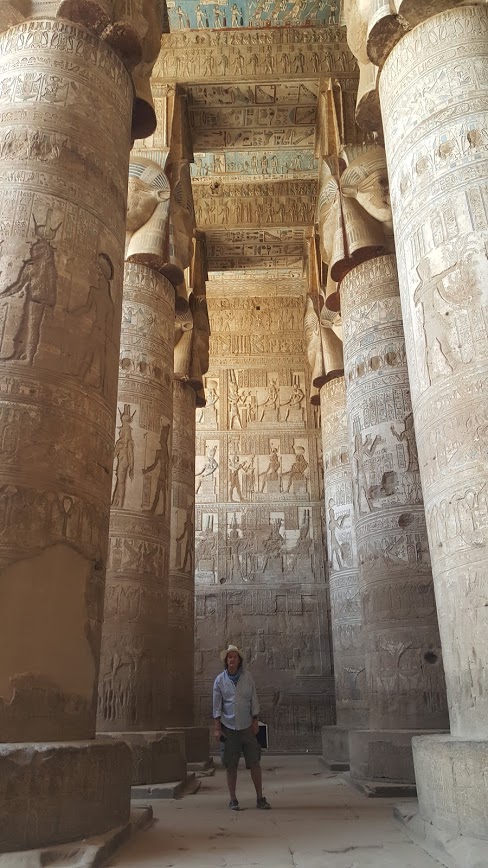
Even so, Karnak is magnificent. The Hypostyle Hall alone is worth the trip to Egypt, notwithstanding the joys of Egypt Air. The complexity, the sheer volume of detail and the quality of the workmanship is staggering, especially when you consider that We (The Brits) had managed to stack some stones on top of each other at Stonehenge round about the same time.
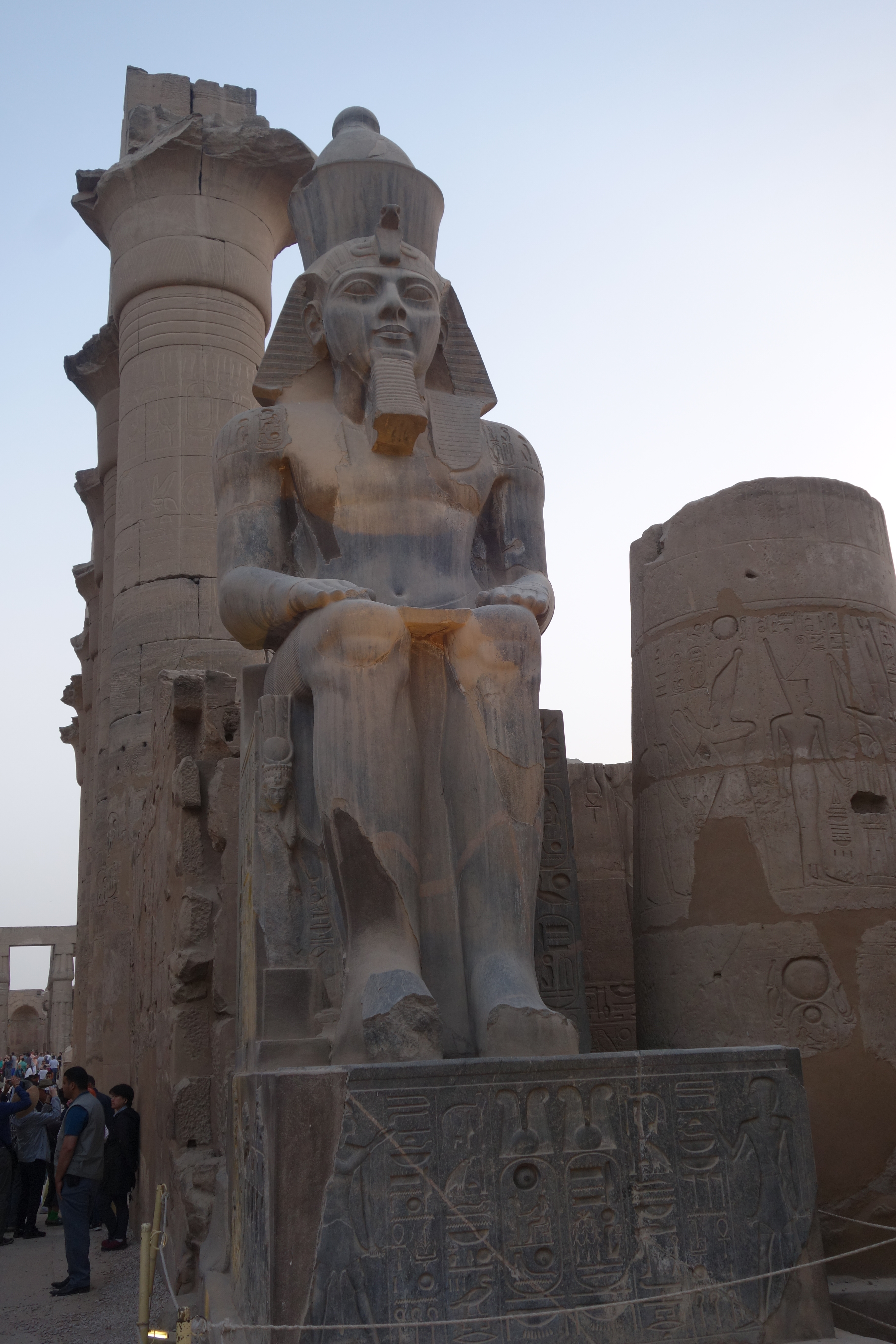
We move on to Luxor temple at the other end of 2 kilometres of sphinxes lining a ceremonial avenue. It’s not as big as Karnak and not quite as glorious, nonetheless, the immensity is breathtaking. If the Pharaohs intended the gods to dwarf the people, it worked. We watch as the light fades and stars begin to twinkle, a twinkle that started a billion light years ago. 4,000 years is only a wink in those terms.
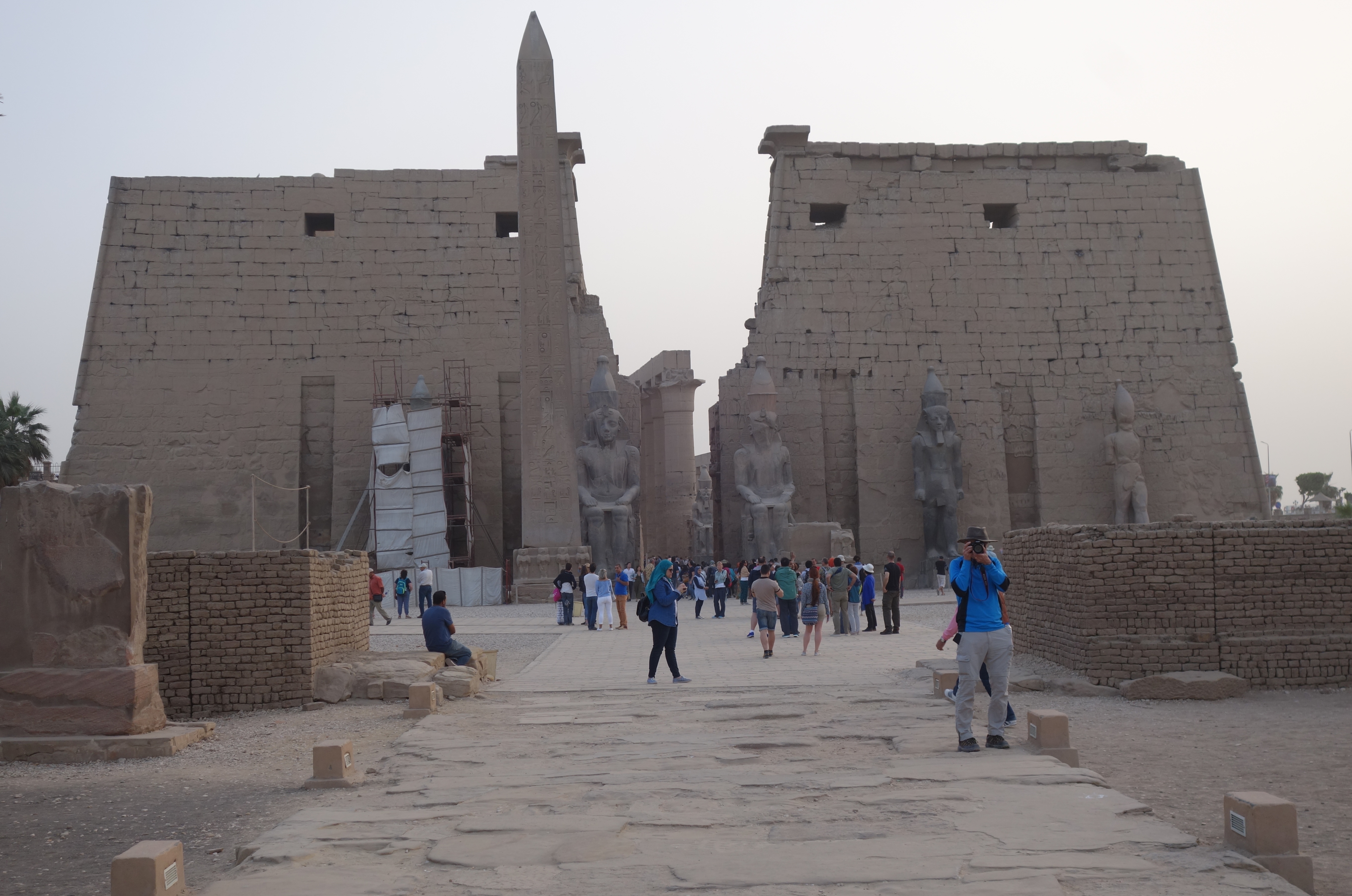
Finally, we drag our feet to the banks of the Nile, where a water taxi flits us over the river to meet our bus which has miraculously crossed without there being any evidence of a bridge. He carries us the two hundred yards to our Hotel for the next 5 nights, (reduced now to 4 courtesy of the weather) the Villa Nile House. An aged garden gnome in a white turban and a long grey frock, greets us and attempts to carry our bags. My suitcase is bigger than Abdul, but he staggers on gamely. The VNH is not the ritziest establishment in town but, after a chicken tagine and a bottle of wine, we are starting to love it. That was a long day.
Day 7
Breakfast in the garden is eaten with Lucy, the David Bowie-eyed cat that eats bread, but there is no time to dally as Summa has instructed us to be on the road by 7.00 so as to avoid the worst of the heat.
We cross the wheat field/desert divide to the Temple of Hatshepsut. The death of the Pharaoh left his 9 year old son in charge with his step-mum as guardian, but she did a deal with the Head Priest (Baksheesh) and, with the help of a false beard and a tight vest, she ruled as a man for the next 23 years. Go Girl. She evidently did a better job than most blokes and built herself a spanking temple although, when her stepson finally got around to pulling off her beard, he did his best to rubbish it.
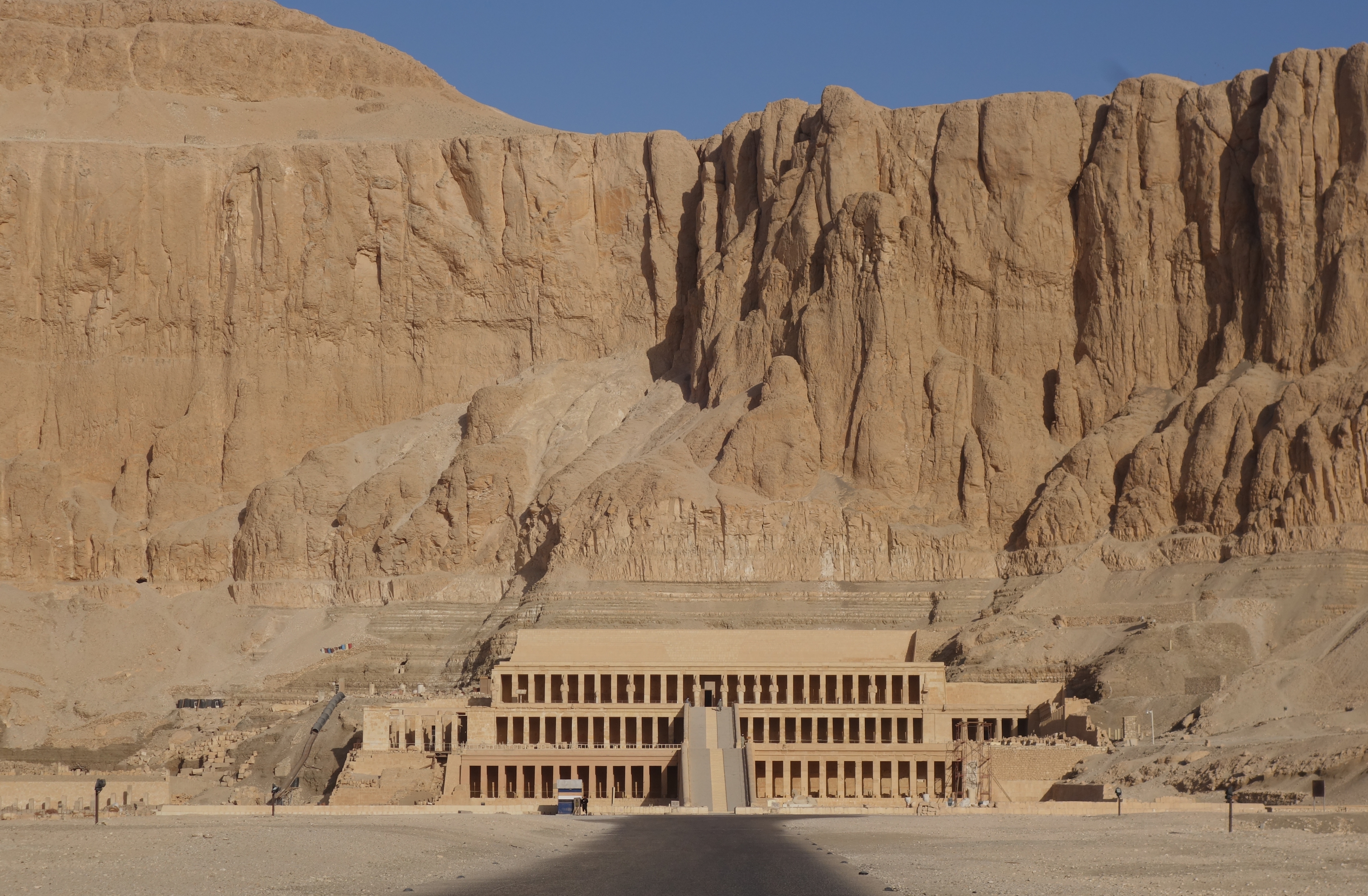
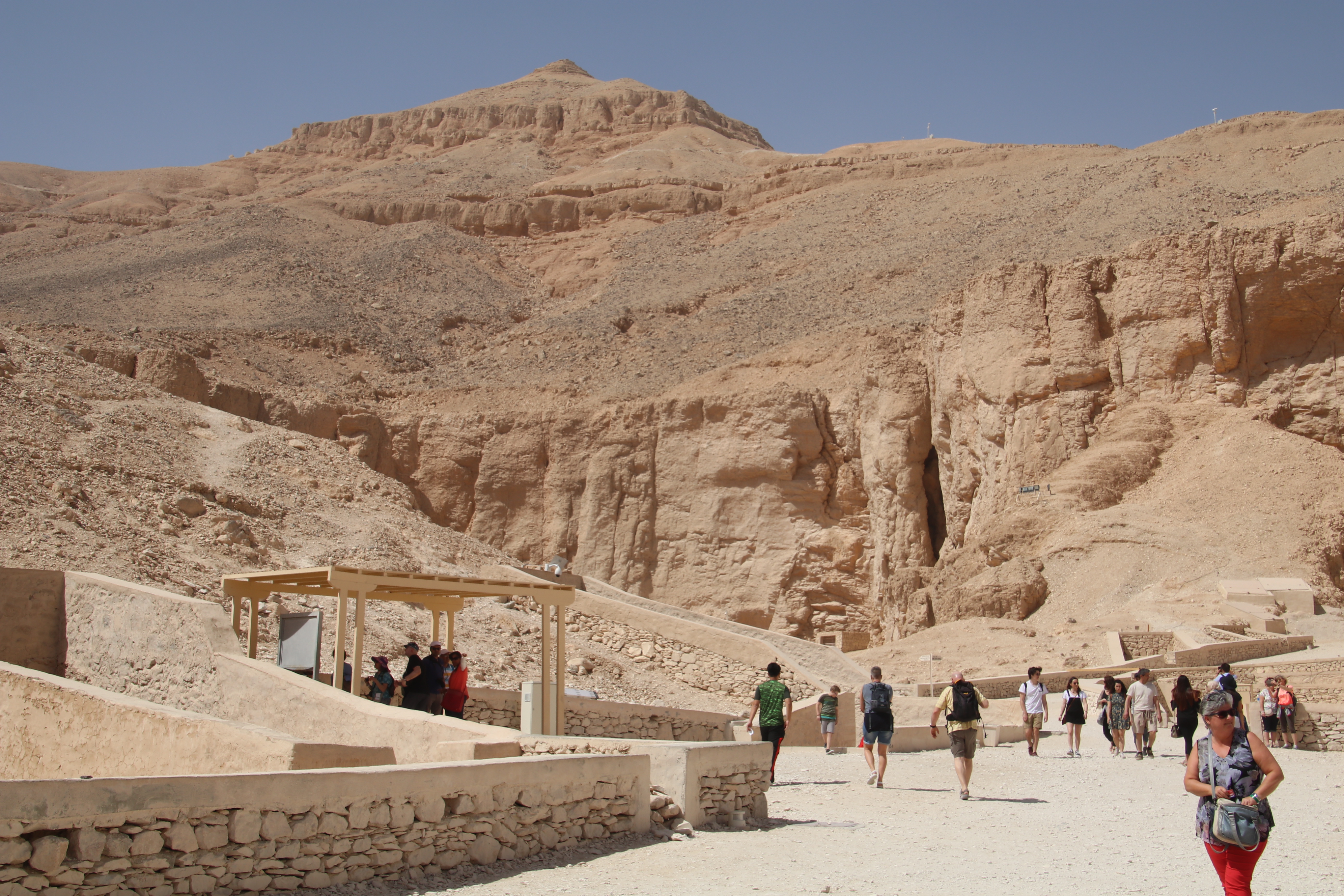
After her place, we drive round to the Valley of the Kings. This is a big valley full of rubble and tourists and tombs. Tombs ‘R Us. If I told you whose tombs we visited, I would be lying. I’m pretty sure there was a Seti in there and almost definitely a Ramesese (There is always a Ramesese and No. II was pretty prolific at sticking his name on anything he could get his chisel on but, whether that included somebody else’s tomb, is probably unlikely). Some are boring. We didn’t even go into Tut’s tomb because we were told it’s really boring. Once you got made Pharaoh, you set some guys on to dig your tomb and, as he got the promotion at age 9 and pegged it at age 19, they didn’t have much time to get it dug, let alone cover it in 3 million hieroglyphs telling the gods what a great guy you were. What is incredible is the amount of loot they found stashed in there, accumulated in those few years.
Anyway, some of the other dudes had over 30 years to draw loads of pictures showing how they smote the Africans and smote the Syrians and smote the Cretans. There can’t have been many people left to smite by the time they were finished. And they also show how their reign was blessed by 637 gods with men’s bods and ram’s heads, or lion heads, or hawk heads and even, occasionally, bloke’s heads (Although, several of the one’s with bloke’s heads had either a booby under their armpit or one leg and an enormous boner). Life was obviously a lot of fun in ancient Egypt.
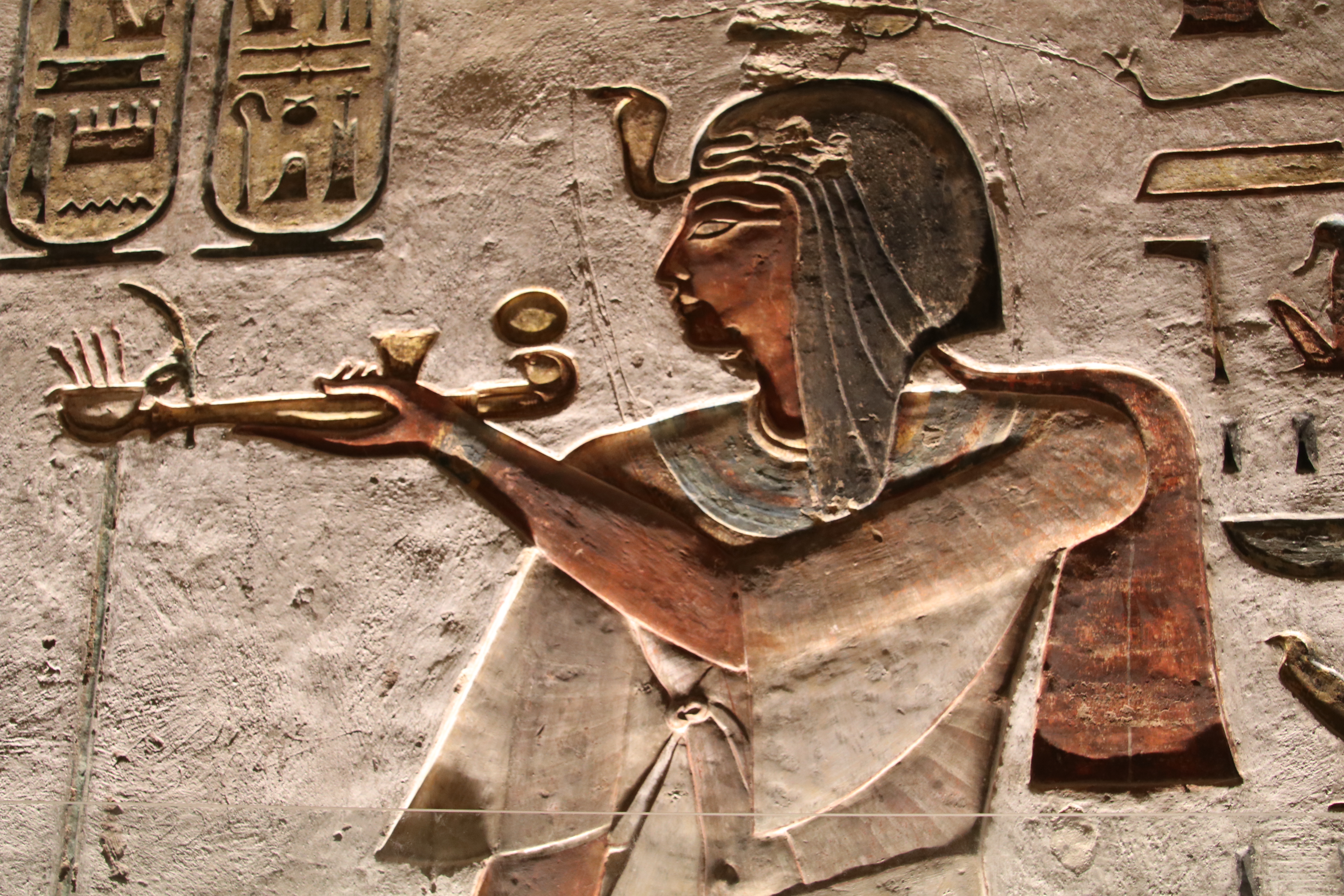
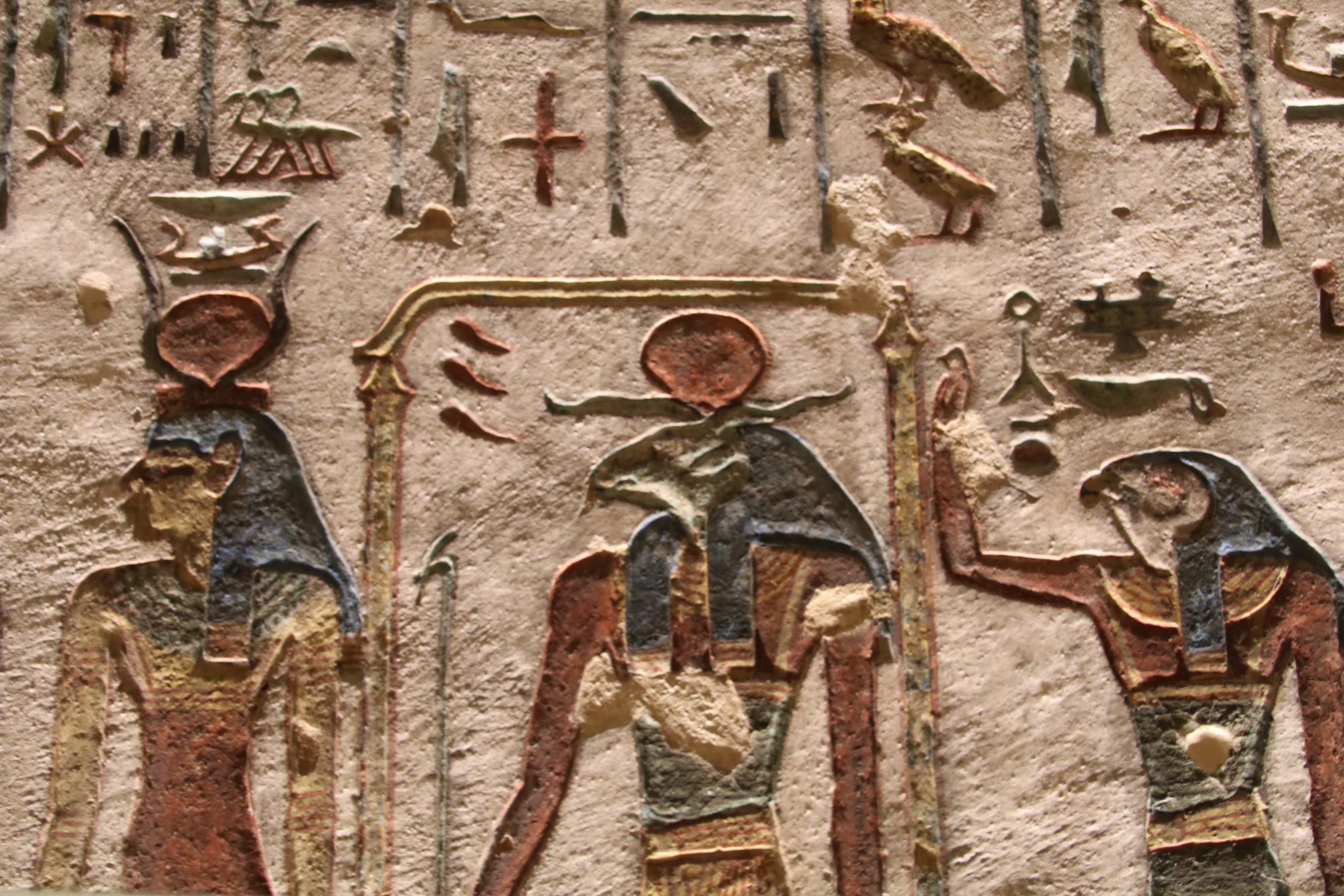
What is really amazing is the colour. These guys invented it, seemingly they used ground up mineral colours with some refined oil and egg white and then fixed it with some sort of plant based agent that also prevented mold from growing. Then they polished it off with beeswax. The result is that the colours here held for 4,000 years, when I can’t get a Chinese pigment that will last 4,000 minutes. The downside, however, is that the fixing agent appears to have been a slow release poison that leaks into the atmosphere so that, when Howard Carter opened Tut’s tomb, he was breathing in centuries of toxic distillate and was dead within 7 months. The Curse of the Mummy’s Tomb. Needless to say, the Chinese paints are still able to mimic this essential trait to this day.
Note to the non-stingy travelers; The ticket for the Valley of the Kings includes for visiting 3 tombs of your choice from those open on the day of your visit, openings rotate. Some of these are really good, some not so much. However, for a further US$5, you get into Ramesese IV which is excellent and, for another US$63, you get into Seti I which is spectacular and one of the highlights of the entire trip. Why skimp? You’ve come a long way for this, live a little, you’re a long time dead, 3,297 years in Seti’s case. Naturally the tour groups do not include this one, so you can imbue it in relative peace. Fabulous.
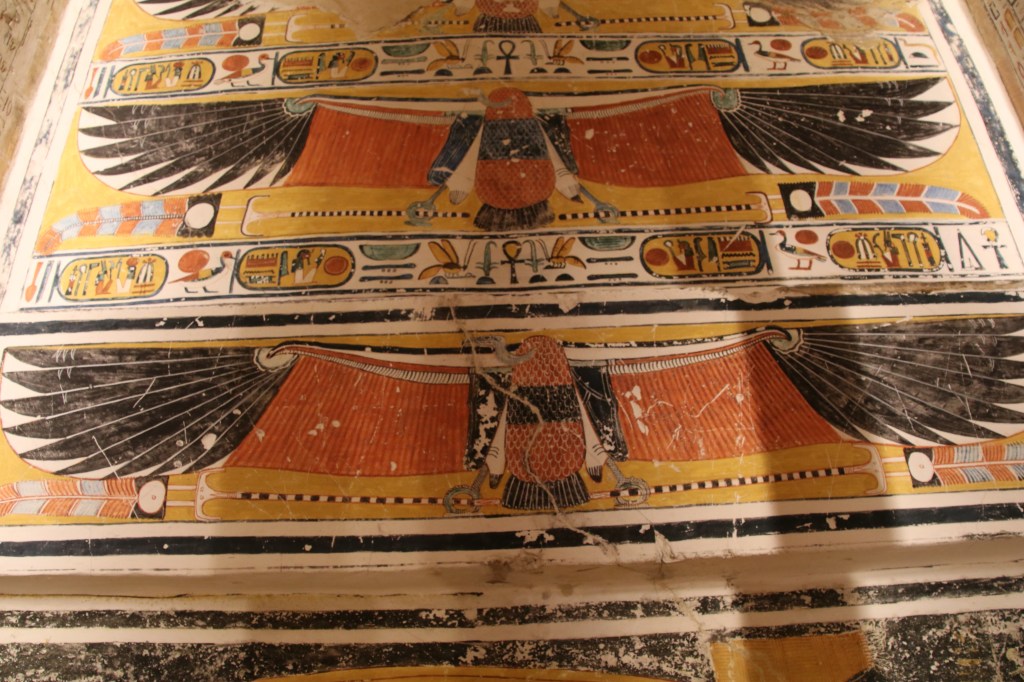
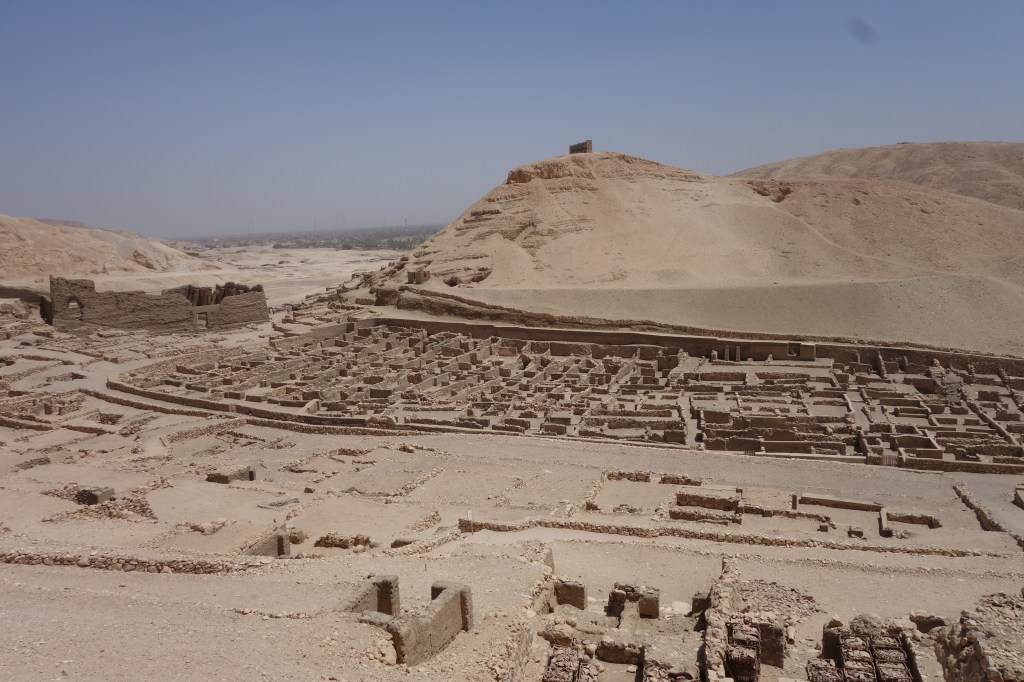
After the Valley of the Kings, we move on to the Valley of the Artisans and saw some more tombs but, it’s a bit like visiting our house after you’ve been to Buckingham Palace. It’s nice, but you’re not going to be awestruck are you? And we have become Tomb snobs.
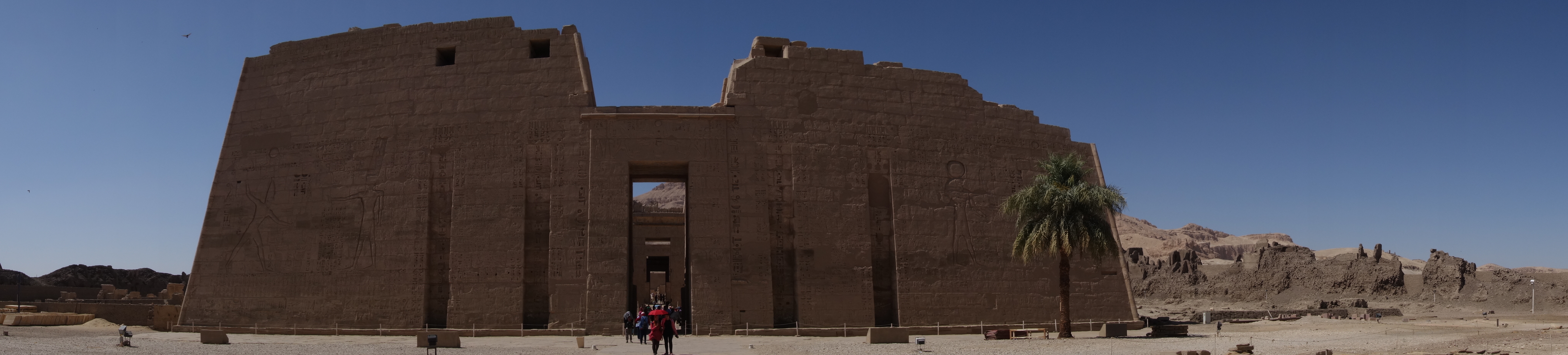
Then on to the Mortuary temple of Ramesese III at Medinat Habu. III named himself after II, because he was a bit of a fan, stalker possibly. This is only Day 2 of Temples and already things are beginning to blur. It has a big Pylon (Entrance gate) with lots of smiting of the Syrians, followed by some columns, followed by a big room, more smiting, Cretans this time and gods saying “Hey Ram! Yo de Man!” and then a smaller room with a tomb. Basic format. This complex is very long and surrounded by a major mud-brick wall, which tells you how often it rains around here.
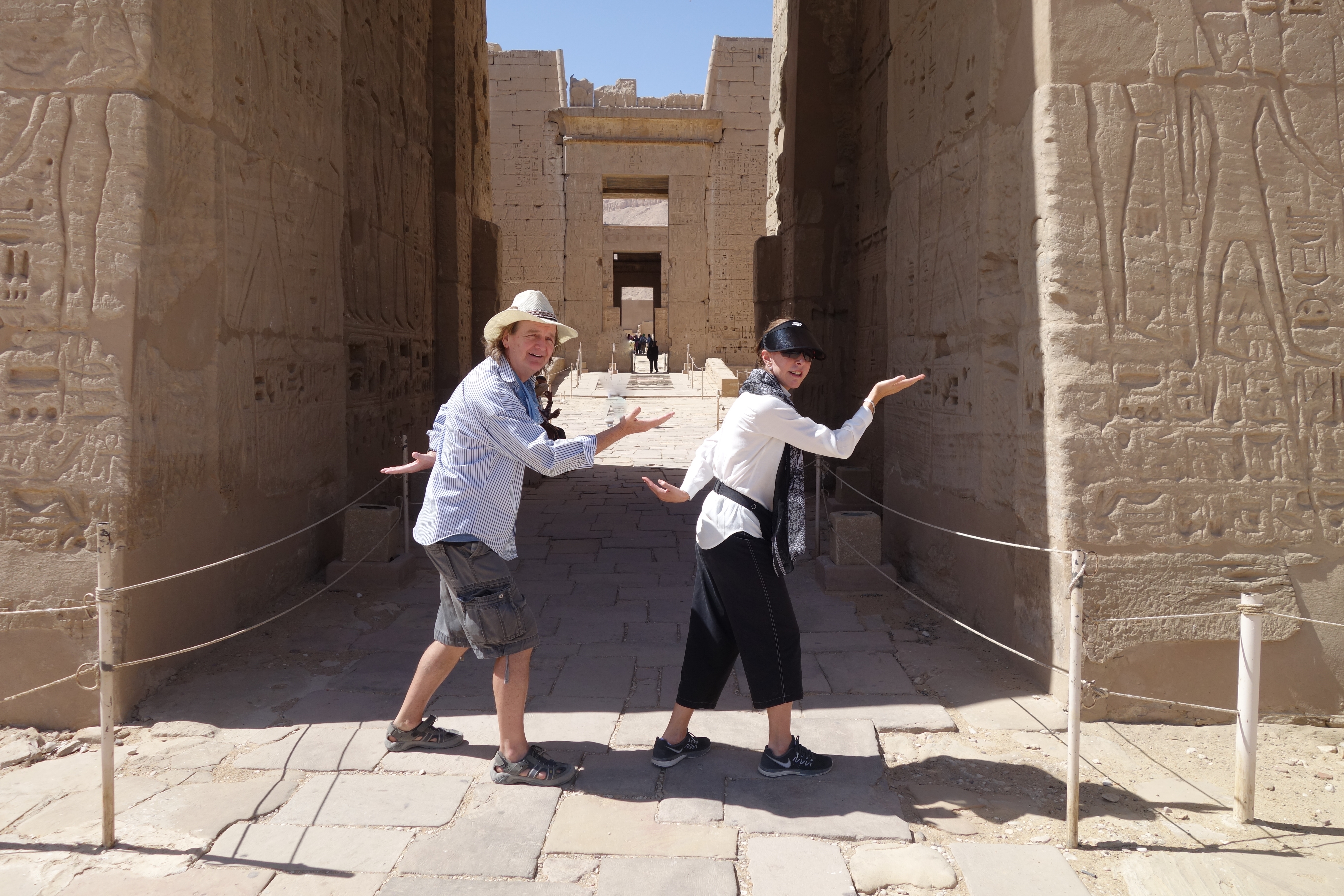
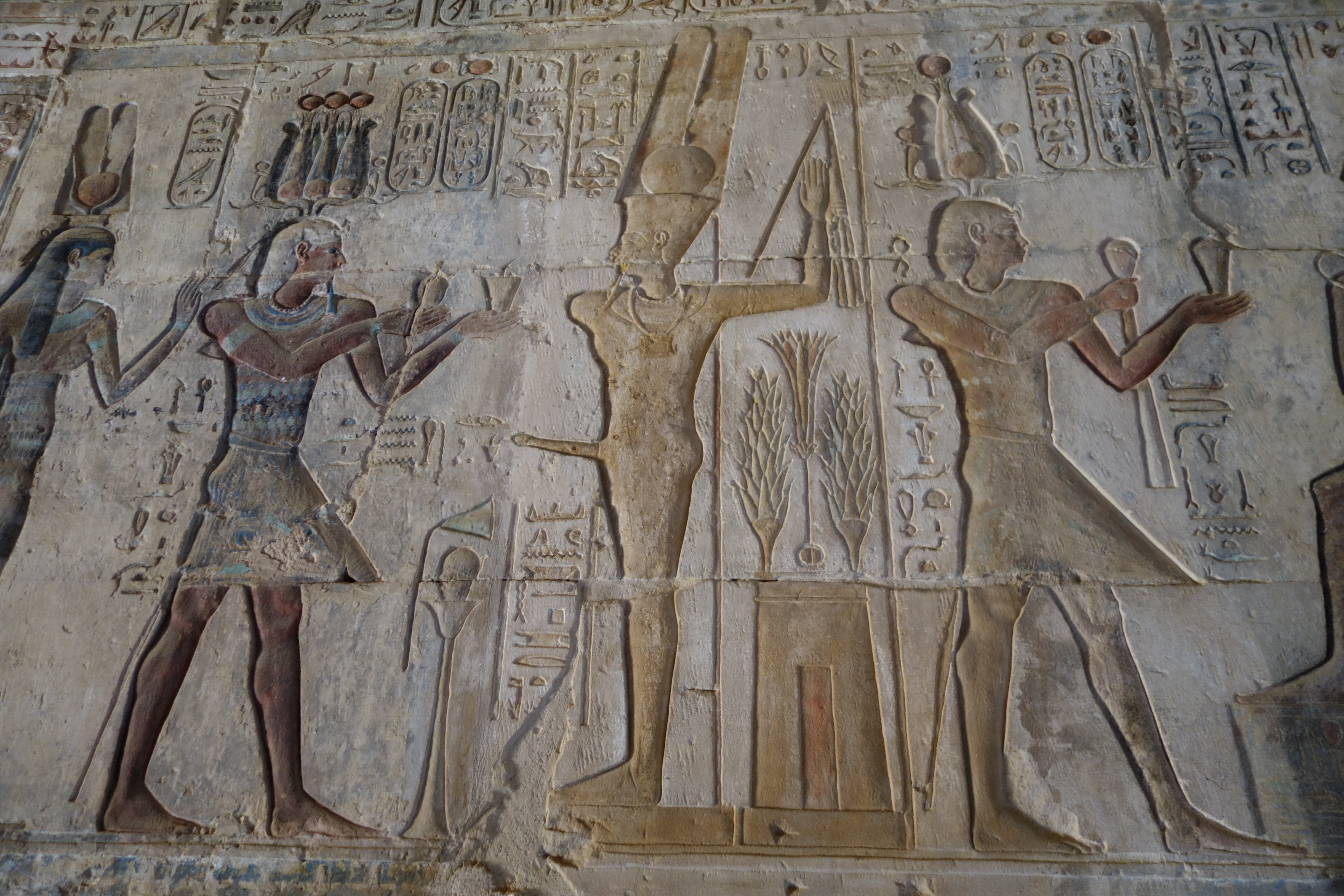
On the way back into town we stop at the Colossi of Memnon, two statues of Pharaoh Amenhotep III. It makes you wonder who was in charge of names 3,400 years ago? In England it was all Ugg and Biff and Gronk, but in Egypt, thanks to picture writing featuring birds, bees, slugs and lots of wiggly lines, it was Amenhotep III. Anyway, his statues are pretty knocked about, but yes, they are colossal although, who was Memnon?

The bus drops us back close to the hotel, at the Blue Sky Café, whose rooftop terrace has views of the Nile, cold beer and excellent chicken sandwiches. This is very obviously an expat hangout and it is difficult to stop eating and drinking but, the Foxalls are on a Souk Sortie, so we drag ourselves back for a shower before taking the ferry over to the East bank.

Luxor Souk is a nightmare street of guys claiming to be the very best friend that you ever had, insisting that they are not going to hassle you while hassling you to buy their shit, rather than the shit in the other shops for the next kilometer on both sides. The pressure is unrelenting and depressing and, in the end, Dori and I bought nothing because they frightened us away. What kind of salesmanship is that? Jon managed to find a statue that he liked and we left him to it, returning after half an hour or so because we were getting worried, only to find the shop door locked from the inside with 5 guys still haggling with him. Finally he got what he wanted and they released him. Tired, hungry and thirsty, we found a restaurant. No beer!!! Aaaaaaaaargh!
Day 8
We are off to Abydos along the desert road before the Police wake up and catch us, because Tourists are supposed to take the village road which is all donkey carts and dead dogs and takes five times as long. Half way along the sky is blackened with apocalyptic clouds of billowing vileness, maybe we should have taken the village road. This looks like Armageddon and Ah’mageddinoutahere! But no, it’s just the local brick kilns spewing out the rankness of Hades in a Region trying to protect the Wonders of the World.
From the outside, the Temple of Seti I doesn’t look like much to write home about. The façade is big and bland and it’s obvious that a lot of restoration has taken place, not all of it good.
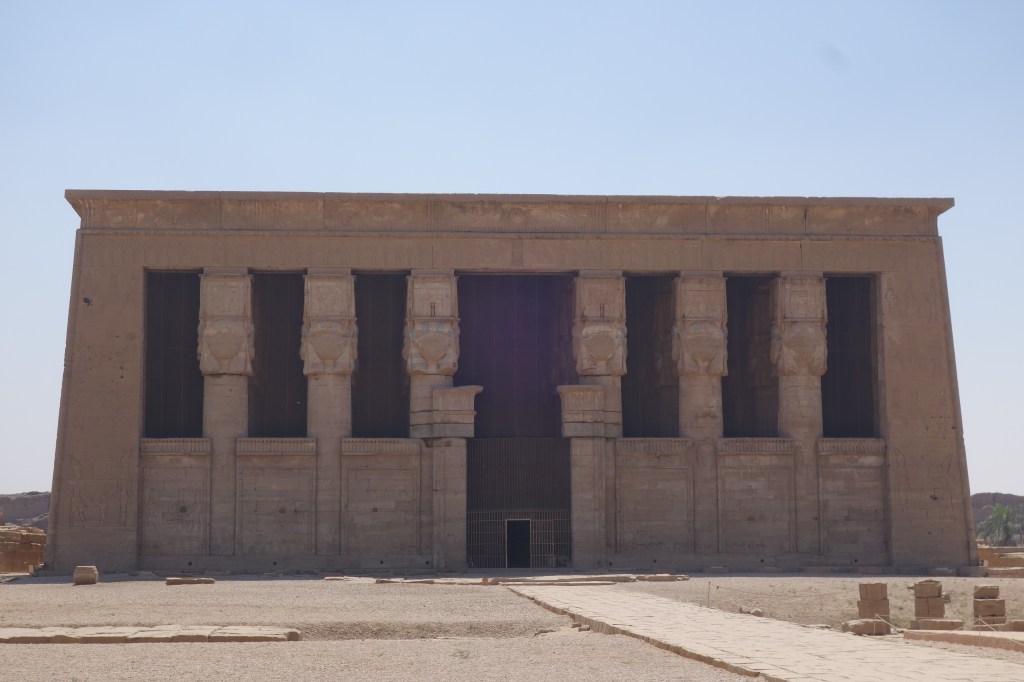
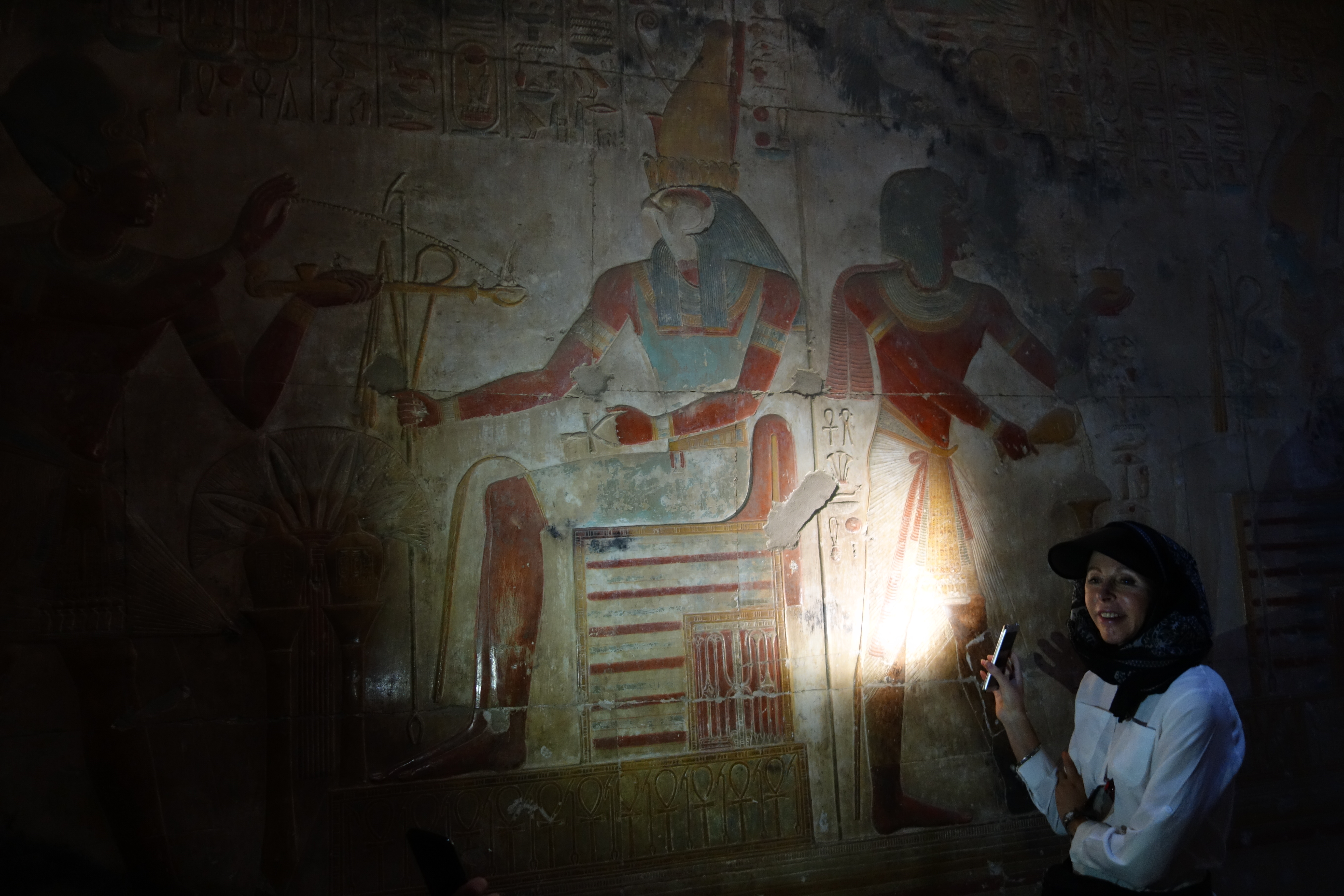
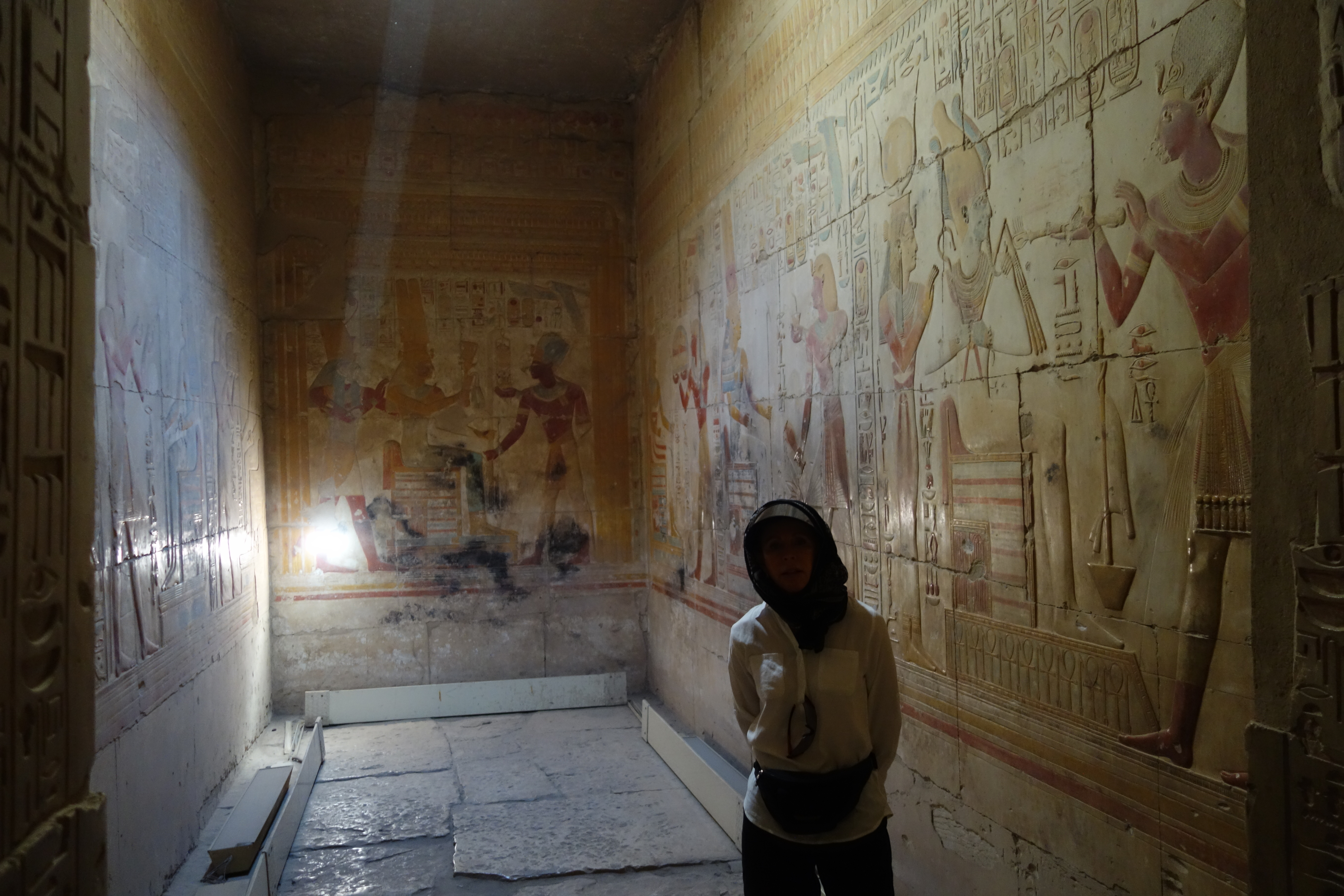
The girls try to use the toilet and, because we are the first visitors of the day, the toilet guard comes tearing across so that he can demand baksheesh, despite the fact that it’s a complete shit hole that hasn’t been cleaned in weeks, if ever. We go into the Temple and they take our money, but the lights don’t work and Summa loses it! She’s yelling all sorts of imprecations at the Sons of Camels, but they just shrug. It’s the will of Allah and we are just infidels visiting a sacrilegious site. We are not off to a good start and Summa’s upset because this is her favourite temple but, guess what? Nature does the trick as the temple is pretty much lit as it was meant to be and, when that fails, our phone/torch apps do enough. Result!
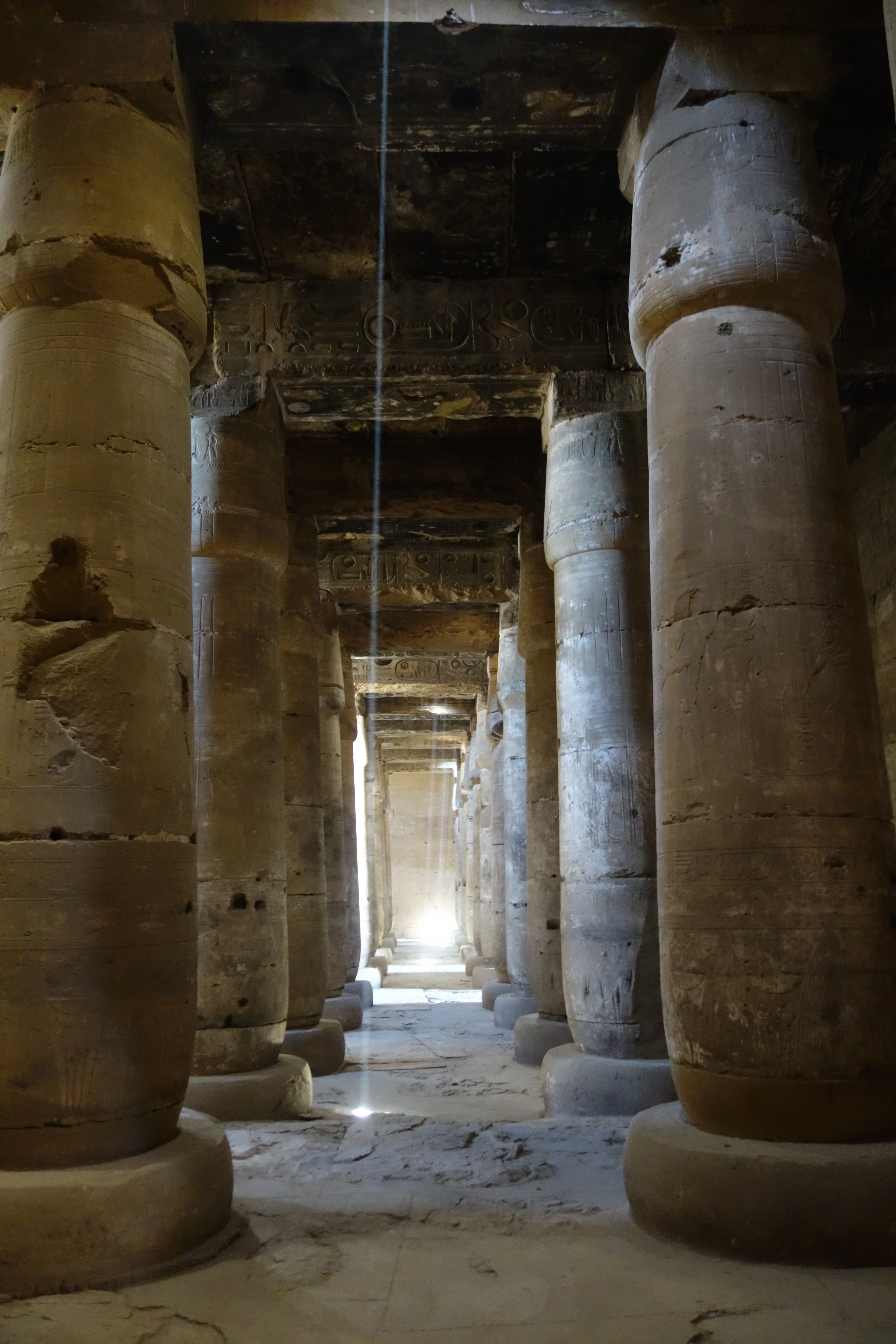
This was one of the most beautiful and atmospheric of all the Temples we were to see. Shafts of brilliant light slice through the ceiling, you almost expect to see sparks where they hit the floor and the walls are bathed in a soft glow which brings the artwork to life. The carving and the colours are fabulous and really well preserved after 3,300 years. We loved it.
We head back along the village road to Dendara and the Temple of Hathor but, now we are Temple snobs. This one got pretty seriously defaced by the “Christians” and anyway, it’s Ptolomeic dear heart. Pshaw!
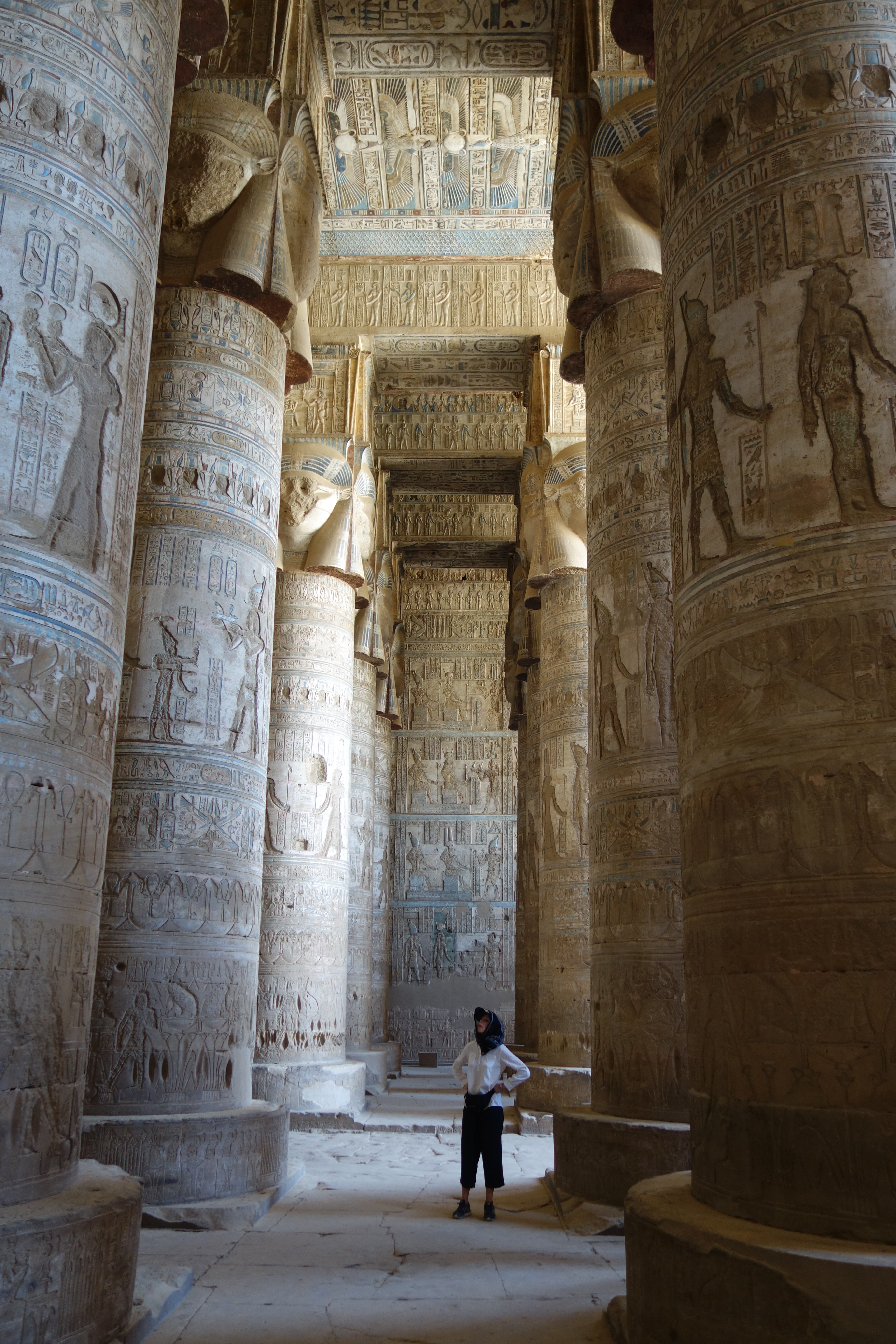
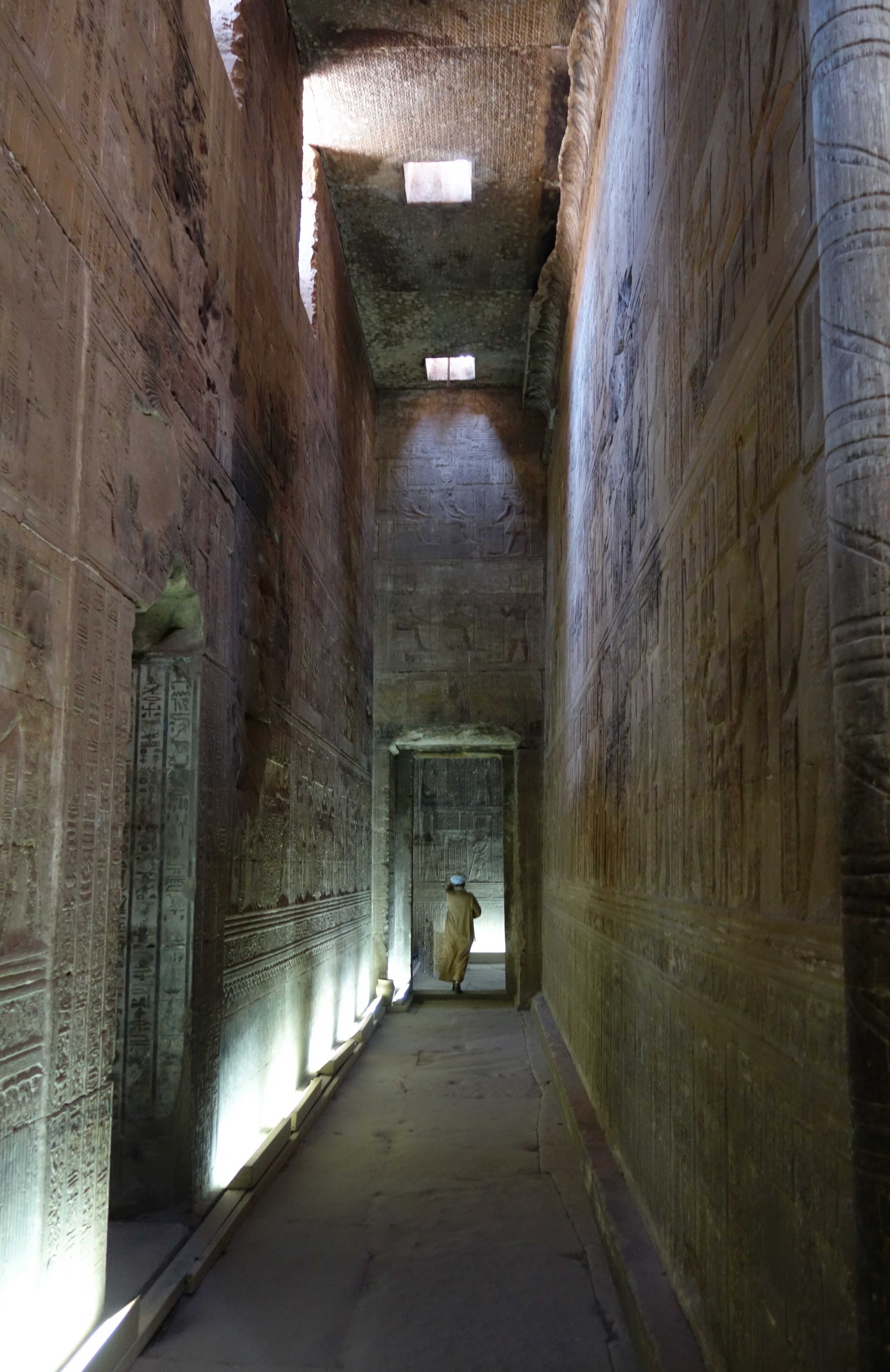
The Ptolomeics weren’t real Egyptians, they were Greeks and Romans masquerading as such and it shows in the quality of the workmanship. Not quite the thing don’tcha know.
Mind you, it’s worth bearing in mind that at the same time as they built this, our own civilization had progressed to living in mud huts in a Country whose sole products were rain, mud and turnips.
Back in the Blue Sky Café for a repeat of yesterday’s late liquid lunch, we get chatting to the Owner who tells us that the elderly gentlemen waiter is his Dad and that he’s married to the elderly German lady who lives in the rooftop apartment for a month, 3 times a year, but that he spends the rest of the year with his Egyptian wife in another house. The girls love this, it’s better than Emmerdale. We have an R&R evening and I manage to find a tailor to repair a rip in my shorts. It turns out that he’s a Coptic Christian and so I show him my photos of Brother Lucas and share some mini Easter Eggs with his kids and he refuses to accept any payment. It seems that baksheesh is not a Christian concept.
Day 9
Wooohoooo! Free day! We idle over breakfast at which Lucy is getting very picky. If there’s no jam on the bread she can be very disdainful. We take a boat over to the Luxor Museum, which is small but perfectly formed, just a few select pieces, well lit.
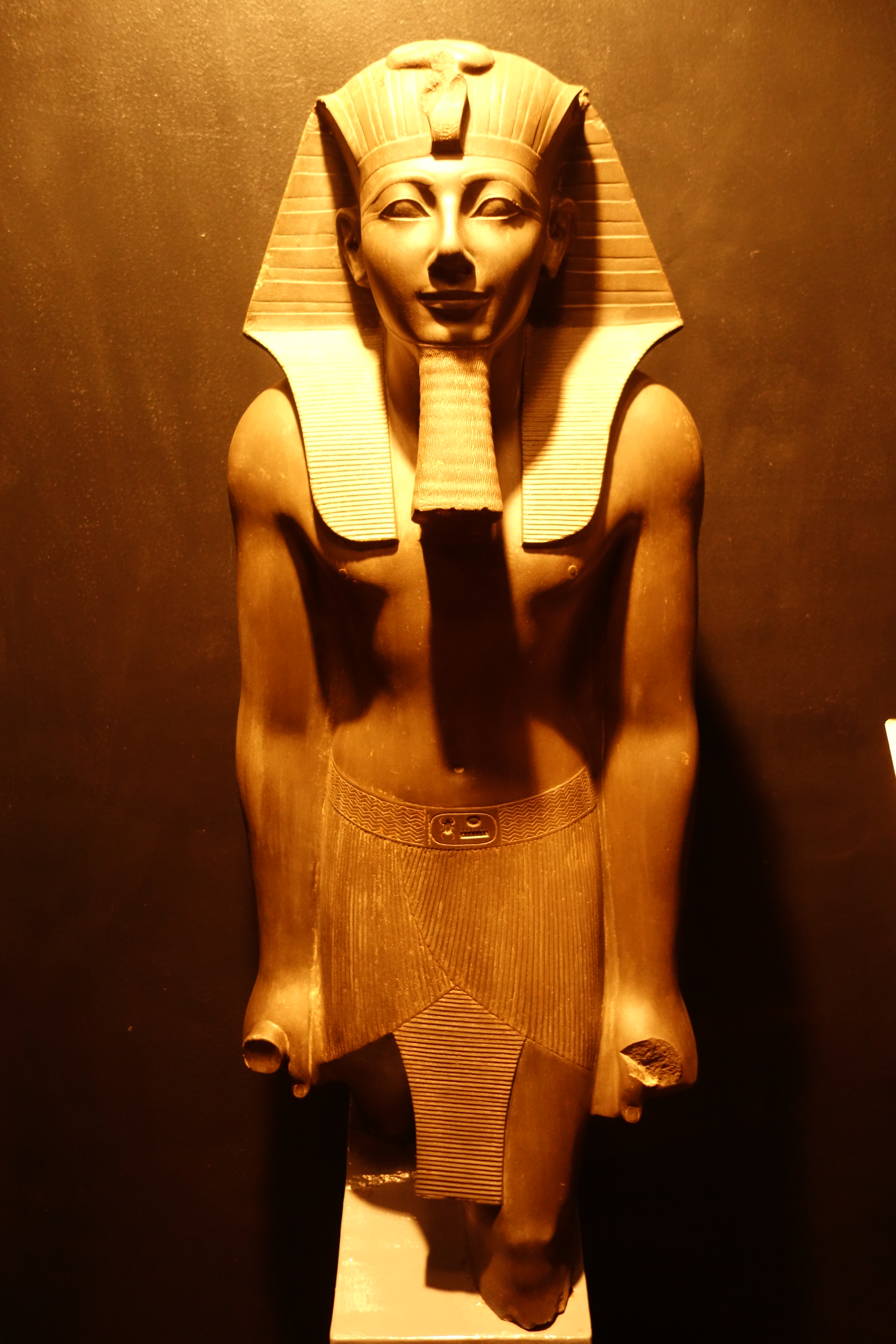
Some of the pieces are perfect examples of detailed carving in granite, the hardest stone in the world. But this was the stone age, what could you use to carve and polish that is harder than granite? A.- Diamonds. Good grief these guys had it sorted. Dori notices that all the Pharaoh statues have a really big gap between the Big toe and the littlies, just like me! Pharoahs could not wear flip-flops. Finally, for those of you who thought I have weird feet, they are not! I have Pharaonic feet.
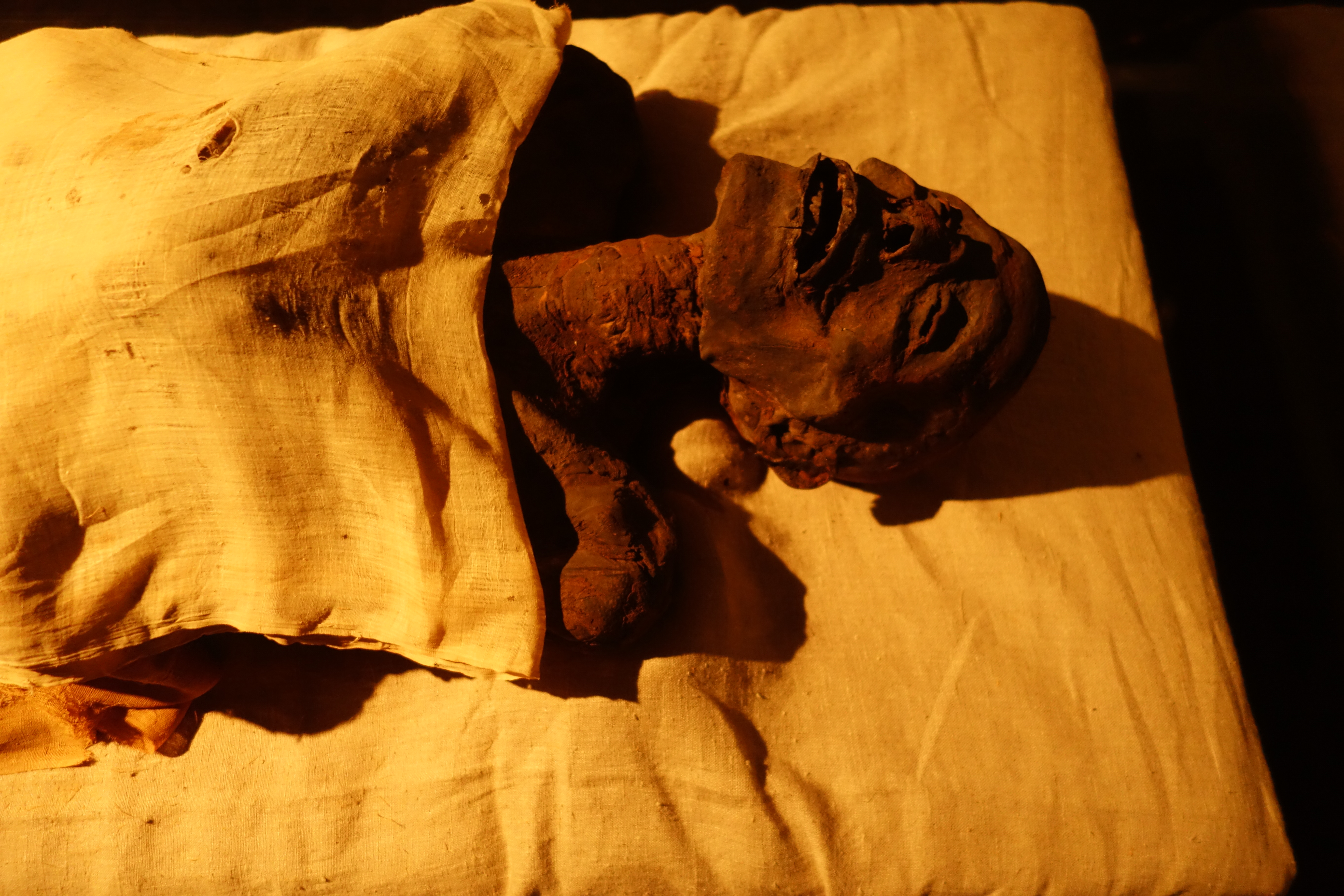
Before I have time to make the announcement to the World, a tornado of schoolkids tears through the peace and quiet. “Hello! Where you from?! Wass your name?! D’you know Mo Salah?!” These four crumbly white antiques hold more interest than all this Mummy stuff, but they disappear as quickly as they came. “Wait! I haven’t told you about my toes!”
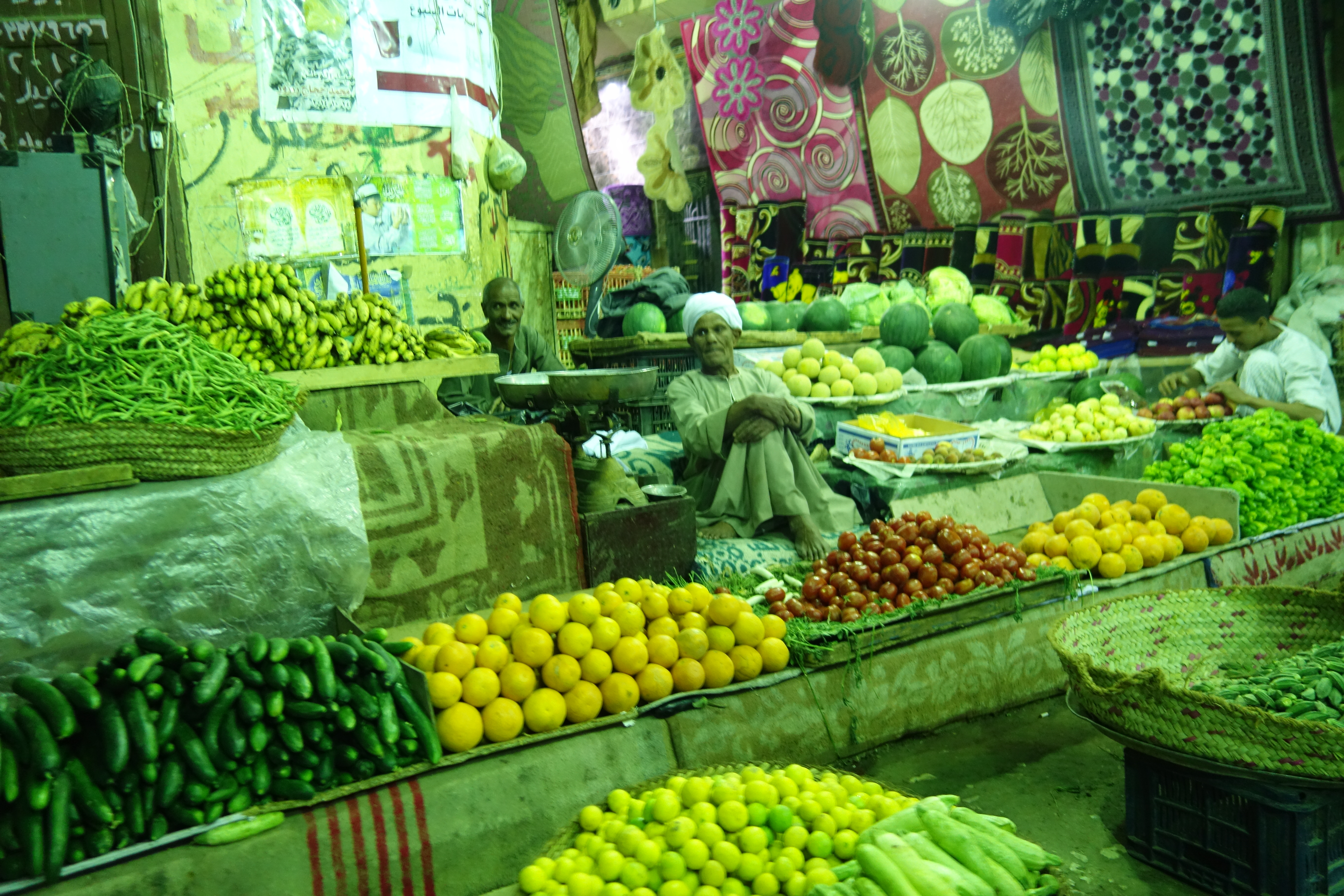
Another boat takes us up the river to the Winter Palace Hotel, very spiffy with some beautiful gardens, and then some gentle off-souk shopping. Although, in the evening, Osama the stoned offers to take us round the local souk, but it is singularly unimpressive, being entirely filled with Chinese shit. He buys us tea in a local shop while he smokes a hubble bubble, this is where most Egyptian men spend the time between birth and death, it seems mostly like death suspended. Shisha does not stimulate, it incapacitates and we get bored and head off back to Karnak and the Light Show.
The Light Show is great, but only because it is so old and incredibly cheesy. You get to go into the Temple at night, so it’s worth it just for that, but the lighting is ancient and could be so much better, but it’s the soundtrack that is the killer. Spoken by a group of geriatric Shakespearian Actooooors and, possibly, Judi Dench, it is utterly pompous and ridiculously fruity daaaahling. My Mum would have loved it, but even I am too young for this shit and we giggle and expostulate all the way round.
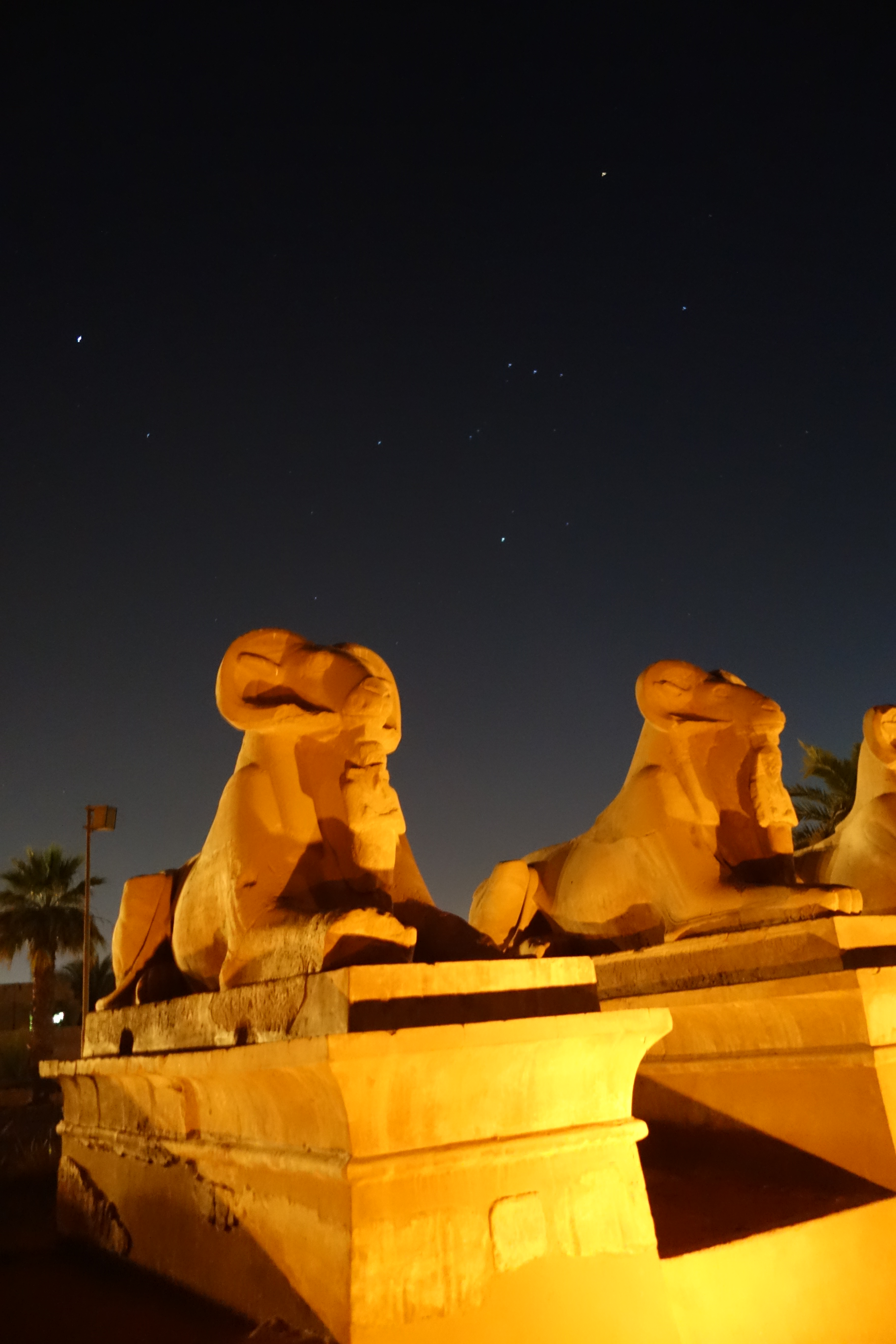
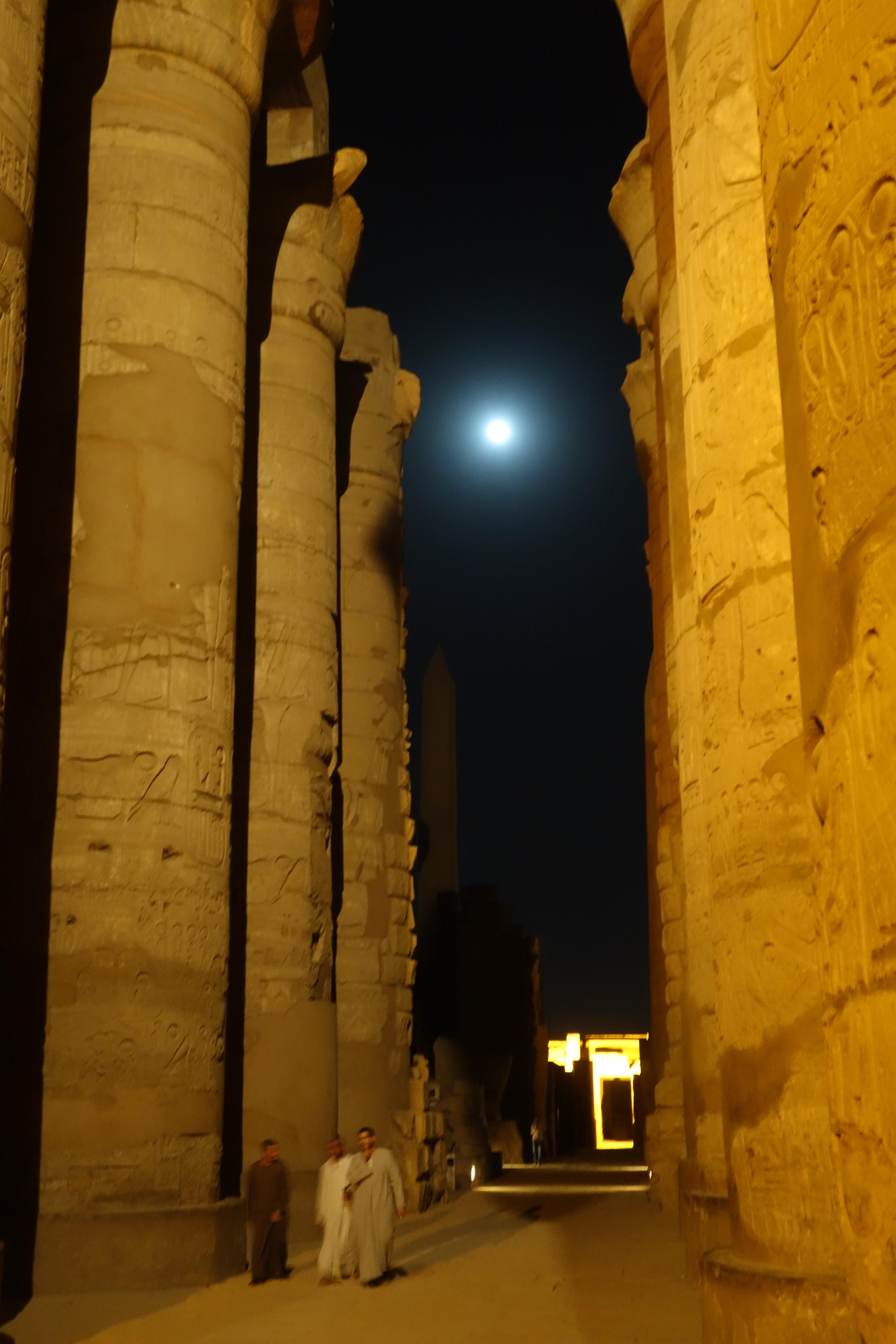
Day 10
In the morning, we say a very fond goodbye to Lucy and the Villa Nile House, help Abdul carry our bags to the bus and meet Salah, our Guide for the next stage as we drive to Esna.
Esna is another shit hole town, but moored at the quayside on the Nile is a beautiful Dahabiya called Zekrayaat.
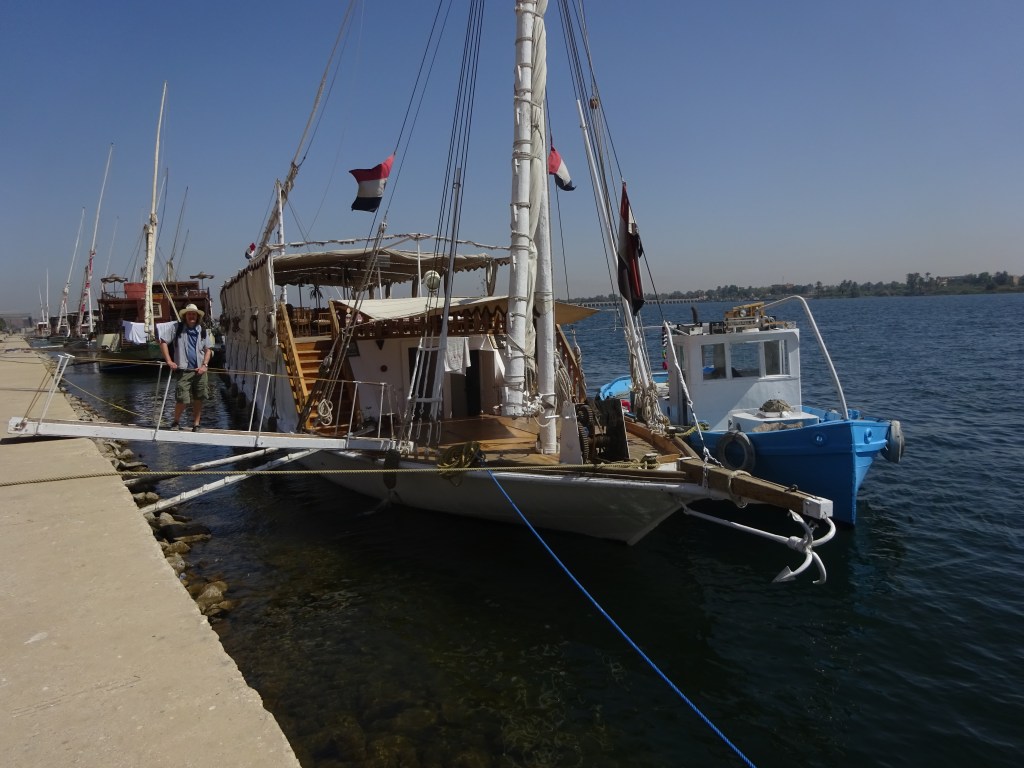
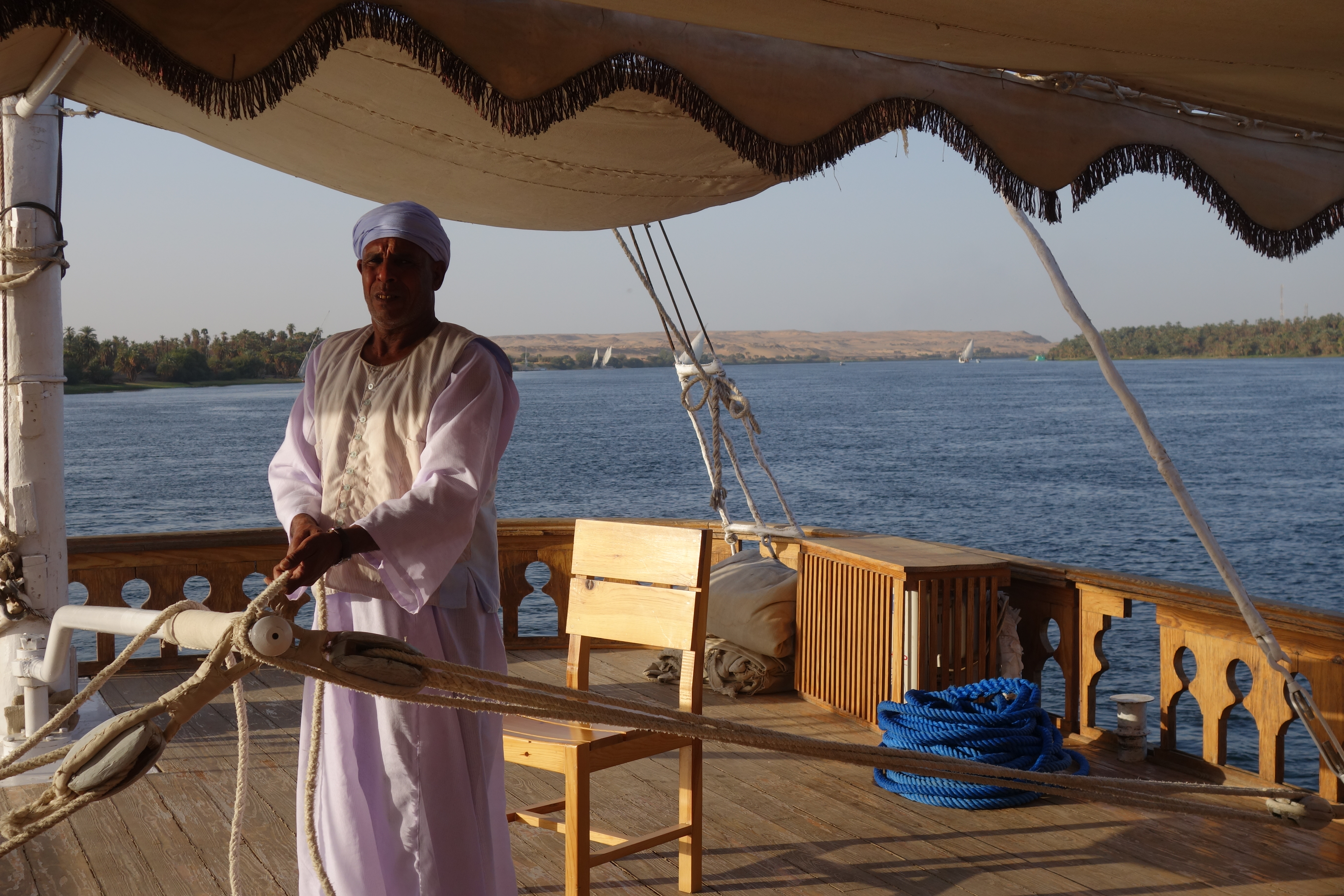
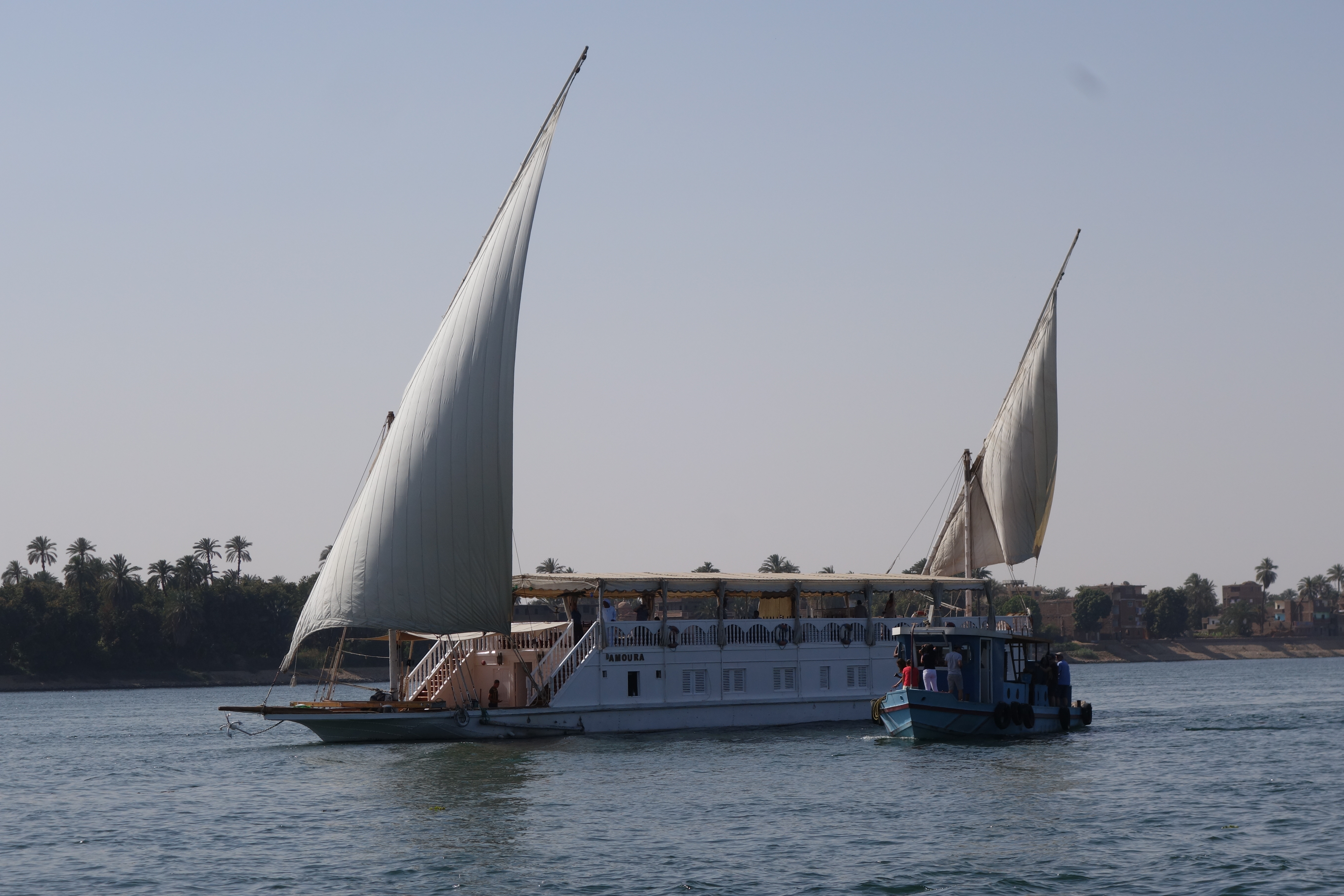
She is a large, shallow bottomed boat with 8 cabins, 7 Crew, 2 massive sails, no engine, 1 huge upper deck with awnings and sunloungers, 1 dining table and 1 hammock, (A hammock! Oh still my beating heart) and 4 passengers. Us! The previous passengers are departing in our bus and Salah has to drag us away to see a Temple. “But Salah, there’s a hammock with nobody in it! Someone might steal it while we are gone. Perhaps I should stay and look after it.” But he’s adamant and we trudge off to see his bloody temple.
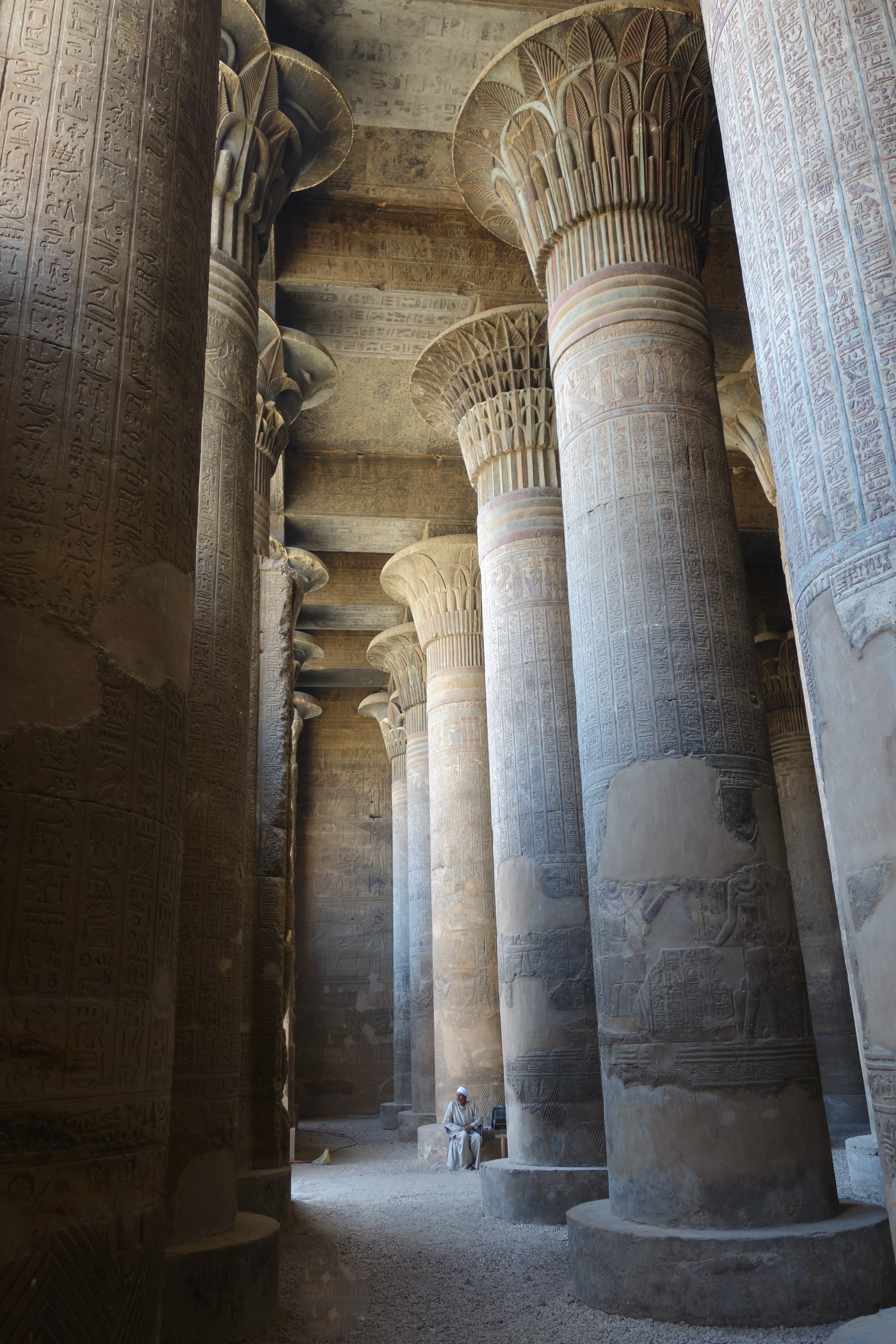
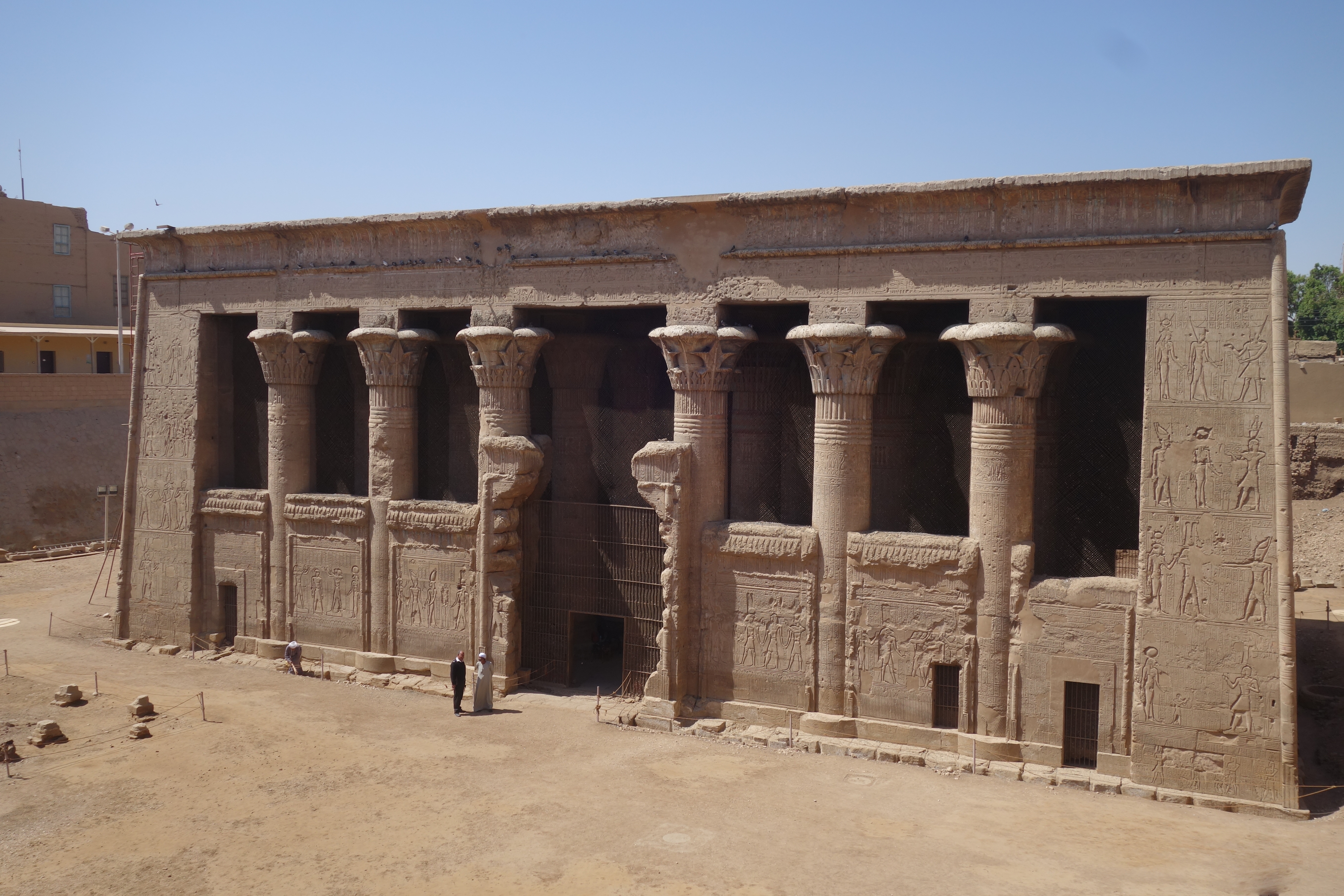
Esna Temple is weird as it sits in a pit 30 feet deep and surrounded by slums, but we have to admit that there are some good bits and we have it pretty much to ourselves. Salah was at college with Summa, our previous Guidette, and it’s somewhat confusing that they have totally different opinions on most Pharaonic lore but, as this is also the case with what Imam our first guide told us, we have to conclude that nobody really knows shit about the Egyptians. Everyone is guessing.
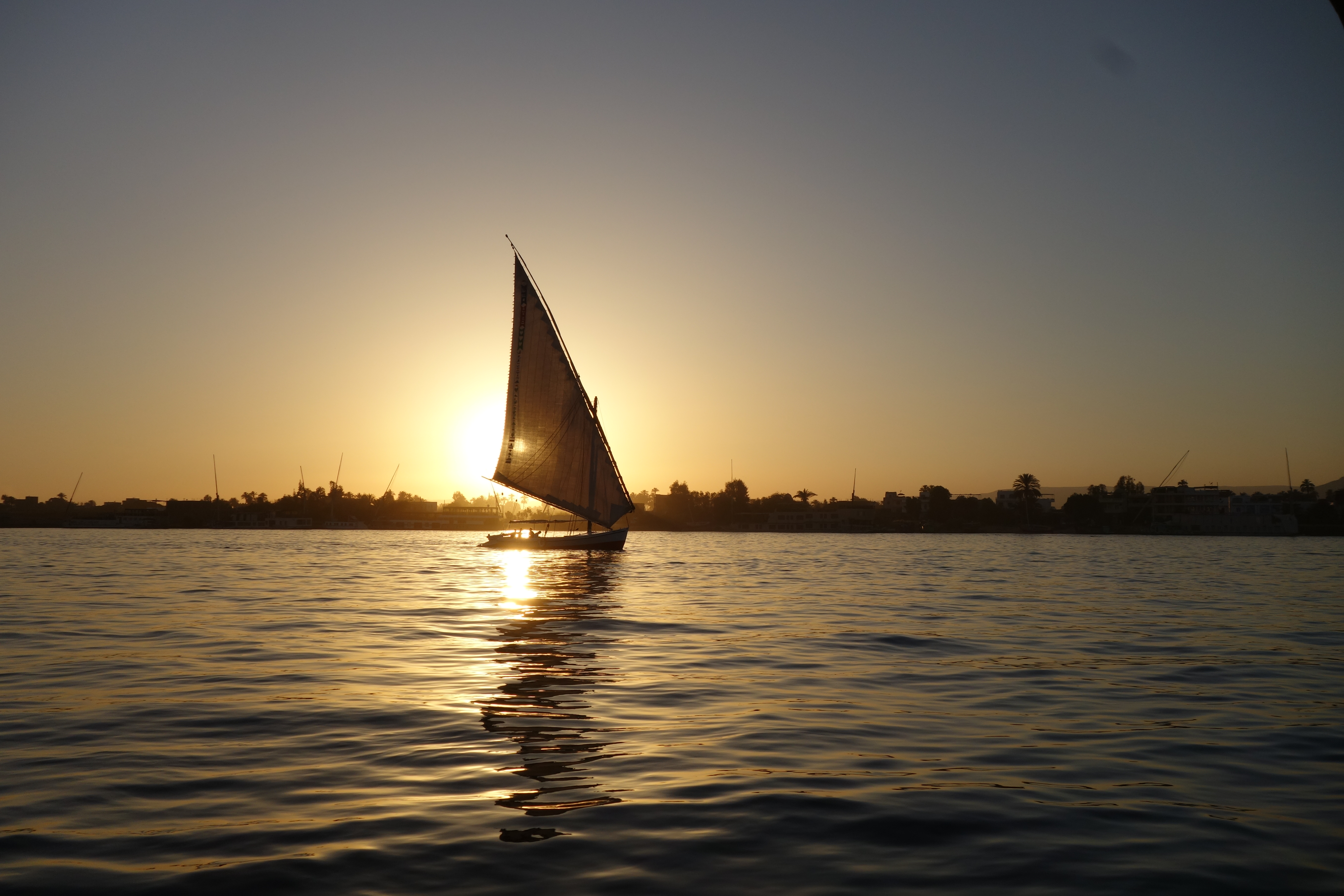
Finally, we head back to the boat and to our double bed cabins with private balcony, I am in love. Tea and biscuits on the upper deck as we leave the town behind and glide between the tranquil banks of the Nile. The Zekrayaat, like most Dahabiyas, does not have an engine, instead she has a small blue tug-boat that travels with her, helps her moor and tows when the wind fails. But while we have a breeze, the tug slips away and we sail. The current is pretty swift but with such a shallow draught and 2 enormous triangular sails, a gentle zephyr pushes the boat upstream.
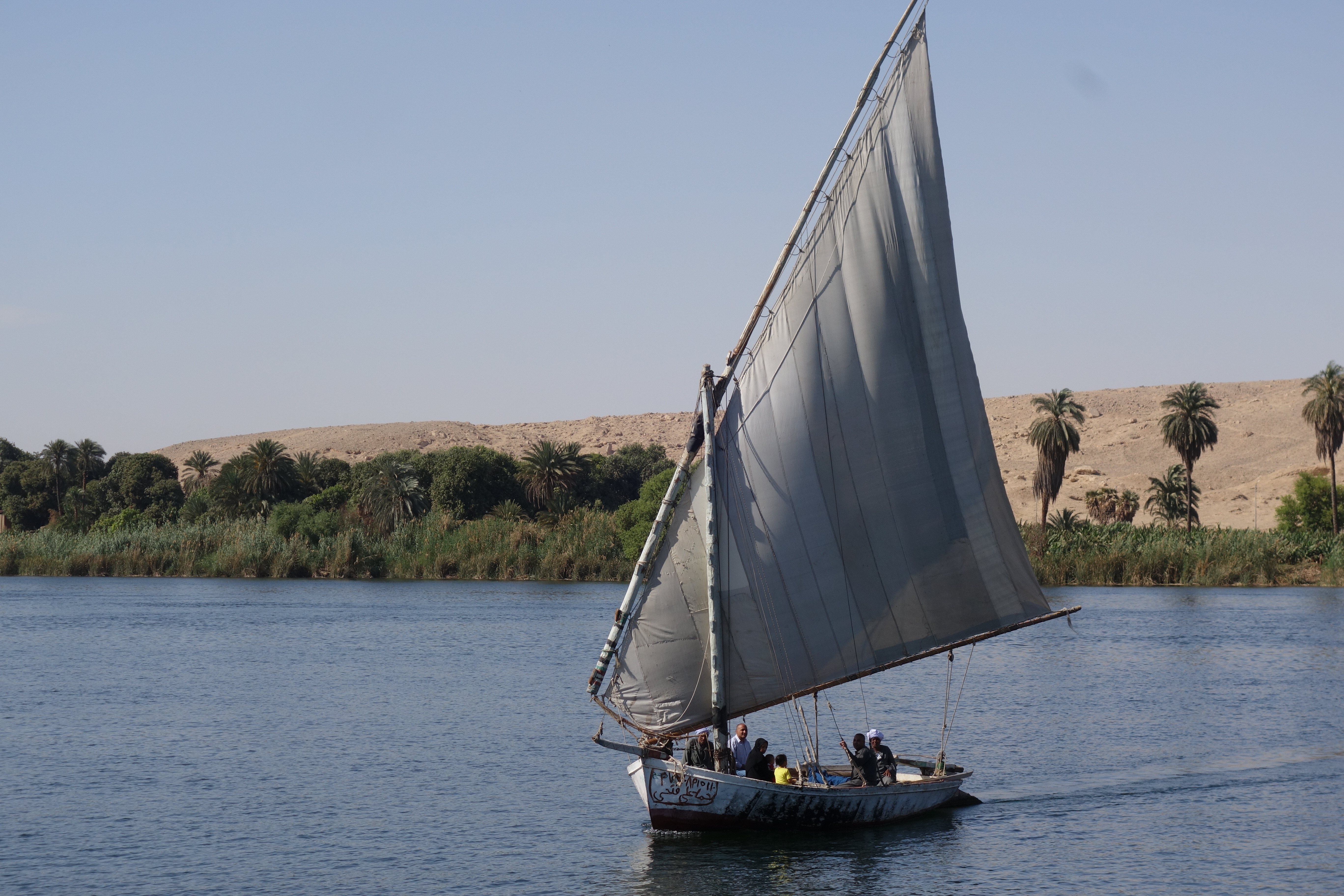
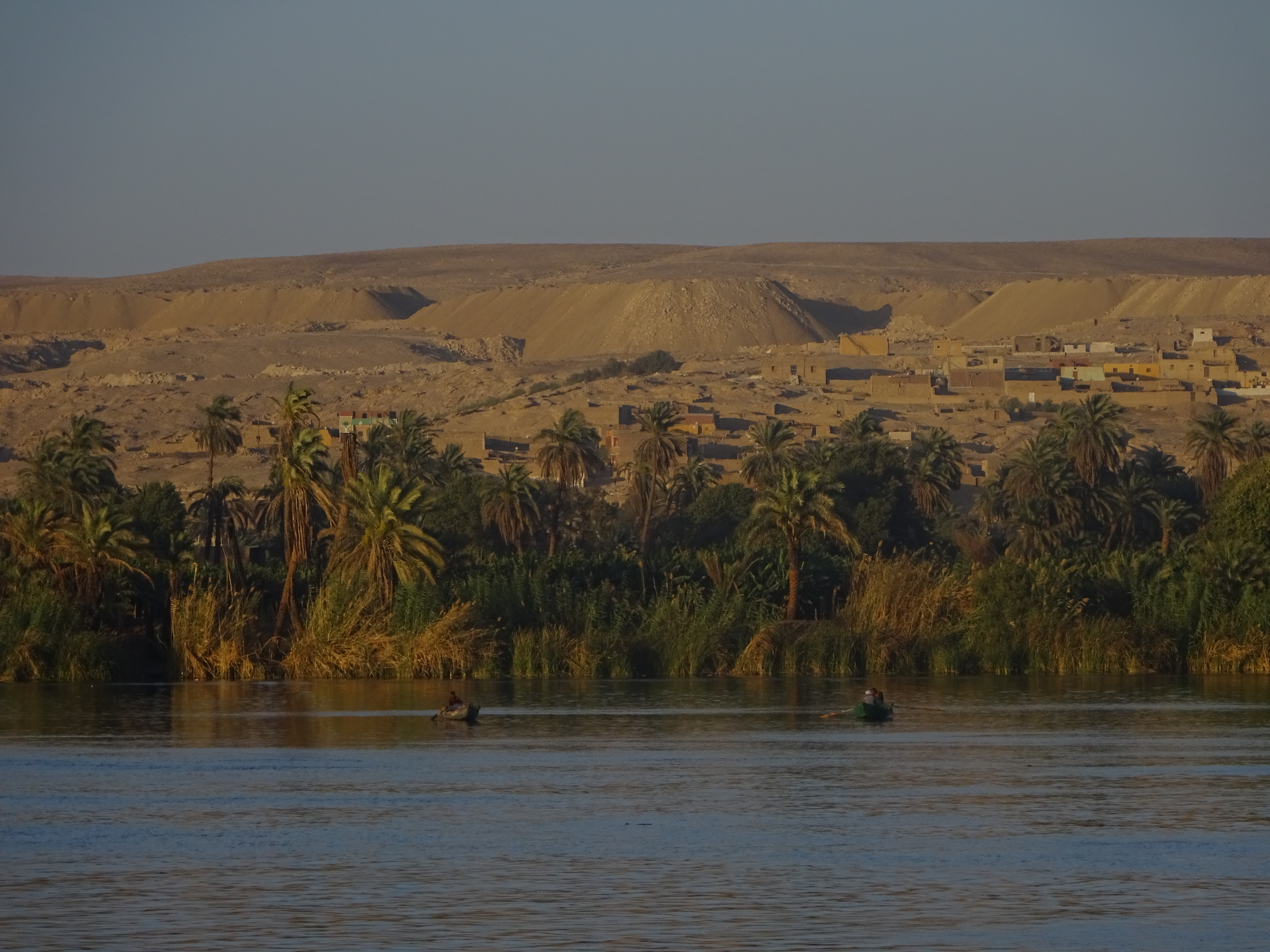
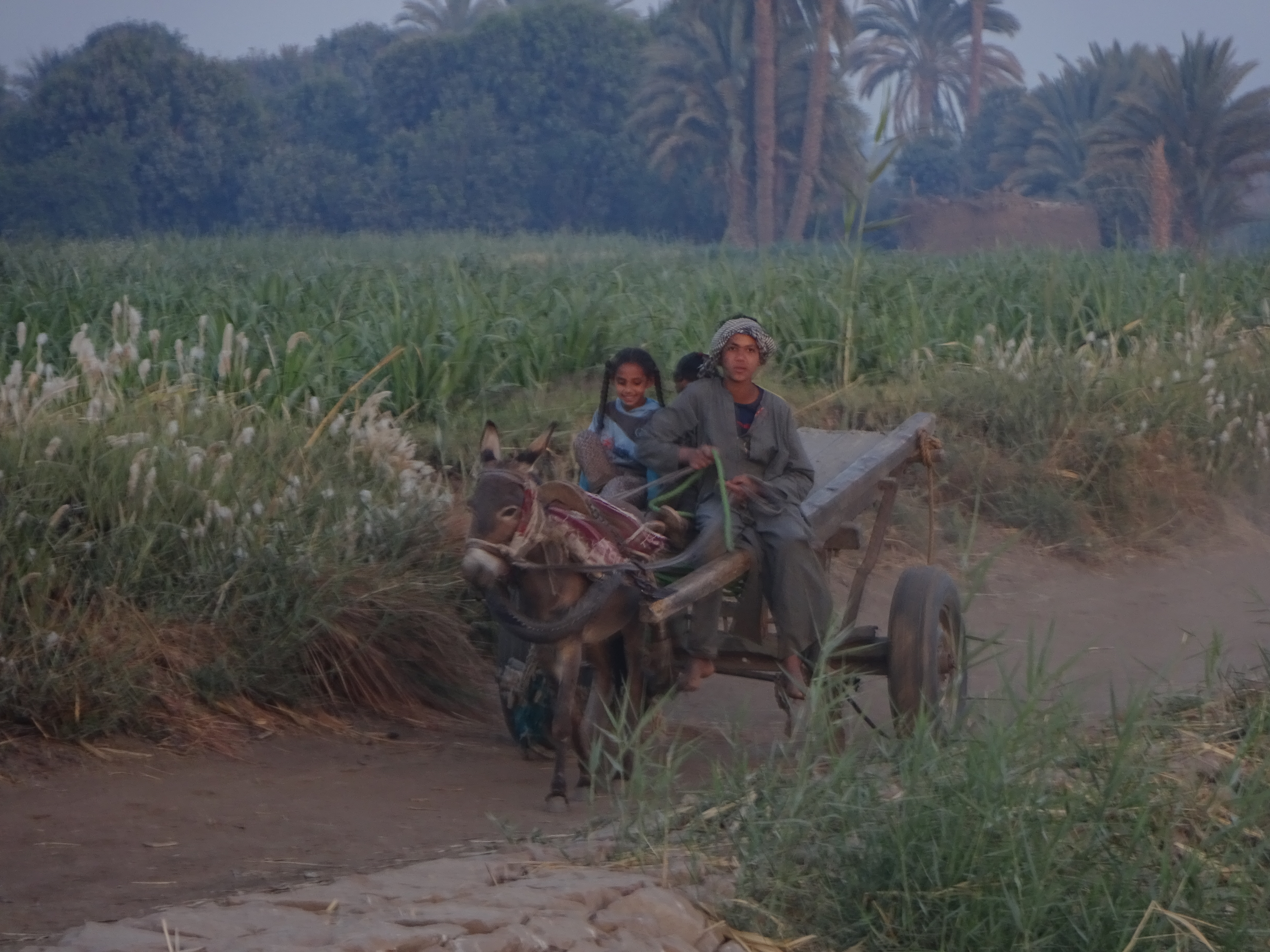
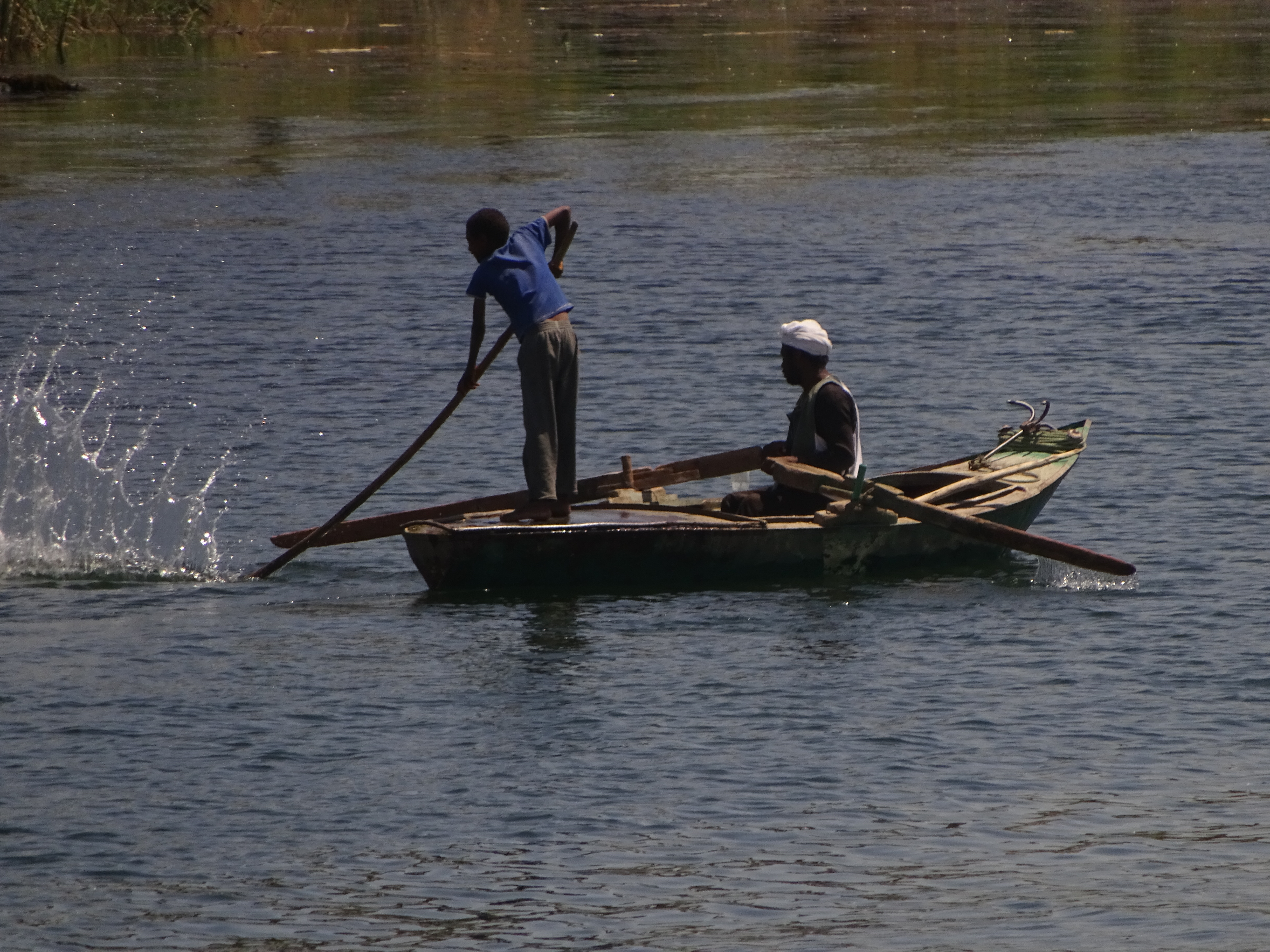
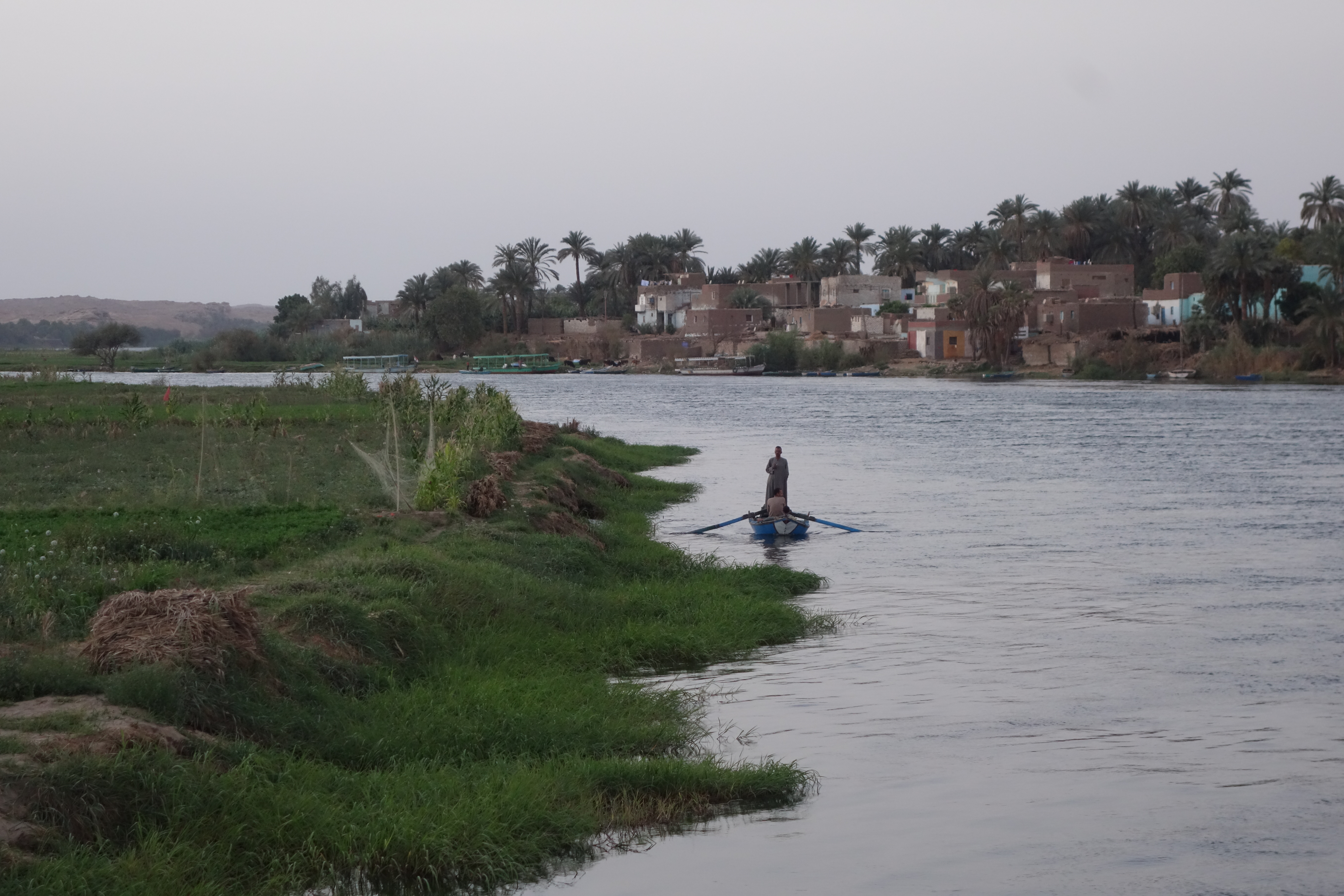
Liz, having been brought up a sailor, is in ecstasy, I’ve got the hammock, so I’m not far off. Once away from the towns, the Nile is incredibly pretty. The water is clean, reflecting a pure blue sky, the banks are a luscious green of date palms, crops and pasture. All manner of birds swoop, roost and fish between the numerous fisherman’s row-boats and the smaller, single sailed feluccas as an occasional donkey trots its load along the bank. The golden desert rises up beyond.
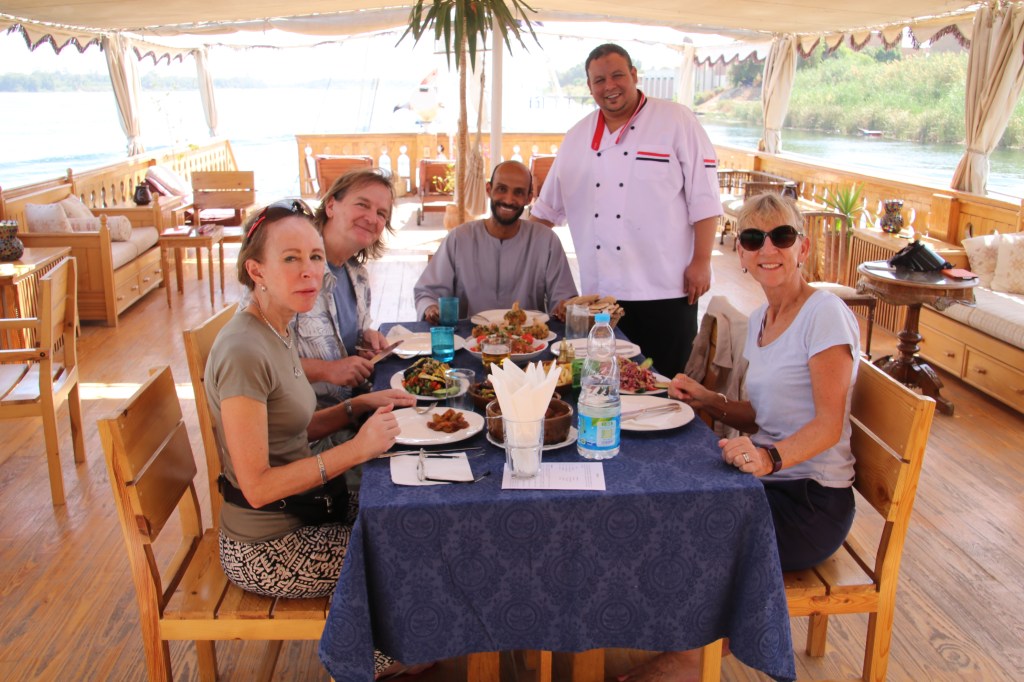
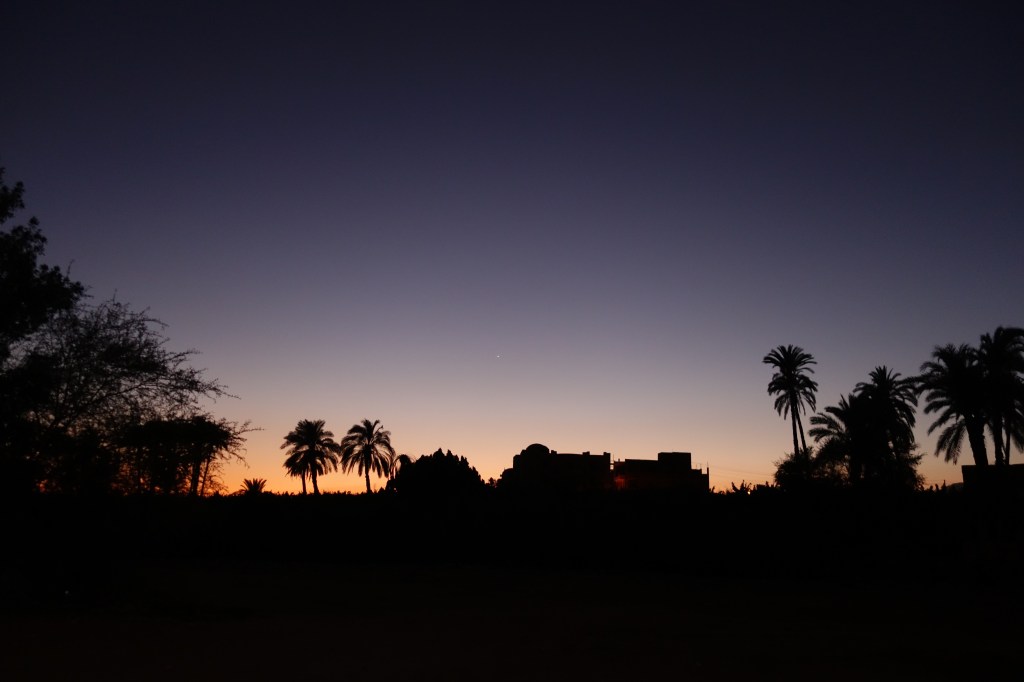
This is not high-speed travelling, this is luxuriating while moving, (just). Our floating palace continues to waft us upstream and we moor for the night as the sun sets. Abdul and Chef Mohammad serve dinner, damn that man can cook, the best Chef of the whole trip and so much food. Dinner is served under our canopy, a canopy of stars over that. Sleep comes with the gentle gurgle of the Nile slipping beneath our keel.

Day 11
In the morning we stop at El Kab, where a small village sits next to what once was the biggest town in Southern Egypt. The village is a shithole and a gaggle of kids rush down to meet us holding baskets and plates that appear to have been woven from industrial waste. We are into re-cycling and we like to help out, but it’s only worth buying if you like it and this stuff looks radioactive. We shake them off and visit the ancient city which, is just a huge mud-brick wall enclosing some grass and dirt, but it is massive. We pass though the cultivated land and onto some tombs cut into the desert cliffs, they are okayish, but Salah saves the day by interpreting the hieroglyphs and teaching us Pharaonic numbering.
The main tomb is for a temple High Priest and the writing on the walls tells us how much tax he paid to the temple during his lifetime. The numbers are staggering and only represent about a tenth of his wealth. This is the answer, the reason as to why this civilization developed so far ahead of any other. The annual flooding of the Nile fertilized and watered the land so that it was unbelievably productive. Food begat population, wealth and armies. Food was traded for precious metals and other fancy goods. Armies protected the trade, or enforced it where necessary, or just smote people and took their stuff. Food made the Pharaohs.
There is also a tomb that belongs to a common soldier who became such a good smiter that they made him a General. His tomb tells all about the battles he fought and the number of smites he had and is the only record of how North and South became one nation.
We walk back to the boat only to be intercepted by the junior vendors, who are now a screaming horde. Dori wants to engage, but their demands are outrageous and aggressive. Enough! We get back to the boat and pull up the gangplank leaving a tribe of tantrums in our wake. Did they learn a lesson? Judging by the similarities with the Luxor Souk, I very much doubt it.

After lunch, we arrive in Edfu and Salah hires two horse-drawn carriages and we canter off through the crowded traffic to the temple of Horus. Everybody gets a favourite god, mine is Horus, the Sky God. Once upon a time, Isis and Osiris were gods but Osiris had a brother, Set, who was jealous of Osiris and killed him, then cut him up and spread the bits all over Egypt, so that he couldn’t be put back together, all except for his willy, which he threw into the Nile where a fish ate it. But Isis loved Osiris and transmuted into a bird and scoured the land until she found all his bits, except the willy. So she put him back together and then fashioned a willy out of clay and gave him a good seeing to while she was still manifested as a bird at which Osiris came back to life. (Well you would, wouldn’t you?) And the son of their union was born half-man, half-hawk, Horus.
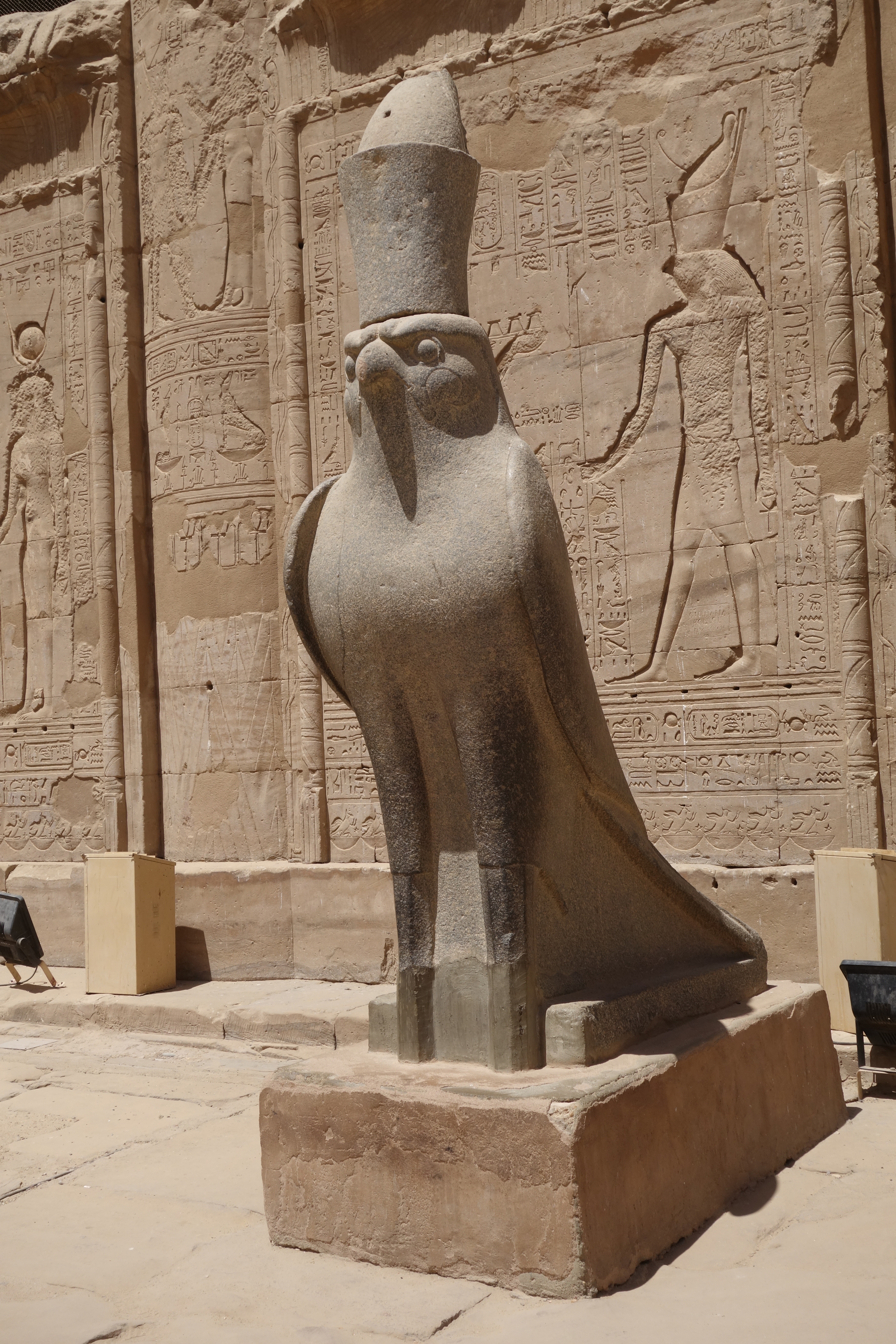
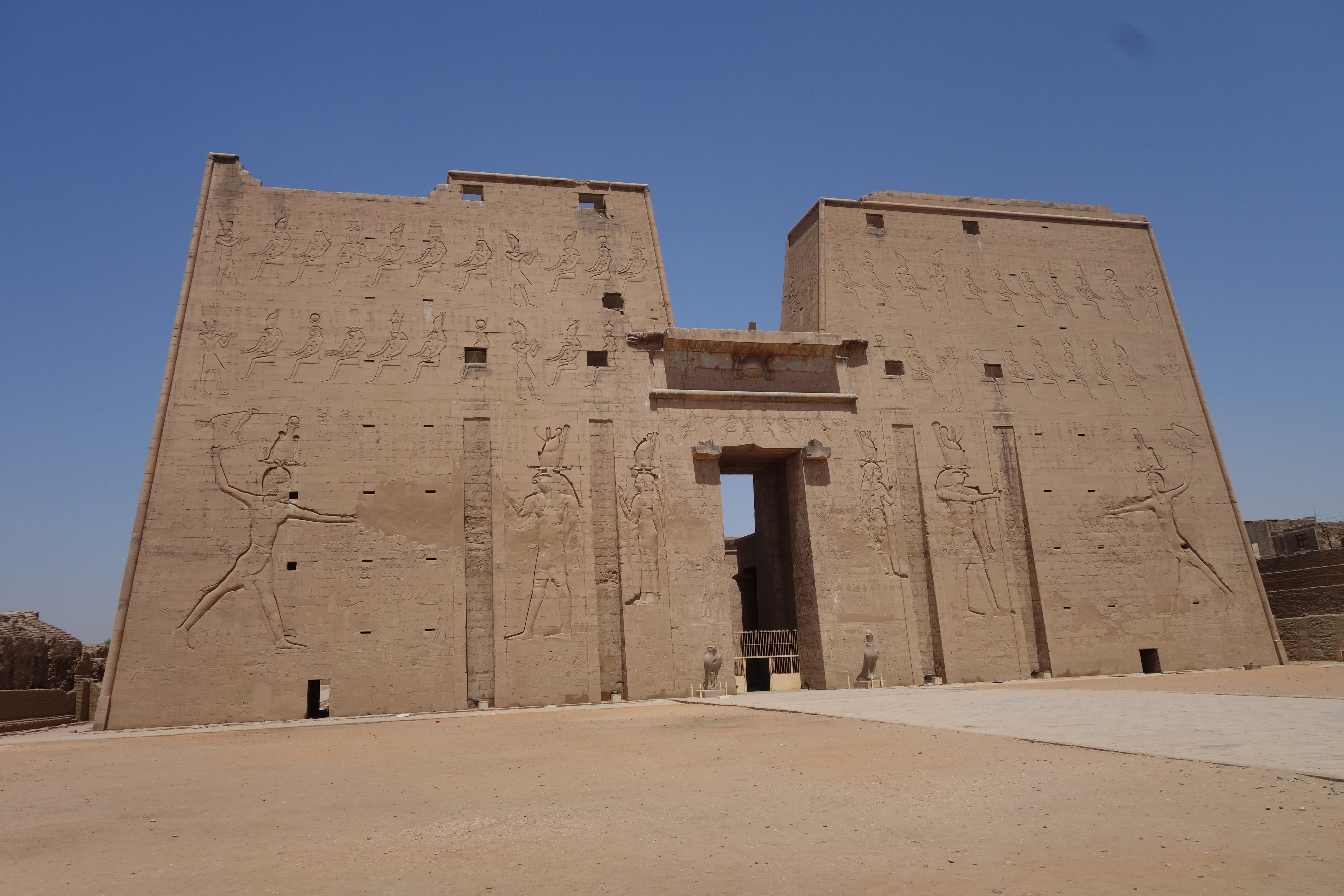
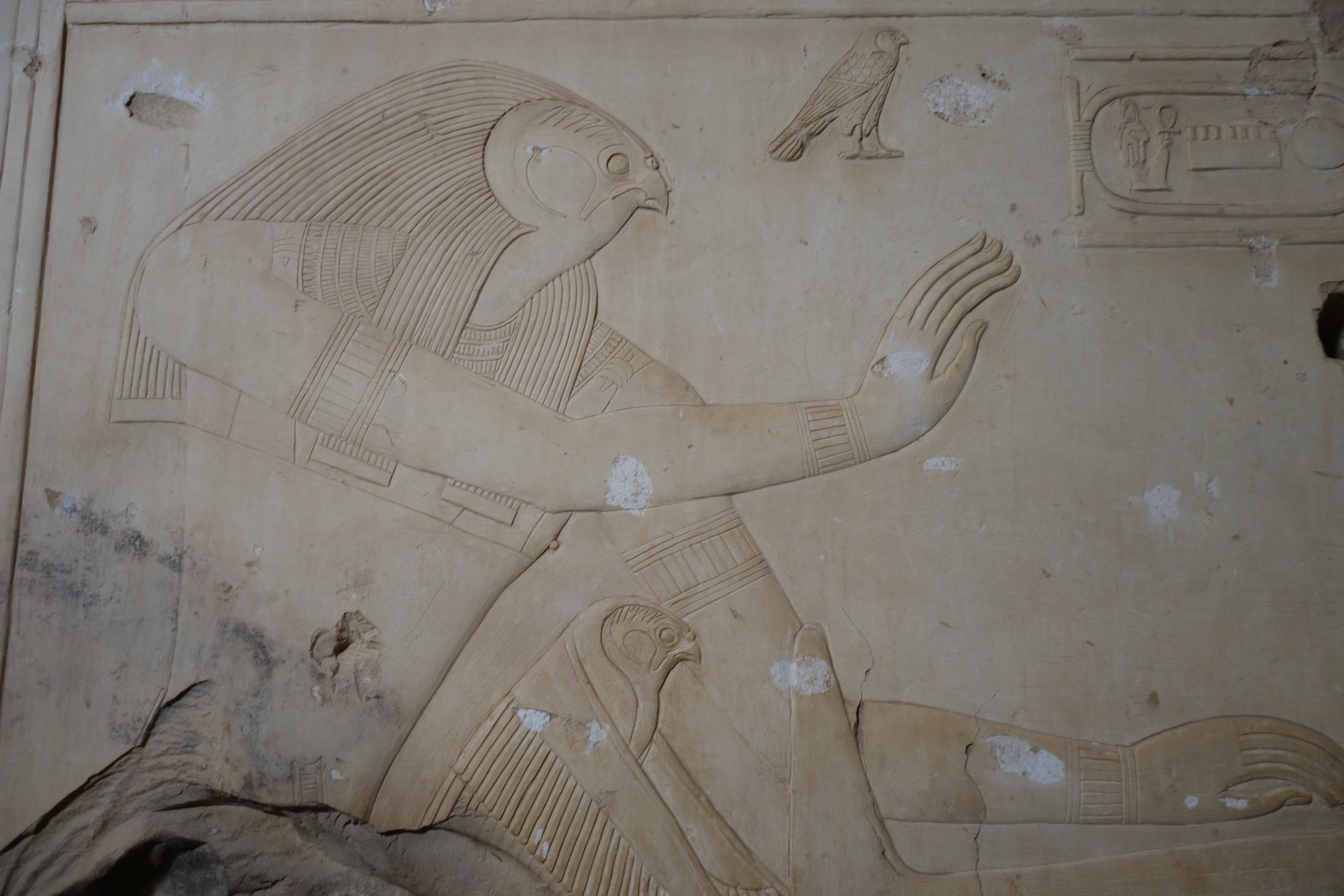
His temple here is pretty big and full of images of him thanking Paraoh for smiting people on his behalf and revenging on Set for what he did to his Dad. Horus is way cool but, his temple here is a bit Ptolomeic.
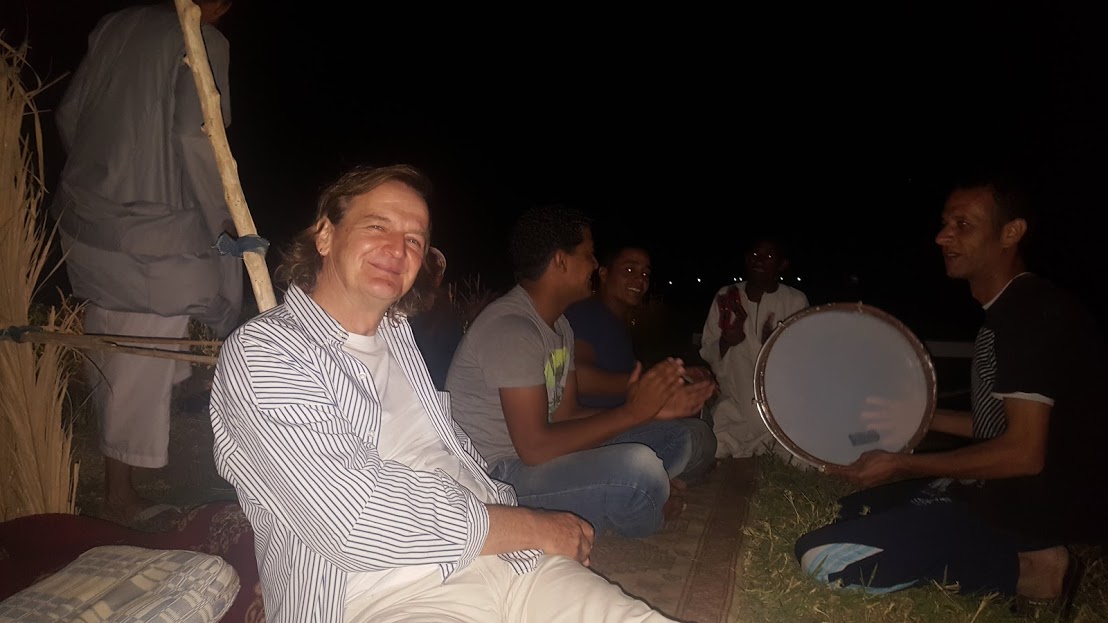
In the evening, we moor at a small island which the locals farm for vegetables. There is a tiny mat shed on the bank and the crew throw in some carpets and cushions and a bunch of guys turn up for a smoke and a chinwag. By the time dinner is ready, they all clear off, the path is lit with candles and we are ushered in for dinner divan style, lounging around, scooping up delicious food in Egyptian bread and spilling most of it down our fronts. There is the blackest sky and brightest stars since Sinai. The Crew pull out a couple of funky tambourine drums and sing us a long and winding song with some really good harmonizing and Liz surprises them by letting go with one of those Arabic ululations, which she is really good at. They think this is the billy biz and, naturally after that, we can’t shut her up. Still, it probably scared away the snakes.
Day 12
In the morning the tug carries us over to the shore and we walk inland and along the edge of the desert where there are petroglyphs of antelope, bison and giraffes, scratched into the rock by early Man. There is even a boat with a sail! By comparison, again, Ugg, Biff and Gronk had just mastered pointed sticks.
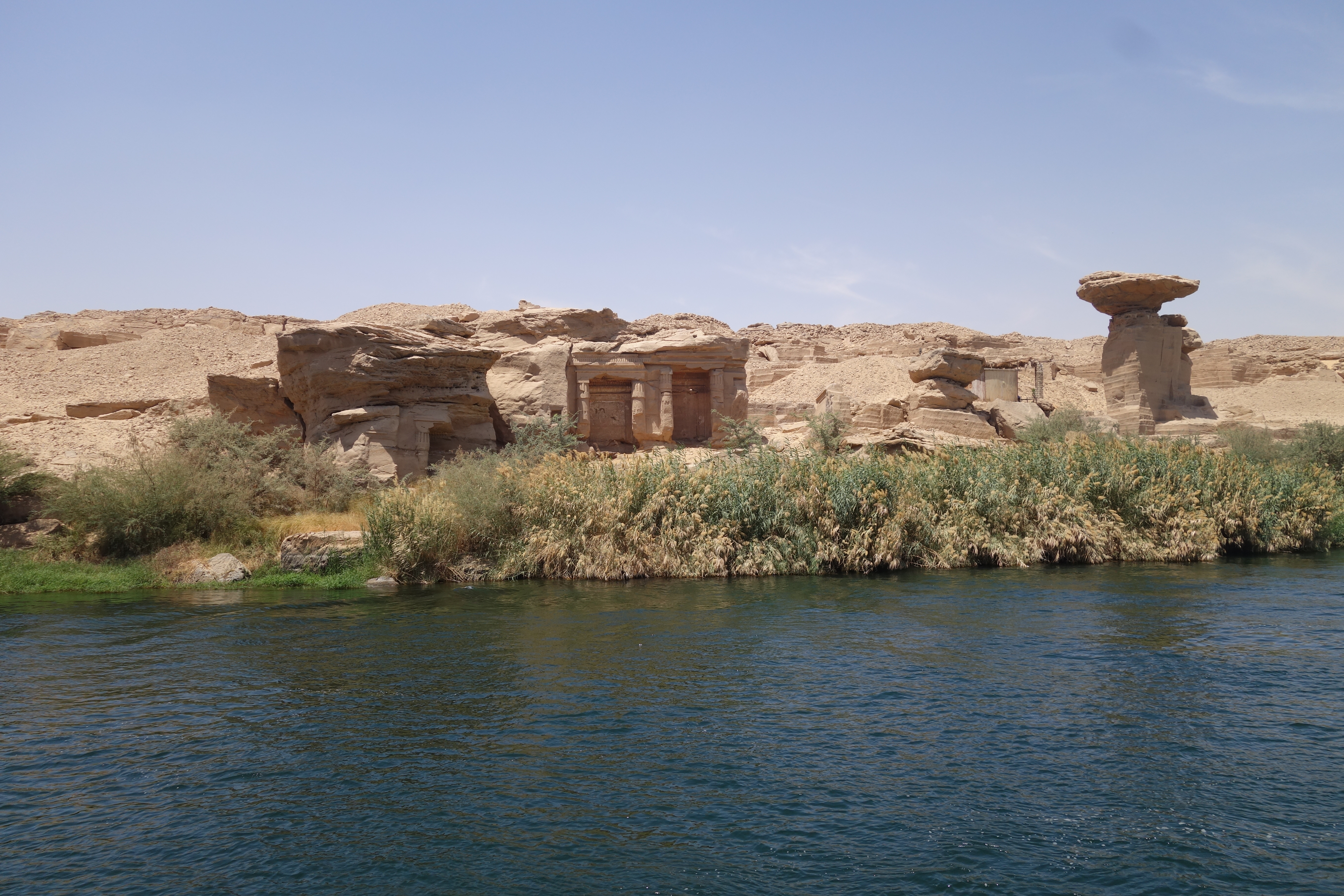
We walk on to Gebel el Silsila, the side of the road is scattered with dead animals, the villagers bring the sick ones out here to die, away from the houses and the houses are surrounding by piles of burning trash, a lot of which is plastic, you can taste the cancer on the air. Gebel is the quarry where generations of Pharaohs cut the stones for their temples in Luxor. There are a few minor temples and tombs here, but it’s pretty bleak and the main reason for visiting is the teaser……. How did they do it? How did men with stone age tools, cut and transport such enormous amounts of stone. Many theories abound, but nobody really knows. In hundreds of tombs, there are pictures of guys farming, fishing and fighting, there are musicians and dancers, make-up artists and perfumiers, but nobody is ever shown building anything. Spooky.
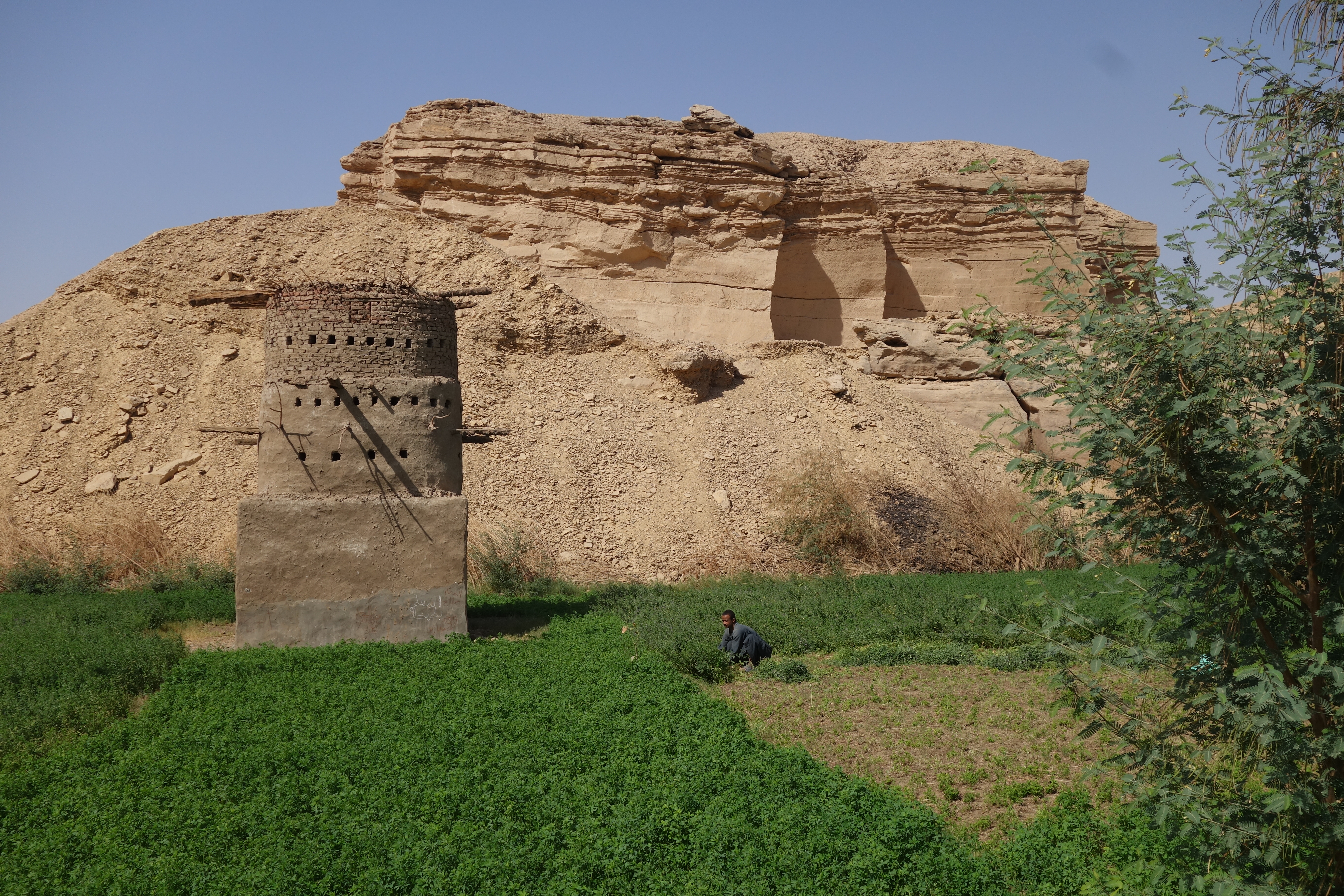
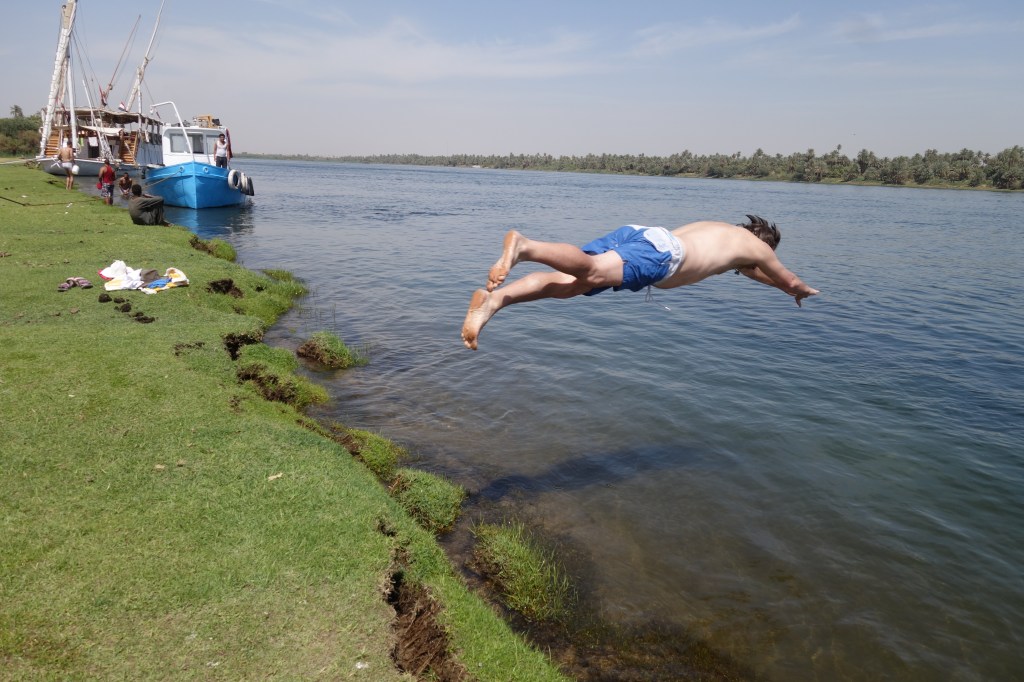
We moor further upstream at a quiet spot, with green pasture and cows, for lunch and a swim. Yes, I have swum in the Nile and must say that despite this being one of the hottest places on earth, the river is bloomin’ bracing. The water is clean, but don’t open your mouth and we are assured that there are no longer any crocodiles, honest. If there were, I’m sure that my Godzilla-like aquabatics would have frightened them off anyway.
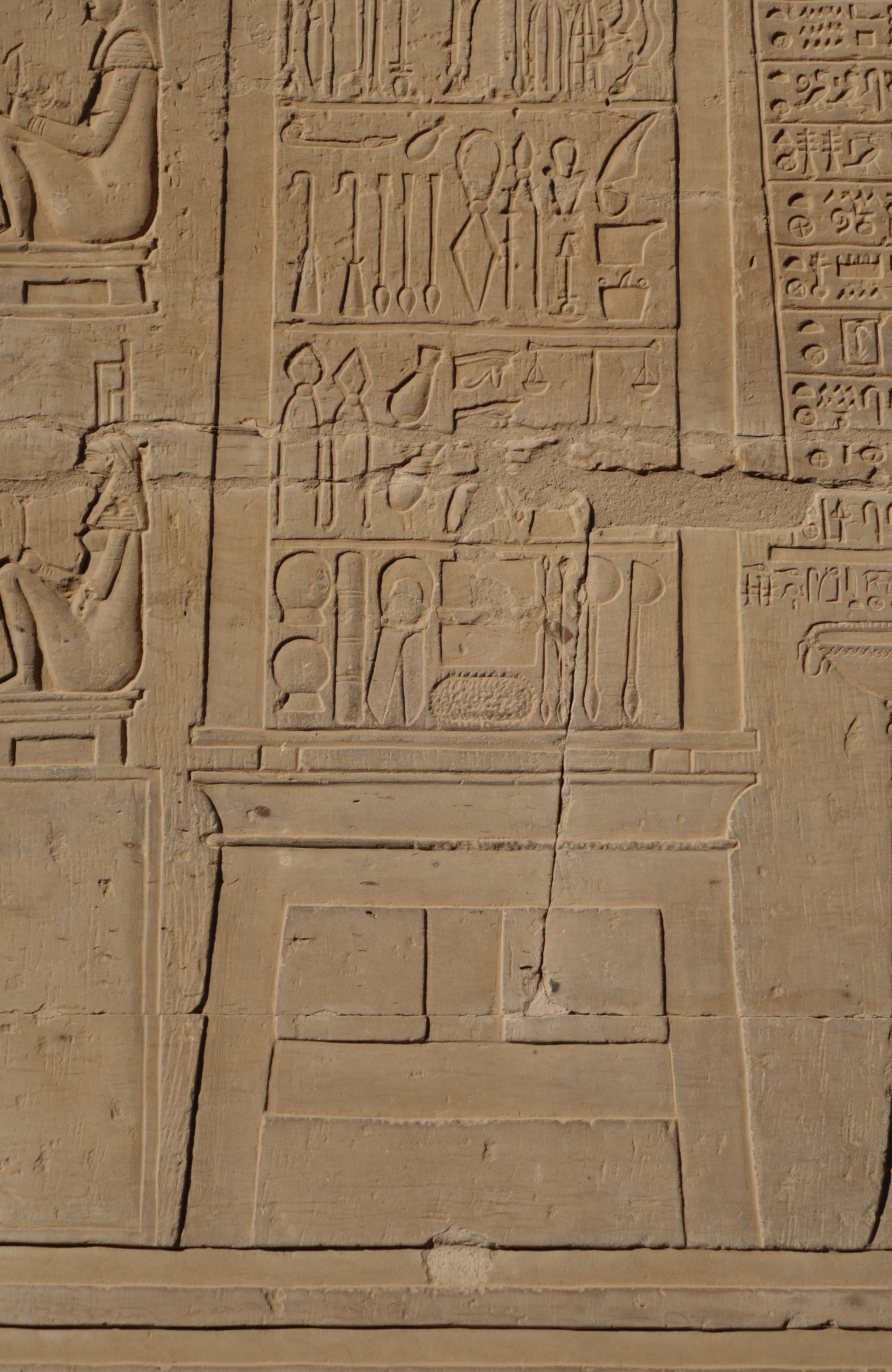
The Zekrayaat sails on to Kom Ombo. This is one of the few towns that has a dockside big enough to park the enormous five storey, slab sided, cruise liners that plough up and down the river. These are ugly boats full of cheap tour groups and not to be recommended. Many are packed with Russians in various shades from snowy white to scorched vermillion, who sport the latest thing in Russian fashion and hairstyles. They pack the double Temple of Sobek (The Crocodile God) and Haroeris (The other Falcon headed God). People climb over the ancient relics to get the best selfies and I keep moving in case I get clambered on. One of the most significant parts of the Temple is the Doctor’s Waiting Room where 2,500 year old hieroglyphs illustrate medical instruments that were still in use in the late 1900’s.
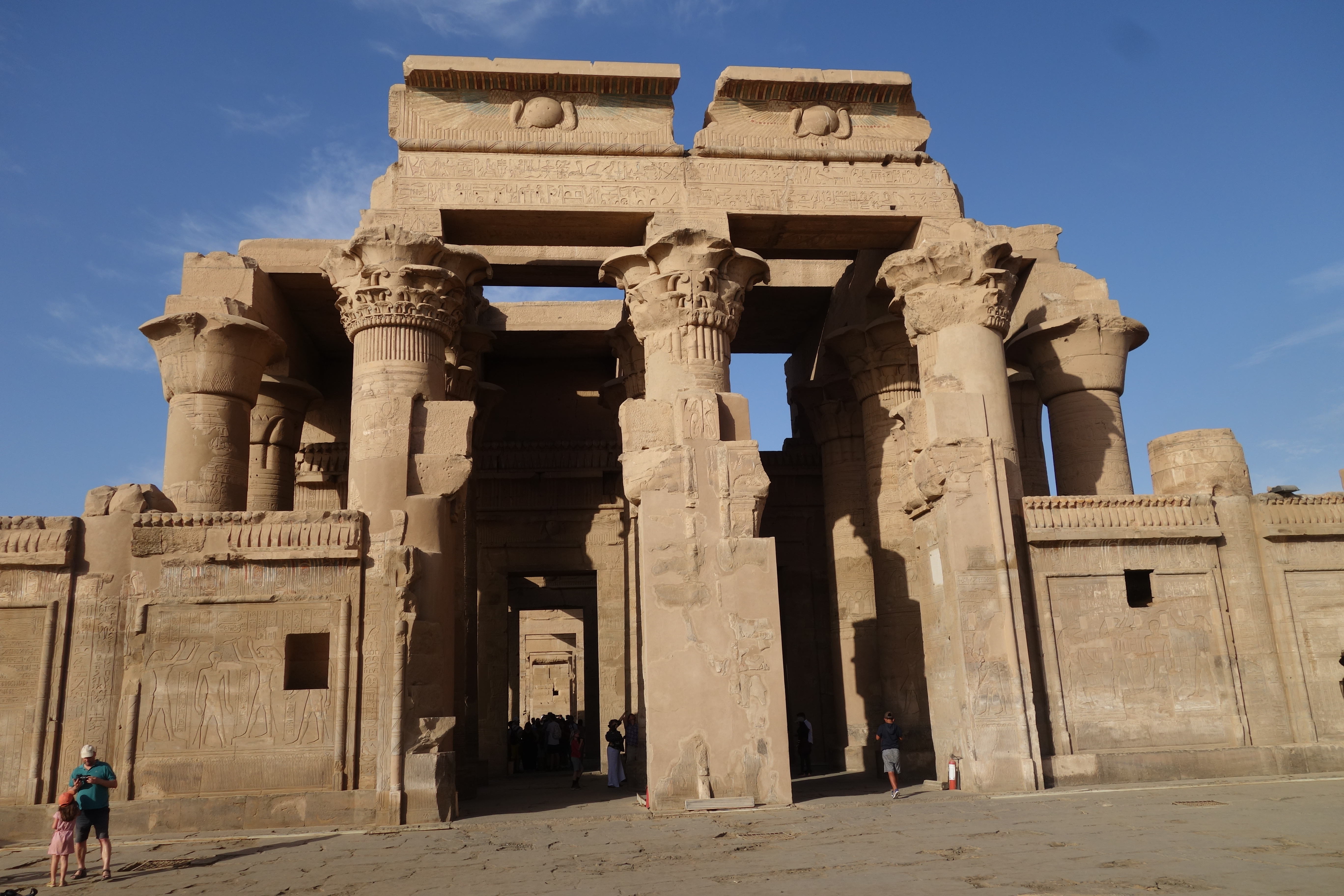
We make our way back to the Zekrayaat, already Tomb and Temple snobs, we are now boat snobs and retire for tea on the upper deck as we sail away, leaving the riff-raff behind.
Day 13
A quiet day, we visit the town of Daraw, which used to be the staging post for the 40 day caravan trek across the desert to the gold mines of Sudan. Unfortunately, we have missed the big camel fair of the week, but wander through the local market which is very lively. Dori and Liz are the only unmasked females in town and Jon and I field several enquiries as to whether they still have their own teeth and are they of a breedable age?
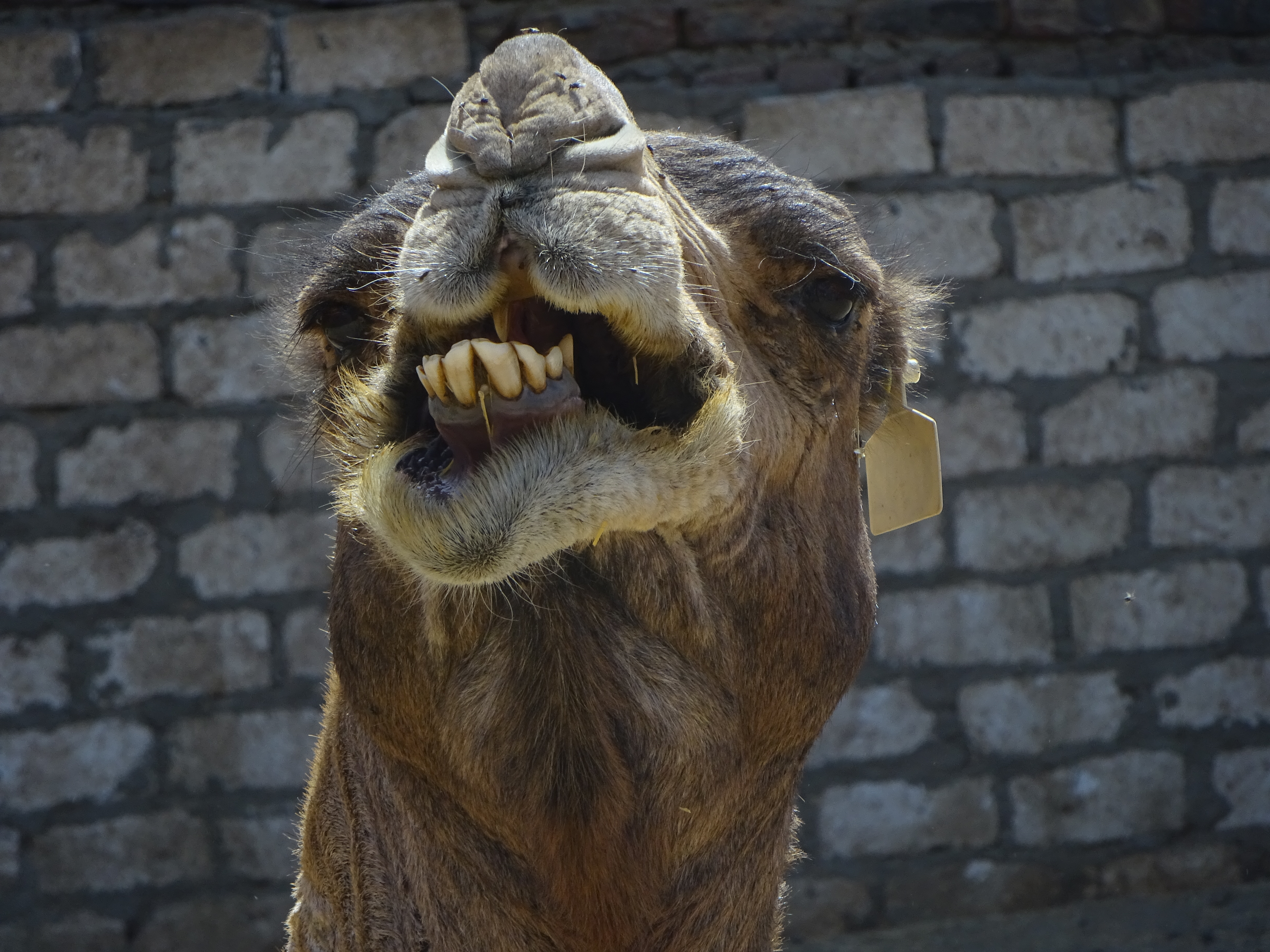
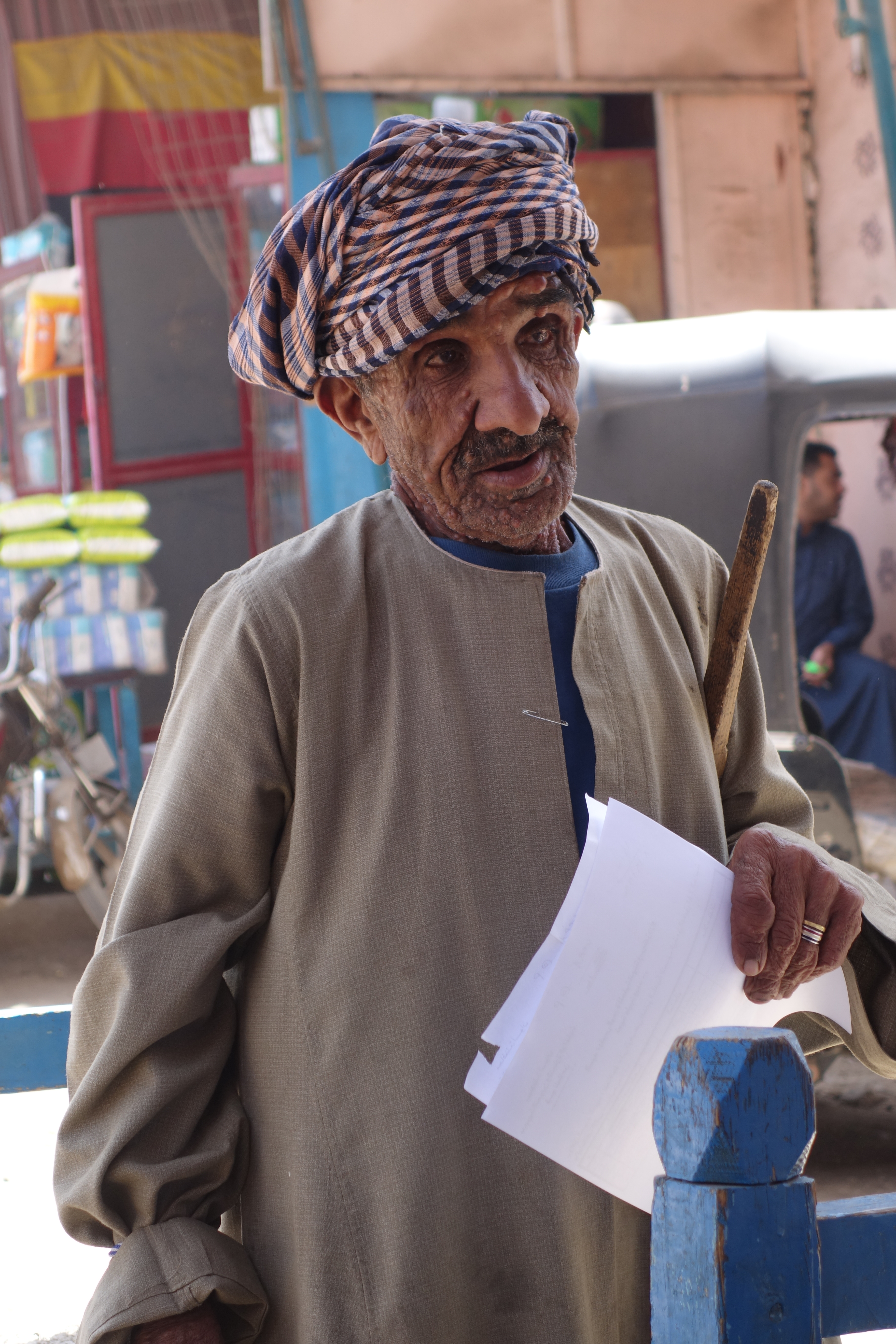
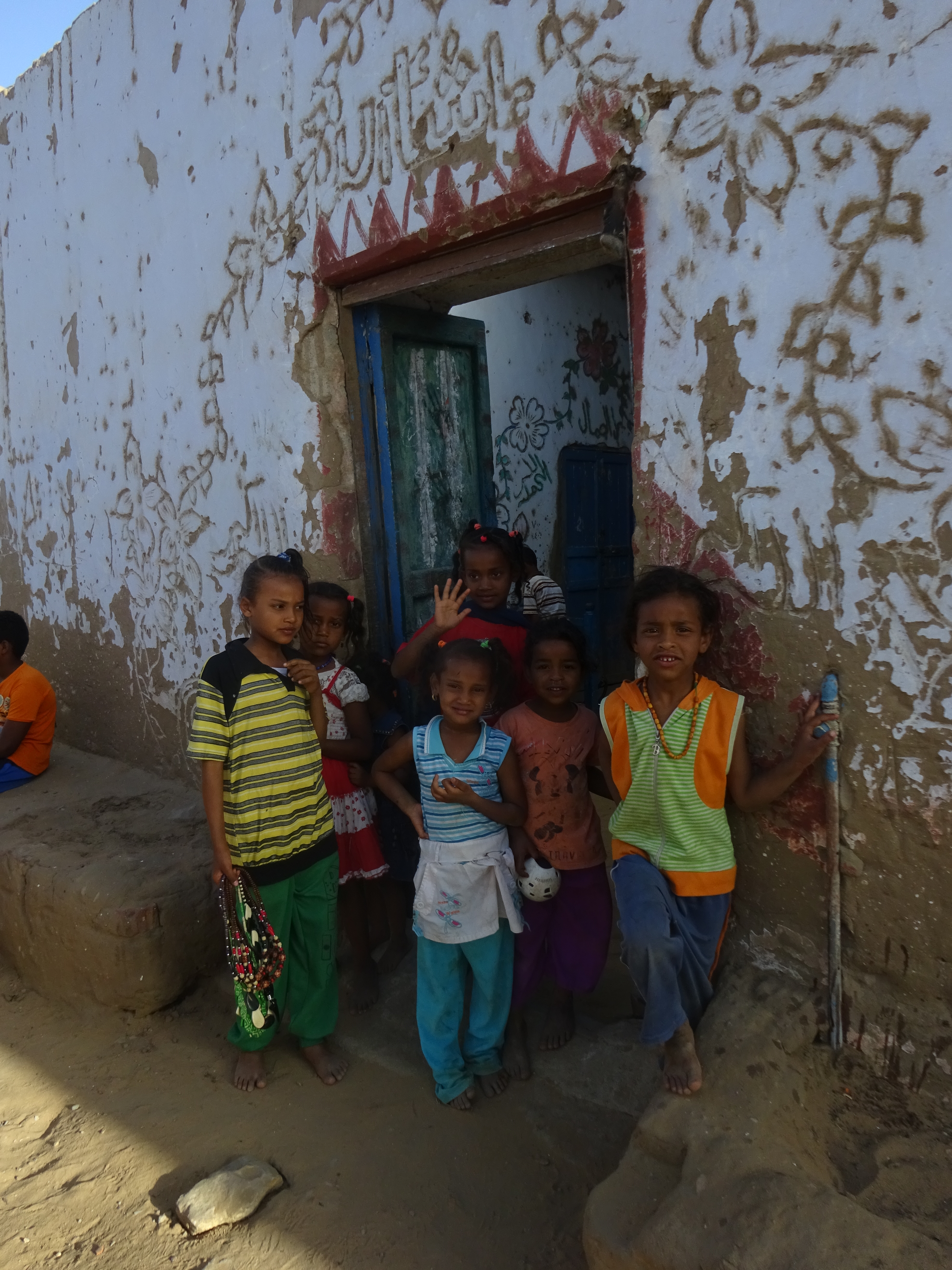
We also visit the village of El Koubania, which is home to Nubian people displaced by the building of the Aswan dam. Seemingly, they are not a happy people, they pine for the desolate wastelands of home and here there is way too much green stuff. Kids try to sell us some basic Nubian jewelry, made in China, and they have a good line in flies. Life is hard and pretty depressing really.
We sail on and moor outside of Aswan, in the morning we are to leave and another group will take our place for the journey back down the Nile.
Day 14
By breakfast time the new passengers are arriving and we have to make way. It’s almost tearful saying goodbye as the Zekrayaat has been terrific and the Crew fabulous, but our new Guide, Aladin, is waiting with the bus to take us to Abu Simbel and so, we must go.
We head away from the lush banks of the Nile and into the stark Sahara. To the South, Sudan and to the West, Libya and 5,000 miles of sand until you fall into the Atlantic. Do not turn West. It is bleak, yellow sand with black rocks. The rocks are actually sand coloured if you turn one over, but nobody does, because of the scorpions, so the rocks are burnt on top. We stop at a little fly-blown café in the middle of nowhere and see our first mirage stretching from horizon to horizon, damn it’s hot.

We arrive in Abu Simbel at lunchtime and Aladin takes us to a small restaurant where they grill the Lake Nasser Tilapia. It’s a freshwater fish and thus a bit bony, but very meaty and really delicious. If only they had beer.
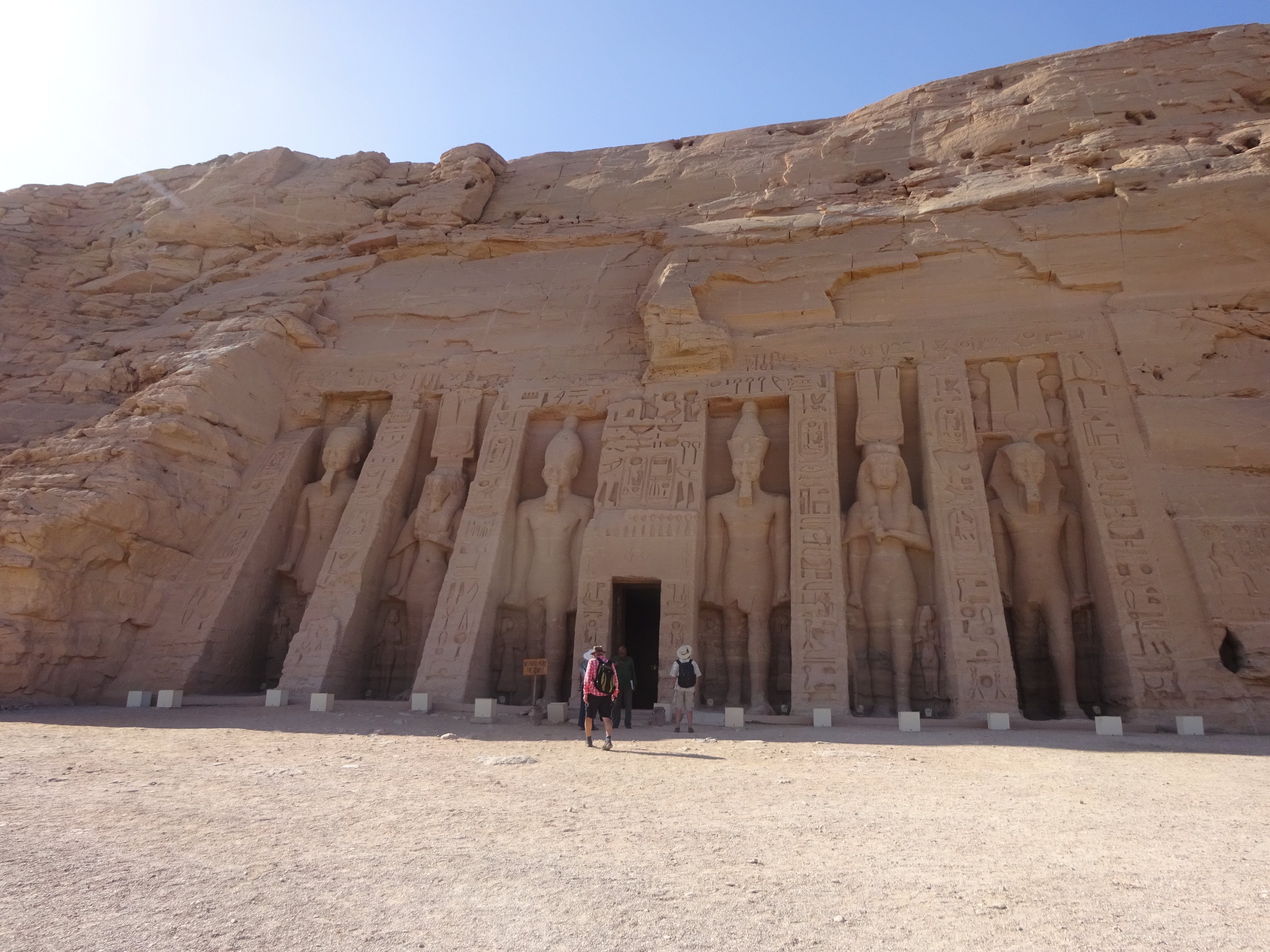
After dropping our bags at the guest house, we go straight up to the Temples of Ramesese II and Queen Nefertari. Originally the temples had been carved into a cliff face looking up the Nile, the main conduit for invading armies from Africa. The gist being; “ Look, I’m a nice guy, here’s one of me and the missus. But, hey, this one is me on my own. See how big I am? Now you wouldn’t want to piss off a guy this big, would you? So why don’t you just head off back to Africa and we’ll say no more about it. Alright?” I guess it must have worked and saved on some of the smiting. The statues sitting outside are massively impressive.
When Nasser got the Russians to build his dam, it caused a Cold War panic, but when the West realized that it would flood one of the Wonders of the World, they really went wobbly. The Russians didn’t give a stuff and Nasser, boxing clever, said that Egypt didn’t even have enough money for the dam so, if the World heritage guys could come up with the spondulicks and the experts to cut the temples and the cliffs into bits and re-build them up higher than the new water level, that would be nice. So the Russians paid for the Dam and the West paid for the temples and the Egyptians sell the tickets. Big baksheesh.
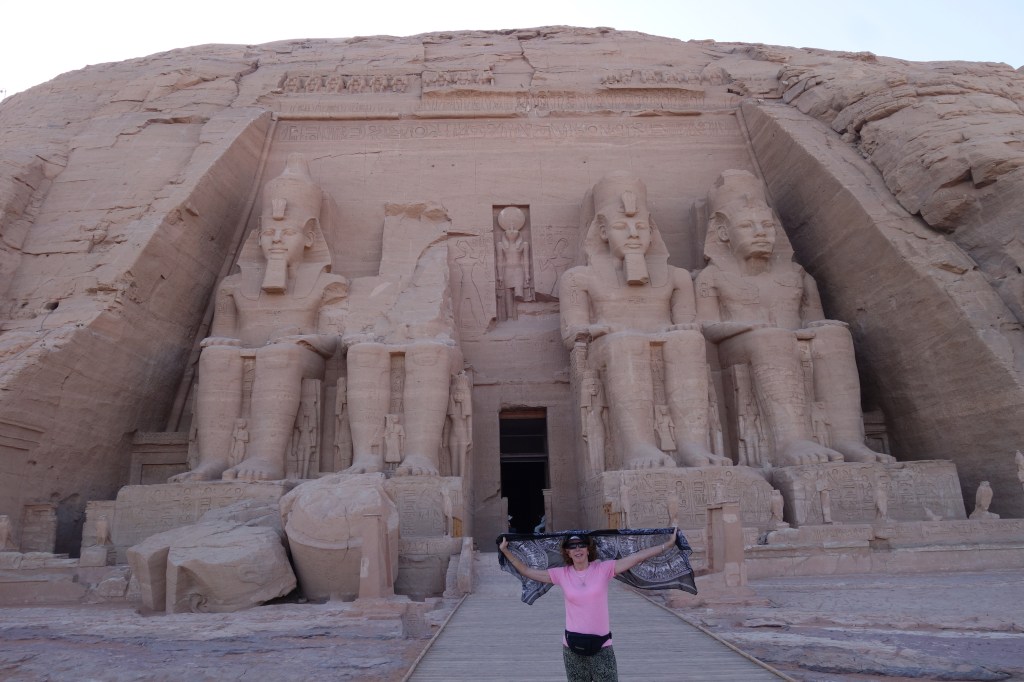
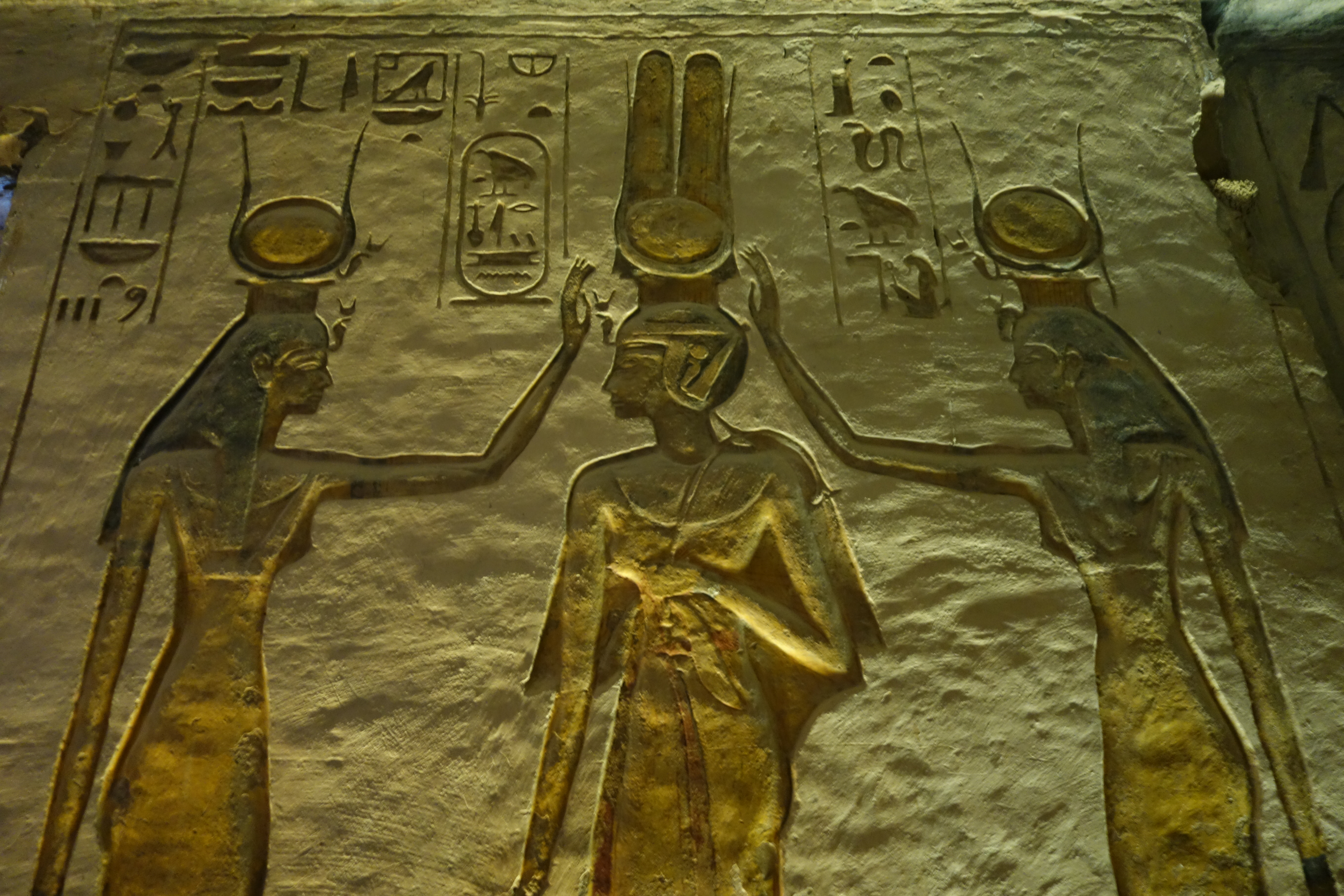
Nefertari’s temple is the smaller of the two, but quite beautiful whereas, Ramesese’s is awesome in its scale. Aladin tells us all about them and we quickly realize that this guy should have been on Jackanory, he loves telling stories from the Old Testament because Ramesese was Pharoah when Moses floated down the Nile in a basket.
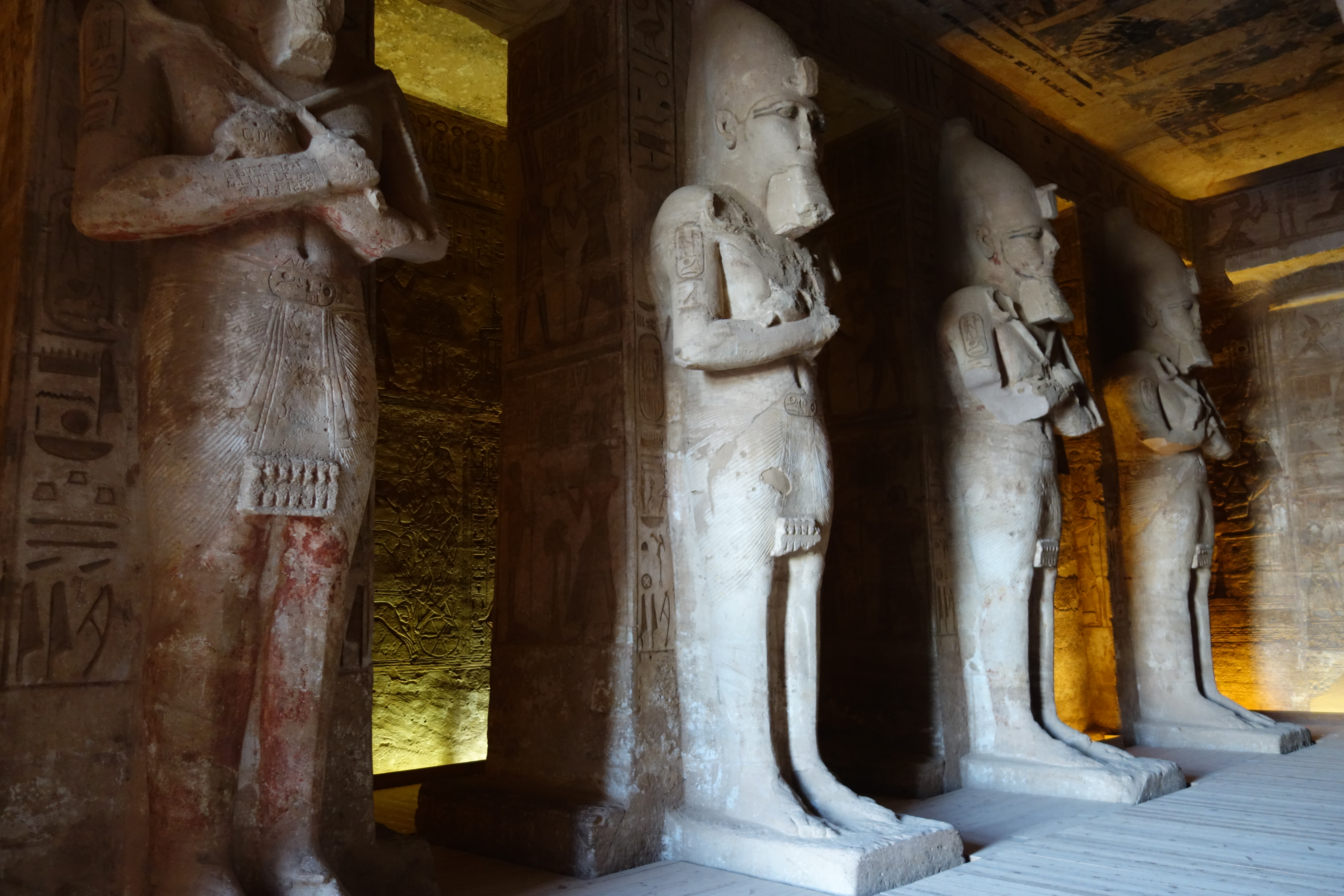
Aladin is very fond of telling us that he is a Nooooobian and that we are now in Nooooobia and Nubia is a bit like the Kurds, a distinct culture but with no borders of their own. De Nooooobians is a little bit Mocha, ‘cause de ‘Gyptian tink he am Café Latte an de African is a bit Espresso but de Nooooobian people, dey is in between an dis is dey Lan’ an de Nooooobians is de real ‘Gyptians ‘cause de ‘Gyptians nowadays is jus’ a bunch of A-rabs. His eyes pop out from his head as he tells us this stuff – again- and again, as Dori falls asleep.
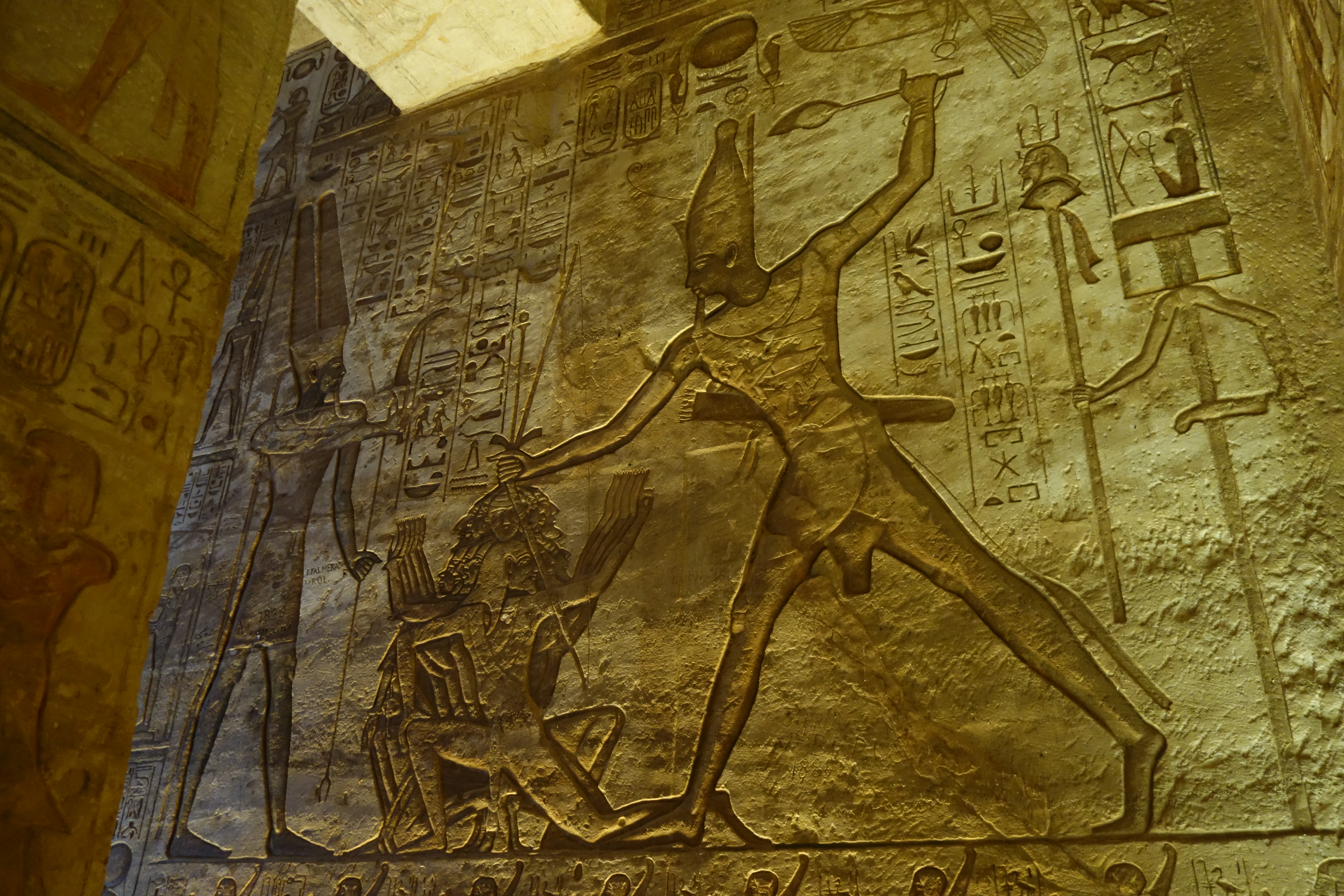
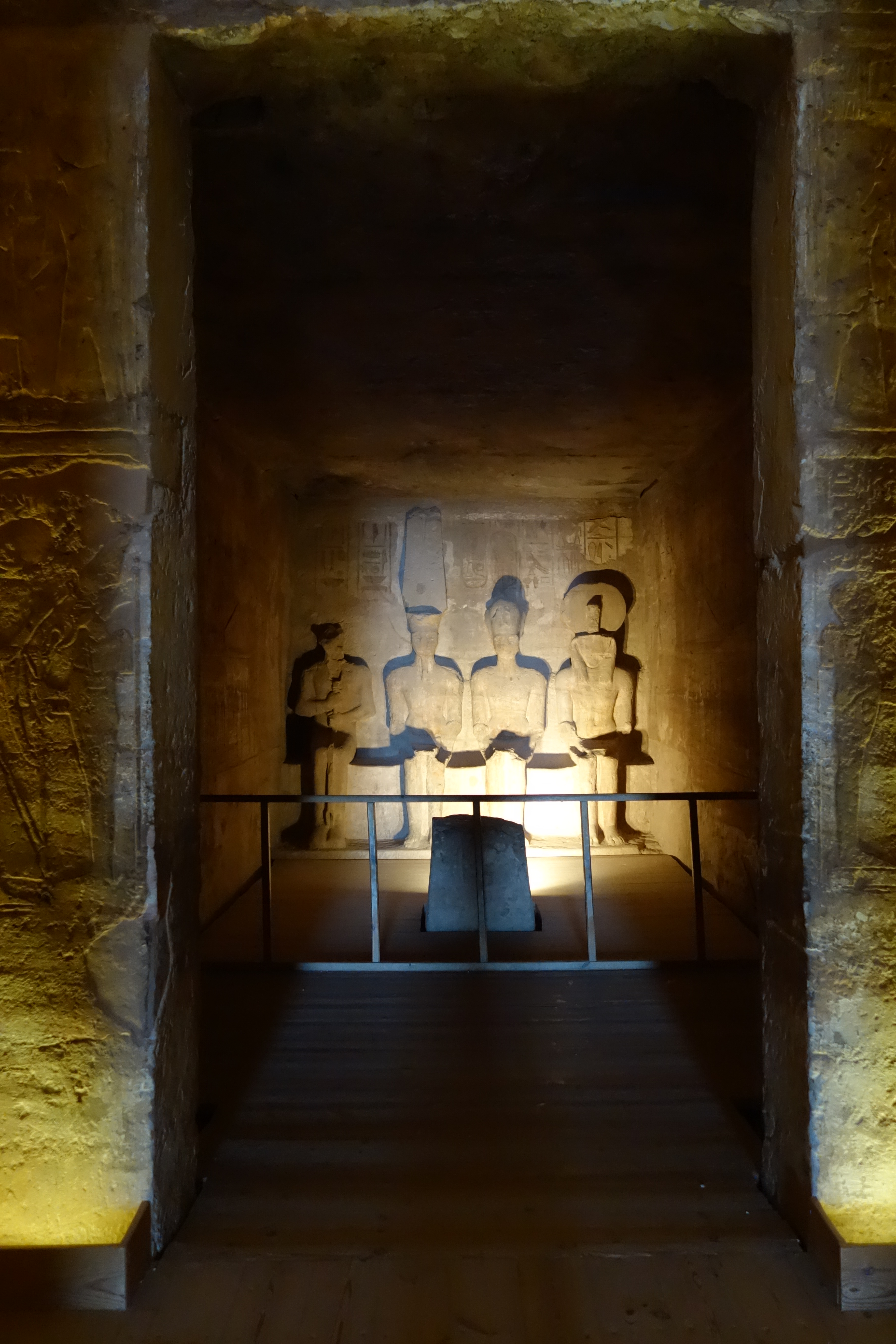
However, what is not to be disputed is how impressive Abu Simbel is, not just the beauty and the scale, but also the fact that it has all been shifted, Temple, Mountain and all. Mind you, I build this sort of stuff for a living and have a pretty critical eye. The bonding mortar used in the re-construction could be improved as some of the joints are visible and, I’m guessing due to cost and time constraints, none of the joints in the mountain appear to have been filled. I point this out to Aladin and tell him that I could fix that. He eyes me skeptically but, when I explain it, his eyes pop as if Moses himself jus’ walk in de door. “I gonna be yo Agent!” he exclaims but, as I reach for my business card, Dori wakes up and slaps my hand.
What is also cool is the fact that the Temple was carved deep into the Mountainside and that, on Ramesese’s birthday, the rising sun comes in through the front door and illuminates his statue at the farthest end. Unfortunately, when they moved it, even with the aid of computer calculations, they couldn’t get it right. Although, fair to say that in the last 3,400 years the Earth’s axis has shifted a bit, just don’t tell Aladin.
Back at the Tuya Hotel, we discover that beer is available but that the time and costs constraints are prohibitive, it seems that they have to send out to the Sudanese border Duty free to get it and it should arrive by morning. Ho-hum. Fortunately we are carrying additives which make a local lemon juice somewhat palatable.
Day 15
For reasons beyond my comprehension, I wake at 5.00pm and know that I am not getting back to sleep so, climb out of bed, dress and walk back up the road to witness dawn at the Temple. On the road up ahead, a tall, rangy figure lopes ahead. It am Aladin, he bin to de Mosque, done his practisin’ an’ deside to be comin’ ‘ere ‘stead of goin’ back to bed. He has a mark high on his forehead, a bit like ash or some form of skin growth. Dori remarked on it previously as we have seen a number of guys with the same mark, so I ask him and he tells me that 55 years of banging your head on the ground, five times a day is going to do that to you. Yup, especially if the floors are a mucky as Egypt’s.
Up at the Temple, I’m not watching the dawn, I’m watching the dawn light up the Temple as it changes from cool blue-grey, to grey-white, to sand and rose and burnished gold and I’m glad I got out of bed.
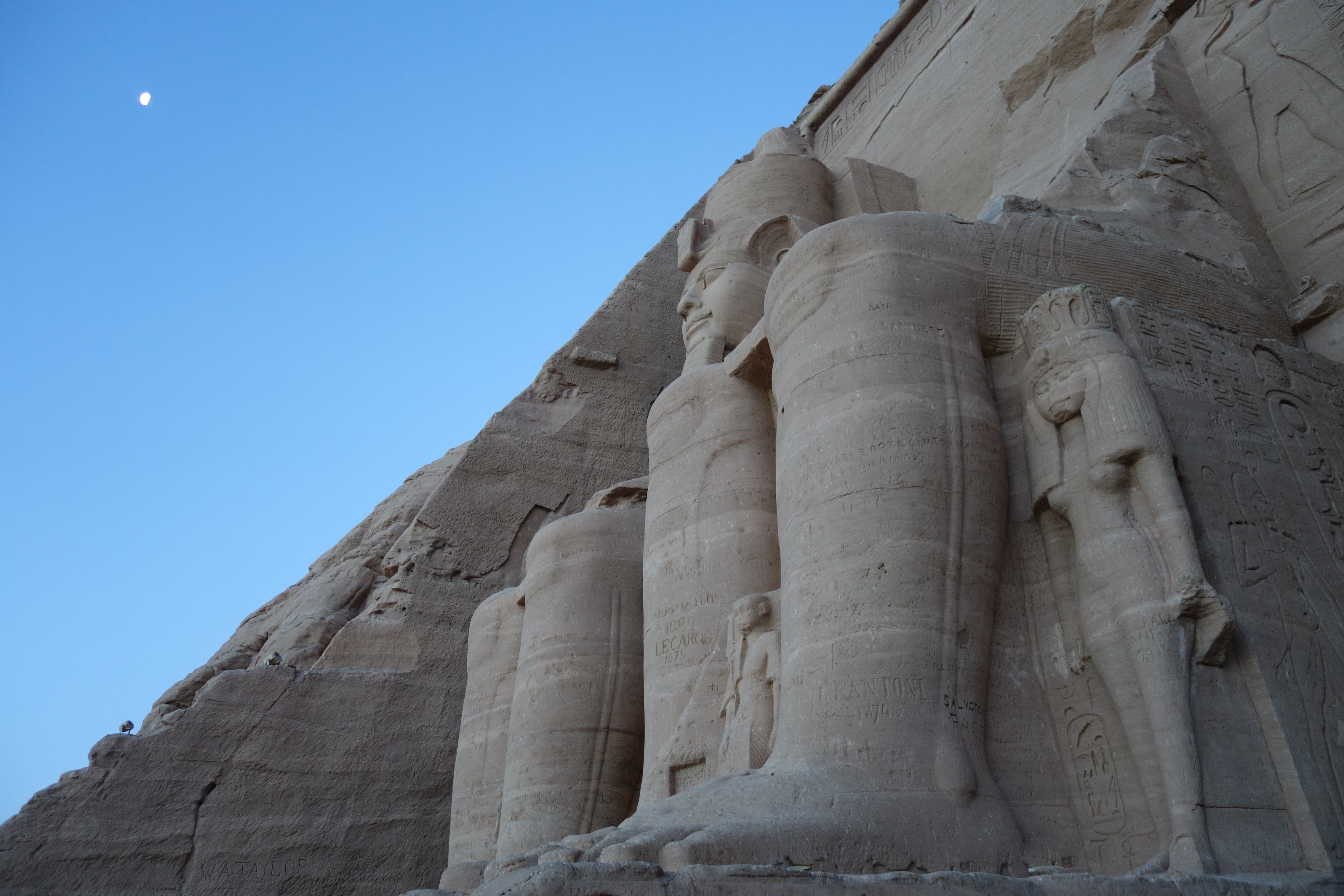
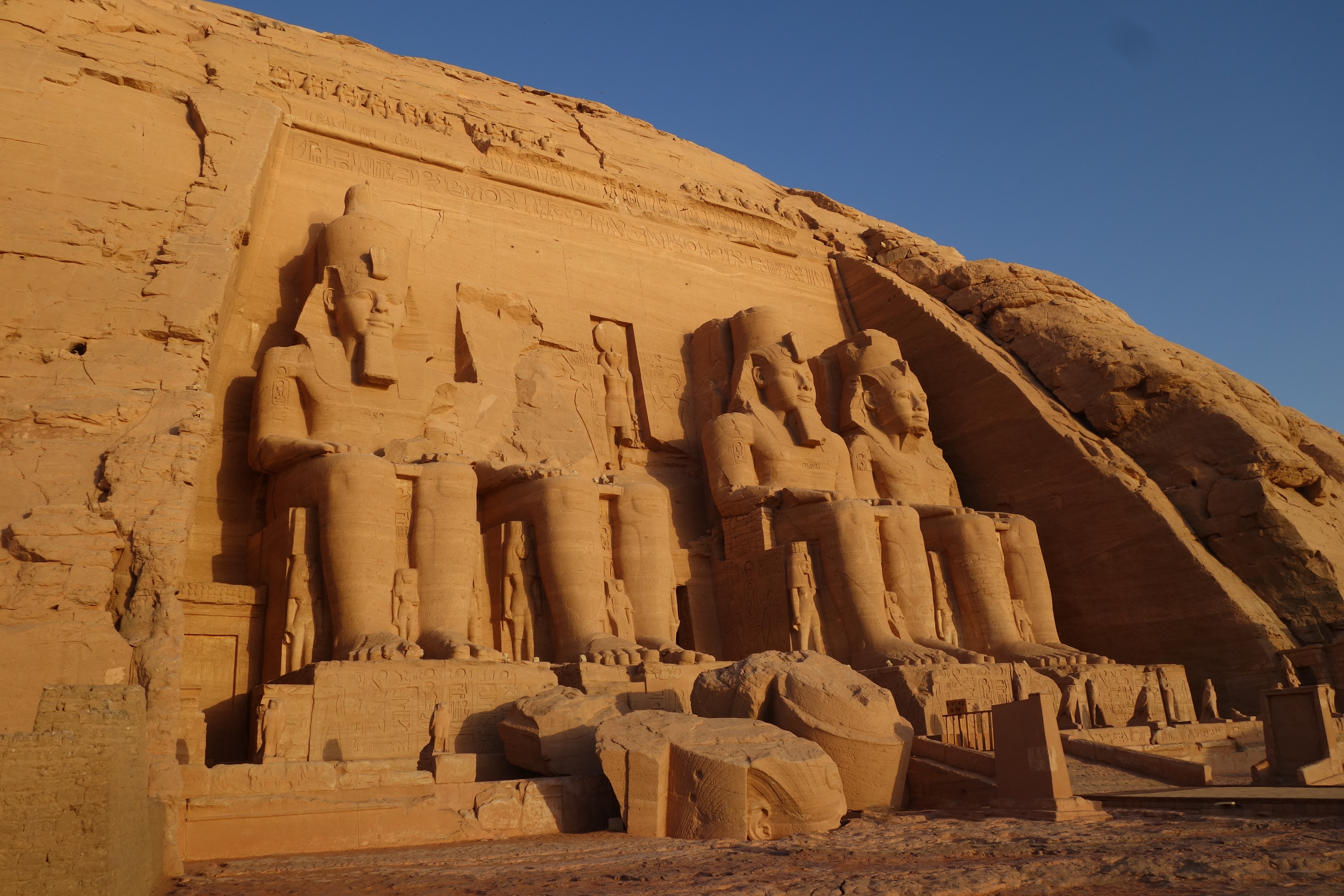
We head back for breakfast and then climb into the bus for the drive to Aswan. The desert again with huge rock outcrops, burnt black and, by some freak of geology, weathered to an almost perfect pyramid shape.
As we pull into the outskirts of Aswan a security check pulls us over and some slick dude in tight jeans and designer shades informs our Driver that he was caught on a police speed camera but, for US$20, he can make it go away. Our Driver denies it and we know he’s right. We turn tail back up the desert road until we intercept the cop car but he won’t show our driver the evidence. No photo – No fine. We drive back to the checkpoint and the slick cop gives our Driver a look of pure hatred but, it’s one thing to think a tourist bus is an easy mark for a baksheesh hit and it’s another thing to actually pull us into a cop station for 20 bucks. Shitbag.
We carry on into Aswan, past the big dam and over the older small dam and down the banks of the Nile to the Old Cataract Hotel. This was originally built in 1899 by Thomas Cooke, but included a suite for the Royal family, it also has a Winston Churchill Room and an Agatha Christie Room, where she wrote “Death on the Nile”. Unfortunately, a huge wedding party has usurped almost the entire hotel and our rooms, booked some six months previously, have gone. There are many apologies, complimentary cold beers from the bar and complimentary bottles of wine should we mind terribly, staying for one night in the old wing after which we will be moved to our original booking in the new wing and upgraded to a suite for the second and third nights. Can we see the rooms for tonight please? Certainly Sir, please walk this way. If I could walk that way, I wouldn’t need the talcum powder. Excuse me Sir? Never mind my good man, lead on. He led us down a corridor on the scale of Buckingham Palace, past the Royal suite, past the Churchill room and into the Dainton Room.

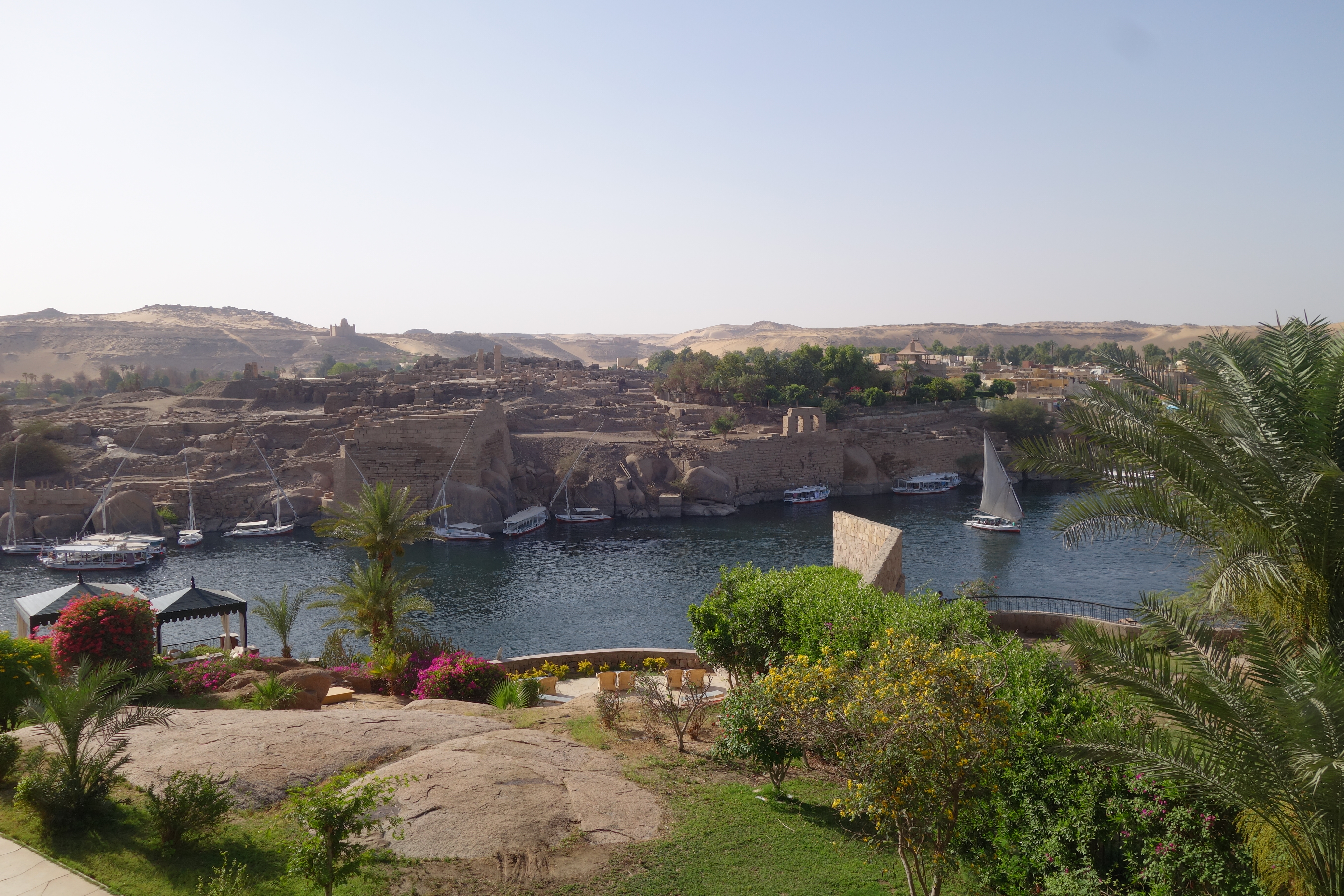
Palatial? It was like something out of a fairy tale. The ceiling was so high that clouds were forming, but fortunately, the canopy over the massive bed would prevent rain from pattering down on my coif. The enormous French windows opened onto our balcony looking down upon feluccas sailing up and down the Nile, date palms waving in the breeze and a ruined temple decorating Elephantine Island directly opposite. Will this be satisfactory sir? I think we might cope, please feel free to demolish the new wing if you think it necessary as you are going to have to drag me kicking and screaming out of here. Score!
Day 16
The Old Cataract is a gem, very elegant, very Agatha, a tad kitsch. Most of the Staff appear to be slightly deranged, but that only adds to the charm. After the best night’s sleep in years and the most incredible shower ever, we descend to breakfast. There are Quail’s eggs, but I can’t for the life of me find the caviar.
Suitably refreshed, we descend to the hotel dock and board our felucca. This is probably one of the shabbiest boats on the Nile, with more holes than sail, and garners disrespectful looks from the Hotel staff, but the captain appears to know what he is about and we sail across to Elephantine Island, to visit the ruins, with ever more Biblical tirades concerning the Nooooobians. There is not a lot there, apart from a view of the best hotel room in the world and we sail on to the Tombs of the Nobles, but we decline to visit (Tomb snobs). We visit Kitchener’s Island, but it’s not exactly Kew (Botanical snobs). And, much to Aladins’ discomfiture, we decline to visit a Nooooobian village (Nooooobian village snobs). But our next stop completely flummoxes us. Camels! Us? The felucca crashes into a tree on the river bank, seemingly on purpose, as the shade it offers is very pleasant and Aladin gestures us ashore to climb the burning dune atop of which our camels await. I figure this is probably his reprisal for declining the Nooooobian village.
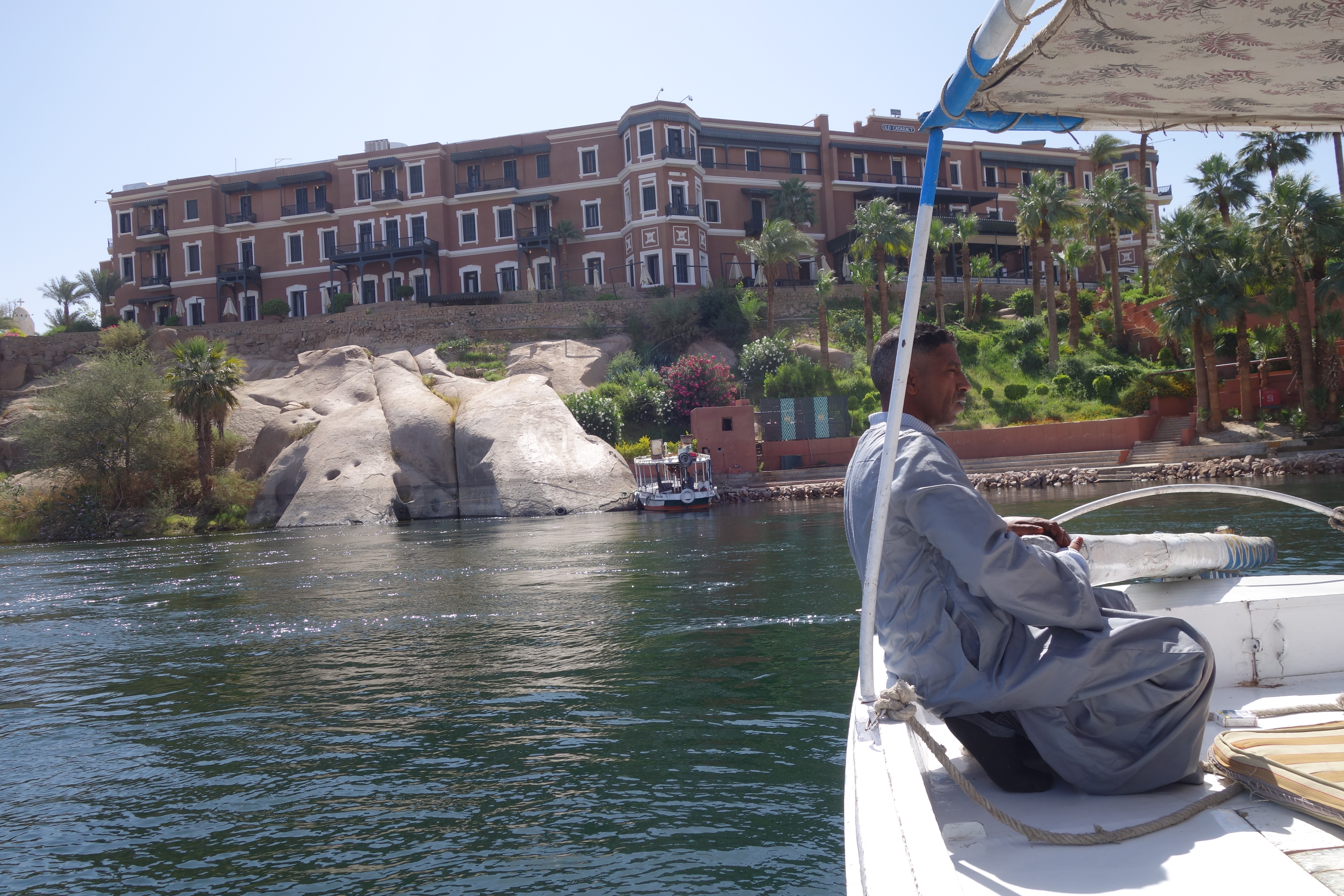
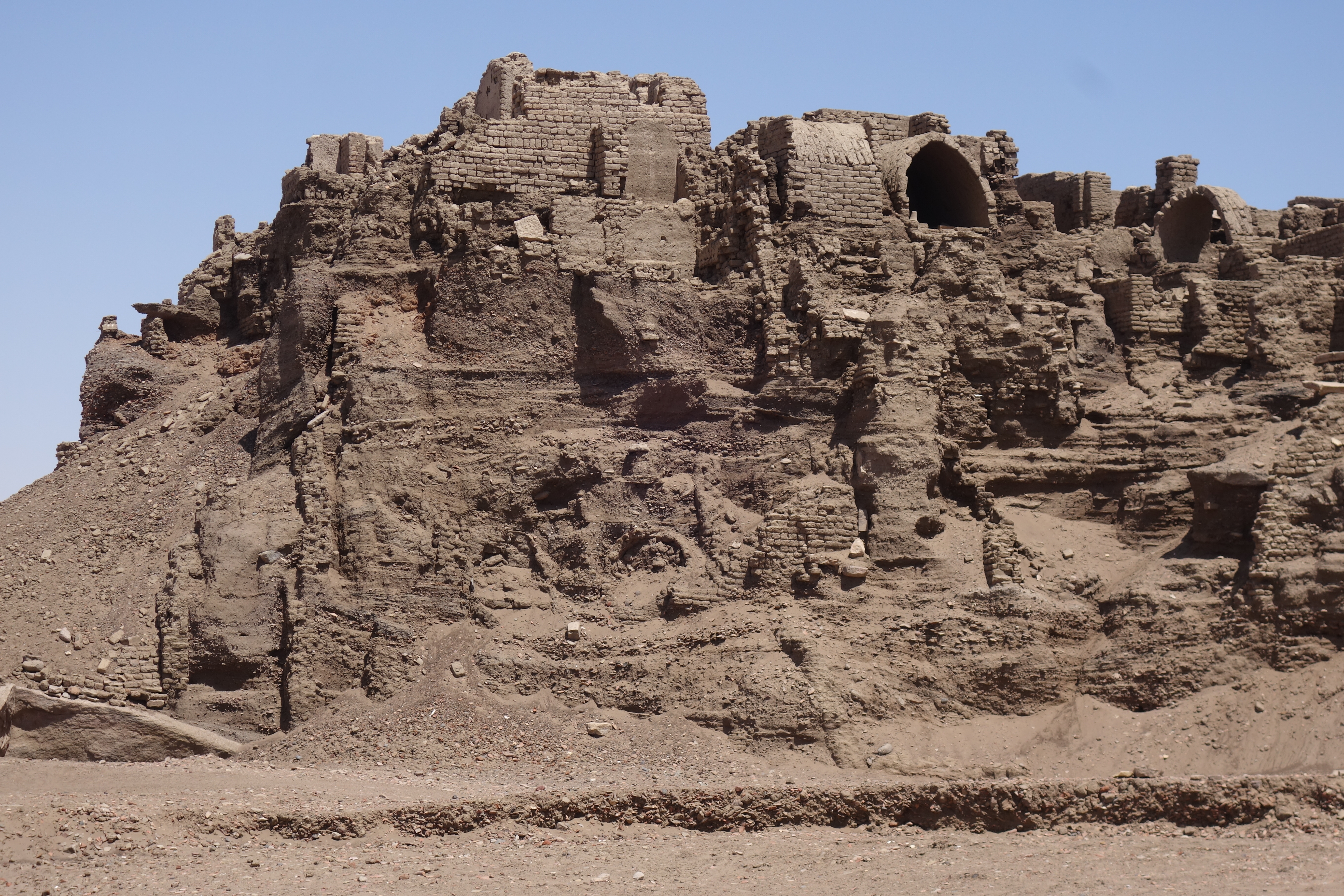
But, once we are mounted and away, it’s surprisingly good fun. The camels, as always, are uncomfortable but seem to be very good natured, quite pretty and not overly smelly. Nobody shouts at them or beats them with sticks although, laughing like a drain at what we look like and trying to take photos of it all, I drop Loleta’s steering rope and she gives me a serious piece of her mind.
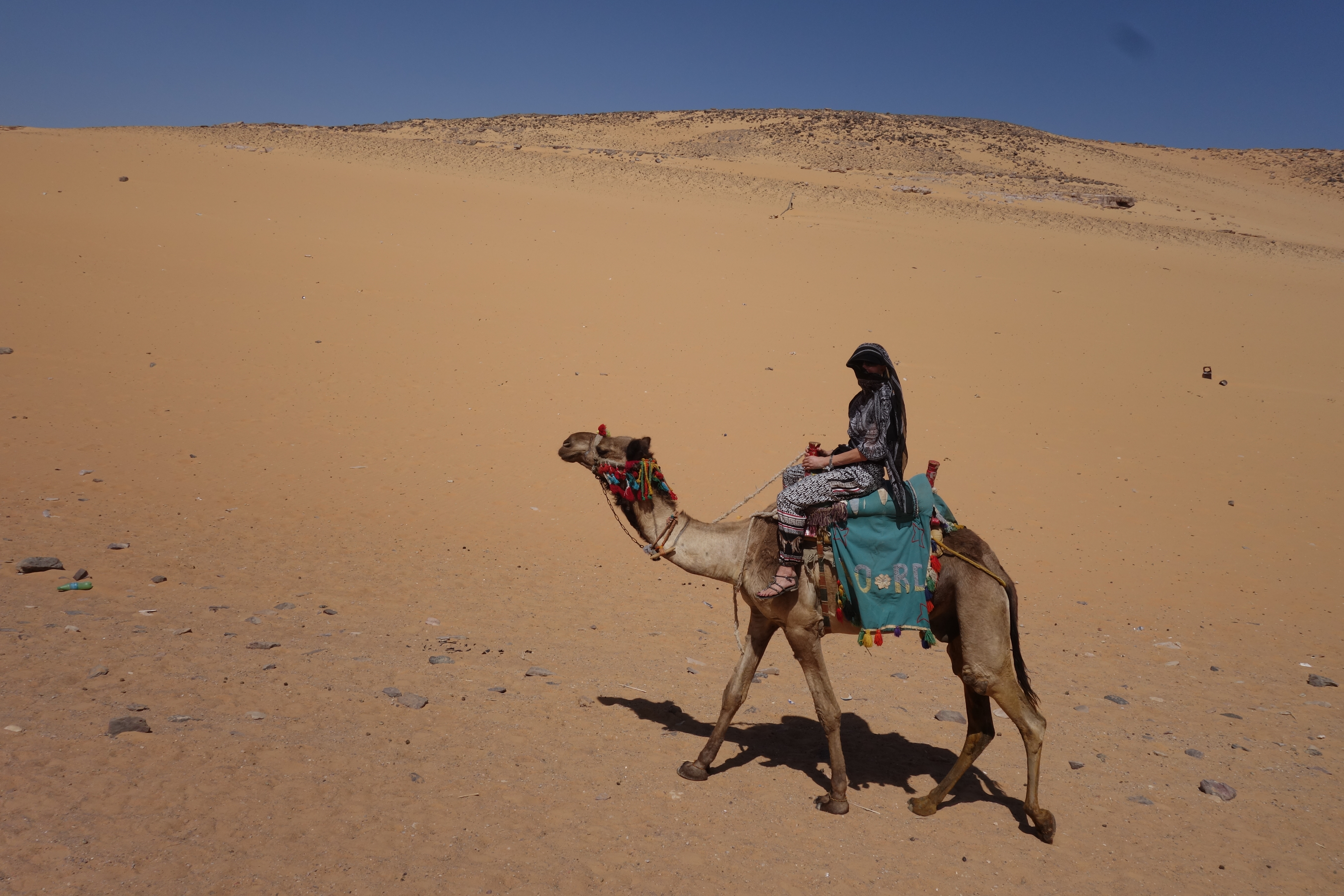

The sky is a blue crystal, the sand is golden and blazing hot. Dori is encapsulated in her black sari like a Bedouin girl and we plod into the desert hills to the ruined Monastery of St. Simeon, dramatically perched on the edge of nothingness.
Ruined, windswept and barren, the unanswered questions of God and Man transcend the thousands of years. WTF? Why here, with no water, no vegetation and a sand bandit behind every rock? Why this need to get closer to God by enduring such pain and privation? The Hittites thought that alcohol was the path to communing with God. Go Hittites. Some of my most entertaining conversations with Him have been after a few pints and I will stick with that, thanks. Loleta carries me back to the boat where the Captain and his lad have prepared fish and chips, with babaganoush and salad and mint tea. Where are the Hittites when you need them? Then, it’s a lazy sail back to the hotel.
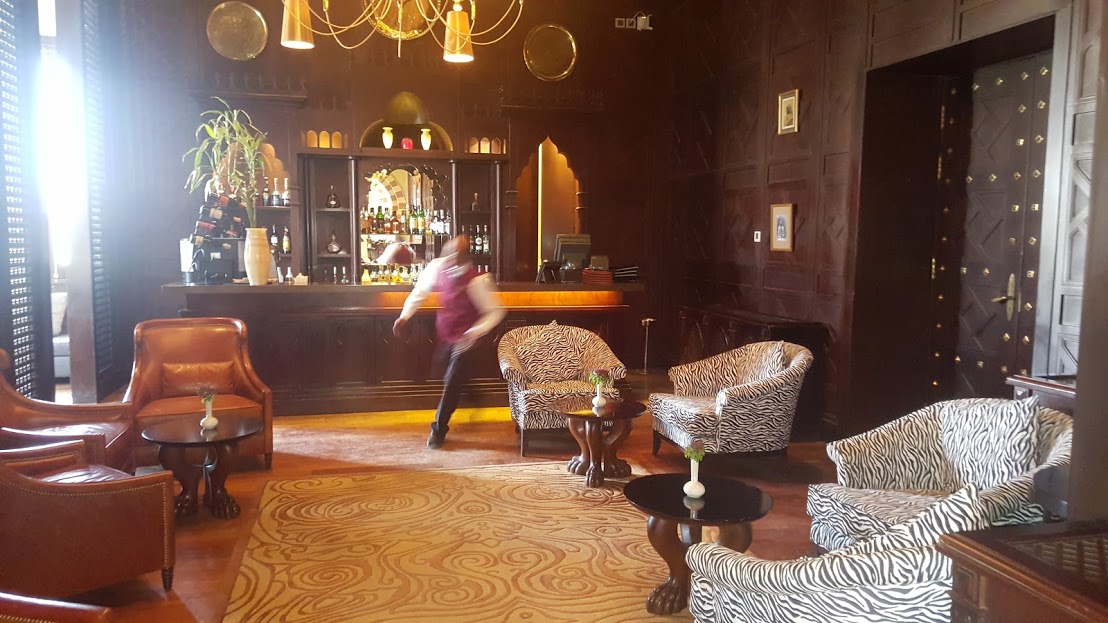
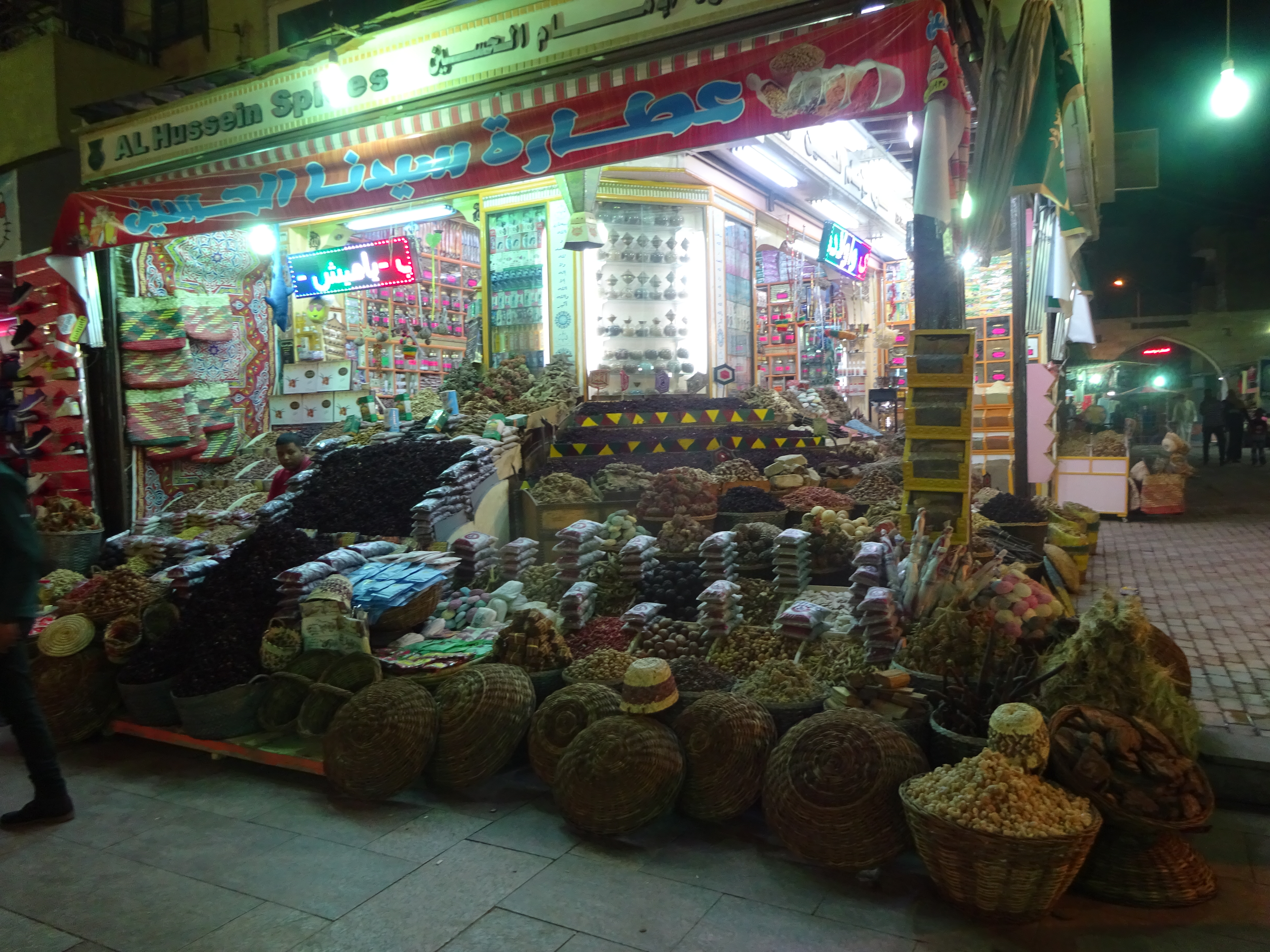
In the evening, after sundowners, we head into town to the Souk and dinner. Everybody has been telling us that the souk in Aswan is much more laid back than elsewhere but, they forgot to tell the soukists. Okay, it’s not quite as bad as Luxor, with the emphasis on ‘quite’. But it is still pretty much full on and they hate it if you know what you want and what you want to pay for it. They will shout and scream and swear on their Mother’s life, they will hold your hand and beg and, when you won’t budge, they will get truly upset as if it is all your fault that you don’t want to buy their shit. We found some beautiful, old, woven rush mats that had been hanging in a forgotten corner for ever and the guy was so incensed that I got the price I wanted that, even after he had the money and I had them in my rucksack, he kept demanding more and then, wounded by my refusal, demanded that I give him my biro, which I also refused. I thought he was going to have a seizure. I should have shown him a photo of my hotel room, I think that would have finished him off.
Day 17
Dori’s Day Off. Finally templed out and up to her yazoo in Noooobians, Dori decided to have a day at the gym and pool while Jon, Liz and I continued the slog. First it’s up to the high dam and a boat ride out to a group of rescued temples which were lifted above the floodwaters to Kalabsha Island. They are in different styles and states of repair and one, the temple of the cow goddess, Hathor, is very pretty.

We then go down to the lower dam and the island of Philae with the temple of Isis, the goddess of Luuuurve, there is a big statue of Barry White. No there isn’t. The layout of this temple is a bit weird because they designed it bigger than the island they built it on, nothing lines up properly because they had to bend it to fit, so it’s actually the temple of bent luuurve but, hey, as long as it’s luuurve, a bit of a kink don’t matter
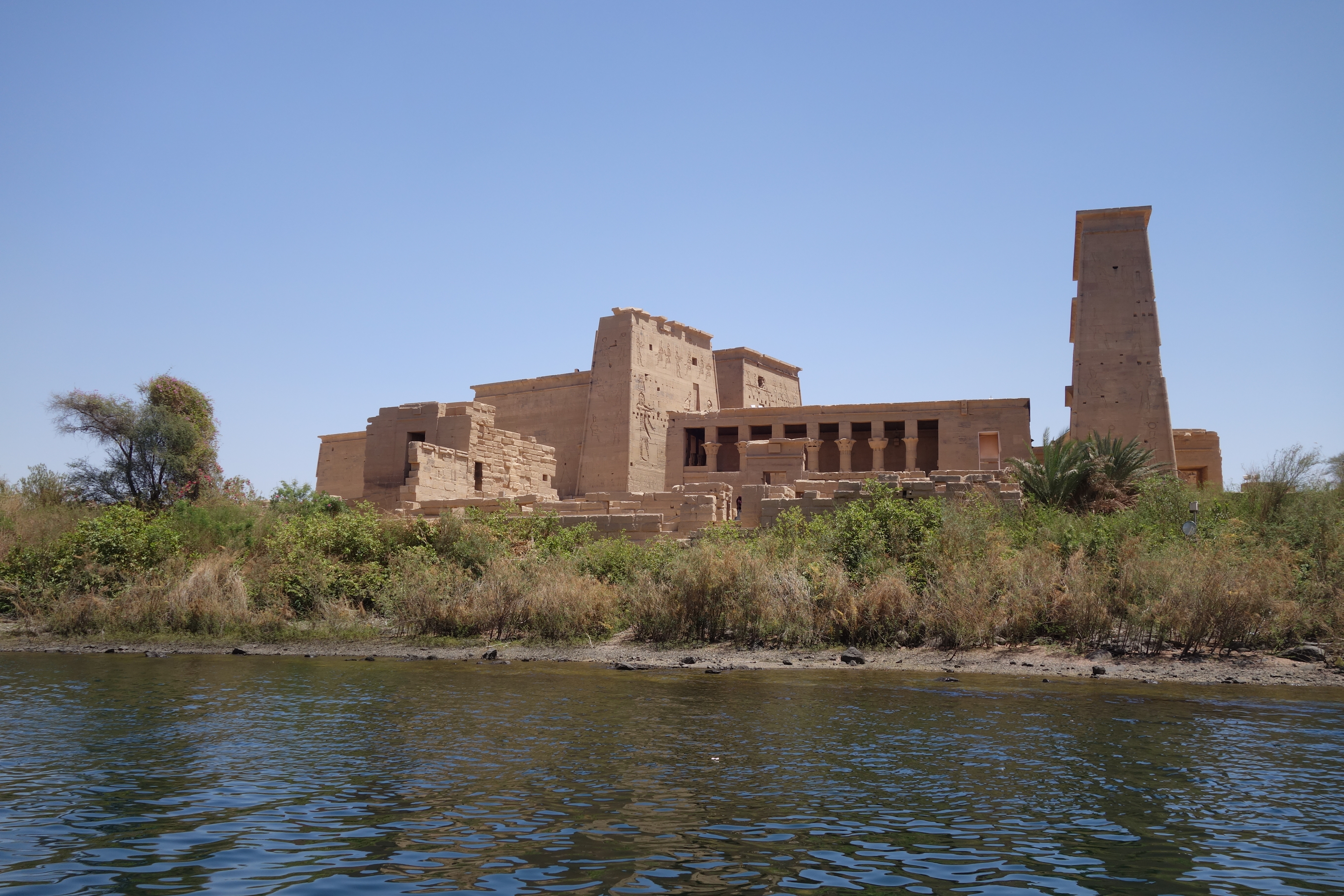
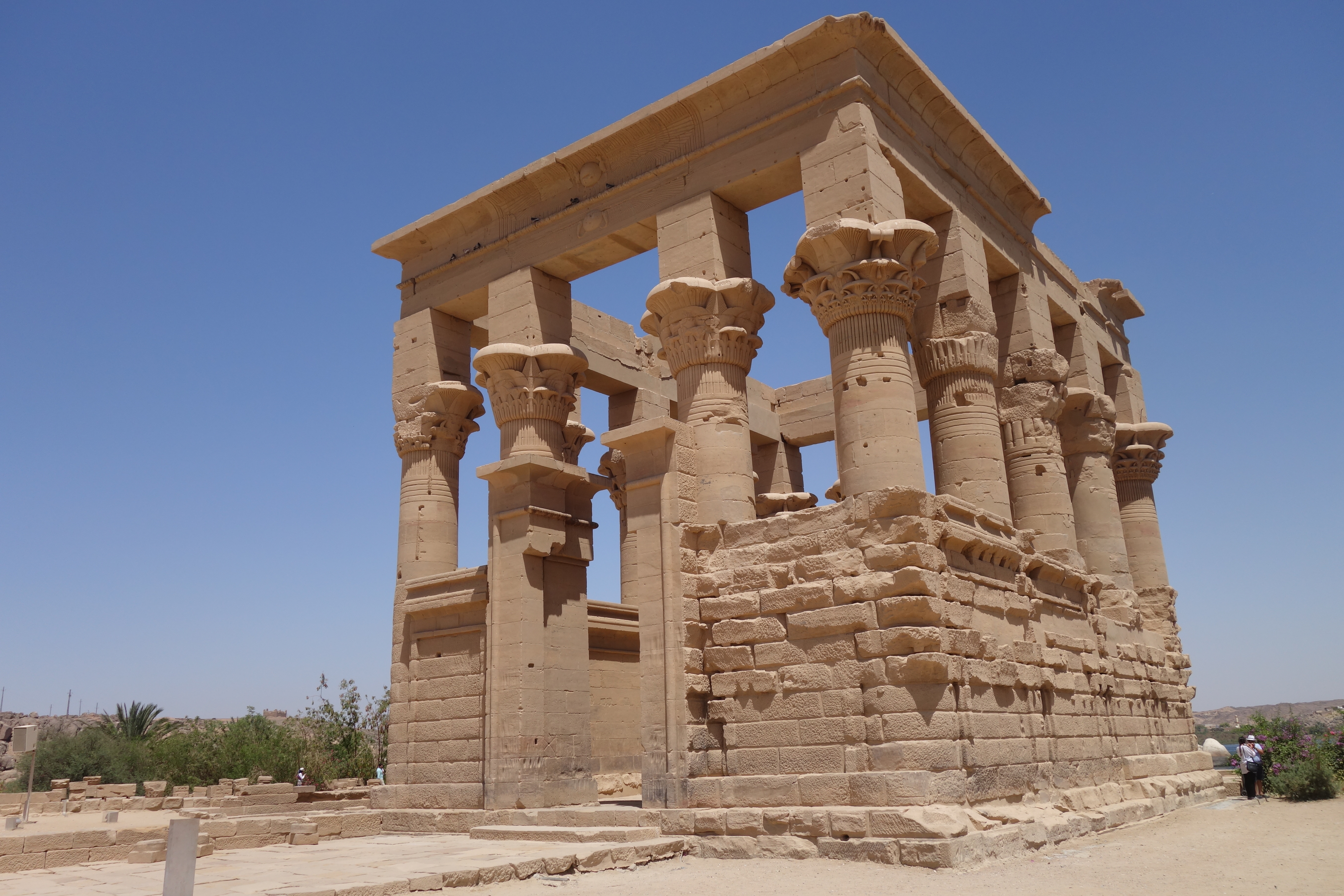
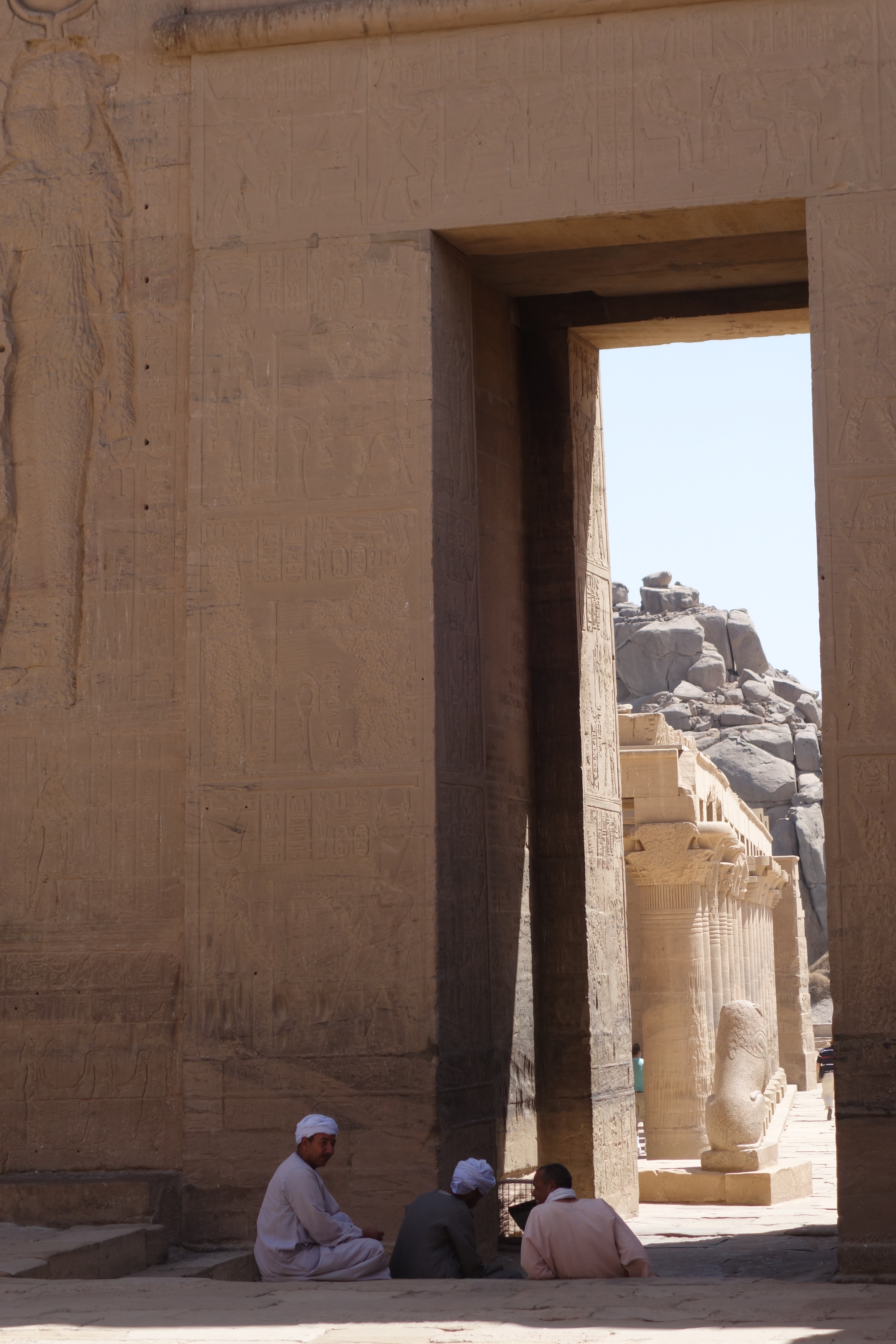
On the way back I finally find a good stone statue of Horus, that is actually stone and not cast resin painted black and then covered in dust and I am a happy man. The evening is spent with a brief Souk visit and a pleasant meal before our last night in the bed of heaven.
Day 18
We fly back to Cairo where we are met and taken straight to the Egyptian Museum to be greeted by Imam, our first Guide of the trip, he is all smiles, maybe we tipped him too generously. The Egyptian Museum is home to some of the most incredible artifacts ever discovered and, it’s a shithole.
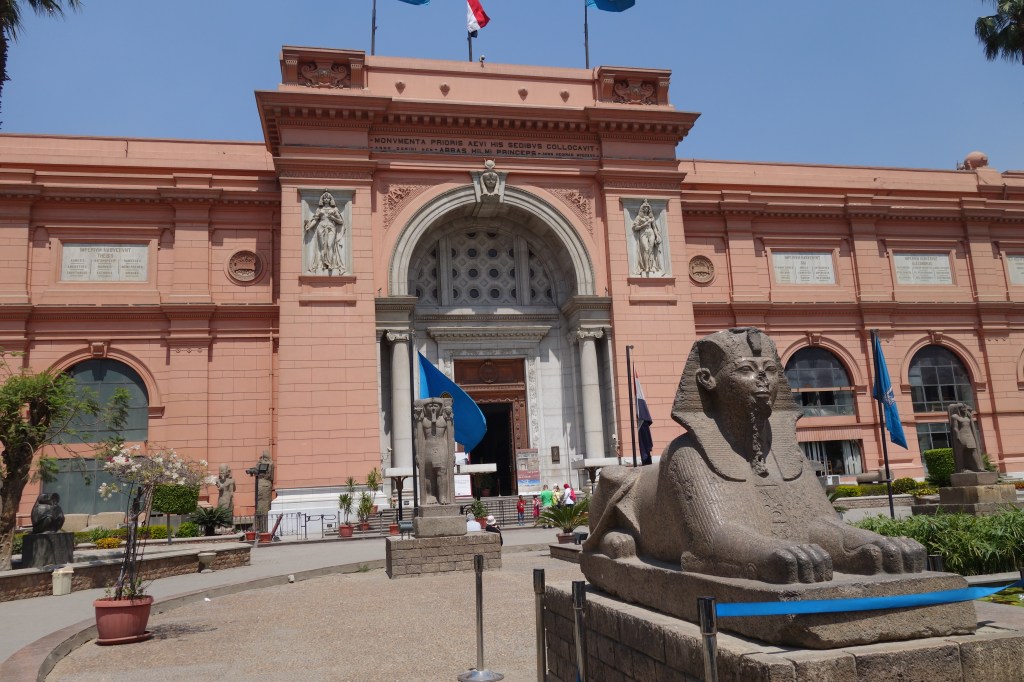
Way past its sell-by date, it’s about as antiquated as some of the exhibits. Riches displayed in dusty glass cabinets, labels missing or on the wrong piece, glaring lights that bounce off the glass so that all you can see is your own reflection, no logical order or placement and just too much shit. Luxor Museum holds less than one percent of the material and was five hundred percent better. They are building a new one over by Giza and boy do they need it, however, expect half of the artifacts to get ‘lost’ in transit.
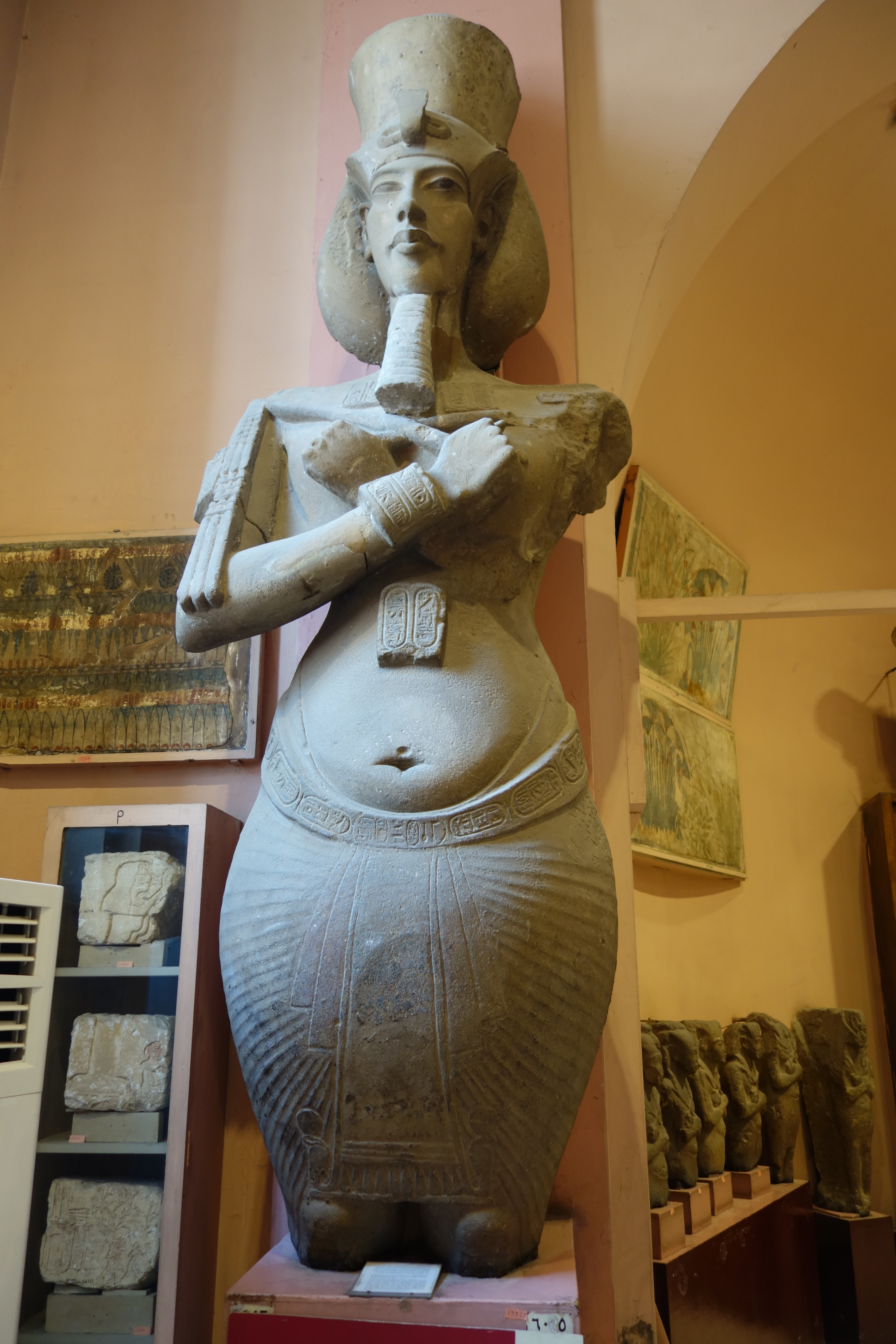

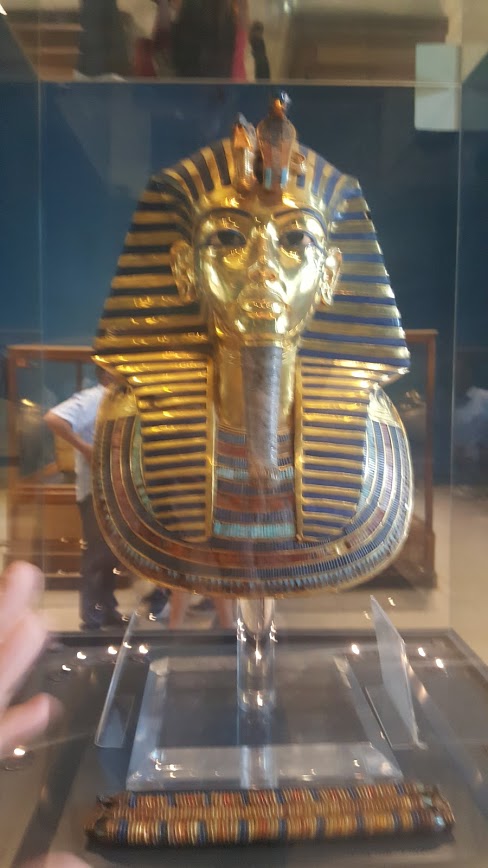
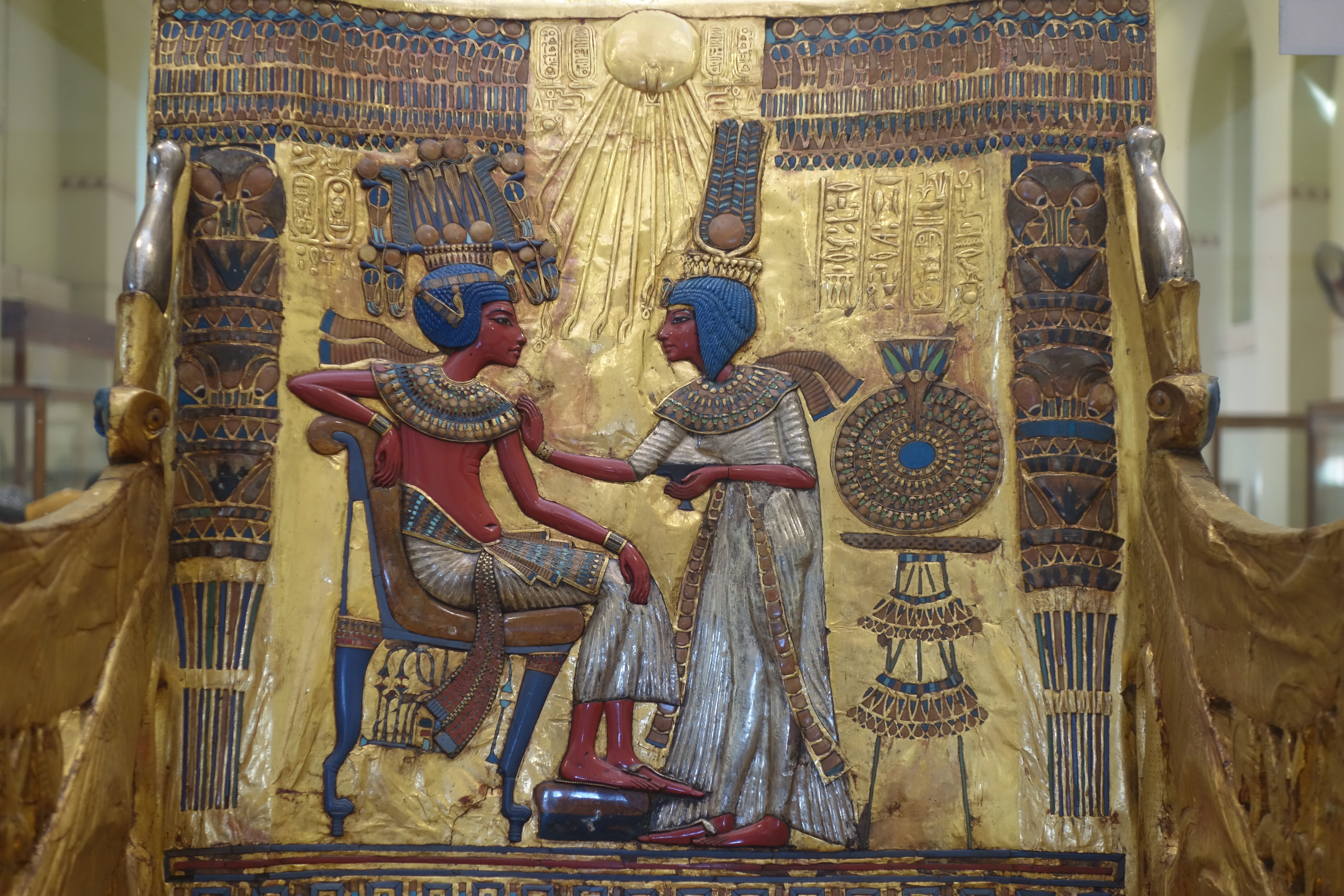
Anyway, they have loads of really cool stuff and it is a must visit if only to see the gold funerary mask of Tutenkhamun and some of the exquisite jewelry he had. The workmanship is stunning and, of course, it’s humbling to think that we were running around in a bit of woad and an old badger pelt, if you were lucky. It seems to be the nature of things that Civilisations see-saw around the Globe, I’m up when your down, and this comes home particularly hard when we realize that after flying from Aswan and walking five miles of museum corridors, there is no coffee shop. There is one in the grounds, but it’s closed, there is a kiosk, but it’s closed and Imam goes into the Staff Canteen to get us four tiny plastic cups of lukewarm tea before we desiccate like Amun’s Mummy.

Back inside the Museum and trying not to miss any of the good bits, I am approached by two attractive teenage girls and their brother. Could they have a photo with me? Of course, vain, dirty old man that I am but, on the proviso that I also get a photo on my camera. Brother takes charge and photos, everybody happy but, I am puzzled.
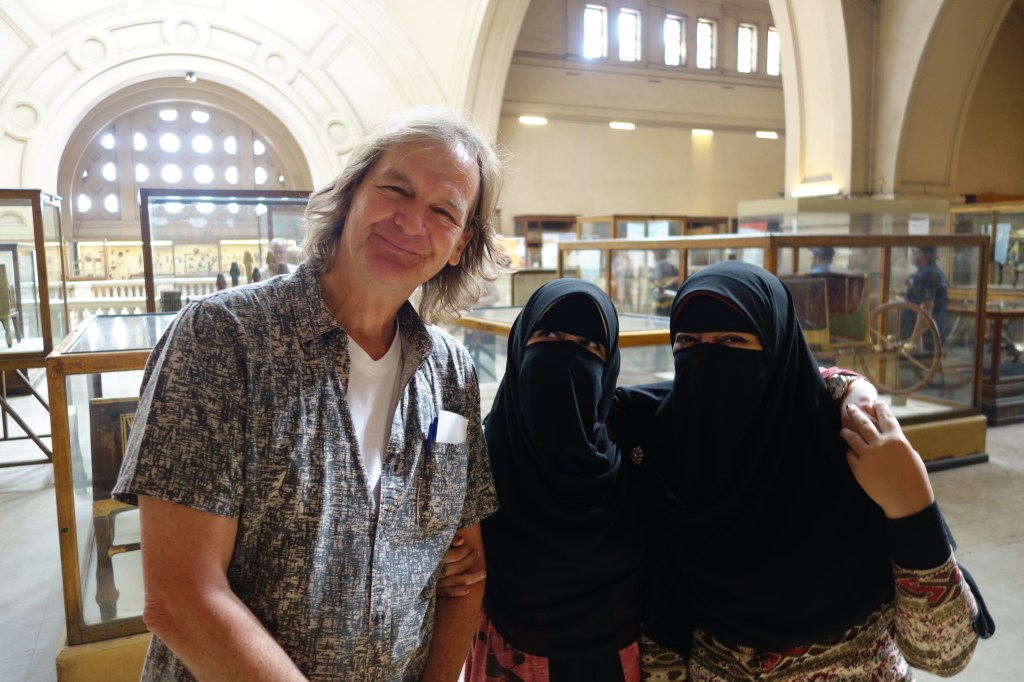
This is because they are both wearing burka so, how can they, or anyone for that matter, tell that it’s them in the photo? What then is the point? It is possible that I am engaged to be married to one or maybe both of them but, if only one, how would I tell which one?
We leave and go to our downtown hotel. The Talisman is gamely referred to as a “Boutique” Hotel, but the entrance bears an uncanny resemblance to Chun King Mansions, the notorious cess-pit of Hong Kong noted for every illegal activity known to Man. There is an old cage lift capable of carrying only Ahmed and our luggage to the 5th Floor and so we decide that the climb would do us good. It didn’t.. As the floors progressed, the environs became increasingly “Blade Runner”. Sounds, smells, rubbish and grime were distinctly dystopian and then, in the dim half light of the 4th Floor landing, with monsters lurking in every shadowed entrance, a blood curdling scream rang forth! A scream of anguish that rent the very fabric of Time itself as Dori did her little Dori Dance. “A turd! A turd! I just stepped in a shit!!!” I honestly didn’t know whether to be appalled or burst out laughing. In the end I guess I did a bit of both. We arrived at the Talisman and, after checking our shoes, we entered.
We were less than impressed, especially as this hotel was one of the few where we had accepted the Travel Agencies recommendation. A sense of our discomfiture got through to Ahmed and the Management and we were upgraded to suites. They were filthy and the baths were disgusting. There was a flurry of activity and rooms were quickly swabbed down until, tired and discouraged, we agreed to stay for the night. Guess what? It turned out to be great. The Staff could not have been nicer or more helpful. The rooms had not been used since the big dust storm of Day 6 and it had taken until our arrival to get the rest of the place back to normal. The night guard went out and got some cold beer and balance was restored.
That evening, we do the Pedestrian tango with the Cairo traffic. The Green Man means nothing here and anyone fool enough to walk is a bullfighter, everybody else has to dance. We hit a really nice restaurant and then a Shisha Bar to watch Mo Salah, the Egyptian footballer playing for Liverpool and national hero. It’s like being in the Rovers Return, without the beer.
Day 19
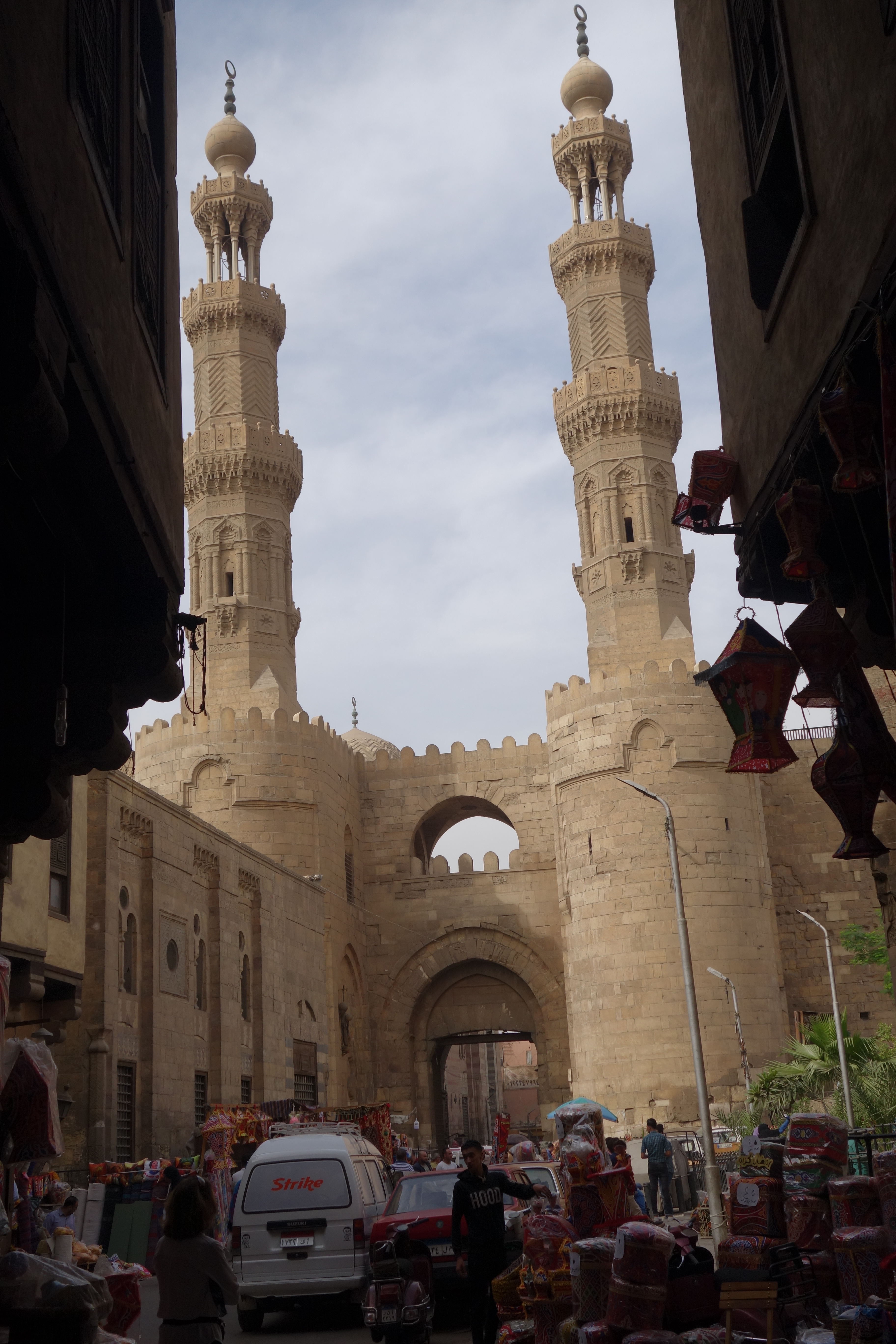
Imam takes us to the older parts of Cairo; the Ancient Citadel, built to defy the Crusaders; a bunch of mosques, (Didn’t we see this somewhere else? – Everywhere else.); the Coptic Quarter with a church built over the room where Joseph, Mary and Baby Jesus slept. Honest! Look, we have some Saints bones and a pillar that weeps blood, but not today; a synagogue or, is it another mosque, or a church? Well yes, it was once, all of the above. Make your mind up; an Orthodox church built over a Roman fort, it’s a mosque with pictures; and a Market. Phew! Time to breath. Not allowed! Hey frien! Buy my shit! No hassle! I’m intrigued by a stall selling naughty nighties, displayed on the outside of a 15th century mosque with Koranic verse carved into the masonry above split crotch panties.
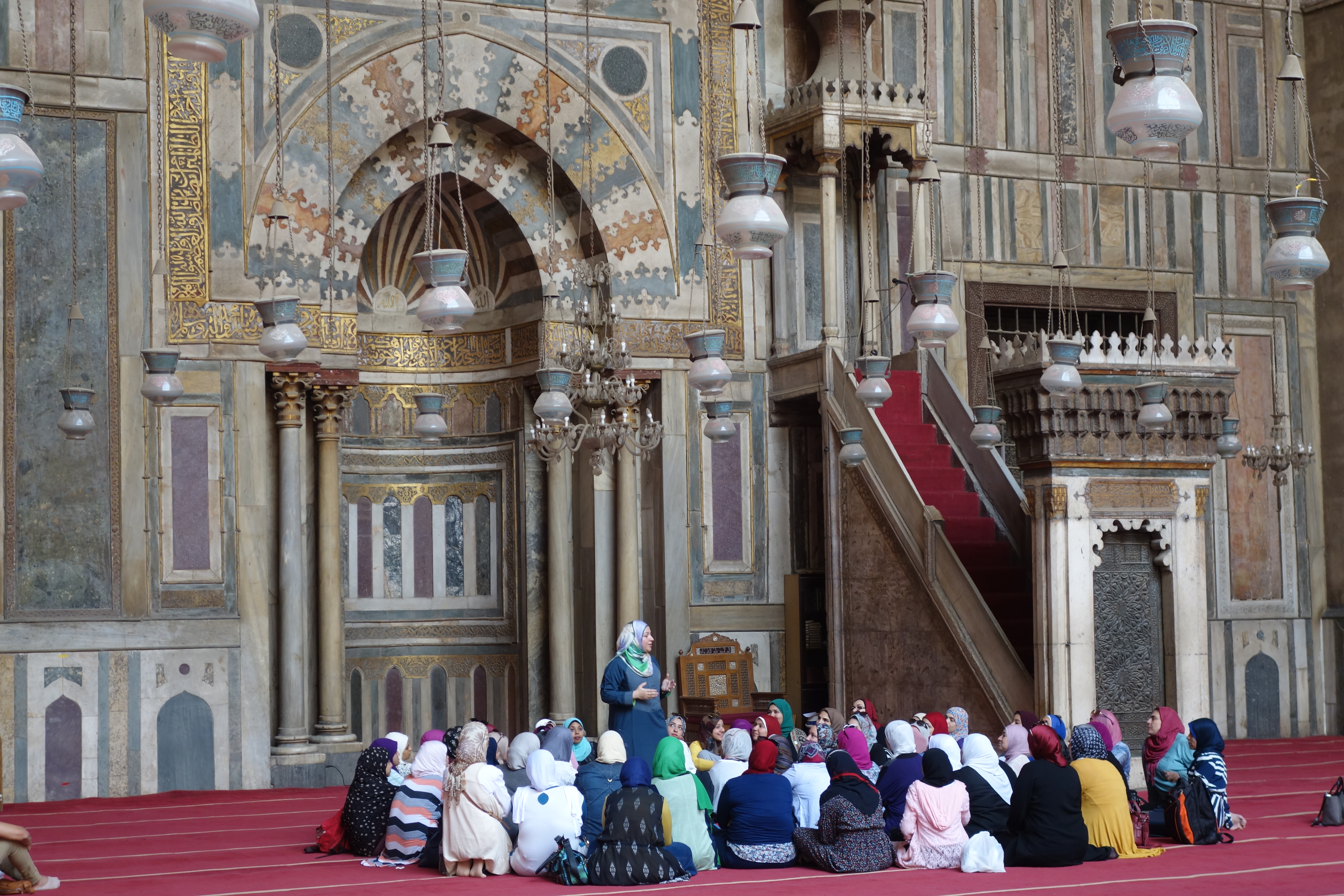
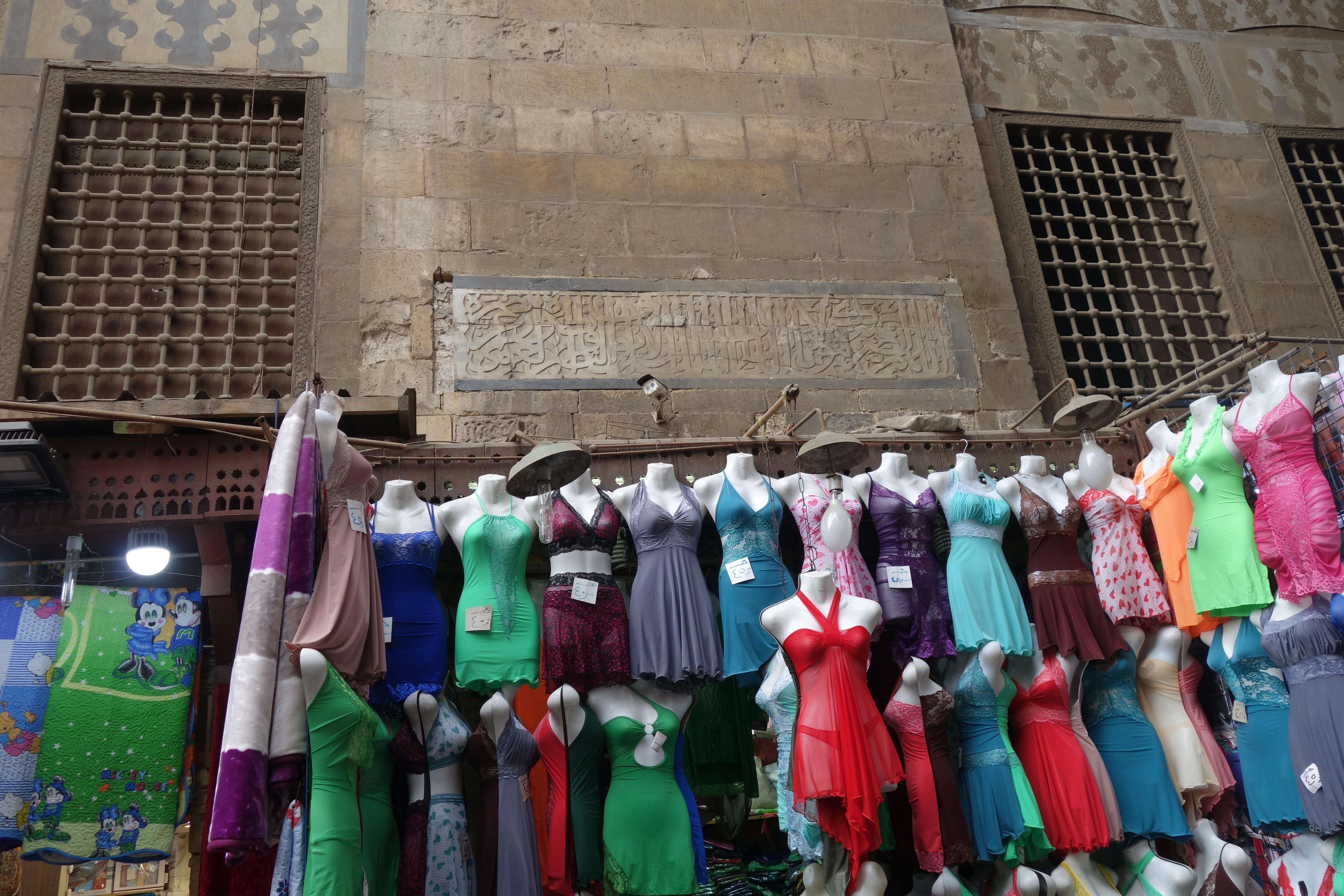
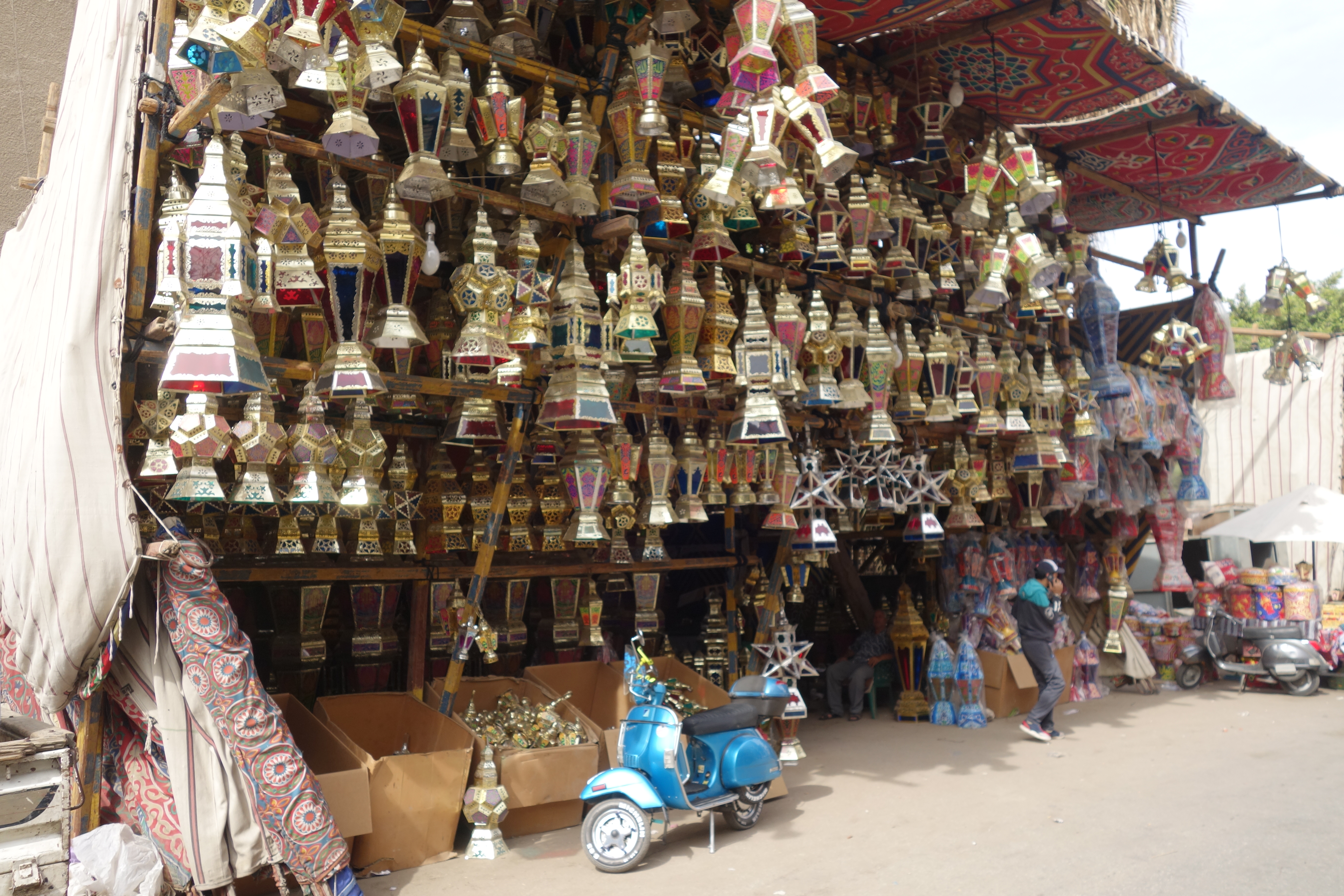
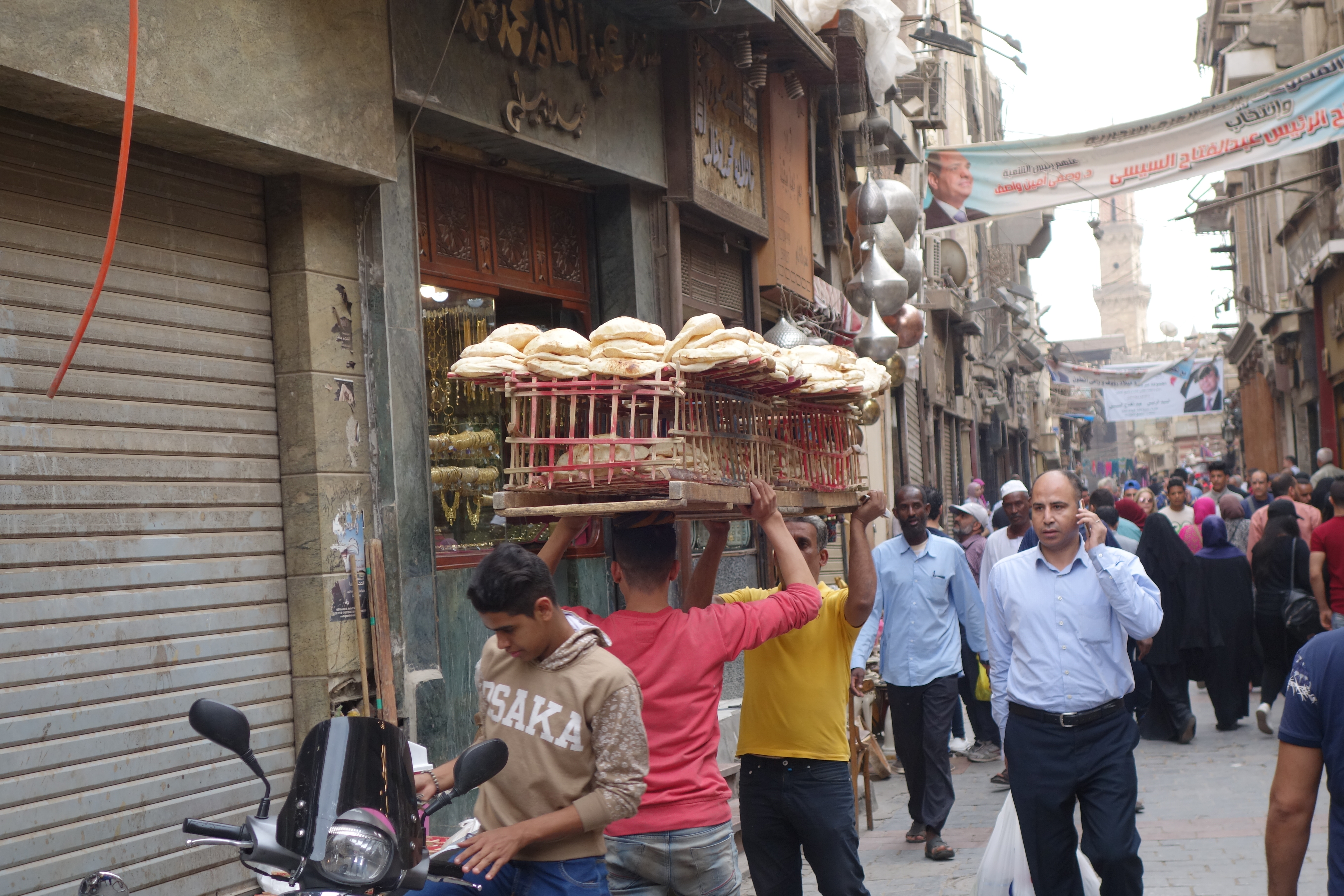
There are some beautiful buildings, thousands of people, donkey carts and scooters and men on bikes with enormous trays of bread balanced on their head. We do the Souk and the outskirts of the Souk and, if you ever need to buy the crescent moon for the top of your mosque, I know just where to get it my friend, no hassle but, could we find the two brass lamps like the ones we saw in the coffee shop in Abydos? Nope. If you see it and you like it, buy it. You might never see it again and a trip back to Abydos ain’t gonna happen.
Day 20
Time to go Home. Bless them, the Talisman allow us to keep one suite for the day so that we can relax and clean up before we go. We make a last foray into the old Quarter with me acting as navigator and guide. It is an absolute warren of passages, ginnels, lanes, snickets and shit alleys containing all the crap that China has ever produced yet, I get us there, much to the surprise of my compatriots and much to my chagrin at their surprise. Then it’s one last meal, one last beer, a shower and farewell to our family at the Talisman followed by the delights of Cairo airport for the return leg to Hong Kong.
__________
Despite the scatology, it was a fantastic trip, awe inspiring and beautiful in so many ways. Djed Travel did a brilliant job. The People of Egypt are lovely, if only Commerce, Politics, Religion, Corruption and Baksheesh didn’t get in the way. Yeah right.
Johny D May 2018
 Travels, Opinions, Stories and Stuff